How will the court make a ruling when platform rules are circumvented?
What evidence is required to prove the act of "circumventing the rules"?
Order snatching, ticket grabbing, traffic brushing, and group control seem to be disputes arising from different business scenarios. After entering litigation, however, similar issues are repeatedly encountered: what the original platform mechanism is, what the involved tool actually does, where the impact originates, and to what extent the damage can be proven.
This observation takes 21 representative case chains as the research object, and conducts comparative analysis from four dimensions: evidence application, proof purpose, court criteria, and proof limitations.
The key highlights presented by the data are as follows: Operation records are often used to explain functions, promotional communications are often used to identify pertinence and ownership, and transaction materials are simultaneously applied in subject identification and amount discussion. The quantity of materials cannot replace the correspondence between materials and the facts to be proved.
The scope is limited to September 20, 2026, covering the involved case and other cases with similar mechanisms and unclear responsibility boundaries. Cases of different trial levels of the same case are counted in combination. The following frequency only describes the extracted materials and discussions. The absence of relevant content does not mean that the corresponding evidence was not used or discussed in the case, nor does it represent the overall admissibility rate or winning rate.
01 / Data and Conclusion: What disputes do these 21 case chains cover?
10 cases involve recommendation, evaluation and batch operation, 4 cases involve operation automation and resource opportunities, 4 cases involve matching and location mechanisms, and 3 cases involve data utilization and channel boundaries. The sum of all groups is 21 cases.
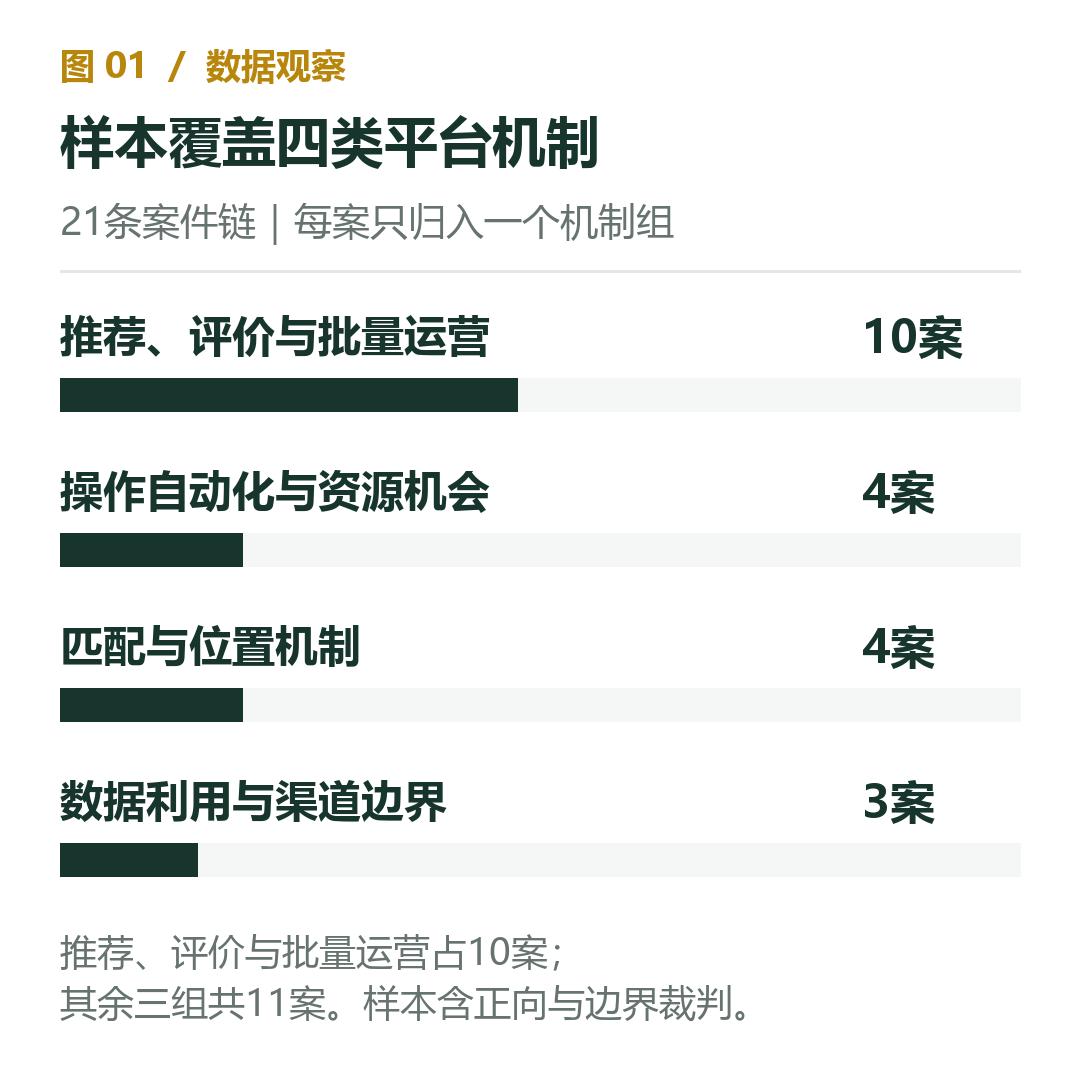
Figure 1 | The mechanism groups are mutually exclusive, and each case chain is counted only once. The research objects cover analogy and boundary disputes, not all 21 cases are food delivery order snatching cases.
This means that the research results are first suitable for answering "how the platform mechanism is affected" and "how courts distinguish legal use from improper acts". It cannot directly give the overall winning probability of food delivery order snatching disputes, nor is it suitable to list the compensation amounts of different platforms together to rank the harm degree.
02 / Data and Conclusion: What types of evidence materials appear more frequently?
Among the seven types of materials in this study, operation demonstration and operation records cover 15 cases, promotional tutorials and business communications cover 14 cases, and identification and technical analysis materials cover 7 cases. Observable operation processes and the tool providers' own statements are the materials that appear more frequently in the sample.
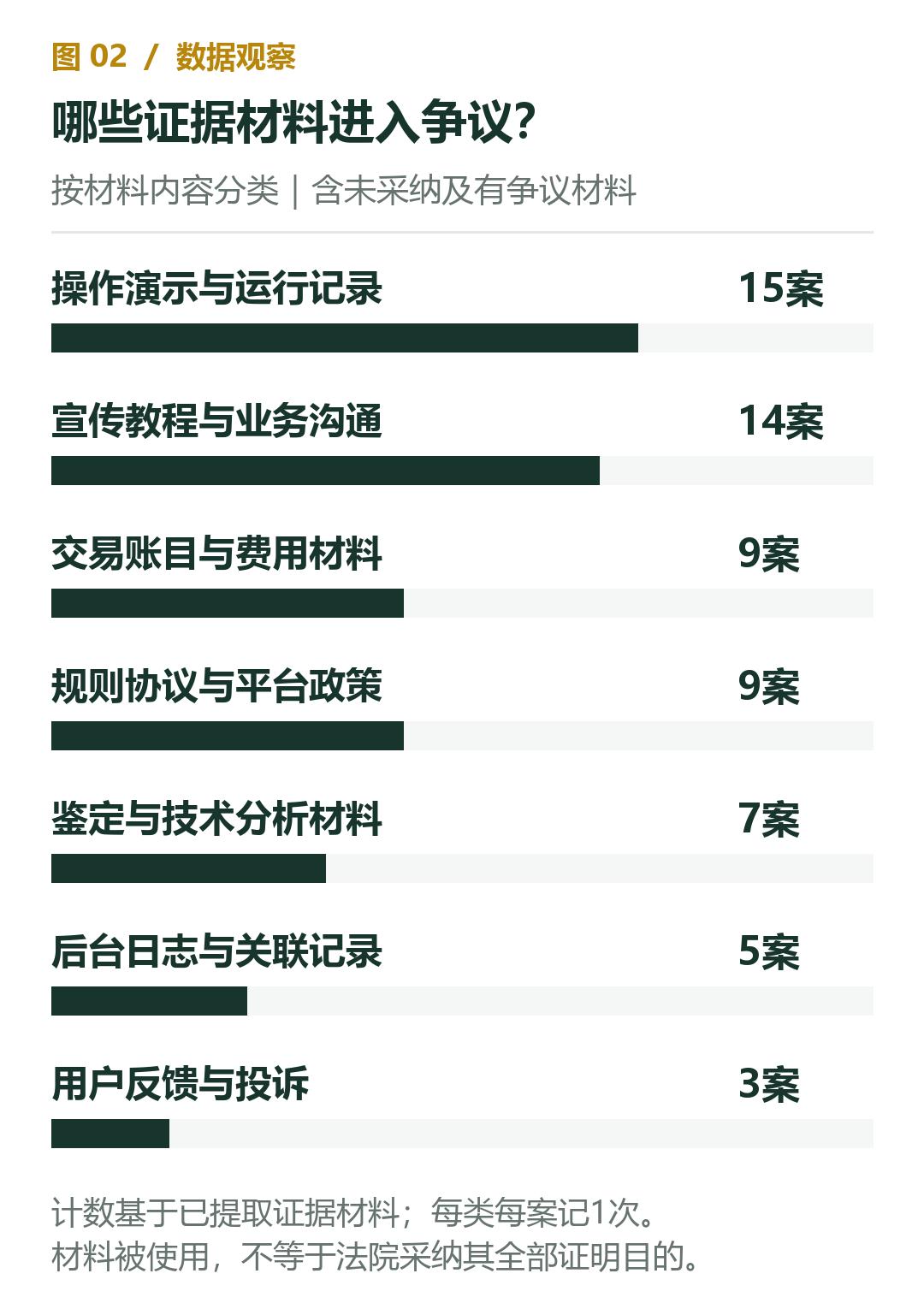
Figure 2 | Statistics of materials submitted by parties, verified in court hearings or recorded in court investigations, including materials that are not admitted. Content fixed by notarization is still classified according to its content type; one case can involve multiple types of materials.
Operation demonstration can present the path of "connection - setting - execution - result"; tutorials, customer service guidelines and marketing content may connect specific platforms, circumvention methods and business entities. The former answers what the tool can do, while the latter helps explain how the tool is provided and used.
Transaction accounts and expense materials, rule agreements and platform policies all cover 9 cases; background logs and associated records cover 5 cases, and user feedback and complaints cover 3 cases. These figures only show the coverage of materials in this study, which does not mean that background logs are of low value, nor can it be concluded that logs were not submitted in other cases.
The 7 cases involving identification and technical analysis include different material forms: judicial identification, technical reports, program codes or packet capture analysis, etc. They cannot all be defined as "cases where judicial identification is admitted".
03 / Data and Conclusion: What are the evidences used to prove?
Only by combining the material type and proof purpose can we see how the evidence functions. The following figure is counted according to the purpose in specific records, and the same material may undertake multiple tasks in the same case.
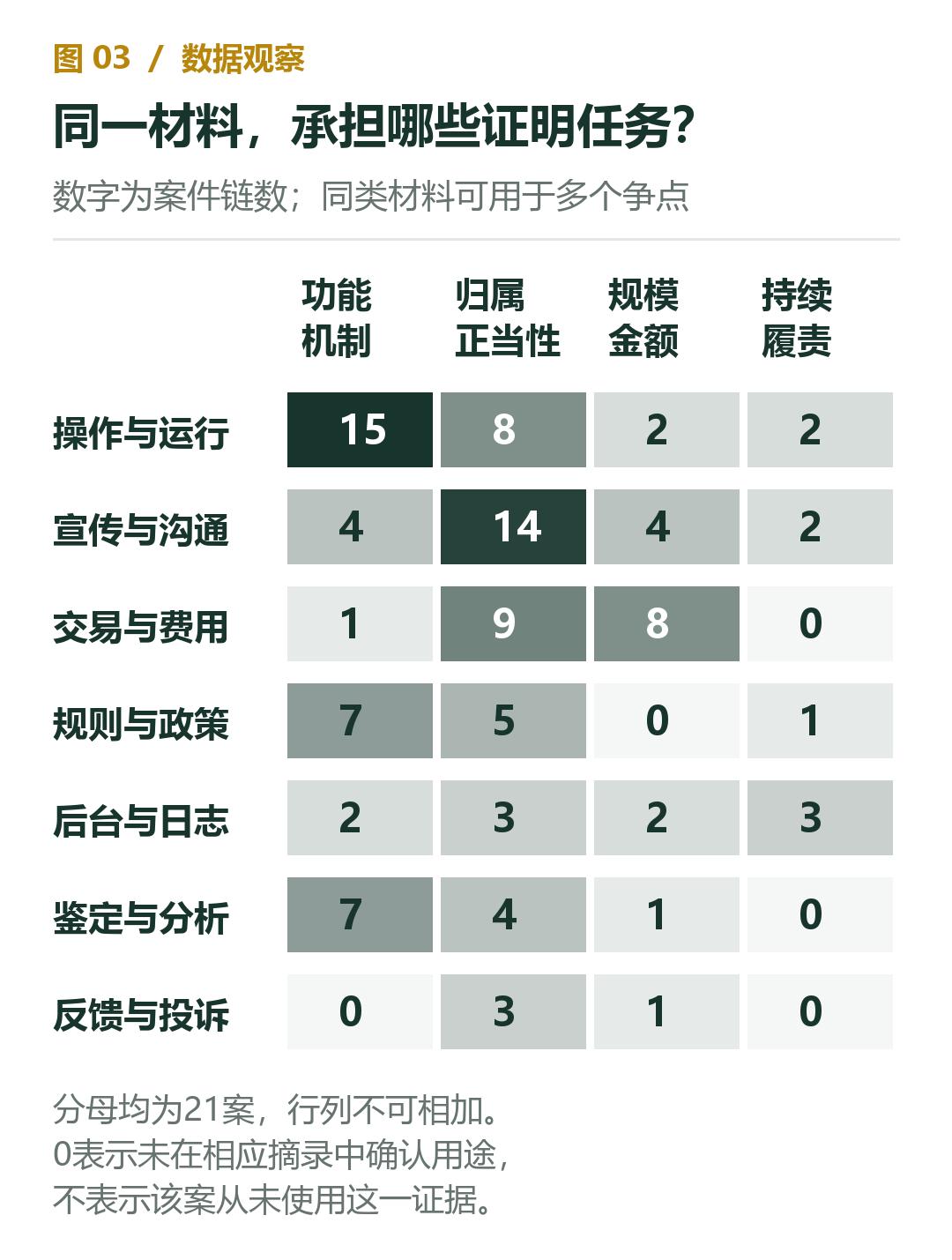
Figure 3 | The same type of material may undertake multiple proof tasks in the same case; the number represents the number of case chains involving corresponding purposes, and the color depth indicates the coverage.
Operation and operation materials are used to explain functions and mechanisms in 15 cases, and also involve ownership or legitimacy in 8 cases. For example, through the comparison of different accounts, versions, devices or usage scenarios, explanations such as "it is only an ordinary tool" and "it is only a terminal difference" can be verified.
Promotional tutorials and business communications involve ownership, pertinence or legitimacy in 14 cases, and involve scale and amount in 4 cases. Sales pitches, service commitments and customer service responses may point to the purpose of use, or be used to claim sales volume; the latter still needs to be reviewed against actual transactions and counterevidence.
Transaction and expense materials involve ownership or legitimacy in 9 cases, and involve scale and amount in 8 cases. Payment flow, contract subjects, invoices and charging instructions can not only prove the amount of money, but also help judge who is organizing, providing or jointly operating the service.
Rules and policies are used to explain functional mechanisms in 7 cases, and involve ownership or legitimacy in 5 cases. Platform rules can explain the original service arrangement, restriction content and visibility; to prove that the specific tool has indeed damaged the mechanism, it still needs to correspond to operation and behavior materials.
04 / Data and Conclusion: What are the main criteria for court judgment?
Normal operation and multi-party damage, compensation remedy and proportion each cover 12 cases; neutral tools and legal purposes cover 10 cases, and rule legitimacy and protected interests cover 9 cases. The establishment of liability and the scope of liability are parallel review issues.
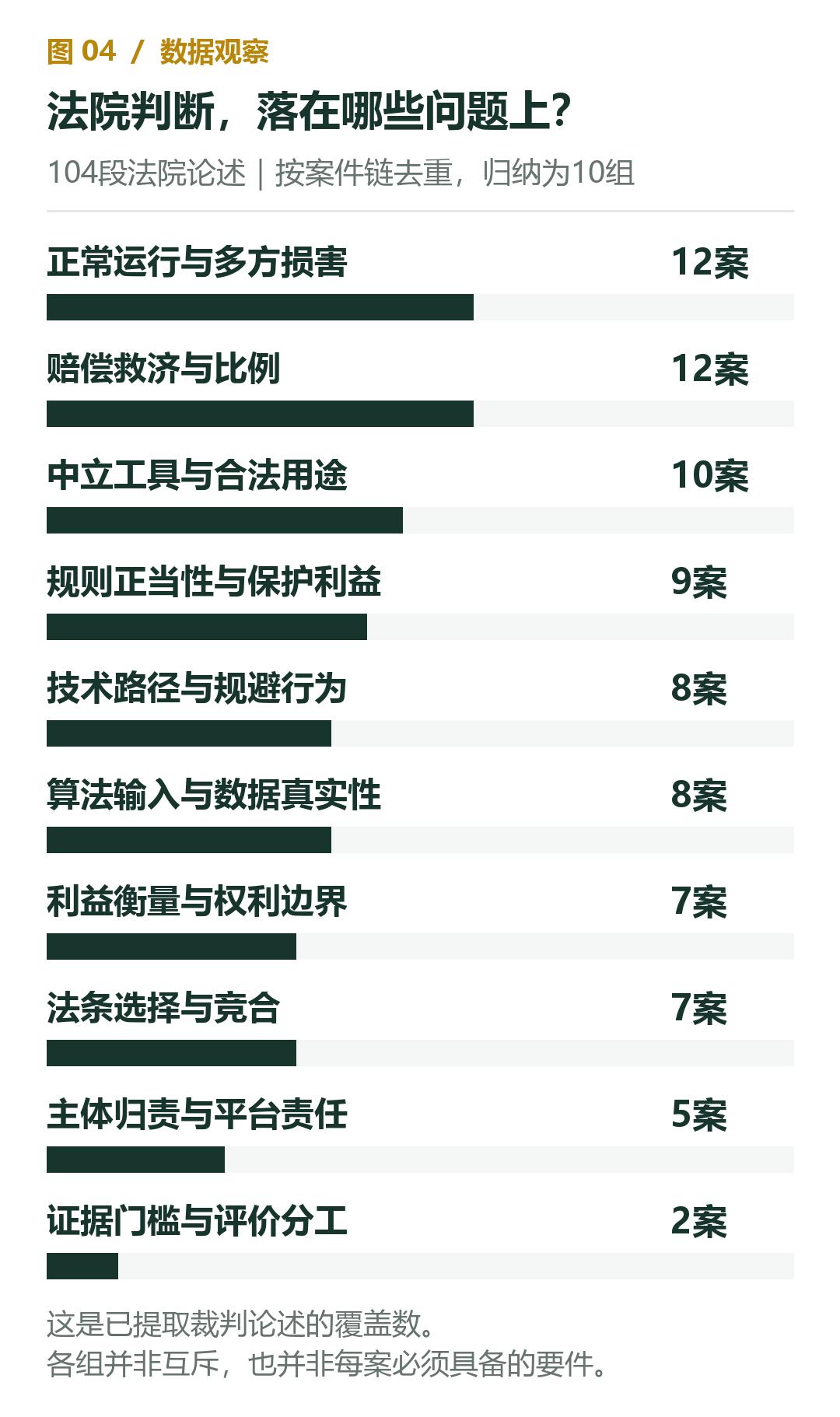
Figure 4 | Summarized based on 104 extracted court discussions. The number is the number of case chains with at least one corresponding discussion, which cannot be understood as the overall admissibility rate of this criterion.
Technical path and circumvention behavior, algorithm input and data authenticity each cover 8 cases. These two sets of reasons respectively ask: how the behavior acts on the platform, and whether the data or operation input into the mechanism still reflects the real user behavior.
Interest measurement and right boundary, legal provision selection and concurrence each cover 7 cases; subject imputation and platform responsibility cover 5 cases. They require further distinction between legal use, manual and technical paths, as well as the roles of developers, sellers and basic service providers.
The discussions related to "normal operation" do not only care whether the system can be turned on or whether it crashes; in the extracted reasons, fair matching, real interaction, resource opportunities and governance costs are also included in the evaluation. At the same time, "the tool has general functions" or "violating platform rules" need to be judged in specific scenarios.
05 / Data and Conclusion: Will these criteria appear in combination in the same case?
5 cases have discussions of "rule legitimacy and protected interests" and "normal operation and multi-party damage" at the same time; 5 cases have discussions of "neutral tools and legal purposes" and "normal operation and multi-party damage" at the same time. The two groups of cases overlap, and cannot be added up to 10 different cases.
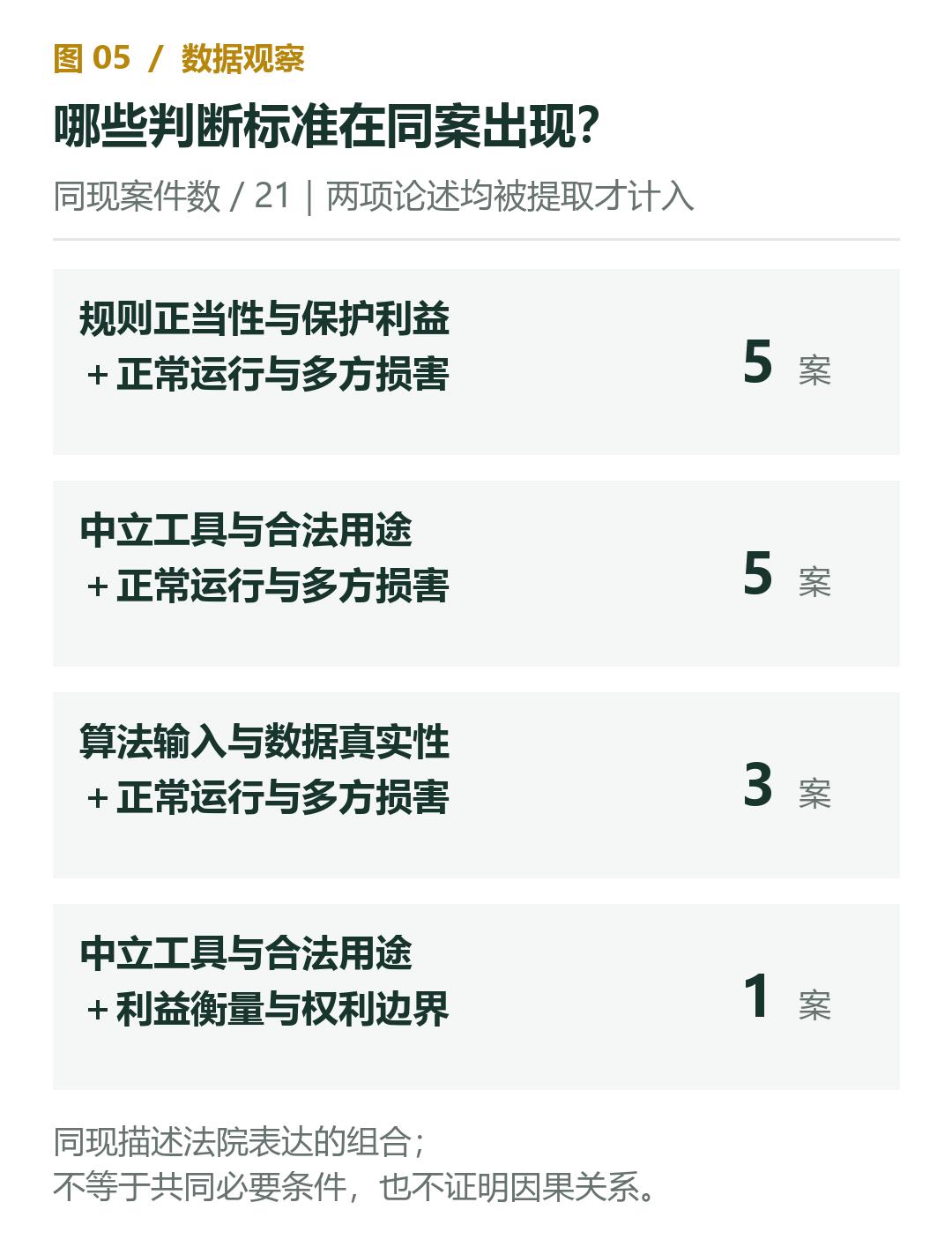
Figure 5 | The four groups of comparisons are counted according to the extracted discussions in the same case. Low-frequency combinations are also displayed, and the co-occurrence number cannot be used to infer legal elements or impact on the outcome of the case.
In addition, data authenticity and operation damage co-occur in 3 cases; tool neutrality and interest measurement co-occur in 1 case. The low number of occurrences only reflects the selection of discussions in this study, and cannot be interpreted as that courts usually ignore the corresponding issues.
For specific disputes, the preparation work can be carried out along two questions: why the protected rules are legitimate, and why the actual role of the tool crosses the reasonable boundary. The common discussions in the sample provide the direction of argumentation, which cannot replace the factual proof of specific cases.
06 / Data and Conclusion: What inferences are still limited after the use of evidence?
13 cases have proof boundaries on the amount or scale; 10 cases have problems of relevance, completeness or insufficient counterevidence; 1 case clearly distinguishes technical facts from legal evaluation. These restrictions correspond to specific propositions, and do not mean that the whole case loses the lawsuit.
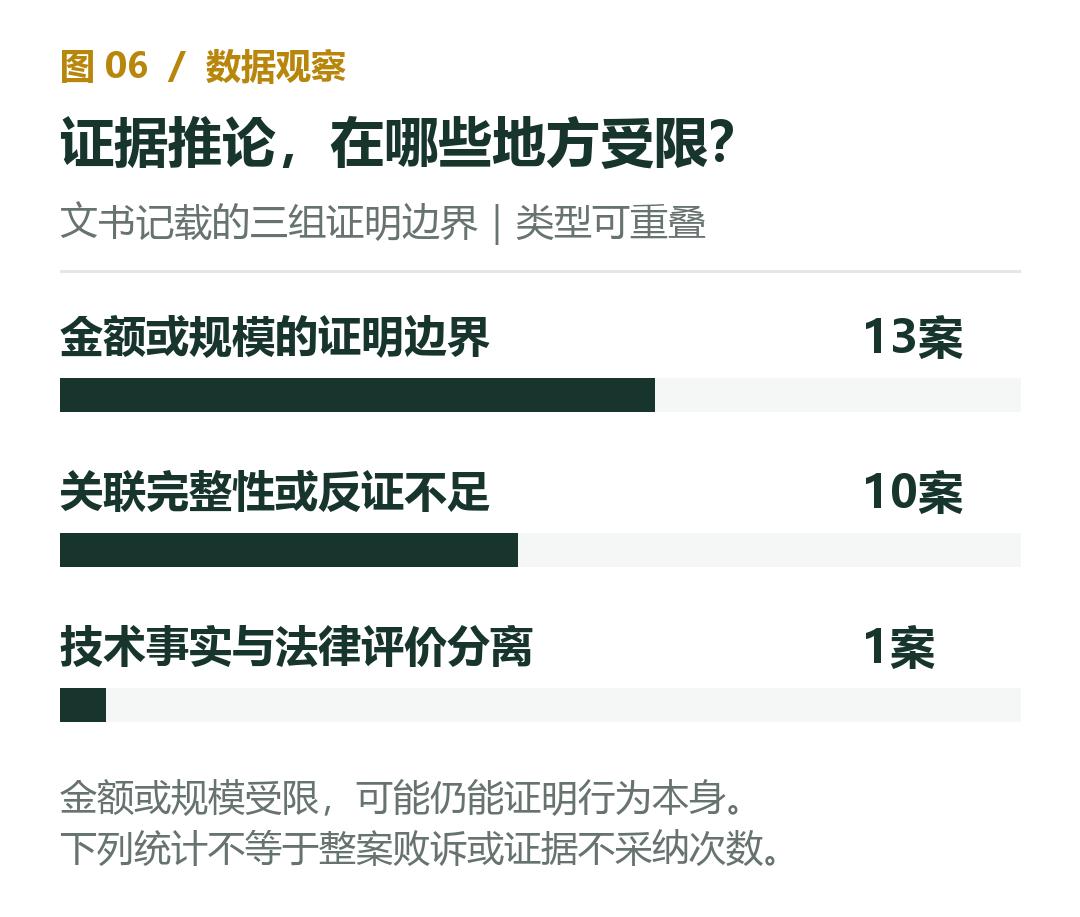
Figure 6 | The three groups of restrictions are summarized based on the original text, with mutual overlap. "Amount or scale" includes situations where the caliber cannot be substituted, the quantity cannot be extrapolated, the amount is not quantified, and the calculation method is corrected.
First, quantitative materials may not support the claimed amount. Sales volume needs to be distinguished from profit, download volume needs to be distinguished from actual users, and quotation needs to be distinguished from actual expenditure; for data of other stores, it also needs to be proved that they belong to the same product and the same responsible subject first. The restrictions in 13 cases are not a unified reason for dismissal.
Second, formal authenticity still needs to pass the relevance and completeness test. Self-made sales forms, partial databases, background deleted screenshots or similar software interfaces may not be able to explain all transactions, historical data, actual front-end suspension or software identity respectively. The 10 cases reflect the insufficient proof on different propositions, which cannot be simplified as that a certain form of evidence is "unreliable".
Third, technical evidence and legal evaluation undertake different tasks. In the materials extracted this time, the retrial review ruling of the automatic red envelope snatching case clearly distinguishes technical facts from legal judgments, and 1 case is counted in this strict caliber. The Juketong case pointed out that the probative force of conclusive appraisal opinions should be comprehensively determined in combination with other facts; the latter cannot be directly equivalent to the clear division of technical facts and legal evaluation, so it is not counted in this item.
Original examples: Automatic red envelope snatching case (2022) Zhe Min Shen No.5195 is a retrial review that dismisses the retrial application, involving the division of labor between technical facts and legal evaluation; Juketong case (2019) Zhe 8601 Min Chu No.1987 involves the probative force of conclusive appraisal opinions; Qunliang second instance (2023) Min Min Zhong No.306 involves authenticity and probative force; Yundian case (2019) Yue 03 Min Chu No.1913 involves the correction of profit margin calculation.
07 / Data and Conclusion: How do these data change evidence preparation?
Conduct operation comparison first. The operation and operation materials of 15 cases suggest that the actual version, account, equipment and conditions should be fixed to show the differences between manual operation, legal functions and the accused functions, instead of only saving the tool name and publicity slogans.
Then make the subject and scenario correspond. The publicity and communication materials in 14 cases and the transaction expense materials in 9 cases provide clues for use purpose and business relationship respectively. Tutorials, product pages, payment objects and software versions should be mutually corresponding.
Finally, split the damage proposition. The quantification restrictions in 13 cases suggest that the function can run, the mechanism is affected, and the loss reaches a certain amount are problems at different levels. Stopping the act, compensation and eliminating impact should also correspond to evidence respectively.
The practical conclusion supported by this data comparison is: organize materials into evidence combinations that can answer specific questions, and at the same time clarify to what extent each piece of evidence can prove. The value of evidence application comes from the correspondence between materials and facts, criteria and claims.
Data Scope and Main Sources
The data comes from relevant judgment documents of Zhichanbao and the full public texts of relevant cases; the effective status of this case refers to the fifth typical anti-unfair competition case of the Supreme People's Court in 2026. The observation deadline is September 20, 2026.
The sample is 21 purposefully selected case chains, covering operation automation, platform evaluation, matching mechanism and responsibility boundary. This paper counts by case chain, and multiple material types and judgment criteria can be selected; "evidence application" includes materials that are not admitted or controversial. The analysis dimension is research induction, not a standard system uniformly issued by courts.
Key illustrative case numbers: (2022) Zhe Min Shen No.5195: retrial review of the automatic red envelope snatching case, dismissing the retrial application; (2019) Zhe 8601 Min Chu No.1987: first instance of Juketong; related (2020) Zhe 01 Min Zhong No.5889 ruling permits the withdrawal of the appeal, which is not the maintenance of the original judgment after the second instance substantive trial; (2023) Min Min Zhong No.306: second instance of Qunliang; (2019) Yue 03 Min Chu No.1913: first instance of Yundian group control; (2023) Yue 03 Min Zhong No.39765: second instance of the general clicker, correcting the evaluation of the manufacturing and sales behavior of general products, retaining the responsibility for inducing likes on specific platforms; (2025) Yue 0112 Min Chu No.19753: first instance of the crowdsourcing slide device, which has taken effect.
This paper does not calculate the admissibility rate or winning rate, and does not infer the causal relationship between winning and losing by the occurrence frequency of materials. The absence of corresponding content in the extracted results does not mean that evidence was not used in the original case or that the court did not discuss relevant issues.