The benchmark of off-grid wind power in Inner Mongolia: Envision records 3000 hours of annual power generation, and wind turbine OEMs are competing for the second growth curve.
Off-grid wind power opens up new territory, with Envision competing on the new track through reliability.
On the grassland of Qipanjing Town, Otog Banner, Inner Mongolia, 48 wind turbines are rotating against the wind.
15 months ago, the 300MW full-capacity operation of the Ordos Phase II Green Power Supply Project was completed, making it the first off-grid wind power project in Inner Mongolia. With an annual power generation of 870 million kWh, the electricity generated is directly sent to the smelting workshops of the Otog Economic Development Zone.
In September, Foresee Energy paid an on-site visit to this wind farm. It is not only a sample for observing off-grid wind power, but also reflects the shift in the competition dimension of wind turbine manufacturers — shifting from the scale competition of "grid-connected power generation" to the reliability game of "off-grid power supply guarantee".
Data from the National Energy Administration shows that by the end of June this year, 100 green power direct connection projects across the country have been approved, with a total installed new energy capacity of 34.1 million kW; however, the number of approved projects is expected to exceed 400, and the actual construction commencement rate is less than 10%. Off-grid projects are even rarer — without the support of the main power grid, the shutdown of wind turbines means power outage in the park. The significance of the Ordos Green Power Supply Project lies not in its installed capacity, but in that it brings wind turbine manufacturers into a brand new competitive arena.
Why did the "wind" in Ordos blow first?
The implementation of off-grid wind power in Ordos is a dual choice of resource endowment and industrial structure.
The development potential of wind and solar energy in Ordos exceeds 150 million kW, ranking among the top prefecture-level cities in China. In the area where Otog Banner is located, the annual average wind speed is 3.5 m/s, the annual utilization hours of wind power reach 2700 to 3000 hours, with long effective wind duration and small fluctuation. The local approved large-scale wind and solar power bases cover more than 6000 square kilometers, and the approved new energy installed capacity exceeds 80 million kW, ranking first in the country in scale.
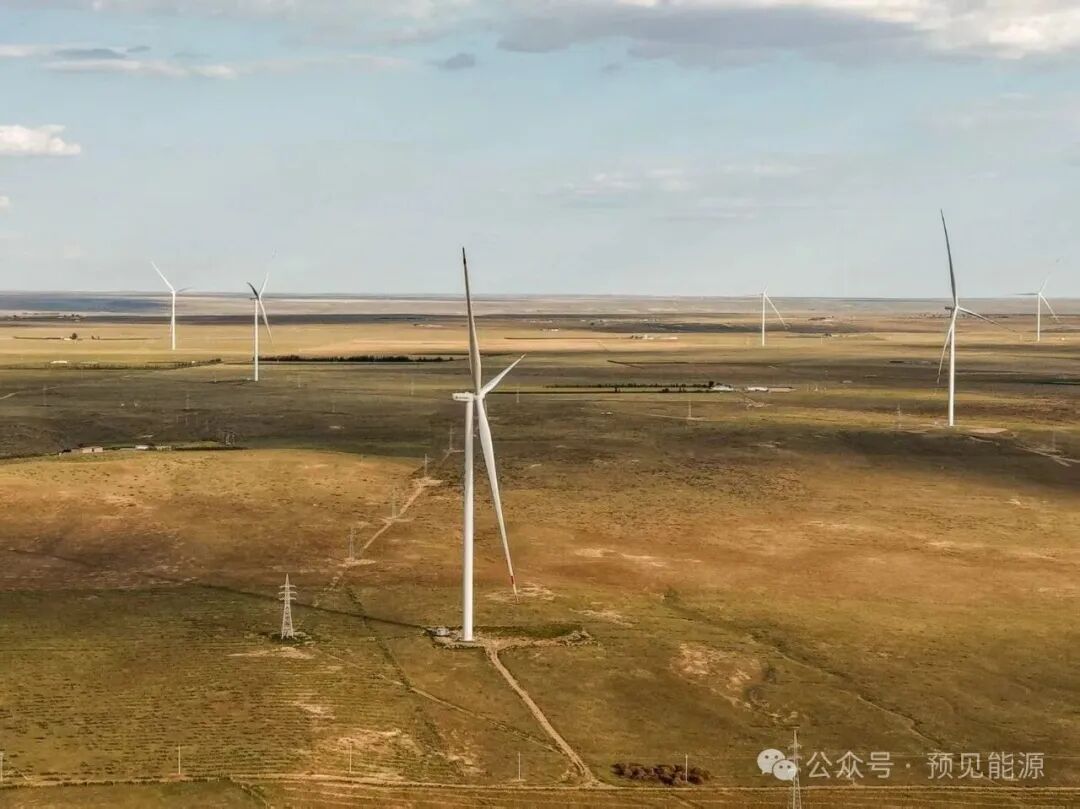
But resources are only the foundation. More critically, the microgrid of Ordos Electric Metallurgy Group provides the basic architecture for the collaborative regulation of "source-grid-load-storage", realizing 100% green power consumption. The load of smelting enterprises in Qipanjing Town is stable, and the off-grid wind power is directly connected, skipping the public power grid as the intermediate link.
This verifies a path of "determining power source based on load": rigid industrial load comes first, and then new energy power sources are matched. However, building wind farms on grassland cannot avoid the ecological cost. Guo Tao, Project Manager of Envision Energy in Ordos, said that reasonable compensation should be given for the grassland occupied by wind turbine positions, and comprehensive reclamation and vegetation restoration should be carried out in the surrounding area after the project is completed.
This logic is also reflected in other Envision projects. The 48MW distributed wind power project in Shajintaohai, Dengkou County, innovatively implements processes such as topsoil preservation and vegetation restoration to minimize the impact of construction on the desert ecosystem. Off-grid projects build their own transmission lines and power transformation facilities, occupying a larger land area. Ecological restoration is not an additional option, but a rigid expenditure that must be included in the cost.
The Jiangyin test bench, the real ace up the sleeve of off-grid projects
Envision's confidence in betting on off-grid scenarios comes from a set of "test-to-failure" verification system and the full industrial chain capability of self-developed and self-produced core components.
Envision is the only wind turbine manufacturer in the world that owns a gearbox factory. Since launching independent R&D in 2017 and putting the factory into operation in 2019, Envision has fully independent intellectual property rights over core components such as blades, gearboxes, generators and converters. Up to now, it has cumulatively delivered 15,000 sets of Envision-brand gearboxes, 15,000 sets of main bearings, 25,000 sets of blades and 23,000 generators, realizing vertical integration from materials to complete turbines, ensuring controllable supply chain and traceable quality. Zhong Dawei, Chief Engineer of Test and Verification of Envision Energy, once pointed out the pain points of the traditional procurement model: "Turbine manufacturers purchase ready-made components, suppliers do not provide design details and material parameters, and turbine manufacturers do not disclose the load of the complete turbine. This 'data gap' sometimes leads to mismatch between components and the system." Self-development and self-production break down this barrier — the people who make the components understand the load of the complete turbine, and the people who make the complete turbine know the failure mode of the components.
Guo Tao emphasized during the visit: "We can control the design standards and production processes throughout the whole process, while for outsourced components, we often cannot grasp the real manufacturing conditions, which brings potential risks."
The cost of self-development and self-production is that the test scale is completely different. At Envision's Jiangyin Smart Wind Power Test and Verification Center, a gearbox has been tested continuously for 800 hours and is still running. Envision's test standard requires at least 1000 hours of operation or even longer. The extreme test is not to get a "pass" for the market, but to measure the real endurance boundary of the product.
In the off-grid scenario, the weight of this testing philosophy is amplified. Guo Tao revealed that Envision's Ordos Green Power Supply Project "once achieved a single-year power generation of over 450 million kWh, nearly 35 million kWh higher than that of peer products of the same type", with an availability rate as high as 99.4%.
He specifically mentioned that "compared with units that start and stop frequently, long-term stable operation is more conducive to equipment health". The underlying logic is thermal cycle fatigue — the damage of each start and stop to the gearbox and bearing is far greater than that of steady-state operation. The components that are tested to failure on the Jiangyin test bench bring exactly the confidence that the wind turbines do not need to start and stop frequently in off-grid scenarios.
Turbine manufacturers under the industry ceiling need a new "table"
Lou Yimin, Senior Vice President and Chief Product Officer of Envision Energy, judged before the 2025 Beijing Wind Energy Exhibition: "The industry has reached its ceiling, and the traditional model of relying solely on 'grid-connected power generation' is unsustainable. We must embrace integrated energy solutions." Wind power needs to be deeply integrated into scenarios such as green power direct connection, source-grid-load-storage integration, off-grid hydrogen and ammonia production. "When wind power enters key industrial fields such as the chemical industry where power outage is unacceptable, its role has undergone a fundamental change — the primary responsibility has shifted from 'creating economic benefits' to 'ensuring energy security'."
The realistic background is that the profitability of the turbine manufacturing segment continued to diverge in 2025. Goldwind Technology, which had fewer low-bid winning projects in the early stage, saw its gross profit margin recover to the highest in the industry, while some leading enterprises are still in the bottoming stage affected by the delivery of low-price orders. The scale is growing, but the profit does not rise. Although the winning bid price of wind turbines has rebounded from below 1000 yuan/kW in 2024 to 1439 yuan/kW, the recovery of gross profit margin still depends on the digestion pace of low-price orders.
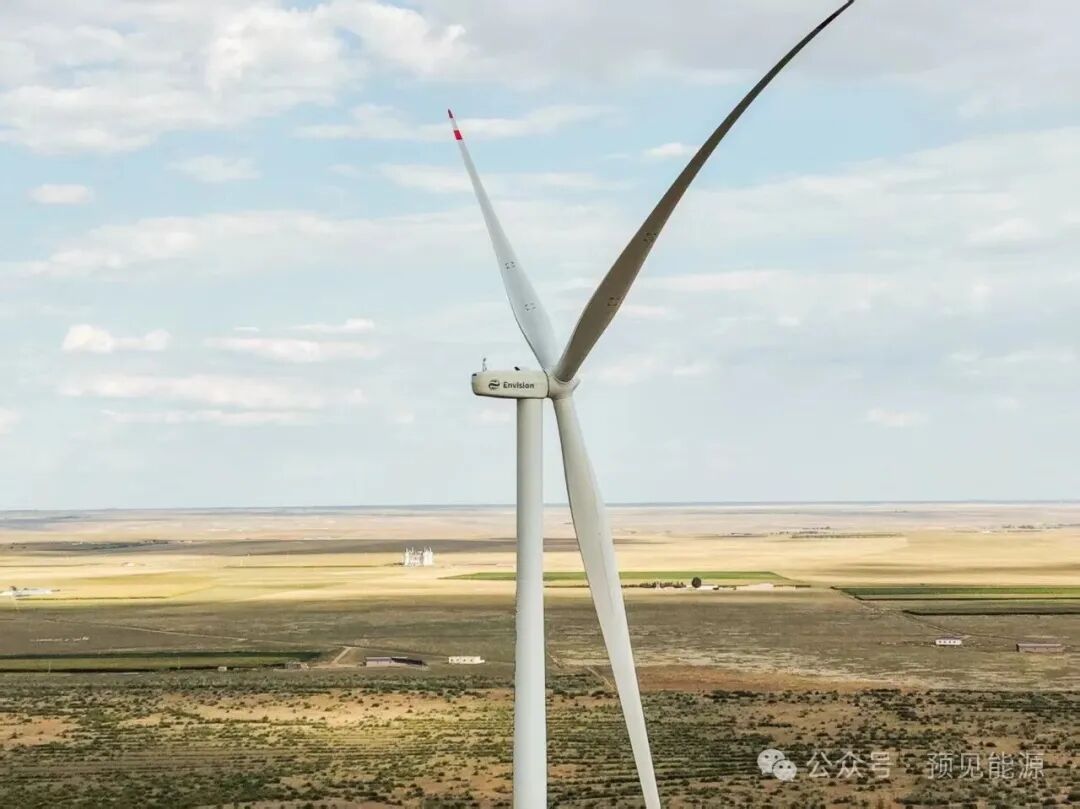
The Ordos Green Power Supply Project provides a differentiated competition sample. Envision provided 24 units of EN-200/6.25 model. Since it was put into operation, the power generation hours of Envision's units have reached as high as 3000 hours. In August 2025, the power generation of Envision's units was about 23.5056 million kWh, 13.73% higher than other units in the same project. Even in the first month of operation when the whole wind farm was shut down for two days, the cumulative power generation of the wind farm with Envision's units was still about 1 million kWh higher than that of other units in the same project.
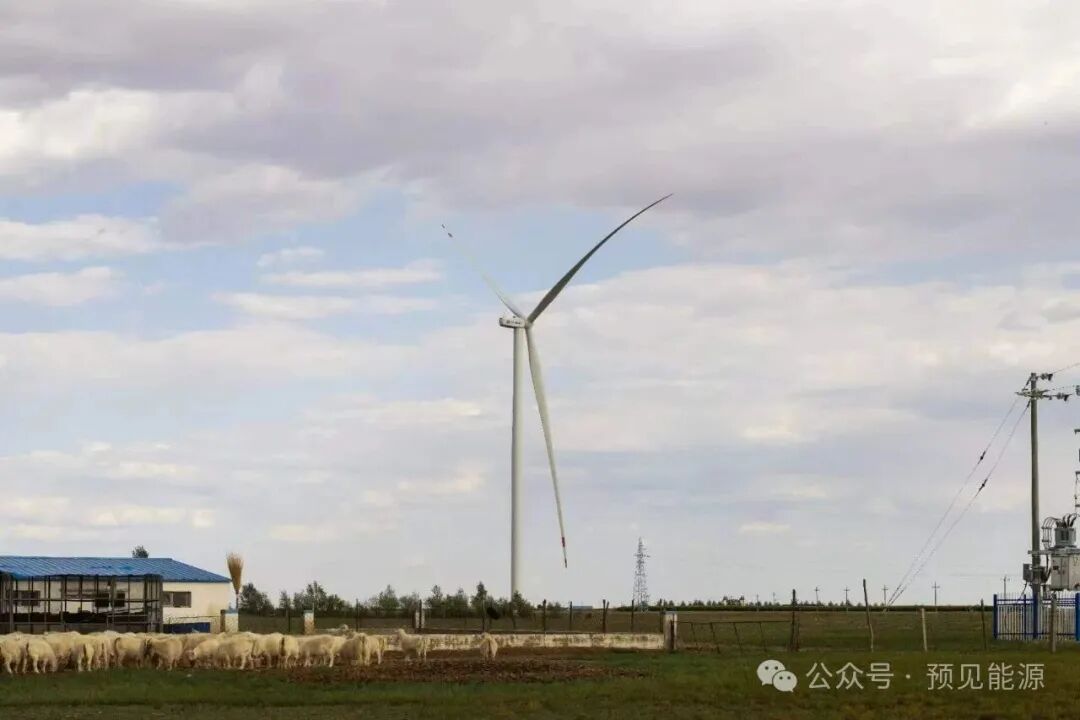
The value of these data does not lie in leading by a few percentage points, but in proving that: In scenarios without the support of the main power grid, the reliability of wind turbines can be quantified, verified and replicated.
Envision's off-grid technology reserve is converging to independent operation. It has released the world's first Galileo AI wind-storage all-in-one machine, which can realize long-term "island operation" off the power grid. In Chifeng, Inner Mongolia, Envision's wind turbines realized the industry's first "island operation", with cumulative fault-free stable operation for more than 5 months, and promoted the black start capability from "station level" to "single turbine level" — after a single wind turbine is hoisted, even if the feeder and box transformer are not connected, it can still form a wind-storage integrated microgrid system.
Off-grid wind power will not replace grid-connected wind power, but it opens another "table" for turbine manufacturers. The rules on this table are not about how large the single turbine capacity is or how low the quotation is, but about whose system is more reliable under extreme working conditions, and whose wind turbines can continue to operate without the support of the main power grid. The Ordos Green Power Supply Project has been in operation for more than a year. The components that Envision tested to failure at the Jiangyin Test Center and the island operation capability verified in the Gobi of Chifeng are making the rules on this table increasingly clear.