What exactly has the low-key Tianjin done right to build itself into a pivotal hub for AI infrastructure?
Boarding the high-speed train at Beijing South Railway Station, you will arrive in Tianjin in less than half an hour.
The pace of this city is never hurried. Teahouses by the Haihe River, old houses along Wudadao Road, and jianbing guozi that costs only a dozen yuan per set on the street — for non-local visitors, it is more like "Beijing's neighbor", a place worth visiting on a weekend.
However, an in-depth observation of its local AI industry reveals a completely different, "hardcore tech" side.
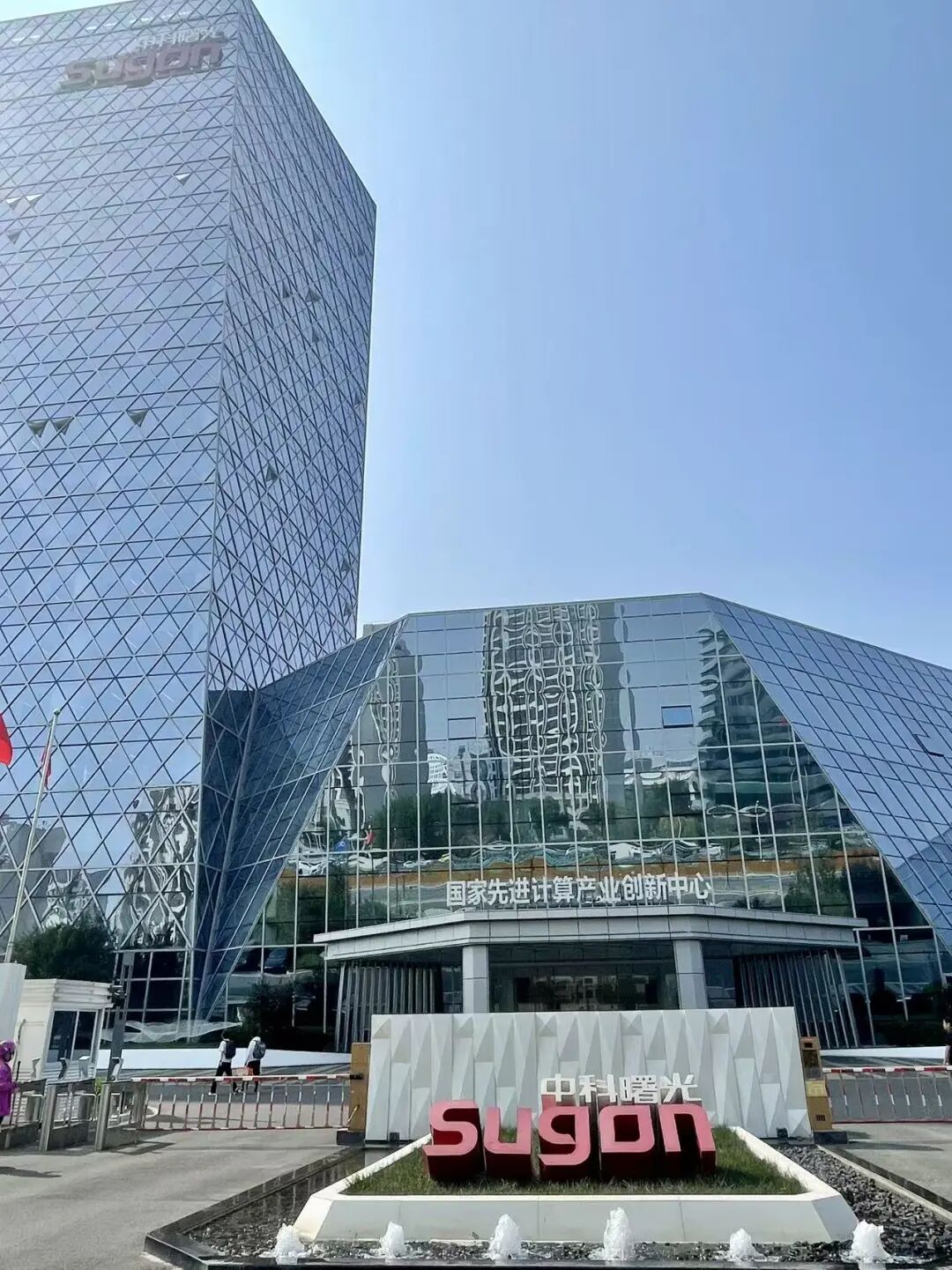
In Tianjin High-tech Zone, Phytium CPUs roll off the production lines and are installed in servers across the country. As of today, the total cumulative number has exceeded 15 million; Kylin's operating systems finish booting on tens of millions of terminals; Sugon's complete machines are shipped from here to all parts of the country; General Data's databases run behind the core accounting systems of banks; while Hygon's processors and acceleration cards are supporting the training of multiple large models with trillions of parameters in China. As for the National Supercomputing Center in Tianjin, the Tianhe series machines run calculations for meteorology, oceanography, biomedicine and materials science around the clock.
Computing power, chips, operating systems, databases, and complete machines — the five unavoidable key links of the domestic information industry, Tianjin has secured a "national team" player in almost every field. These are not scattered enterprises, but a complete information technology application innovation industrial chain, which is quietly held in the palm of this city.
There is a very interesting detail. On September 22, Hygon Information held a press conference in Shenzhen, officially releasing the 1000-series CPU — its first chip designed for physical world scenarios such as industrial control. The theme of the press conference was "Unleash End-side Computing Power, Drive the Physical World". The protagonist of this press conference themed around "computing power" is a Tianjin-based company. There are many other similar cases that reflect its low-key yet strong hard power. For example, the market value of Hygon Information once exceeded 1 trillion yuan, standing at the same level as Changxin Technology in Hefei.
This does not mean there are no stories, but the stories are hidden too deep — hidden in the deeper layer of the industrial chain.
Unveiling Its Full Assets: Full-stack AI Infrastructure
To understand Tianjin, you need to first lay out all its assets for a clear view.
Let's start with the most fundamental computing power. In May 2009, the Ministry of Science and Technology approved the establishment of the National Supercomputing Center in Tianjin — the first national-level supercomputing center in China, which deployed Tianhe-1, China's first supercomputer that ranked first in the world, as well as the fully independent new-generation Tianhe exascale system. Today, the center has formed a 300-exaflop-level capability, and on this basis, it has jointly built a domestic exascale (1000P) intelligent computing system with Qiyuan Laboratory, building a "supercomputing-intelligent-data" integrated digital and intelligent infrastructure.
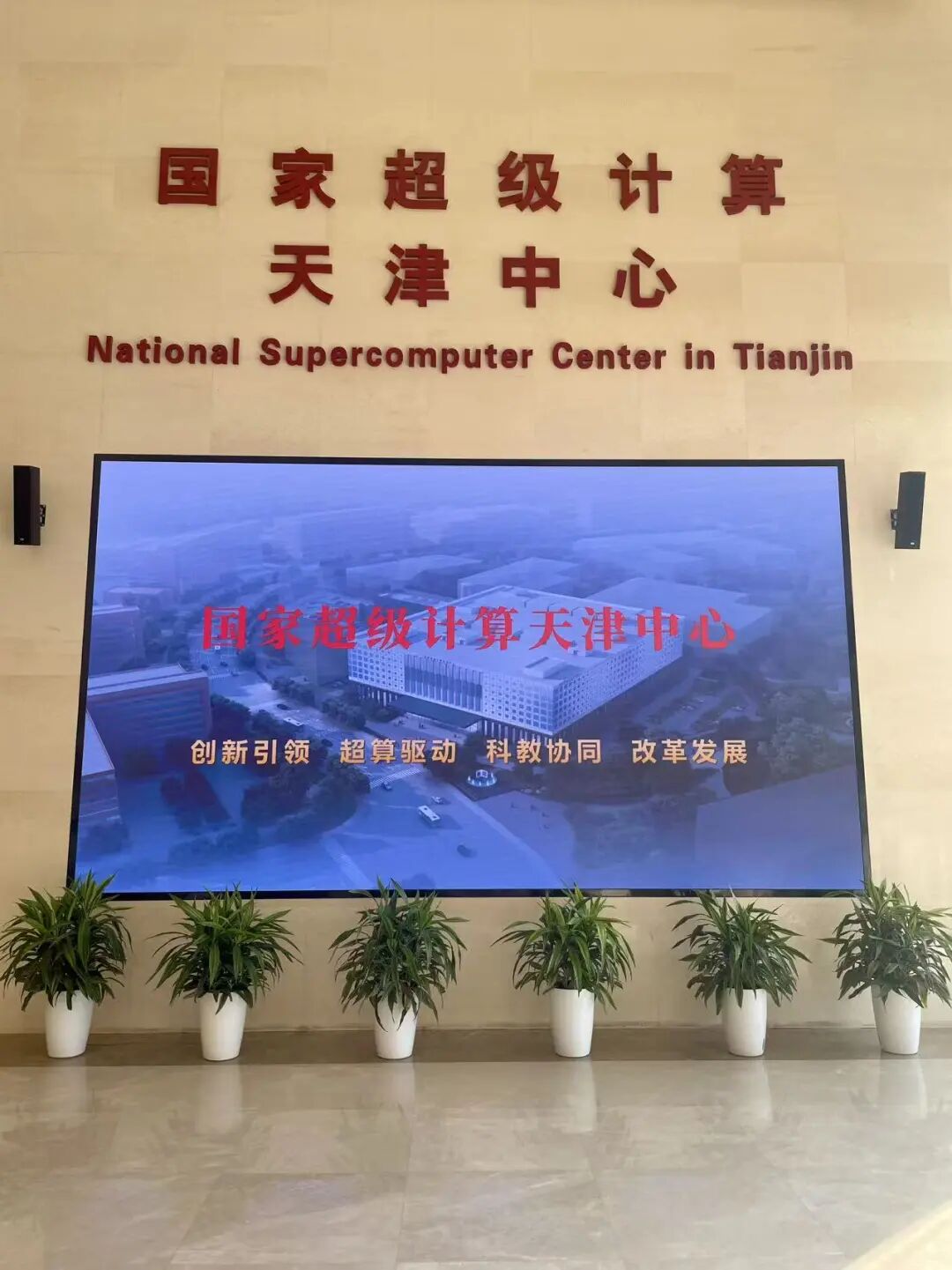
According to the National Supercomputing Center in Tianjin, this is currently the supercomputing center with the widest application scope and the strongest high-performance computing capacity in China. The Tianhe series platforms complete more than 20,000 computing tasks every day, serving more than 10,000 key scientific research institutions, enterprises and government departments in over 30 provinces, municipalities and autonomous regions across China as well as Hong Kong and Macao regions, supporting the achievement of more than 6,000 innovative results. The computing power of Tianhe is behind projects such as Deep Sea No.1, Baihetan Hydropower Station, and the Hong Kong-Zhuhai-Macao Bridge. Over the past decade, it has helped increase efficiency for enterprises and added value for industrial parks by nearly 90 billion yuan in total.
Supercomputing is not a fast-money business. It is a public infrastructure for the country to conduct scientific research, make weather forecasts, and develop new drugs — the foundation of all current AI stories is exactly this kind of machine.
Next is the chip sector. Tianjin's chip story cannot leave out two leading players, and coincidentally, both were founded in 2014.
One is Phytium. In 2014, it was established with joint support from China Electronics Information Industry Group, the Binhai New Area Government of Tianjin, and Tianjin Advanced Technology Research Institute, focusing on developing CPU, the hardest "heart" in a computer. In 2021, "Tianjin Phytium Information Technology" was renamed "Phytium", removing the word "Tianjin" from its name, while its headquarters has always remained in Tianjin, with subsidiaries set up in Beijing, Changsha, Chengdu, Guangzhou, Shenzhen and other cities. Today, its product lines cover the Tengyun S-series server CPUs, Tengrui D-series desktop CPUs, and Tenglong E-series embedded CPUs, with corresponding products for scenarios from end devices to the cloud. Its applications have been deployed in domestic government office, finance, telecommunications, electric power, energy, transportation, education and other fields. By the end of August 2026, the cumulative sales of Phytium chips exceeded 15 million units; by the end of June this year, it had more than 8,800 ecological partners.
The other is Hygon Information, also founded in 2014, which focuses on high-end general-purpose processors (CPUs) and deep computing processors (DCUs), adhering to the "dual-core strategy" and owning the only domestically developed "C86 + GPGPU" product matrix in China: its CPUs adopt the C86 architecture with independent optimization and native x86 compatibility, while its DCUs are designed based on the general parallel computing architecture, integrating more than 2000 operators and supporting over 100 mainstream AI frameworks.
Relevant person in charge of Hygon Information revealed that its computing power has provided software and hardware coupling support for the training of multiple top large models with trillions of parameters in China, and is compatible with 99% of non-closed-source large models worldwide. In 2022, it was listed on the Sci-Tech Innovation Board, which became the most direct valuation of Tianjin's scientific and technological strength from the capital market.
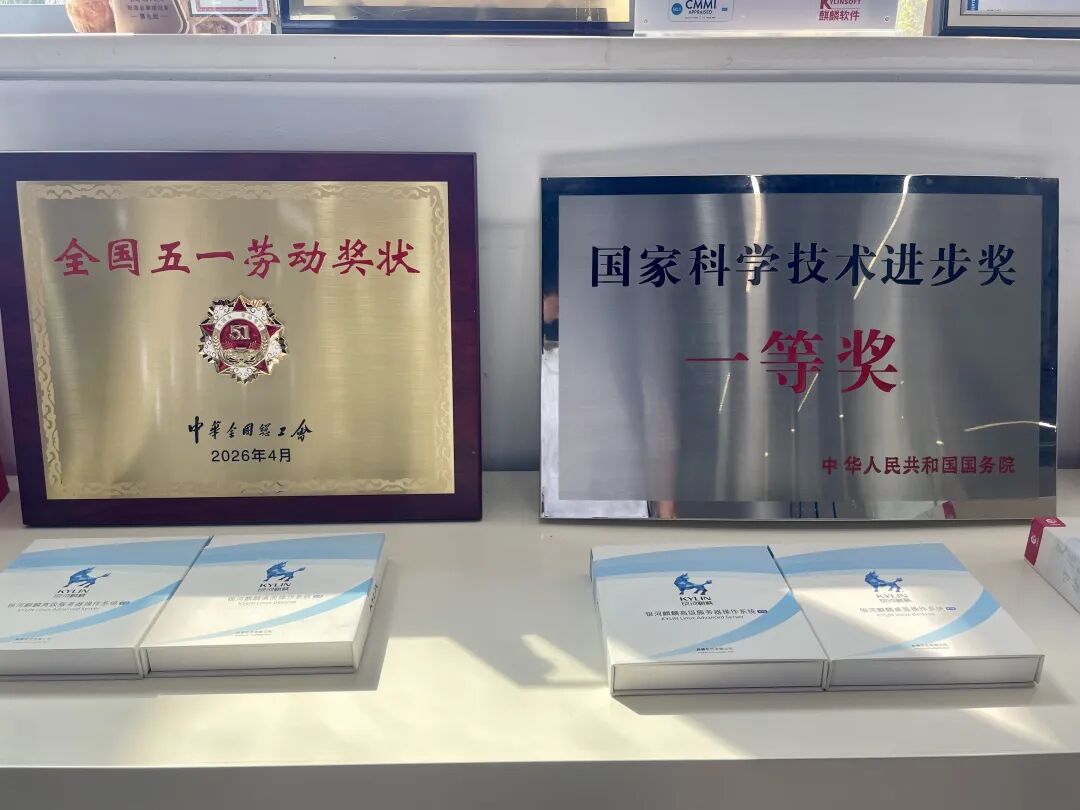
Then let's look at Kylin Software in the operating system sector. China Electronics integrated China Standard Software and Tianjin Kylin into Kylin Software Co., Ltd., with its headquarters located in Tianjin. Its "Galaxy Kylin" operating system traces its origin to the national major scientific and technological research project undertaken by the National University of Defense Technology. According to public data, Kylin's operating system products have ranked first in China's Linux market share for 14 consecutive years, covering key fields such as government, national defense, finance, telecommunications, energy and transportation — the boot interface of servers in government agencies and many industries is its product.
AI infrastructure is inseparable from databases, and General Data is undoubtedly the outstanding player in this field. Founded in Tianjin in 2004, its technology can be traced back to Nankai University, focusing on the GBase series of database products. The database is the most "silent" layer in the information system — users cannot see it, but every bank transfer and every bill issued by the operator must rely on it to operate.
Finally, for the complete machine and server sector, the benchmark enterprise is Sugon. The main headquarters of Sugon's information industry is located in Tianjin, and it has ranked first in the domestic high-performance computer market for 11 consecutive years. Its product lines have been clearly leaning towards AI in recent years: AI large model all-in-one machines, ScaleX640 super nodes, and ten-thousand-card super clusters, which are deployed for scenarios of different scales. In July this year, "Sugon 8000 (Dengfeng)", China's first fully domestic 10000-card AI super cluster designed and developed by Sugon, was officially completed and connected to the National Supercomputing Internet synchronously. The Sugon industrial chain, covering chips, complete machines and computing power services, connects several Tianjin-produced links together.
If you look at the map, most of these enterprises are located in Tianjin High-tech Zone. This is an area that accounts for less than 1% of Tianjin's total area, but gathers more than 20% of the city's high-tech enterprises: it has cultivated 15 sci-tech listed enterprises with a total market value exceeding 1 trillion yuan; the R&D investment intensity exceeds 7%; the number of high-value invention patents per 10,000 people is nearly 1700, about 106 times the national average; in the first half of this year, the growth rate of regional GDP reached 9.5%. It gathers more than 40% of the city's software enterprises with a scale of over 35 billion yuan, and has specially built an agglomeration area called "China Information Technology Application Innovation Valley".
Putting these enterprises together, you will find a fact: the most critical links of AI infrastructure, namely chips, operating systems, databases, complete machines and computing power, these five layers are also the most difficult configuration for the domestic information technology application innovation industry to gather at the same time, but Tianjin has all of them.
Not long ago, the Ministry of Industry and Information Technology announced the list of the first batch of national demonstration bases for emerging industry development to be established. Tianjin High-tech Zone in Tianjin, together with four enterprises including Sugon, Kylin Software, Optoelectronic Communications and China Automotive Technology and Research Center, was selected, covering information technology application innovation, advanced computing power, intelligent connected vehicles and emergency communications — one industrial park plus four enterprises almost cover all of Tianjin's advantageous fields. And Tianjin has been selected in such national-level lists for more than once.
More critically, the relationship between them is not a simple "same-city relationship", but an interconnected one. Kylin originated from the National University of Defense Technology, Phytium is one of the earliest domestic R&D teams for domestic CPUs, the Sugon ecosystem grows outward along the industrial chain, and the team and technology of General Data have been precipitated in Nankai University for 20 years. This industrial cluster is not attracted by investment promotion, but naturally developed over time.
Computing power, algorithm and data are the three elements of AI. For computing power, Tianjin has supercomputing centers and Sugon; for algorithm, Tianjin has Tianhe Tianyuan; the data sector is the latest complement — and what it supplements is not general corpora, but medical data with higher thresholds.
In the currently booming large model sector, there is a more direct reversal: Tianjin does not lack large models. The Tianhe Tianyuan large model is developed here, but it is not only showcased at press conferences, but also applied in ports, customs, public security organs and hospitals. China's first AI-native tertiary hospital and the first tertiary hospital with all information systems migrated to the cloud based on domestic information technology application innovation have been built here. The Tianhe "Wenquxing Yuan" Scientific Intelligent Training Ground, in cooperation with Tsinghua University, National University of Defense Technology, Tianjin University, Nankai University, Tianjin Institute of Industrial Biotechnology of Chinese Academy of Sciences, COMAC and other institutions, trains models on topics such as drug target discovery, protein structure prediction, new material simulation and controlled nuclear fusion. The medical data marked in the wards mentioned earlier will most likely end up here.
A closed loop is taking shape: the computing power is in Tianjin, the model is in Tianjin, and the data used to train the model is also in Tianjin. Perhaps the AI of other cities is presented on the stage, while Tianjin's AI is running in wards, docks and laboratories. Large models determine the public discussion popularity of AI, but the computing power infrastructure is what determines the confidence of AI.
What Has the Low-key Tianjin Done Right
Let's go back to the question at the beginning.
In an era when everyone is rushing to the front stage, "standing on the base" sounds like a concession: it does not care about the spotlight of press conferences, there is no news of sky-high financing, and even the "trillion-yuan market value" has not caused much discussion. But if you look at the time span of more than 10 years, you will find that Tianjin has actually done four things right.
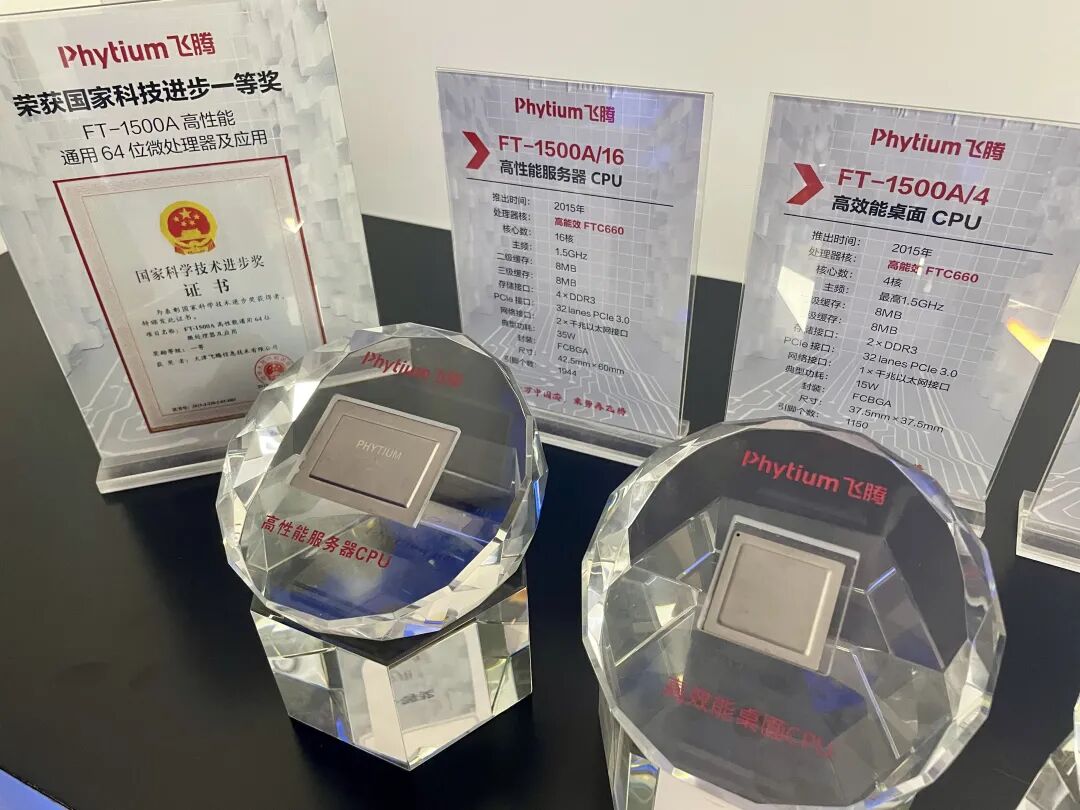
First, Tianjin has forward-looking layout and unique insight. Take Phytium as an example, it was introduced from Changsha and settled in Tianjin in 2014, and the company went through a few years of silent period in the early stage. Wang Yang, Media Director of Phytium Information Technology Co., Ltd., introduced, "In the early stage when we invested in R&D and had no output, Tianjin provided office buildings, talent apartments for employees, and subsidies, allowing Phytium to settle down and develop steadily." Such demonstration effect attracted other excellent enterprises to settle in, and by "building a good nest to attract phoenixes", the entire information technology application innovation industrial chain was created.
Second, when others are competing for the track, it has grabbed the foundation of the track. Large models will be updated, architectures will be iterated, and star companies will be replaced, but once key fields such as computing power, chips, operating systems and databases become the base of the national information system, they will be extremely difficult to replace. Those who grab the foundation do not get benefits in the early stage, but their achievements cannot be taken away in the later stage.
Third, it has turned the national strategy into a long-term cause, rather than short-term political achievements. Supercomputing, CPU, operating systems and other related fields are difficult to produce impressive results within a single term of office, but Tianjin has been working on them for more than 20 years, with generations of people continuing to push forward the work — up to now, it has been preparing for the "quantum-supercomputing-intelligent" computing power system in 2027. The mission of Phytium, "focusing on core chips of information systems to support national information security and industrial development", is actually the footnote of this path: this kind of work never requires loud voices, but undivided attention.
Fourth, it does not compete for the center of public narratives, but only for the irreplaceable nodes on the industrial chain. The influence of a city does not necessarily exist on hot search lists, it can also exist in the boot screen of others, in wards, docks and laboratories — or in a batch of data that other cities cannot produce for the time being.
In fact, Tianjin's "low profile" is not a defect, but more like an active choice: compared with the dazzling "high-rise buildings", it is more critical to build a solid "foundation". AI infrastructure is not a one-time bet, but the responsibility and persistence of long-termism, which is inseparable from Tianjin's long-term rooted strategic determination.
In the second half of AI, the competition is not about whose model is more popular, but whose base is more solid. Moreover, this base is still moving upward, sinking downward, exploring forward and expanding outward — from data