"Zhihui Jun" has launched the consumer-level Qiyuan Q1 and T1 robots in cooperation with Swancor New Materials, with a unit price ranging from 20,000 to 30,000 yuan. Would you buy one?
One year on, since it started to enter the humanoid robot track, the products of Swancor Advanced Materials have been officially launched for sale.
On September 20, Qiyuan Robotics, a consumer-grade embodied intelligence brand under Swancor Advanced Materials, officially released two humanoid robots, Qiyuan Q1 and Qiyuan T1. The products will be shipped in order of orders starting from October 1, and the brand, technology, product and ecological strategies were announced simultaneously.

In terms of pricing, the Qiyuan Q1 is priced at 19,999 yuan, the Qiyuan Q1 Explorer Edition at 26,999 yuan, the Qiyuan T1 at 19,999 yuan, and the Qiyuan T1 Pro at 29,999 yuan. The robot business of Swancor Qiyuan has officially entered the commercialization stage.
Led by "Zhihui Jun", the former special material enterprise has finally started its journey on the embodied intelligence track. But this cross-border leap directly from the traditional chemical industry to the high-precision and cutting-edge technology field, is it a high-stakes gamble, or the much-anticipated second growth curve that Swancor Advanced Materials has long been pursuing?
New chemical materials hit growth bottleneck, Swancor Advanced Materials crosses border into consumer-grade robots
Founded in 2000, Swancor Advanced Materials has long been engaged in chemical materials in the field of high-performance resins. Before "Zhihui Jun" took over, it was a core domestic supplier in the tracks of vinyl ester corrosion-resistant resins and wind turbine blade resins, as well as a leading enterprise in the field of recyclable wind power materials, a typical new chemical materials enterprise.
The traditional business of Swancor Advanced Materials mainly consists of four segments: environmentally friendly high-performance corrosion-resistant materials, materials for wind turbine blades, new composite materials, and circular economy materials, among which corrosion-resistant resins and wind turbine blade resins form the revenue base.
However, as the bottlenecks and ceiling of traditional new chemical materials are relatively clear, and the market space has entered the stage of stock competition, it is difficult to achieve explosive growth. If the company wants to increase its valuation, it has to seek external opportunities, which is one of the reasons why Swancor Advanced Materials is looking for a second growth curve.
In 2025, Zhiyuan Innovation proposed to obtain control of Swancor Advanced Materials through a combination of agreement transfer and partial tender offer. Swancor Advanced Materials readily agreed to the acquisition transaction. Zhiyuan Innovation was originally a rising star in the humanoid robot track with advanced technical capabilities of its own, so for Swancor Advanced Materials, this cross-border transition with guidance is far less difficult.
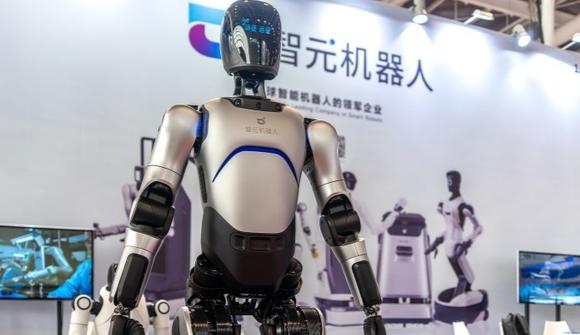
However, although Zhiyuan has taken over Swancor Advanced Materials and established Swancor Qiyuan, in fact, the division of labor between Zhiyuan and Qiyuan in the humanoid robot sector remains different. Zhiyuan is more focused on large B-end businesses, such as high-value scenarios that require high technical capabilities including industry and factories, while Swancor Qiyuan targets the C-end, focusing on consumer-grade personal robots.
Although Swancor Advanced Materials has carried out cross-border transformation, it has not abandoned its original main business, which has been transformed into a "cash cow" to provide financial support for the cross-border business. According to the data from the 2026 semi-annual report, all four core new material subsidiaries under Swancor Advanced Materials have achieved profitability, continuously supporting the robot business financially and undertaking the arduous task of being the base for R&D investment.
Tian Hua, CEO of Swancor Advanced Materials, said that the company is currently still driven by two wheels: new materials are the existing main business with relatively stable revenue, and consumer-grade embodied intelligence is one of the most important strategic directions for the future. The company's high-performance composite material technology provides support for the development of the robot business, and lightweight, high-strength, safe and flexible related materials have been applied in the R&D and verification of structural parts such as robot feet and connecting rods.
Qiyuan Q1 and T1 debut, consumer-grade robot product matrix takes initial shape
The Q1 and T1 robots officially launched by Qiyuan this time are an important answer sheet submitted by Swancor Advanced Materials to the consumer-grade C-end market after its transformation.
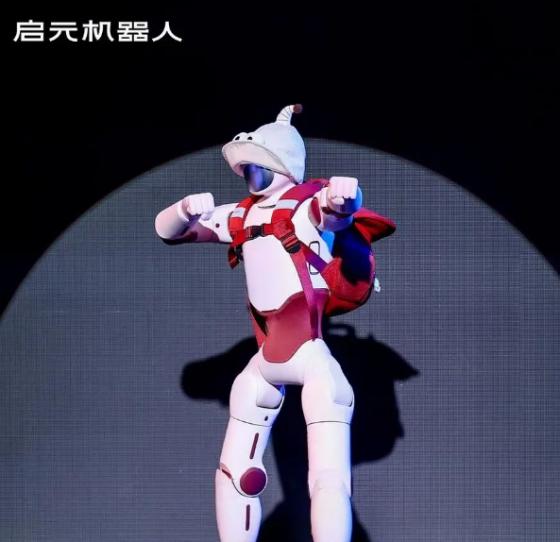
The Qiyuan Q1 is the world's first small-sized full-body force-controlled humanoid robot, with a standing height of about 88cm and a total weight of about 15kg. Different from the large-sized robots on the market that are usually over 1.5 meters tall, the biggest highlight of the Q1 lies in its lightweight and miniaturized design, and the body can be folded and directly put into a bag.
The Qiyuan Q1 is equipped with miniaturized QDD quasi-direct drive joints, which reduces the size of the force-controlled joint to that of an egg, taking into account both force control capability and safety. This product is mainly targeted at technology developers, trend toy enthusiasts and family companion scenarios.
Peng Zhihui (Zhihui Jun), Chairman of Swancor Advanced Materials and Co-founder of Zhiyuan Robotics, said that for him, the most interesting part of a robot is not what it looks like when it leaves the factory, but what you can turn it into. He also added that raising a robot is like raising a pet, and the time you invest determines what it will grow into.
The Qiyuan Q1 Explorer Edition focuses on an open ecological route, with a complete open SDK and hardware development interfaces, providing a full set of development toolchains, supporting developers to carry out secondary development to build their own robot application ecosystem.
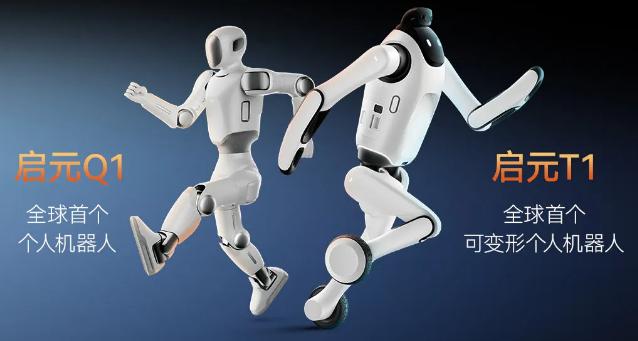
The Qiyuan T1 is the world's first deformable personal robot, with a standing height of about 100cm and a weight of 16kg. Its main highlight is the cross-form integrated architecture, which can automatically switch between two different forms: wheel-foot humanoid and quadruped, to meet different application scenarios.
For example, in indoor environments, the T1 can switch to the wheel-foot mode, and its features of zero turning radius and low operating noise allow it to move in narrow spaces such as living rooms and studies; in outdoor environments, the T1 can switch to the quadruped form, which can walk smoothly across grass, steps, gravel roads and other surfaces, which can not only meet family companionship needs, but also be taken out for walks. Equipped with the NVIDIA Orin Nano computing power chip, the T1 Pro can further enhance perception and motion capabilities.
Tian Hua, CEO of Swancor Advanced Materials, said that from the first day of its establishment, Qiyuan Robotics has been firmly oriented towards individuals and families, hoping that robots will not only appear in laboratories and factories, but truly walk into daily life.
Tian Hua divided the process of personal robots entering families into three stages: "First, make them interesting enough so that people want to get close as soon as they see them, and are willing to try when they get their hands on them; next, evolve from interesting to useful, and truly help in study, companionship, recording and family life; after that, they will become loving, know you better and better, remember your habits, and become your 'silicon-based family member'."
In addition to hardware, Qiyuan has also built its own software ecosystem, such as launching a skill store, opening a developer community, and accessing third-party applications such as JD Health and Ximalaya, allowing users to continuously expand the practical capabilities of the robot. At present, the number of platform developers in the Qiyuan community has exceeded 1,000, and hundreds of new robot skills can be added every month.
Differentiated C-end route, facing off against Unitree head-on in the consumer market
The official pre-sale and delivery of Qiyuan Q1 and T1 has heated up the competition in the domestic consumer-grade humanoid robot sector. Unitree R1 and Booster K1 from Accelerate Evolution also target the C-end market.
In terms of price strategy, Qiyuan has pushed the entry threshold for mass-producible C-end humanoid robots down to the 20,000 yuan range, trying to expand the purchasing space for ordinary enthusiasts.
The starting price of Unitree R1 is slightly higher, at 29,900 yuan, and the price of the high-end version is further raised to 39,900 yuan, which is priced more for professional R&D customers. The overseas pricing of Accelerate Evolution's Booster K1 is 5,999 US dollars, but this product was initially anchored at university laboratories and robot competition teams, not taking the general public as the core C-end sales target, so the target groups are slightly different.
Each company has its own ideas for form design. Qiyuan chooses a differentiated special configuration route, in which the Q1 focuses on extreme portability and foldability, and the T1 takes a unique path to create a cross-form transformation between wheel-foot and quadruped, hoping to solve the traffic problems in complex indoor and outdoor home environments through form changes.
Unitree R1 adheres to the traditional biped humanoid route, with a larger overall body size and a weight of 27.29kg. Its R&D focus is on tapping the motion upper limit of the biped body, pursuing extreme motion performance such as running and stunts. However, the excessive self-weight also has disadvantages, for example, there will be certain thresholds in scenarios such as handling and home placement.

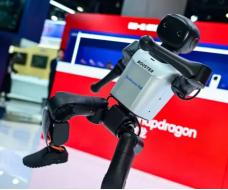
The Accelerate Evolution Booster K1 is positioned as a competition-oriented development carrier, with a height of 95cm and a weight of 19.5kg. In terms of hardware tuning, it prioritizes serving robot events such as RoboCup, focusing on gait confrontation and algorithm verification, and has not made too many functional adaptations for family life scenarios.
The differences between the three in the software ecosystem are even greater. Qiyuan tries to build a dual-line ecosystem for the public and developers, which not only retains full SDK development capabilities, but also complements third-party service access for ordinary users, hoping to lower the usage threshold for non-technical people.
Unitree R1 chooses to fully open the underlying hardware control interface, integrate multi-modal large models, and focus more on serving algorithm developers, with less ready-made application reserves for ordinary families. The Accelerate Evolution Booster K1 is equipped with the Booster GYM 2.0 simulation toolchain, and its built-in large model mainly serves scientific research experiments, with almost no C-end consumer supporting content.
At the current stage of humanoid robot development, the gap between the hardware prototype capabilities of various companies is actually narrowing. What can truly widen the gap is mass production quality control, supply chain cost and ecological operation capabilities.
Unitree has higher upper limit of motion performance relying on its profound technical accumulation in legged robots; Accelerate Evolution's Booster K1 already has a mature reputation in scientific research and competition scenarios; Qiyuan's breakthrough point lies in the deformable and portable hardware design, as well as its product positioning for ordinary families.
210 million yuan orders generate high popularity, can the momentum last?
Although it has only been a little more than a year since Swancor Advanced Materials changed its control in 2025 to enter the robot track, it has officially launched its commercially available products, and the cross-border efficiency is indeed very high.
In terms of team structure, as of the first half of 2026, the R&D team of Qiyuan Robotics has expanded to 180 people, including 11 doctors and 110 masters, with the proportion of master and doctor personnel as high as 67.22%. The core team mainly comes from the fields of robotics, large AI models and motion control.
In terms of patent reserves, Swancor Advanced Materials has applied for a total of 273 patents, with 135 authorized patents, among which 67 new patent applications related to robots alone cover core technologies such as structural design, motion control, and perceptual interaction.
In terms of commercialization, according to the disclosure of the 2026 semi-annual report, the advance payment received by Qiyuan Robotics business from pre-sale orders of Q1 and T1 products has reached 210 million yuan. However, advance payment is not equal to actual revenue, and can only be converted into revenue and profit after actual delivery, but this data shows that Qiyuan Robotics currently has no shortage of order popularity.

In addition, Swancor Advanced Materials' long-term determination for transformation should not be underestimated. To this end, it has launched an equity incentive plan, intending to grant restricted shares to 347 core employees, with assessment indicators anchored to robot business revenue, number of invention patents and R&D investment growth rate, directly binding the interests of the core team to the robot transformation.
The construction of the team structure, the reserve of patents and the interest binding brought by equity incentives are the three fundamental steps that make Swancor Advanced Materials' cross-border path not only fast, but also stable.
Pain period after transformation, high R&D investment leads to profit turning to loss
Of course, to evaluate the transformation results of Swancor Advanced Materials, we must not only look at the future, the present is equally important.
According to the semi-annual report data released by Swancor Advanced Materials in the first half of 2026, the company achieved a revenue of 803 million yuan during the reporting period, a year-on-year increase of 2.42%. The gross profit margin of its main business was 14.27%, a slight year-on-year increase of 0.13%. The net profit attributable to shareholders was -167 million yuan, turning from a profit of 29.9 million yuan in the same period last year to a loss. The loss is mainly due to the high-intensity R&D investment related to robots.