Apple's new business: selling non-privacy-infringing AI hardware to you
「Welcome home.」
The phrase "Welcome home" lays a subtle hint for Apple's mysterious new product event on October 13.
The single word "Home" seems to indicate the core protagonist of this event. Just as we reported earlier, this time Apple is very likely to add plenty of new gadgets to our homes.
Photo | Apple
Behind these new hardware products, Apple is also trying to make AI truly enter every household, and turn Siri AI into the "brain" of the entire smart home system.
When Apple, which has always emphasized privacy protection, meets AI that needs to actively perceive the surrounding environment, Apple's privacy strategy in the AI era may be even more intriguing than the upcoming new products.
Just a few days ago, a leak about Apple's new device exactly revealed a quite counterintuitive product idea:
An AI Camera That Never Records Footage
According to Bloomberg journalist Mark Gurman's disclosure on his "Power On" podcast, Apple is developing a smart home camera codenamed J450.
It is shaped like a small metal cylinder, looks like an enlarged version of lipstick, and can be placed in different positions in the house.
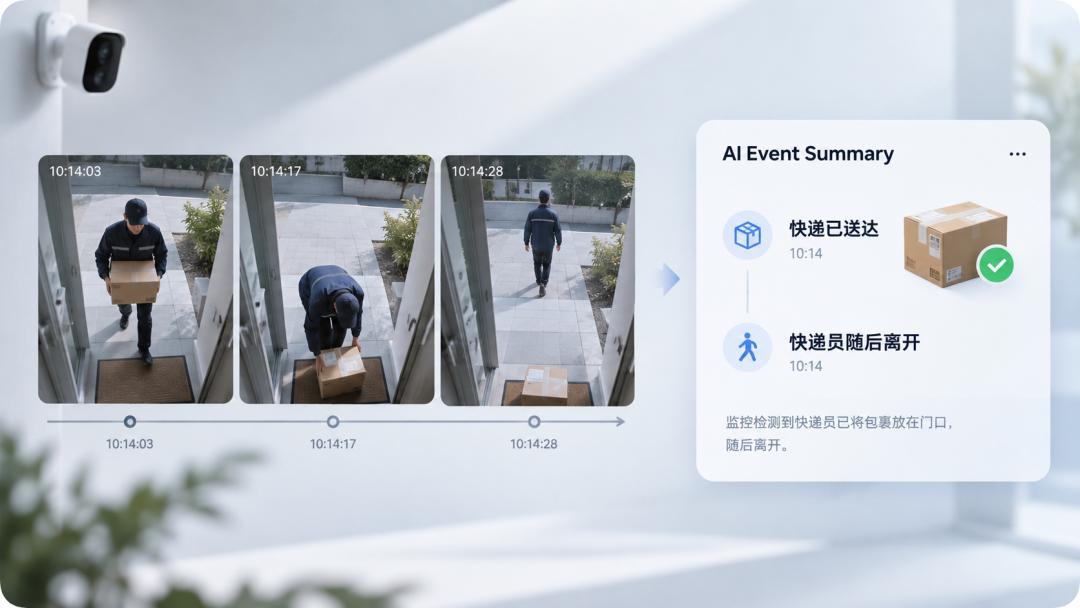
What is particularly special is that this camera does not save or transmit videos. It perceives the surrounding environment through a very low frame rate, then uses AI to analyze the activities of people and pets, and finally converts these events that happen into text descriptions.
From this point of view, calling it a "sensor" seems more appropriate...
This product will not form an independent product line. It is a supporting device for the smart home display hub codenamed J490 — the HomePad mentioned in previous leaks.
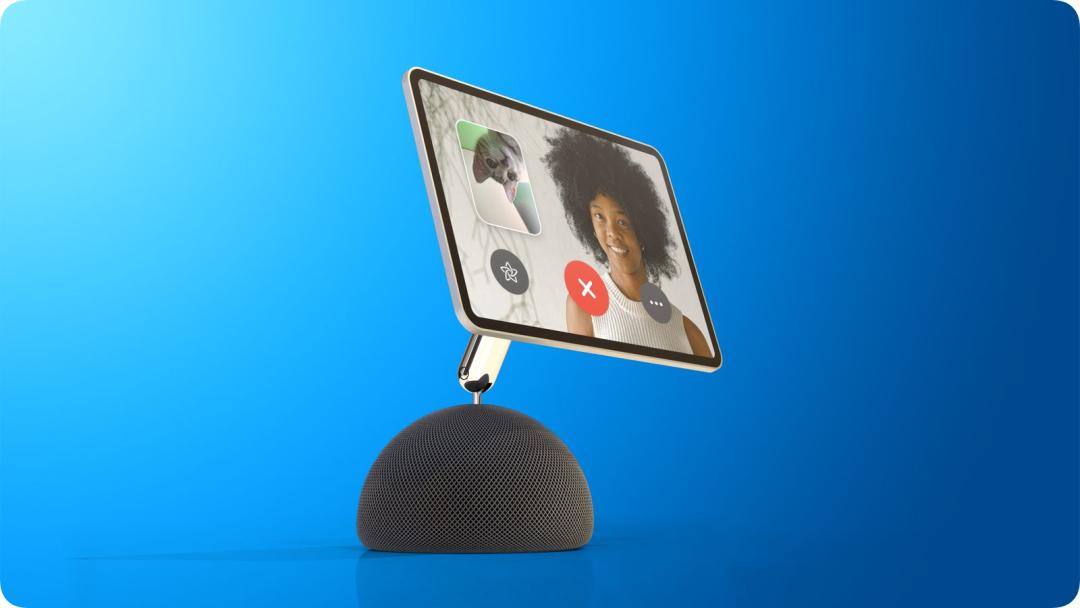
Photo | MacRumors
The leak also mentioned that its perception method may be very similar to the technology used in the camera-equipped AirPods that Apple explored earlier.
In August this year, a demo video was exposed: AirPods with cameras were used to identify books in front of the user. And in the later September, Gurman described the related technology as "Depth map" in another podcast — which is closer to presenting the position and movement of people through dot-like information.
We will put aside for now whether the leak is accurate. We use it here to understand what exactly this new "camera" is intended to do.

For a traditional camera, a ten-minute video means ten minutes of continuous frames. But for AI that can understand visual information, the only thing users really need may be just one sentence:
"Someone put the courier at the door and then left."
We can't say that complete video recording will lose its value. After all, in real life, the information that continuous images can provide still cannot be clearly explained by a single AI-generated text.
But from this technical path, it does provide another idea: Devices do not have to completely record everything that happens around them to understand what is happening.
To draw an analogy, the perception solution Apple is exploring is a bit like a frosted glass / grating glass on the bathroom door.
People outside the door can still see if there is anyone inside, and even guess what a person is roughly doing through the blurred outline. But at least, they can no longer see every move inside clearly as if they were looking through transparent glass.
This certainly does not mean that privacy is protected flawlessly. After all, frosted glass is not a wall, and something will always leak out.
But the psychological pressure they bring to people is obviously not at the same level. If a bathroom only has transparent glass, few people would be willing to walk in; and when the glass becomes frosted, even if they know that the outside can still see their outline, many people are willing to accept this level of exposure.
What Apple is trying to change may be exactly this psychological boundary.
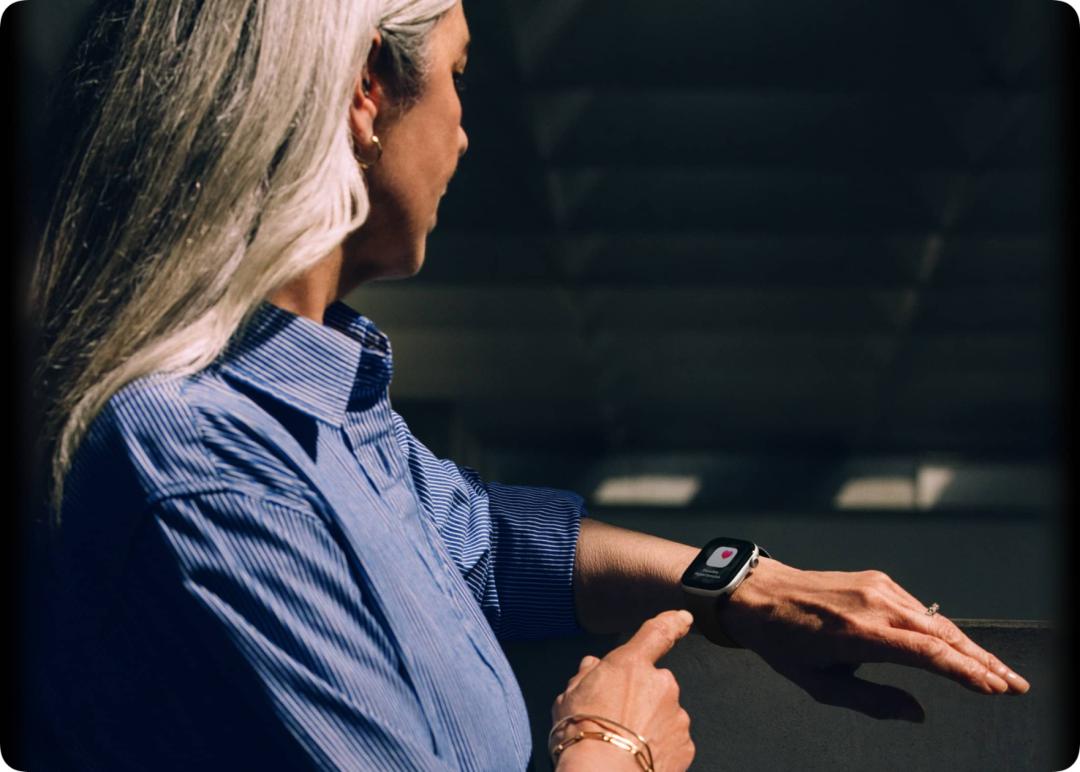
The recently released Apple Watch Series 12 brings the Siri Recap function. I think it also reflects a similar line of thinking.
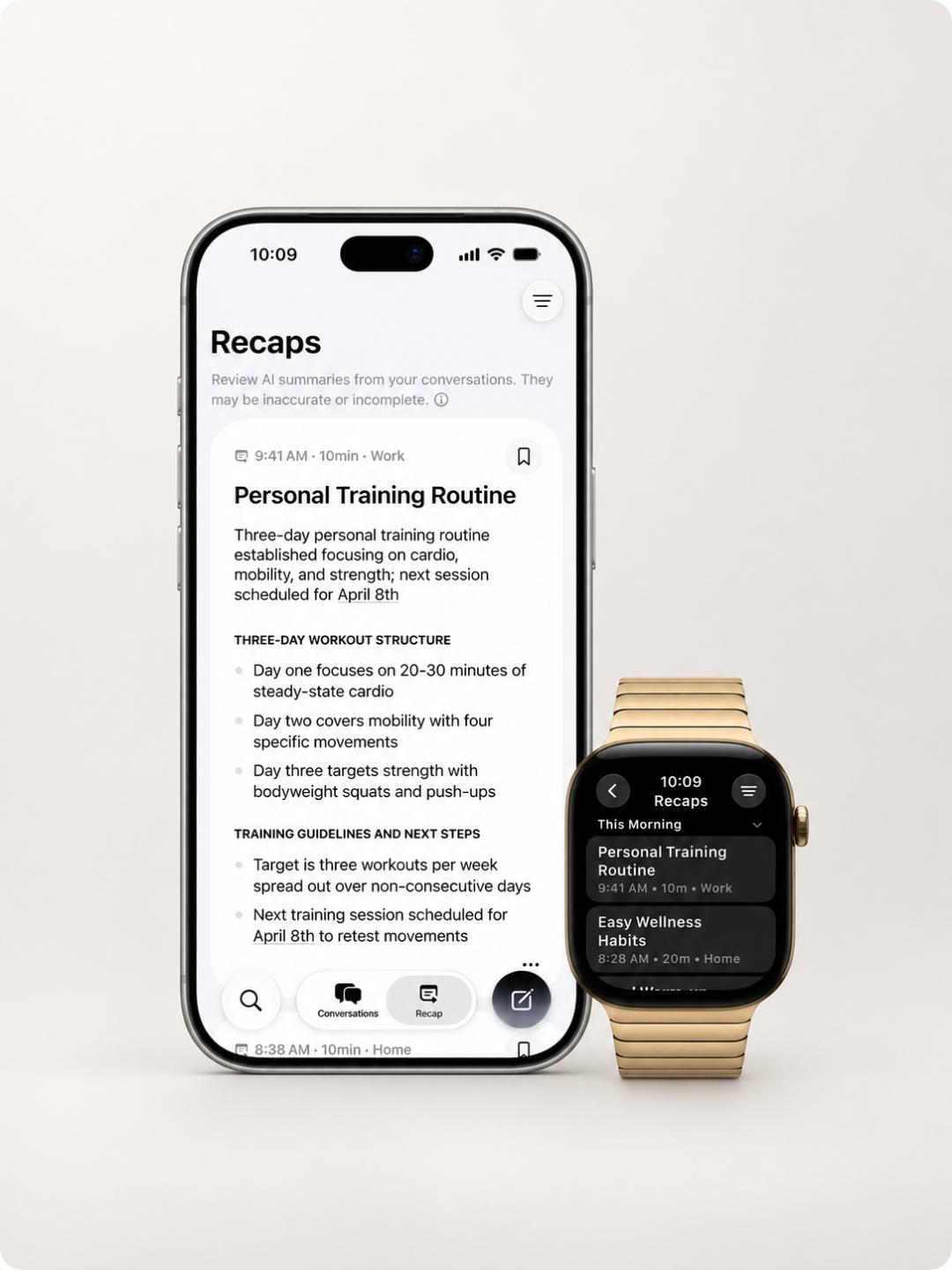
Photo | Apple
After the user actively turns it on, the watch can detect surrounding conversations, and generate titles, summaries and key points through Apple Intelligence for users to review afterwards.
In this process, the collected audio will be sent to iPhone and PCC (Private Cloud Compute) for analysis and transcription. What is left in the end is a "highly compressed and sensitive information removed" text record, and the original recording will not be kept for users to play back.
Looking back at that camera, the two seem to be different product forms, but the directions Apple is exploring on both are surprisingly aligned:
Shift from recording what happened to understanding what happened.
Social Trust Rewritten by AI
In the past, smart devices often passively responded to users' active operations; but in the future, AI assistants need to actively and continuously understand the user's environment to have the opportunity to provide more scenario-fit services. This is the "personal context" concept we often mention.
Contradictions also arise from this.
The better a device understands the user, the more likely it is to access details of the user's life that they do not want to be recorded; what is more complicated is that privacy involves not only the device owner, but also friends, family, and even other people who accidentally appear within the perception range.
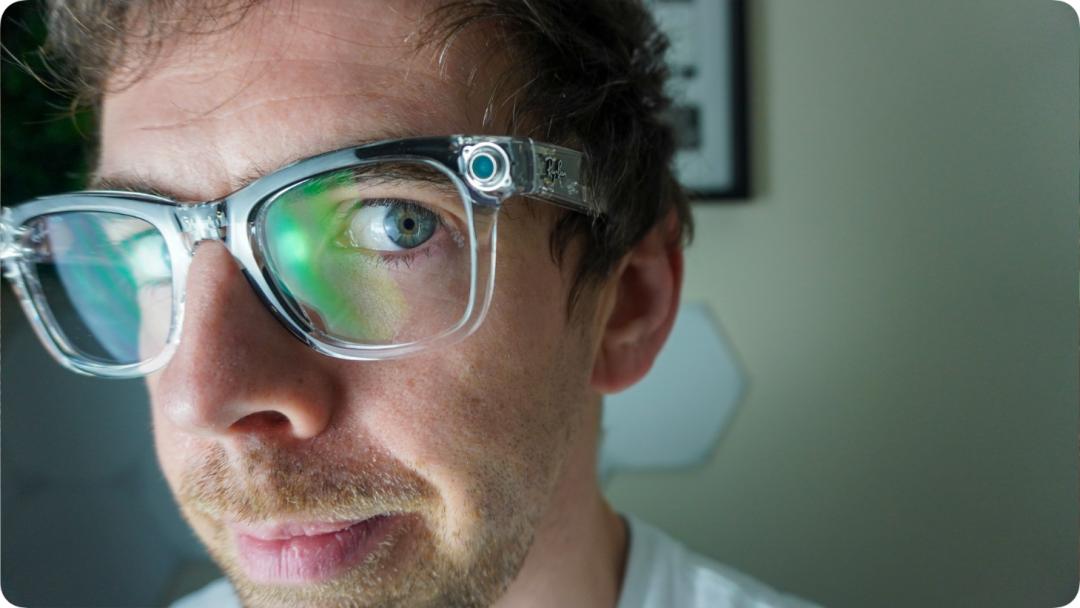
A simple scenario: you are sitting in a coffee shop chatting with a friend, and the other party is wearing a pair of smart glasses. You discuss work and complain about colleagues as usual.
It may not seem like a big deal at first, it's just a pair of glasses.
But if this friend suddenly takes out a voice recorder, puts it on the table, and tells you that all your complaints about weird clients, the upsetting things about quarreling with your parents, and even the old stories about your ex, may all be recorded one by one, uploaded to a server somewhere unknown, and finally organized into a memo for him to search and check at any time.
Most likely, you won't be able to drink that coffee.
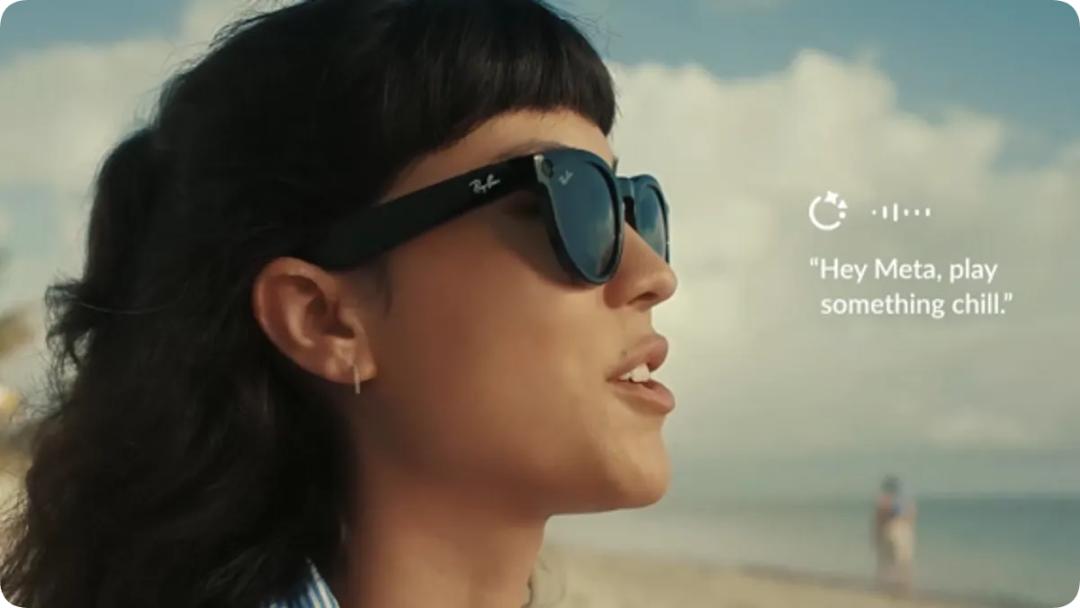
Because in our traditional social environment, there are actually many unspoken rules that do not need to be clearly stated.
Casual chats between friends are not recorded by default; jokes at the dinner table are over after being said and laughed — these rules are rarely written into formal social etiquette, but they form the tacit understanding between people in communication.
The real dilemma is that AI wearable devices are gradually dissolving this layer of tacit understanding.
In the past, when we wanted to record a conversation, we usually had to take out our phone and turn on the recording, so people around us at least had a chance to ask about it.
Today, when we use some smart glasses devices, the indicator light that lights up during recording can be regarded as a reminder to people around. Even in my opinion, this is more or less like "I've already reminded you, the rest has nothing to do with me".
The lit indicator is only a reminder after all, not a promise. It does not mean that people around have agreed to be recorded.
What's more, in the future, devices that can perceive the surrounding environment all day long may even save the step of "pressing the record button". Even if the wearer does nothing actively, the device may have silently completed perception and analysis in the background.
This is also the embarrassment of some current AI hardware product forms: the basis for many of their capabilities to function is exactly built on environmental perception that people around may not know about and may not agree to.
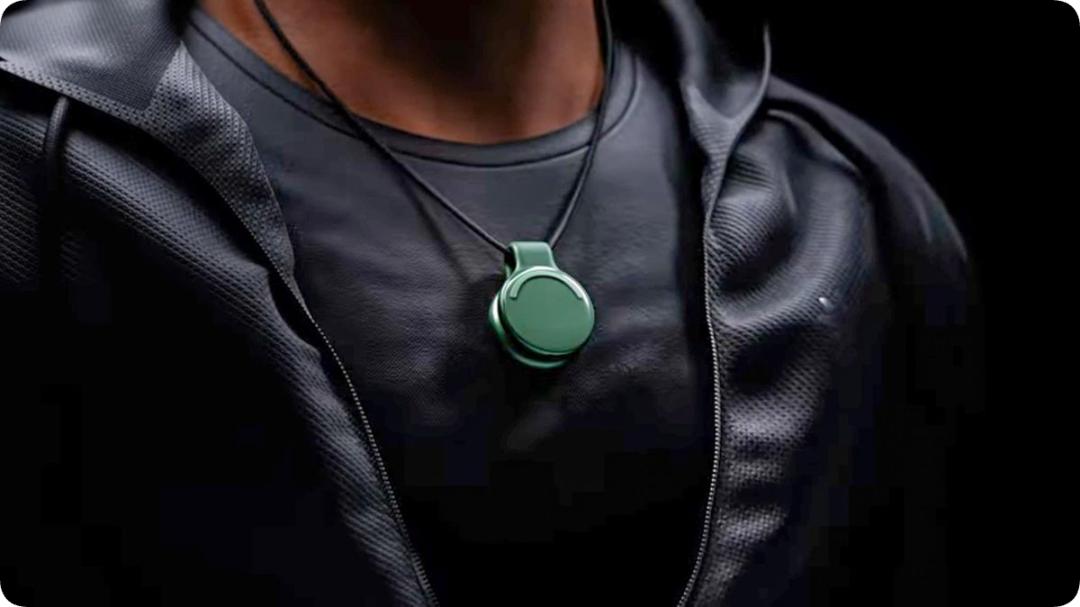
This also forces us to re-examine our understanding of "privacy".
In the past, when we talked about privacy issues of tech products, we often focused on data security and personal information leakage. For example, whether our chat records have been leaked, and whether the platform has handed over this information to third parties without permission.
When AI devices begin to have the ability to continuously perceive the real world, privacy issues have taken on a new layer of complexity.
In fact, long before the emergence of AI wearable devices, American privacy researcher Helen Nissenbaum put forward a theory to understand privacy — "Contextual Integrity". But I think it is also applicable in the AI era.
The theory of contextual integrity tells us that privacy is not simply equal to confidentiality.
Every day we exchange information in different social relationships and scenarios, and whether the flow of this information is appropriate largely depends on whether it conforms to the default rules of people in specific contexts. For example, when we see a doctor, we will tell the doctor some physical conditions that even our family members may not know.
To judge whether the flow of a piece of information crosses the line, we need to consider who is transmitting the information, who is receiving it, what content is involved, and under what conditions the information is transmitted.
Therefore, even if the information itself does not change, once the receiver or transmission method changes, the originally reasonable information exchange may cross the privacy boundary.
Still taking the doctor visit as an example, I am willing to tell the doctor my physical condition, but if this information is provided to advertisers without my consent, even if the content remains the same, it will probably be difficult for me to accept.
Back to the coffee shop scenario just now.
I am willing to complain about my client to a friend, which does not mean that I also agree that this conversation is collected and analyzed by his AI glasses. Even if the information does not leak, this is essentially far beyond my expectation of the "private communication" scenario.
Therefore, privacy protection cannot only stay after data is collected. What the device chooses to record and what not to record is itself part of privacy protection.
From this perspective, Apple, as a hardware manufacturer, may be trying to ease this contradiction with a different technical idea —
Try to separate "perception" from "recording". By not retaining the original footage, it may reduce the social risk brought by continuous recording for users.
Apple's Privacy Business Logic
In fact, it is not surprising that such a product idea appears on Apple.
As we discussed in previous articles, Apple has reached a cooperation with Google to enhance Siri's AI capabilities with the help of the Gemini model. This incident also reflects Apple's attitude towards privacy protection.
Even though it uses Google's large model, Apple still chooses to keep the operating environment of related AI functions firmly in its own hands, allowing them to run on the device side and the PCC (Private Cloud Compute) architecture.
Even if part of the calculation relies on Google's cloud infrastructure, Apple hopes to prevent users' private data from being obtained by third parties through its own privacy protection mechanism.
Interested readers can jump to read this article by themselves: To make your iPhone smarter, Apple pays Google 1 billion dollars every year
It is obvious that Apple has been trying to turn "privacy protection" into its own competitive advantage.
At the same time, if Apple wants to continue to be one of the most important hardware entrants in the AI era, it has to make its products gain more capabilities to perceive the real world.
The more the device knows, the more difficult the accompanying privacy problems are to avoid.