Solid-state batteries are really coming.
From winning by scale to leaping to defining industry standards.
On the eve of this year's National Day, seven government departments including the Ministry of Industry and Information Technology and the National Development and Reform Commission unveiled an ambitious industrial plan.
On September 28, 2026, the seven departments jointly issued the "15th Five-Year Plan for the Development of the New-Type Battery Industry" (MIIT Joint Regulation No. 220 [2026]). This is the first national-level special plan in China's battery sector, and it has for the first time included all-solid-state batteries in the national timetable — by 2030, all-solid-state batteries will initially achieve large-scale application.
The document also sets two more rigid indicators: the cycle life of long-life lithium batteries will reach 15,000 times, and the product defect rate of leading enterprises will drop to PPB level (parts per billion). The authorities have clearly marked the future direction of China's power battery industry in the most direct way.
Liquid batteries are still the absolute main force at present, while all-solid-state batteries have not yet crossed the mass production threshold. The gap between them is temporarily filled by hybrid solid-liquid batteries. This type of transitional product in the eyes of many people has been gradually mass-produced and launched on the market since the end of last year.
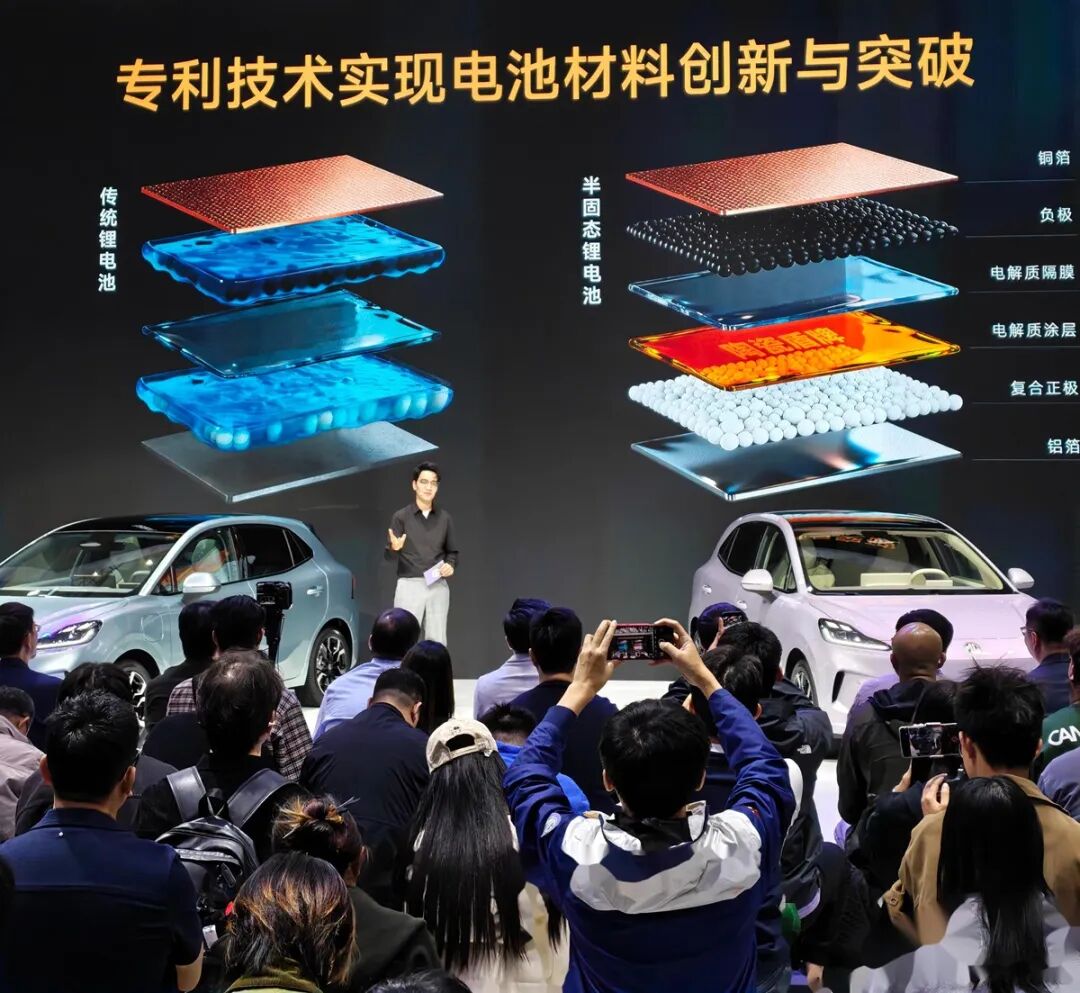
▲ The current market performance of the MG4 is quite good, partly due to pricing factors, but the bonus brought by its semi-solid-state battery also plays a role.
SAIC Motor once planned to launch the IM L6 Lightyear version in 2024, which was the first to be equipped with the Lightyear semi-solid-state battery developed by SAIC Qingtao, but this model was later aborted. Until the end of last year, the new generation MG4 was equipped with the second-generation semi-solid-state battery for the first time and launched on the market in batches, bringing this technology to the 100,000-yuan vehicle market. NIO's 150kWh battery pack (cells supplied by Welan New Energy, 360Wh/kg) has been put into operation on the market in June 2024.
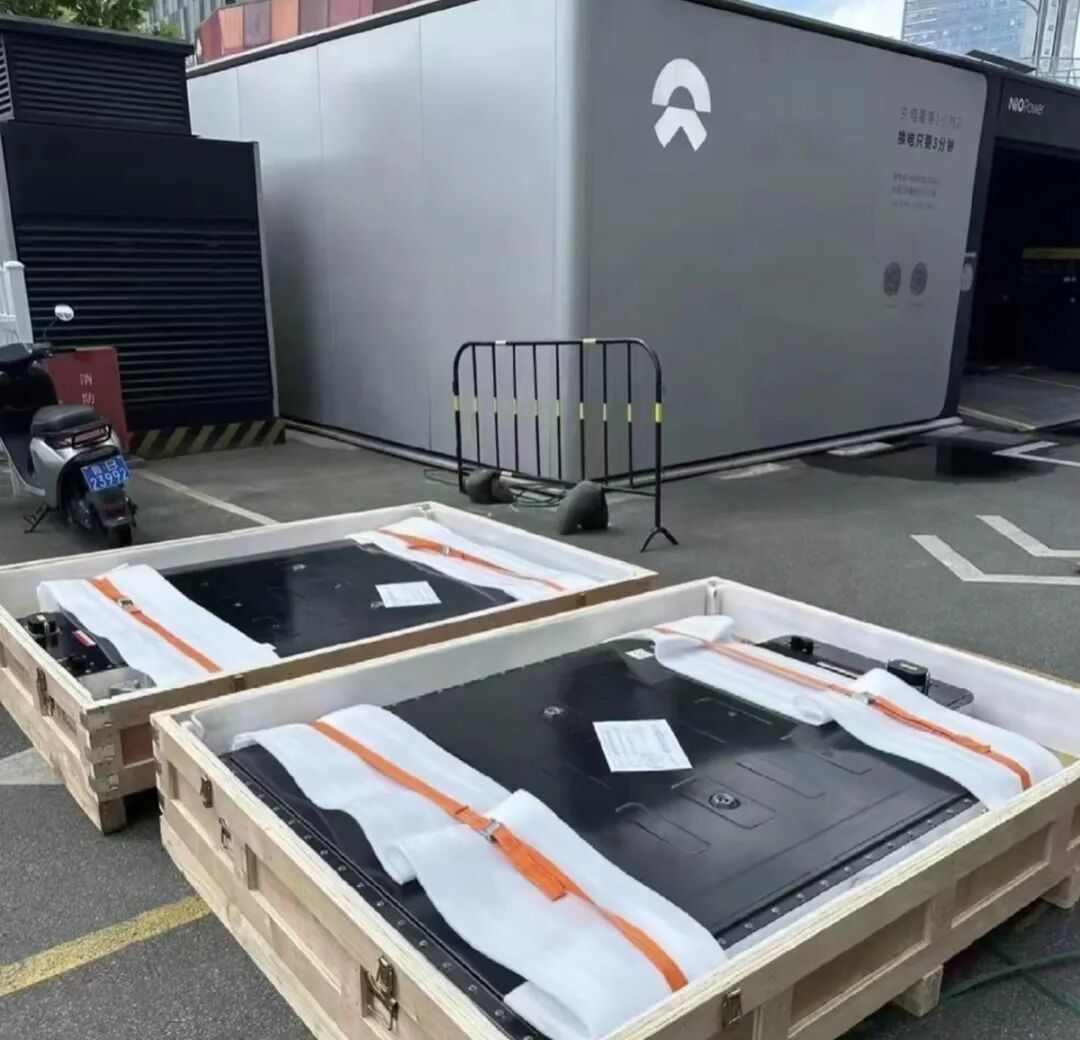
▲ NIO's 150kWh battery pack can also be described as "long-awaited by the public before its arrival".
But the real bottleneck lies in all-solid-state products. Toyota has postponed the mass production time of its first solid-state battery vehicle to 2028, and Nissan has set the time in fiscal year 2028. Most of the solid-state battery mass production news in the past two years actually refers to hybrid solid-liquid products that still contain electrolyte. However, there is no lack of progress: at least since the beginning of this year, the market cost of sulfide solid electrolytes has dropped from the previous 20 million yuan per ton to less than 1 million yuan per ton. Pilot production lines have been put into operation intensively, and 60Ah-class all-solid-state cells have started to roll off the production line. The last remaining stretch of road determines who will stay at the table in the next decade.
01
The last three barriers, and the solid-liquid batteries that have taken the lead
Liquid electrolyte is like water, which can seep into every gap of the electrode, while solid-state batteries are solid-to-solid contact, and the interface impedance accounts for 60~80% of the total impedance. During charging and discharging, the electrode expands and shrinks repeatedly, the contact surface cracks and fits again, accompanied by microcracks, side reactions and lithium dendrites.
The data of small laboratory samples is excellent, but problems break out intensively once scaled up to vehicle-grade cells. This is a typical scaling effect, not a problem of unadjusted formula. The core difficulty of mass production lies in how to break through three barriers —
The first barrier is the interface: high voltage on the cathode side will oxidize and decompose the electrolyte, and lithium metal on the anode side will drive the reduction of the electrolyte, and high-resistance layers are continuously generated on both sides;
The second is lithium dendrite: sulfide is relatively soft, lithium still precipitates along grain boundaries and micro-pores, and maintaining contact often requires 50~150MPa external pressure. Excessively high pressure will induce dendrite penetration, while insufficient pressure will lead to contact failure;
The third lies in cost and manufacturing: sulfide will generate highly toxic hydrogen sulfide once it meets water and oxygen. The dew point of the production line must be lower than -40℃ or even -70℃. The equipment investment per GWh is 2~3 times that of the liquid production line. Even under the most optimistic estimation, the cost of all-solid-state cells in the initial mass production period will be more than 2 yuan/Wh, or even more than 3 yuan, while the cost of lithium iron phosphate cells has been reduced to less than 0.5 yuan/Wh.
Of course, from the perspective of mass production and vehicle loading as soon as possible, the real key bottleneck at present is the first barrier mentioned above, that is, the interface impedance problem. Liquid electrolyte has good fluidity and can fully infiltrate the electrode surface.
For the semi-solid/solid-liquid batteries that have been mass-produced and installed on vehicles at present, even if the solid electrolyte interface film breaks after the cell is violently shaken, the remaining small amount of electrolyte can seep in and re-form the interface film. However, the solid system has no fluidity, and defects on the interface film will accumulate to form a locally over-thick and uneven component structure, and once the contact is lost, it will be lost permanently. The actual state of solid electrolyte is more like a pressed powder cake. The porosity of the cold-pressed sulfide sheet is as high as 25~28%, which looks dense but is actually a pile of particles. In addition, the electrode expands and shrinks repeatedly during charging and discharging. The measured pressure wave in each cycle can reach 1.25MPa, and interface fatigue gradually accumulates to produce microcracks and delamination.
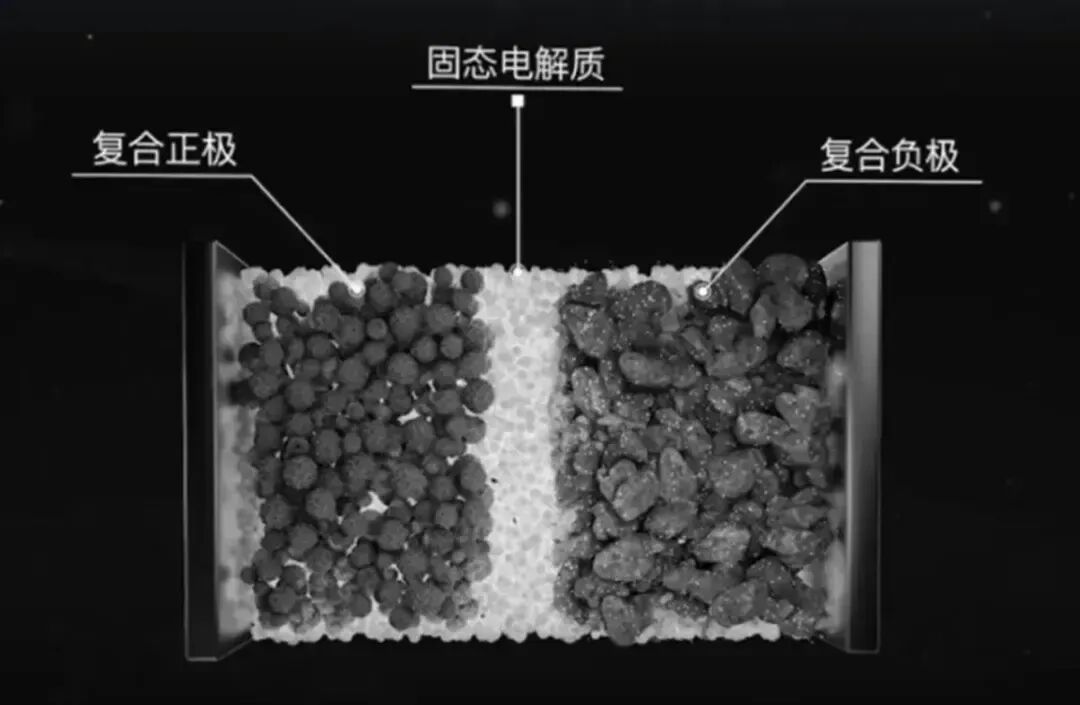
▲ Liquid electrolyte has the major disadvantage of spontaneous combustion after the package is broken, but it also has the advantage of no-dead-corner penetration to ensure good contact. The situation will be completely different if it is replaced by solid electrolyte.
To solve this problem, the only way is to adopt a high-pressure packaging mode for solid-state cells. The solid-state battery samples previously trial-produced and displayed in the laboratory have adopted a 20MPa packaging scheme. In terms of mass production, the 20MPa mode is obviously unrealistic, so most enterprises adopting the sulfide scheme adopt 5MPa packaging for mass production.
But don't underestimate this 5MPa, which means a force of 50 kilograms per square centimeter. It is a huge test for shell materials, packaging processes and other aspects, and is an obvious cause of high cost.
As for the material side, the solution is the composite of sulfide and halide: use high-voltage resistant halide on the cathode side, and high-conductivity sulfide on the anode side. The fluoride doping system developed by the team of CUI Guanglei from Qingdao Institute of Bioenergy and Bioprocess Technology, Chinese Academy of Sciences, has tripled the air stability, and the interface impedance after compounding with high-nickel cathode has dropped from 150Ω·cm² to 32Ω·cm². On the process side, isostatic pressing bidirectional diffusion reduces the pole piece impedance by another 70%, and the electrolyte film reaches the 20μm level.
The only key to cost reduction is lithium sulfide. According to the statement released by Gotion High-Tech at the 2026 Global Technology Conference, 70~80% of the cost of sulfide solid-state batteries comes from electrolyte, and 70~80% of the electrolyte cost comes from lithium sulfide. Changjiang Securities estimates that lithium sulfide will account for three quarters of the BOM cost of 1.66 yuan/Wh (which is an extremely optimistic estimate). Its quotation has dropped from more than 2 million yuan per ton at the beginning of the year to the order of millions of yuan per ton, but there is still a considerable distance from the mass production target of 500,000 yuan per ton set by the industry.
Hybrid solid-liquid batteries are often regarded as a compromise product, but in fact it is a key step on this route. It is dominated by oxides and retains a small amount of electrolyte. It is more accurate to describe it as a half-modified liquid battery, rather than a simplified version of solid-state battery. YU Qingjiao, Secretary-General of Zhongguancun New Battery Technology Innovation Alliance, said that many liquid lithium battery equipment are compatible with this technology, which is exactly the reason why it can turn 350Wh/kg energy density and 1000km cruising range into mass production configurations.
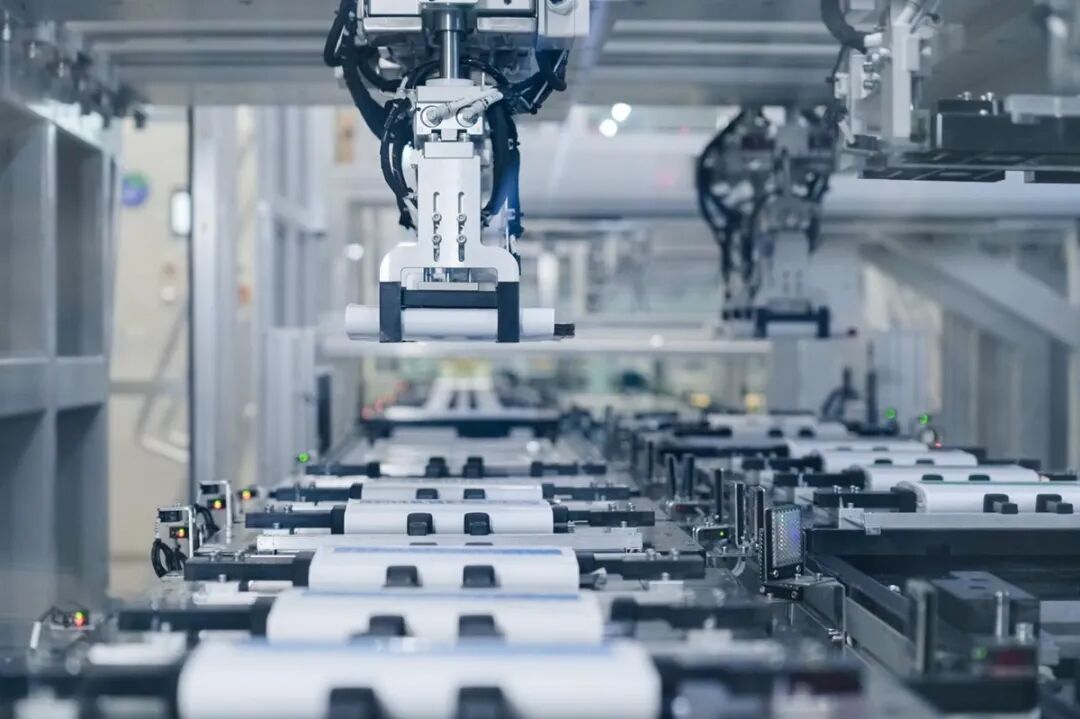
▲ It is certain that due to the pressure packaging problem of solid-state cells, their production lines must be greatly modified compared with the current ones, and this part of the cost cannot be underestimated.
Its value is not limited to the product itself, but also to running through brand new processes such as dry electrodes, ultra-dry environment and isostatic pressing in advance for all-solid-state batteries, using real orders to support the fledgling supply chain of lithium sulfide and composite current collectors, and taking the lead in opening up scenarios such as low-altitude aircraft and humanoid robots. The statement of ZHU Xingbao, chief scientist of Gotion, is very straightforward: let semi-solid-state batteries take the lead to leave growth time for all-solid-state batteries.
The cost is also real. According to the prospectus of Qingtao Energy, the company's revenue in 2025 was 943 million yuan, and its loss in the year was 1.302 billion yuan. This step is currently for market positioning and technical training, and it is far from making profits.
02
Whose timetable is reliable, and the future pattern
Among all the first-line power battery manufacturers at present, CATL is the most prudent one. Its official account reaffirmed on an interactive platform last month that it is expected to carry out small-batch production in 2027. ZENG Yuqun judged at the Summer Davos in June this year that "all-solid-state batteries are still at level 4", so its conclusion is that it is difficult to achieve million-level vehicle loading before 2030.
SUN Huajun, CTO of BYD, gave a route of batch demonstration vehicle loading around 2027 and large-scale vehicle loading after 2030. Its sulfide cells have an energy density of about 400Wh/kg, which have passed the full set of vehicle-grade safety verification of China Automotive Technology & Research Center. The 2GWh pilot line in Pingshan was put into operation at the beginning of the year, and the 20GWh mass production line in Bishan is being promoted simultaneously.
For several other manufacturers, Gotion High-Tech is relatively pragmatic: the 0.2GWh Jingshi pilot line was put into operation in 2025, with 100% domestically produced equipment. Its officially announced energy density is 350Wh/kg. At present, 70Ah cell samples have been installed on vehicles for road tests, and the yield rate is claimed to be 90%. As for the 2GWh mass production line, the overall design has been completed at present, and the cost reduction target is 1 yuan/Wh in the medium and long term, that is, to reach the cost line of ternary lithium cells in 2023.
As for EVE Energy, its Longquan No.4 product, which was rolled off the production line in March this year as officially announced, claims that the cells can work normally below 5MPa.
The current key is how to reduce the external pressure to the critical point as much as possible while ensuring product performance, so as to reduce production costs.
As for second-tier manufacturers, they have their own clever solutions. CALB's unbounded all-solid-state battery has an energy density of 430Wh/kg, a capacity of more than 50Ah, and an operating pressure of less than 1MPa. It will be installed on vehicles in small batches in 2027 and achieve mass production in 2028. Another 450Wh/kg product has been delivered to robot and aircraft customers in the fourth quarter of 2026.
Sunwoda focuses on the polymer route. Its all-solid-state battery Sunwoda BiXiao has an energy density of 400Wh/kg, and the 0.2GWh pilot line has been put into operation. It will carry out small-batch trial production in 2026, and then reach GWh-scale production in 2027. Farasis Energy uses soft-pack lamination to be compatible with existing production lines. Its second-generation semi-solid-state battery with 330~350Wh/kg has achieved GWh-level shipment, the third-generation 400Wh/kg product is planned to be mass-produced in 2026, the first-generation sulfide all-solid-state battery has been sent for sampling, and the second-generation product has an energy density of 500Wh/kg.
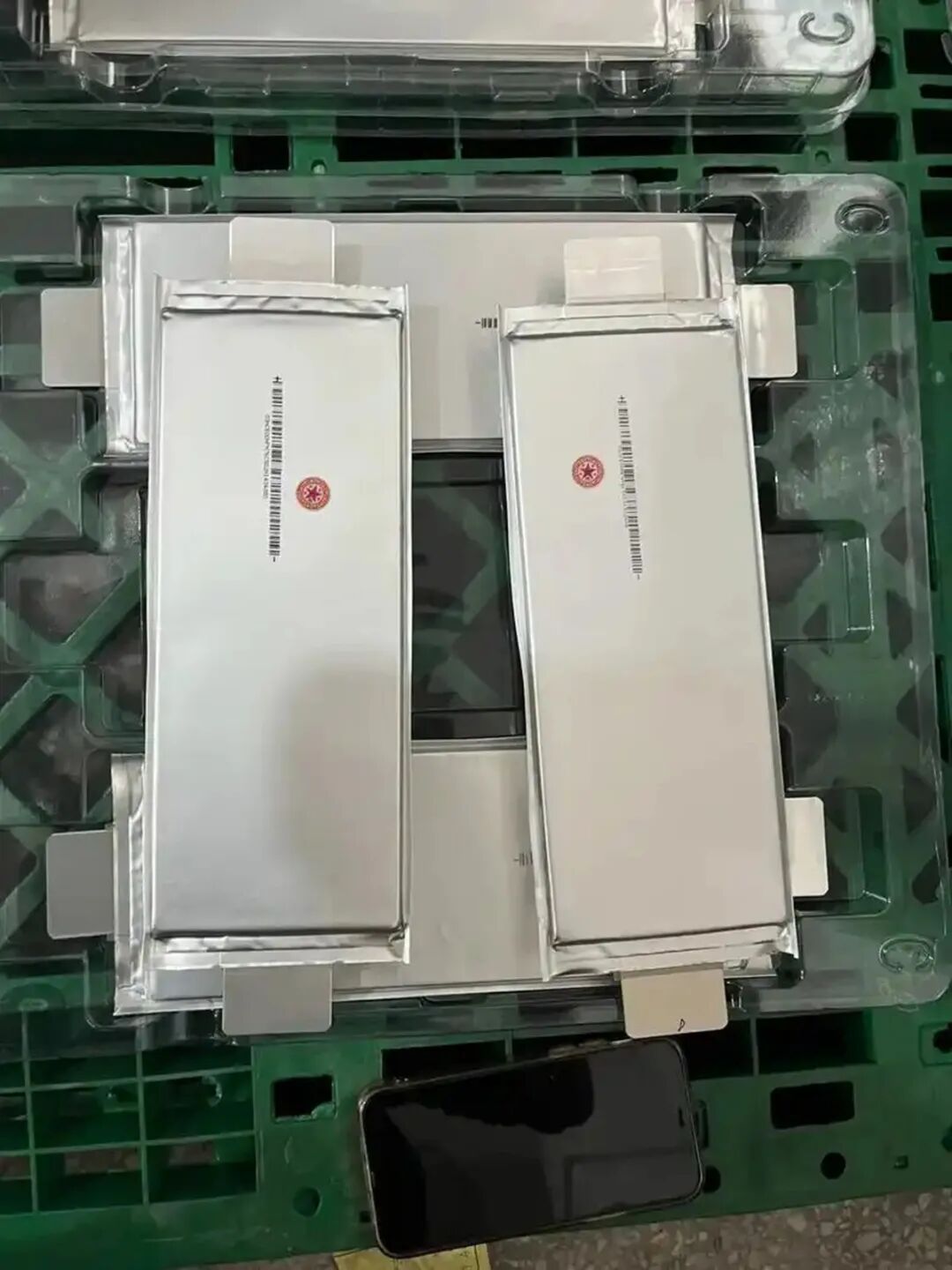
▲ Farasis Energy's soft-pack semi-solid-state battery. Semi-solid-state batteries are well compatible with existing production lines, but the situation will be completely different when it comes to all-solid-state batteries.
Tailan and Changan's diaphragm-free technology adopts the route of oxide plus in-situ curing. Its semi-solid-state battery will complete vehicle loading verification in 2026, and the all-solid-state battery will be mass-produced in batches in 2027.
On the vehicle enterprise side, SAIC said that Qingtao's all-solid-state production line has been put into operation in Anting, with prototype vehicle testing in 2026 and mass production delivery in 2027. GAC's Panyu pilot line has been put into operation, and it is planned to be installed on vehicles of the Hyper brand in 2026. YIN Tongyue, Chairman of Chery, said that the Rhino hybrid solid-liquid battery will be installed on vehicles in the fourth quarter of 2026, and the all-solid-state battery will start verification in 2027, with cells reaching 400Wh/kg.
The overseas market presents a different picture. Toyota has set the mass production time in 2027~2028, Honda will put the all-solid-state trial production line into use in early 2025 and target vehicle loading in 2028, and Nissan has set the time in fiscal year 2028. Samsung SDI plans to achieve mass production in 2027, SK On has advanced the schedule to before 2029, and LG New Energy has set the time in 2