Nano Banana has finally been upgraded to version 2.1, which supports 4K direct output, and its Chinese localization has made remarkably noticeable progress.
All those late nights were totally worth it: Google's big banana has finally gotten an update!
In the wee hours of the morning, Google unexpectedly released its new generation of image generation model Nano Banana 2.1, which has achieved comprehensive upgrades in visual design, mask editing, subject consistency, and the realism and naturalness of images.
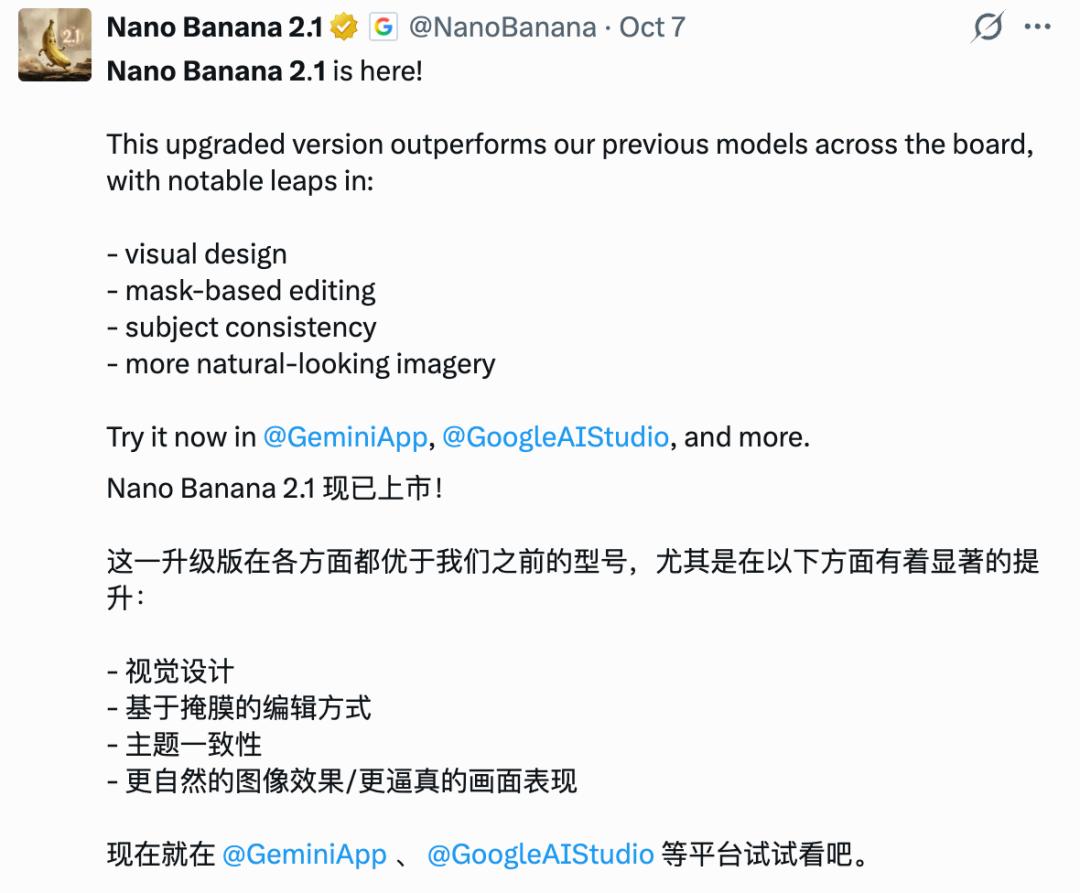
It can not only output photography-level masterpieces directly in 4K resolution, but also support free image editing, one-tap background replacement, and accurately solve the headache of designers who "go crazy over endless revisions":
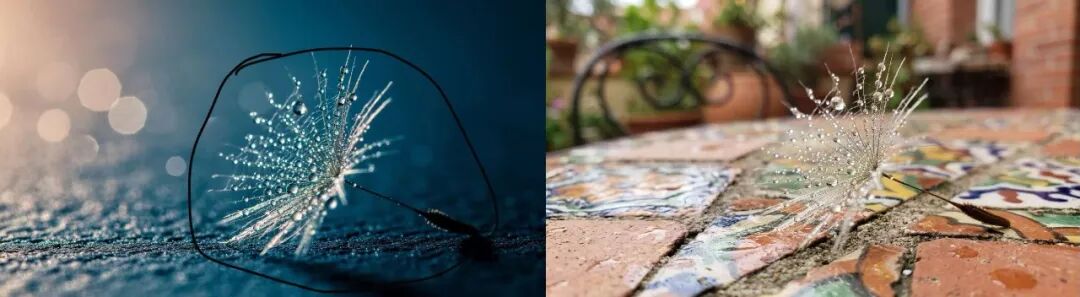
△
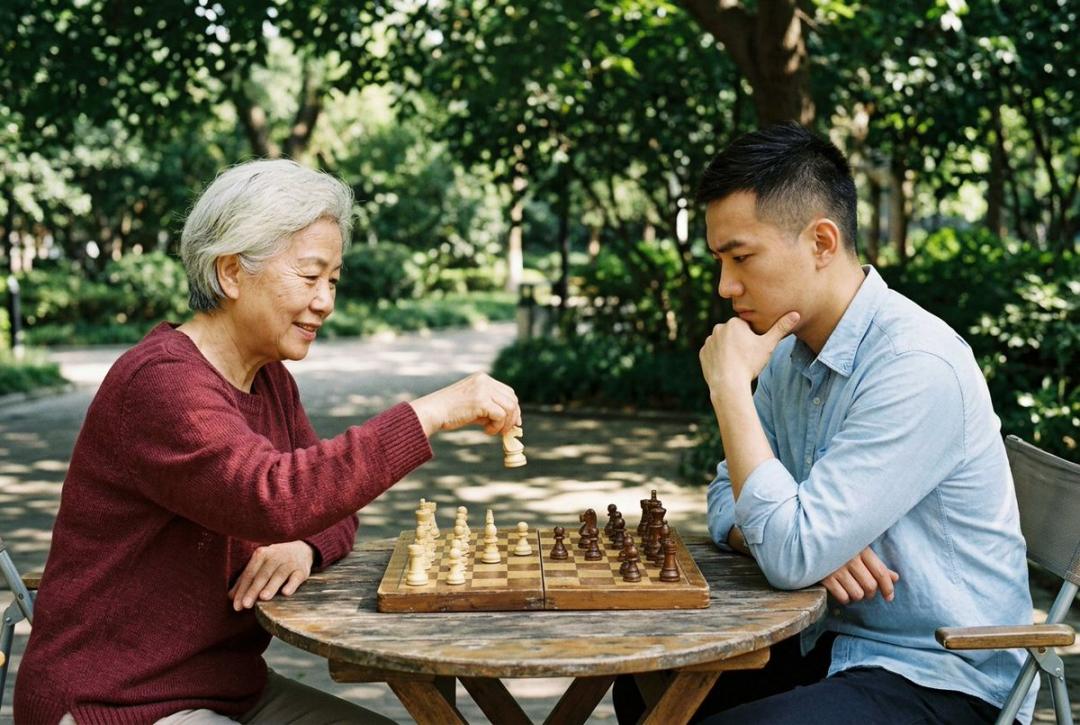
△
Its performance is also extremely impressive.
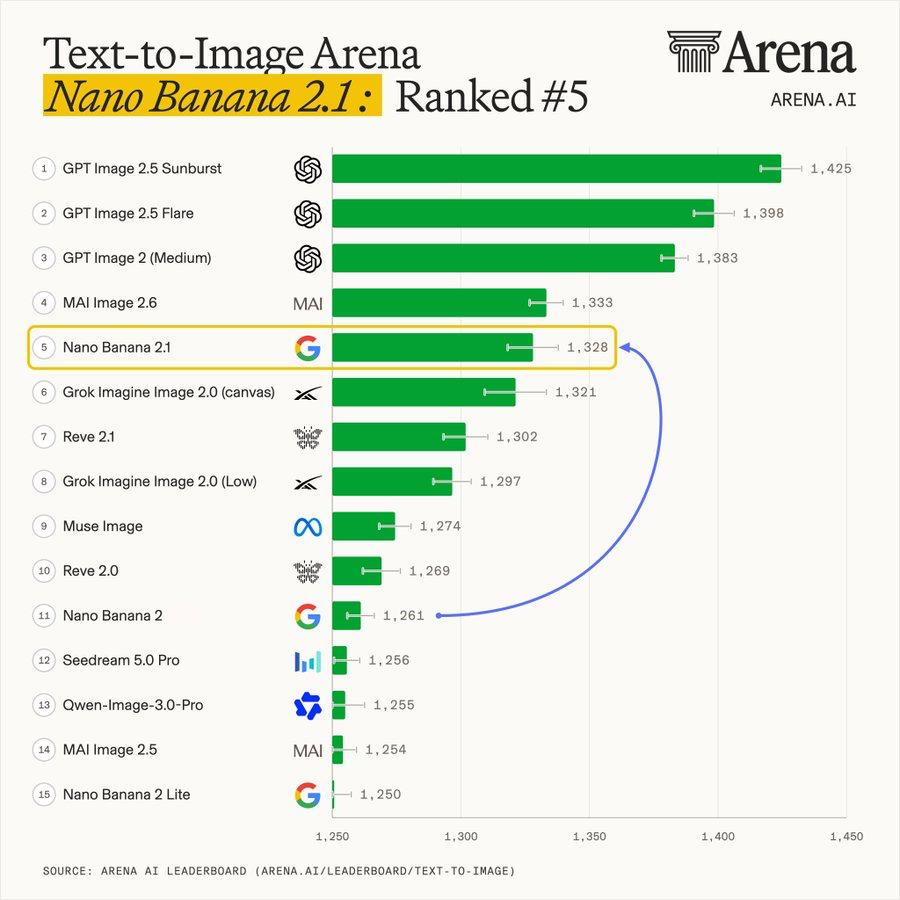
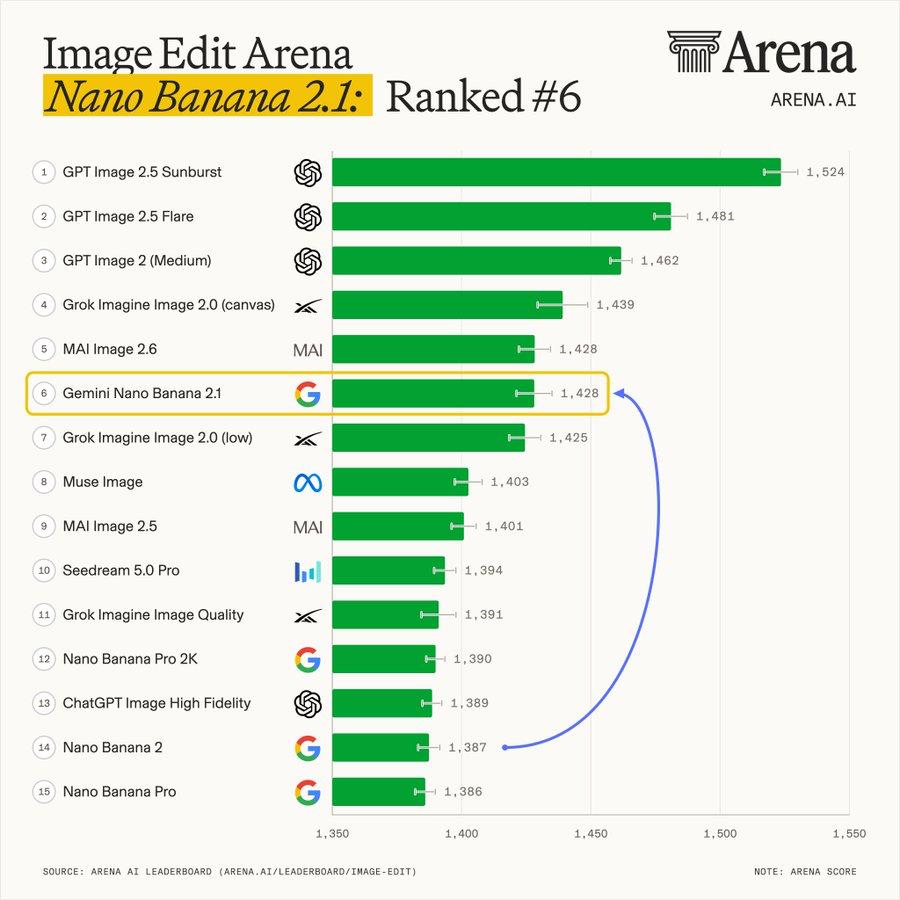
According to Arena, a well-known US AI evaluation platform, compared with the previous generation Nano Banana 2, Nano Banana 2.1 has seen an average improvement of approximately 61.7 points across three functions: text-to-image, multi-image editing, and single-image editing.
Among them, the text-to-image function ranks 4th, with an 80-point increase over the previous generation, second only to GPT;
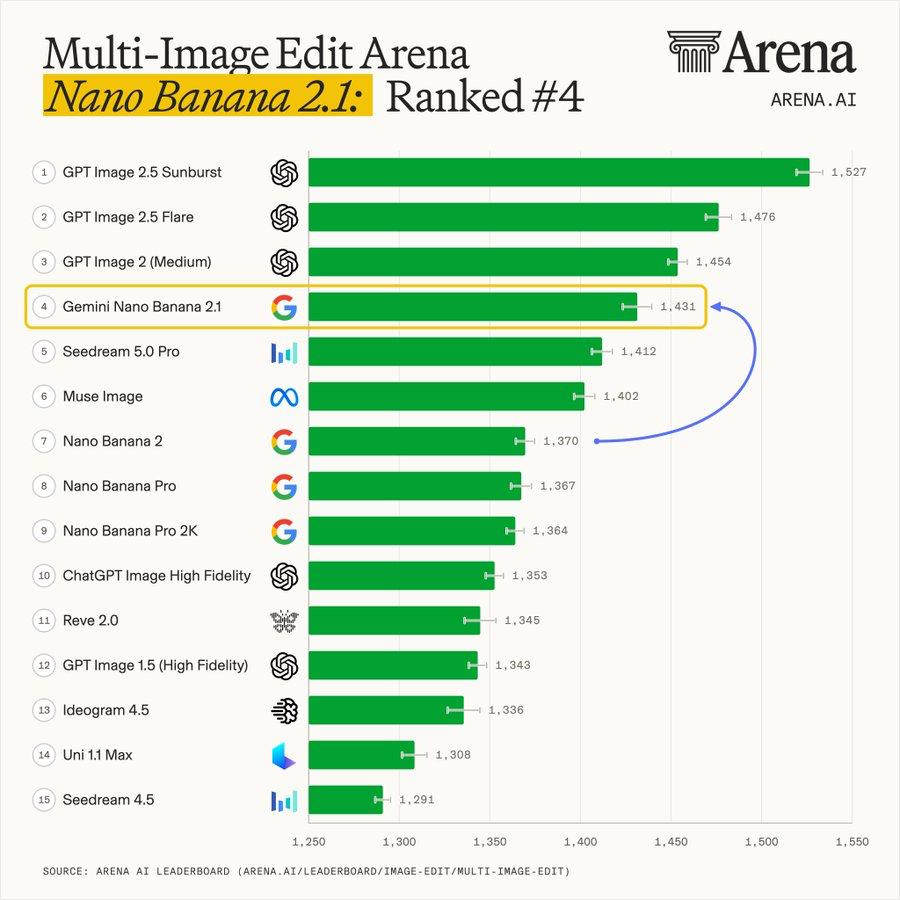
The multi-image editing function ranks 5th, scoring 1328 points, up 67 points;
The single-image editing function ranks 6th, scoring a total of 1428 points, up 38 points.
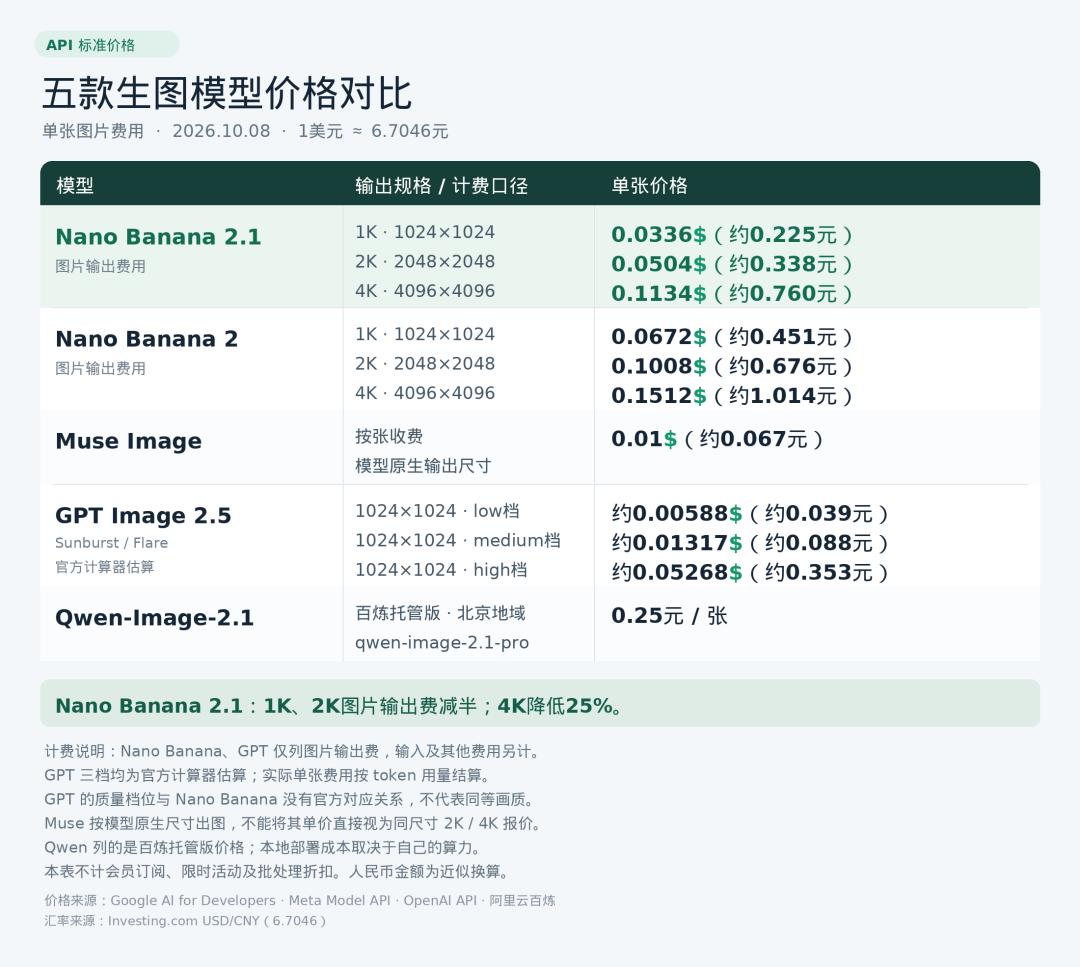
What's even more attractive is the API pricing.
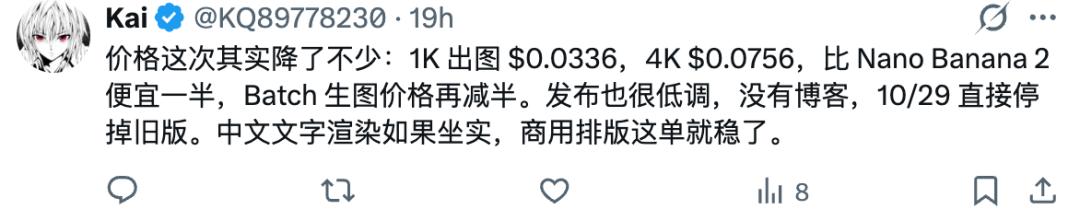
Google slashed the generation price for 1K and 2K images of Nano Banana 2.1 by half directly, and the 4K version is also around 25% cheaper.
△
People can't help but sigh that Google's banana is getting better and better (doge).
4K direct output matches DSLR quality, Chinese language performance improved, maximum texture
First of all, let's follow netizen Christopher Fryant's "macro camera" to experience the charm of Nano Banana 2.1's 4K original direct output:
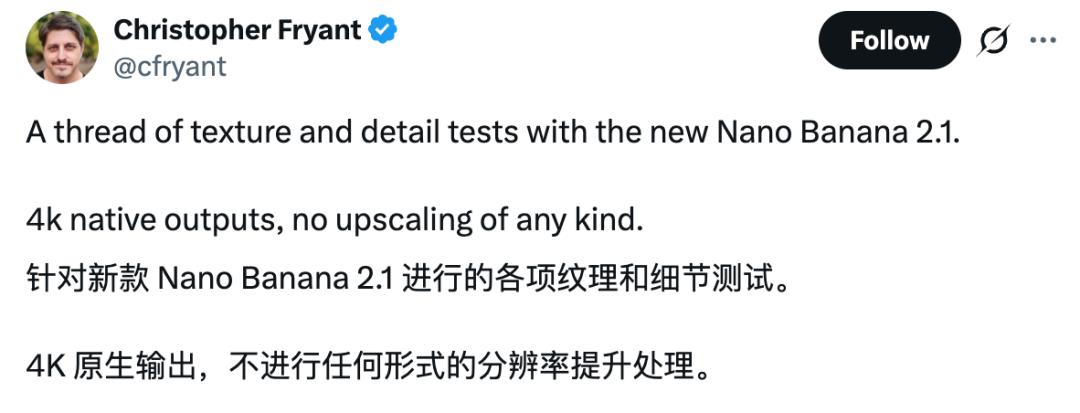
In Christopher Fryant's works, the color and gradient of the amber pupils of the man are as natural as real life, and the curl and whitening at the tips of the eyelashes are clearly distinguishable;
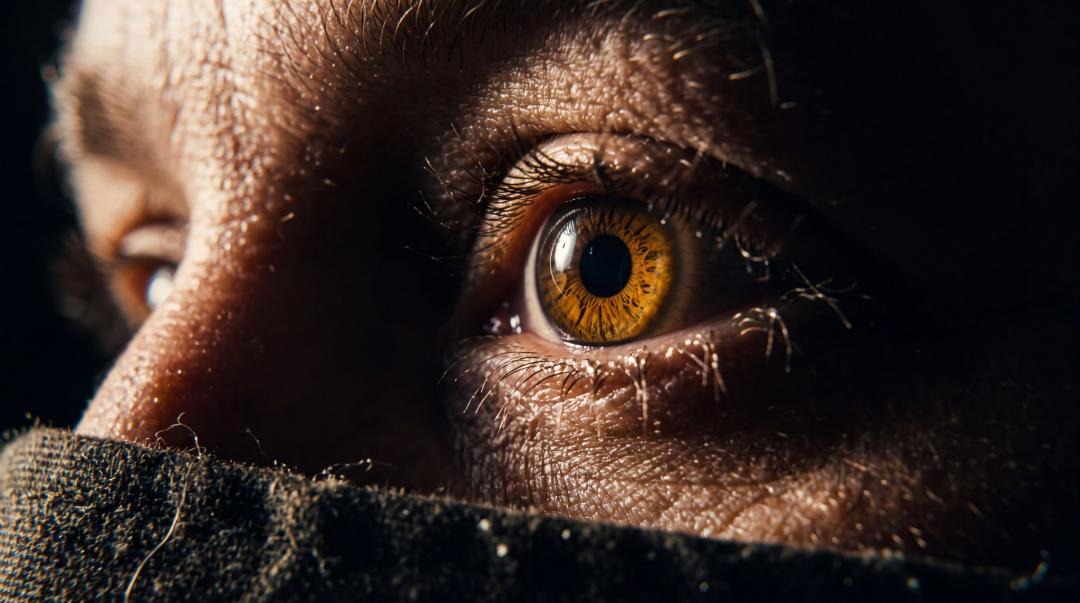
Light and shadow are no longer just flat filters, but carve out the uneven texture of the skin and the slightly furrowed "frown lines" when he frowns:
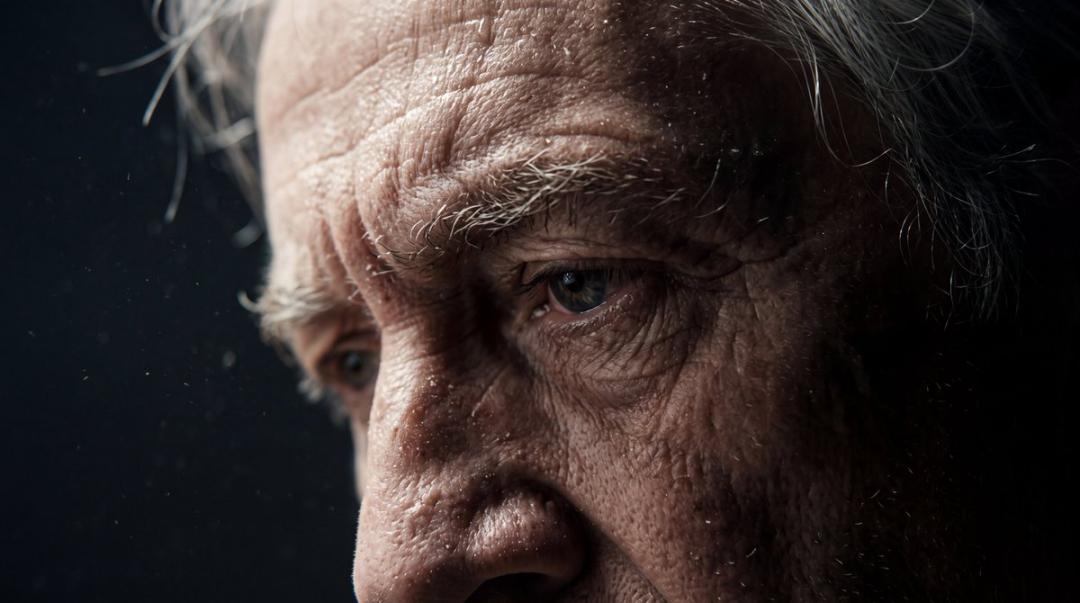
Even the rough texture of the fibers stitched through the fabric is restored down to the finest detail:
Regarding this, the "photographer" Christopher Fryant himself couldn't help but exclaim:
Its texture is exactly the same as the photos taken with my DSLR, the cinematic feel is absolutely amazing!
Onlookers are also full of amazement:
This is absolutely stunning, my god!
On the other side, a practical test case of Chinese promotional posters from designer netizen @Guizang is also well worth checking out.
After finishing the test, Guizang's biggest feeling is:
The clarity of Chinese text and the problem of typos have been greatly improved!
There is no mottled mess of scattered text and images, no the "fragmented feel" seen in GPT outputs. The images are clean, the layout is aesthetic, the lotus patterns are elegant and beautiful, and it can generate 4K images with one tap.
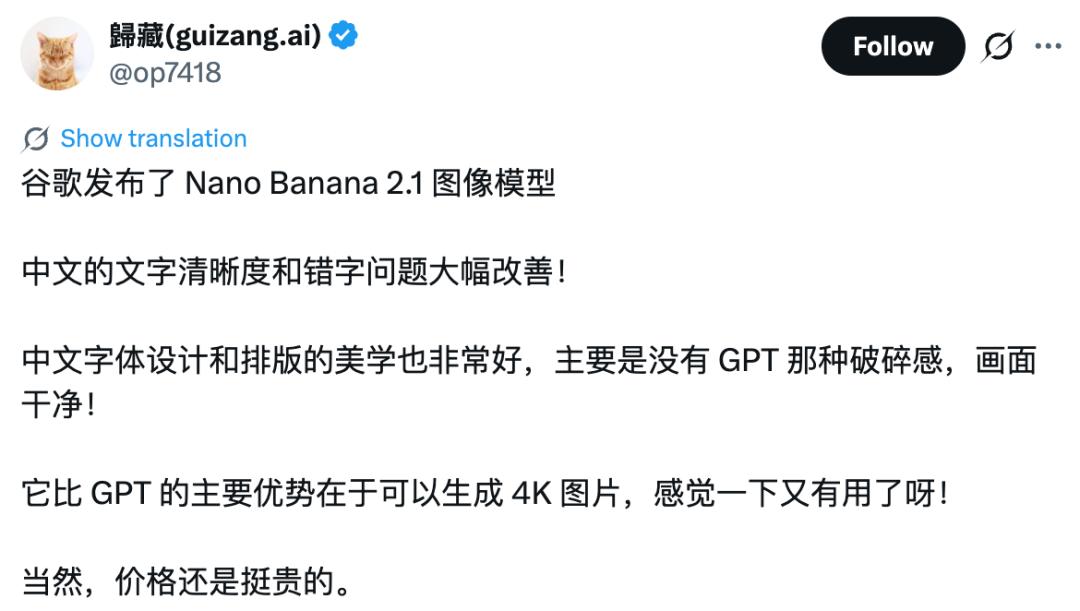
It's actually really useful now!
With enhanced Chinese rendering and the price cut buff, this probably means that domestic designers can also use it to make commercial orders now!
In addition, some netizens have made very creative use of it.
Heather Cooper fed the images generated by Nano Banana 2.1 to Veo 3.1 for further production, and finally created a vivid three-dimensional high-definition short film within Google Flow:
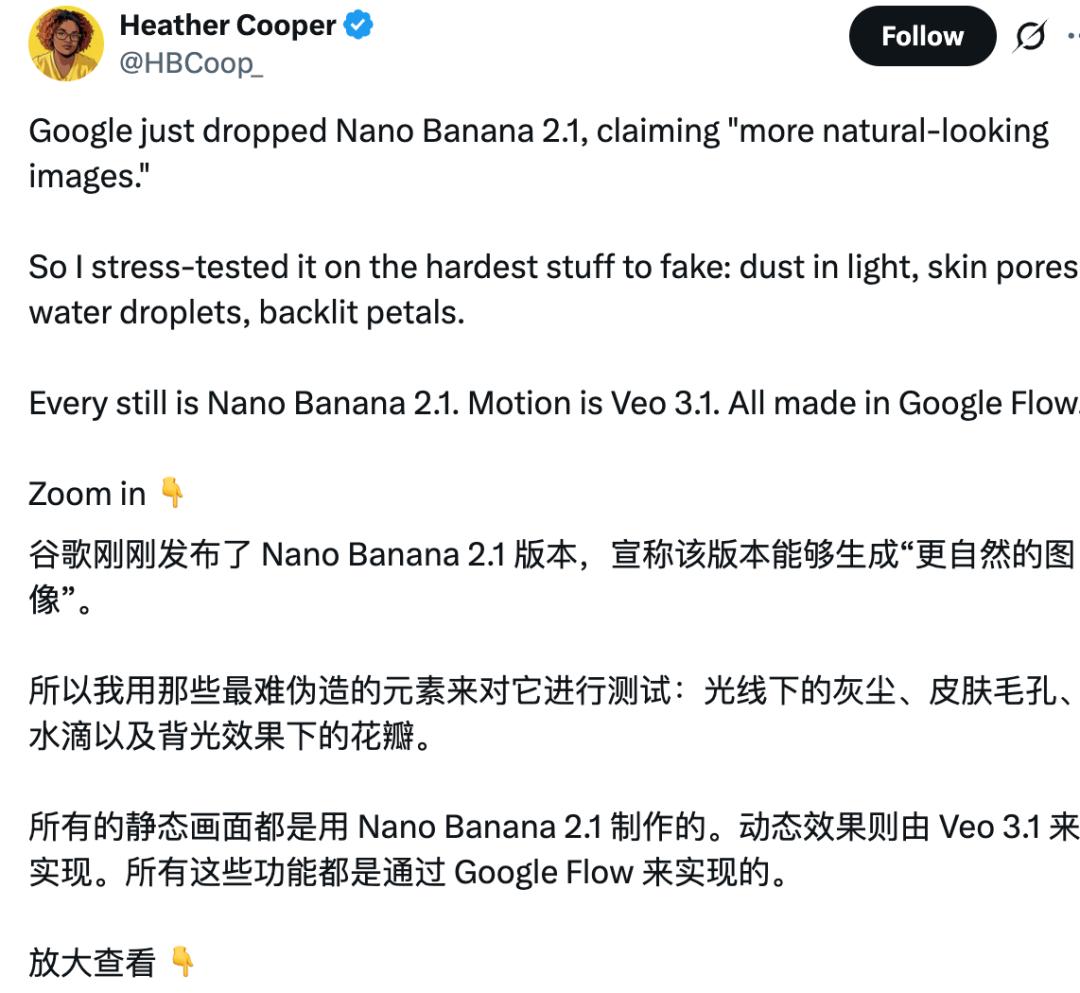
This means that the full workflow from generating key frames, maintaining subject style, to making images move for real can be completed entirely on the same platform.
Wow, the Adobe Creative Suite used by designers and video editors is probably going to shake in fear again. (PS, PR: Don't come near us!)
However, don't rush to uninstall them just yet, Nano Banana 2.1 still has room for improvement.
Fast enough, but completion rate and continuous editing stability still need to be improved
With Google launching Nano Banana 2.1, people can't help but wonder which one delivers better performance, Nano Banana 2.1 or GPT Image 2.5?
We definitely need to bring both of them in for real-world comparison tests.
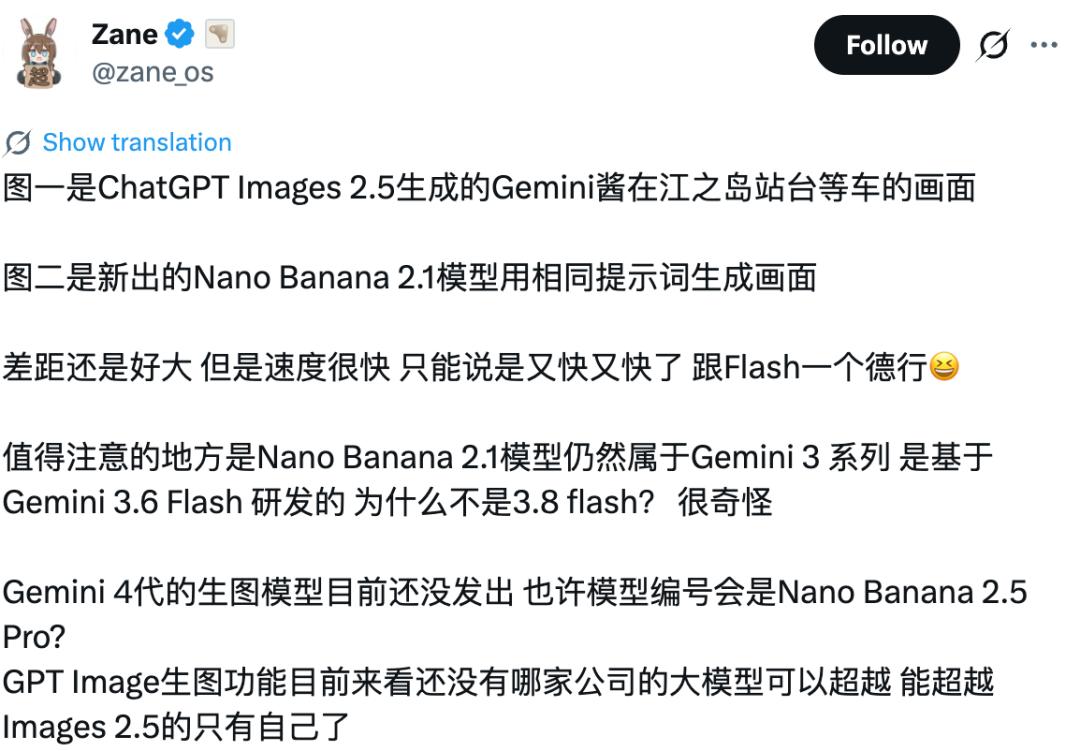
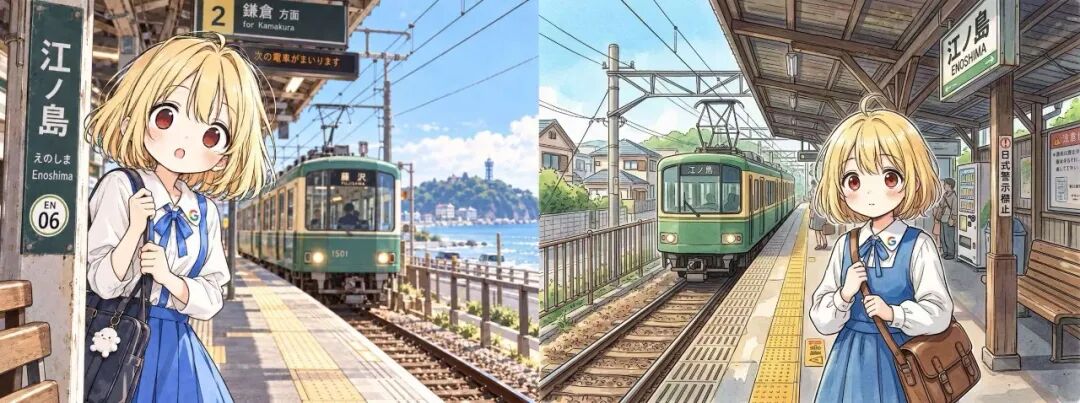
Recently, netizen Zane compared the effect of generating the Gemini mascot on a railway station platform with ChatGPT Images 2.5 and Nano Banana 2.1, and said:
Nano Banana 2.1 does generate images pretty fast, but the image texture and overall completion level still can't beat GPT.
△
On the other hand, netizens Stav Zilbershtein and snow also found in their practical tests that Nano Banana 2.1 may have a watermark bug.
This leads to the fact that although its initial editing quality is accurate and good, it cannot withstand the continuous stacking of Google's "watermarks".
As the number of modifications increases, the image quality may get worse and more blurry after each edit — areas that were not supposed to change start to show noise, color drift, and texture distortion... after enough edits, even the original creator might not recognize the image anymore.
