Why is this nuclear optical clock from China worthy of 50 years of human research?
Nuclear optical clock, have you come across this term recently?
The other day, Xinhua News Agency released an official report, stating that a Chinese scientific research team has developed a nuclear optical clock, and the relevant achievement has been published in the top academic journal *Nature*.
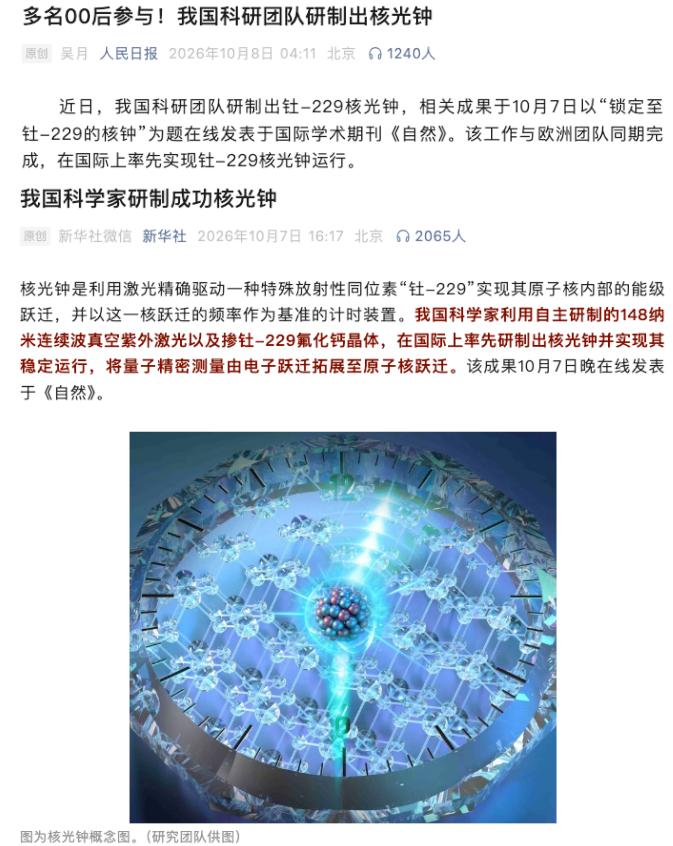
To put it in a nutshell, the Chinese team has developed a more advanced atomic clock, which operates at the atomic nucleus level instead of the conventional atomic level, so it is named nuclear clock, or nuclear optical clock.
We have long been accustomed to things like undergraduates publishing papers on *Nature*, but the term "nuclear optical clock" sounds really powerful... I wonder if I have read too many xianxia novels recently, my first thought was: is this new artifact the same type as the Eastern Emperor Bell in those novels?
But if you search online, you will find most people's understanding of it on the Internet is in this style:
What! Did the Chinese redefine time?
Can the Chinese know one day before an earthquake happens?
Can an undergraduate from Tsinghua University double the combat power of Chinese nuclear submarines?

Come on, those marketing accounts, please tone down your hype. The achievement was published on *Nature*, not on a story magazine. How could a purely scientific thing be made to look like a sensational debate, it's not that mysterious at all.
However, after I did in-depth research, I found that although what those marketing accounts said was a bit exaggerated, the technology of this nuclear optical clock is indeed top-tier.
To explain the specific situation, we have to talk about the atomic clock that everyone is familiar with.

As we all know, in order to figure out exactly how long one second is, humans have pushed the skill of precise measurement to the limit.
Before, people observed the rotation of the sun and planets, then used mechanical clocks, where one swing of the pendulum represents 1 second. Later, for higher precision, people studied quartz.
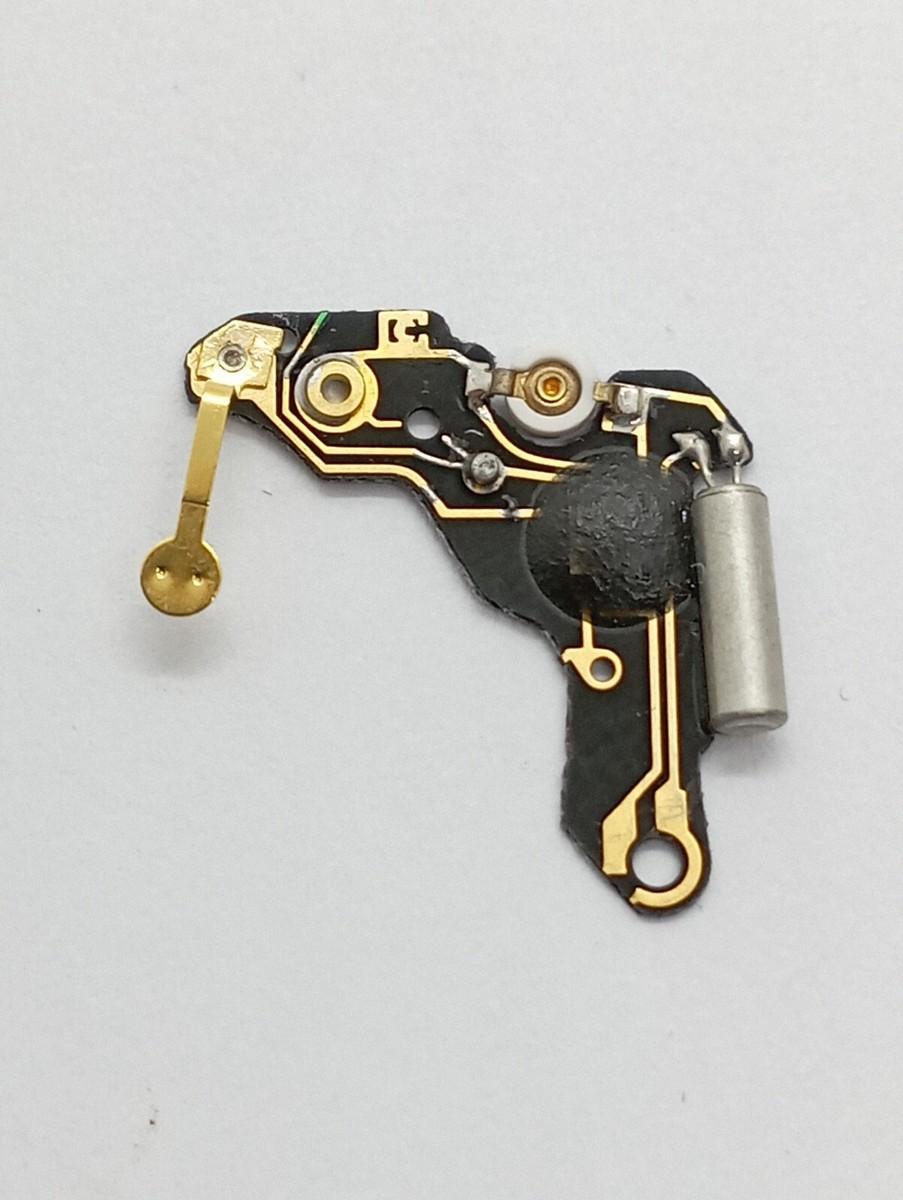
Quartz crystal can vibrate at a frequency of 32768 (2^15) Hz when powered on, so after 15 frequency bisection divisions, it can output a signal of 1 second per cycle. As a result, quartz is made into crystal oscillators and used in various electronic components.
That white cylinder right here
But since quartz is still affected by factors such as temperature and aging, humans directly reduced the measurement scale to a smaller level, and used atoms to define time.
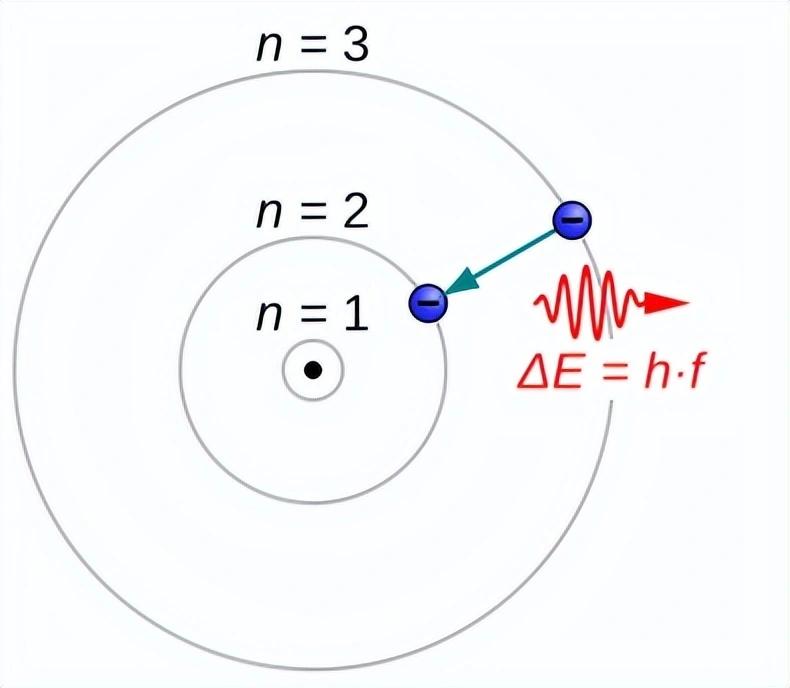
We learned in middle school chemistry that electrons inside an atom are at specific quantum energy levels. When it transitions between two energy levels, it will absorb or release electromagnetic waves of a specific frequency.
Restricted by Planck's constant, this frequency is a fixed value in the universe, so it is perfect for calculating time. For example, the cesium atomic clock uses the specific transition frequency of cesium-133 to define 1 second, so the definition of 1 second in the International System of Units is the duration of 9192631770 oscillations of the transition frequency of cesium-133.
Alright, since atomic clocks are already so advanced, why did we develop this nuclear optical clock mentioned at the beginning? Are the researchers just too bored?
The reason is actually the same as why we phased out quartz clocks. Although atomic clocks are extremely advanced, since electrons are extremely light, they are very vulnerable to interference from the external electromagnetic environment, so scientists have to spend a lot of energy to eliminate systematic errors.
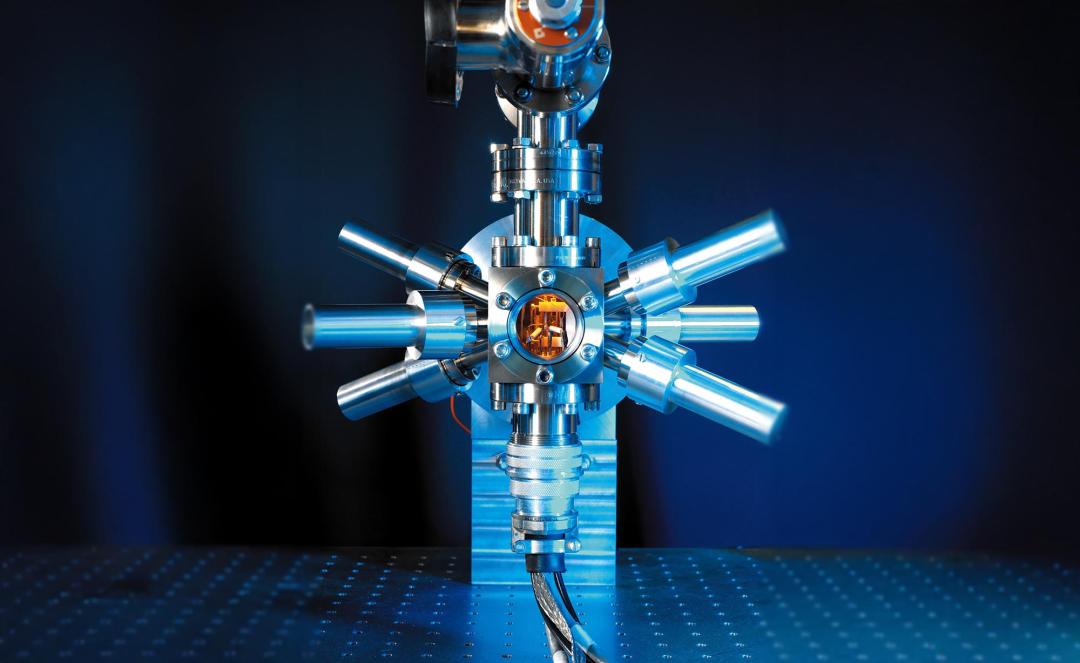
Not to mention that a complete atomic clock also needs to be equipped with complex laser cooling, vacuum systems and an ultra-low temperature environment close to absolute zero.
Although the functional part that actually works is not large in size, all the supporting facilities together are more luxurious than the Mid-Autumn Festival mooncake gift box. It is very difficult to further miniaturize it for engineering applications, and it also takes up a lot of space when carried on satellites.
So some people thought, hey, can we go even smaller, and directly use the atomic nucleus to measure time?
As not many people know, in an atom, not only the extranuclear electrons have energy levels, but the atomic nucleus at the core also has its own energy levels, and can also perform quantum transitions. And using the atomic nucleus to measure time is simply a perfect choice.
If we compare the extranuclear electrons to a circle of feathers by the playground that will be blown away by a gust of wind, the atomic nucleus is like a solid pillar in the center of the playground, remaining completely unmoved no matter what external electromagnetic interference there is.
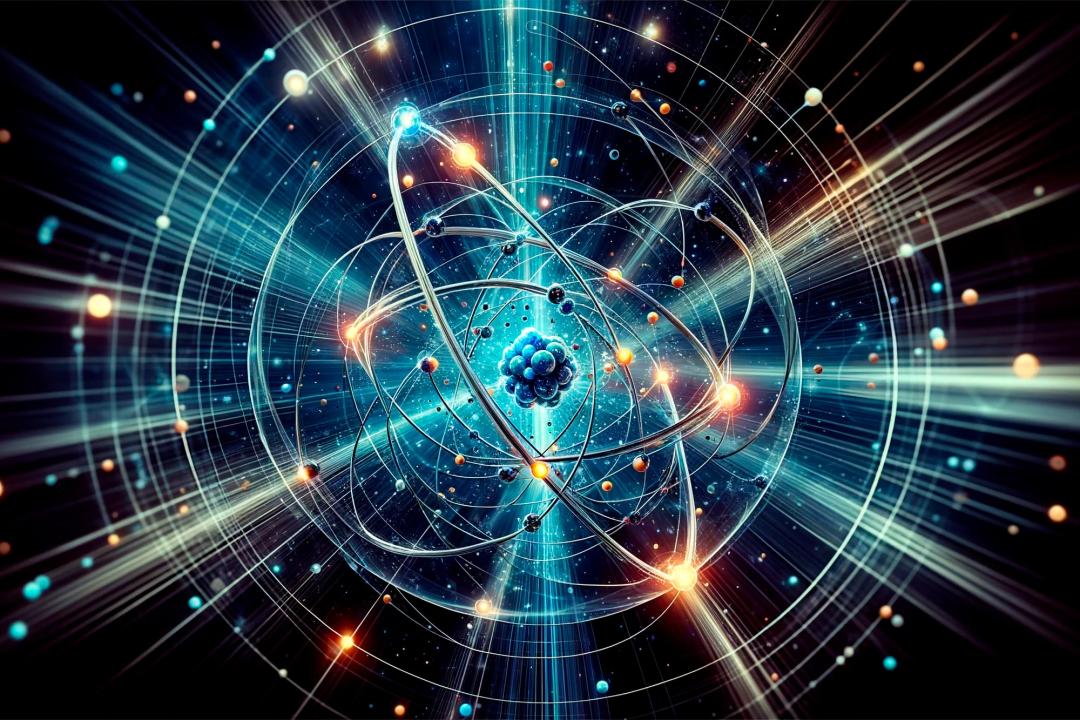
So in theory, the limit error of the current common atomic clock may be 1 second deviation over 100 million years, but the theoretical accuracy of the nuclear clock can reach 1 second deviation over tens of billions of years — which is longer than the time from the Big Bang to the present!
OK, so how do we make such a magical tool? The basic idea is the same as that of the atomic clock:
First, use a beam of laser to hit the atomic nucleus, and make it enter the excited state of quantum transition;
Then, calculate the specific frequency of the nuclear transition energy, and adjust the laser to be completely consistent with this frequency;
Finally, measure the frequency of this laser perfectly calibrated by the atomic nucleus, and use tools with a speed-changing gearbox effect such as "optical frequency comb" to restore the light wave frequency to the duration of 1 second.
That's it, a nuclear optical clock is completed.
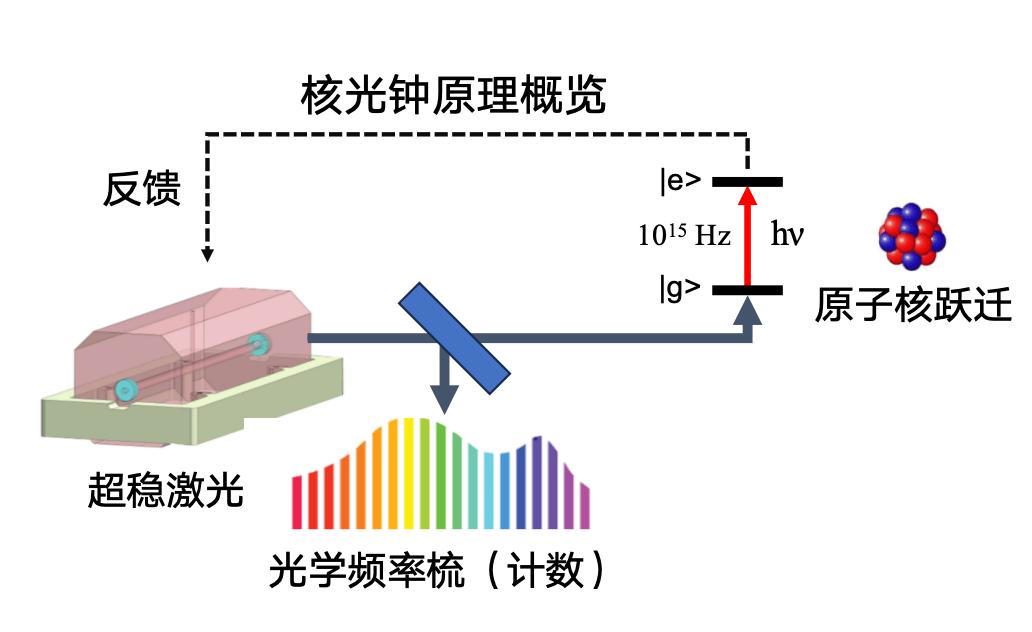
It sounds as simple as putting an elephant into a refrigerator, but to complete these steps, the whole mankind has spent a full 50 years...
Because the first problem faced in making a nuclear optical clock is energy. The transition of a conventional atomic nucleus requires extremely high-energy gamma rays to excite, but with current human technology, we cannot fully master gamma rays... (Besides, their penetrating power is too strong, which may damage the equipment)
Fortunately, there is always a way out. In 1976, when Americans were researching nuclear weapons, they accidentally found that after the element Thorium-229 decays, there will be two extremely close nuclear energy levels, with extremely low transition energy!
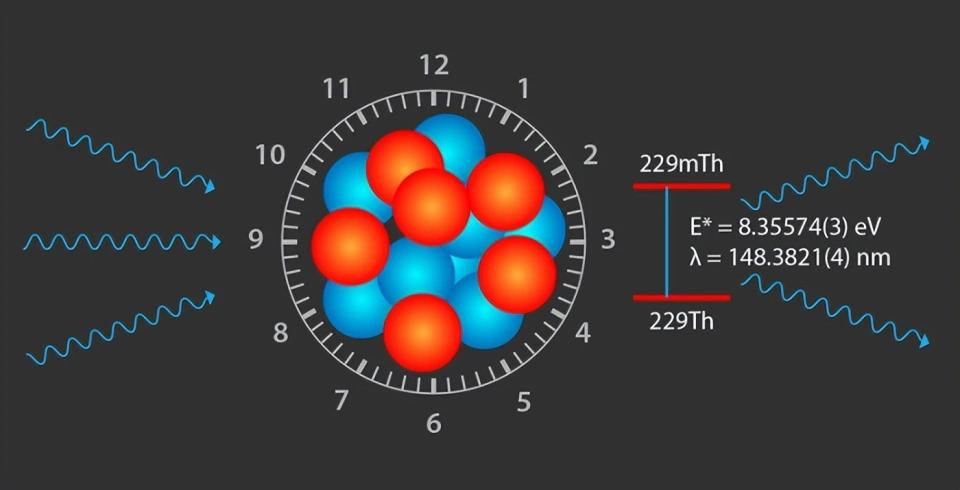
But at that time, the Americans didn't think of using it to make a nuclear optical clock.
It was not until 2003 that German scientists noticed this blind spot, and pointed out that Thorium-229 is simply the perfect raw material for nuclear optical clocks! And it can even be driven by laser!
But that was just a theoretical idea, because it was not until 2016 that scientists proved for the first time that Thorium-229 has this excited state. As for how much energy is needed for Thorium-229 to transition to the excited state, scientists had no clue at all.
Previously, people guessed the energy was 3.5 electron volts, and it was not until 2023 that the measured energy was determined to be about 8.3 electron volts. It was not until 2024 that scientists finally confirmed that a laser with a wavelength of about 148.3 nanometers is needed.
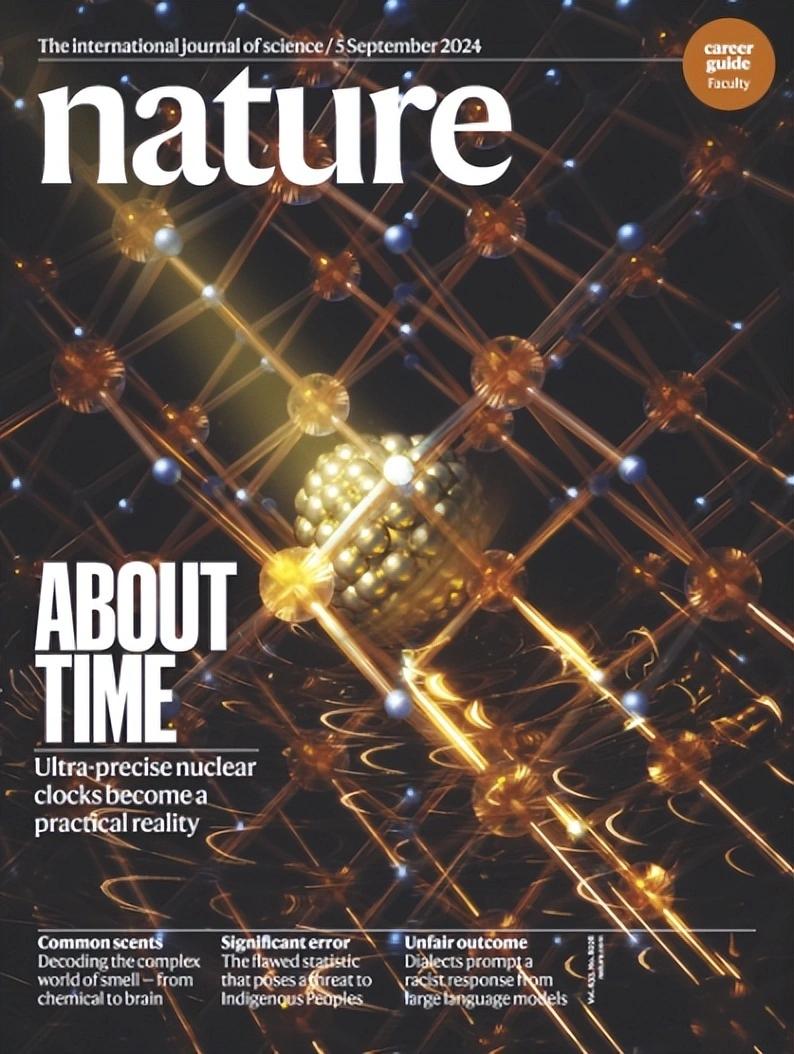
Great, now that we know what it needs, let's get started making it immediately! But new troubles came again.
To make a real "clock", the laser cannot just flash once, the beam of laser must be extremely stable. But this 148-nanometer wavelength belongs to the vacuum ultraviolet band.
This kind of light is extremely special, it will be absorbed by air, and existing optical materials and laser technologies can do nothing about it.
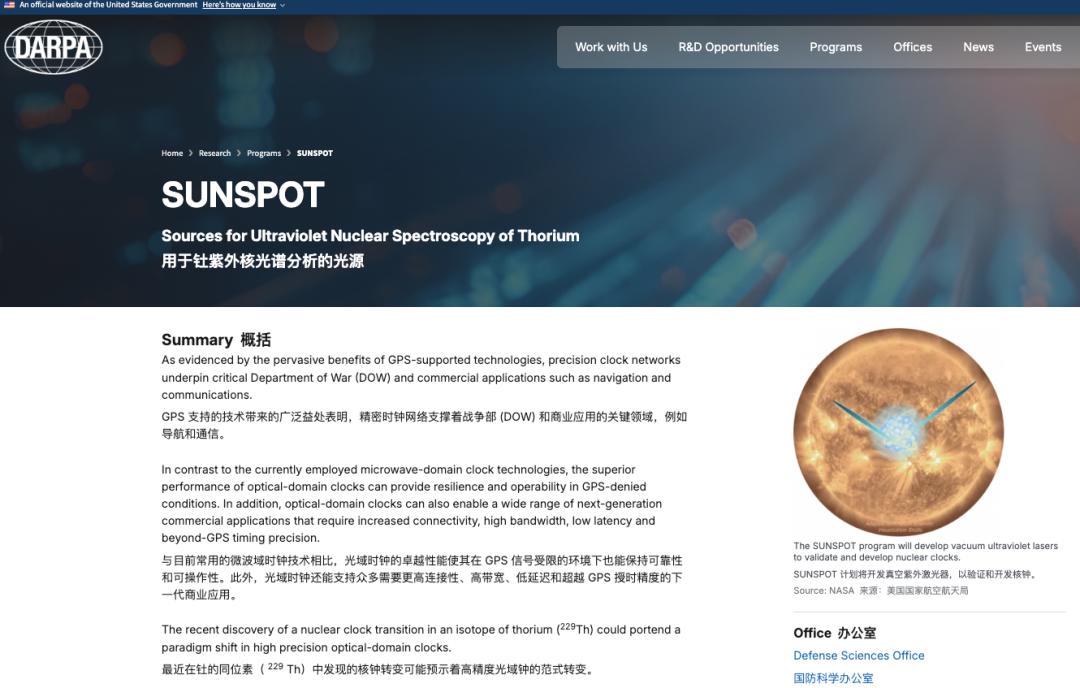
This problem is so difficult that even the US military has no solution. In January 2025, the US Defense Advanced Research Projects Agency (DARPA) specially launched a project called SUNSPOT, one of the core goals of which is to focus on developing the required laser for Thorium-229...
However, when this laser problem was stalling the Americans, the team led by Professor Ding Shiqian from Tsinghua University had already achieved a breakthrough by taking an alternative path...
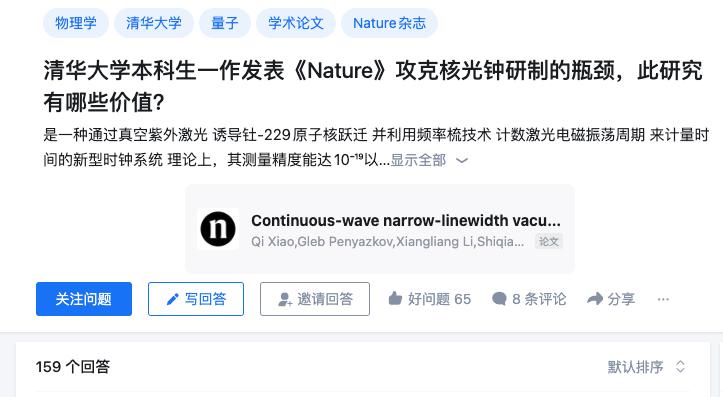
Different from the conventional idea of manufacturing lasers, they directly used "cadmium vapor" as the medium, and adopted a scheme called "four-wave mixing" to fuse several lasers of different frequencies into a beam of pure 148-nanometer vacuum ultraviolet light.
After years of continuous efforts, the team finally developed a continuous and stable light source. In February this year, this achievement was directly published on *Nature*.
Interestingly, when this *Nature* paper about the light source was published, it caused a small wave of online discussions because of the author signature. At that time, Qi Xiao, an undergraduate student from Tsinghua University, was listed as the first co-first author, while his doctoral supervisor Beichen Huang was listed as the fourth. So some netizens started to discuss the order of these authors and who contributed more to the experiment.
But no matter what, being able to leave their names on this answer sheet of the history of human science and technology is already enough to make everyone admire these two researchers.
With the required light, the last remaining part to make a nuclear optical clock is: the material.
In a nuclear optical clock, Thorium-229 needs to be evenly mixed into a crystal like sprinkling salt. Thorium-229 is already extremely scarce, and crystal growth is prone to defects, and the crystal must be absolutely transparent so that it will not block the laser. Where can we find such a crystal?
No rush, previously European scientists had found a key material, calcium fluoride. So after that, top Chinese scientific research institutions including Tsinghua University, Peking University, Shanghai Institute of Optics and Fine Mechanics, Institute of Nuclear and New Energy Technology of Tsinghua University, Shanghai Institute of Ceramics, and National Institute of Metrology of China all joined the team, to jointly complete the nuclear optical clock operation experiment.
Finally, they used 1.4 micrograms of Thorium-229 to make a thorium-doped calcium fluoride crystal, and with the efforts of Professor Ding Shiqian's team at Tsinghua University, the nuclear optical clock independently developed by Chinese researchers was successfully built.
