Apart from being unable to make phone calls, humanoid robots are becoming more and more like mobile phones.
Humanoid robots are increasingly resembling smartphones, even having their own exclusive "SIM card".
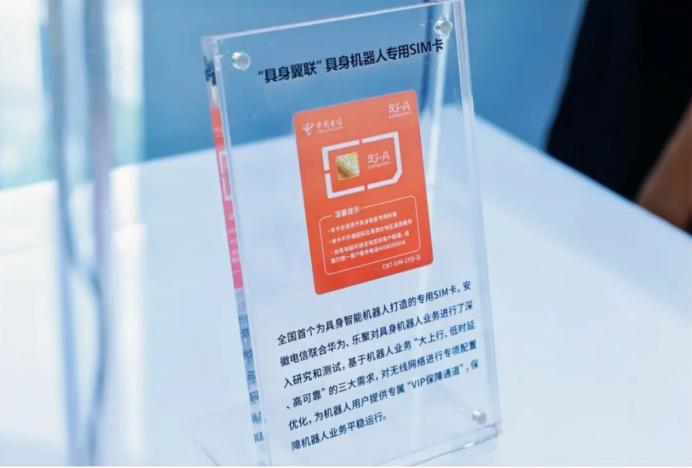
Recently, Leju Robotics, in collaboration with Anhui Telecom and Huawei, launched "Embodied Wing Link", a 5G-A exclusive package for embodied intelligent robots, and released a dedicated SIM card. The standard version of the package costs 599 yuan, and the enhanced version costs 999 yuan, providing an uplink speed of up to 500Mbps, low latency at the 20ms level, and priority service scheduling.
The SIM card is the "identity document" for devices to access the cellular network, which is what we commonly call a "mobile phone SIM card".
However, this card mainly solves the problem of efficient network connection for robots, and cannot yet enable them to make phone calls like smartphones. What is really noteworthy is that the industry has begun to tailor network access solutions specifically for robots.
Even the price is moving closer to that of smartphones. The price of humanoid robots has been "rolled" down to the price of a single smartphone.
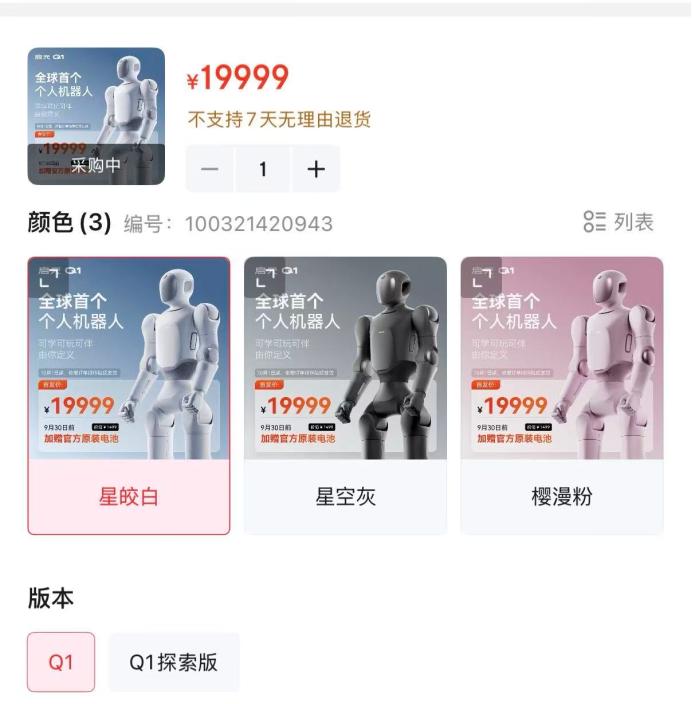
The Qiyuan Q1 released by Qiyuan Robotics recently is priced as low as 19999 yuan, falling into the price range of 15999 yuan to 26499 yuan of Apple's newly released foldable smartphone iPhone Duo. The Xiaobumi from Songyan Power had previously reduced the price to 9999 yuan.
As early as 2023, Huang Xiaoqing, founder of CloudMinds, proposed that "the future of robots is a super smartphone". His logic is that robots will definitely connect their cloud brain to their bodies through 5G networks, becoming a general-purpose platform that can develop applications and be programmed, just like smartphones.
The embodied intelligence industry has gone through three years of booming development, and humanoid robots are moving closer to this direction. Will it become a "super smartphone"?
Leaving aside the question of whether it can become a "super smartphone", at least the industry is optimistic that robots will become as popular as smartphones. Liu Peichao, founder and CEO of Dobot, believes that robots may become a ubiquitous commonly used carrier just like smartphones. Peng Zhihui, co-founder of Fourier Intelligence, also said, "In the future, robots will be as popular as smartphones and become the most capable physical partners of human beings."
1
It is not unusual for robots to use SIM cards.
As long as they are equipped with a cellular communication module, devices can access 4G and 5G networks through SIM cards or eSIMs when conditions permit. New energy vehicles, industrial robots and some embodied intelligent robots have long been using this technology.
For example, the Fourier Intelligence Expedition A3 supports eSIM and physical SIM cards to access 5G networks; Kärcher's cleaning robot has a built-in telecom SIM card; Ona's delivery robot is connected to the Internet through an IoT SIM card.
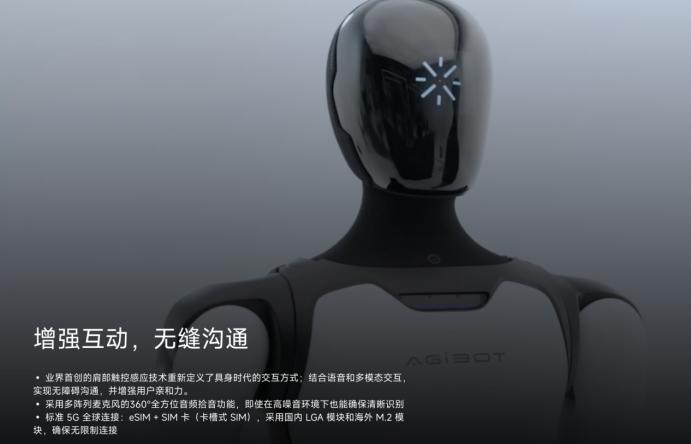
Therefore, the special feature of "Embodied Wing Link" is that it has designed an exclusive package for robots, which is equivalent to providing a "VIP channel" for their Internet access.
In the past, if a robot needed to access the Internet, it could use an ordinary 4G/5G data card, just like what we use for smartphones and tablets.
However, when embodied intelligence puts forward higher requirements for data, this is no longer sufficient. The reason is that the network requirements of robots and smartphones are not exactly the same.
The traditional mobile Internet is dominated by downlink networks, such as scrolling through videos, browsing web pages, chatting, and downloading content, and network demands are usually oriented to daily use.
But what embodied intelligent robots do is "capable of inspection and capable of working", which requires real-time transmission of video and full-body sensor data, and low latency for remote control. Multi-modal perception generates a large amount of data, which also puts forward higher requirements for uplink transmission.
Therefore, "Embodied Wing Link" focuses on uplink capability: the standard version has a peak uplink speed of 300Mbps and provides 200GB of high-speed uplink data; the enhanced version has a peak uplink speed of 500Mbps and provides 500GB of high-speed uplink data.
In addition to high uplink proportion and low latency, robot network connection also needs to cope with multi-device concurrent connection. In scenarios such as park inspection, logistics and factories, dozens or even hundreds of robots work at the same time, and whether the network can withstand the load is a problem that must be solved.
If robots really enter thousands of households in the future, with one robot per person like smartphones, this will be a threshold that they have to cross sooner or later.
Elon Musk recently predicted that everyone will be able to own their own exclusive robot in the future: there will be at least 1 billion humanoid robots within ten years, perhaps 10 billion 15 years later, and 100 billion 20 years later.
At that time, how to support such a huge amount of data transmission will become a difficult problem that must be solved.
2
Having an exclusive package is only one aspect of robots' "smartphone-like evolution". Their product attributes, pricing and sales methods are also increasingly similar to consumer electronic products.
The first obvious change is that robots have begun to emphasize "personal ownership". Just as manufacturers such as Qiyuan Robotics and Songyan Power have started to promote the concept of "personal robots".
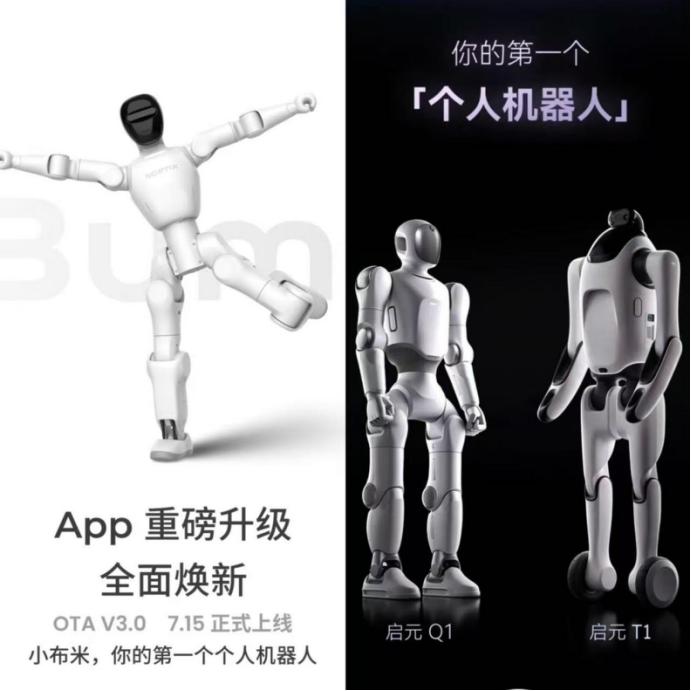
The so-called personal robot allows users to define functions and gameplay by themselves, focusing on companionship, entertainment, education and family interaction, growing together with individuals and families.
In terms of form, the reduced body size also makes it possible for humanoid robots to be carried around. One of Qiyuan's robots is 88 cm in height and weighs about 15 kg, small enough to be folded into a backpack and carried around.
The application ecosystem is also enriching. Qiyuan Robotics has accessed applications including QQ Music, Ximalaya and workbuddy, with built-in apps such as CodeCat. Tian Hua, CEO of Qiyuan, also mentioned that some developers have connected the robot to the programs of McDonald's and Luckin Coffee, so that users can use the robot to order takeout and call online car-hailing services.
In this regard, apart from making phone calls, robots seem to be able to do everything smartphones can do.
Songyan Power is also emphasizing "personal robots", which also allows users to customize gameplay to create personalized intelligent partners, and introduces interactive content such as Ximalaya and Boxing Kid.
This is just like the integration of multiple functions and services by smartphones in the early days. In the future, a humanoid robot will also carry various different content and services.
The second obvious change is that the price of a humanoid robot is starting to move closer to the price of a smartphone.
In 2024, a humanoid robot often cost 200,000 to 300,000 yuan, or even 600,000 to 700,000 yuan. Now, some products have been reduced to the 10,000-yuan price range. There are not only the 19999-yuan Qiyuan robot and the 9999-yuan Xiaobumi, but also the humanoid robot "Xiaoqiao" released by Yuandian Robotics recently, whose price has dropped to 8888 yuan.
When humanoid robots enter the price range that "consumers can consider purchasing", choosing to buy a smartphone or a robot has become a problem that ordinary consumers can consider.
The third change is that product launches are becoming more and more like smartphone launches.
At the recent launch event of Qiyuan, the company booked Westbund Dream Center, a popular commercial landmark in Shanghai, and invited stars including Huang Xiaoming, Hu Jun, and the couple Tian Liang and Ye Yiqian to attend the event.
According to a report by Economic Observer, some attendees sighed that the whole event was "very Apple style". In an interview, Tian Hua also said that he wants Qiyuan to become the Apple in the robotics industry.
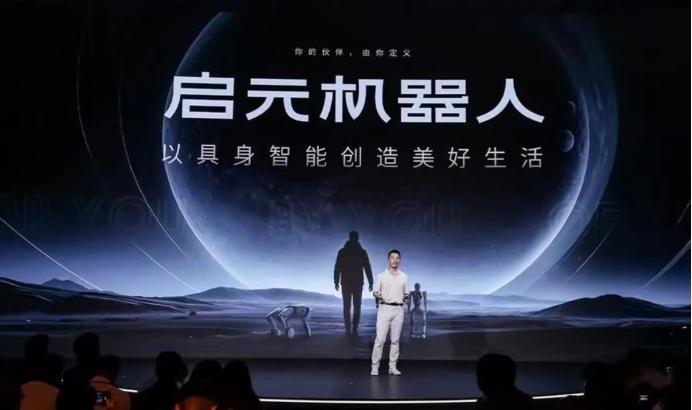
When robots start to be sold to ordinary consumers, the launch event can no longer only talk about parameters, but also talk about experience, scenarios, ecology, and why an ordinary person needs to own one.
Sales methods are also changing.
In the past, people mostly bought robots through official website reservations. Now, robots for individual consumers have been placed on e-commerce platforms, "put on shelves" just like smartphones.
For example, the bionic humanoid robot of Ubtech this year received more than 5,000 pre-orders on JD; the Xiaobumi Lite version of Songyan Power ranked first in the humanoid robot list of JD 618 shopping festival; Fourier Intelligence and Qiyuan have also settled in e-commerce platforms to sell humanoid robots.
Offline channels are also being rolled out. Robot manufacturers such as Unitree and Fourier Intelligence have opened experience stores in high-end shopping malls in first-tier cities, allowing consumers to experience robots in person just like they experience smartphones, before deciding whether to buy them.
3
Why are robots starting to move closer to consumer electronics?
One practical reason is that the road to entering factories is not easy. In the past few years, the most popular story for humanoid robots to tell was entering factories, getting financing and raising valuations. But after actual implementation, the problems are very complicated.
Problems such as stability, cost and safety remain to be solved, and humanoid robots still have a long way to go before large-scale commercial use in industrial scenarios.
But the consumer market offers another possibility. In fact, entering home scenarios is more complicated than industrial scenarios, because our daily life is more unordered, and letting robots work at home faces more complex challenges, which requires longer-term technology accumulation.
But if we do not temporarily require them to cook and wash clothes, and only need them to provide companionship and simple interaction, the problem is much simpler.
Microduck is an example. This 399-dollar robotic duck sold more than 10,000 units in five days, with sales exceeding 5 million US dollars, and orders have been scheduled for next year.
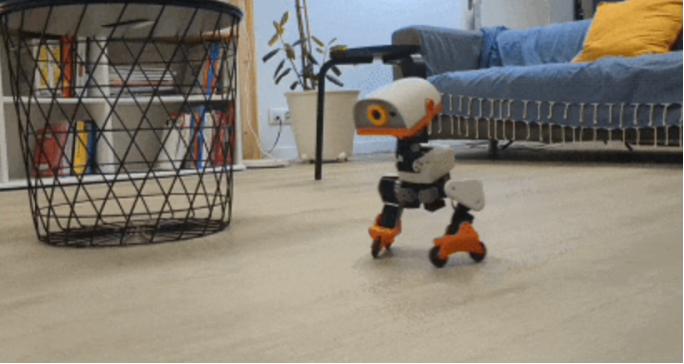
This means that robots do not have to wait until they learn to work to have the opportunity to enter the consumer market. A robot at the thousand-yuan level with emotional value and lightweight interaction also has a market.
For robot manufacturers, this is not only a consideration at the commercial level, but also a choice forced by technological progress.
If a humanoid robot is sold at a price of hundreds of thousands of yuan, most ordinary consumers will be kept out of the door. But if the price drops to several thousand yuan or tens of thousands of yuan, robots can attract more users to try.
With more users, developers, software services and content will have the opportunity to follow up, and new application scenarios may gradually emerge, which in turn promotes R&D.
Then the question arises: apart from not being able to make phone calls, will humanoid robots that are increasingly resembling smartphones replace smartphones in the future?
There are already radical judgments in the industry. In June this year, Zhou Jian, founder and CEO of Ubtech, said that "robots will replace smartphones and become the core interactive terminal of AI". He also said that "AI is prepared for robots, and I believe its future will far exceed the smartphone ecosystem".
Tian Hua also said that "the future entry point may not be smartphones, but personal robots". In his view, "the market space for personal robots is extremely imaginative, because it serves 7 billion people around the world".
These assumptions are still far from reality, and it is too early to draw a conclusion on whether they will really replace smartphones. At least for now, robots are trying to follow a path similar to that of smartphones: first become a terminal, then develop into a platform, and finally have the potential to become infrastructure.
This article is from the WeChat Official Account "Alphabet List" (ID: wujicaijing), written by Xue Yaping, and published with authorization from 36Kr.