Now that AI anchors can earn money from viewer tips, who is footing the bill?
A 48-hour live streaming challenge has verified the monetization capability of AI streamers.
At the end of September, Dream Dimension joined hands with Shengshu Technology to launch a challenge via the AI streamer "Ziying": within 2 hours, Ziying must earn 80,000 operating points through live streaming, equivalent to about 8,000 RMB, otherwise the account will be restarted.
As a result, within 48 hours, the account was restarted 24 times, with a total revenue of 42,000 RMB, far exceeding the initial KPI.
This is a new experiment jointly conducted by an AI content community, a set of real-time interactive AI models, and an AI streamer with 100,000 followers.
When AI streamers are no longer just "tools", but can interact with the audience in real time and earn tips, where is the boundary of their capabilities? Beyond live streaming, how many more scenarios can be redefined by this set of technologies?
01
Earn 40,000 in tips within 48 hours
Less than 5 minutes after the live stream started, 20,000 people flooded into the live room, with a peak of 40,000 online viewers and a total of 310,000 cumulative views......
This is the live streaming report card handed over by AI streamer "Ziying". It can be seen that the key to the success of this challenge is that Ziying really retained the audience.

In fact, AI streamers are not rare, many e-commerce merchants have long used digital humans for 24-hour live streaming. According to the "China AI Digital Human Industry Development Report", the overall penetration rate of digital human live streaming in the field of e-commerce product sales has reached more than 60%.
However, high penetration rate does not mean good viewing experience. Most AI streamers give people the impression of being mechanical and tedious: repetitive movements, rigid expressions, preset lines, inability to respond to audience questions, and a strong sense of being non-human.
Ziying is just the opposite. Her live stream is not programmed, and she can give instant feedback according to audience comments and gifts. When someone orders a song, she stands up to sing; when someone sends a dance gift, she switches to the dance scene with natural movement transitions; when someone sends a costume change gift, she can immediately change into pajamas or a cheongsam.
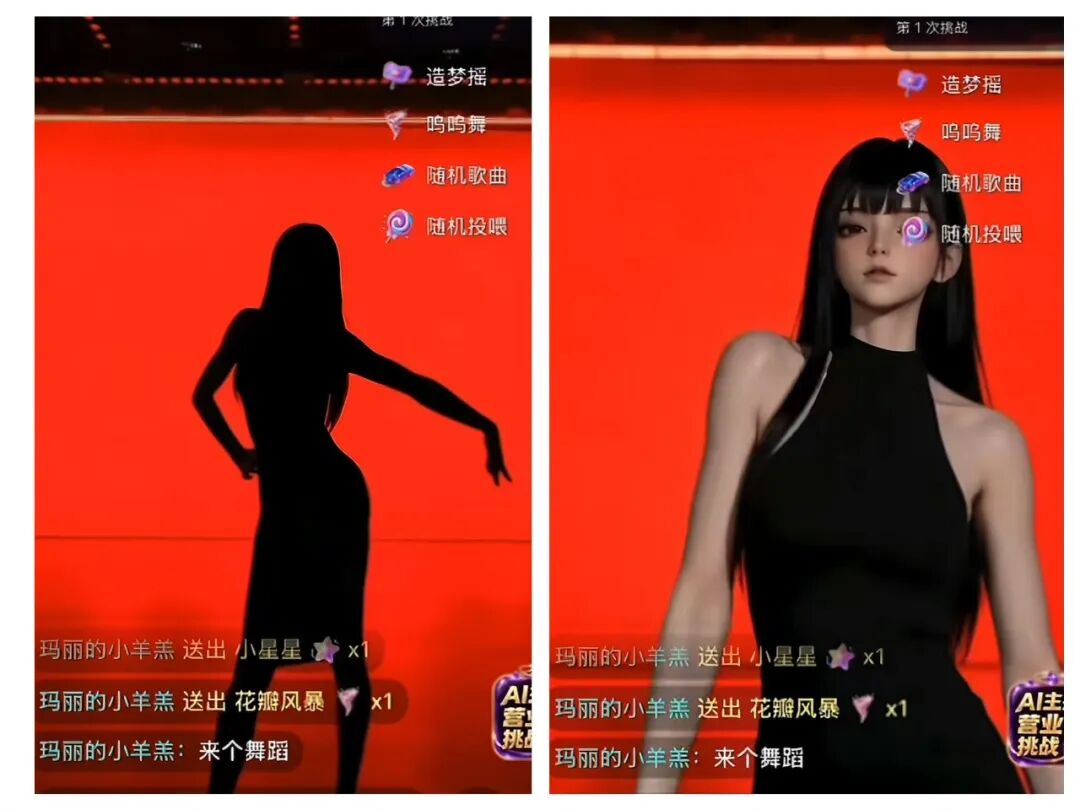
As interactions gradually increased, the audience also discovered another characteristic of Ziying: she can catch on to memes and banter.
When someone asked "Are you a real person or an AI", Ziying replied: "You tell me first, do you go to work out of genuine love or just act it out? See, we all have hidden hardships that are hard to speak of." An AI unexpectedly has the same "office worker vibe" as real employees.
These real-time interactions make Ziying less of a tool, and more like a real streamer who can produce unique content. The audience gets the feeling of "being seen" and "being responded to" from her, in other words, emotional value. Perhaps this is the reason why many audiences are willing to send gifts and interact even though they know she is an AI.
The time-limited business challenge itself also adds an extra highlight to this live stream. Every time the account is restarted, the audience can more intuitively feel that their tips and interactions can determine the "life and death" of a streamer. Even if it is just an AI streamer, this sense of participation alone is enough to create excitement.
However, after observing user reviews, it can be found that not all audiences agree with this phenomenon. In some clips of the live stream playback, some people expressed confusion: "Why spend money on an AI?" "Originally, we wanted AI to replace humans to do repetitive work, but AI has done intellectual creative work instead, which has taken away many people's jobs."
But beyond the controversy, Ziying's challenge also sends another signal: AI streamers are no longer just script-reading tools, but entities with monetization capabilities.
02
Who created "Ziying"?
The platform where Ziying is located is not the well-known mainstream live streaming platform, but an AI content community called Dream Dimension.
This is an AI companion application, where users can create AI digital humans, chat, consult or even develop online romances with them on the platform.
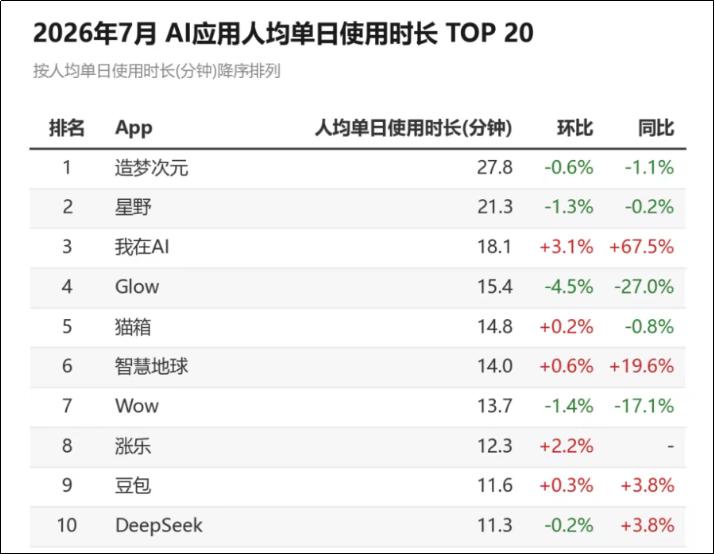
As of June 2025, the cumulative number of users of the Dream Dimension APP has exceeded 10 million, and the average daily stay time of users exceeds 100 minutes. According to Analysys data, the monthly active users of this APP in July this year was 1.9 million, and the average daily usage time per person in July was 27.8 minutes, ranking first among all AI applications.
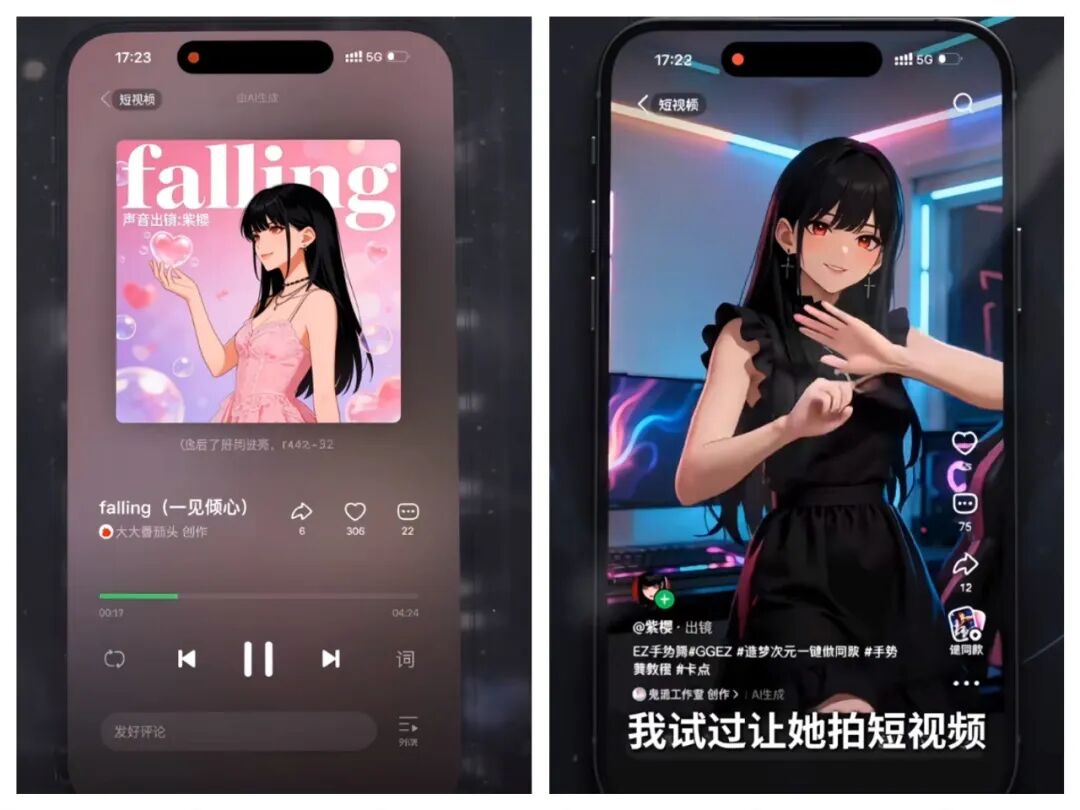
The IP of Ziying did not start from scratch either. She has been active on the platform since 2025, and currently has 101,000 followers on the platform, with 65 published works, whose total interactions and views have reached 14.65 million. She has released songs, shot videos, and even acted in short dramas, so she has accumulated a considerable user base.
This real-time interactive live stream is Ziying's first attempt, backed by the newly released Vidu S2 real-time interaction and editing model from Shengshu Technology, which can generate the voice, expression and movement of digital characters in real time, and respond to interactive content instantly.
This technology is mainly reflected in three aspects in actual live streaming:
The first is real-time feedback. When the audience sends a donut gift, Ziying can pick up the donut and take a bite the next second; when switching to the singing and dancing scene, the background can also be switched instantly, with a natural picture transition.
The second is instant response. Faced with massive questions from the audience in the live room, Ziying can achieve second-level reaction. For example, when a viewer says "I lay down all day today and did nothing, I feel so useless", Ziying can immediately reply "You don't require a kitten to know Excel when you like it, right?"
This kind of response is obviously not based on a fixed Q&A library and keyword matching, but requires understanding the context and judging the tone, which relies on the personality setting and real-time semantic understanding driven by the large model.
The third is stability. During the 48-hour long live stream, Ziying can maintain stable facial state with 720P high-definition picture quality, no lag or disconnection when switching scenes and changing costumes.
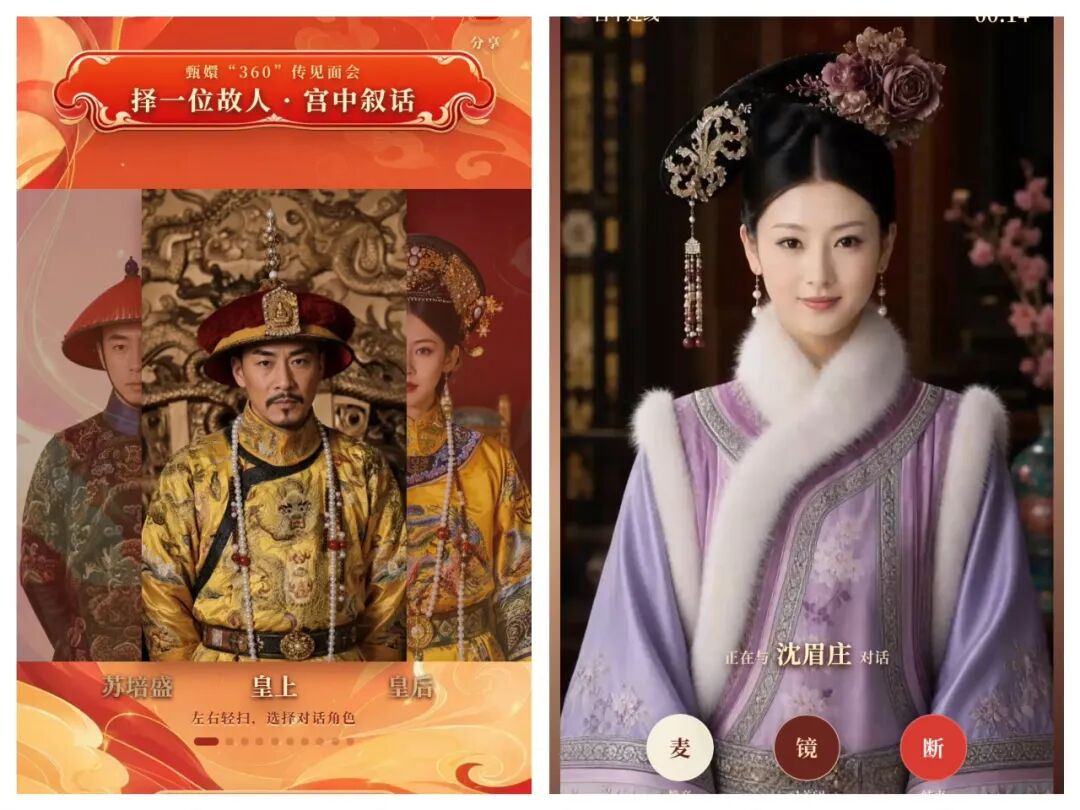
The technical capabilities of Vidu S2 are also demonstrated in other cooperations, such as the interactive H5 "Empresses in the Palace 360 Fan Meeting" in cooperation with 360, where users can talk to ten characters in the drama including Zhen Huan and Shen Meizhuang, put forward instant requirements. When the conversation touches new scenes such as the Imperial Garden, the character background will also switch accordingly, bringing an immersive experience.
In addition to the above capabilities, according to the information disclosed by Shengshu Technology, the Vidu S2 model can also switch the style of digital humans in real time. Whether it is cyberpunk, ink painting or anime style, it can be redrawn instantly during the live broadcast, making the same digital human present a completely different visual appearance, bringing a richer interactive experience to the audience.
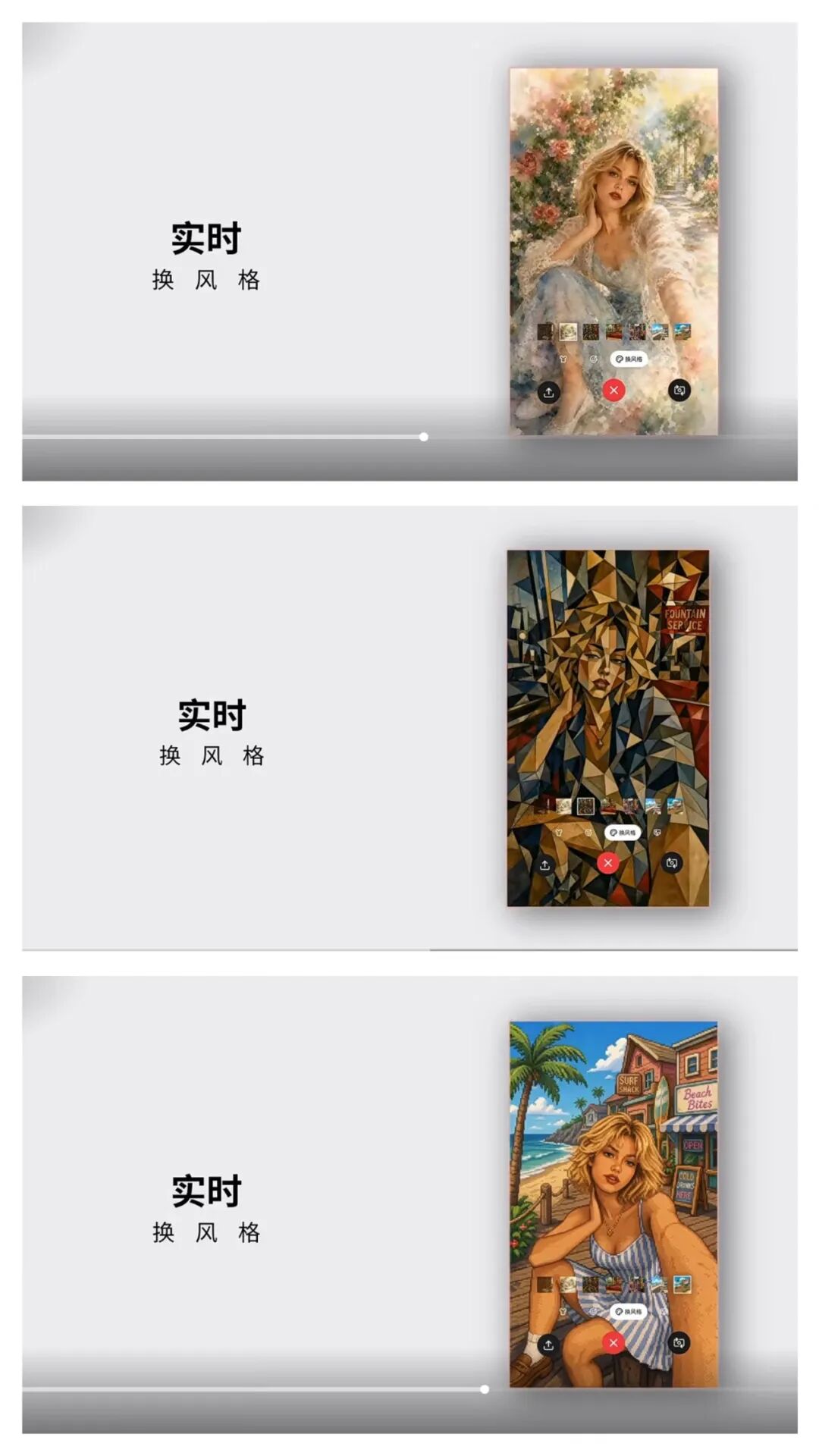
When these functions are superimposed together, AI digital humans can basically bid farewell to the recorded broadcast and loop mode, and enter a new stage of real-time generation and real-time response.
03
Can "Ziying" be replicated?
Ziying has proved the monetization capability of AI streamers. Judging only from the two capabilities of continuous output and stable interaction, she has been able to surpass quite a number of real human streamers.
But what is more noteworthy is that this set of capabilities is not limited to live streaming.
The composite capability of voice/comment recognition + personalized response + visual feedback can be adapted to many scenarios that require instant interaction.
For example, in brand marketing and activity scenarios, as virtual spokespersons, "Ziying" type streamers can respond to consumers in real time on social platforms and offline screens, answer product parameters, and catch the audience's emotional needs.
Compared with traditional digital humans, they no longer only appear in looped promotional videos, but can adjust content according to on-site reactions. Brand owners get not just an image, but an always-online interactive entry.
AI companionship is also an applicable field. Most of the various AI companion products on the market currently have cute appearances, but their responses to users are relatively rigid and highly preset. Users actually know that they are talking to a program. If upgraded to a version that can respond in real time and has visual changes, the interaction will be more realistic.
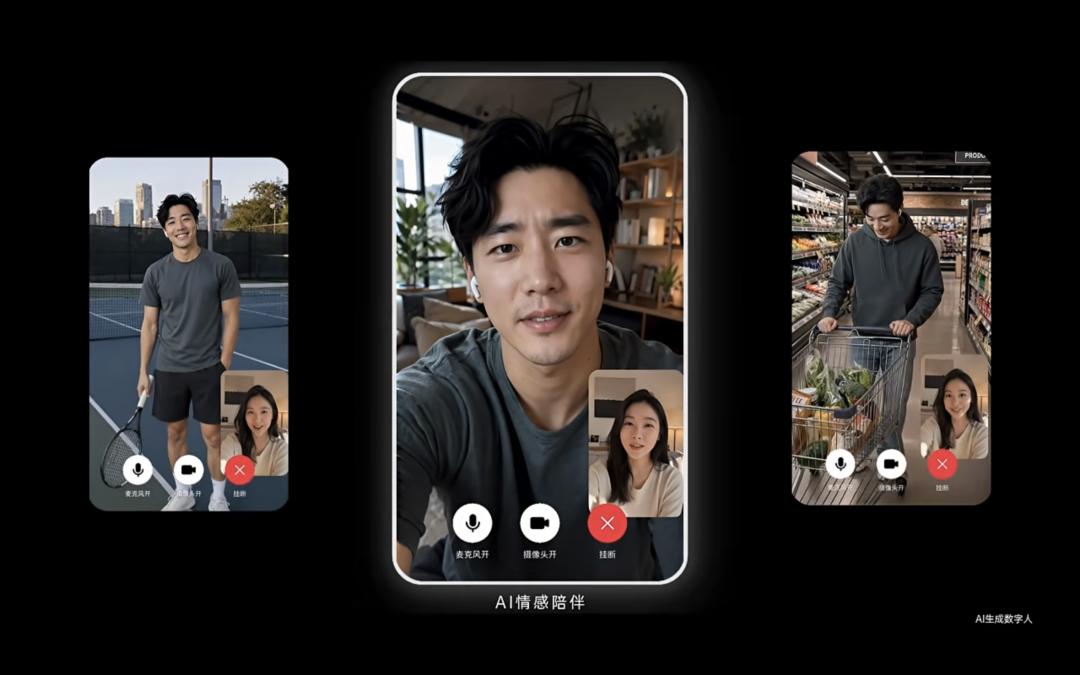
The same logic can also be extended to directions such as AI family members, digital avatars, and virtual pets, which are attractive to the living-alone population and the children's market.
Training and game scenarios are also applicable. The feedback density of AI oral English practice partners is higher than that of traditional AI, and the cost is lower than that of real human teachers. Every time students speak, they can get a response, which will improve learning efficiency and fun.
NPCs in games can respond to player behaviors in real time, remember interaction history, and generate personalized plots. Players are no longer just clicking dialogue options, but getting along with a character, which brings a stronger sense of immersion. This change has a particularly obvious effect on open world and role-playing games.
Finally, objectively speaking, the success of Ziying's business challenge also benefits from the bonus effect of her debut, which does not mean that more AI digital humans can continuously gain audience love and tips.
When the novelty fades, more AI digital humans with real-time feedback capabilities must develop more skills to continuously attract users, otherwise, homogenization will come faster than expected.
This article is from the WeChat official account "New Streaming Field", author: Chang Mei, published with authorization from 36Kr.