I earn 120 yuan per day by working as a "teacher" for robots.
Robots are still learning to perform tasks, and the "teachers" guiding them have already started their work.
They are robot data collectors. Folding clothes, making beds, washing dishes, sticking labels on express packages — these actions that people are used to doing are the tasks they demonstrate repeatedly every day. The recorded data will be reviewed, filtered, and then used to train robots.
At present, there are roughly several approaches to data collection: one is teleoperation, where collectors wear VR headsets to "operate" real robots; another uses handheld grippers like UMI, where people hold equipment that imitates mechanical arms to perform tasks, without needing real robots to record movement trajectories; the third uses cameras to record the first-person perspective of humans, which is called Ego data in the industry — collectors wear cameras on their heads or hang them on their chests, doing housework as usual. Many collectors cannot clearly state which category their work falls into, and they care more about how many minutes one data point takes, how many hours they need to accumulate per day, how much money they can earn by repeating these actions every day, and how long this kind of work can last.
"Focus One" talked to five practitioners.
Some people do housework repeatedly at home with a monthly income of about 5,000 yuan, taking this job as a transition; some lead teams to collect data, and if one parameter is not adjusted correctly, hundreds of hours of data will be completely invalidated; others have collected data for robots for several months, but have never even seen a robot at the workplace.
Headsets pressing on glasses, sweat soaking gloves, having to restart after clothes fall — these are all their daily work experiences. Some people feel like they are "tightening screws" on an assembly line, while others have developed a "feel" for the machine and can gain a sense of achievement from it.
What has this new job brought them, and why did they make different choices? The following are their stories.
01. Daily salary of 120 yuan, I worked as the "hand" of the robot for a month
Xiao Sun | 22 years old, Shanxi, part-time at an embodied intelligence data collection company
This summer vacation, I originally wanted to find an internship, but after submitting applications I didn't find a suitable position, so I planned to get a part-time job to pass the time. When I saw "robot data collection" on a recruitment app, I was curious about how people could provide data for robots, so I went to apply for the job.
Before I went, I thought this would be like an experience project in a science and technology museum. Put on the equipment, do a few movements, which would be novel and not too tiring. Only when I actually started working did I find that it is more like an assembly line job that requires long hours of repetitive labor.
After joining the company, we received two days of training first, mainly learning how to use the equipment and the requirements for movements. When officially on duty, I have to wear a VR headset, carry a charging backpack, and hold a gripper in each of my two hands.
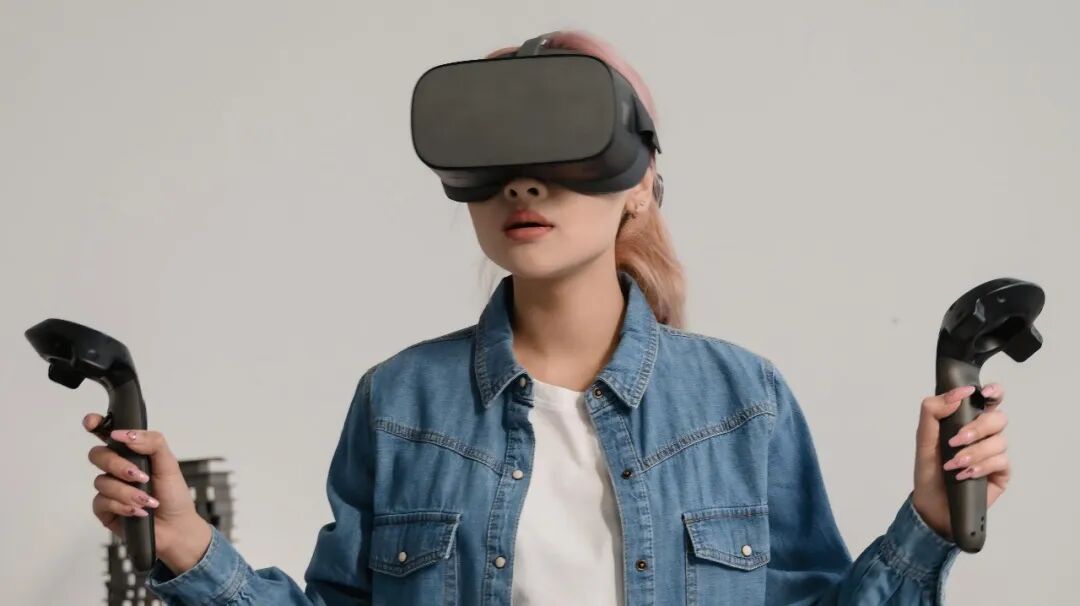
Every day at work, we first claim tasks in the group chat. The main work content is to do housework while wearing the equipment, including folding clothes, sweeping the floor, washing dishes, etc. It looks simple, but there are many actual requirements.
For example, when folding clothes, you can't keep folding the same piece, you have to fold T-shirts, skirts and coats, and different clothes have different folding methods; you also can't always fold in the same scene, you have to switch between the living room and the bedroom. The company wants as diverse data as possible. If the same action is shot too many times from the same angle, its value will decrease.
Each video cannot be less than two minutes. After completion, they are uploaded in batches and then reviewed by the backstage. Clips with non-standard movements, unclear pictures, or unqualified light will be sent back and not counted as valid duration.
We have day shifts and night shifts, both 8 hours long, working six days a week with one day off, and wages are calculated by the day. The day shift pays 120 yuan, and the night shift pays 135 yuan. The assessment mainly focuses on valid duration: at least 3 hours per day, and an accuracy rate of 85% is considered passing. Every month, the company will also rank employees by cumulative valid duration, and the top few will get extra bonuses. At first, I was always worried that I couldn't meet the standards, but after getting familiar with the equipment, I found that the requirements were not as difficult as I imagined.
The most difficult part is wearing the equipment for a long time. The grippers are not very flexible and the angles are hard to control. When facing soft and thin clothes, they often can't grip them, and if the clothes fall, I have to re-record. Folding a piece of clothing often needs to be repeated more than ten times, and the movements can't be exactly the same, so I have to think about what angle and method to use for the next attempt. With my arms raised all the time, my shoulders, wrists and neck are very sore after a whole day's work.
After working for two days at the beginning, I once thought I would never want to touch this job again. After about a week, my body gradually adapted, and I became more skilled with the equipment.
Later I found that some people with non-standard movements can also pass the review, and there seems to be a certain space for "slacking off" in actual execution. But even so, repeating similar movements every day is still very tiring, which is not much different from tightening screws in a factory.
The staff turnover rate here is very high. Most of the people who come are young people, basically under 30 years old, and many leave after working for two weeks. The company's requirements for new employees are also getting higher and higher. When I first came, I still had two days of training, but later the training was shortened, and new employees were required to reach the level of skilled workers just one day after arrival.
After working for a full month, I still resigned. For me, the daily salary is not high enough to offset the consumption of repetitive labor and physical energy.
I think if you just want to find a part-time job to get through a transition, or are curious about robot data collection, you can give it a try; but if you want to broaden your horizons and find a long-term career direction, this job may not bring much gain.
02. I taught the robot to fold towels, and it even learned my unconscious small movements
Zheng Zheng | 26 years old, Beijing, data collector at embodied intelligence company Lingyu Intelligence
When my family asks me what I do, I usually say: "You can imagine me as a preschool teacher, I am teaching robots."
I do robot data collection in Beijing, and I have been in this industry for more than half a year. I used to work in the IT industry. When I saw this position on a recruitment app, it even asked if I usually play games. I found it novel, so I submitted my resume. The interview required on-site operation of the machine to test coordination; after two or three days of onboarding training, I could get started. Every day I wear a headset to remotely operate the robot, collect the process of completing movements into data, and hand it over to my colleagues in the next stage to train the model.
This job pays a basic salary plus performance bonus, and the income is a little less than my previous job. But I am really curious about this industry, so I am willing to continue doing it. When I first joined the company and saw so many robots, I thought they were so cool and amazing, but after repeating the same thing every day for a long time, I also feel bored.
Recently, I mainly teach robots to fold towels and boxes, which are relatively simple, and one data entry takes less than two minutes. The more difficult task is putting on pillowcases. The pillow core is very soft, and it takes a lot of time to operate the robot to tuck the pillow core into the pillowcase little by little. For some simple tasks, 200 pieces of data can be collected in one afternoon; for difficult tasks, it may take a whole week to collect.
My working hours are from 9:30 a.m. to 6:30 p.m., with 15 minutes of rest for every 45 minutes of work. Some tasks require keeping my arms raised to operate, and my arms get tired after working for a long time. When I feel bored, I can listen to music or chat with colleagues next to me. The most frustrating thing is that the machine suddenly breaks down, for example, a cable is loose, or the poor network leads to recording failure, and the collection efficiency is immediately affected.
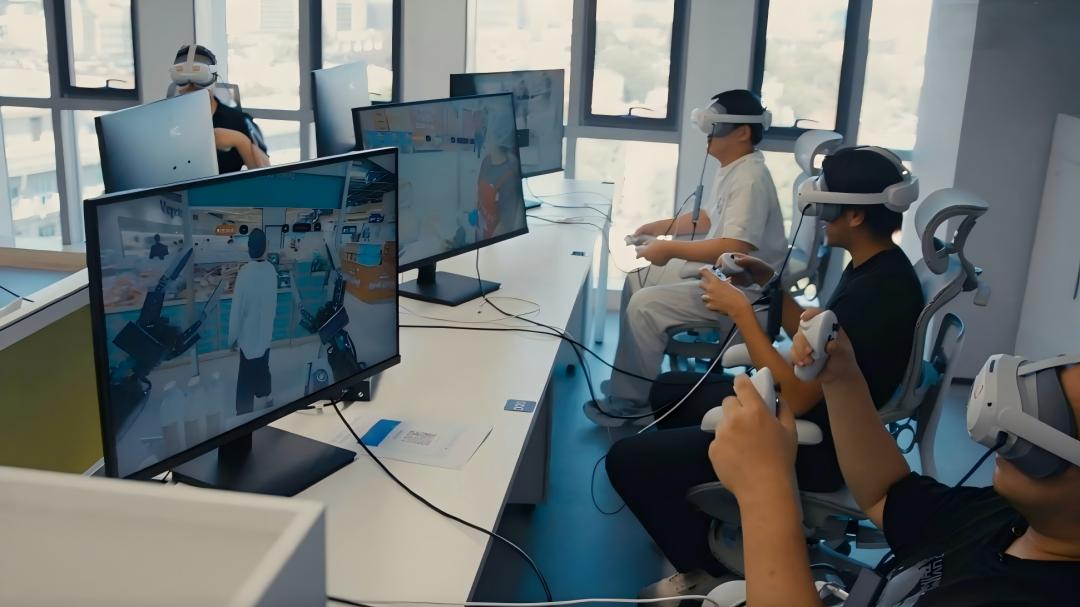
Source / Lingyu Intelligence official website
After doing repetitions many times, I gradually developed a "feel" for the machine. Some movements are difficult to do with the front hand, but can be easily completed with the backhand, because the machine's range of motion is limited; some movements look simple, but if the starting position or wrist angle is wrong, they will also fail. These experiences cannot be learned only by reading documents. After getting familiar with the machine, I know what angles it can reach, so I can adjust accordingly. If some prescribed steps are not smooth to perform, I will also give feedback to the management: changing to another method may be simpler.
New colleagues who just come think folding boxes is difficult, and I will tell them it's okay, just practice more, and it will get better eventually. Many tasks will feel very simple when you look back after you are skilled at them.
What's more interesting is that I can see some familiar small movements from the robot. Sometimes I unconsciously make the gripper clamp empty, and later in the generated model, the robot's gripper will also shake unconsciously. The prescribed initial position is to place both hands flat in front of you, but some people are used to raising their hands higher, and the robot will learn a higher starting position accordingly.
A couple of days ago, the company made several demonstrations: the robot can continuously fold several towels, and can also sort and assemble shapes. The data I collected was used in these demonstrations, and I still think it's so cool, with a feeling that "I also contributed to it". The robot is still a child now, a not very smart child, who needs us to teach it over and over again. When its capabilities become stronger, we data collectors may also need to do more complex and more targeted tasks.
I also participated in the robot tasting project of JD 7FRESH, which can interact with guests, more interesting than repeatedly folding towels. In the future, I want to move towards the marketing direction, participate in exhibitions and provide training for customers. After working for more than half a year, I already know how boring this job can be, but I still think it's very cool and fun.
03. I have been doing data collection for several months, and I have never seen a single robot
Li Zhe | 23 years old, Guangzhou, data collector at an embodied data company
I used to be a video editor. After this year's Spring Festival, I wanted to see if there were any new opportunities, and I swiped to a "data collection" position when looking for jobs. The job description on the recruitment notice looked very relaxed: wear data collection equipment and do some things you usually do at home. I thought it was not difficult, so I signed up.
The workplace is in Guangzhou. The onboarding training was held in the company's factory, which was divided into many small rooms to simulate various family scenarios. At first I thought this job was just wearing equipment and doing movements in my own home, but I didn't expect that I had to come here to work every day, and I wanted to quit at that moment.
In the first stage, my main task was to wear a headset to do three things: wash dishes, arrange plates, and move a set of tea sets repeatedly from one table to another. Each piece of data takes less than one minute. There is a large screen in the workroom that displays in real time how many pieces of data I have completed today and how much the valid data duration is. Usually after a whole day's work, I can accumulate three to four hours of valid duration.
The fully charged collection equipment can only be used for two hours, so after working for two hours, I have to stop to charge the equipment and take a rest by the way. Later, the company provided an external power bank, which can be connected to the equipment to work for more than four hours in one go.
After I became skilled, I was transferred to the express delivery scenario to stick labels on cartons. This time, in addition to the headset, I had to wear an extra glove on my dominant hand. The glove is very heavy, and the work is more complex: the hand movement must be completely captured in the shooting frame for this piece of data to be considered qualified. Sometimes I have to repeat it many times to record a qualified piece of data.
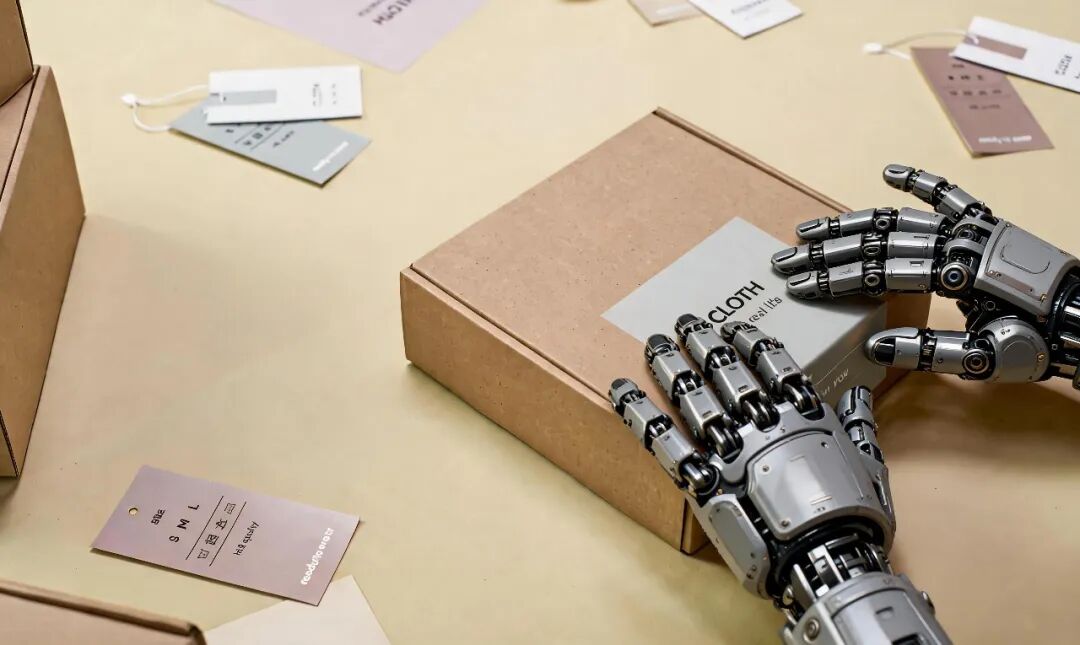
Source / AI generated
The salary also increased a little. At the beginning, I got 100 yuan a day, but I could only get the full amount if I met both the working duration and valid duration requirements. After switching to the express label sticking job, I got 150 yuan a day.
This job is far less relaxing than it looks. I am nearsighted, and the frame of my usual glasses is relatively large, so the headset just presses on the frame, which is very uncomfortable after a long time. The equipment itself is also heavy, and my neck gets sore after wearing it for a long time. The gloves are not breathable, and my hands are full of sweat after wearing them for a long time. Sometimes the equipment will prompt weak signal, so I have to stop, take off the gloves to wipe my hands, then put them back on and continue working. If I take off the gloves for too long, the connection between the gloves and the head equipment will be interrupted, and I have to re-pair them.
Sometimes my friends ask me what I have been doing recently, and I say I am doing robot data collection. They think I can see many humanoid robots at work, but in fact, after working for several months, I have never even seen a robot at the workplace.
I have always taken this as a part-time job, and I don't plan to do it for a long time. The main purpose is to find something to do and get some income by the way. Well, I feel it's just a little better than working on an assembly line tightening screws. Compared with my previous job as a video editor, the income level is similar. At least based on my experience in the past few months, there are quite a lot of data collection jobs, so I don't have to worry too much about no work to do in the short term.
If you want to find a part-time job to get through a transition, you can try it, but I don't recommend doing it for a long time.
04. Making the bed 50 times a day is similar to "tightening screws" in a factory
Xiao Ran | Born in the 1980s, Chongqing, embodied intelligence data collector
I used to be a headhunter. In the years when I worked as a headhunter, I contacted many robot companies. After talking to them a lot, I learned about this industry.
In August this year, I joined a data collection company in Chongqing as a full-time employee, working from home, and it has been more than a month now.
My work is very simple: do housework at home, wear a DJI camera on my head, and record the whole process. The tasks include folding clothes,