Behind the Surge of the Hard Technology Industry: Decoding the Beijing Government-Finance Hub Circle
China's Internet was born in 1994. On April 20, an international dedicated line with a bandwidth of only 64kb formally connected China to the global Internet. In the following years, Jack Ma founded China Pages, Charles Zhang returned to China, and NetEase, Tencent, and Baidu emerged one after another. The online shopping, social networking, search, games, and cybersecurity that people are familiar with today were almost all founded in those few short years.
After that, the Internet, mobile Internet, new consumption, and the hard technology tracks centered on AI and chips rose in relay, and China's scientific and technological forces have surged forward for 30 years.
Looking back at history, people are easily shocked by the trend of technology. But behind the main line of science and technology changing China, there is also a hidden line: the support of national policies and the voting preference of financial capital. The surging of China's scientific innovation is not only a technological upgrade and breakthrough, but also a process where trickles of capital and venture capital funds converge into a great river. This is the era narrative of the policy and finance circle.
At present, hard technology tracks such as AI and chips are rising at an accelerated pace. The successful operation of a scientific and innovative enterprise not only relies on the breakthrough of the technical team, but also requires the support of national forces and the patient cultivation of the primary market. Policies, capital, and scientific research and innovation form a closed loop.
And the source of all this converges in Beijing, the capital city.
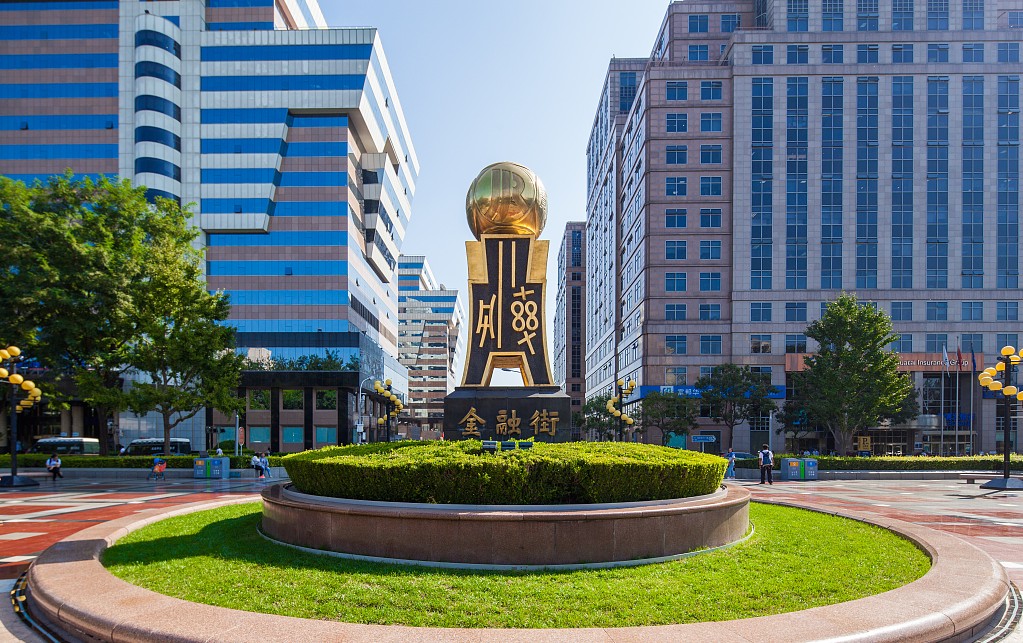
Beijing · Financial Street
01
Beijing Policy and Finance Circle: Four Layers of Structure, One Closed Loop
Beijing is the source of national financial policies and the vane of the capital market. It is also the only super science and technology innovation financial city in the country that integrates "top scientific research sources + state-owned parent fund cluster + market-oriented VC gathering place + hard core industrial scenarios".
To understand Beijing's scientific and technological strength, it is necessary to decode the major country policy and finance hub circle: Chang'an Avenue - Financial Street - Haidian - Lize.
Chang'an Avenue: Top-level Policy Foundation
As the core bearing area of the country's government affairs functions, it gathers national government institutions and is the ultimate source of national policy formulation, rule implementation and resource coordination. The top-level design of financial reform, scientific innovation support and industrial upgrading is output from here, delineating the development boundary, which is the most fundamental order foundation of Beijing's policy and finance circle.
Financial Street: Capital Source
Relying on the top-level policy support of Chang'an Avenue, Financial Street has become a national financial management center, gathering core institutions such as the People's Bank of China, the National Administration of Financial Regulation, the China Securities Regulatory Commission, large state-owned banks, insurance giants, and national team parent funds. It undertakes the functions of financial supervision, policy implementation, and top-level allocation of trillions of capital. It is the "decision-making brain" and upstream of funds in China's financial system, and also the core living water source of RMB venture capital and industrial capital for decades.
Haidian: Carrier for Scientific and Technological Innovation
With Zhongguancun as the core, it gathers top universities, key laboratories, and a large number of scientific and innovative enterprises, continuously outputting cutting-edge technologies, scientific research achievements and high-end talents. As the core position of hard technology and Internet innovation across the country, Haidian takes over the capital flow from Financial Street, implements the industrial policies of Chang'an Avenue, and completes the last mile of "policy - capital - technology".
Lize: Supporting Industrial Implementation
In recent years, the Lize Financial Business District has risen, forming an upstream and downstream complementary pattern with Financial Street. Financial Street focuses on upstream top-level decision-making, focusing on supervision and control, policy formulation, and allocation of large capital headquarters; Lize Financial Business District focuses on downstream emerging financial services, positioning itself as a digital financial demonstration zone, gathering fintech enterprises, law firms, accounting firms, rating agencies and other professional service institutions, undertaking the industrial spillover of Financial Street, focusing on industrial implementation, technology application and supporting services, and making up for the shortcomings of the financial industry chain in landing.
Policy support, financial empowerment, industrial implementation and supporting services, the four-layer system operates in a closed loop, making Beijing firmly at the top of the country's scientific innovation capital density and industrial implementation efficiency. It is precisely because of this policy and finance ecosystem that Beijing can always stand at the forefront of the trend in the three waves of Internet iteration, industrial upgrading and hard technology breakthrough, and lay out super industrial cycles such as AI and semiconductors in advance.
The industry refers to the core area - around the dual axes of policy and finance "Chang'an Avenue, Financial Street on the West Second Ring Road", extending outward to Sanlihe and Yuetan, covering an area of about 50 square kilometers - as Beijing's "policy and finance circle". This area gathers 175 headquarters institutions and more than 1,900 financial institutions, controlling more than one third of the country's financial assets, with a scale of up to 150 trillion yuan.
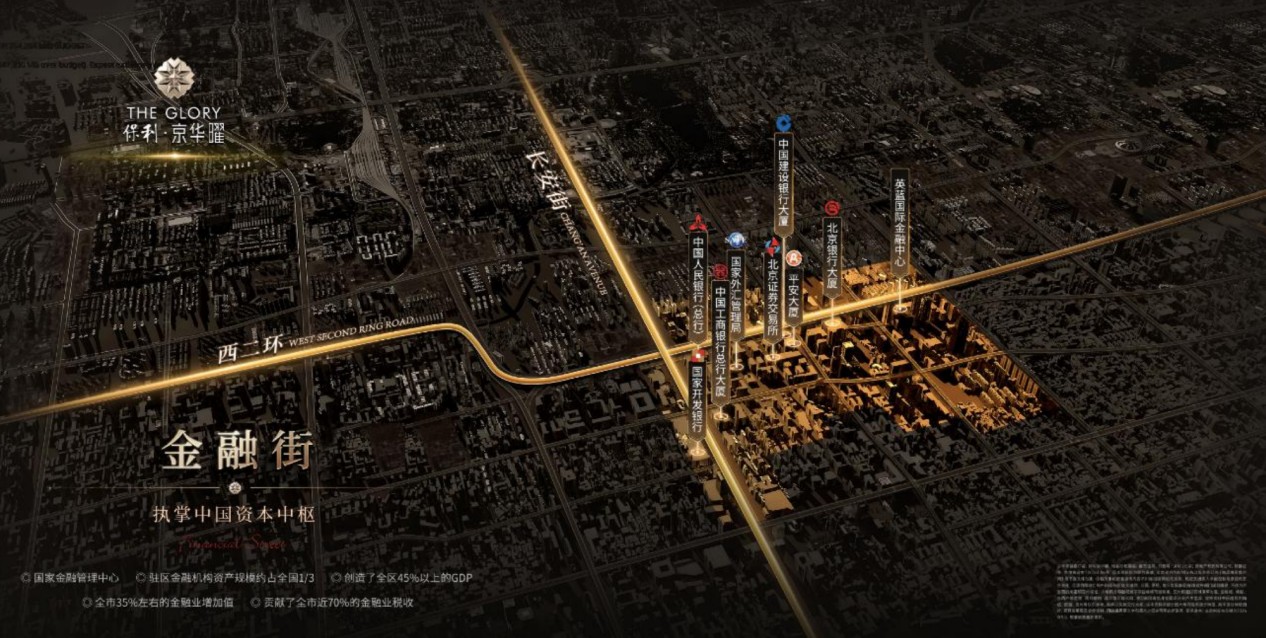
Location Map
It is a national-level financial hub integrating policy sources, capital headquarters and rule formulation, weaving a huge and sophisticated capital ecological network with supervision systems, policy resources, trillions of funds, professional intermediaries and industrial capital, which profoundly affects the trend of each round of scientific innovation wave.
The major country policy and finance hub circle is not only a gathering place for capital, but also a reconstructor of industrial trend and order. China's scientific innovation has never been a one-dimensional technology story. It is the joint effort of policy, capital, industry and city. And this is the center.
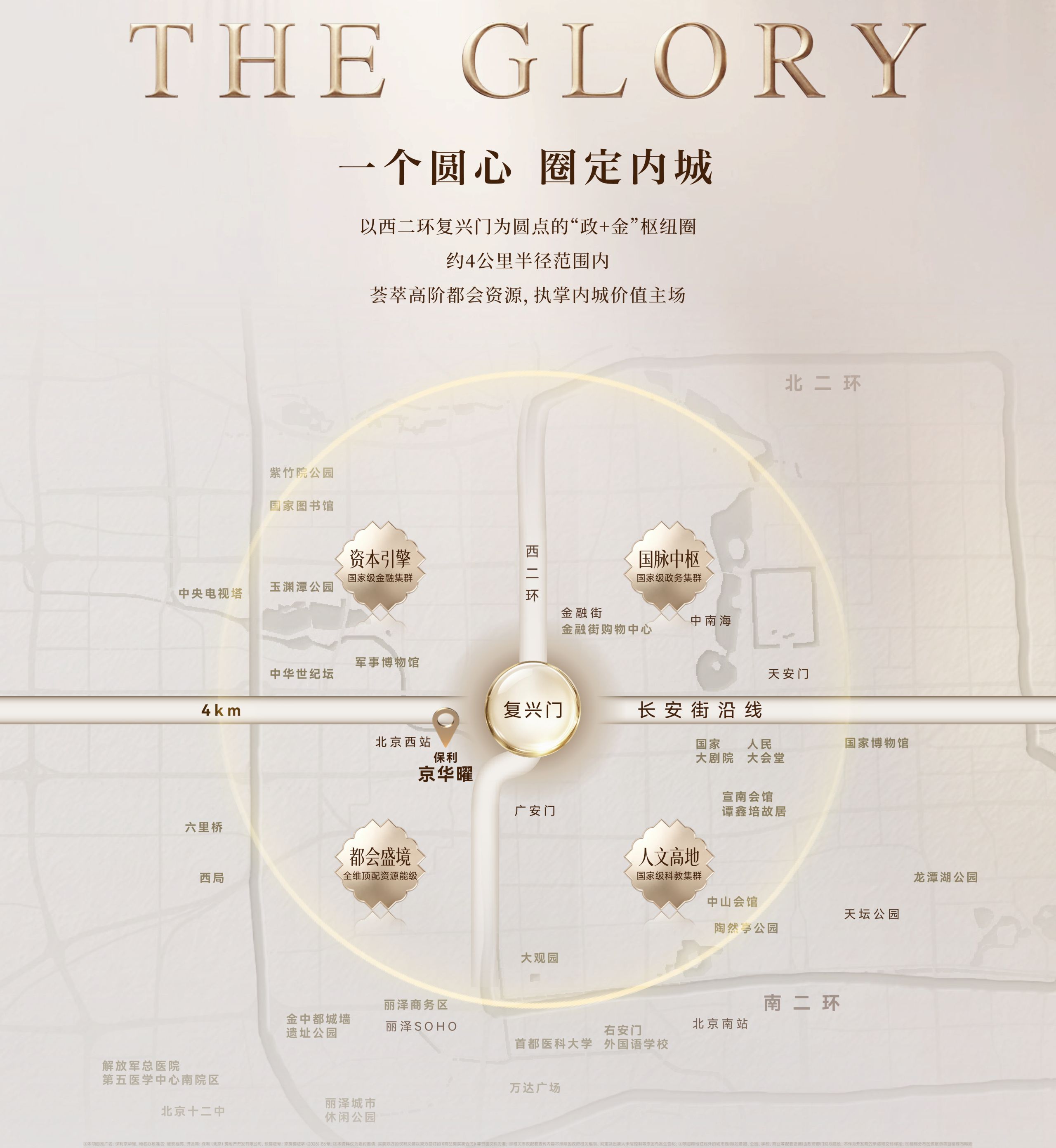
Dual Axes of Major Country Policy and Finance
02
Under the Aura, a Neglected Contrast in Life
Practitioners rooted in the policy and finance hub circle have distinct group characteristics. They hold cutting-edge information, can capture policy and regulatory dynamics at the first time, and have information advantages and decision-making advantages far beyond those of non-local capital; they are not a single group, but a multi-layer flowing talent network, and can enter the "revolving door" at any time to flow continuously among ministries / regulatory authorities, state-owned financial institutions, market-oriented capital, and industrial entrepreneurs.
In the eyes of outsiders, they are elites standing at the top of the industry, with a sophisticated business style, and a single decision may affect the fate of an enterprise.
But only the insiders who are truly rooted in the inner city know best that after taking off the elite aura of the workplace and returning to daily life, everyone will face a huge living contrast. This group of people who control the core resources of the city and have seen the top world have been compromising on their daily residence.
At present, most of the residential buildings along the West Second Ring Road and Fuxingmen are old houses with decades of age, and their product logic has long been completely outdated: the house type pattern lags behind modern life, the storage system is seriously missing, there is no activity space in the community, parking is difficult, the commuting route is chaotic, a large number of buildings have no elevators, and the low floors are humid and noisy.
Outside is the top of the city, but when you get home, you have to make do with life. This is the real existing residential pain point that most high-income families in the inner city are reluctant to mention to the outside world.
Their work pursues millisecond-level updates, but their living conditions lag behind the current new products by more than one era.
What's more helpless is that inner city improvement has always been scarce. While new houses outside the Fifth Ring Road in Beijing are iterating at a speed of one generation every five years, the way for people here to change houses is full of difficulties. The nature of their work determines that they cannot stay far away from this area, but the West Second Ring Road area with Financial Street as the core is located in the absolute inner city of Beijing, the land supply is strictly controlled, and new residential buildings are almost locked. Since 2014, the residential land transactions within the Third Ring Road of Beijing have only accounted for 2.7% of the city's total. It is almost impossible to find a place that can take into account the work circle and living quality.
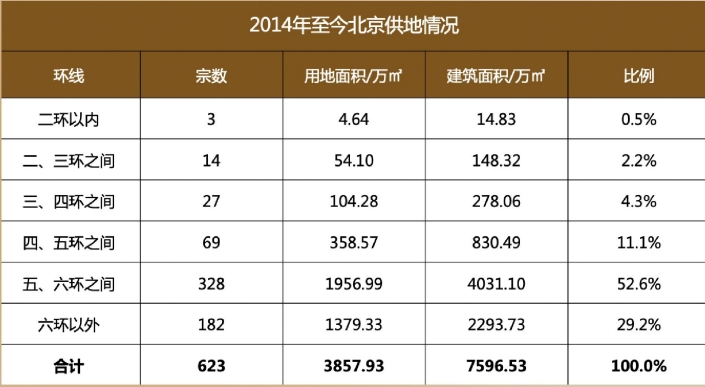
Beijing's Land Supply Since 2014
Only by understanding the pain points of the social circle can we truly understand the demand for inner city improvement. In 2026, a leading real estate enterprise went to more than 500 households in this area to conduct research, and found out their pain points in indoor storage, number of bathrooms, family social space, lighting, parking and other aspects one by one, and launched targeted residential solutions based on these real life scenarios.
This enterprise is central state-owned enterprise Poly Developments, and its new generation of product is located along the West Second Ring Road: Poly Jinghua Yao.
03
A New Generation of Residential Sample in the Policy and Finance Hub Circle
Jinghua Yao is located in the core block of Taipingqiao on the West Second Ring Road, with irreplaceable scarce location. It is located at the core of the junction of Financial Street, Lize and Haidian, truly half a step to Xicheng and one step to Haidian. At the same time, it is 1.5 kilometers south to Lize, with full-dimensional resources of government affairs, capital, scientific innovation and financial services. It is a rare new residential plot in the core of the inner city that has not been supplied for many years, with extremely high scarcity.
At the same time, it is also the first elevated slab residence in the inner city of Beijing. The project has carried out super innovation starting from the "base", bringing a super fourth-generation residence product to potential home buyers in the region.
The elevation height of Jinghua Yao reaches 5.6 meters - close to two floors, which brings several most intuitive advantages to the owners of the project:
- Better safety and privacy;
- The activity space such as the clubhouse is greatly increased, the functional space of the project exceeds 10,000 square meters, which can meet rich and diverse functional needs, and set up more sunny parking spaces;
- After the slab is elevated, the project garden can also take advantage of the natural drop to create a more three-dimensional garden system, and at the same time make the landscape free from the fragmentation of the buildings, with better integrity and completeness;
- The elevated slab also "eliminates" many pain points of low-floor housing sources, and solves the accompanying problems such as moisture return and poor lighting.
The advancement of the elevated slab is beyond doubt. In southern cities such as Hangzhou and Shanghai, as well as northern cities such as Tianjin, the planning policies were liberalized earlier, and the elevated slab has become the mainstream architectural form, especially in improved and high-end residences. Poly is the leader in this field.
The innovative design of Jinghua Yao has greatly improved the living experience of the project in all dimensions. It makes it a residential area above the park. After entering the community from the street, people's sight is a continuous landscape. After going upstairs to the home, it is a quiet and private living space.
This vertical zoning concept of "life on the slab, functions under the slab" not only realizes the physical separation of living functions and public services, but also reconstructs the living order of inner city luxury residential areas in the vertical dimension. The street is full of bustling city life, the park is a quiet private world, and the upstairs is a pure and comfortable residence, which perfectly adapts to the life pursuit of the policy and finance circle with proper advance and retreat, and separation of movement and stillness.
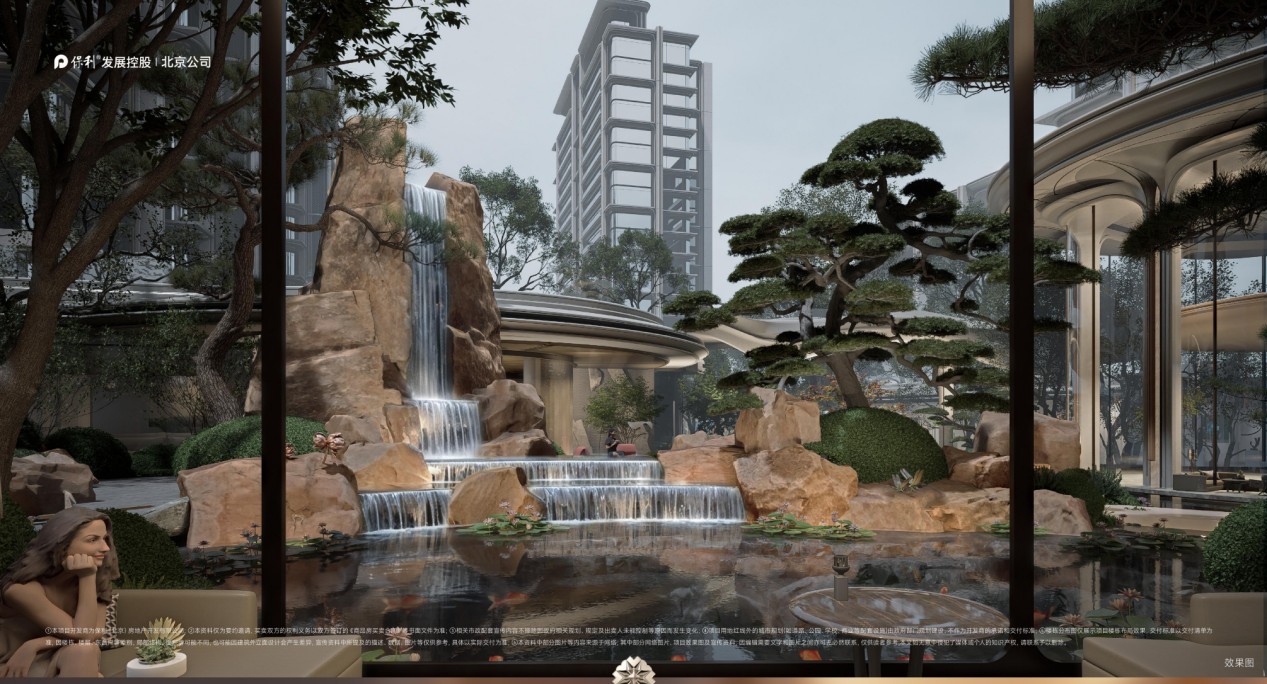
Rendering of the Project Garden
Jinghua Yao has done very detailed work in meeting user demands. A small case can prove it: the project has specially built the most practical electric bicycle garage in the inner city, which is very rare in luxury residential projects. But the detail is exactly based on customer research - the most convenient means of transportation for short-distance travel in Beijing's inner city is electric bicycles, and a large number of prospective customers have one at home.
Therefore, many people think that Jinghua Yao is the new house that best understands the inner city improved families after visiting it.
The new interface of the project is gradually taking shape, forming a huge intergenerational difference in image and design concept with the surrounding old communities, and it has become the focus of the area immediately.
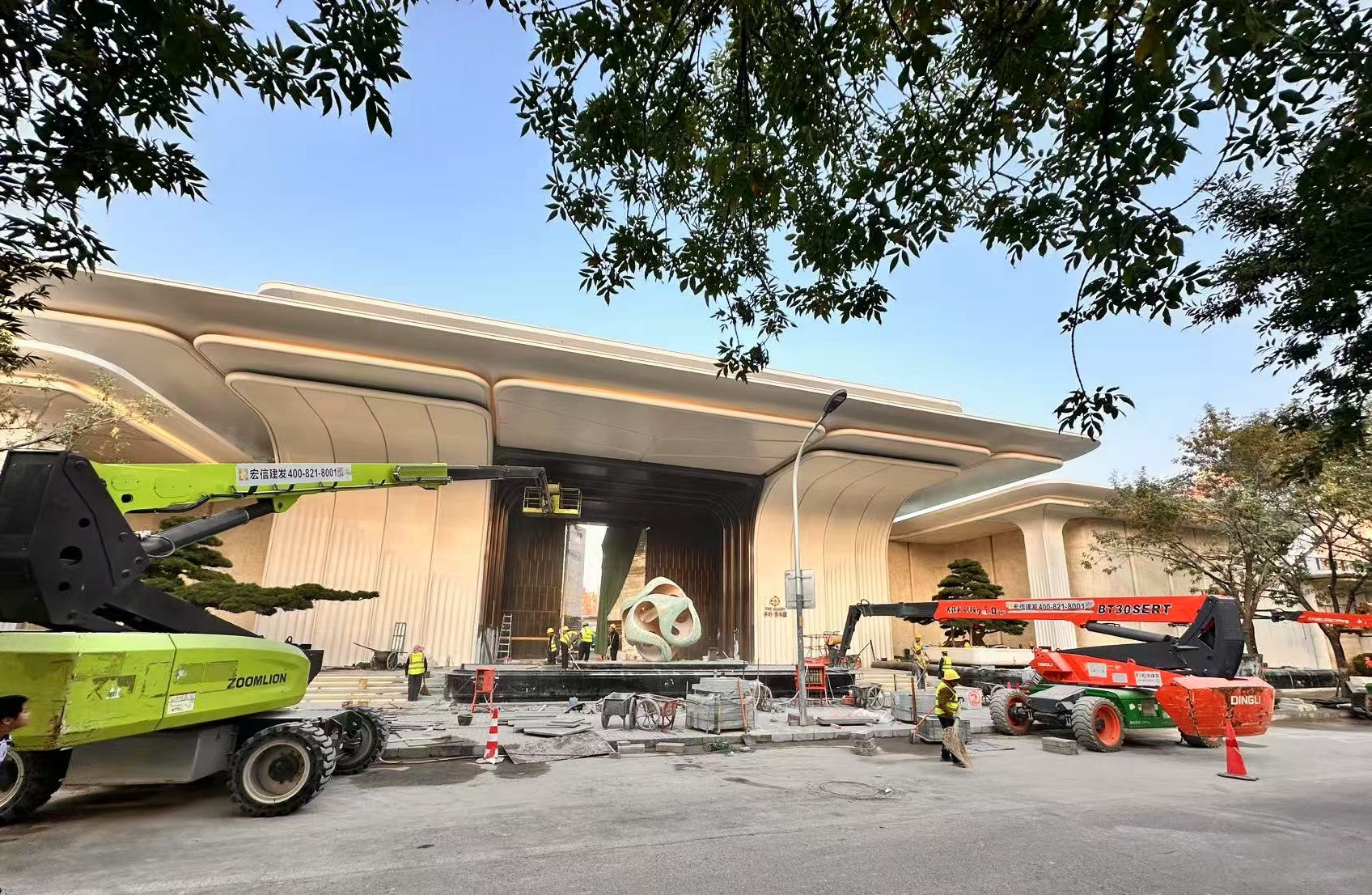
Real Picture of the Residential Gate Under Construction
The "pure" design concept followed by Jinghua Yao is also implemented in the house type design: the whole project only has four-bedroom units.
There are 453 units in total, and all the house types are four-bedroom. This strategy means that the whole community is for the same type of family, and the social circle is relatively pure. But it ranges from 124 ㎡ four bedrooms, two living rooms and two bathrooms to 181 ㎡ four bedrooms, two living rooms and three bathrooms, which allows families with different needs in the same social circle to choose from a wealth of products.
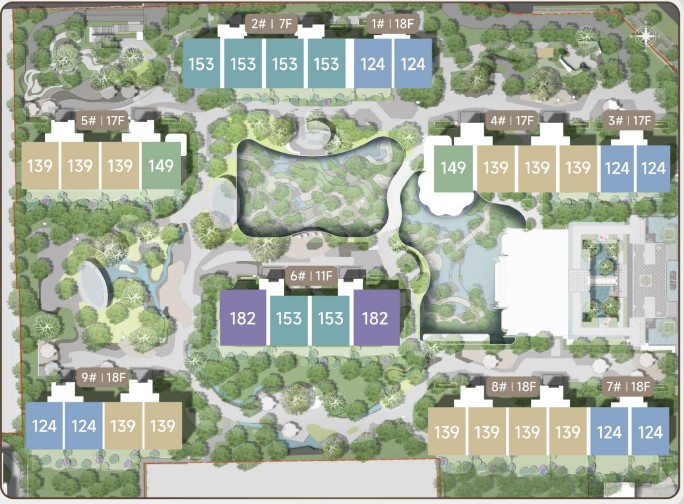
Layout Plan of the Project Building Units
The 124 ㎡ unit has four bedrooms, two living rooms and two bathrooms, with a south-facing