Just now, the Nobel Prize in Chemistry was announced, and a 95-year-old scientist has solved the mystery of why life only uses "one hand".
On October 7, the 2026 Nobel Prize in Chemistry was announced!
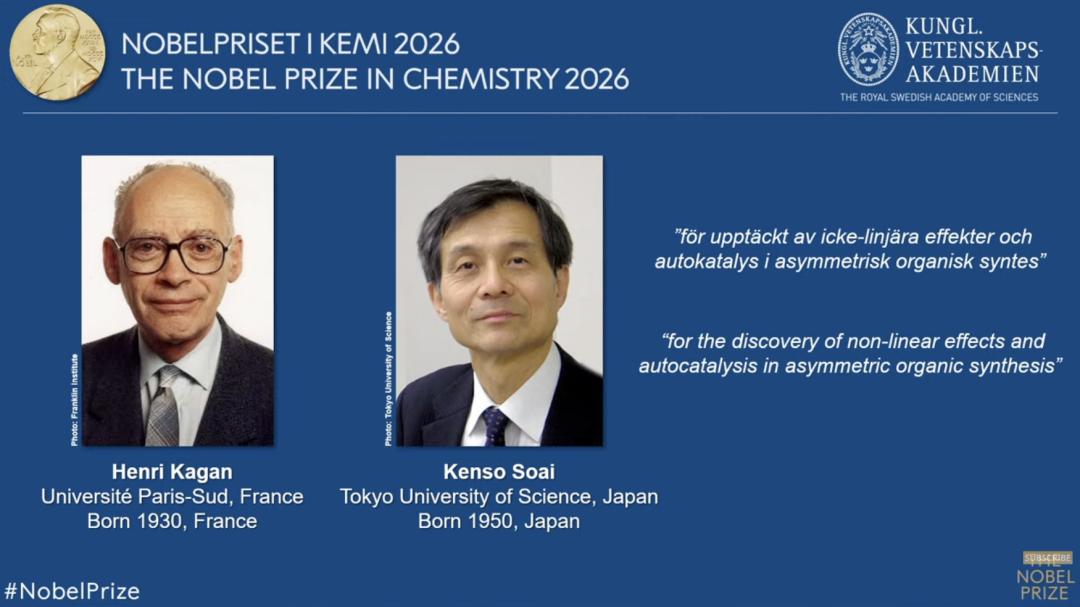
This year's Nobel Prize in Chemistry is awarded to Henri Kagan from Université Paris-Sud in France and Kenso Soai from Tokyo University of Science in Japan, in recognition of their discovery of nonlinear effects and autocatalysis in asymmetric organic synthesis.
Their discoveries have solved an ultimate puzzle that has plagued humanity for over a hundred years: why is life "biased"?
Their research is not only related to the origin of life on Earth, but also has saved countless lives in reality and completely transformed the modern pharmaceutical industry.
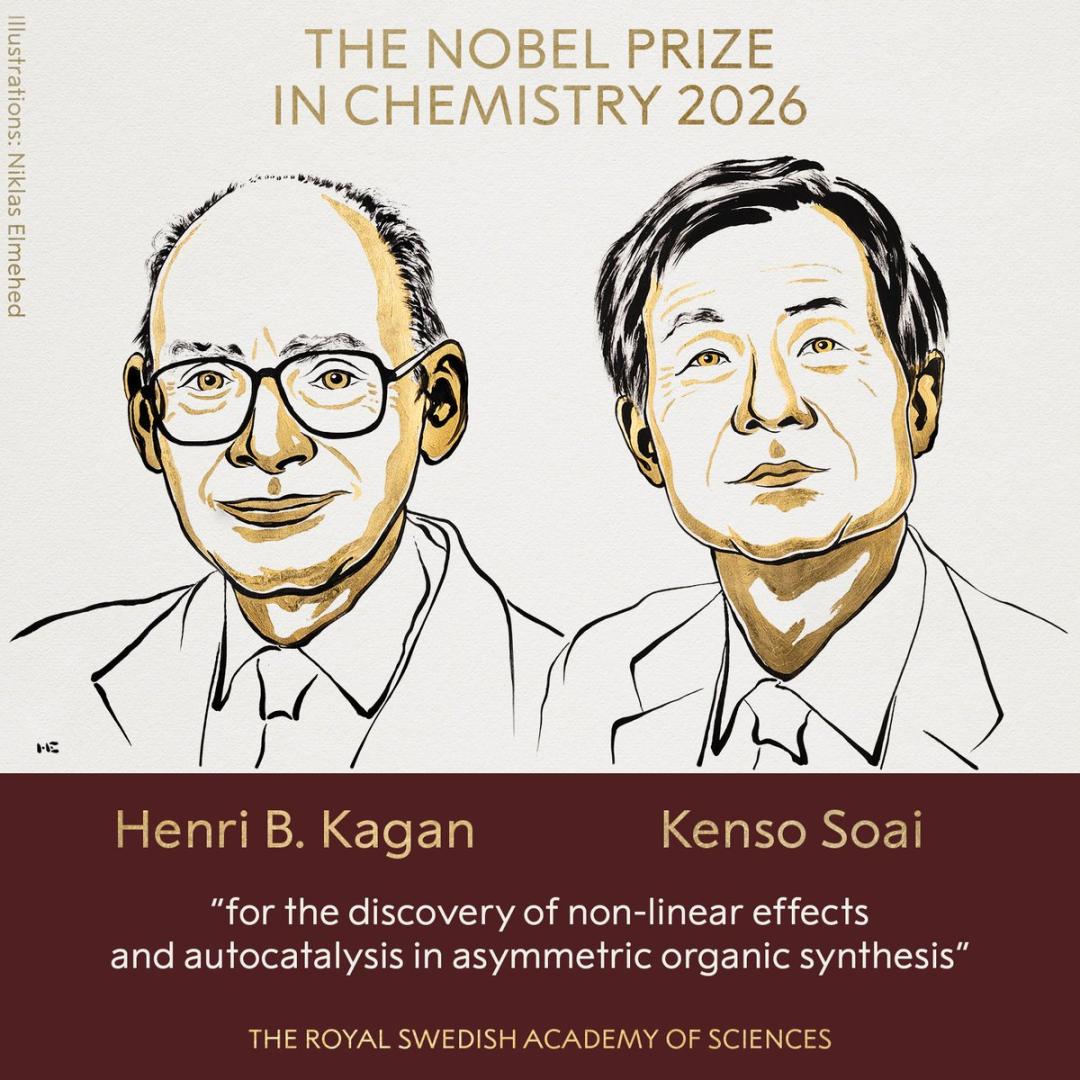
Kagan is already 95 years old this year!
25 years ago, two of his peers who won the Wolf Prize with him stepped onto the Nobel Prize podium, while he was left off the stage. 25 years later, he finally got his long-overdue Nobel Prize!
Kenso Soai was born in Hiroshima in 1950, and served as a visiting professor at Jilin University for five years from 2010 to 2015.
Meanwhile, Chinese chemist David Liu, who was widely tipped as a favorite before the announcement, missed out on the Nobel Prize this time.
What is more coincidental is that the Nobel Prize in Chemistry two years ago was just awarded to AlphaFold. Even today, AlphaFold 3 still confuses the left-handed and right-handed versions of molecules!
The Prank of the Creator — The Deadly "Twins"
To understand this year's Nobel Prize in Chemistry, we need to understand "chirality".
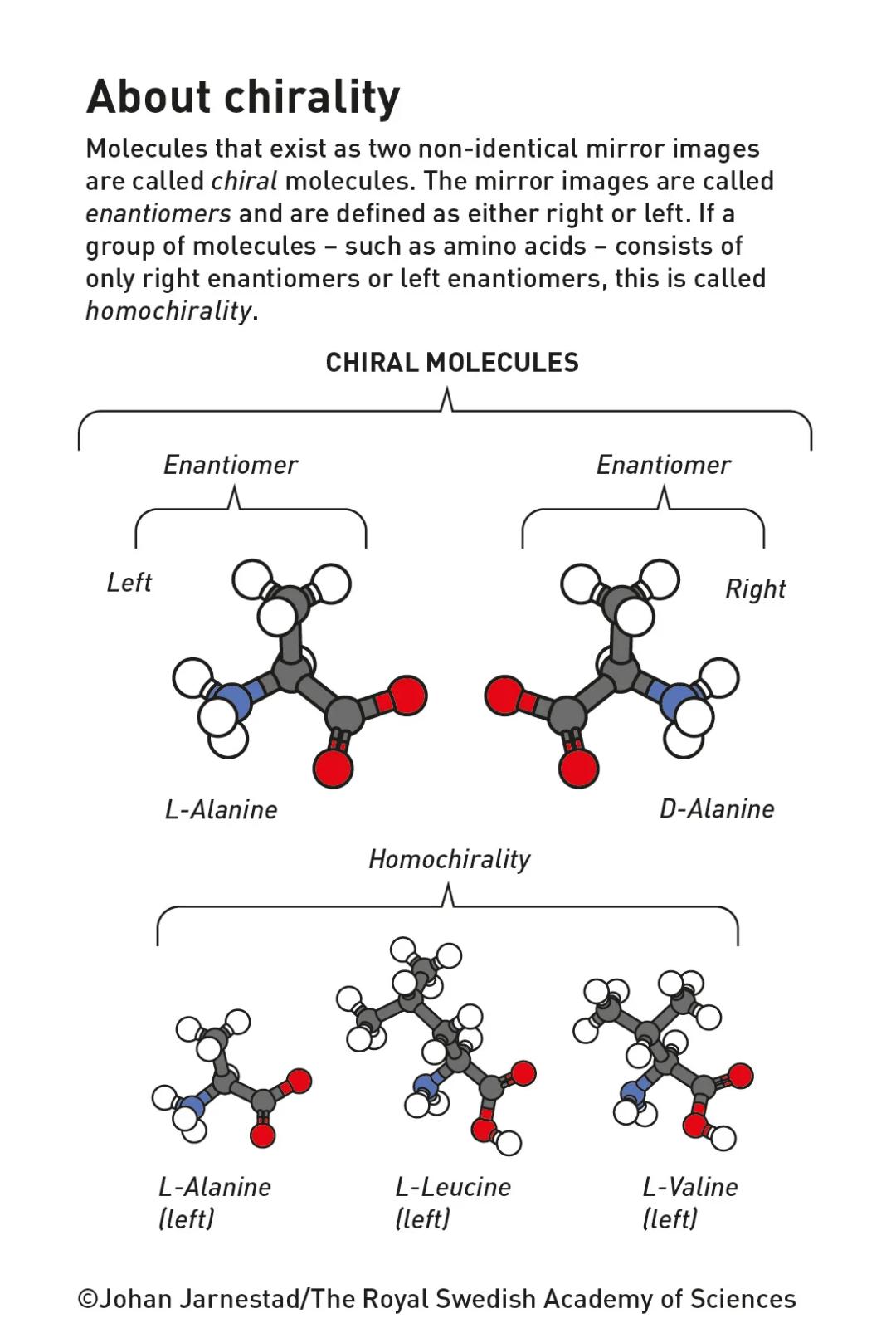
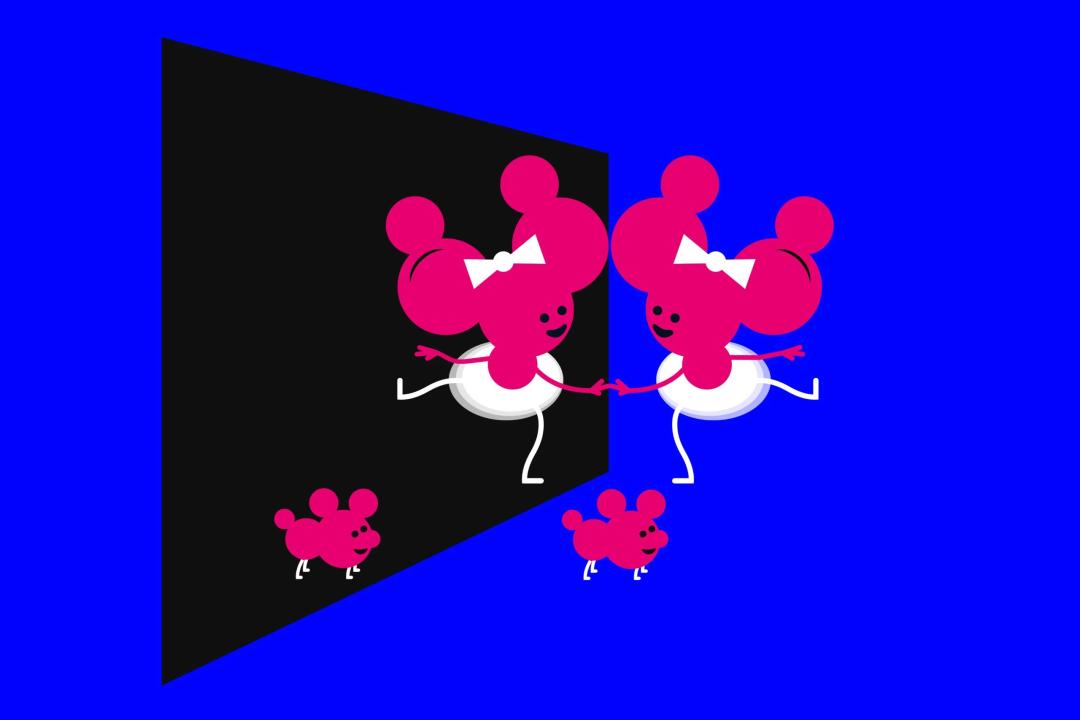
The left hand and the right hand look identical, but no matter how you rotate them, you can never make the left hand overlap perfectly with the right hand. In the chemical world, this phenomenon is called "chirality".
Many chemical molecules, just like our two hands, have two mirror-image variants — "enantiomers", referred to as "left-handed molecules" and "right-handed molecules".
But the problem is that the code lock of life "recognizes hands".
If you make a "left-handed key" and a "right-handed key" at the same time, the lock on the door can only be opened by one of them. If you force the other one in, it will not only fail to open the lock, but may even completely break the lock.
This used to be a nightmare in the pharmaceutical industry.
In the 1960s, a sleeping pill named "Thalidomide" became popular all over the world, especially widely used to relieve morning sickness in pregnant women. However, a tragedy occurred: tens of thousands of babies with severe congenital defects (such as phocomelia) were born across the globe.
Why did this happen?
Scientists later discovered to their horror that thalidomide is a "chiral drug". Its "right-handed molecule" is an angel that can effectively calm people down and induce sleep; but its "left-handed molecule" is a demon that causes fetal malformations. At that time, the pharmaceutical process could not separate the two molecules, and the pills taken by pregnant women contained half angel and half demon.
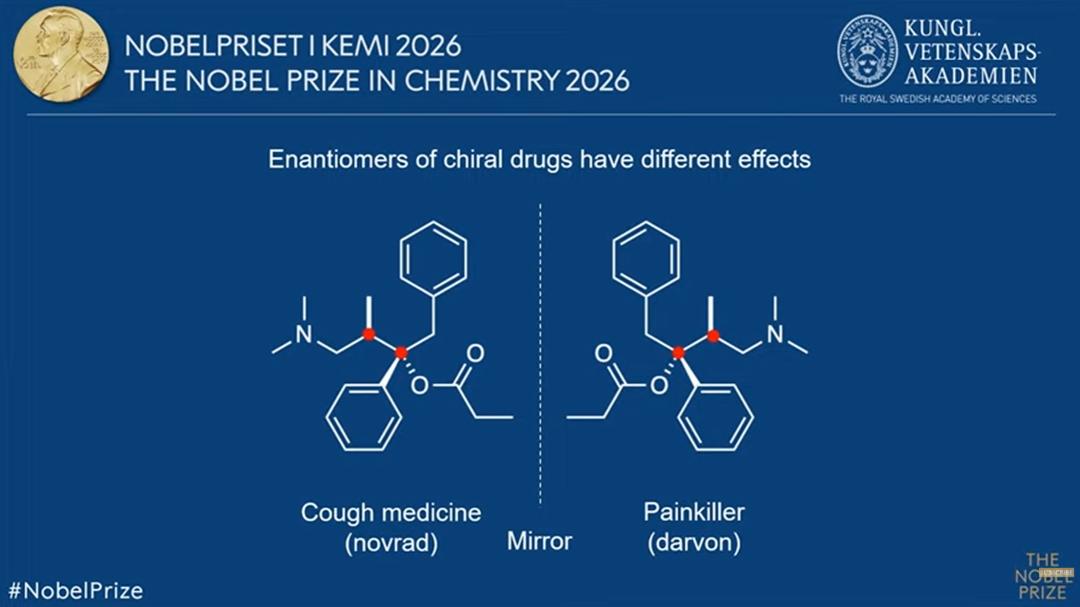
This tragedy known as the "Thalidomide Disaster" demonstrated to humanity the importance of controlling molecular "chirality". Chemists made a firm resolution: we must find a way to produce "right-handed molecules" or "left-handed molecules" in test tubes!
But how easy is that?
Nature's Bias: The 50/50 Split in Test Tubes
When chemists tried to make chiral molecules in the laboratory, they found to their despair that without the intervention of external chiral forces, chemical reactions are always absolutely fair — the generated "left-handed molecules" and "right-handed molecules" are always 50% to 50%. This is chemically called a "racemate".
But that is not the case in nature.
All life on Earth are extremely pure "single-chirality" organisms. All amino acids that make up the proteins in our bodies are uniformly "left-handed" (L-type); and all sugar molecules that make up the backbone of our DNA and RNA are uniformly "right-handed" (D-type).
Why? Why is there not even a single right-handed amino acid mixed into our bodies?
If random synthesis in the laboratory always gives a 50/50 split, how did the first molecules of life break this balance in the primitive oceans of the Earth billions of years ago, forming the 100% pure single-chirality world we see today?
This question is known as the "mystery of biological homochirality".
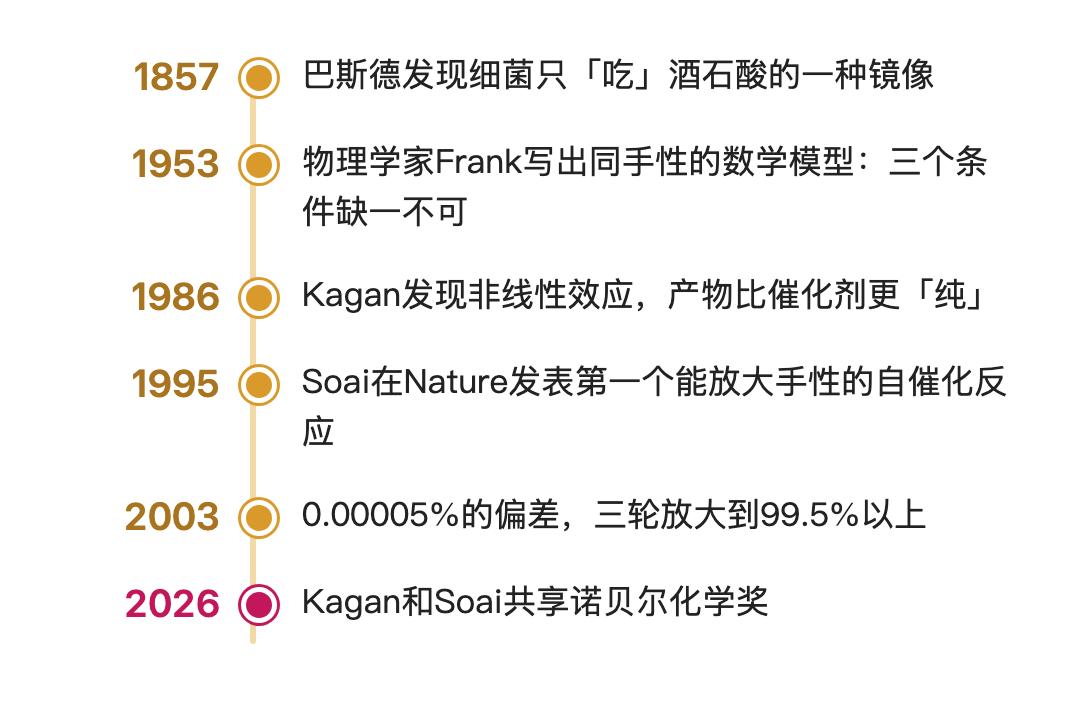
In 1953, Sir Charles Frank, a theoretical physicist from the University of Bristol in the UK, "teased" chemists in a mathematical paper.
He proposed that life must have gone through a very special chemical process. To achieve the transition from 50/50 to 100% single chirality, three harsh conditions must be met at the same time:
1. Autocatalysis: The product must be able to catalyze its own formation (produce itself).
2. Asymmetric reaction: The reaction must be biased towards one side.
3. Mutual inhibition (mutual annihilation): When "left-handed molecules" and "right-handed molecules" meet, they must be able to cancel each other out or inhibit each other's growth.
Frank's mathematical model was perfect, and he coldly dropped a sentence at the end of the paper: "It may not be impossible to prove this in the laboratory."
This was almost the ultimate provocation from physicists to chemists.
In the following decades, this model became an "unsolvable mystery" hanging over the heads of all chemists. How to reproduce this magic in a real beaker with real molecules?
Until this year's two Nobel laureates stepped onto the stage.
Kagan's "Counterintuitive" Breakthrough — Nonlinear Effects
In the 1980s, Henri B. Kagan from Université Paris-Sud in France came up with a question.
At that time, chemists had already invented the "asymmetric catalysis" technology to produce pure single-chirality drugs, which uses an already chiral catalyst to guide the reaction to generate a product of a specific chirality.
At that time, there was a deep-rooted "common sense" in the chemistry community: the purity of the catalyst determines the purity of the product, which follows a perfectly straight line.
If the catalyst you use is 80% "left-handed" and 20% "right-handed", then the resulting product must also be 80% "left-handed" and 20% "right-handed". That sounds very reasonable, right?
But Kagan was a man who liked to get to the bottom of things. He began to think: what if the catalysts do not work alone, but work in "teams"?
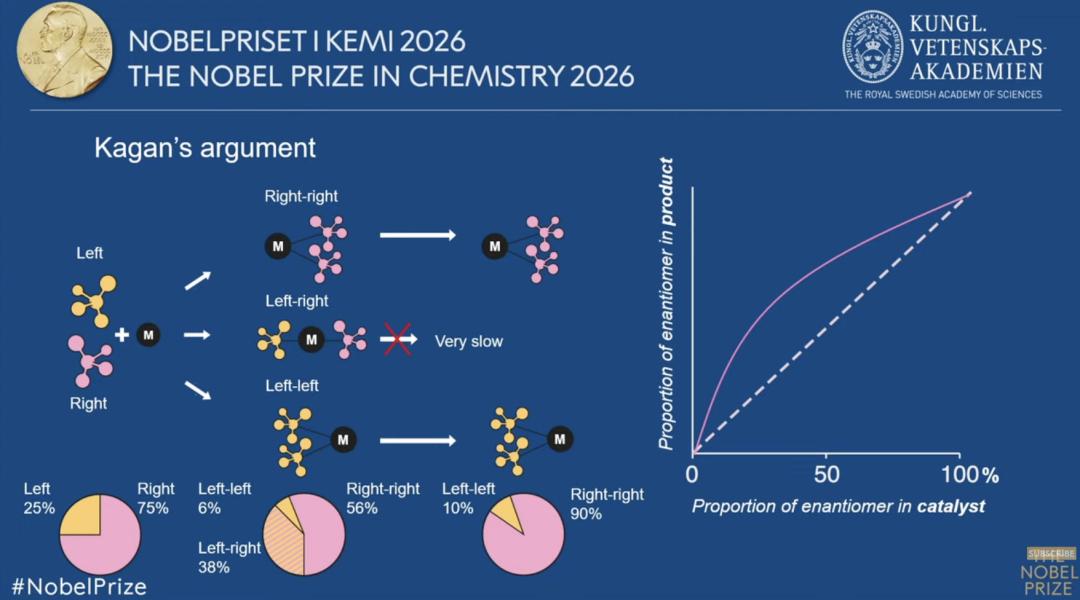
When many metal catalysts react, the central metal ion will attract two chiral molecules at the same time. Kagan deduced that if we mix left-handed and right-handed catalyst molecules in a beaker, they will combine in pairs to form three combinations:
- Left-Left Combination (pure left-handed team)
- Right-Right Combination (pure right-handed team)
- Left-Right Combination (mixed team)
The miracle is hidden in this "mixed team".
Through precise experiments and calculations, Kagan found that the catalysts of the "left-left" and "right-right" combinations work extremely efficiently; however! The "mixed team" composed of one left-handed and one right-handed molecule is extremely lazy, or even does not work at all!
This leads to an extremely magical consequence: the Nonlinear Effect (NLE).
Suppose 75% of the catalyst you use is left-handed, and 25% is right-handed.
According to probability, the "left-right" mixed combination will consume a large number of the minority "right-handed" molecules. As a result, almost all of the remaining catalysts that can actually function are "left-left" combinations!
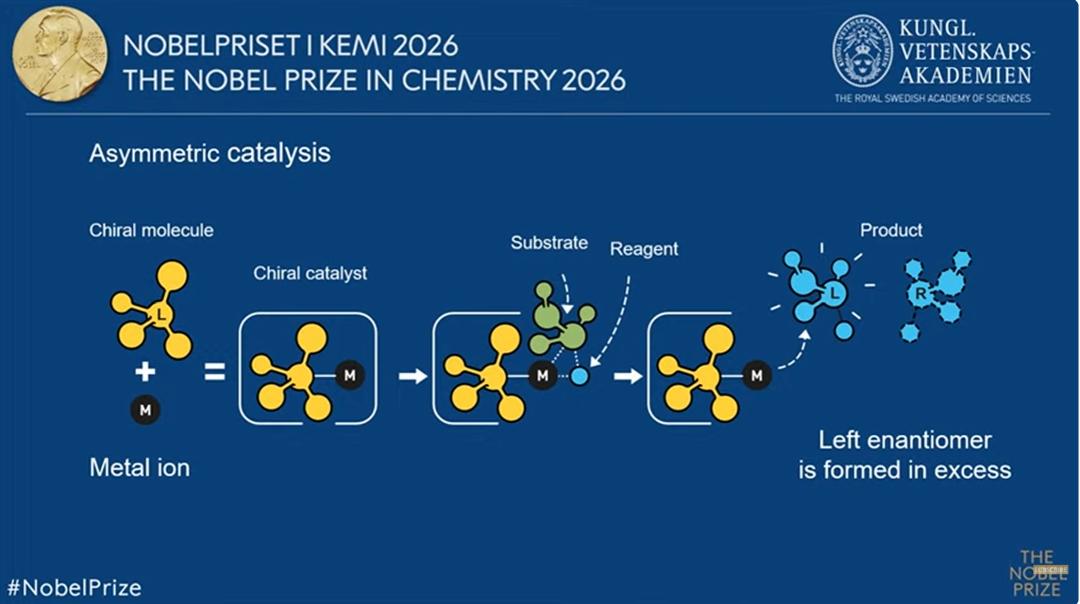
The result is: you only use a 75% pure left-handed catalyst, but miraculously get a left-handed product with 90% or even higher purity!
The official Nobel Prize illustration reverses the calculation: when 75% is right-handed and 25% is left-handed, after random pairing, "right-right" accounts for 56%, "left-left" only accounts for 6%, and the remaining 38% are all "left-right" mixtures.
The mixed part almost stops working, and the reaction is actually driven by 90% "right-handed" and 10% "left-handed"!
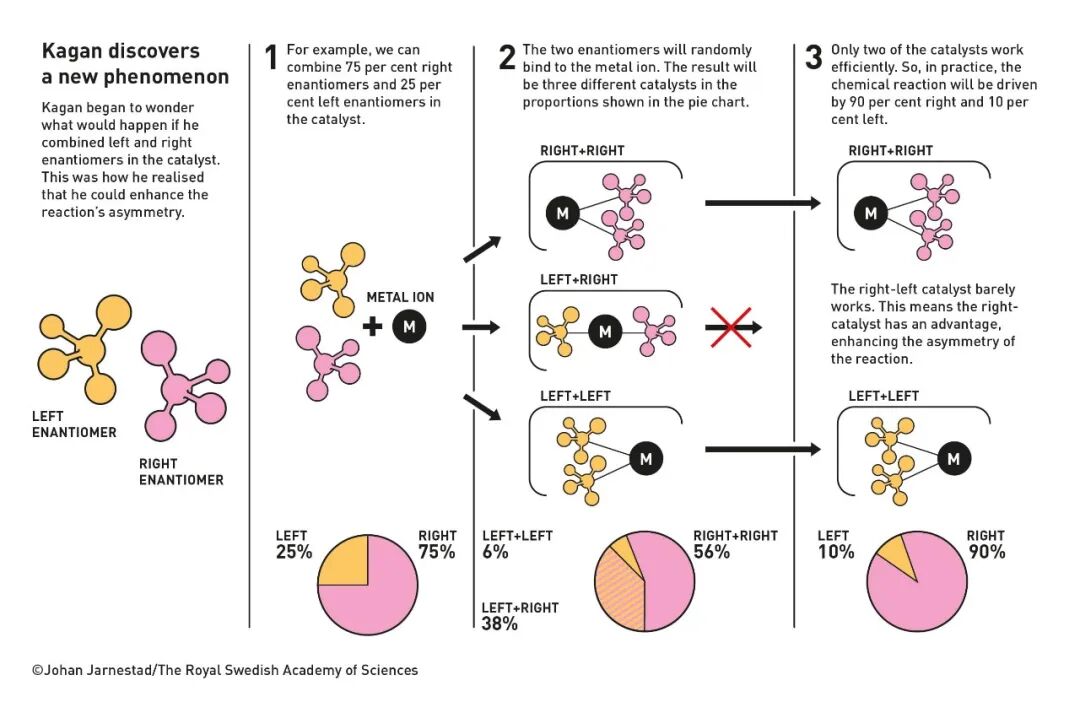
Kagan's reasoning: the mixed left-right catalysts hardly work, so the right-handed version takes the advantage
In 1986, Kagan officially published this discovery that shocked the chemistry community.
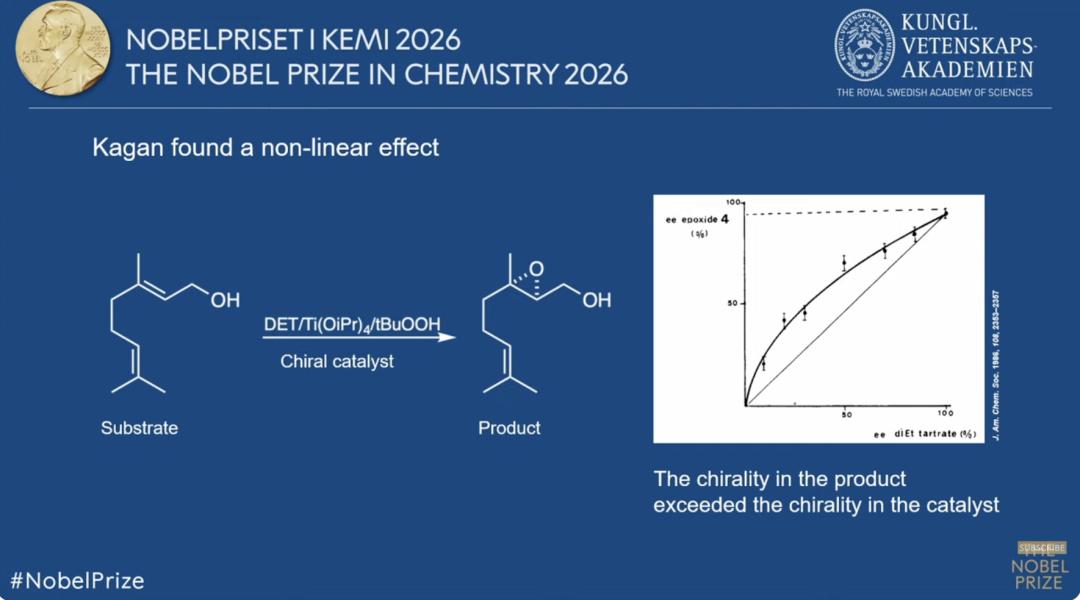
In that year, Kagan reported three asymmetric reactions in one go, where the purity of the products was completely out of proportion to the purity of the catalysts.
In one of the asymmetric epoxidation reactions, the purity of the product was even higher than that of the catalyst itself! The scientific background material of the Nobel Committee said that this was "unimaginable" at that time.
Kagan had thought about this possibility of deliberately "contaminating" the catalyst to get a purer product as early as the late 1960s.
He broke the linear assumption of the chemistry community regarding purity transfer.
More importantly, he perfectly proved the third condition put forward by physicist Frank years ago — "mutual inhibition". The combination of heterochiral molecules leads to catalyst deactivation, which is the "mutual annihilation" in the microscopic world.
Kagan's discovery provided a powerful weapon for the modern pharmaceutical industry. Today, when pharmaceutical companies synthesize chiral drugs, they can use the analysis of nonlinear effects to produce life-saving drugs with extremely high purity at very low cost and using catalysts with low purity.
But that was not enough. Kagan only proved "asymmetric amplification", and he had not yet realized the most core part of Frank's model: "catalyzing itself".
The baton was passed to the Japanese scientist.
Kenso Soai's "Masterpiece"
Kenso Soai received his doctorate from the University of Tokyo in 1979, under the supervision of the famous organic synthesis expert Teruaki Mukaiyama. After that, he went to the University of North Carolina at Chapel Hill in the United States, where he did two years of postdoctoral research with stereochemist Ernest Eliel. He joined Tokyo University of Science in 1981 and has stayed there ever since.
Kenso Soai from Tokyo University of Science in Japan read Kagan's paper and suddenly thought: since asymmetric amplification is possible, can we find a molecule that is both a catalyst and a product, and can continuously amplify its own "chirality" during the process of self-replication?
At that time, this was considered a "chemist's daydream". Throughout the early 1990s, Kenso Soai was frantically trying and making mistakes. He tried countless combinations of molecules and experienced thousands of failures.
In 1990, he used diisopropylzinc and pyridine-3-carboxaldehyde to achieve the first asymmetric autocatalytic reaction. But the purity of the product was only 35%, much lower than the 86% purity of the catalyst. Only two of Frank's three conditions were met.
In the official Nobel Prize popular science material, the subtitle of this section is called "Results from Trial and Error".
Finally, in 1995, he broke through that door.
He