The 2026 Nobel Prizes have been announced, and optogenetics is driving the brain revolution.
The 2026 Nobel Prize in Physiology or Medicine is announced!
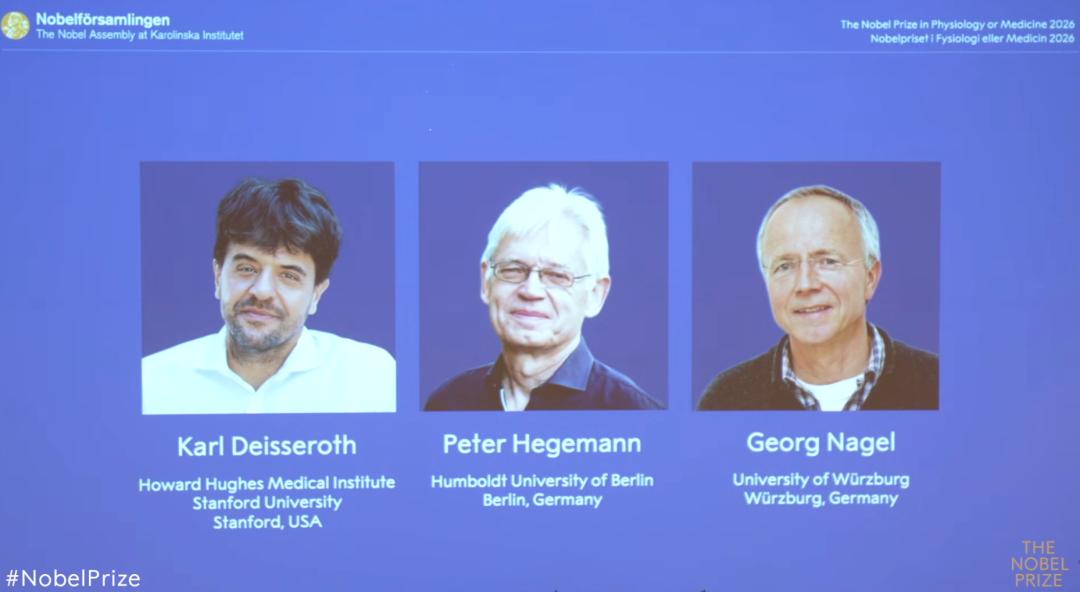
Three scientists, Karl Deisseroth, Peter Hegemann and Georg Nagel, share this honor, in recognition of their outstanding contributions to the research of light-gated ion channels and optogenetics.
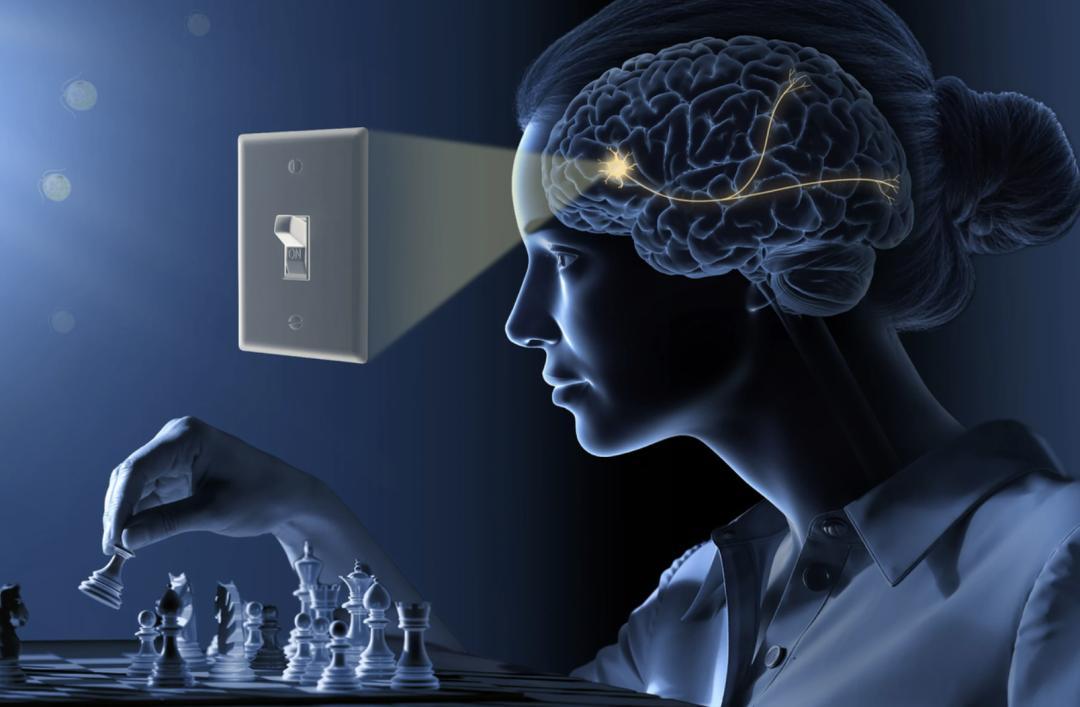
Simply put, these three new Nobel laureates have found a "light-controlled switch" for human nerve cells.
They invented a technology called "Optogenetics" , which can reveal how nerve cells in the living brain shape human memory, emotion and behavior with unprecedented precision.
Per Svenningsson, Chairman of the Nobel Committee for Physiology or Medicine, excitedly commented: "Optogenetics gives us the opportunity to map the brain in ways that could only be dreamed of in the past."
Indeed, they have opened a whole new era for neuroscience. But you would never imagine that this brain revolution enough to be recorded in human history actually started with a tiny, insignificant clump of "green algae" in a pond.
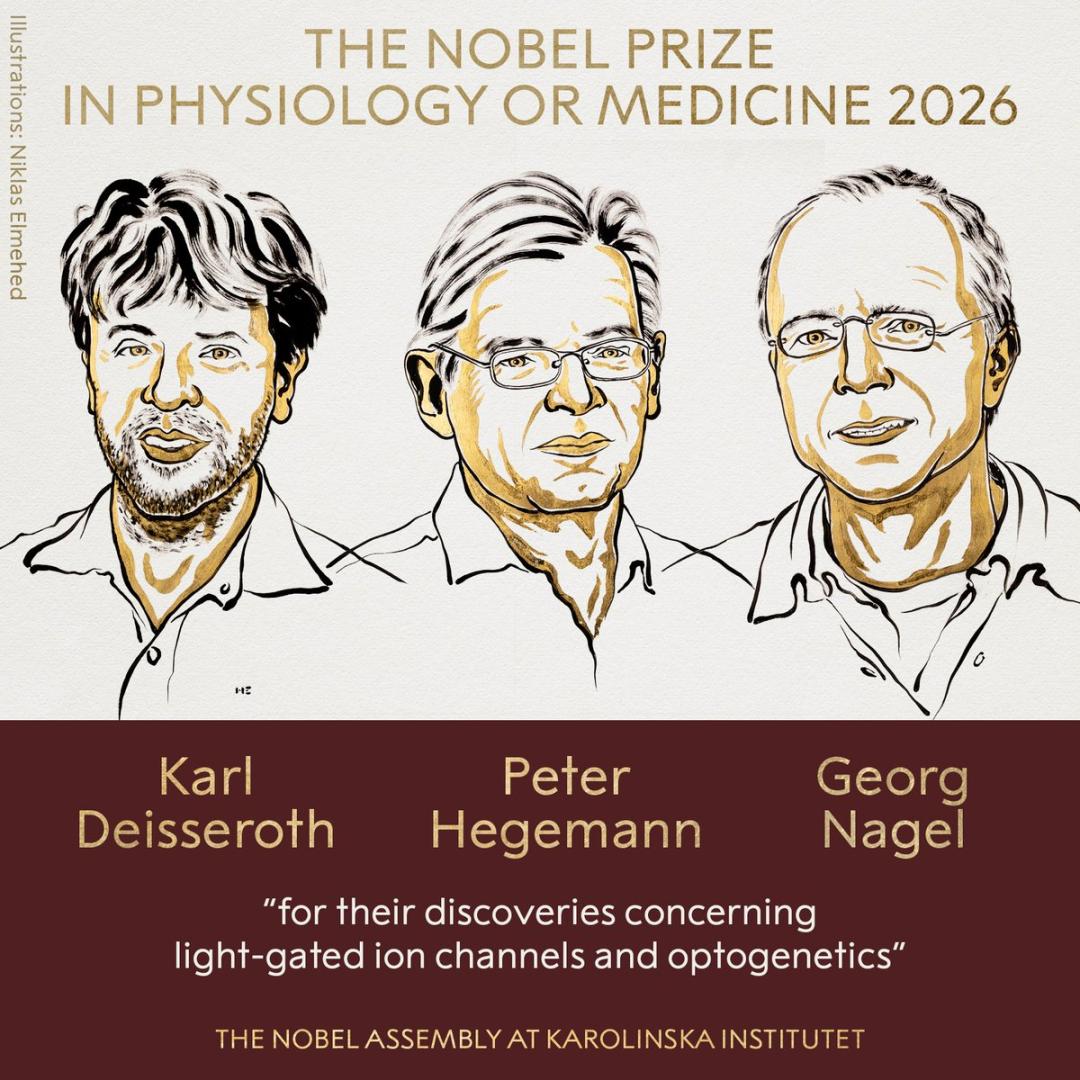
The total prize money this time is 12 million Swedish krona (about 8 million yuan, 1 million Swedish krona more than last year), which is equally divided among the three winners.
The first prize in 1901 was 150,000 krona, and it was once cut to 8 million krona in 2012.
Tu Youyou, the first Chinese winner of the Nobel Prize in natural sciences, won half of the 2015 Nobel Prize in Physiology or Medicine alone "for her development of revolutionary therapies against some of the most devastating parasitic diseases".
The Human Brain: The Most Complex "Black Box" in the Universe
Before telling this incredible story, we need to understand why scientists are so "puzzled" by the brain.
The human brain weighs about 1.4 kilograms, but contains about 86 billion neurons (nerve cells), with as many as trillions of connections (synapses) between them. That is more than the number of stars in the entire Milky Way.
How the brain governs our emotions, behaviors and bodily functions has long been one of the biggest mysteries in human science.
Throughout the 20th century, neuroscientists were like blind people groping for an elephant in a huge maze with a flashlight. They tried to figure out which regions of the brain affect which functions.
For example, they found that damage to a certain part of the brain would cause people to lose their language ability; electric shock to a certain area of the brain would make people feel happy.
But the problem is that the methods in the past were too "crude".
Imagine you want to fix a line of code in a sophisticated supercomputer, but the only tool you have in your hand is a big hammer.
Past brain science research was like this: whether it was removing part of the brain tissue, performing extensive electrical stimulation with electrodes, or using chemical drugs that affect the entire brain, it was like smashing a computer with a hammer.
Scientists can observe phenomena, but "cannot prove causal relationships".
As the Nobel Committee said, the brain map they drew at that time was like a rough "sketch full of question marks and unknowns".
Scientists have dreamed of having a "God's scalpel" — it must be precise enough to control only one or a specific type of neuron; it must also be fast enough to keep up with the millisecond-level flashing speed of neurons.
Is this possible? The entire neuroscience community fell into despair.
Until two German biologists took a second look at those swimming green single-celled organisms in a puddle.
The Miracle in the Pond: Curiosity and Phototactic Algae
The scene of the story shifts to Germany.
One of this year's Nobel laureates, Peter Hegemann from Humboldt-Universität zu Berlin, is a person full of curiosity. Unlike other neuroscientists who are obsessed with the human brain, Hegemann's focus is much more "humble".
He often stares at a single-celled algae under the microscope — Chlamydomonas — in a daze.
Chlamydomonas is a very amazing microorganism. It has no eyes, no brain, and is completely a single cell. However, if you put a lamp next to a petri dish full of Chlamydomonas, you will find a wonderful phenomenon: All Chlamydomonas will swim towards the light source in unison as if enchanted.
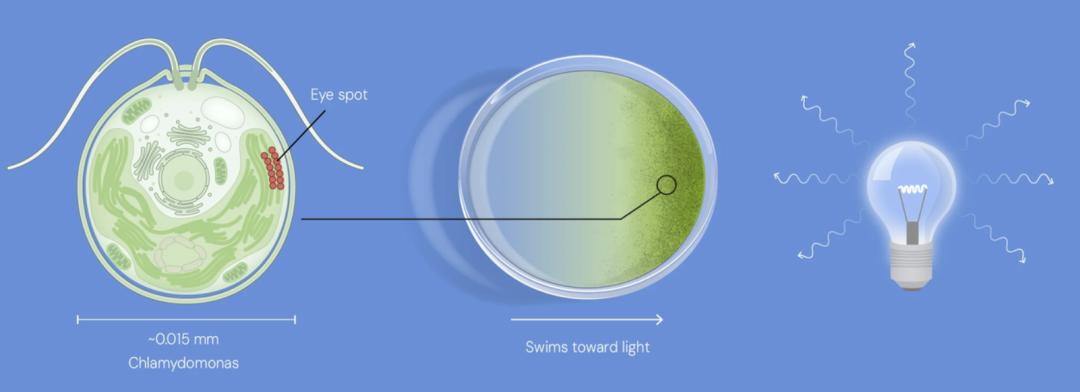
This phenomenon is called "phototaxis" in biology.
Hegemann's curiosity was completely ignited: A single-celled organism without even a nervous system, why can it "see" light? How does it convert light signals into
movement instructions?
With this pure question that seems to have nothing to do with human medicine, in the early 21st century, Hegemann and his old partner Georg Nagel from the University of Würzburg embarked on a crazy treasure hunt.
Hard work pays off. In this most basic botanical research, they discovered a treasure that shocked the world.
They found that on the surface of Chlamydomonas cells, there is an extraordinary algal protein with unique properties. They named it "channelrhodopsin" .
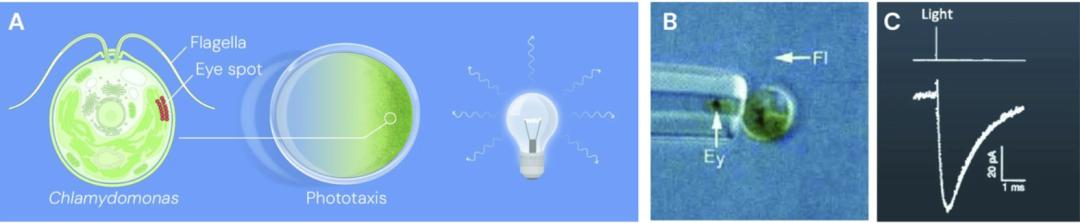
The working principle of this protein is absolutely exquisite, just like a door equipped with a "light-controlled sensor":
When blue light hits this protein, the channel of the protein opens instantly (Light-gated ion channels).
Then, charged ions will flood into the cell like a tide, generating a tiny electrical pulse. It is this electrical pulse that directs Chlamydomonas to swim towards the light.
What made the two German scientists even more amazed is that they conducted a very bold test: What would happen if this algal protein was placed in the cells of other organisms?
The result is shocking: No matter which cell they put this protein into, those cells will instantly become "sensitive to light"! As long as the light is turned on, the cell will generate an electrical signal.
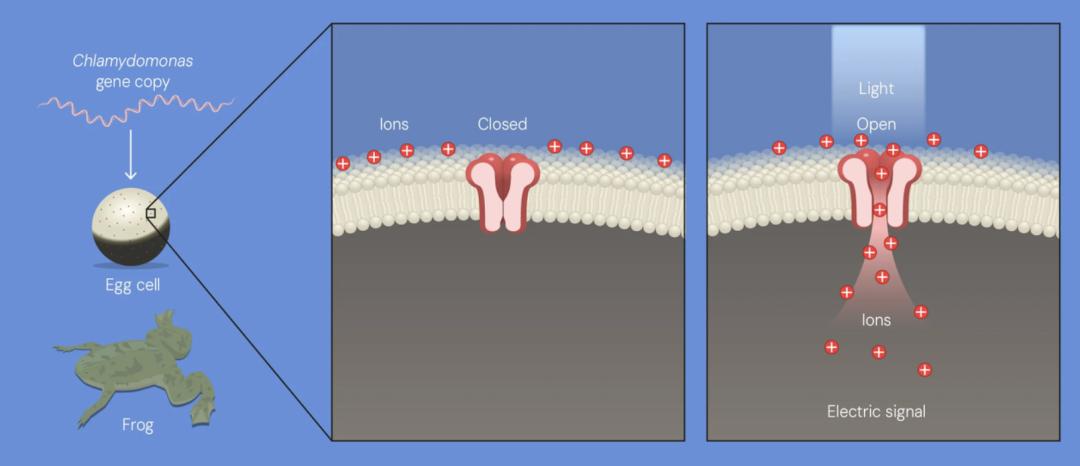
This is like finding a universal "light-controlled switch". As long as this switch is installed on any cell, light can control its activity.
A wonderful discovery was born.
But no one expected that across the ocean in the United States, a psychiatrist keenly captured this paper and turned it into the ultimate weapon to solve the mystery of the brain.
The Cross-border Maverick: The Magician Who Turned Light into a Neuron Switch
This leads us to our third Nobel laureate today: Karl Deisseroth from Stanford University.
Deisseroth is not only a top neuroscientist, but also a clinical psychiatrist.
In clinical practice, he faces patients suffering from depression, schizophrenia and Parkinson's disease every day. He knows very well how crude traditional drugs and electroconvulsive therapy are, and how huge their side effects are.
He has been searching hard for a method that can "precisely control a single neuron".
When Hegemann and Nagel's paper on "channelrhodopsin" was published, most people in the scientific community just thought "this algae is quite fun". But a thunderclap exploded in Deisseroth's mind.
A crazy idea was born: If we implant the "light-controlled switch" gene of this green algae into the nerve cells of mammals (such as mice and even humans), can we control the brain with light?!
Just do it. Deisseroth and his team began experiments like "Frankenstein".
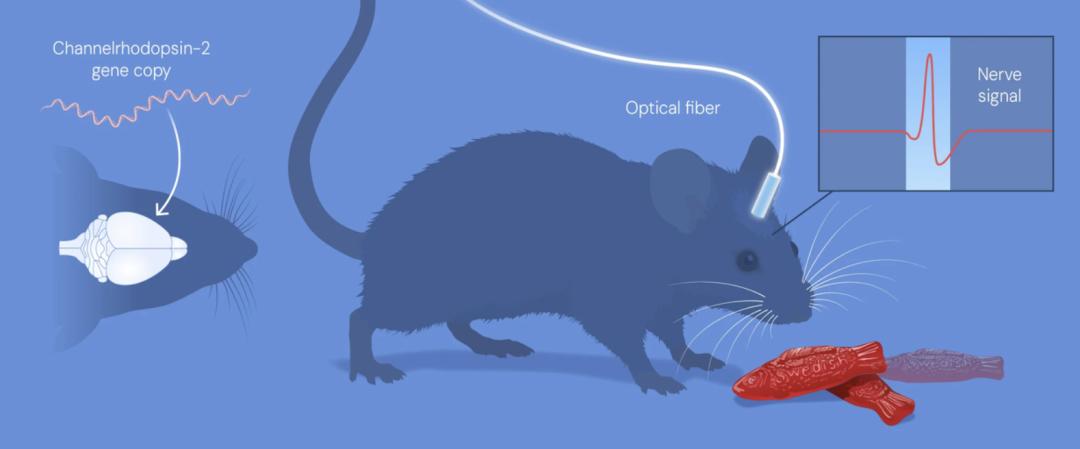
He used a virus as a carrier to precisely deliver the gene with "channelrhodopsin" into specific nerve cells of rats. A miracle happened! The rat nerve cells successfully grew this light-controlled protein from algae.
In 2005, Deisseroth published that landmark breakthrough paper that was destined to go down in history:
In the laboratory, when he used a very thin optical fiber to irradiate these nerve cells with blue light, the light-controlled switch turned on, the neurons were instantly activated, triggering strong nerve signals; when the light was turned off, the neurons immediately quieted down, without any delay.
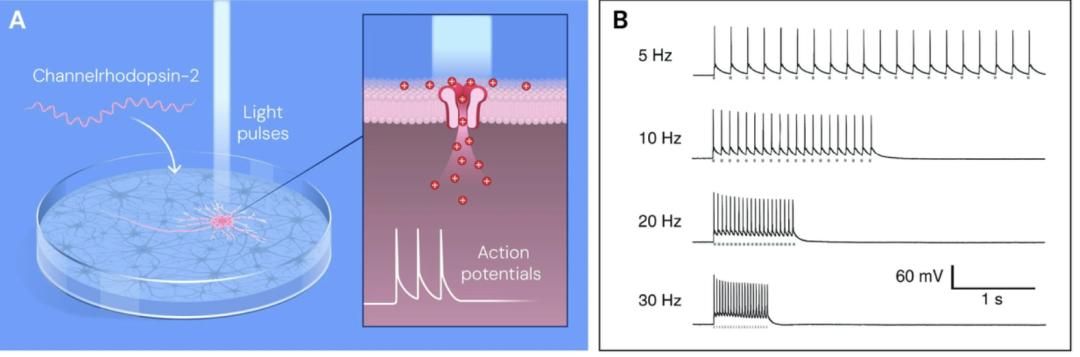
Precise, fast, and no side effects!
Two years later, in 2007, he even completed a groundbreaking feat of dimensionality reduction — he made this light-controlled switch operate successfully in the brain of a living mouse!
In various subsequent demonstrations, scientists all over the world saw creepy and thrilling scenes:
A lively little mouse has a glowing optical fiber inserted in its brain.
When the blue light turns on, the mouse suddenly starts to spin clockwise frantically; when the blue light goes out, the mouse stops immediately as if nothing had happened;
In some experiments, when the light turns on, the grumpy mouse instantly becomes docile;
In some experiments, when the light flashes, the mouse that was originally afraid of a certain corner walks straight past, because the memory of fear is forcibly turned off by "light".
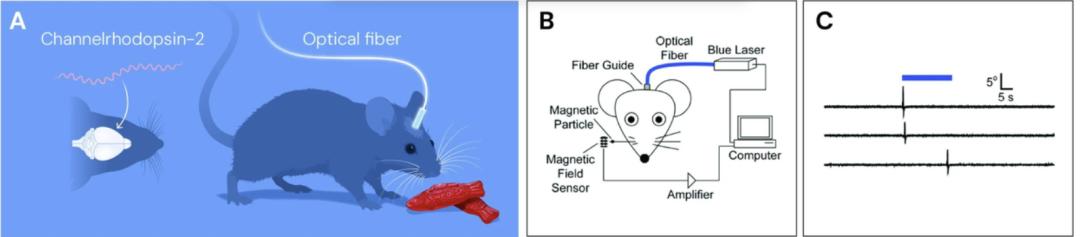
Deisseroth officially named this technology that perfectly integrates optics and genetics — Optogenetics.
A brand new discipline was born!
The Miracle of Light — From Mapping Memories to Restoring Sight for the Blind
The emergence of "optogenetics" is like suddenly giving a high-precision strong flashlight in a dark super warehouse full of countless debris, and this flashlight can also precisely control the placement of every item.
This technology quickly swept through laboratories around the world, producing a nuclear explosion-level global impact.
In the past two decades, thanks to optogenetics, human understanding of the brain is increasing exponentially:
Unveiling the ultimate veil of memory and emotion
With the help of optogenetics, researchers can finally reveal the neural circuits that control specific memories, sensations and behaviors. Scientists can not only find the specific cells in mice that store the memory of "first love", but even implant a "false memory" that the mouse has never experienced through light irradiation. We are finally beginning to understand how our joys, sorrows, anger and happiness operate at the material level.
New dawn for overcoming mental and neurological diseases
Depression, anxiety disorder, post-traumatic stress disorder (PTSD), Alzheimer's disease, Parkinson's disease... These stubborn diseases that have plagued mankind for thousands of years have finally ushered in the hope of a breakthrough. Through optogenetics, scientists have accurately located the neural circuits that cause these diseases, which provides an irreplaceable theoretical basis for the development of new targeted drugs and brain-computer interface treatment solutions.
Clinical miracle: Restoring sight for the blind
This is also one of the most exciting clinical applications! As the Nobel Committee specifically mentioned, In clinical medicine, researchers are using this method to try to restore vision for people with visual impairments.
Many blind people lose their sight because the photoreceptor cells on the retina die, but the ganglion cells behind their retina are still there.
Scientists are trying to use optogenetic technology to inject the "light-controlled protein" from green algae directly into the remaining nerve cells of blind people, so that these originally non-light-sensitive nerve cells can directly become "new eyes" capable of capturing light!
At present, relevant clinical trials have been launched all over the world, and some blind patients have seen the outline of objects with the help of this technology!
Epilogue: A Beam of Light That Illuminates the Future of Mankind
Mankind may have to grope in the dark for hundreds of years if we want to unlock the