It's so cutthroat! DeepSeek released an update during the holiday, and a new version of Harness is now available.
Who says DeepSeek doesn't work overtime during holidays? Just yesterday, DeepSeek Harness received another update.
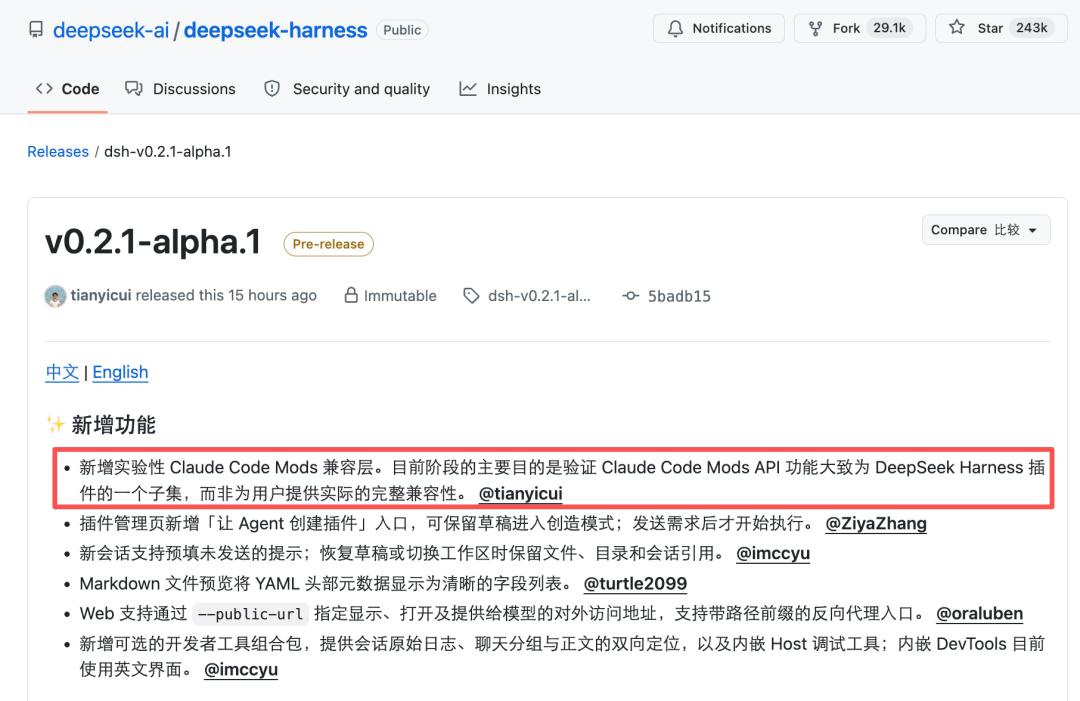
The newly released v0.2.1-alpha.1 adds a very noticeable feature: the experimental Claude Code Mods compatibility layer.
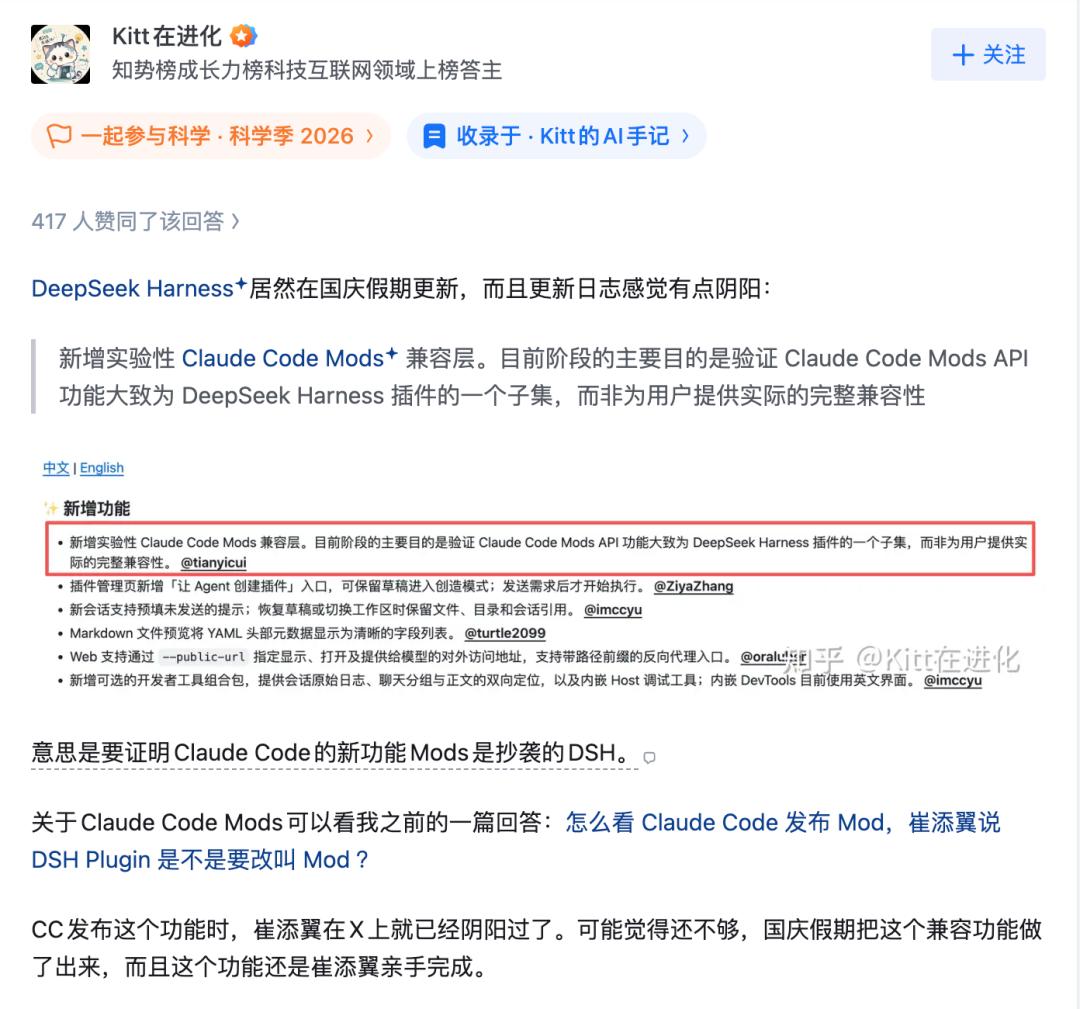
What's more interesting is the official explanation for it: this update first aims to verify that the capabilities of the Claude Code Mods API are roughly a subset of DeepSeek Harness's plugin capabilities.
Put another way, it roughly means: all the new capabilities you just opened up can also be supported by my plugin architecture.
However, to understand this update, we need to go back a little in time first.
A couple of days ago, Claude Code recently launched Mods. Friends who have played games are no strangers to Mods: it allows you to install mods to change the interface, add features, and even modify the gameplay.
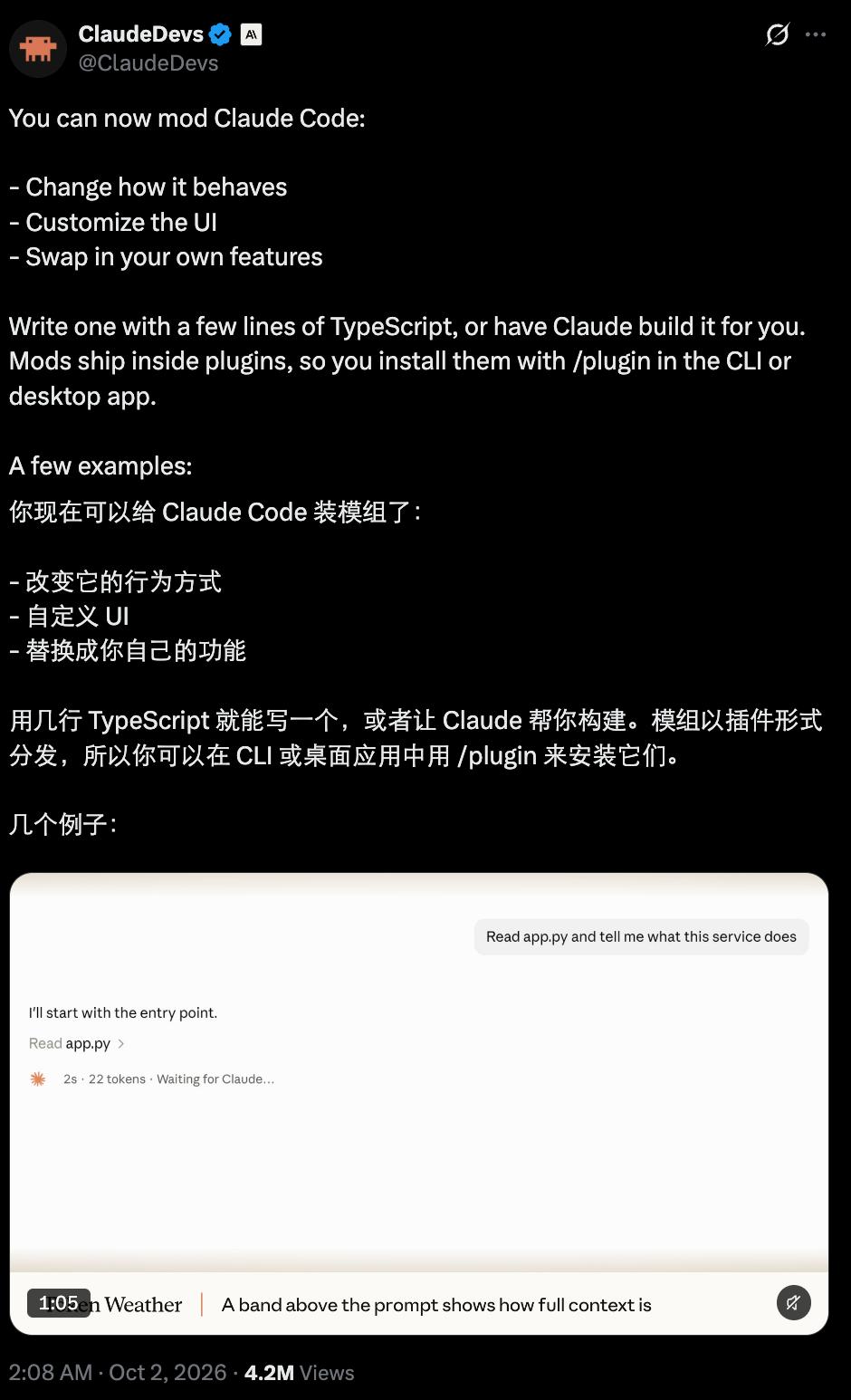
Claude Code Mods can also be understood this way: you can make the custom modifications you want to your AI programming tool. For example, if you find it hard to see how much context has been used, you can add a real-time dashboard; if you want an extra check before a certain type of command is executed, you can write an interception rule; if you want to review the code modified by AI in your own way, you can also create a dedicated interface.
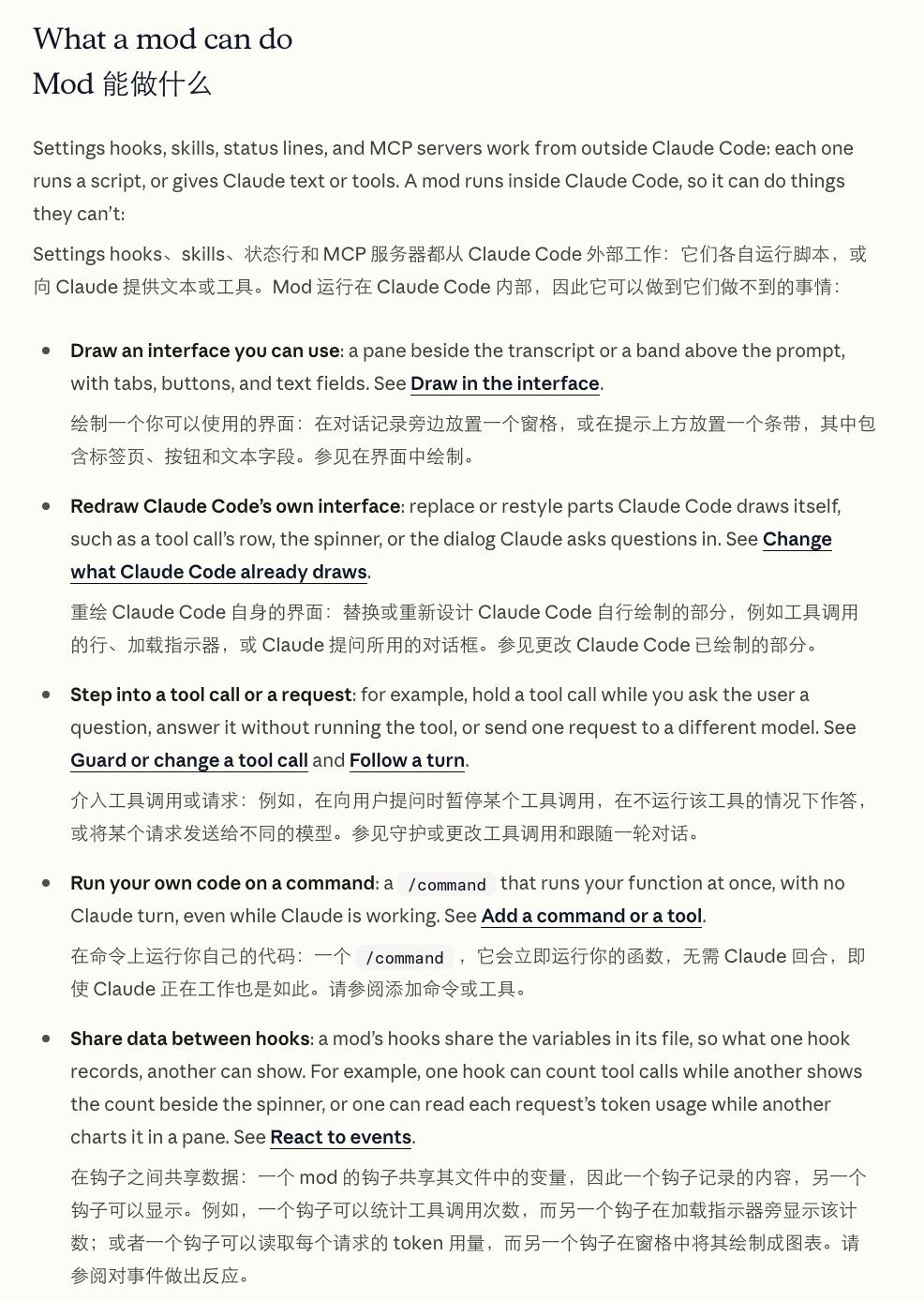
Its technical implementation is JavaScript or TypeScript event handlers running inside Claude Code. Tool calls, prompt submission, and interface rendering can all be opportunities for Mods to intervene: observe, modify, or take over this step.
As for the difference between it and some previous concepts, we can understand it this way: Skill gives the AI a set of working methods, MCP connects the AI to external tools and data, and Mod further allows you to modify the interface and working behavior of the AI tool itself.
The official examples they showed are also very creative.
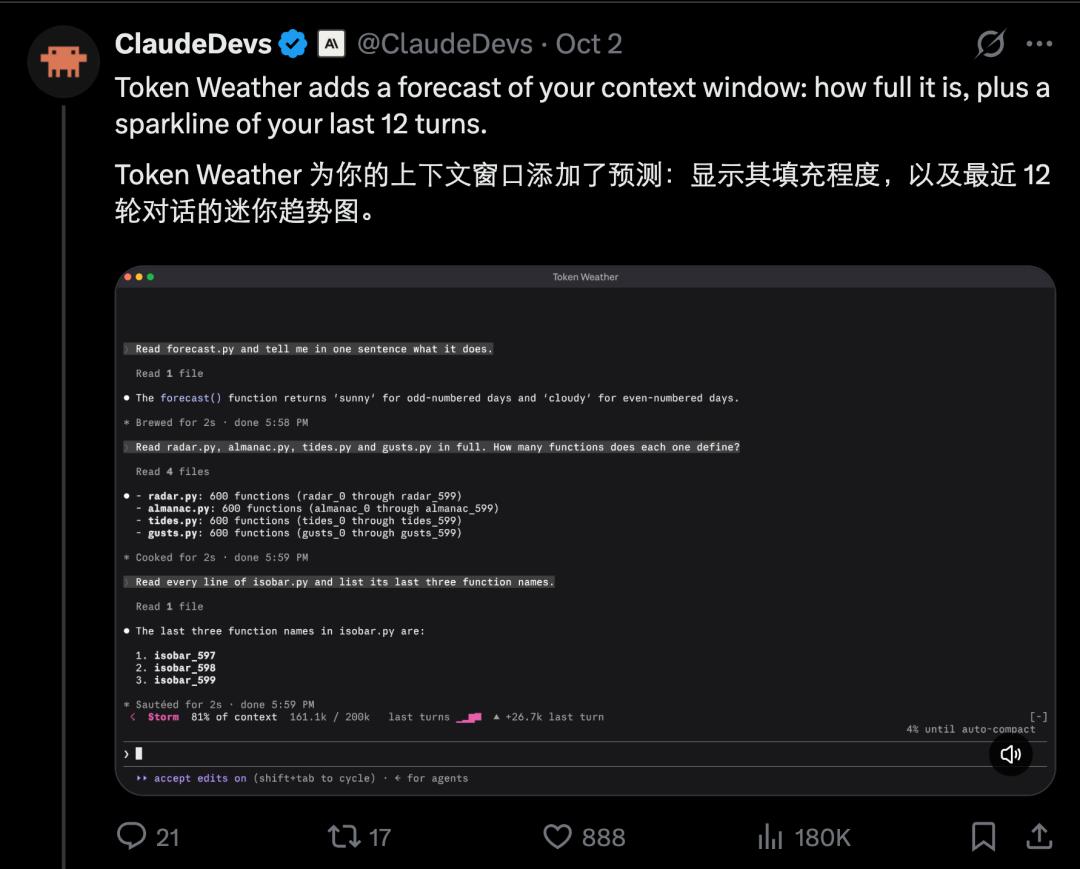
One is called Token Weather, which visualizes context usage as "weather forecast": low usage means sunny, and as it gets fuller, it turns stormy. As the "weather" changes while you chat, you will know that it's time to pay attention to the context.
The other two are more practical: Blast Radius shows the impact before high-risk commands are executed and leaves the decision to the user; Replay Theater allows you to review file modifications step by step.
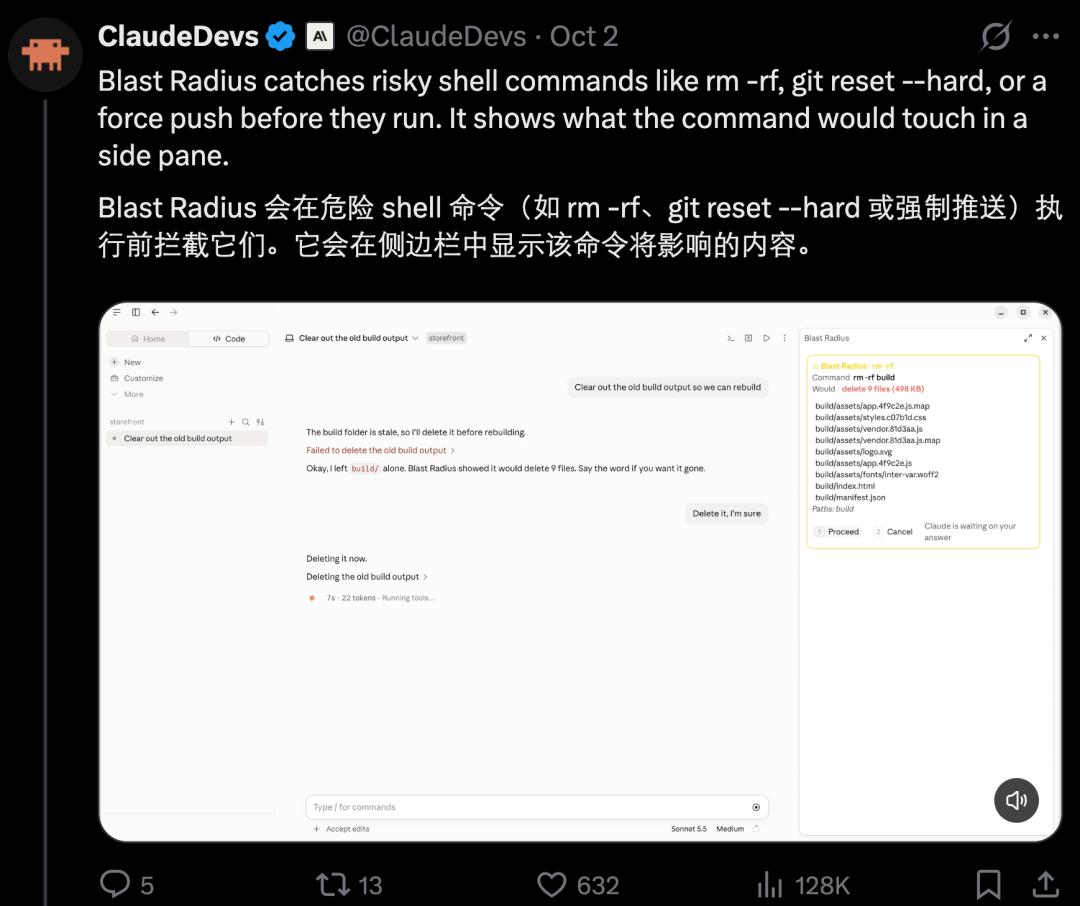
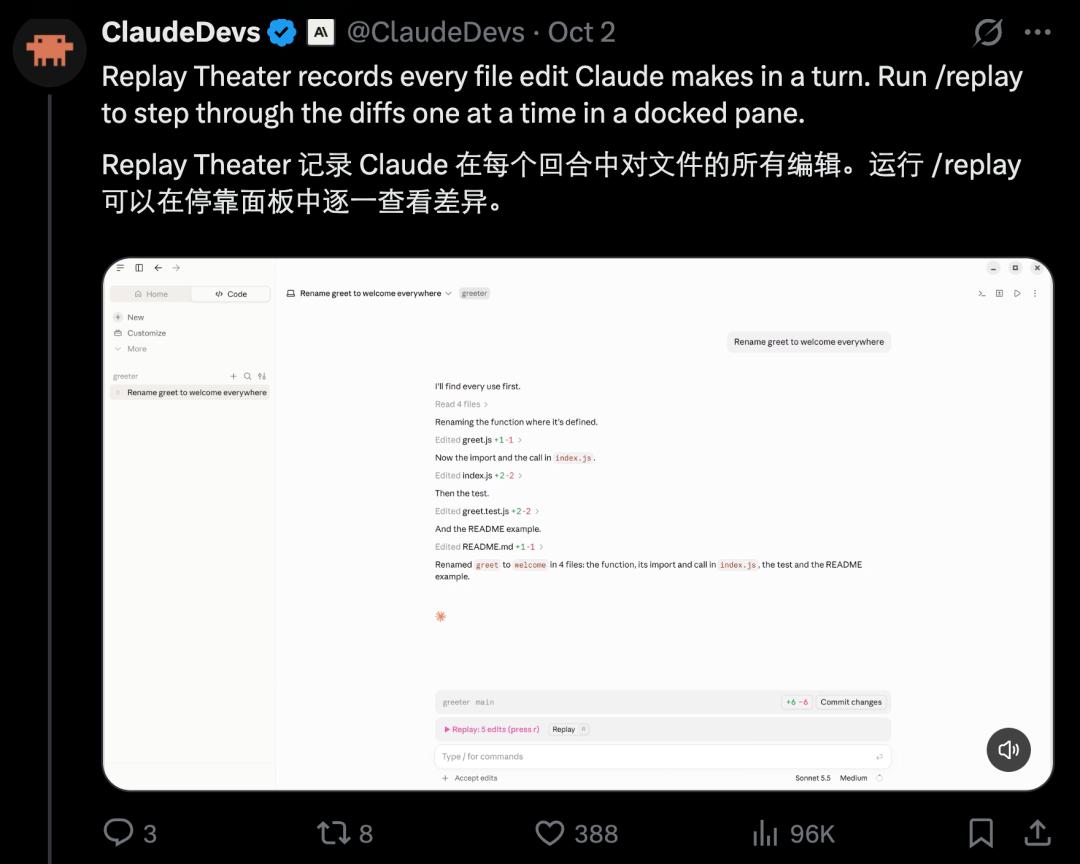
Most importantly, these features can be created directly with the help of Claude. Describe your requirements, allow hot loading, watch it install the custom features into the current session, and then continue to give modification suggestions.
Boris, head of Claude Code, emphasized this kind of personalization in his official announcement: everyone works in different ways, so the Claude experience can also vary from person to person. You can customize it with prompts, and then share Mods as plugins.
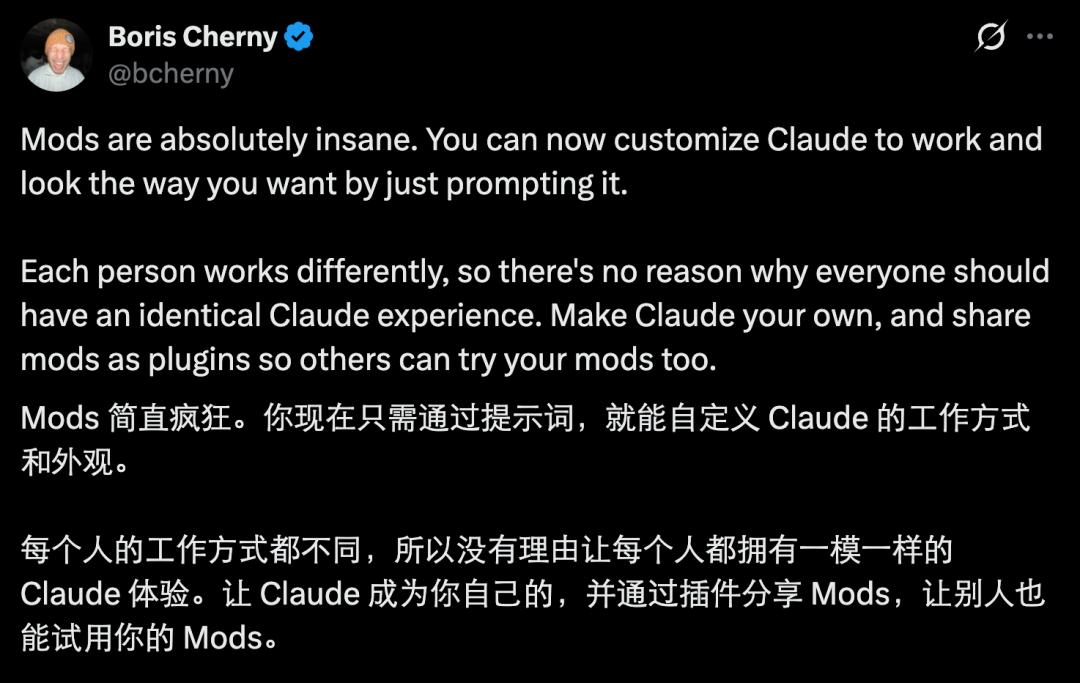
Therefore, if you think the tool is not easy to use in the future, besides waiting for official updates, you can also directly say: "Modify yourself."
Shortly afterwards, Cui Tianyi, head of the DeepSeek Harness team, reposted Boris's post and made some comments, which can be roughly summarized as: We are very familiar with this direction.
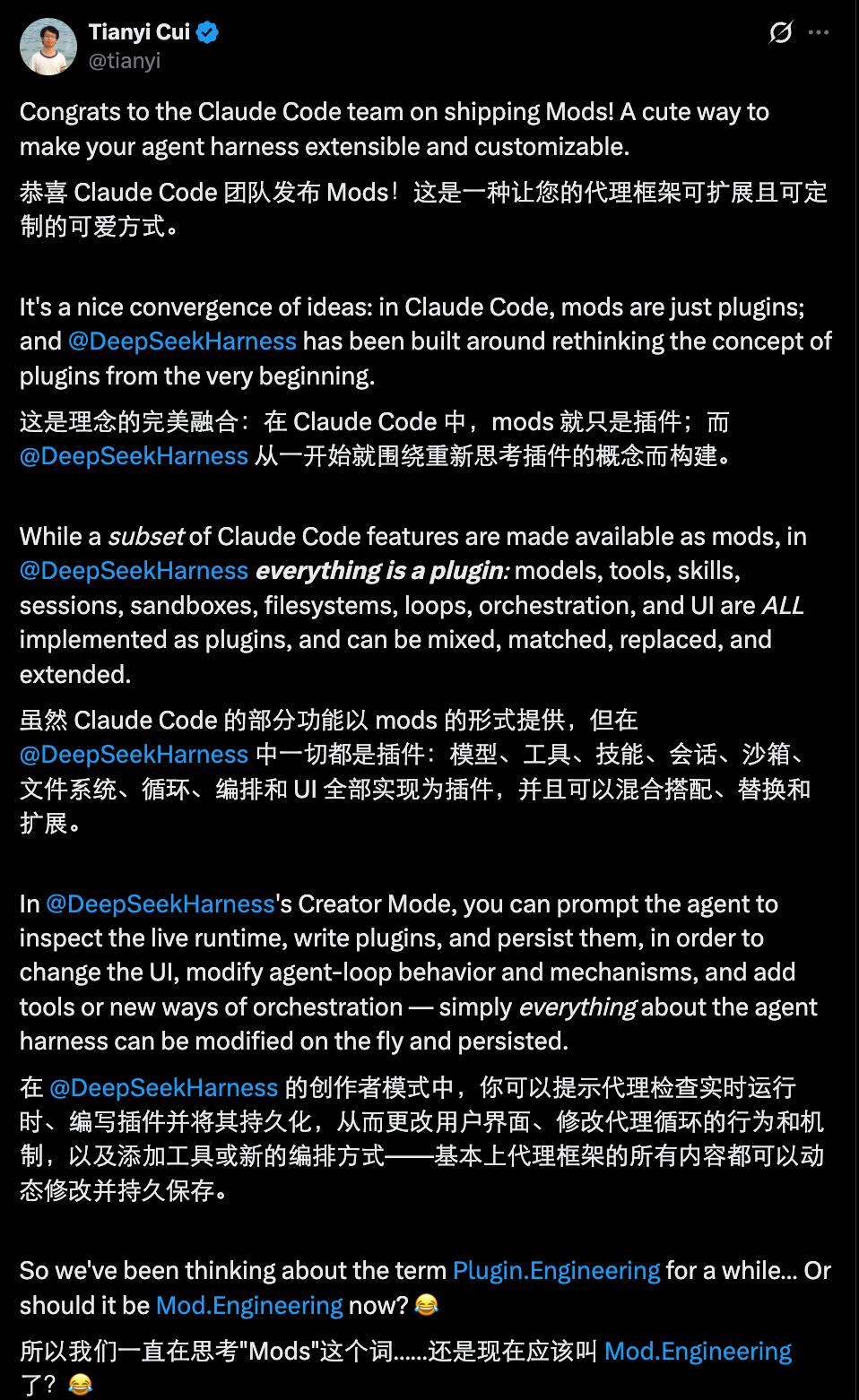
Specifically, after seeing the release of Mods, Cui Tianyi first sent his congratulations, saying that it is a clever way to make Agent Harness scalable and customizable, and that the concepts of the two sides are converging.
Cui Tianyi then emphasized the architectural difference between the two sides: according to his statement, Claude Code opens up some capabilities as Mods, while DeepSeek Harness has been rethinking the concept of "plugins" from the very beginning, and its proposition is "Everything is a Plugin".
Models, tools, Skills, sessions, sandboxes, file systems, Agent Loops, task orchestration, and UI can all be combined, replaced, and extended as plugins.
In the DSH creation mode, users can also let the Agent check the currently running system, write plugins on the spot and save them. Modifying the interface, adding tools, and even adjusting the mechanism for the Agent to perform tasks are all within the scope of this idea.
Finally, he joked: The team has been thinking about the term "Plugin Engineering" for a while, so should we call it "Mod Engineering" now?
What's more interesting is that shortly after this post was published, DeepSeek really made a compatibility layer.
The new DeepSeek Harness version v0.2.1-alpha.1 adds the experimental Claude Code Mods compatibility layer. This update was signed by Cui Tianyi in the release notes.
What is the purpose of this compatibility layer? You can think of it as a bridge: extensions written according to the Claude Code Mods interface can run in DSH's plugin system.
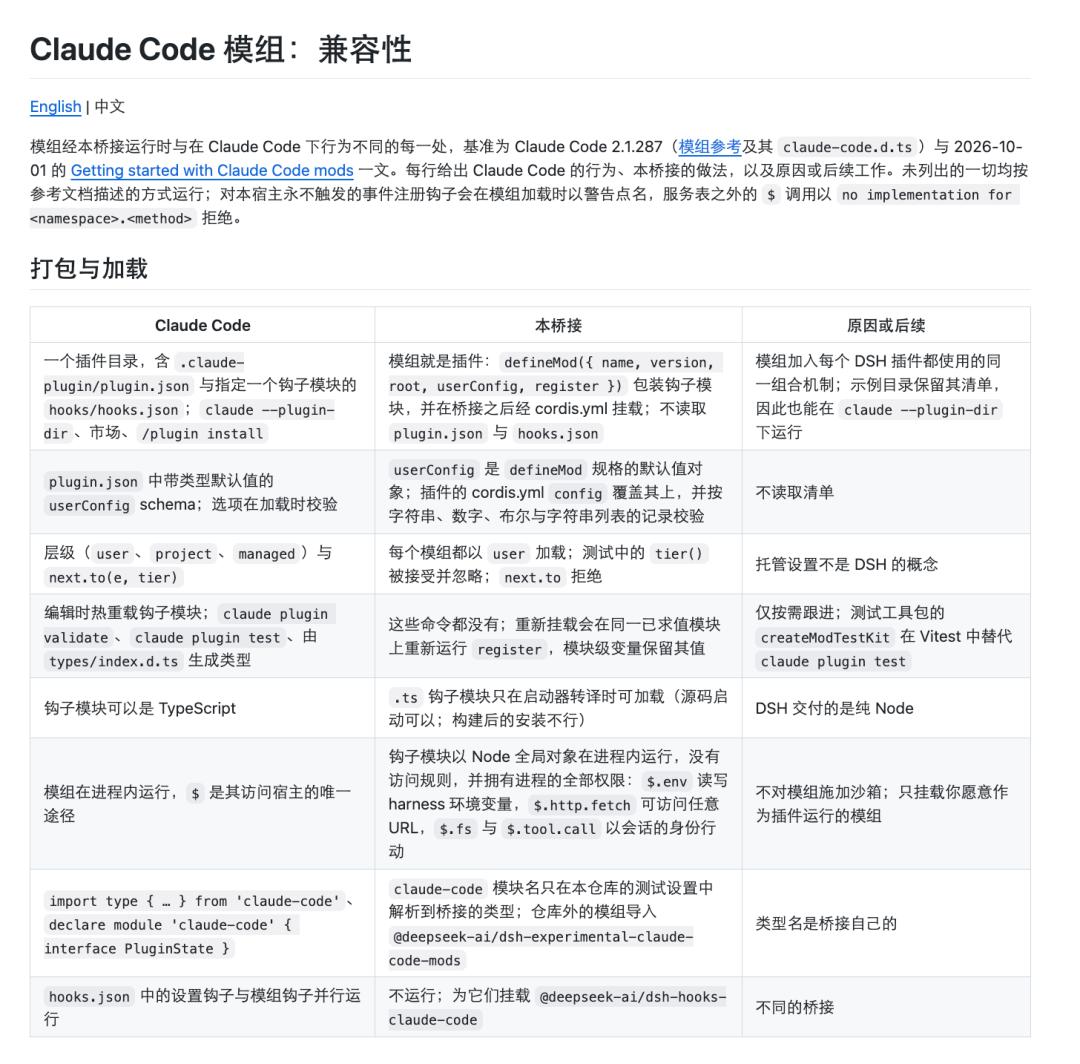
The official documentation lists three bridging examples: Token Weather that checks context usage, Blast Radius that shows impact before command execution, and Replay Theater that reviews file modifications. These examples show how Claude Code Mods can connect to DSH.
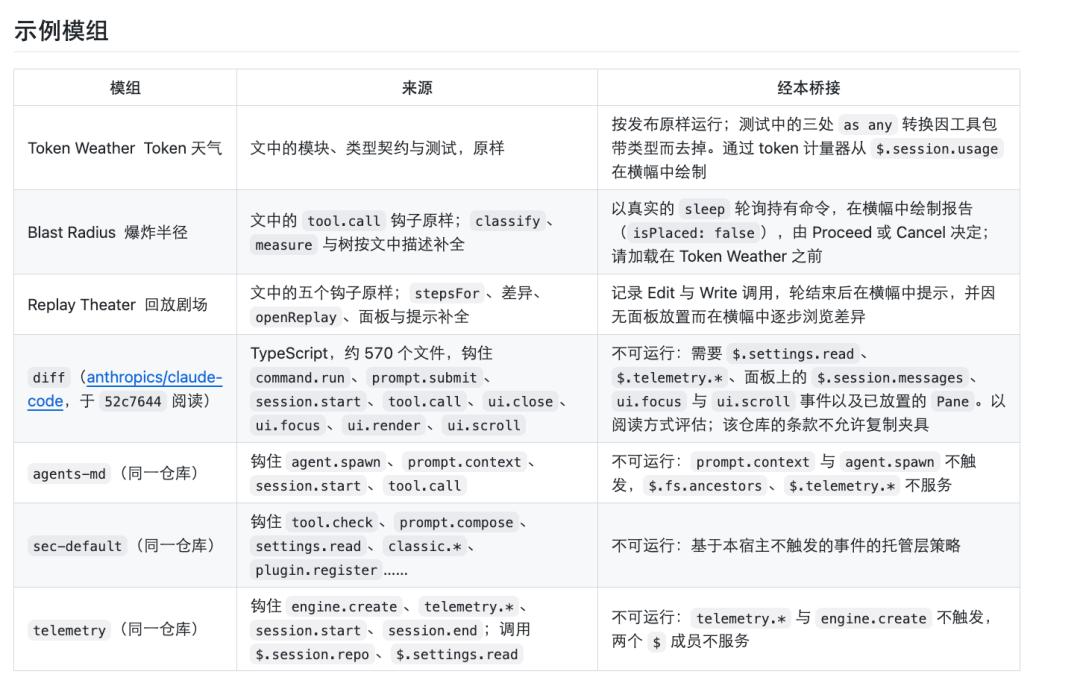
This gives a very intuitive demonstration of "Everything is a Plugin": extensions designed for another set of Agent tools can also be connected to your own system through bridging.
The new version also adds a more user-friendly entry: "Let Agent create plugins". Click to enter on the plugin management page, you can enter the creation mode, describe the features you want, and let the Agent make them. The newly added supporting developer toolkit makes it easy to view session logs, locate problems and debug.
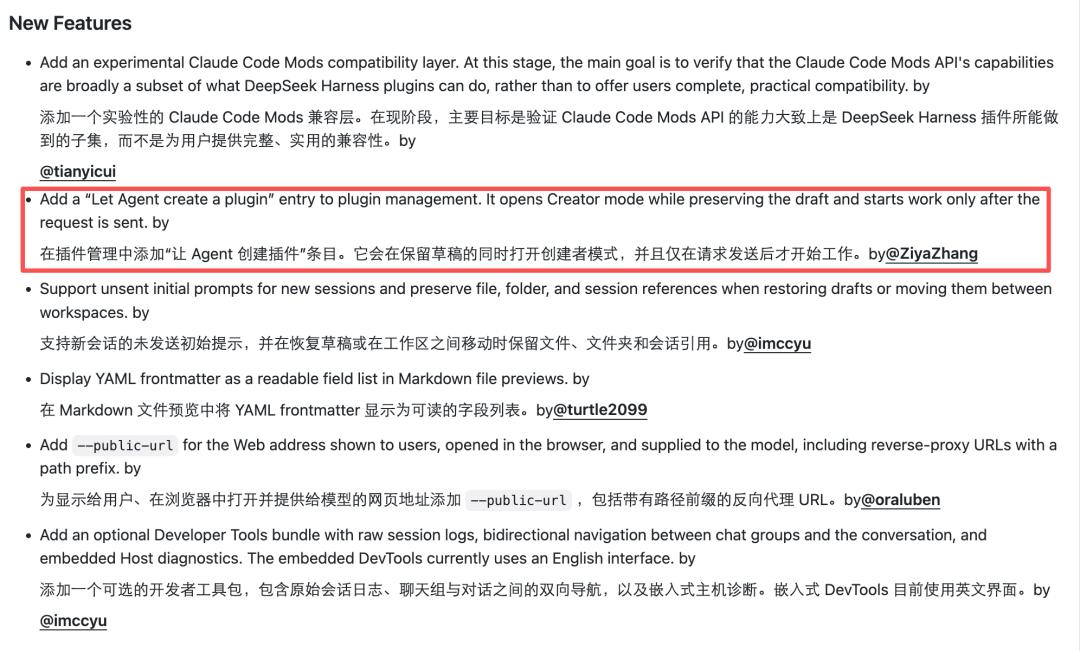
These two features, one tries to support external extensions, the other facilitates users to create features on the spot.
However, this bridge is still under construction.
The official clearly stated that the current compatibility layer is mainly used to verify that the capabilities of the Claude Code Mods API are roughly a subset of DSH's plugin capabilities, and does not yet provide full practical compatibility.
Specifically, the previous demos already have runnable bridging examples, but Claude Code's built-in diff, agents-md, sec-default and telemetry are still marked as "non-runnable" in the documentation, because some dependent events, interfaces or interface capabilities have not been connected. The loading method also needs to be adapted according to DSH's mechanism, and you cannot directly move Claude's plugins over to use for the time being.
Therefore, the most noteworthy part of this update is that DSH uses specific examples to demonstrate the possibility of reusing extensions across tools. There are still a few steps to go before you can install and use them seamlessly at will.
At present, the topic "DeepSeek Harness adds Claude Code Mods compatibility in the new version" has been on the Zhihu hot list.
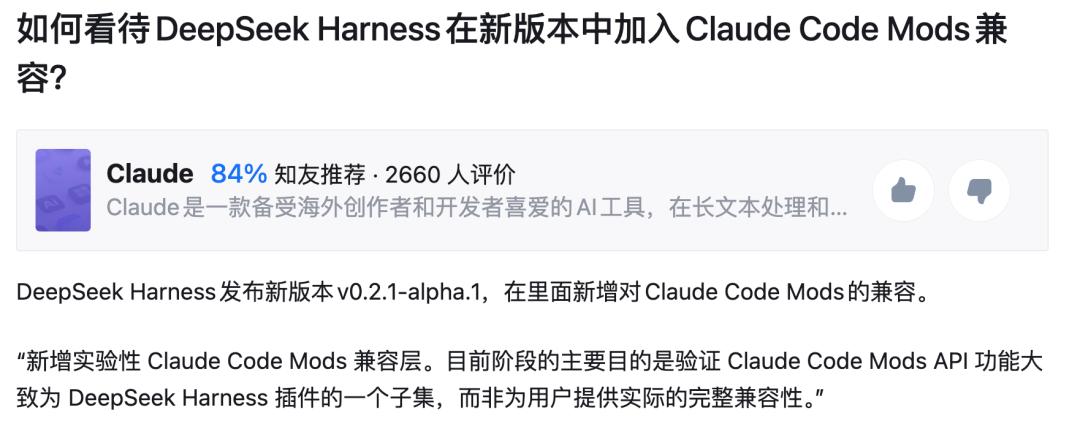
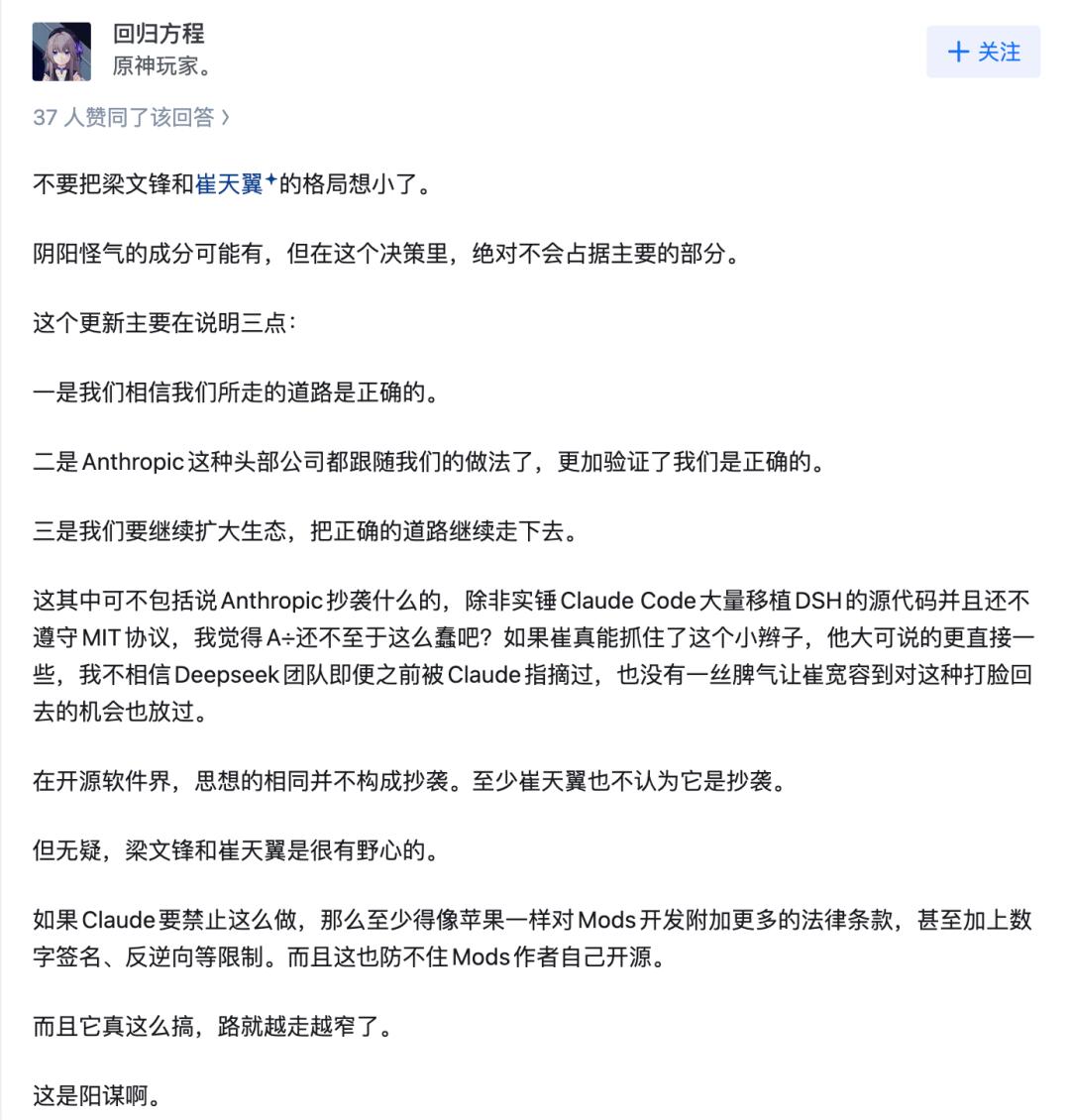
Everyone has their own interpretation of the words "subset" and other descriptions in the DSH new version release note, interested readers can go and have a look.
Reference links:
https://github.com/deepseek-ai/deepseek-harness/releases/tag/dsh-v0.2.1-alpha.1
https://www.zhihu.com/question/2089740005770008568
© THE END
This article is from the WeChat official account Synced (ID: almosthuman2014), author: Synced, published with authorization by 36Kr.