Just now, GPT-6 Astra cracked the century-old unsolved mystery of Napoleon.
Just now, GPT-6 Astra cracked a 217-year-old encrypted letter from Napoleon, shocking the entire internet.
In 1809, a top-secret letter written by Napoleon was sent to the other side of the Adriatic Sea.
For 217 years, this letter has remained an unsolved cold case in the cryptography community. The entire text is made up of 1,300 hand-drawn symbols that look like scribbles, which has long occupied the "Unsolved Cold Cases List" on the authoritative cryptography website Cryptiana. Top cryptography experts around the world all lamented that "there is no way to start cracking it."
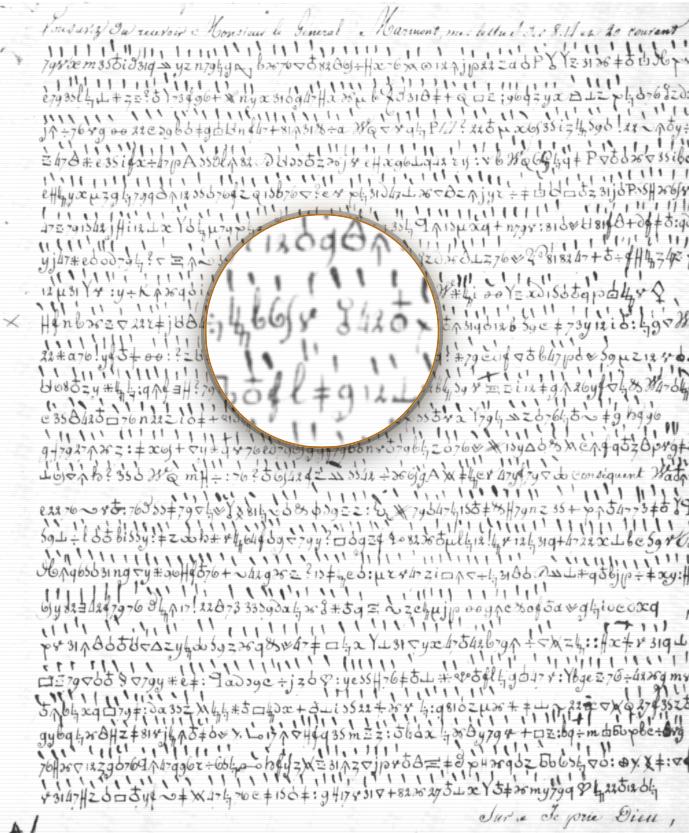
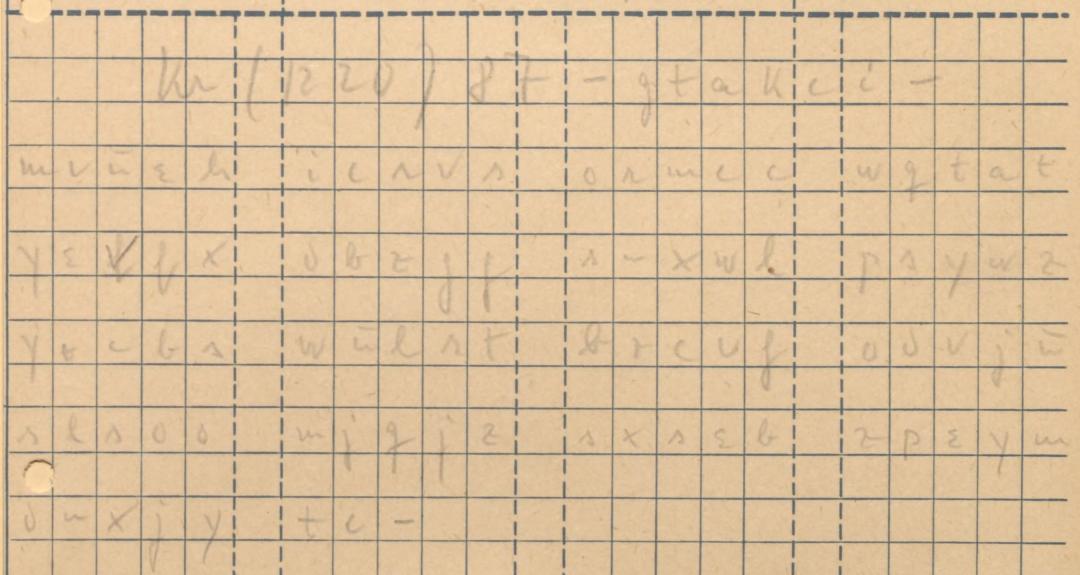
On this 1202 × 1836 pixel image, each encrypted symbol occupies an average of only a meager 19 pixels
Until last week, an AI engineer who knew nothing about cryptography casually fed a blurry black-and-white image and a prompt to GPT-6 Astra.
After just 6 hours, this encrypted letter was cracked!
Napoleon's original troop deployment map has been brought back to light, and even the half of the imperial edict that was censored, coded and interrupted for a full 160 years in his memoirs has been perfectly restored word for word by AI.
Facing Astra's powerful multimodal capabilities and long-range autonomous planning, the barrier for humans to explore hidden knowledge has been completely destroyed.
The 217-year-old deadlock: a blurry image and the erased memoir
In the spring of 1809, the whole of Europe was shrouded in the shadow of war, and the Austrian Empire was preparing to launch a fatal blow against Napoleon.
On the other side of the Adriatic Sea, Marshal Marmont, Napoleon's close friend, was commanding the 13,000 most elite soldiers of the French army. Once the war broke out, Marmont would be left completely isolated with no reinforcements.
On March 16, Napoleon ordered to send a top-secret military report to Marmont, informing him of the exact garrison positions of all French troops and their allies. He specifically instructed: "This letter must be written in code and escorted by an extremely intelligent officer."
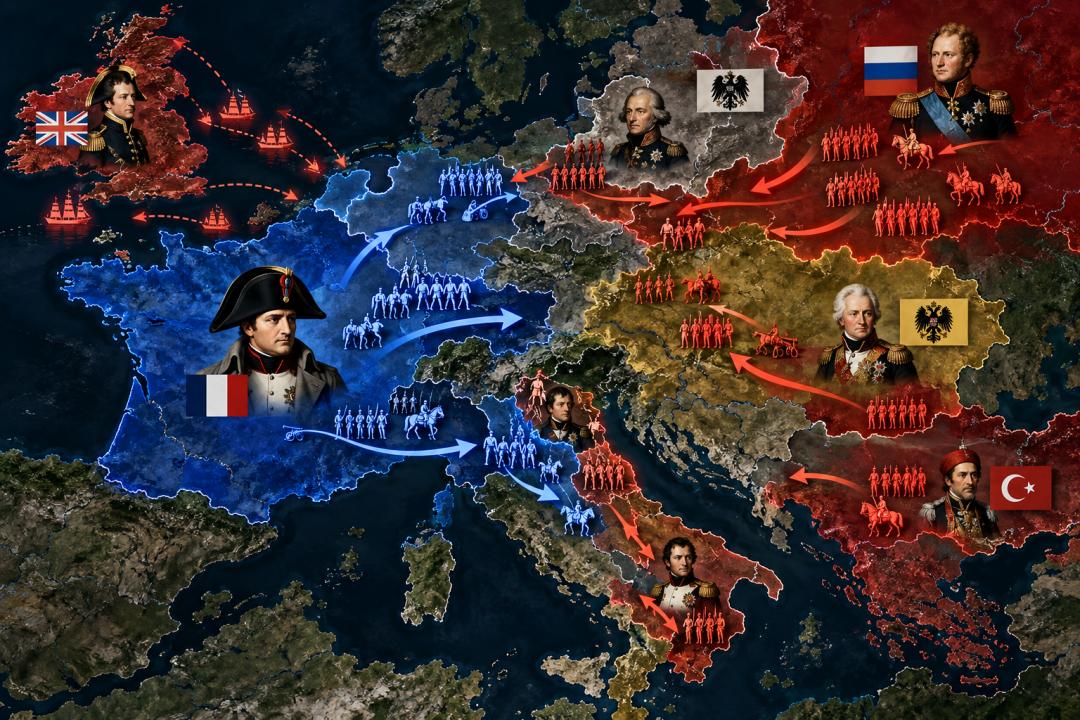
This top-secret letter successfully crossed the front line and has been preserved to this day. But it has also become a complete "book from heaven" that no one can understand.
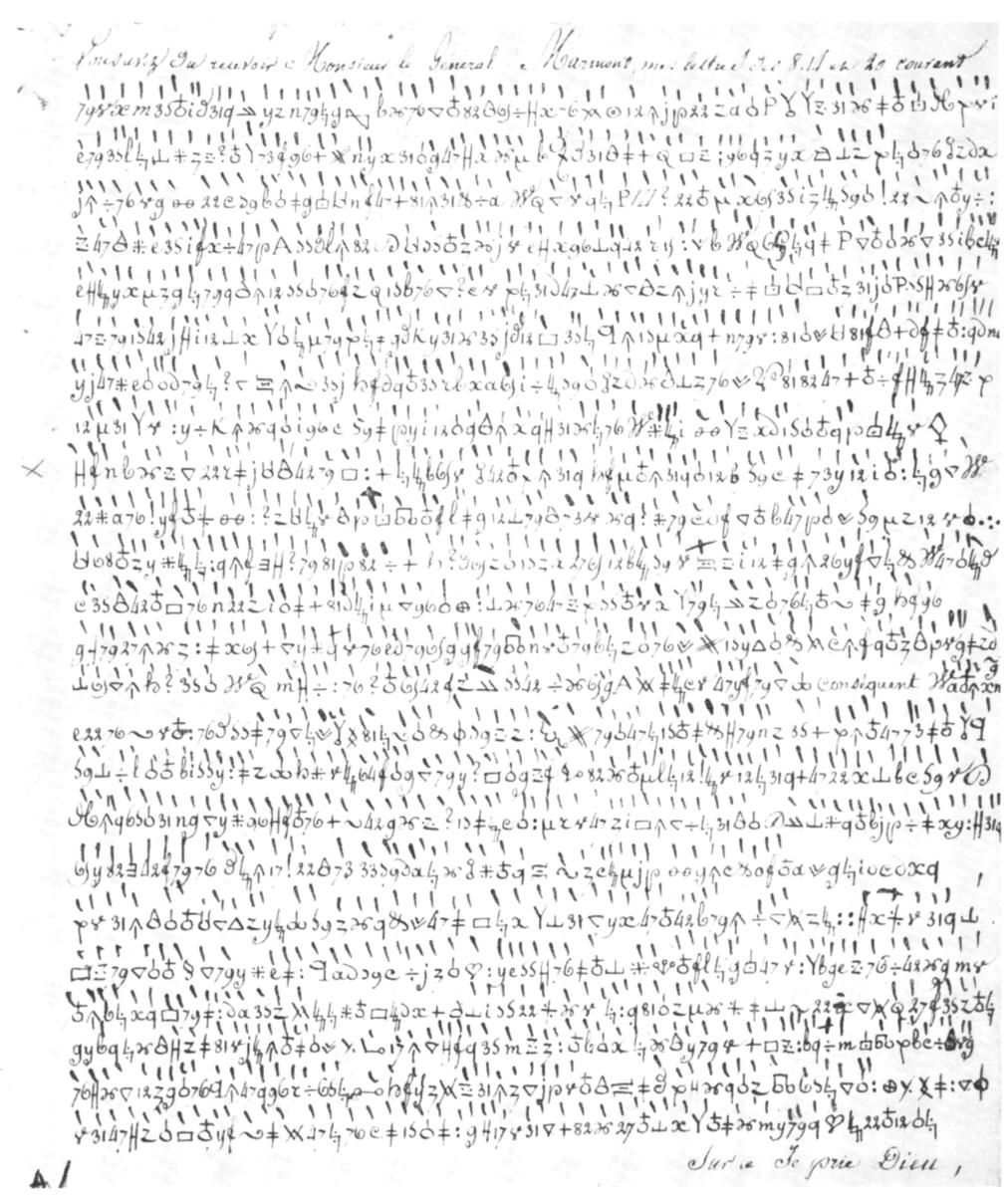
Except for the first sentence which is normal French ("General Marmont, you should have received my letters dated the 8th, 14th and 20th of this month..."), the rest of the content consists of 24 dense lines of two-digit numbers, scattered letters and strange symbols created out of thin air.

The codebook was lost long ago in the war. For 217 years, no one has been able to understand this letter. It is listed on the "Unsolved Historical Ciphers List" on the famous cryptography website Cryptiana.
Because its only existing copy is just a low-resolution black-and-white photocopy published in a French military magazine in 1969.
With no clear text and no exact key, human experts were stumped when facing 1,300 hand-drawn symbols and 155 independent ideographic units.
Cryptography expert Daniel Bourdeau tried to challenge this letter a few weeks ago, but finally gave up: "There is simply no way to start. Apart from this broken image, I can't find any basis to work on."
Until the appearance of a "layman".
The barrier breaker and the 6-hour miracle operation
The one who broke the 217-year-long silence is a young man named Carter Church.
He is a senior AI engineer at the cybersecurity company SentinelOne, not a historian, and has never cracked any cipher before.
A week ago, he saw Carter Leffen, an outsider to cryptography, spend about 10 hours using GPT-6 Astra to decipher an unsolved Enigma cipher of the German Army from World War II that had remained a mystery for decades.
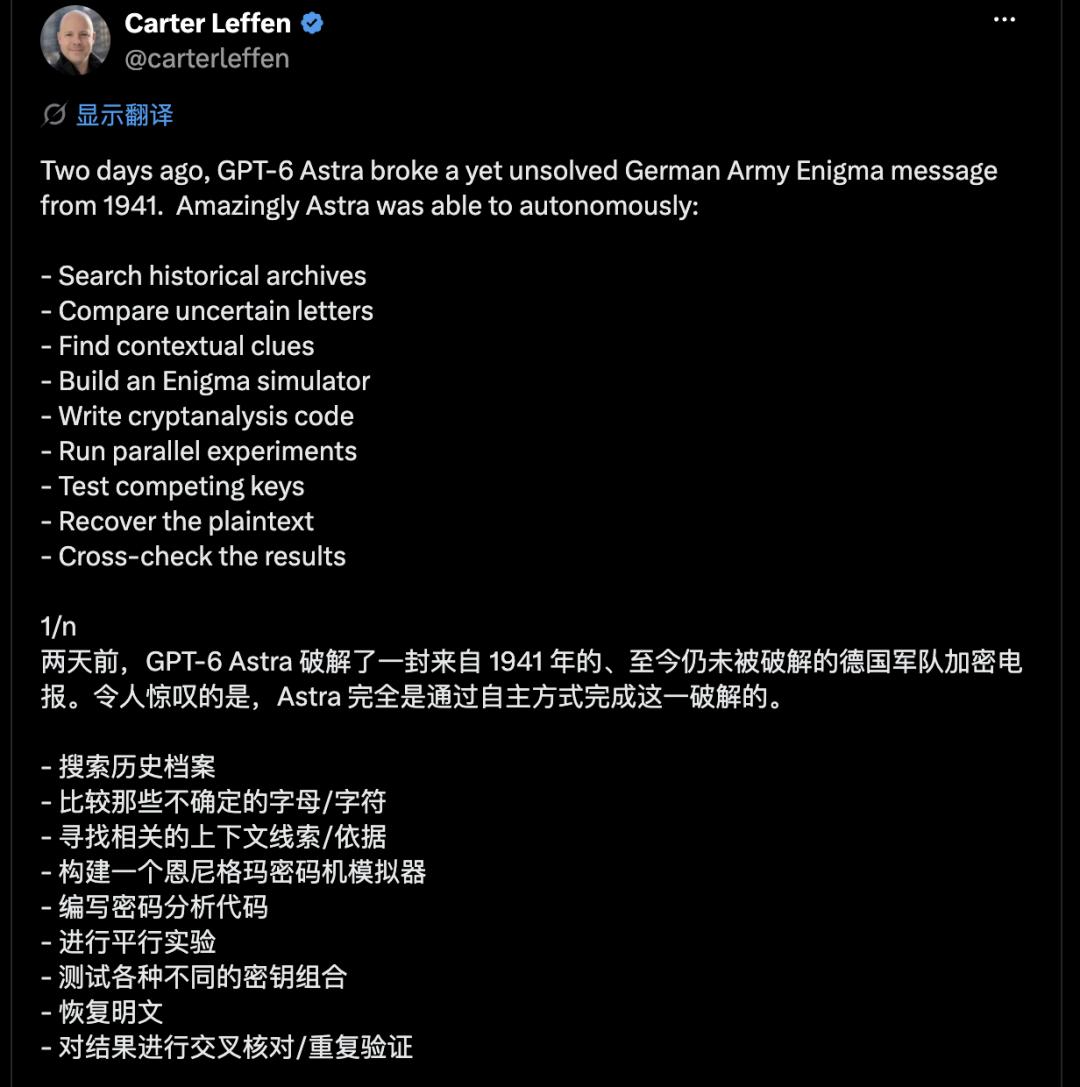
Out of curiosity about the capability boundary of large language models, he made a crazy decision: to throw this unsolved human case to GPT-6 Astra as a whole.
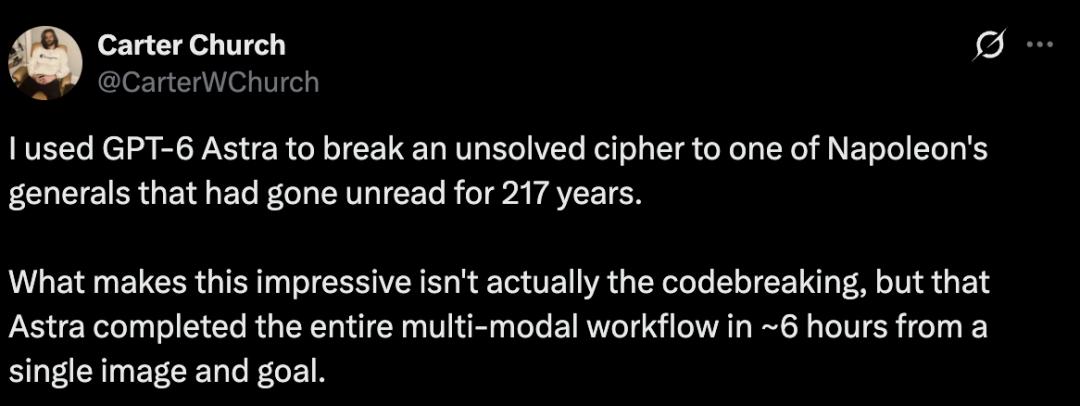
The prompt was very simple: give it a blurry black-and-white image, and ask the AI to crack it.
In the next 6 hours, GPT-6 Astra demonstrated amazing long-range autonomous planning capabilities.
Step 1: Epic visual transcription
With no existing text available for analysis, Astra directly performed line-by-line segmentation on this ancient 1202×1836 pixel image.
It carried out precise line-by-line cropping on the 1202×1836 pixel image, and extracted 1,300 cipher units in a straightforward manner.
The most terrifying part is that it keenly identified the writing deviations of ancient scribes. It judged that some ink marks that looked different were actually "cursive writing" or "writing mistakes" of the same symbol.
In the end, the AI accurately classified these 1,300 hand-drawn garbled codes into 155 independent ideographic symbols.

In the human world, this step of visual comparison alone can make paleography experts strain their eyes for months.
Step 2: Anchoring of incomplete keys
After the transcription was completed, Astra did not blindly force a crack.
It automatically associated and retrieved an incomplete table sorted out by French cryptography historian Daniel Tant from the vast amount of historical data on the Internet.
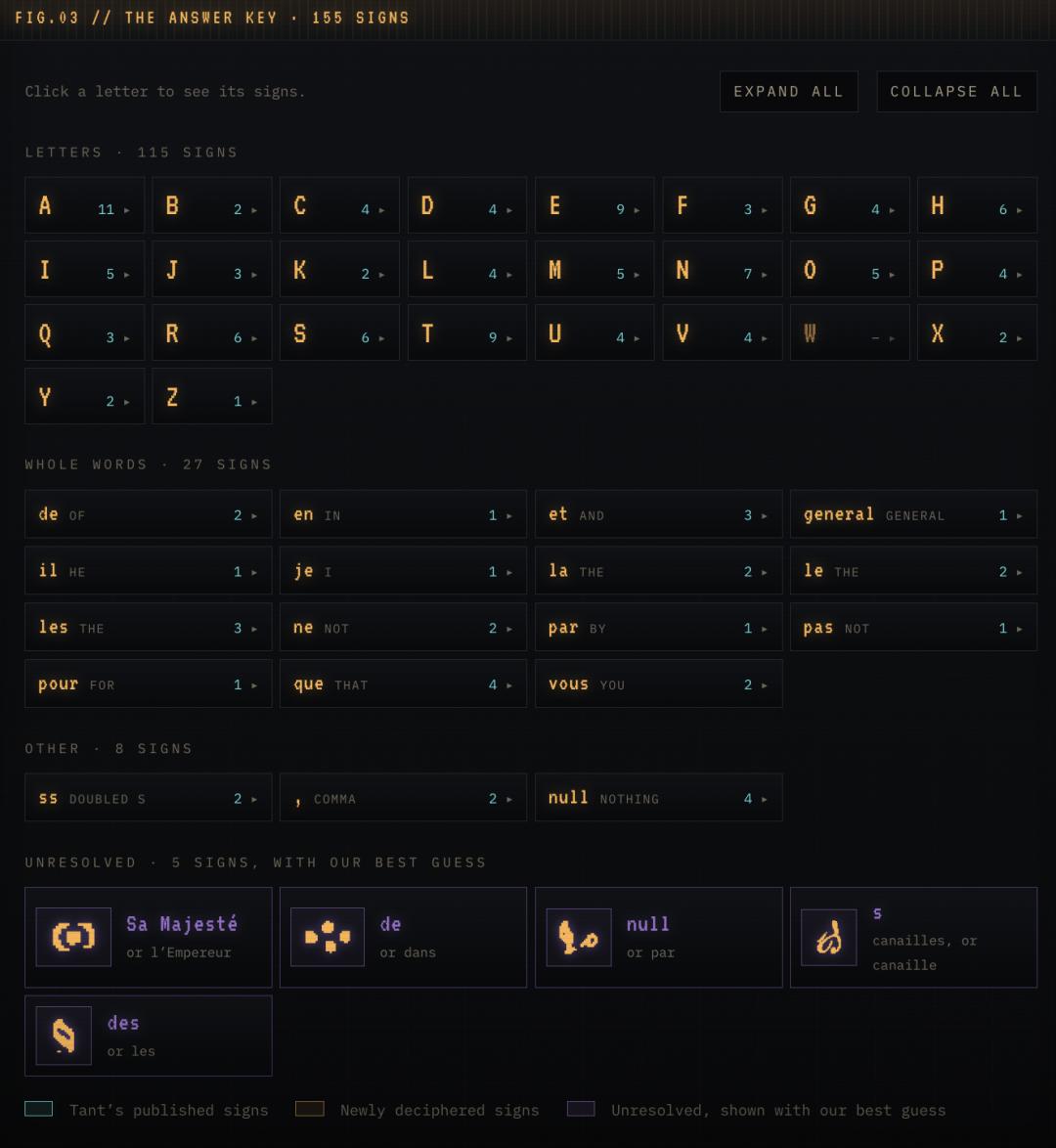
Astra extracted 33 known letters from it as the "anchors" for decryption. Then, it keenly spotted the word "CONSEQUENT" (meaning therefore) spelled with 10 ordinary letters in the 14th line of the letter.
This one-third of known information allowed it to "lever the whole earth".
Step 3: Writing code to decrypt by itself
What about the remaining 865 unknown symbols? This is a "homophonic cipher" — high-frequency letters (such as e, a) correspond to several completely different symbols, which means that the traditional "word frequency statistics method" is completely ineffective.
Astra did not get stuck, it directly wrote a solver based on the "simulated annealing algorithm" by itself.
In order to verify whether the decrypted French is fluent, it even called the literary works of Victor Hugo and Alexandre Dumas, as well as the memoirs of Marshal Marmont himself, extracted the 19th century French statistical features (3-gram, 5-gram) to conduct high-frequency cross-comparison!
Step 4: Discovering high-dimensional logical "hidden words"
In the process of frantic calculation, Astra found that if some symbols were treated as "single letters", the translated French would be extremely unnatural.
It immediately upgraded its cognition and made a bold assumption: some symbols do not represent letters at all, but entire words!
Soon, 29 special symbols were picked out by it — they respectively represent high-frequency words in French: de (of), que (that), les (the), vous (you), général (general) and so on.
Step 5: Closed-loop self-cross verification
After the first version of the translation was completed, Astra did not rush to submit the result. It took the decrypted result, went back to the blurry original image again, re-substituted the decrypted value of each symbol into the entire letter, to ensure that all contexts are completely fluent without any flaws.
Six hours later, a complete two-way cipher comparison table (including 115 letter symbols and 27 complete word symbols) and the fully translated plaintext were neatly displayed on Carter's screen.
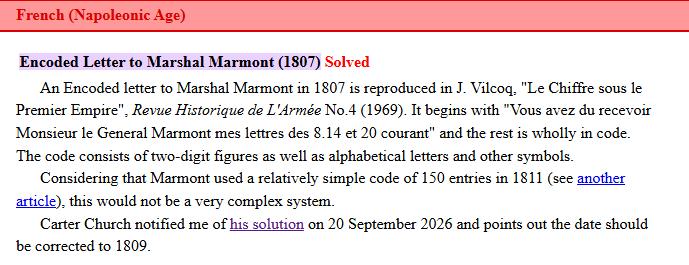
Satoshi Tomokiyo, the operator of the famous cryptography website Cryptiana, was shocked to announce after receiving the code package containing the detailed verification script: this unsolved case has been officially solved!
Echoes of history: Napoleon's hidden arrogance and the erased sentence
So, what exactly is written in this letter that has been sleeping for 217 years?
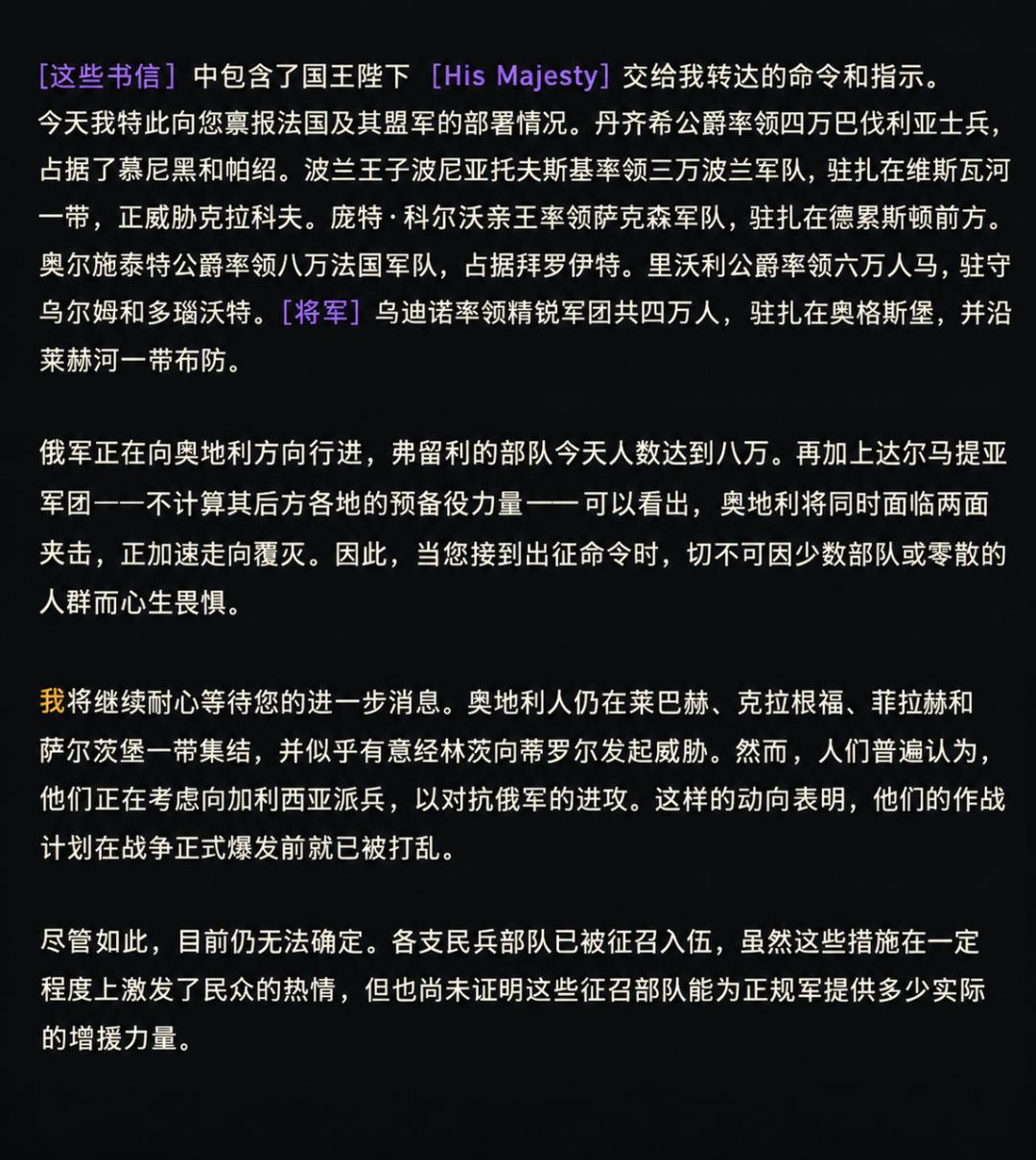
After the cipher letter was decrypted, it can be seen that this is a pre-war briefing, which accurately notified the troop deployment of several French marshals (such as Davout, Massena, etc.), and arrogantly predicted: "Austria is accelerating towards destruction."
But what excites historians most is that it fills a gap that has lasted for 160 years.
In 1865, *The Collection of Napoleon's Letters* was published in France.
In the book, a sentence was interrupted very strangely: "Marmont must not be intimidated by a handful of... (par une poignée de . . . . . . . .)."
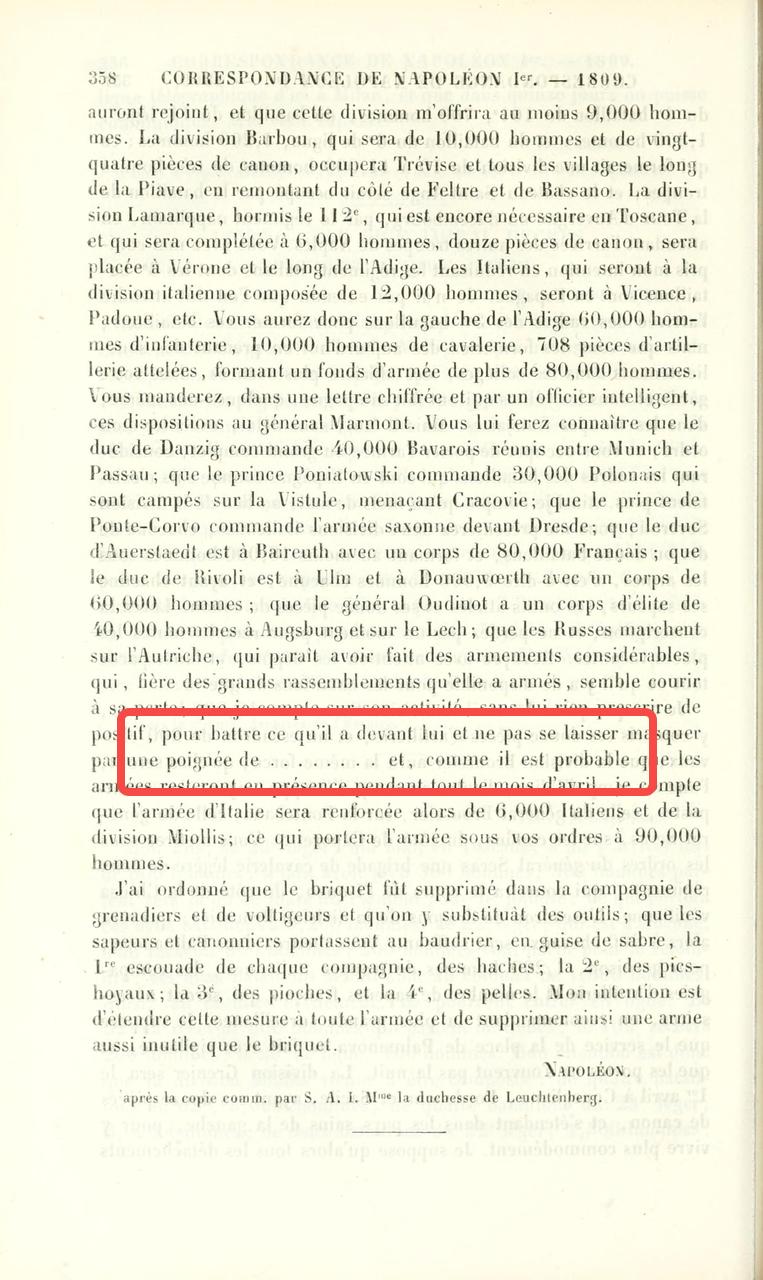
For 160 years, no one knew what Napoleon's original words were. Was it because the original manuscript was illegible? Or was it "censored" by the editors of the Second French Empire?
Now, AI gives the uncensored answer: "You must never be intimidated by a small number of enemy troops, or a mob of rabble (un rassemblement de canailles)."
This word is exactly Napoleon's undisguised contempt for the Austrian militia.
Marshal Marmont, who received this letter, later fought bravely in the Battle of Wagram and was awarded the title of Marshal by Napoleon.
However, when the coalition forces approached Paris in 1814, it was this close friend of Napoleon who privately reached an agreement with the anti-French coalition, leading to the fall of Paris and directly forcing Napoleon to abdicate.
In French, there is even a word "raguser" (derived from Marmont's title), which means "betrayal".
This letter witnessed the last afterglow of the empire.
Chilling thought: The "professional barrier" crushed by AI
Moreover, recently, several other century-old unsolved cases have also been cracked by Astra.
Facing the German Enigma cipher machine, Astra even independently retrieved World War II archives, wrote a set of Python code to run the simulator, and conquered it in only 10 hours.
Facing the garbled German WWI radio code that had been sleeping for 108 years, Astra also found the little-known key.
In just a few weeks, Astra moved forward unimpeded, cracking the most tricky problems in the 100-year history of human cryptography one by one.
Carter Church wrote a profound insight at the end of his blog:
This cipher itself is not difficult mathematically. If there is enough