40 million yuan in three days, exceeding 100 million yuan in one week: Behind the Linchao phenomenon is the silent rise of a cultural brand.
The real luxury in the future lies in the output of culture and values, as well as the uniquely Chinese cultural narrative.
On September 25, Linchao Nanjing Deji Store officially opened to the public. But the real stir happened much earlier.
During the three-day trial operation, which was only open to a small number of VIP members of Deji Plaza, the daily turnover exceeded 10 million yuan for three consecutive days, with a total of more than 40 million yuan in three days. After the official opening, its popularity did not wane but grew. Queues formed outside the store every day, and the average waiting time to enter the store exceeded 3 hours. In Deji Plaza, this queue became a unique sight: some people queued up as soon as the mall opened in the morning, some did not get in until the evening after queuing from the afternoon, and others even brought stools to wait in the line.
Inside Deji and the whole industry, this news has caused a huge sensation. Some consumers traveled from Shanghai and Hangzhou just to catch a glimpse of this brand that originated from the deep alleys of Lanzhou.
At this moment, the gold and jewelry industry is actually experiencing collective anxiety. The gold price has fallen from its high point, the consumption of gold jewelry has plummeted year on year, and leading brands have closed nearly 1,000 stores in total. The growth model that the industry has relied on for survival in the past two decades — channel expansion and gold price dividend — is failing at the same time.
Yet Linchao's popularity shows no sign of fading. It is free from the fluctuations of gold prices, driven not only by channel innovation, nor by minor tweaks to business models. What is it relying on? This "abnormal" phenomenon is a highly worthy business case for in-depth analysis.
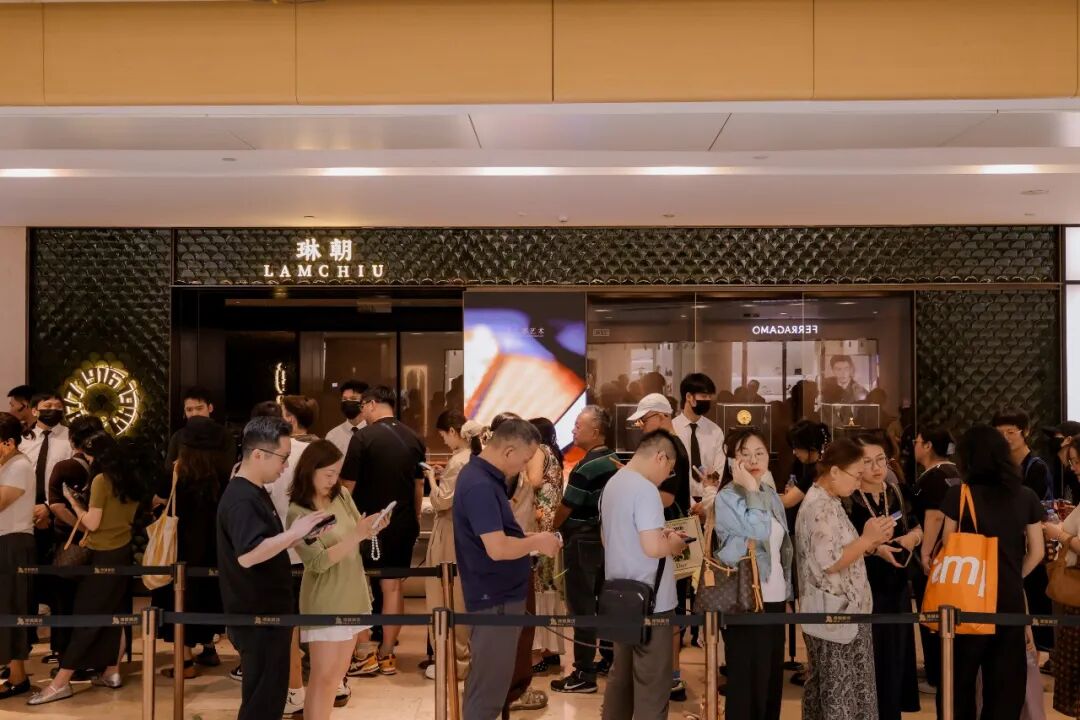
(On the opening day of Linchao Nanjing Deji Store)

The industry is "leaning on" old paths, while Linchao is "breaking away" from them
In 2026 of the gold and jewelry industry, most brands are doing the same thing: leaning on old paths.
They rely on channel optimization, minor product innovation, price hikes to maintain profits, and store closures to control costs. These are all reasonable business choices, but essentially they are all leaning closer within the existing framework.
What Linchao is doing, however, is breaking away.
Breaking away from the inertia of channel-driven growth, breaking away from the traditional narrative of the gold industry, breaking away from the value system of Western luxury brands, and breaking away from the pricing logic of "gold price + processing fee".
This kind of "breaking away" is vividly demonstrated throughout the opening process of Nanjing Deji Store.
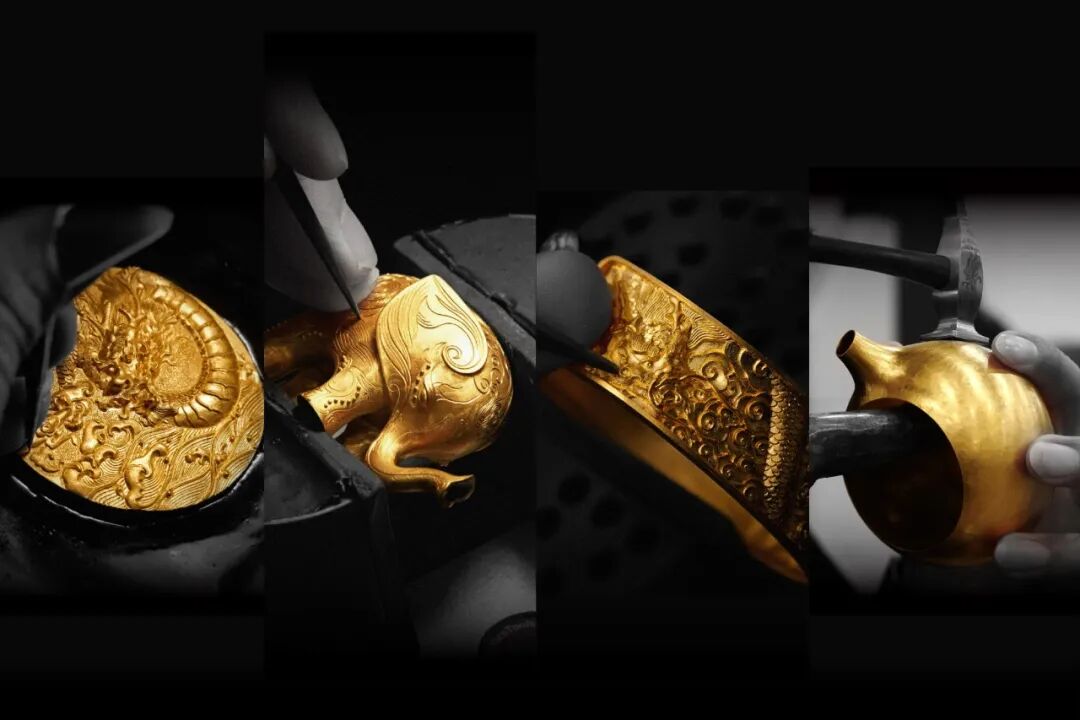
To the outside world, the first thing people notice about Linchao is the uniqueness of its products created by extreme craftsmanship and original spirit. 99% of its products are original designs, with nearly 100% manual work involved, covering dozens of craftsmanship techniques such as filigree, chiseling, fine carving, forging, water grinding, granulation, micro inlay, and mortise and tenon inlay. An intricate filigree work may take months or even a year to polish. In 2024, Linchao suspended order acceptance twice due to overwhelming orders. In 2025, Linchao raised its prices by 10% to 20% against the market trend, and the production cycle was extended to one year, yet its products still remained in short supply.
How rare this "uniqueness" is in the industry can only be seen clearly through comparison with similar brands.
Laopu Gold follows the path of "entering the Western-defined luxury system with Chinese symbols". It has 45 self-operated stores and an operating revenue of 27.3 billion yuan, with an overlap rate of more than 80% between its consumers and the world's top five luxury brands.
Junpei takes the youth-oriented route of "jewelry-grade gold". It entered most first-tier business districts within two years and achieved rapid replication by relying on style and user segmentation. Both of them are commercially viable, but in comparison, they are not on the same level as Linchao in terms of the degree of manual work and originality of products.
Linchao's "uniqueness" does not come from channel coverage or pricing strategies, but from a more fundamental fact: its products cannot be replicated.
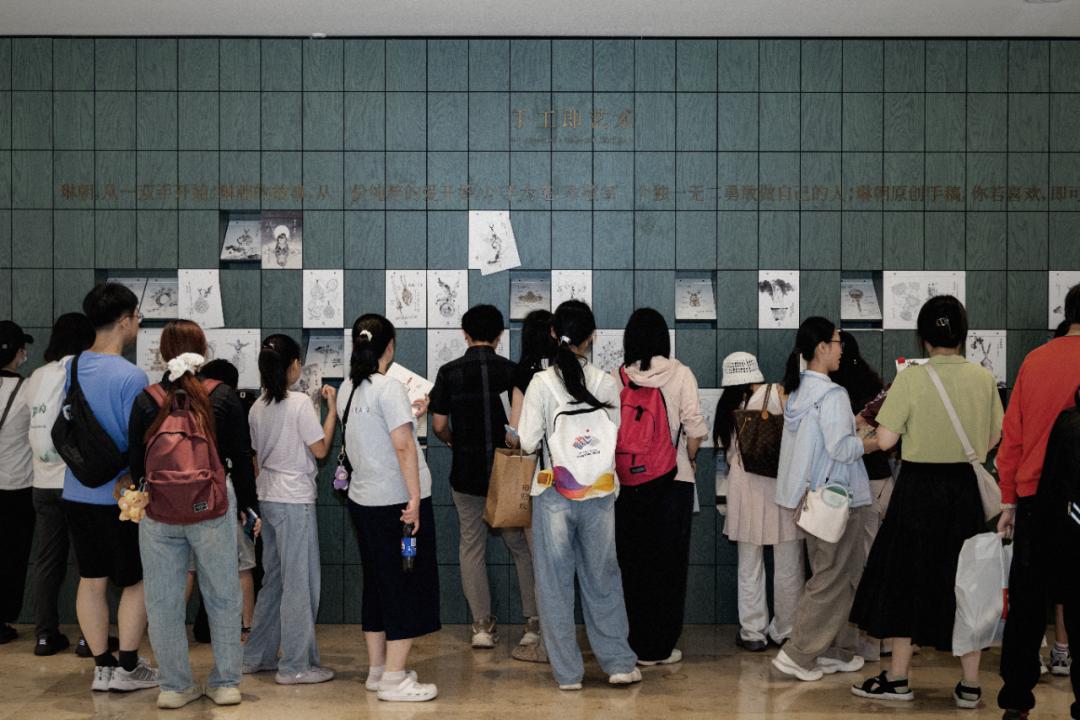
(The queuing phenomenon that led Linchao to change its store enclosure three times, the picture is from the Internet)
But products are only the surface. The opening process of Nanjing Deji Store itself is a paranoid performance of "extremeness". The store enclosure was changed three times, each time more carefully than the last. Hand-drawn drafts are available for free to take away, paired with handwritten short sentences that express aspirations or convey emotions. Originally scheduled to open in July, it was finally postponed to September, twice delayed just to bring the best presentation to Nanjing. The high monthly rent is burning, but Linchao chooses to slow down.
The Nanjing city exclusive collection is a gift that Linchao prepared for this city. From Qinhuai lanterns to Yuhua stones, from Xie Daoyun to The Peach Blossom Fan, from the mythical pixie beast to the lively saying that "no duck can swim out of Nanjing". Six works, six dimensions, each growing out of the inside of Nanjing's culture. This is not a simple collage of "Lanzhou design + Nanjing elements", but a systematic translation from understanding to creation.
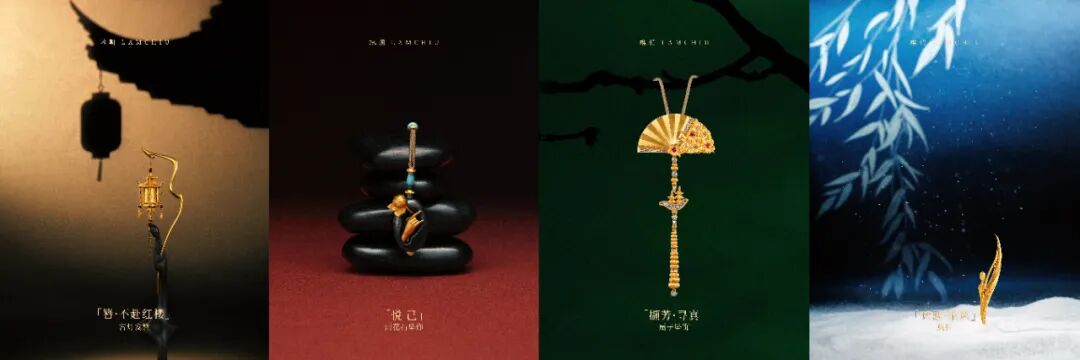
Even for the packaging system, Linchao is extremely demanding. Every detail conveys the same message: pursue extremeness and never perfunctoriness.
Behind all this is Linchao's "retranslation" of traditional culture. It injects the orientation of individual value — making the dragon no longer aloof, but representing every brave person. It speaks for the unnoticed corners, designs the bracelet's mouth opening, and creates contemporary Chinese artistic blank space. It devotes itself to the cause it loves without asking about the direction.
"Leaning on old paths" means doing better within the existing rules, while "breaking away" means redefining the rules themselves. This difference is not a difference in business strategies, but a difference in the root of corporate culture.

Products are the fruit, culture is the root cause:
Linchao's moat is not inside the store counter
All phenomena of Linchao today are results. Products are also results. Culture is the root cause.
This root cause is Linchao's brand culture and corporate culture. It is not an abstract concept, but the soil that grows in the enterprise organization, which is concrete, perceptible and warm.
(The picture is from the Internet)
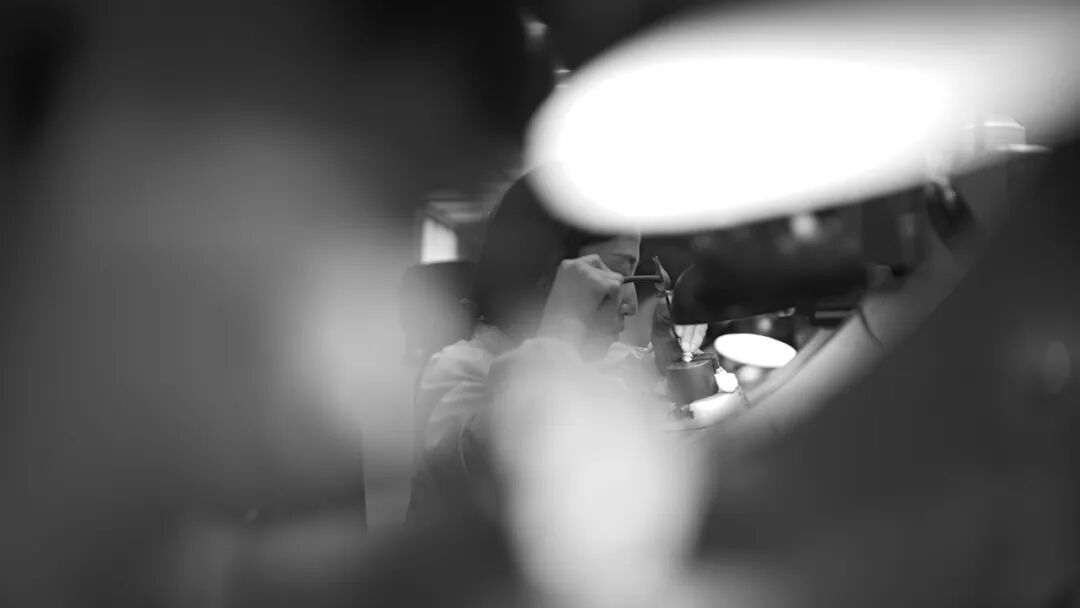
I was fortunate to visit Linchao's company once. In an old residential building, there are countless people with bright eyes. From top to bottom, everyone is enjoying the happiness brought by extreme passion and enjoying the process of creation. The founder Ma Chaoxian, under the pseudonym "Mr. Corner", almost never leaves Lanzhou, obsessed and crazy in his own corner. His state has infected the whole team — where pain turns into happiness, and work turns into creation. This is the most fundamental culture of Linchao: extreme passion.
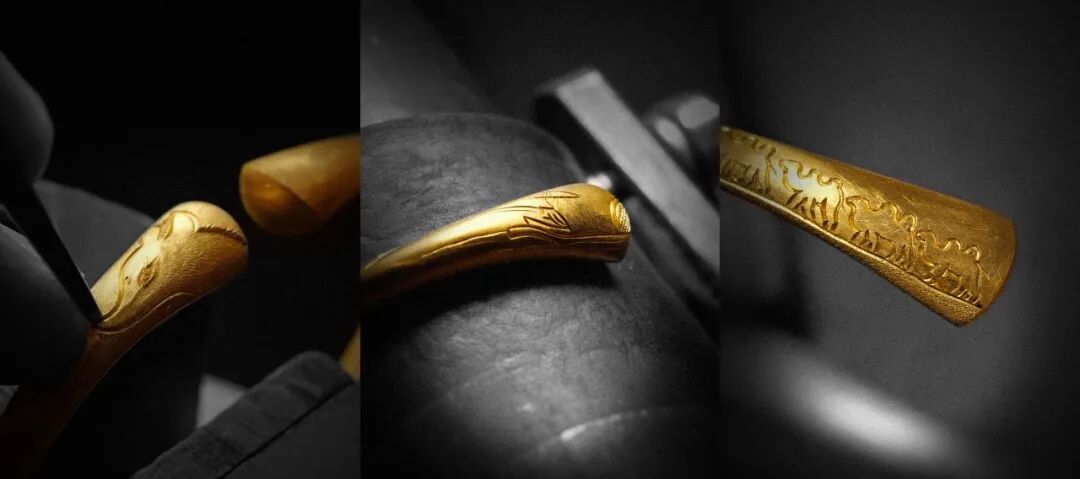
This passion projected onto products becomes the design philosophy of "individual value orientation". Linchao makes the dragon no longer aloof, but become every brave person; it speaks for the unnoticed corners, and carefully chisels at the opening of the bracelet; The Peony Pavilion has no pavilion, and the image of Wukong hides the self — that is the contemporary Chinese artistic blank space, the space left for the owner to fill in by himself. Linchao advocates that everyone be brave to be themselves and pursue the ultimate self. With such a culture, they can pursue the extremeness of every thing and every product. Good products and good business will naturally grow on their own. This is people-oriented.
(The picture is from the Internet)
Taking this people-oriented concept one step further, it is another belief of Linchao: as long as you are kind, you will have wisdom. You must do good things for others in places they don't know to move them. So on the back, joints and inner walls of the products — those corners that have been defaulted for thousands of years as "no need to care" — Linchao spends the most time chiseling. The founder said: "Only when the unseen parts of every piece of jewelry are well made, can you feel it is pure." It is not made well to be seen by others, but to be made well even if no one sees it. This is putting kindness first.
With passion, respect for people and kindness, one more thing is needed to preserve all these. Linchao's answer is: stay focused and long-term oriented. It does not pursue rapid scale expansion. "Even if we achieve the ultimate success in the Chinese market in the future, the number of stores may be controlled at single digits." While other ancient gold craftsmanship brands are accelerating store opening one after another, Linchao has only opened one store in 21 years. Its answer is "one city, one store, one design" — when entering a city, it only opens one store, and each store is designed exclusively for the city it is located in. This is a long-term mindset: enjoy the process of creation, rather than chasing short-term results.
Corporate culture is not a slogan hanging on the wall, but the soil that grows in the organization. Products grow from this soil, business grows from this soil, and the phenomenon of queuing for six hours at Deji Store also grows from this soil.
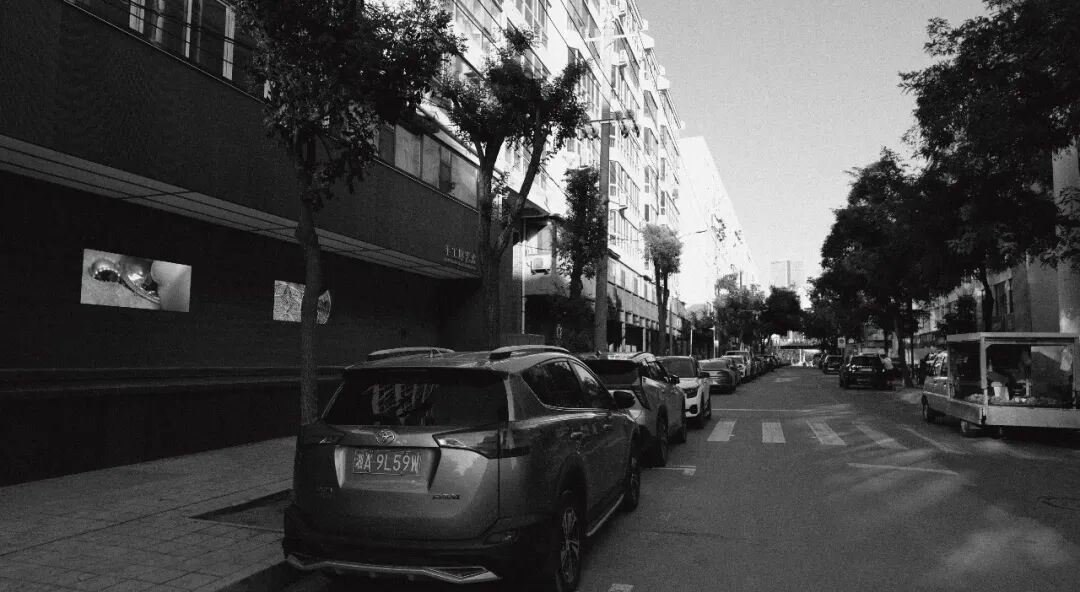
(Linchao Headquarters · Lanzhou Jinchengguan)
Linchao is not located in a first-tier city, nor in a commercial center. It is in Lanzhou, Northwest China, in a residential building on an old street in Jinchengguan, with a car repair shop and a pharmacy next door.
This location has instead nurtured the cultural soil. Lanzhou is not impetuous. To give birth to a great brand, you must polish it slowly. Slowness has instead cultivated the core competitiveness of the brand.
This reminds me of those international luxury brands that also "originated from remote places".
The story of the top international jewelry brand BVLGARI originated from the small town of Paramythia in the Epirus mountains of Greece, while the headquarters of Loro Piana is located in Quarona, Piedmont, Italy, a small town at the foot of the Alps.
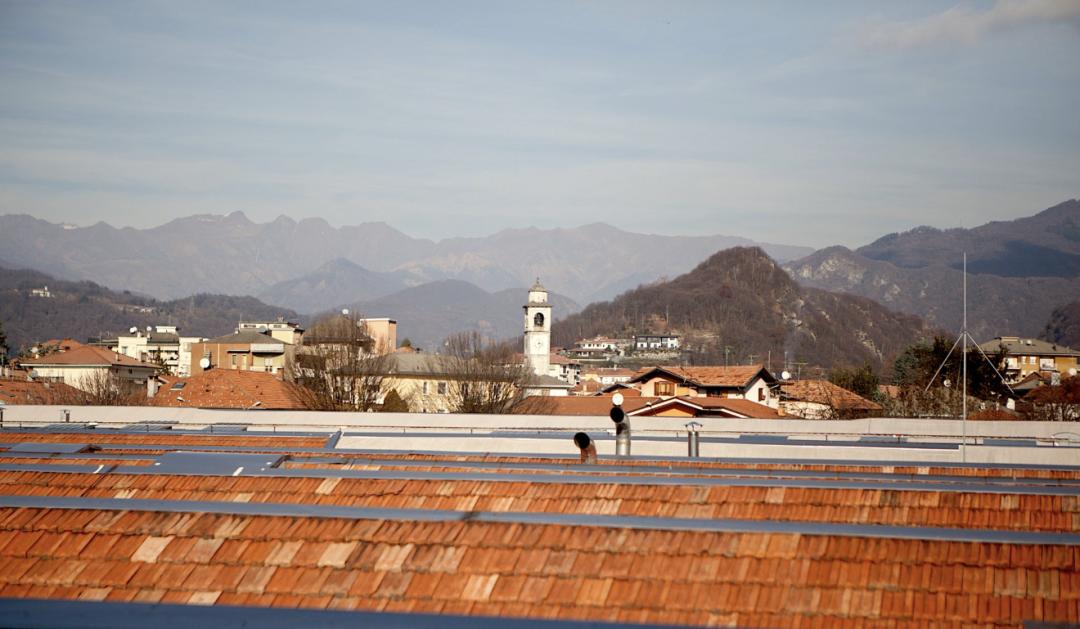
The small town of Quarona, where Loro Piana's headquarters is located
The "temples" of these brands are in Paris, Milan and New York, but their "roots" are always rooted in those small places unnoticed by tourists.
Linchao's founding team also shows a persistent pursuit of the original power of the brand. Ma Chaoxian, the founder, is one of the very few founders in the industry who is a craftsman by origin. He is rebellious, perceptual, obsessed and crazy, and rarely leaves Lanzhou, focusing on making his own works in the corner of Jinchengguan. Chen Feng, CEO of Linchao and founder of Rich Capital, is introverted, calm and rational, and puts forward that "slowness is Linchao's competitiveness". Linchao's future lies in the world, but its roots will always be in Lanzhou and Jinchengguan. Hold onto the origin, and look towards the distance. With roots, Linchao will not drift; with roots, Linchao can go far.