With the number of intelligent agents on the rise and their access points becoming increasingly scattered, Feicheng AI Assistant aims to create the "no need to think" entry, integrating various AI capabilities into your personal portable system.
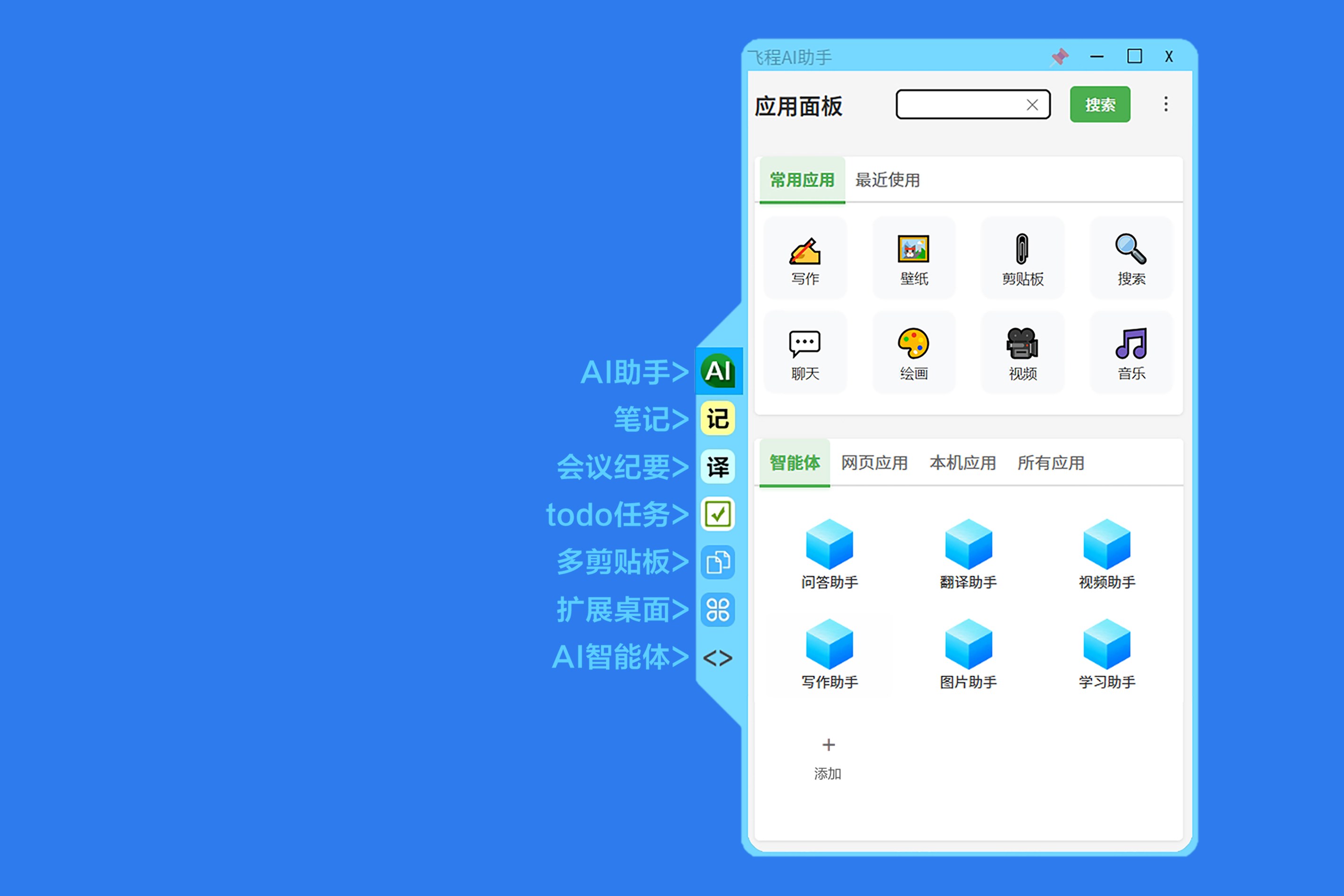
As AI assistants move toward systematization, Feicheng AI Assistant is building a personal portable system for every user
As agents grow increasingly diverse, a natural opportunity is emerging: with more and more capabilities and more focal points, people's attention is constantly being scattered. It is at such a moment that an entry point that "requires no extra thinking" is particularly valuable — it acts as a natural common divisor of memory, fits human intuition, is easy to remember, so that the moment people think of an AI assistant, they will recall its initialism domain name (aizs.com). Hangzhou Feicheng Technology registered this domain name in advance following this trend, devoting itself to creating a "portable system" for users. It works more like a DIY model building block platform — turning various agents and APIs into assembleable building blocks, so that everyone can build and connect freely on demand, and assemble their own exclusive intelligent system.
The opportunity shifting from "abundant capabilities" to "portable on-demand invocation"
AI Agents are integrating into daily life and office scenarios with a booming momentum. Users are getting access to an increasing number of agents, and models, tools and APIs each have their own strengths. While capabilities are getting richer, the number of entry points and focal points is also growing. There is a need for a hub that can launch all kinds of intelligent applications, to quickly locate, activate and combine these capabilities. For individuals, it brings the convenience of "finding, calling and using the functions anytime anywhere"; for enterprises, it delivers the efficiency of smoothly integrating multiple intelligent capabilities into existing workflows. As the number of options increases, an intuitive common-divisor entry point that requires no memorization becomes the key to gathering scattered attention and returning to focus.
The common divisor in memory is a shortcut across time and space
Zhang Guoqiang, founder of Feicheng Technology, has an early insight into this trend based on his development experience with big data. Back in the early wild growth period of AI and large models, the team reserved the domain name aizs.com, which is the initialism of Chinese term for "AI assistant", aiming to build it into an interconnected interaction hub for the market — an open, easy-to-remember entry point that opens up space for interconnection between all kinds of applications. Based on this entry point, Feicheng AI Assistant positions itself as "the invocation and search layer in the AI field", focusing on connecting different models and enabling interconnection between applications. When users want to use a specified industry-specific model application, they can quickly activate the corresponding intelligent application capability by searching for the target AI application.
Connect agents and APIs just like assembling building blocks
In terms of product form, Feicheng AI Assistant adopts a floating design: it stays quietly in the background in daily scenarios to keep the home screen neat, and can be instantly called out via shortcuts such as "Alt+Space" when needed. All desktop icons can also be displayed in the "second system", and the desktop can be traversed to another space-time through VR, realizing a balance between simplicity and permanent availability.
In terms of the system framework, the two features together form the experience of a "DIY model building block platform". The first feature is "DIY-buildable": the platform provides abundant modular components, so that individuals and developers can freely splice functional modules just like playing with building blocks, and flexibly build lightweight agents. It supports both an intuitive visual view mode and a source code mode for developers, to meet customization needs of different levels. The second feature is "freely connectable": every type of agent and API is a standard building block. The system connects friendly to various cloud large models, local models and efficiency tool APIs through a unified interface, supporting multi-modal creation of text, images, music, videos and more, as well as task scheduling, data analysis and automated office. On this basis, the output of one model can be smoothly transferred as the input of another model, so that multiple "building blocks" are connected layer by layer in the workflow, and natural collaboration takes place automatically. The end-side model carefully organizes memories locally, focuses on differentiated information, making invocation more efficient and memory more personalized to fit individual users.
Broad space for both users and developers
In terms of applications, Feicheng AI Assistant provides both a development platform and an operation platform. Its product logic is close to a "cross-application interconnected building block platform" — it is not only an invocation entry point connecting various models and APIs, but also an agile platform carrying DIY modules and agents.