Swiss engineering and technology enterprise Mosaic SoC researches and develops spatial perception chips, enabling consumer devices to perceive their surrounding environment in real time with low power consumption | Top 100 Swiss Innovators
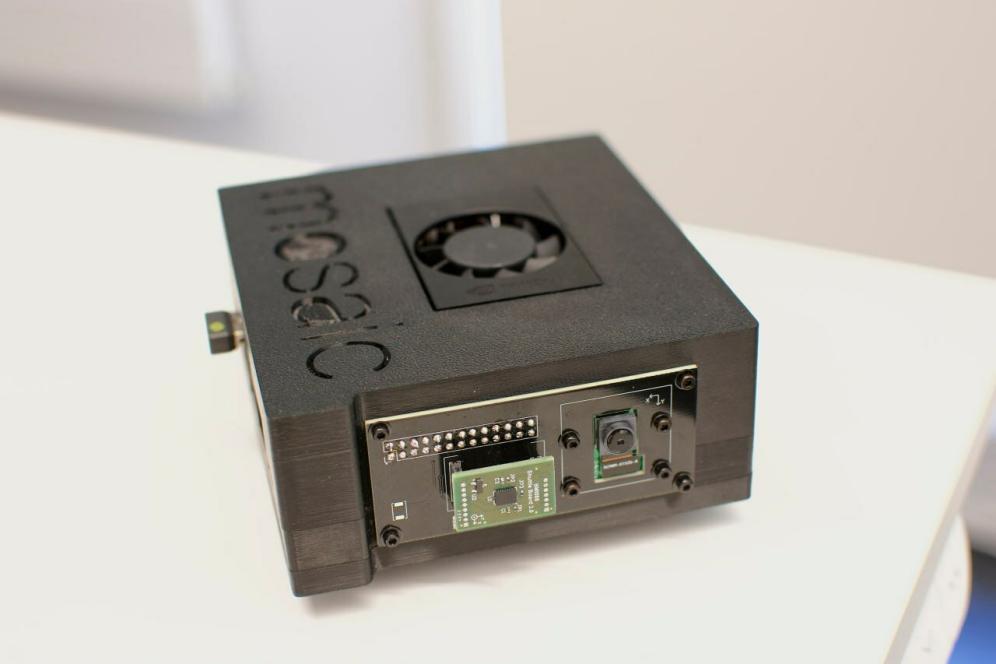
Image source: Environmental Leader
Swiss engineering and technology firm Mosaic SoC (hereinafter referred to as Mosaic) was founded in 2024, dedicated to the R&D of spatial perception chips. The chip integrates the key building blocks of spatial perception into a single chip, achieving ultra-low power consumption and minimal size, making it suitable for consumer devices.
Mosaic is a spin-off of ETH Zurich, co-founded by Alfio Di Mauro and Moritz Scherer. Alfio Di Mauro, CEO of the company, holds a doctorate in electrical engineering from ETH Zurich and once served as a research assistant at the Integrated Systems Laboratory of ETH Zurich. Moritz Scherer, CTO of the company, holds a doctorate in electrical engineering and information technology from ETH Zurich, with research focus on AI computing and hardware-software co-design.
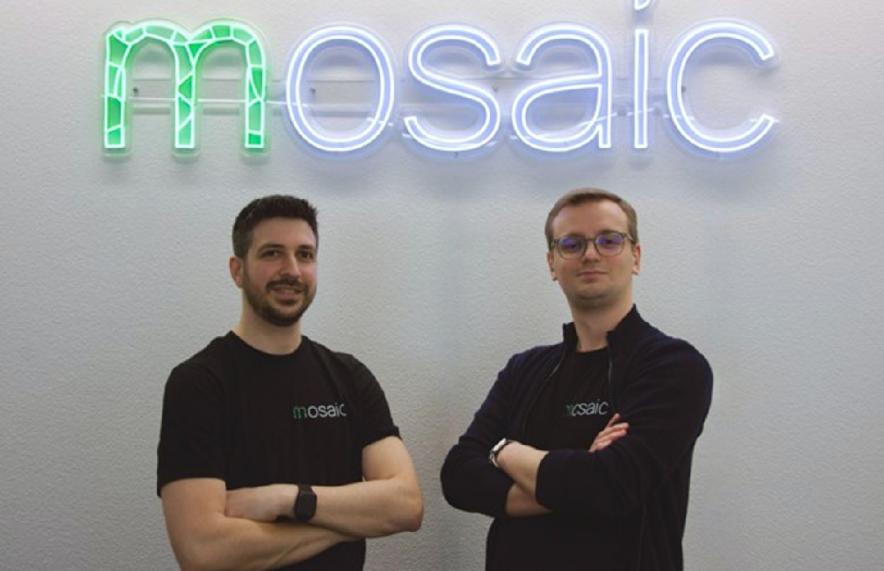
Image source: startupticker
The continuous environmental perception capability of end-side devices such as smart glasses and AR/VR requires long-term processing of camera and sensor data to complete spatial computing tasks such as recognition, tracking, simultaneous localization and mapping (SLAM) in real time. Currently, such functions are mainly carried by traditional application processors or GPUs. Although traditional GPUs have strong parallel computing power, their chip design focuses more on peak performance, resulting in high power consumption during continuous visual and AI computing. Frequent memory access and intermediate data handling will also increase bandwidth pressure and energy consumption, and cause obvious heat generation. Consumer devices represented by AR glasses rely on small-capacity batteries to work for a long time, and are strictly constrained by battery capacity, heat dissipation conditions and overall device weight. The use of such high-power chips will lead to problems such as shortened battery life, excessive temperature rise, and increased device volume, which greatly limit their landing applications on lightweight battery-powered wearable devices.
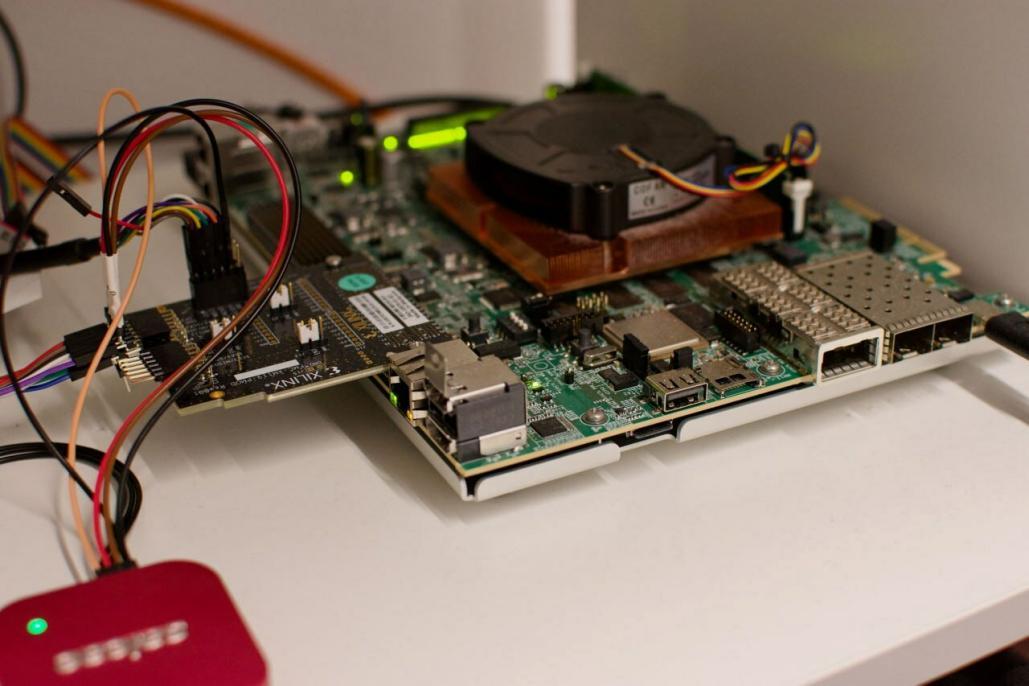
Image source: Environmental Leader
Mosaic has developed a spatial perception chip, which is based on the open-source RISC-V instruction set, builds a highly customized heterogeneous multi-core computing architecture. By adopting a multi-core architecture with more than 8 cores and a co-design of computing and storage, multiple computing cores and dedicated accelerators can read and write memory data in parallel at the same time, eliminating the bandwidth bottleneck, computing waiting time and extra power consumption caused by traditional serial memory access and frequent data handling, so as to improve the data transmission efficiency and computing power utilization during parallel processing of multiple visual and AI tasks. Based on this architecture, the chip can handle tasks including simultaneous localization and mapping (SLAM), target tracking, eye movement and hand tracking, visual processing and neural network inference, enabling AR/VR devices to construct local spatial maps and track environmental objects in real time. It can also be used as a co-processor for smartphone cameras to continuously perform visual tasks such as image classification with extremely low power consumption, which barely affects battery life.
At the software level, Mosaic provides a complete software stack including self-developed compilers and AI deployment toolchains, which can automatically adapt customers' existing algorithms and models to different RISC-V cores and dedicated hardware accelerators, optimize task scheduling, execution efficiency and memory usage, reduce the development workload of ODMs and OEMs in underlying software adaptation and system integration, thus accelerating the development and launch of smart terminal products.
Mosaic is currently primarily targeting the AR/VR chip market, which has a current size of 6 billion US dollars and is expected to grow to 10 billion US dollars by 2029. In the future, the company will gradually expand to the end-side device markets that require low-power continuous visual perception, such as smartphones, robots, autonomous systems and spatial imaging.
In April 2026, Mosaic SoC completed a $3.8 million pre-seed round of financing, led by Founderful and participated by Kick Foundation. The funds are mainly used to advance the development and commercialization of low-power spatial perception chips, and further improve the AI model deployment toolchain, compiler and supporting software.

Mosaic SoC is a listed enterprise in the 2025 "TOP100 Swiss Startups". The "TOP100 Swiss Startups" gathers the best "Swiss Made" technological innovation enterprises in the start-up and growth stages, and is the most internationally influential benchmark list in the field of Swiss technological innovation. Since 2011, this list has selected 100 of the most pioneering and market-prospective Swiss innovative enterprises and 25 Swiss growth-stage enterprises with the most unicorn potential across Switzerland every year, covering fields such as life sciences, construction machinery, robotics, information and communication technology, low-carbon technology, and food technology. The "TOP100 Swiss Startups" and its series of brand events are landmark activities in the Swiss innovation ecosystem, representing the highest ground of Swiss innovation and the forefront of international investment and financing.
The Chinese version of 2025 "TOP100 Swiss Startups" is honorably released by Insight Tech. Insight Tech is the authorized Chinese partner of "TOP100 Swiss Startups", responsible for the operation and promotion of "TOP100 Swiss Startups" in China and assisting the list projects in commercial cooperation with China. Insight Tech is a service provider for China-Europe (Switzerland) industrial innovation cooperation, committed to promoting the Sinicization of Swiss innovation and the internationalization of Chinese industries through ecological construction and cross-border empowerment.
To obtain the full list and industry-specific lists of "TOP100 Swiss Startups", please visit the official WeChat account or official website of Insight Tech.