Just now, OpenAI's Muse has been launched, GPT-6.1 is priced at a steeply discounted rate, and it is revealed that the company plans to raise financing of over 200 billion.
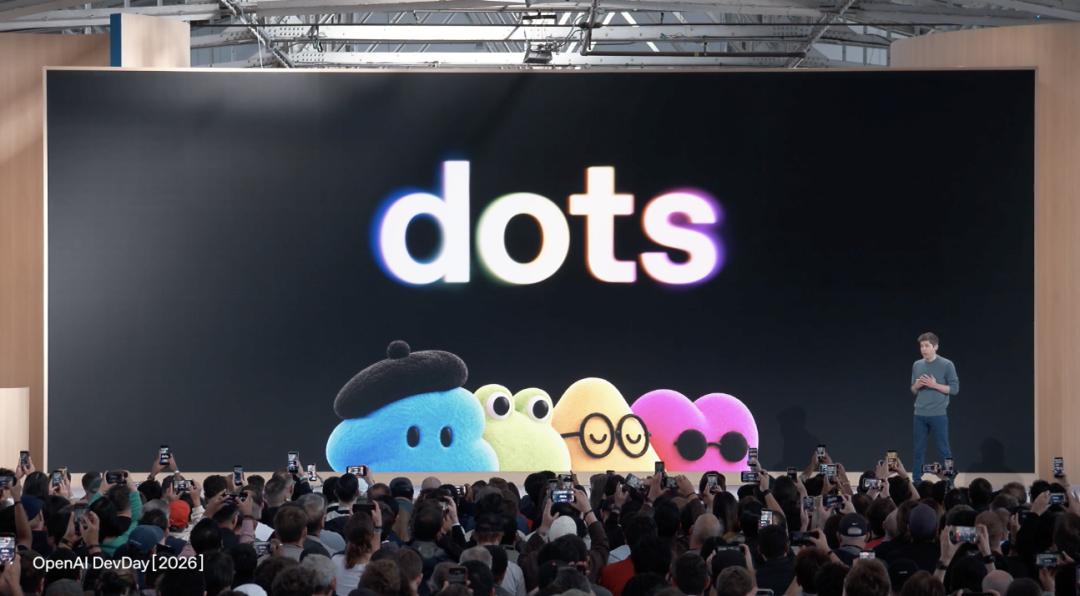
ZhiEast reported on September 30 that in the early hours of today, Sam Altman, co-founder and CEO of OpenAI, released a total of 21 products, features and updates at OpenAI DevDay 2026, including the 24/7 personal agent Dot, collaborative space ChatGPT Space, GPT-6.1 Sol, etc.
Among them, the 24/7 personal agent Dot is positioned similarly to Meta's personal agent product Muse, powered by GPT-6 Astra, runs continuously 7×24 hours, and has independent cloud computers, browsers, and code writing and testing capabilities.
Interestingly, whether by coincidence or on purpose, Elon Musk's SpaceXAI company has already registered the Dot.com domain name, which will redirect to the Grok webpage when you search for it.
Starting today, OpenAI Dot is open to ChatGPT Pro Business, Premium and Enterprise users, it is included in the existing subscription, and conversations do not count towards the usage quota.
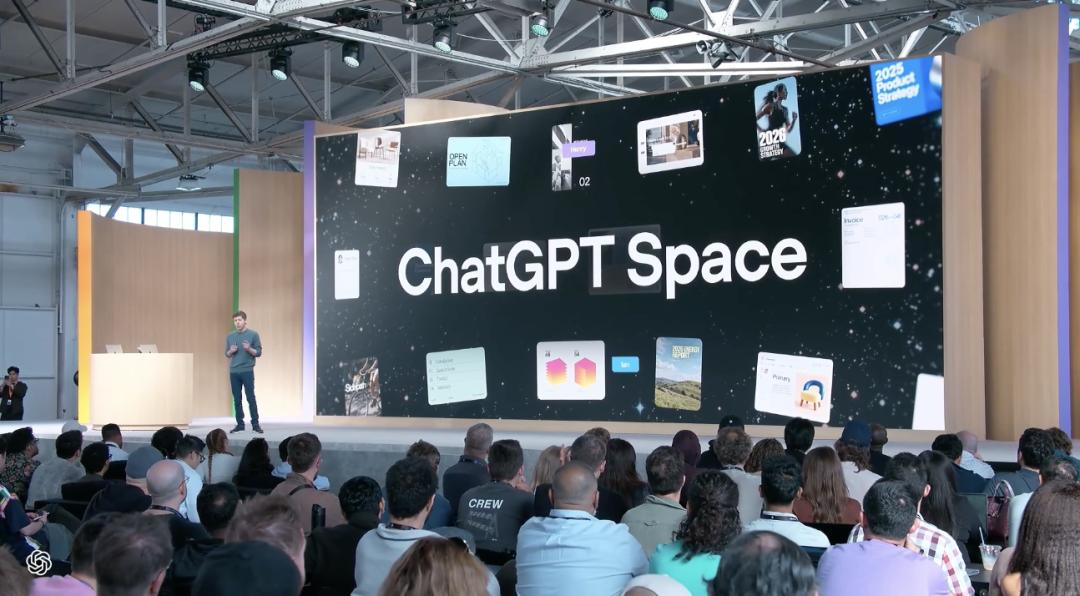
The collaborative space ChatGPT Space allows users, teammates and multiple agents to work together on the same dynamic page, and users can assign tasks by @mentioning Dot.
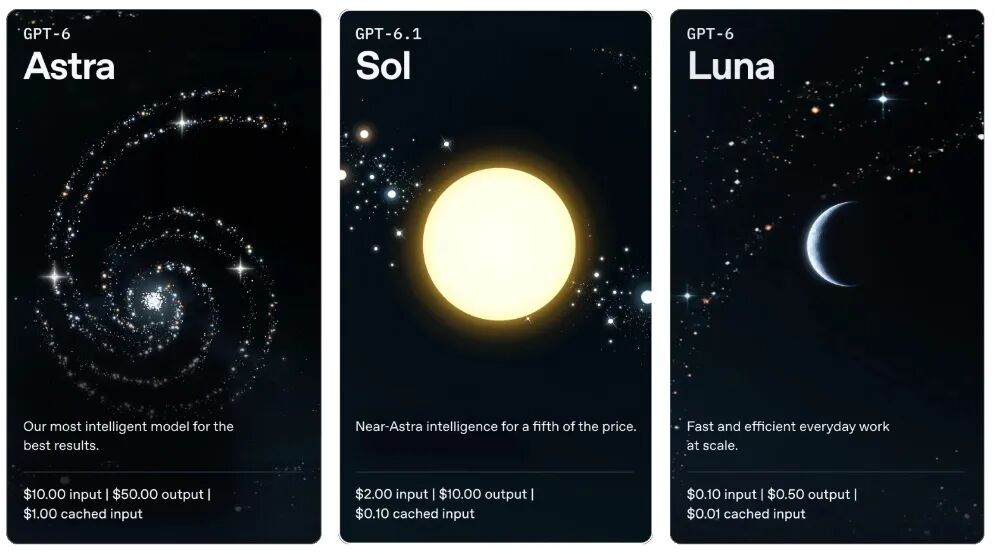
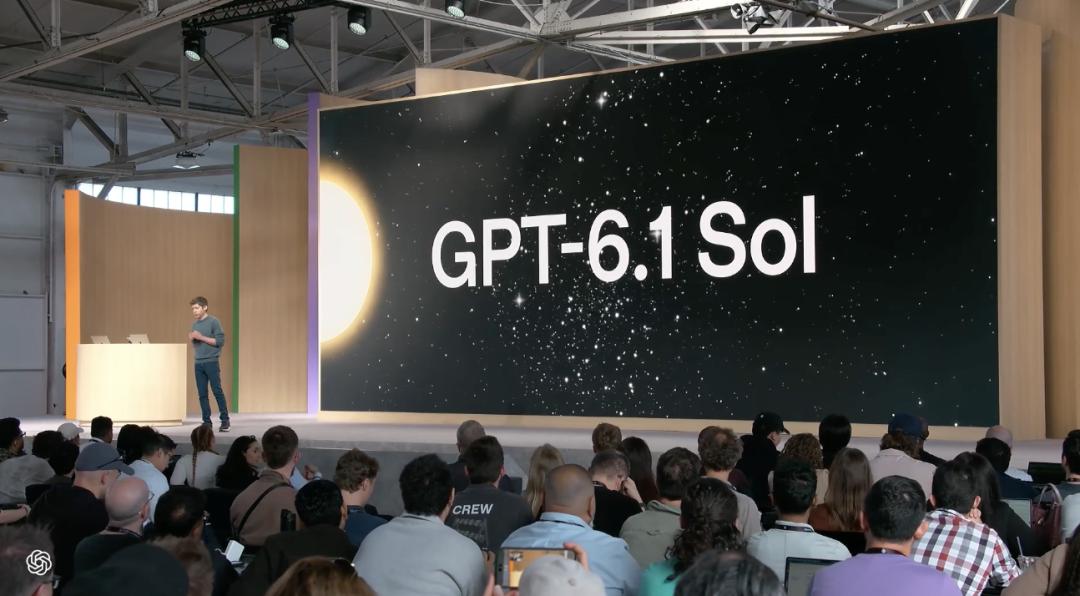
GPT-6.1 Sol was also released at the same time. This model performs comparably to GPT‑6 Astra in programming and professional tasks, but its price is only 1/5 of Astra's.
Updated alongside the model are the 8x speed inference mode Ultrafast (up to 300 tokens/s), the low-latency Decisions API (millisecond-level response), the new Pro 500 subscription plan (monthly fee of $500), and the re-opened Pro 200 subscription plan (monthly fee of $200).
In addition, OpenAI also released 8 developer capabilities: Codex Harness open source, Codex cloudification, Codex Secure Cloud, Agents API public beta, OpenAI Private Intelligence, Sign in with ChatGPT, Plugin Extensions, and OpenAI Marketplace.
There are another 6 platform and ecosystem updates, covering enhanced ChatGPT Sites, optimized plugin discovery and submission processes, AWS Bedrock managed Agents, integration with Microsoft Agent 365, and cooperation with Base Ten to open up open source models.
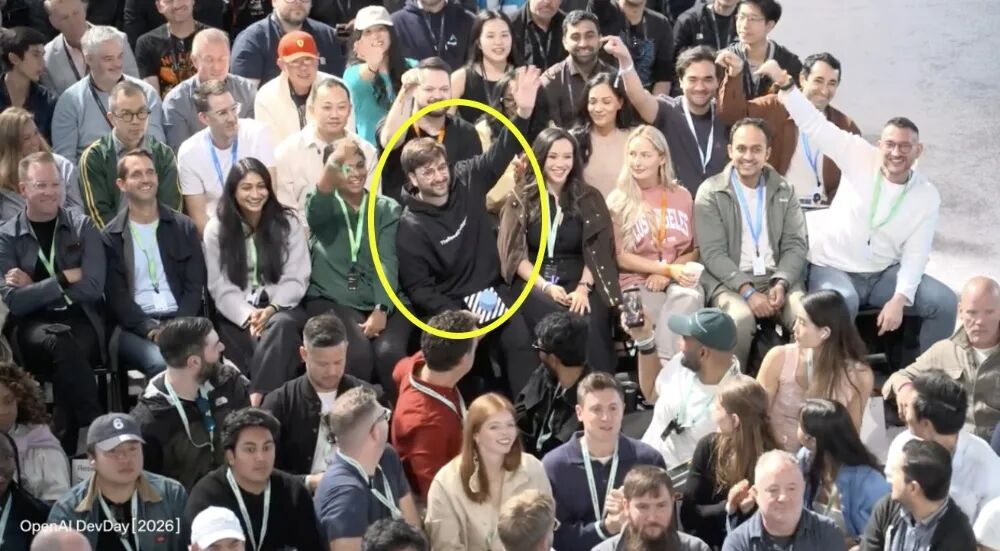
At the end of the keynote speech, Altman invited "Tibo" Thibault Sottiaux, known by developers as the "God of Reset", to press the "reset button" on site, resetting the account quota for all ChatGPT users around the world.
According to another report from Bloomberg today, people familiar with the matter revealed that after OpenAI postponed its IPO, it plans to raise at least 300 billion US dollars (about 2.011 trillion yuan) in a new round of bridge financing, seeking a pre-money valuation of about 1.4 trillion US dollars (about 93.848 trillion yuan).
If the financing goes smoothly, its valuation may once again exceed the 965 billion US dollars valuation of Anthropic's latest private market financing round.
01.Dot: The 24/7 agent, "the most authentic form of AI"
In his opening keynote speech, Sam Altman positioned Dot as "the most authentic form of AI that we have always envisioned for ourselves".
Powered by GPT‑6 Astra, Dot is a 24/7 continuously running agent that can actively check information at night, push urgent matters in the early morning, update calendars, filter feedback, and help users regain their focus.
Through OpenAI's plugin ecosystem, Dot can connect to more than 4,000 applications. Users can reach their own Dot at any time through ChatGPT, SMS, Slack or Teams.
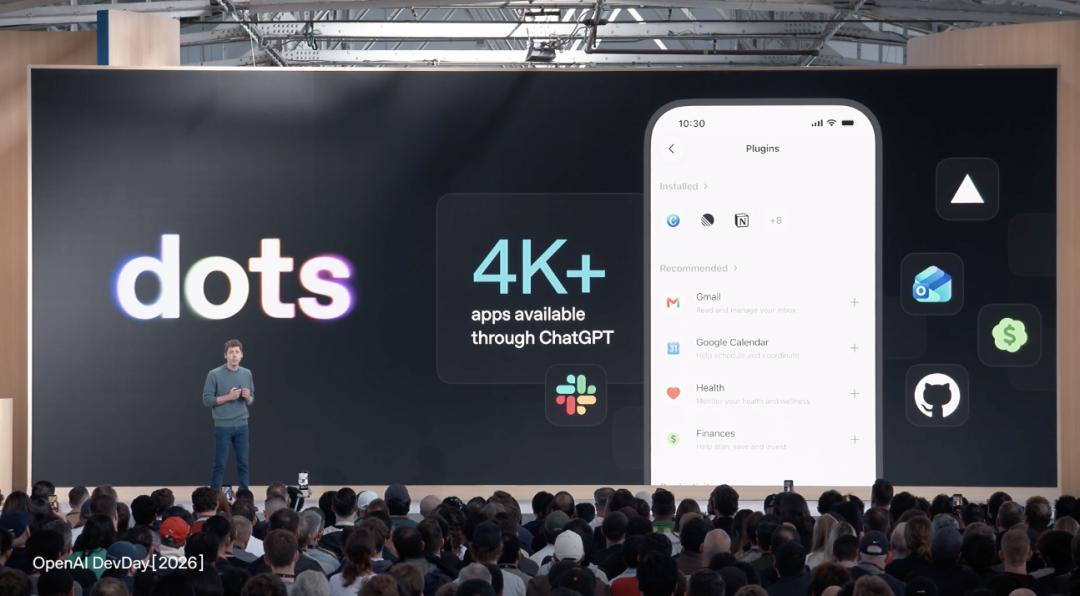
In terms of capabilities, Dot is driven by the Astra model and can undertake end-to-end complex engineering projects, such as monitoring bug reports, fixing problems, drafting PRs, planning budget cycles, diagnosing APP performance bottlenecks and building repair solutions and other tasks.
At the same time, each Dot has independent cloud computer, browser and code writing and testing capabilities. Users can open Dot's computer at any time to check its work; they can also authorize Dot to connect and use their own devices to collaborate with Dot directly in the working environment.
In terms of application scenarios, Dot can be a scientist: it will understand the user's research questions and the methods for evaluating evidence. After obtaining new data, it will re-run the analysis, explore unexpected results, and update the charts in the paper. When research findings change, it will modify the corresponding explanations and mark the content that requires user review.
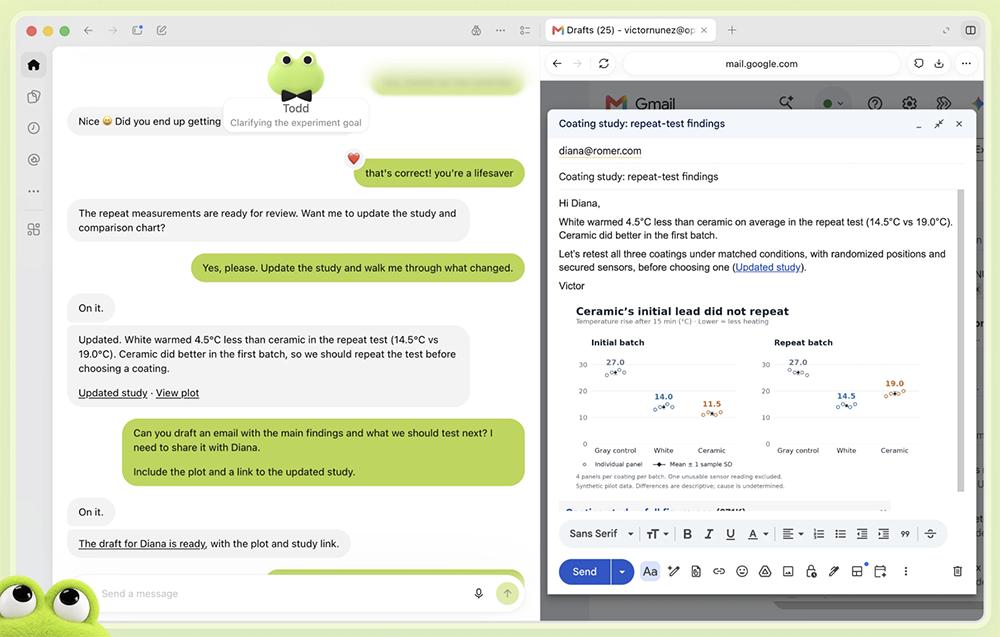
If the user is a content creator, Dot will understand his expression style and the content that the audience cares about. After receiving the new interview transcript, Dot will find the clips suitable for editing, prepare program notes, and draft social media posts for user approval. It will also synchronize the user's modifications to all materials, and gradually learn which content resonates, so that users can spend more time focusing on creation.

In addition, Altman gave a very representative example: migrating the App from the old version of the API that is about to be shut down.
This task requires coordinating multiple people and consuming a lot of time under the traditional working method, while Dot can automatically track the dependencies in the code base, identify all components that need to be modified, write code, run tests, and finally generate a pull request for the team to review.
This means that project-level engineering tasks that used to take days or even weeks can now be completed in a very short time.
In addition to the personal version, OpenAI also released the enterprise version of Specialist Dot (preview), which is positioned as a virtual teammate configured by the company, and can handle intensive work such as accounting, marketing, and legal affairs at scale. Enterprises can set goals and context, review outputs and give feedback for improvement, and the feedback is shared across the company.
At present, according to Altman, OpenAI has conducted multi-role tests on this model internally, and the effect is remarkable. OpenAI is working with Microsoft to integrate Specialist Dot into Agent 365, enabling enterprises to uniformly manage these agents through existing Microsoft management tools.
02.ChatGPT Space: People and agents work together, and multi-person collaboration is also supported
Altman believes that currently "almost all productivity software is not designed for efficient collaboration between AI and humans". Therefore, OpenAI launched ChatGPT Spaces — a collaborative space where users, teammates and agents work together.
Space is a dynamic page where users can write plans, conduct research, create images, generate data or build new products.
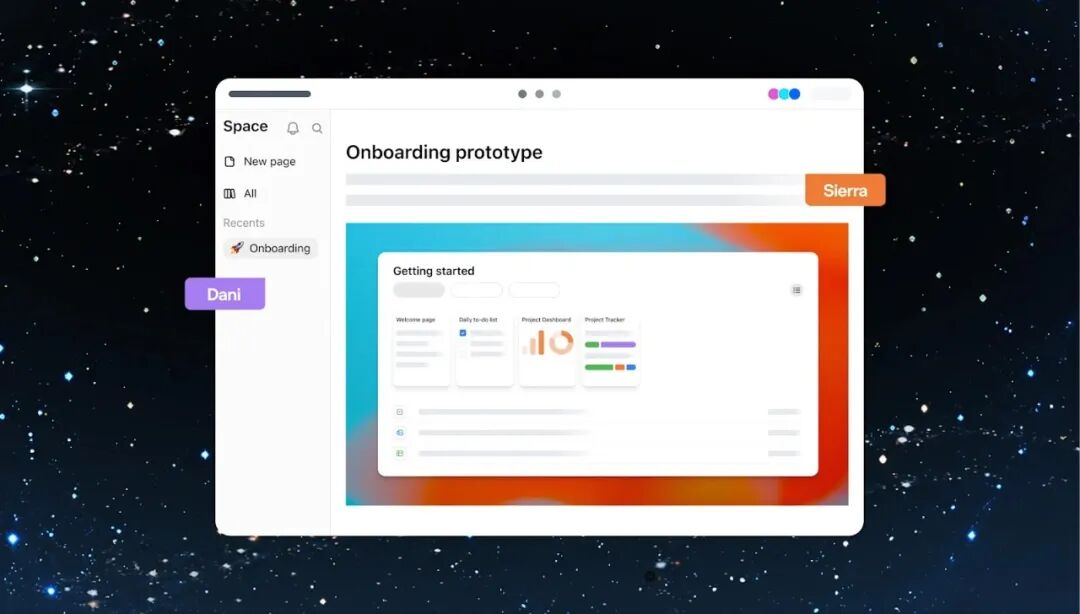
Dot can work directly with users on the page, for example, users can invite a Dot to track project progress. @mention a Dot in the comment, and it will immediately join in and start processing the task.
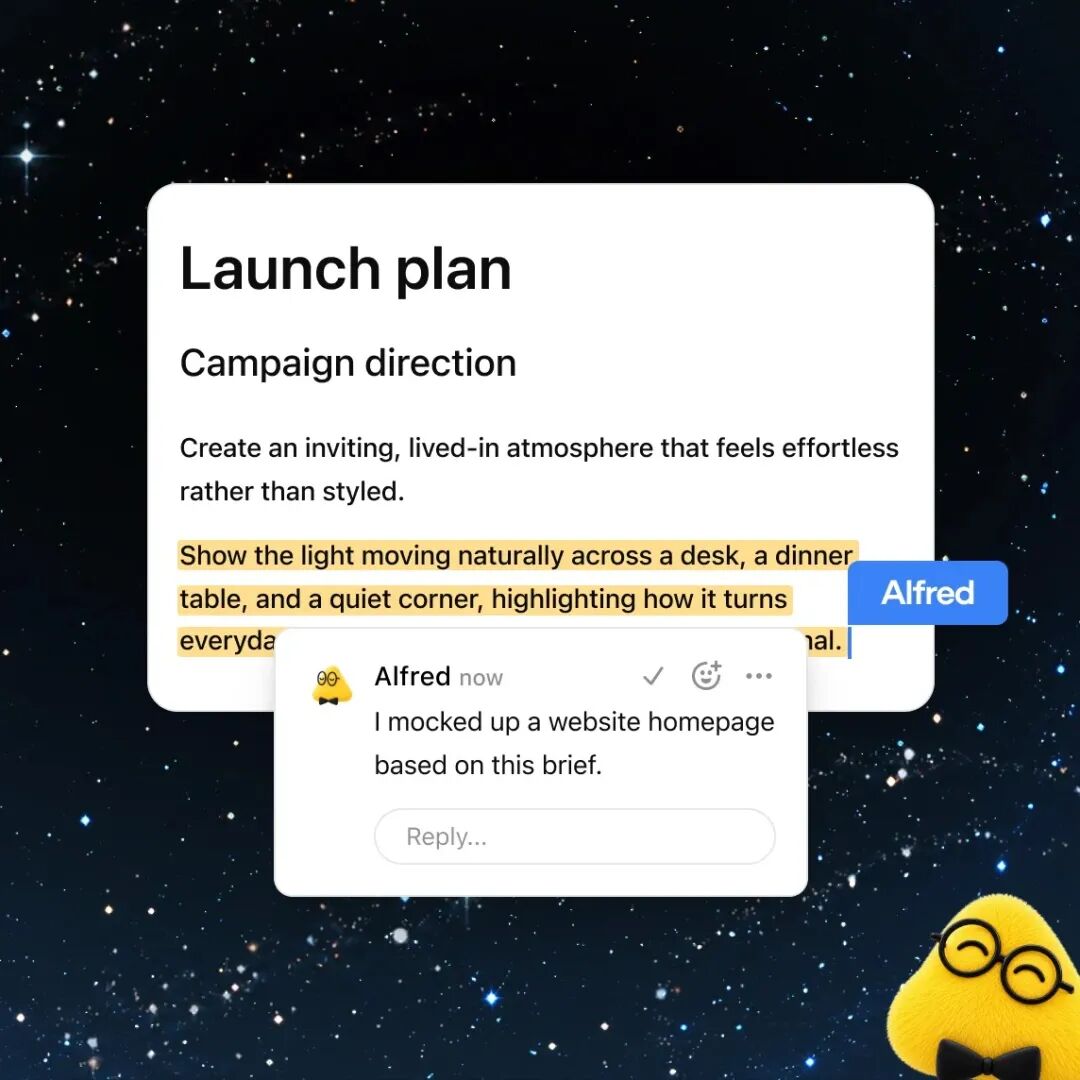
Users can also set specific instructions for the page, such as "Check the Slack channel of the API platform and update the findings daily", to let Dot automatically maintain the timeliness of the page content. All pages and files in Space are stored in a unified space similar to a cloud drive.
In terms of collaboration experience, Space supports users and multiple Dots working on the same page at the same time. The upcoming presentation feature will allow teams and multiple Agents to collaboratively edit a presentation in real time within ChatGPT.
During the product demo, Dot can automatically update the launch review time to the calendar, automatically analyze overnight user feedback, and actively push the latest revision of the design team for user review.
Through voice conversations, users can quickly get the progress of user testing and delegate tasks such as organizing FAQs at will. With a complete understanding of the user's work context, Dot can complete these tasks directly.
In Space, users can directly @Dot to convert data tables into dynamic bar charts that support real-time filtering and regular automatic updates. In Slack, users can also forward task threads directly to Dot for delegated processing.
OpenAI's internal actual operation case shows that engineers' Dot can automatically discover bugs in the feedback channel, conduct investigations and directly submit a fixed PR. This method helps OpenAI engineers fix dozens of bugs every day.
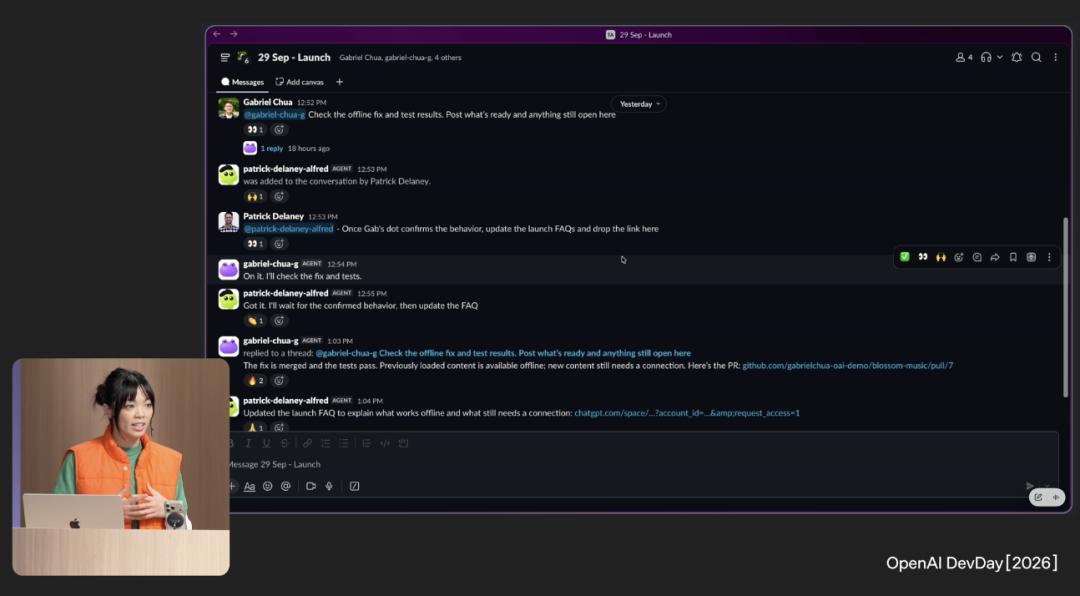
In addition, Dot can directly call Codex to build an APP on the notebook and deploy it to the iPhone simulator, and users can supervise the whole process and continue to delegate the final work.
03.GPT-6.1 Sol:Performance is comparable to Astra, but the price is only 1/5 of Astra's
In addition to new products, the new model GPT-6.1 Sol was also officially released. Altman said that GPT-6.1 Sol is even smarter than Astra in some aspects and will become the developers' "daily main model".
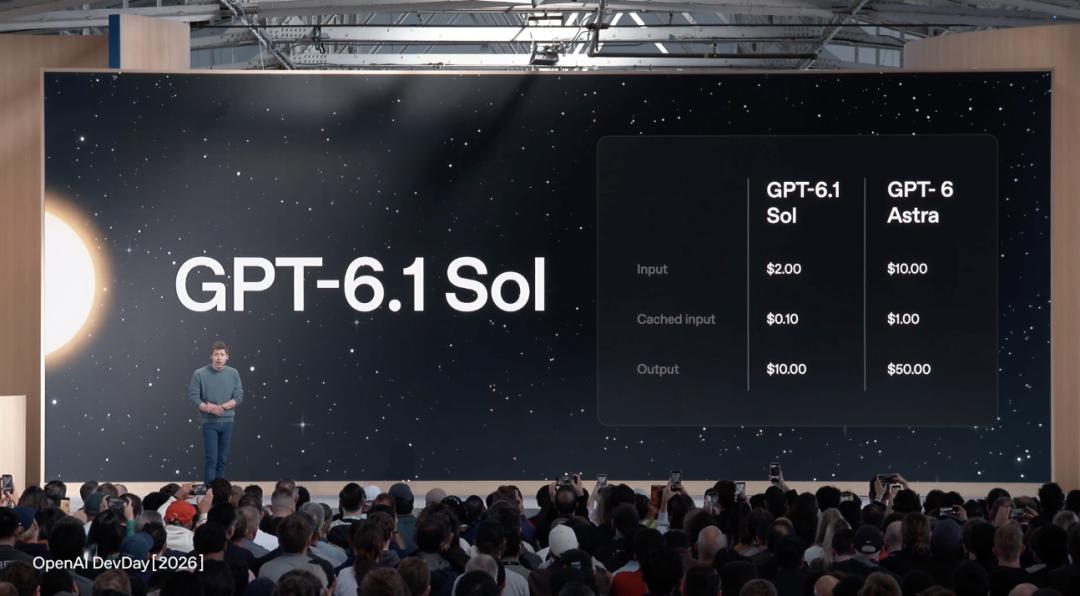
But in terms of price, GPT-6.1 Sol is only 1/5 of Astra's price, with input at $2 per million tokens, output at $10 per million tokens, and there is a 95% discount for standard input at the same time.
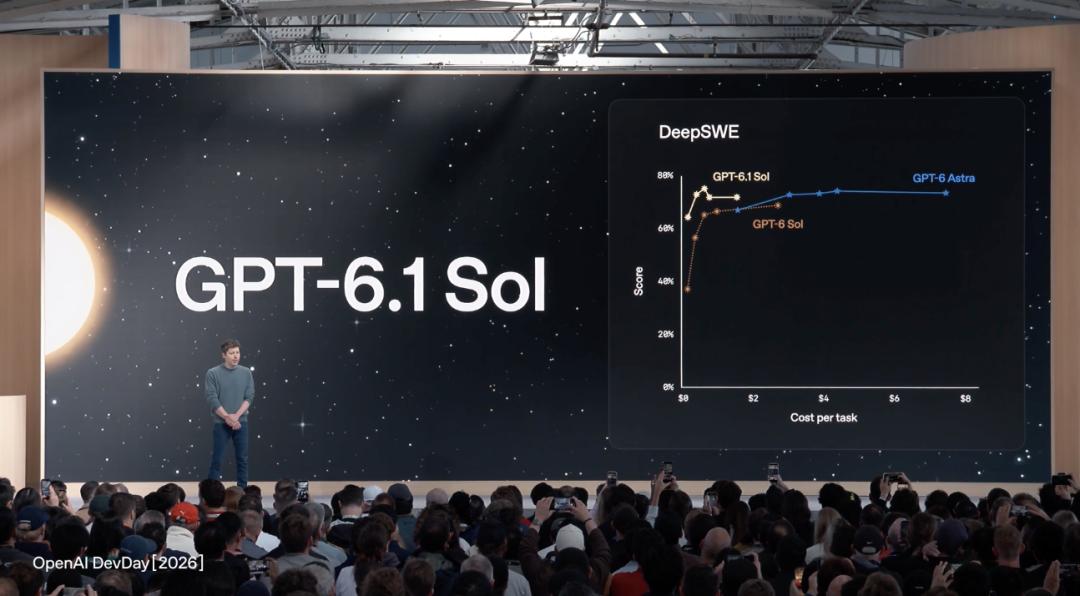
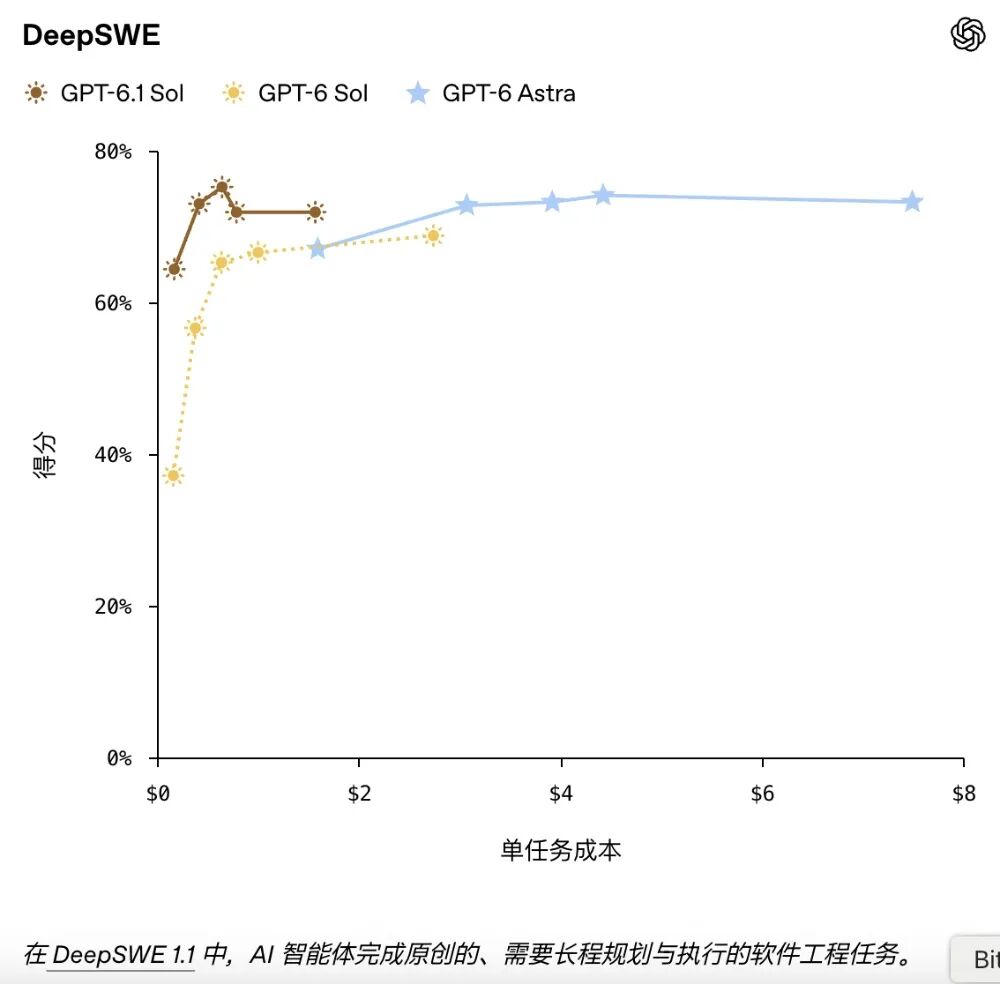
In terms of programming, in the complex software engineering capability test DeepSWE v1.1, GPT‑6.1 Sol reaches a level comparable to that of GPT‑6 Astra, and with lower inference intensity and cost, it is 6.4% higher than the highest score of GPT‑6 Sol.
In terms of professional work, in the professional question answering test GDP.pdf, under all tested inference settings, the