A good embedded AI is not a "second App" inside an App.
AI Feature Inflation and Misalignment
Every app assumes I need AI, and no one has ever asked me for my opinion.
You have probably come across posts complaining that every app now has to tie itself to AI, which is barely useful at all. A flood of comments under such posts echo the same sentiment, and the named targets cover almost all categories of apps.
Users actually know clearly what annoys them. An operation that could be completed in two steps originally now suddenly gets a very prominent AI button, or even an independent tab, or requires users to chat with AI first, all of which only add unnecessary operational layers.
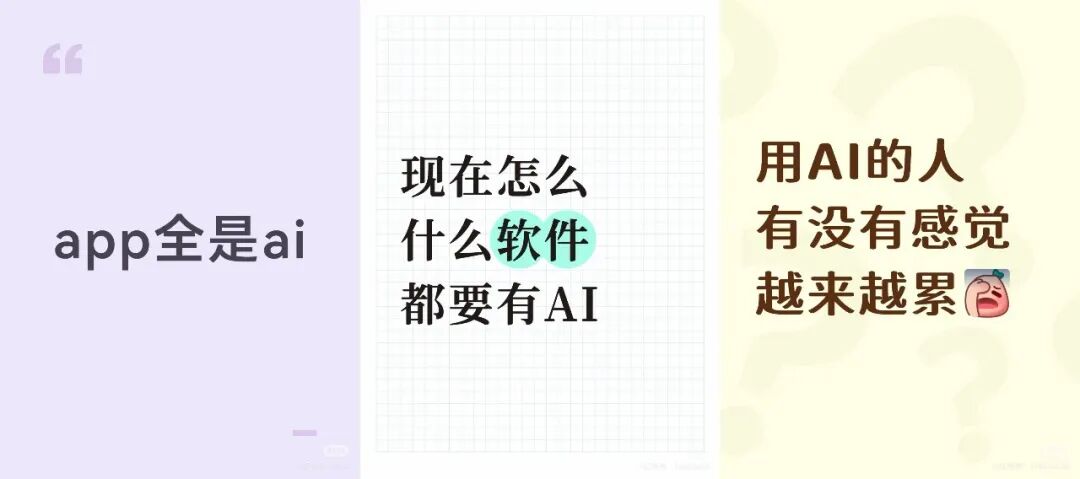
Overseas markets call this status "AI fatigue". A study published in 2026 in Computers in Human Behavior Reports even specially developed an AI Fatigue Scale, which divides this fatigue into four dimensions: cognitive overload, emotional stress, behavioral disengagement and physical exhaustion.
The popularization of AI is creating a kind of "feature inflation": technical capabilities have increased, but the product value perceived by users does not necessarily rise proportionally, and may even go the other way around. After all, an app is essentially a product that compresses complex tasks into simple operations.
When I need to take a taxi, I just enter my destination directly.
When I want to listen to music, I just click the play button.
If AI requires users to re-describe the already compressed demand in natural language:
"Please help me call a car from here to my company."
It decompresses a deterministic operation back into a conversation. The point is that Prompt is not inherently more advanced than Button.
At the same time, embedding AI into apps has been the most certain trend in the past two years. As of March 2026, the number of domestic users of AI-native apps has reached 446 million. Apart from competing for the entry of AI-native apps, major tech firms are also embedding AI into the apps that users already open every day. WeChat is conducting gray tests on its AI assistant "Xiaowei", Alipay has added "Abao", and Meituan has launched "Xiaotuan".
While almost all products are adding AI entrances, users feel these AI features are useless. The problem is not that "AI is not smart enough". The performance of large models improves every six months, but user complaints have not decreased. The real problem is the misalignment between AI and the original product experience.
The first type is demand misalignment. Many products do not find a problem that AI is suitable for solving, but decide that "the product must be AI-enabled this year" first, and then go back to look for applicable scenarios. If even ChatGPT, Doubao, DeepSeek can do the corresponding work better, the significance of this app building another chat box is very limited.
The second type is interaction misalignment. AI is good at handling ambiguous problems, but a large number of tasks in apps are very specific. When users already know exactly what they want, AI is not necessarily a better entry; its real advantage comes into play when users only know roughly what they need.
The third type is presence misalignment. What really triggers user resentment is the AI feature that cannot be turned off, pops up constantly, occupies the core entrance, and keeps reminding users to "try AI". The AI feature itself does not necessarily bring negative feedback, and bad reviews only appear when users clearly perceive the unnecessary existence of AI.
What Kinds of Problems and Tasks Are Suitable for AI
So what kind of position is the right one for AI?
The more deterministic a task is, the more suitable it is for a button; the more ambiguous a demand is, the more suitable it is for AI.
"Play the next song" does not need AI. But the demand like "I'm very tired today, I want to listen to something calm but not too depressing" is a completely different case.
"Book a high-speed rail ticket from Shanghai to Beijing on Friday morning" has been perfectly solved by traditional filters.
But for the demand like "I want to take my kids out for a two-day weekend trip, I don't want to get too tired, the budget is 2000 yuan, and it's better not to spend all the time outdoors", the value of AI will start to show.
The former requires accurate execution, while the latter requires understanding a person's unstated, incomplete intent.
When Google launched Ask Maps this year, it did not emphasize letting users search for "coffee shops nearby" through chat, but focused on handling complex problems that used to require checking locations, reviews, and business hours at the same time to get answers.
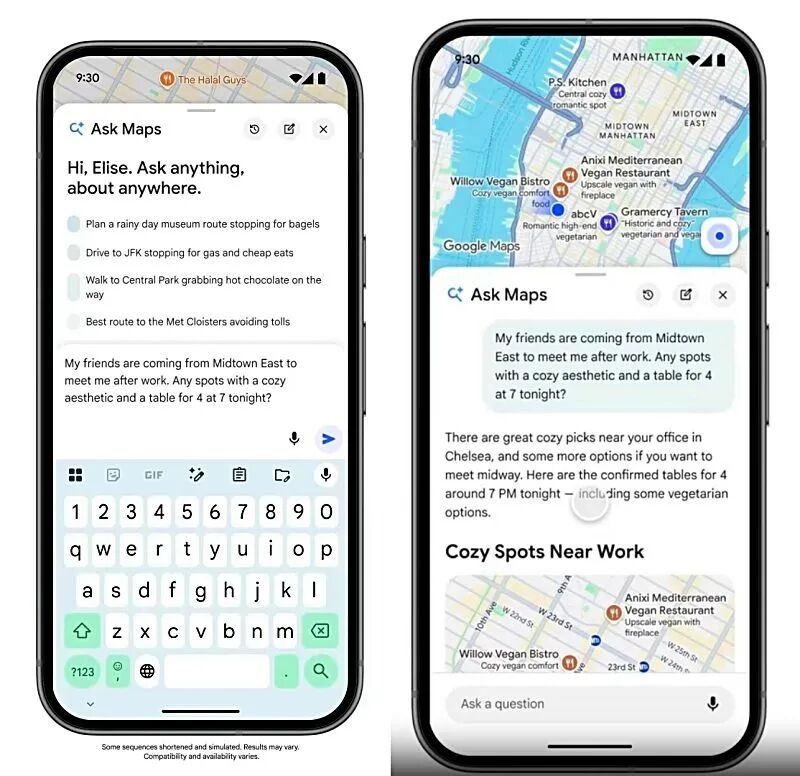
It relies not only on Gemini, but also on information from more than 300 million locations and a huge community review system.
Therefore, a valid embedded AI feature usually needs to meet at least two conditions:
First, there are indeed ambiguous demands that traditional buttons, search boxes and filters cannot express well.
Second, this app can provide scenario context that general AI cannot obtain by default.
Otherwise the problem is very simple: why don't I just go ask ChatGPT, Doubao or DeepSeek directly?
As the performance of basic models gets closer and closer, what really creates differentiation is: what unique resources can this product provide for the model that others do not have.
Maps know the location relationship of the real world.
Taobao has complete data of commodities, orders and consumption scenarios.
Meituan has resources of catering, local services and fulfillment capabilities.
Music platforms know exactly what a person has listened to in the past few years.
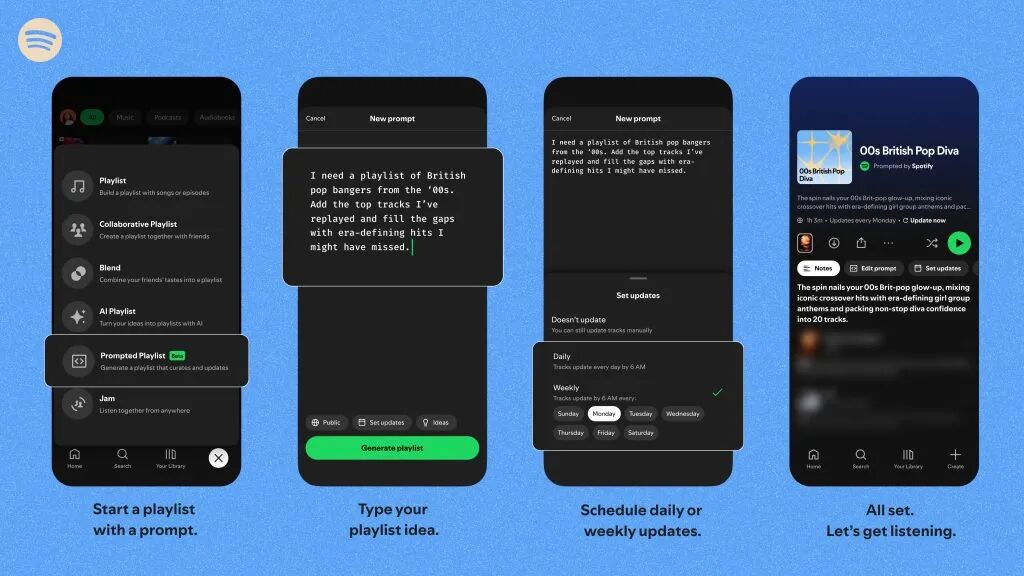
Spotify's Prompted Playlist, which expanded its test this year, is a very good example.
Users no longer need to accurately specify the genre, era and BPM of the music they want, but can directly describe a scene, a mood or even a memory, and Spotify will generate a playlist based on the complete listening history of the account since it joined the platform. For example: "Find some songs that I loved very much in college, but haven't listened to this year."
This is a problem that traditional search boxes are very difficult to handle.
Therefore, it is not strange at all for natural language to be embedded in music apps.
Xiaobao, the AI assistant recently launched on NetEase Cloud Music, also follows this logic: it does not try to create an AI play button, but appears at the "next step after listening to music" — you can ask it when you don't know what to listen to next; you can ask it for the creative background of a song you are playing; you can also ask it whether your music taste has changed recently.
Natural language fills in the part that buttons cannot solve originally.
Both platforms have complete listening records and access to large models, so where will the differentiation appear?
What AI Is Harder to Replicate Is the Emotion and Relationship Built in the Product
All music platforms have user listening records. Knowing what you like, what you skip, and what you have on loop recently has long been the basic capability of recommendation systems.
But the most distinctive part of NetEase Cloud Music in the past is not only "knowing what you listened to", but also the large amount of content generated after users finish listening to songs.
Why did the comment section of NetEase Cloud Music once become a highly recognizable product culture?
Because many users will subconsciously scroll down after listening to a song. They do not just want to study the lyrics or creative background.
More often, they want to confirm: is there anyone who feels the same way as me?
Someone wrote down their heartbreak, youth, a city or an ordinary night under a song; a total stranger may hear this song for the first time several years later, and just read this comment.
Large-scale analysis of NetEase Cloud Music comments in the past also shows this feature: love, memories, loneliness, family affection and life milestones are recurring themes in a large number of popular music comments. Music is only the entry. What gradually grows behind it is actually a set of expression and connection systems built around music. This is also a part that is easily covered by the vague term "data barrier" in vertical AI.
Data tells AI what users have done.
But what a product has accumulated over a long period of time is not just the number of plays, but also why users are willing to express their feelings here, and what kind of interaction habits they have formed with this product.
The differentiation of vertical AI not only comes from how much data it has, but also from what kind of relationship the product has already established with users. Looking at Xiaobao from this perspective, you will find it is far more interesting than "NetEase Cloud Music also has an AI assistant".
The capabilities designed for Xiaobao by NetEase Cloud Music include not only finding songs and introducing song backgrounds, but also taste interpretation, listening report generation and casual chit-chat.
In the past, emotional feedback in the Cloud Village (NetEase Cloud Music's user community) mostly happened between users. This kind of feedback is public and asynchronous. It depends on another person writing down their thoughts first, and you happen to see it one day.
AI adds another kind of relationship: instant, private, and allows continuous follow-up questions.
If the music comment section is more like a public area, Xiaobao is more like a small room that you can walk into at any time to say a few words. The former provides unexpected encounters and emotional resonance between people; the latter adds instant, personalized responses. They are two different emotional feedback mechanisms.
Music is originally an emotional entry with very low access threshold. Therefore, Xiaobao can be not only a music listening companion, but also a lightweight "emotional tree hole": you can start chatting from the song you are listening to, and eventually talk a little about your life.
This product logic is in the same line as the community attribute of Cloud Village. In the past, the connection path was "person - music - person": a song connects two total strangers. Now, there is a new emotional feedback path: "person - music/emotion - AI".
Of course, AI will not replace real people because of this, nor should it be regarded as a psychological counseling tool. Its value is more simple: for those moments when you suddenly want to say a few words but the content is not important enough to find a real person to talk to, there is a new low-threshold outlet.
When I tested the "Destined Singer" feature of Xiaobao, I experienced exactly this kind of value. After seven rounds of two-choice selection, Zhao Lei was left as my destined singer. What impressed me more was its follow-up remark: this account has listened to Zhao Lei's songs 463 times, and his name did not appear until the sixth round, and was never eliminated after that.
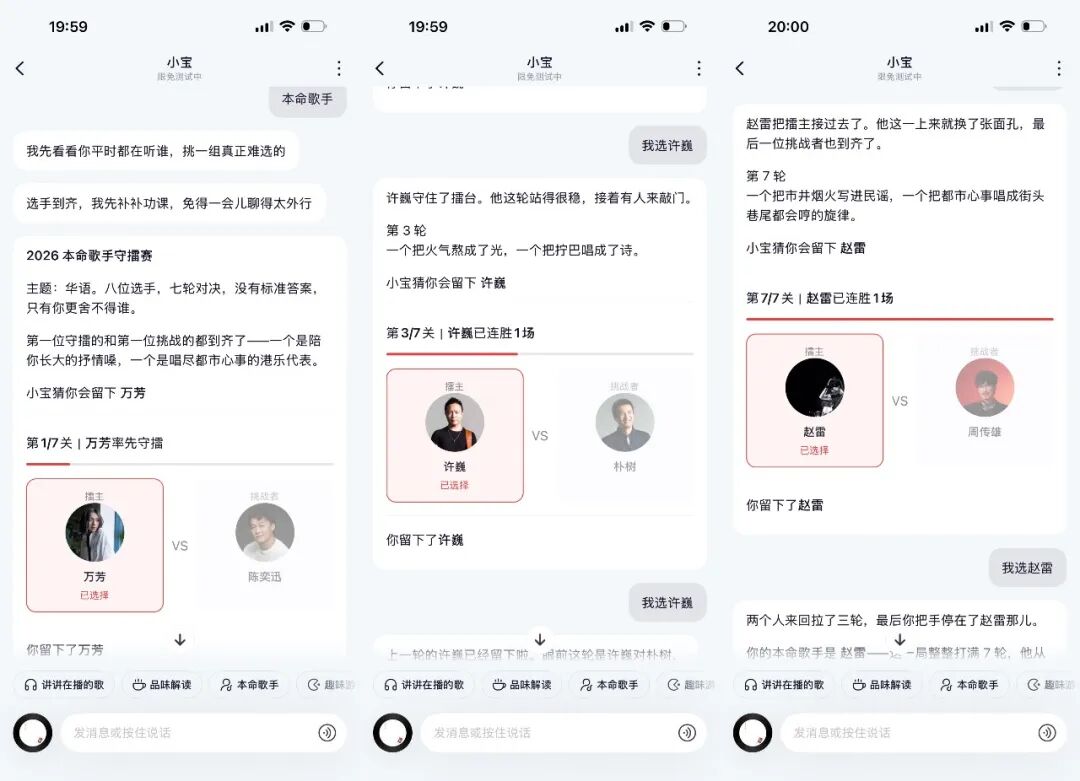
General AI knows who Zhao Lei is, but a music platform has more opportunities to know what stories have happened between Zhao Lei and "me".
Superimposed on the expression and community relationships formed by the product over more than a decade, this "context" is no longer just the number of plays in the database.
It gradually brings the unique personality of the product. However, this is also the more difficult part. If the AI recommends a wrong song, users can just skip to the next one. But if an AI tries to understand user emotions, its fault tolerance space will become smaller.
Too formulaic responses will seem perfunctory, and excessive speculation will easily cross the user's boundary. It still needs time to verify whether Xiaobao can turn the "emotional tree hole" from a fun feature that touches your emotions into a long-term reliable experience. If this path works, for NetEase Cloud Music, it means Xiaobao can connect recommendation, content, community and user relationship layers, which is a very promising extension.
In any case, at least it provides another perspective for observing embedded AI in apps: models can be replicated, and features can be easily followed up; but the relationships formed by a community over many years cannot be simply accessed through an API.
A Good Embedded AI Should Not Become a "Second App" Inside the App
Precisely because AI can chat from music to emotions, its position in the product needs to be more restrained. It should take over the "next step" of operation, not seize the "first step".
When you open a music app, the first thing to do is still to listen to music, not to chat. When you open a map app, the first thing to do is still to find the way, not to ask AI. Therefore, the more reasonable position for AI is the next step that traditional functions cannot handle well.
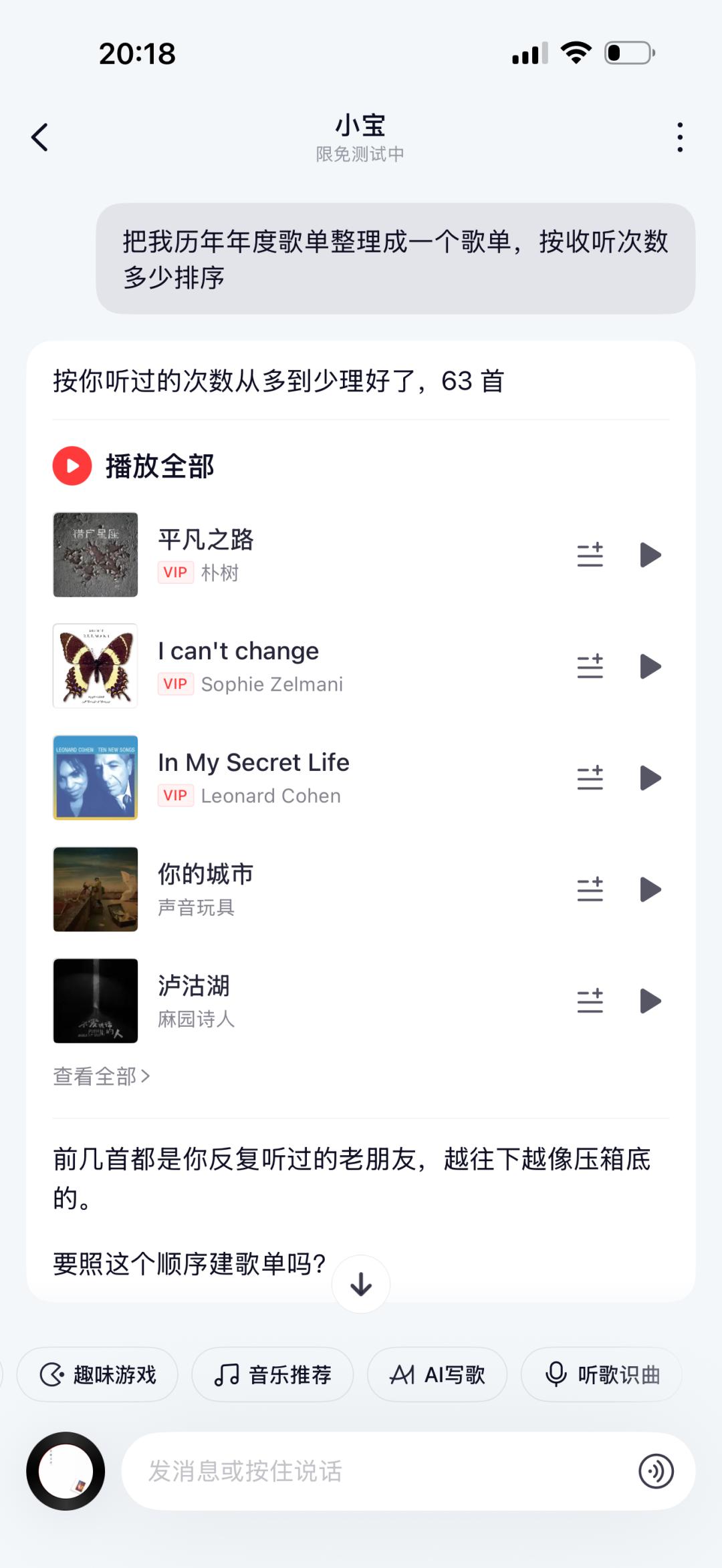
Embedded AI is an extension of the original product, not building a new product from scratch. When you need it, it should be smarter than the traditional search box; when you don't need it, it should barely exist.
One of the notable advantages of Xiaobao is that it does not turn the homepage of NetEase Cloud Music directly into a ChatGPT interface, but still attaches to the music listening scenario, and only appears when users click to activate it. At least for now, it has chosen a more restrained path than "placing the chat box in the center of the homepage".
Not everyone can get this path right at the first attempt. For example, Diandian (the AI assistant of Xiaohongshu) once adjusted its position: after a version upgrade in March 2026, users could no longer use the "Ask Diandian" feature from the search box. The official customer service said the entrance was temporarily offline, and a new entrance would be launched later. Even if the content logic is correct, the position of the AI still needs repeated testing.
The deeper the context is, the more important the boundary control becomes.
Listening tracks, orders, location, documents — these are exactly the unique moats of vertical AI, and also the parts that users care most about.
If AI wants to "understand you better", the product must clearly tell users what data it uses, why it uses the data, and whether users can choose not to enable this feature.
So far, the entire industry has not done well in this aspect.
Now the industry is still in the typical "AI explicit" stage. But when it matures, AI will probably gradually move to the background.
You don't need to know what the recommendation algorithm is, nor do you care which model is used behind the noise reduction, HDR and computational photography of the camera. Users will only feel that: the search results are more in line with their needs, photos are easier to organize, recommendations are more accurate, and they can find the songs they want to hear even