Hidden in the semi-annual reports of catering enterprises is a bustling China brimming with the warm vitality of everyday civilian life.
The gears of the economic cycle will crush some people while letting others survive.
Over the past year, more than 20,000 people have "vanished" from the financial reports of Haidilao and Jiu Mao Jiu. They may have become numbers on the expansion track of other brands, but they are trapped in the dilemma of "getting less and less pay despite working harder".
In the first half of 2026, the "average monthly salary per capita" of Green Tea Group was 6,733 yuan, down nearly 25% year-on-year. The majority of people who are "averaged" may earn less than 4,000 yuan a month; the "average monthly salary per capita" of Xiao Caiyuan also decreased by about 7% within a year and a half.
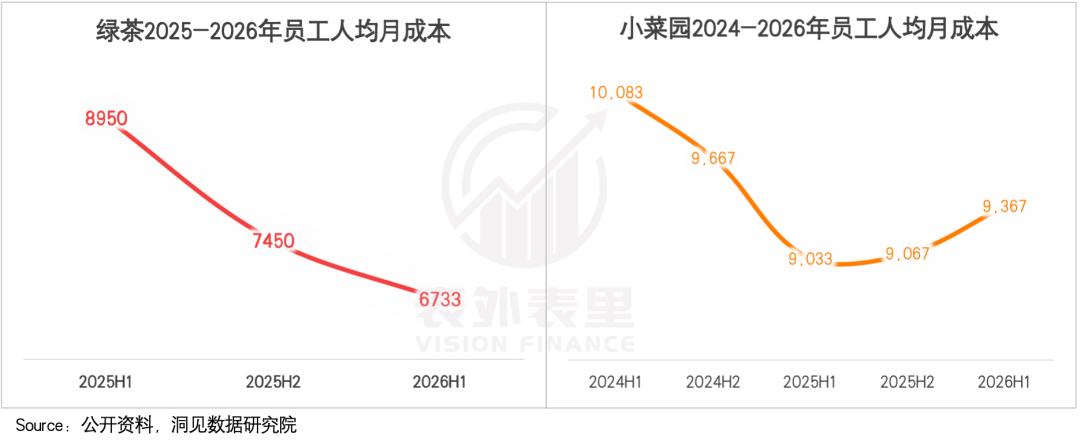
The wallets of workers are shrinking, while the confidence of catering executives is expanding. Following the founder of Green Tea whose salary "increased 5 times in 3 years", the chairman of Xiao Caiyuan also gave himself a doubled annual salary in the name of high-quality development.
The differentiation not only occurs in wallets, but also unfolds on dining tables.
Veteran diners have long noticed that eating out is getting cheaper now: Tai Er Suan Cai Yu has cut prices, signature dishes of Xiao Caiyuan are on discount, and Meet Noodles has lowered prices again and again... The average customer unit price and same-store sales of several chain catering brands are all diving downward collectively.
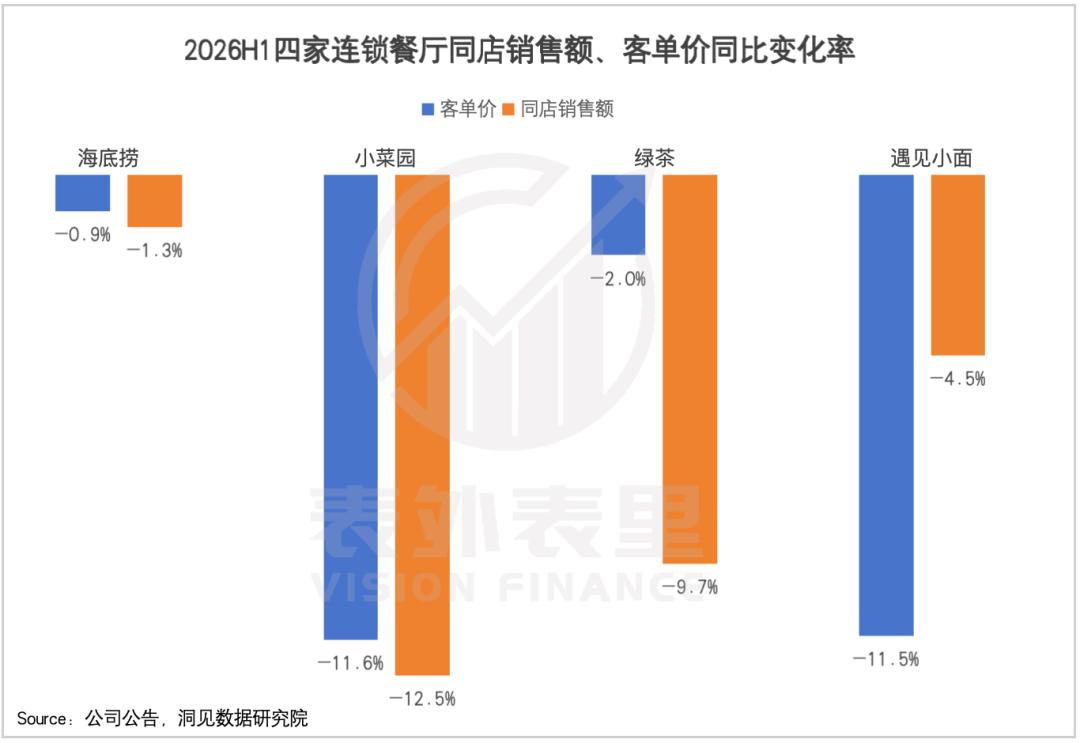
Yet at the same time, restaurants are getting busier and busier, and shopping malls are crowded with people as soon as mealtime comes. Data also shows that the daily orders per store of Meet Noodles have increased significantly, the table turnover rate of Xiao Caiyuan has risen, and the average monthly income per square meter of new Green Tea stores has increased by nearly 50%...
The catering industry is facing severe cold, but "widespread distress" is far from the whole picture.
One side of the financial report records growing pains, while the other side hides hidden dividends and survival wisdom. Through the data, we can not only see the solutions to go through the cycle, but also catch a glimpse of a real down-to-earth China.
Catering brands focusing on third- and fourth-tier cities are more profitable and stable
In most people's intuition, first-tier cities have stronger consumption power, but catering financial reports seem to break this common sense.
In the first half of the year, Green Tea's stores in third-tier cities had the highest store efficiency, 18% higher than that in first-tier cities; in terms of same-store sales, first-tier stores fell by 11.8%, while third-tier stores only fell by 7%. For Xiao Caiyuan, stores in third- and fourth-tier cities are also more resilient to market downturns than those in first-tier cities.
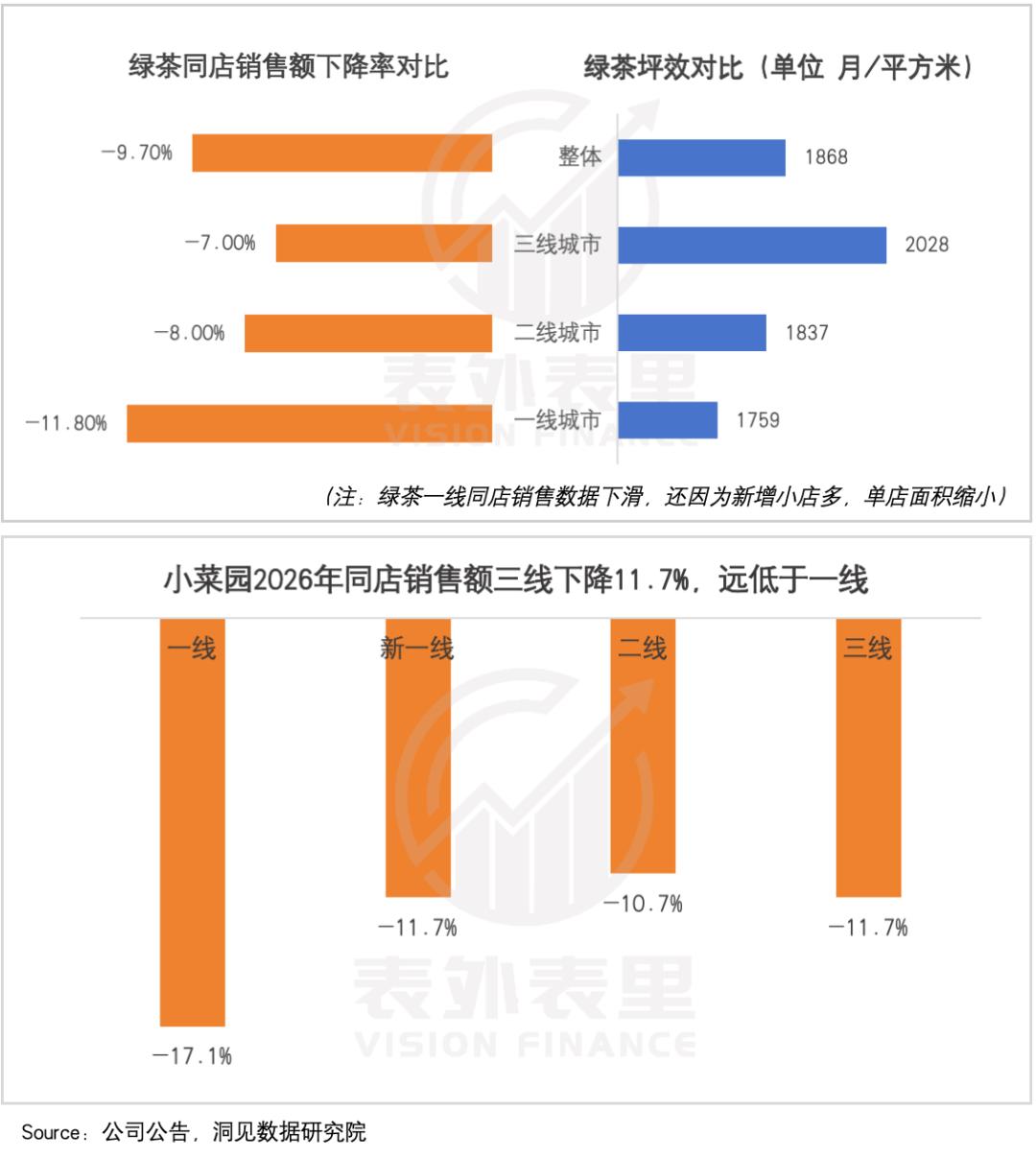
Not richer than first-tier cities, but more stable than them. The catering market in low-tier cities may hide neglected dividends.
Sitting in Xiao Caiyuan stores in different cities, you can clearly feel the difference: in new first-tier city stores, young people are scattered in small groups, with the exhaustion of work written on their faces; in contrast, in third- and fourth-tier city stores, guests often come with their whole families, and every table is chatting and laughing happily.
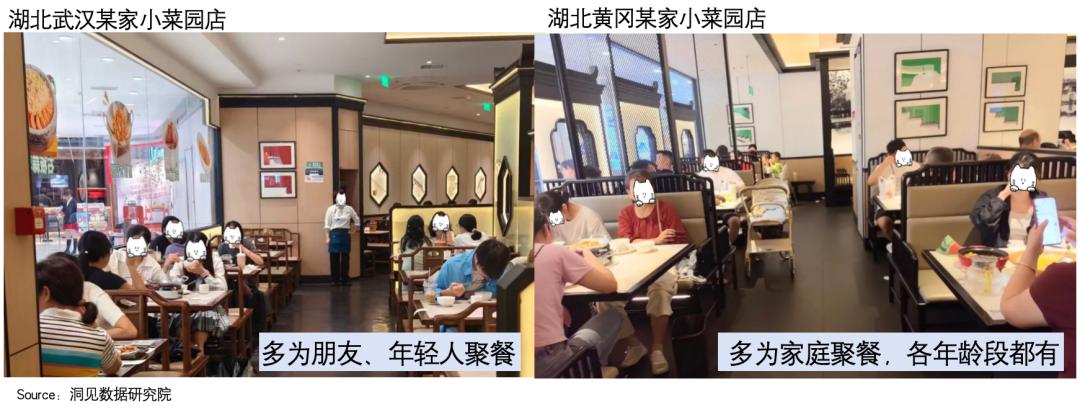
Comparing group-buying packages, third- and fourth-tier cities mainly promote "multi-person meals for family and friends gatherings", while the popular packages in first-tier cities are "two-person meals for weekday noon".
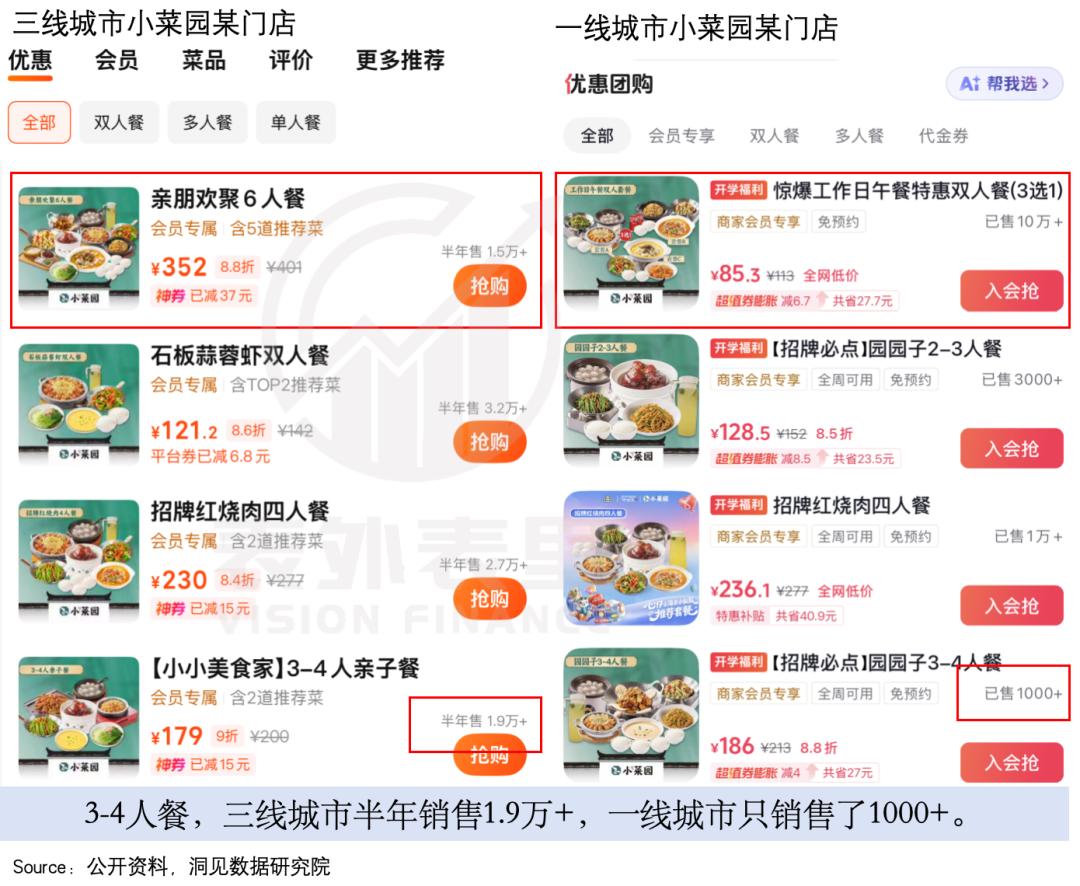
For the same brand, in different city locations, the consumer portraits are completely different.
After all, big cities are full of diverse dining options, young people in Wuhan can enjoy different "high-quality meals" every day, and even in Shanghai, chicken stew with herbs has been transformed into a Bistro-style dish. Chinese restaurants with a per capita consumption of 50 to 60 yuan are not impressive, and people only think of them when ordering takeout or having a casual meal with colleagues.
However, in third- and fourth-tier cities, those once-underrated brands like Green Tea have immediately become "rigid demands": in a prefecture-level city with more than 5 million people, there are only a pitiful 6 restaurants on the must-eat list. Under the insufficient supply, chain brands with good taste and clean environment have become the "decent choice" for family dinners and social banquets.
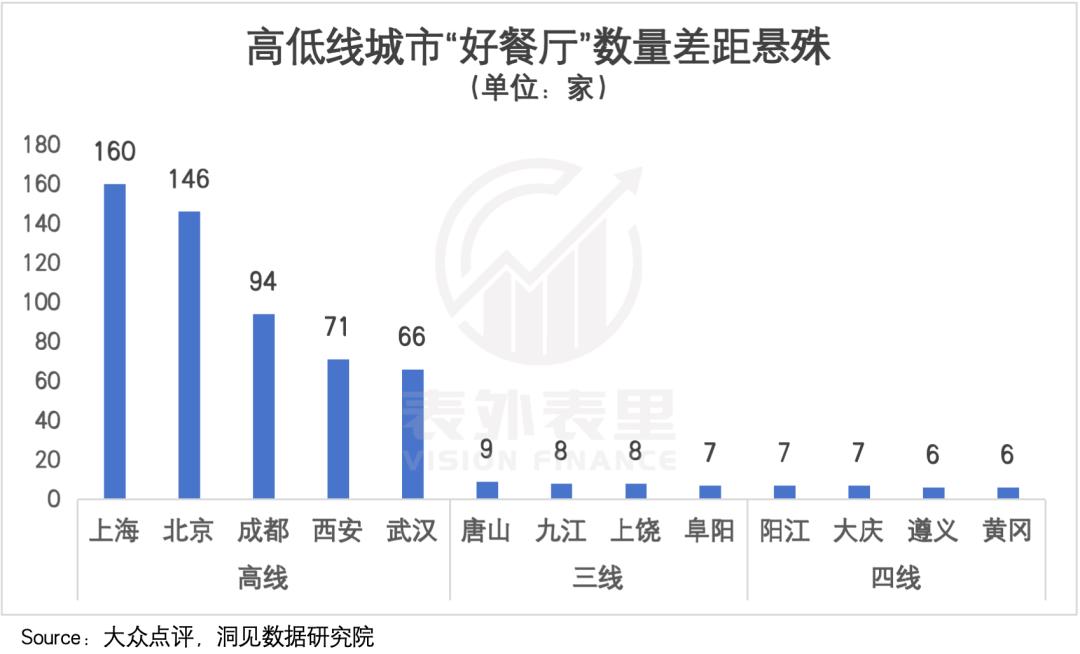
Especially at the moment when it is hard to earn money and easy to spend it, chain Chinese food that people "can eat or skip" is immediately abandoned by young people in first-tier cities, but in sinking cities, people still need to improve their meals and maintain social connections, so consumption is more resilient.
However, not all catering brands can live better in low-tier cities.
In the first half of the year, Haidilao's same-store sales in first-tier cities rose against the trend, while stores in third-tier and below cities declined instead. This reflects that categories with high customer unit price and targeting young people like hot pot have stronger resilience in big cities.
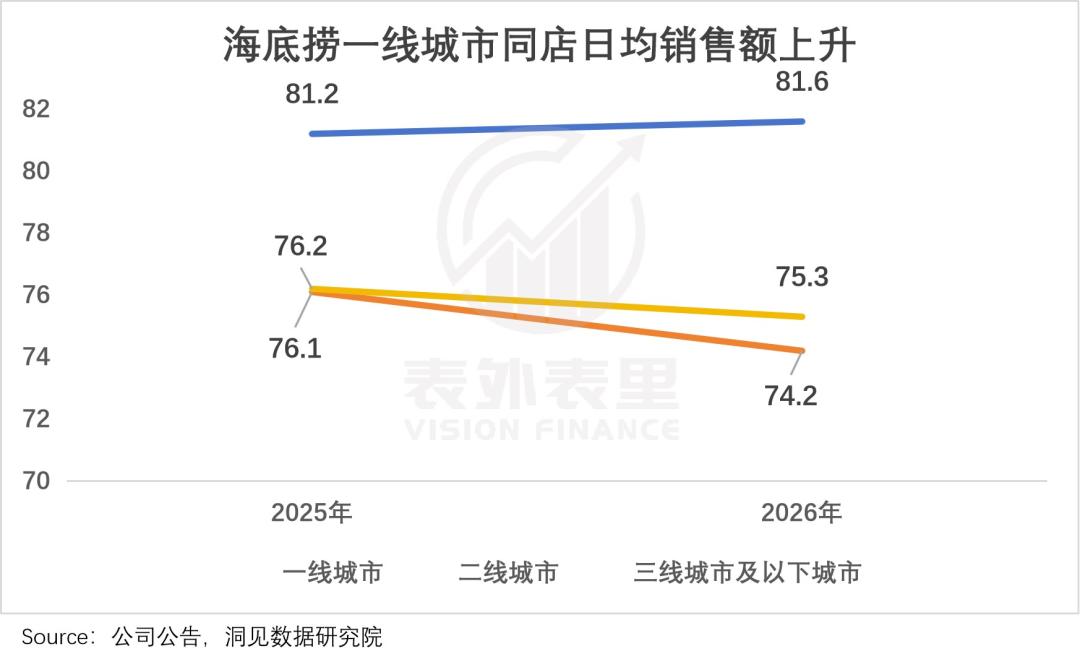
In terms of revenue and number of stores, Haidilao's second-tier city stores have shrunk the most severely — in these places, high-end private kitchens attack its proud "extreme service" from the top, while cost-effective brands compete for swing consumers from the bottom.
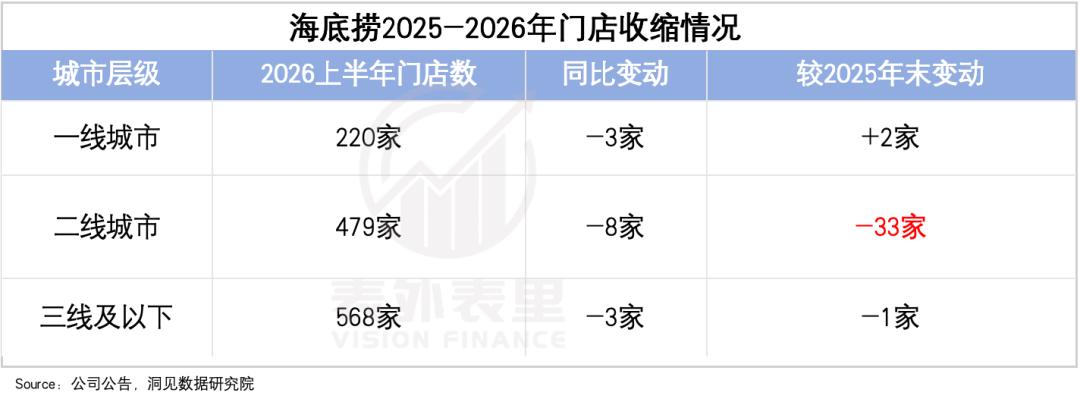
It can be seen that the key for catering to survive through the cycle is not to choose the right city, but to choose the right position of the brand in people's lives. Where you can match the demands precisely, you will have competitive advantages.
Of course, as a tough business, the difficulty of catering never only lies in stabilizing income, but also in controlling costs.
In the first half of the year, although the "average monthly salary per capita" of Green Tea and Xiao Caiyuan declined, due to brand expansion and more employees, the proportion of labor costs in revenue increased instead of decreasing. On the whole, the "mountain of labor cost" pressing on catering business owners has not become lighter.
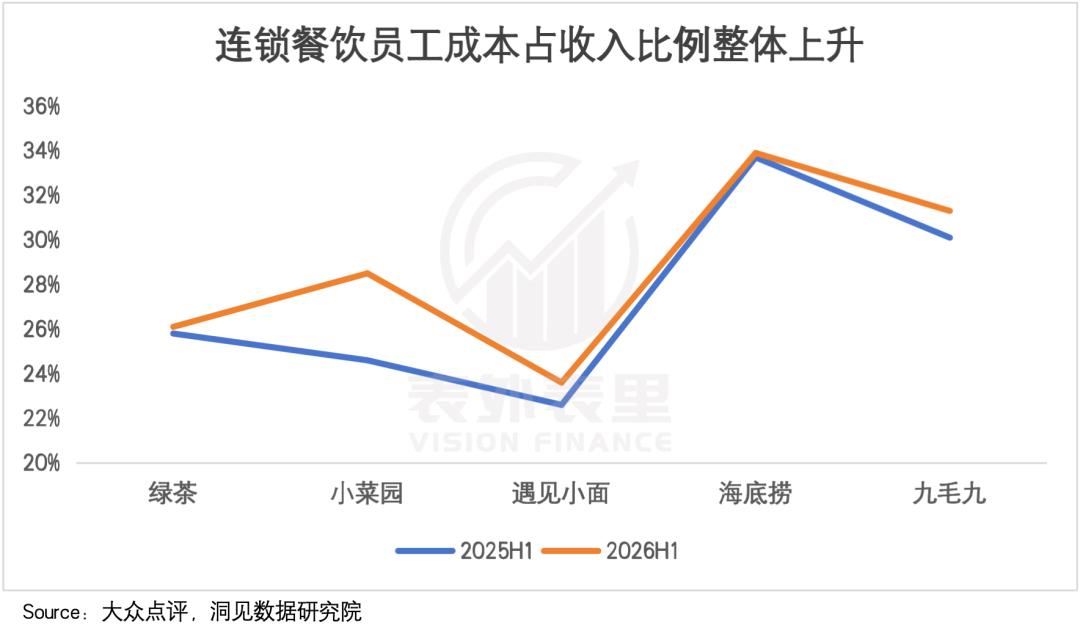
At this time, the advantages of low-tier cities are highlighted: there are jobs paying 3,000 to 4,000 yuan a month everywhere in big cities, and young people may quit their jobs at any time; while in third- and fourth-tier cities, a decent job with acceptable income near home is very rare, so employees have lower mobility and are more willing to compromise on salary.
Xiao Caiyuan, which started from third-tier cities, has maximized this structural dividend. Now more than 80% of its stores are opened and operated by veteran employees who started their own businesses.
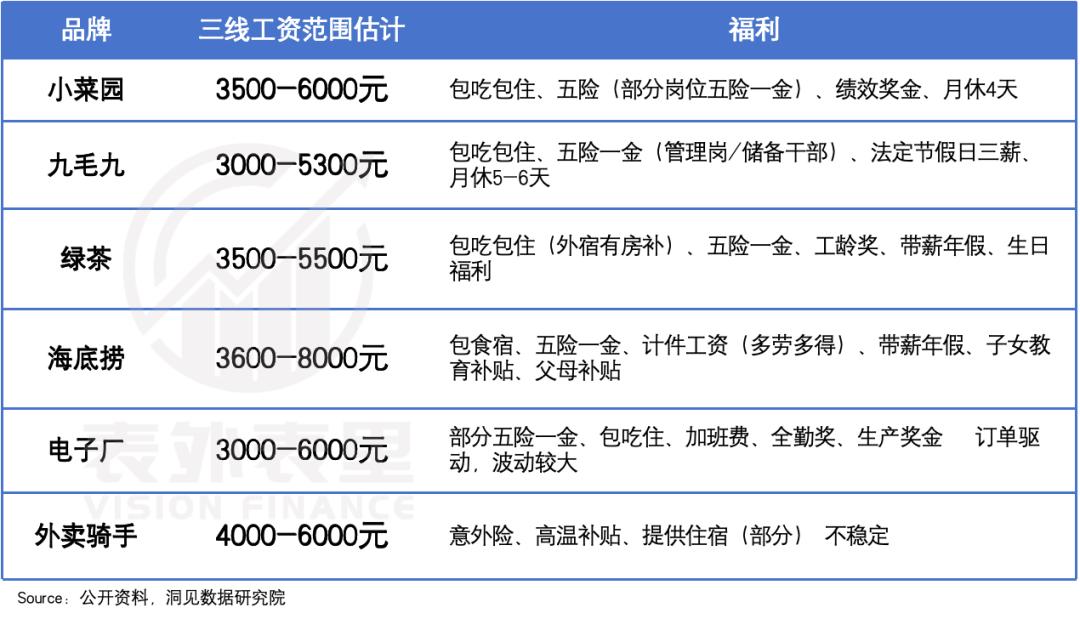
For catering giants, the operation ecology of low-tier cities with both low cost and high user stickiness is not only a "safe haven", but also can save precious cash flow, winning time for them to find the most suitable "way to survive the cold winter".
In the cold winter, brands have their own ways to keep warm
Takeout is an unavoidable topic for the catering industry. In the first half of the year, Xiao Caiyuan "actively controlled the takeout volume", the number of takeout orders decreased by 12.5% year-on-year, and the revenue decreased by 10.6%.
This is not its first move to restrict takeout. Previously, when stores were flooded with orders, the brand did not take the opportunity to expand, but instead set a red line that "the proportion of takeout should not exceed 30%".
While Xiao Caiyuan is "strictly guarding against takeout", Haidilao has opened the door wide: Laopa Small Kitchen, rice-matching hot pot dishes, mixed rice restaurants have emerged one after another, covering everything from working meals to midnight snacks, all moved online.
The interim report of Meet Noodles shows that for every 4 yuan of revenue, more than 1 yuan comes from takeout; the revenue growth of Green Tea and Jiu Mao Jiu is also mainly contributed by takeout.
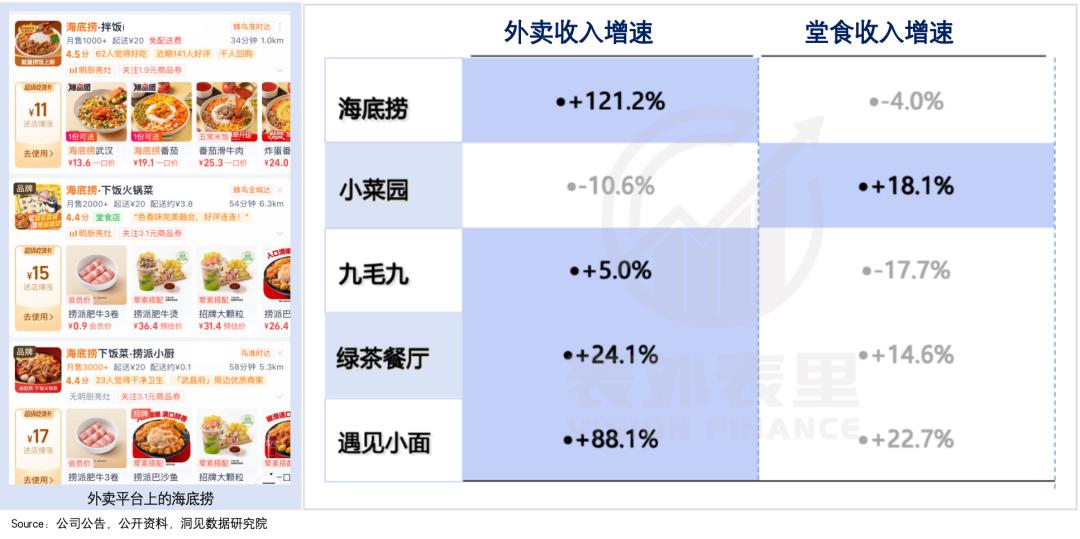
One party brakes against the trend, while the other advances rapidly. Although they seem to go in opposite directions, their goals point to the same place — to make stores survive and live better.
The reason why Xiao Caiyuan "abandons takeout to protect dine-in" is that dine-in is the foundation of its business.
Walking into its stores, you will see two rows of electric rice cookers, in which Wuchang rice is stewed with Nongfu Spring, the fragrance of rice is so strong that your hunger grows even stronger.
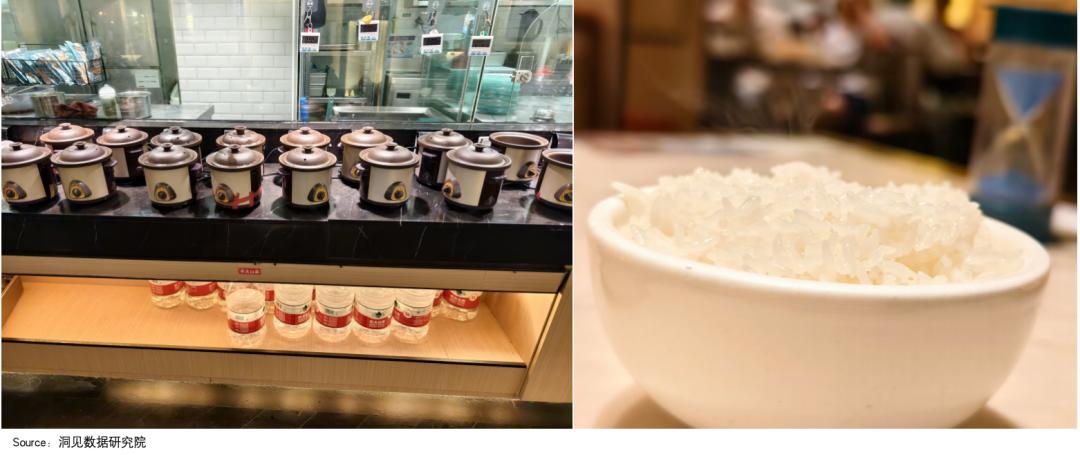
This kind of rice tastes best when eaten hot, and takeout will make it lose its soul. Its three "voted signature dishes" — farmhouse braised pork, spicy pot kidney bean shreds, and stone plate garlic shrimp also pay great attention to "wok hei", and the flavor is best when eaten in the store.
The most critical point is that this type of Chinese full-course meal has many working procedures and slow serving speed. After deducting various fees and subsidies for takeout, the profit left is even thinner. It is better to focus on doing a good job in dine-in, which can win a good reputation among customers instead.
Haidilao also values dine-in, but it faces a different situation: as a hot pot giant that has been popular for ten years, its growth ceiling has long appeared, and it is looking for new growth opportunities by opening food stalls and sushi restaurants. The takeout business is the easiest part for consumers to change their minds — hot pot can't be eaten every day, but spicy mixed dishes that cost 20 to 30 yuan a meal are affordable.
The young brand Meet Noodles is at the other extreme: its store territory has just expanded from the downtown of first-tier cities to the Fifth Ring Road, where there is certain consumption potential that can support the high-growth takeout business.
Not only are there fierce differences over takeout, catering brands also have different attitudes towards "whether to cut prices".
The popular red bowl pea noodles of Meet Noodles have been reduced in price from 26 yuan to 20.5 yuan, and can even drop below 20 yuan after storing value in the card, with a decline of more than 20%. Over the past four years, the overall customer unit price of the brand has also experienced an obvious "downgrade".
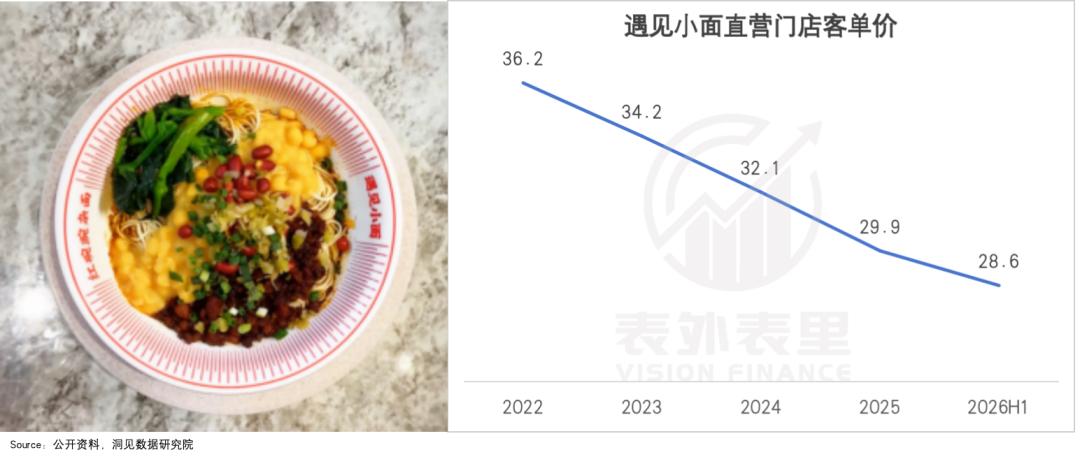
Behind this is that the Chinese noodle restaurant track is fiercely competitive and fragmented, with the top five brands accounting for only about 3% of the total market share. To gain a firm foothold, after the novelty fades, returning to cost performance is the mainstream.
Just like that 20-yuan red