The implementation of embodied intelligence starts with making mistakes.
A month ago, robots from robotics firm Sharpa were deployed at the DQ store on Wujiang Road in Shanghai, tasked with making Oreo Blizzard, covering 55 complete steps including taking cups, dispensing materials, adding Oreo toppings, stirring, and inverting the cup for delivery.
While the adjacent large model circle is spreading AI threat theories in turn and performing stunts of slumping down in dizziness, Sharpa's robots have been working silently at the DQ store for a full month without a single day off.
This year marks the year when humanoid robots enter real production scenarios. After showcasing their capabilities on stage, robots have put down performance props, put on labor protection gloves, and walked into factories and workshops. The next step for humanoid robots is practical combat in application scenarios, which is an undoubted industrial trend at present.
On the day Sharpa's robots started working, public opinions were relatively positive. After all, this is the most complex long-horizon task performed by a robot in the domestic embodied intelligence field in an unmodified real scenario for the first time, which is completely different from the pop-up experience that only stays at the Demo level.
However, after a full month of work, people outside the industry and insiders have formed two completely different perspectives:
In general, onlookers treat it as a sightseeing spot, and customers who buy ice cream say the robot works a little slowly. It takes Sharpa's robot about 6 minutes to complete the whole process, twice as long as a skilled human shop assistant, which is still at the apprentice level.
At the same time, the robot's behavior has extremely large variance. It not only has very "anthropomorphic" wonderful moves such as picking spoons and even judging which spoon is easier to grab, but also has situations where it does not know to wipe the crumbs on the table and cannot take the initiative to find work. Of course, consumers have also said that "it is still a child" and it is understandable. After all, after eating the ice cream made by the robot, they feel that their IQ has become higher.
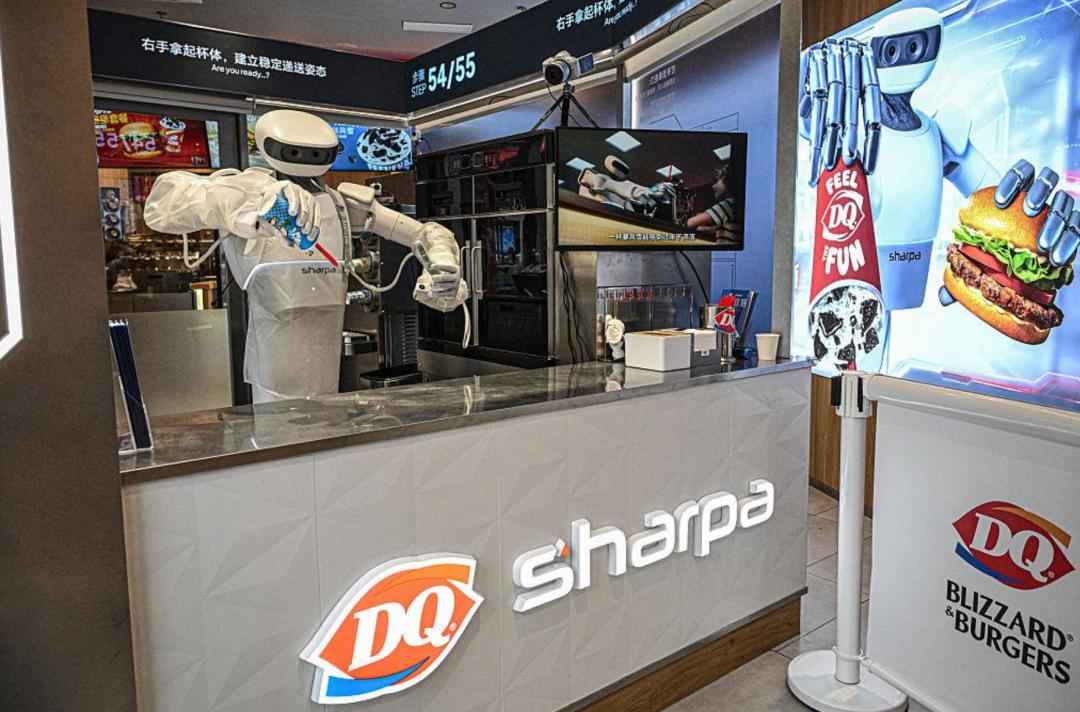
Sharpa's robot works diligently at the DQ store
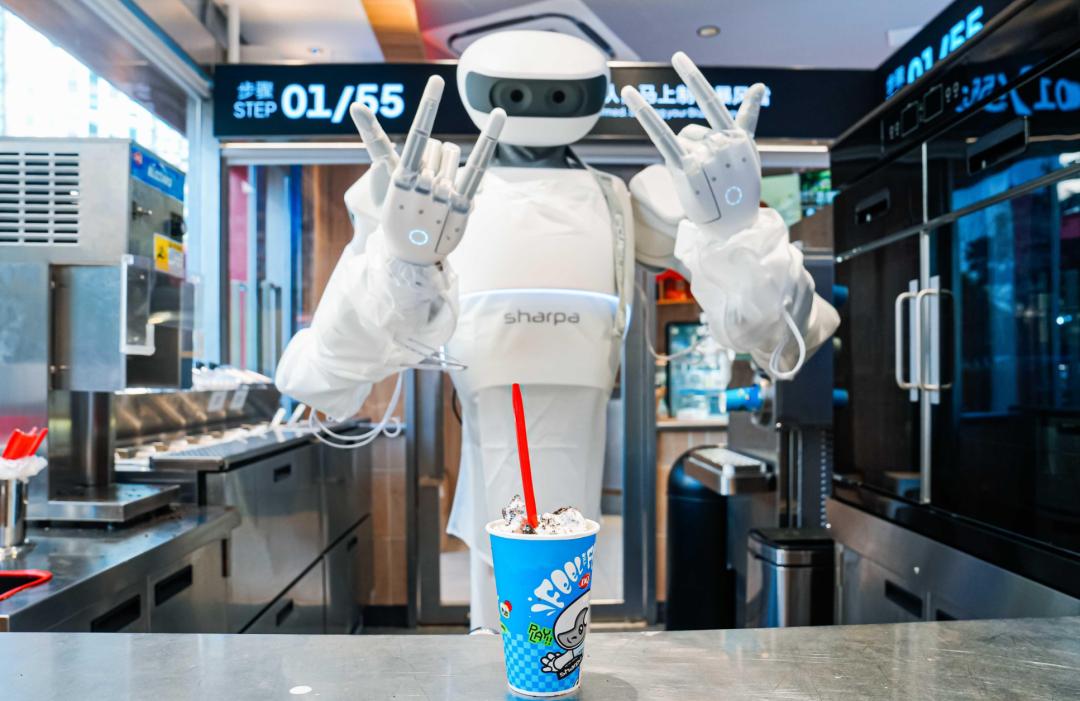
Sharpa's robot provides emotional value to customers
Practitioners in the embodied intelligence industry conduct in-depth on-site observations and go back to the office to review the footage frame by frame: What difficulties did the robot encounter? Which problems can it solve by itself? Which problems cannot be solved? How does it compare with our company's products? Is Sharpa still recruiting now?
In other words, the focus of the industry is on the collection of failure cases accumulated by the robot. Among the 55 steps of making DQ ice cream, many steps hide failure points, which put forward extremely high requirements for the robot's generalization ability. Just like human employees need training, the strengths and weaknesses exposed by robots in actual combat are scarce technical assets for subsequent review and research.
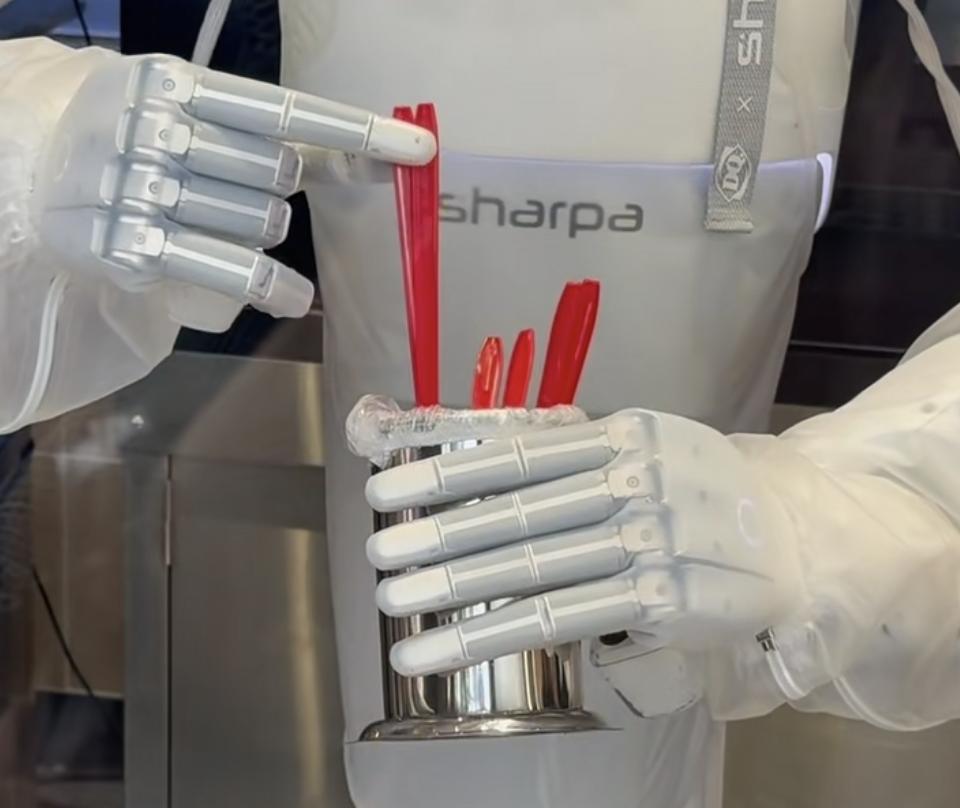
The robot grabbed two spoons at one time
It is no exaggeration to say that if Sharpa's robot does not make any mistakes at all, the industry will probably breathe a sigh of relief, which means that the technical challenges are not that great, and the illusion that "I can do it too" will spread rapidly. It is precisely the problems exposed by robots in actual combat that are of great research and review value at the current industrial stage.
A robot that can make mistakes is a robot worthy of research.
Learning to Swim in the Open Sea
In 2024, Li Yifan, Xiang Shaoqing and Sun Kai, the three founders of Hesai, a lidar company, founded Sharpa. They started with dexterous hands, launched Sharpa Wave, a five-finger dexterous hand with tactile perception, and achieved mass production and delivery smoothly in October 2025.
Robotic hands are recognized as the most critical hardware link in the entire robot. Sharpa first solved the problem of "whether the hand can work", and then installed the capability on the whole robot. At the CES at the beginning of this year, Sharpa exhibited humanoid robots and released the CraftNet model at the same time, demonstrating tasks such as playing table tennis, dealing cards, and assembling paper windmills on site.
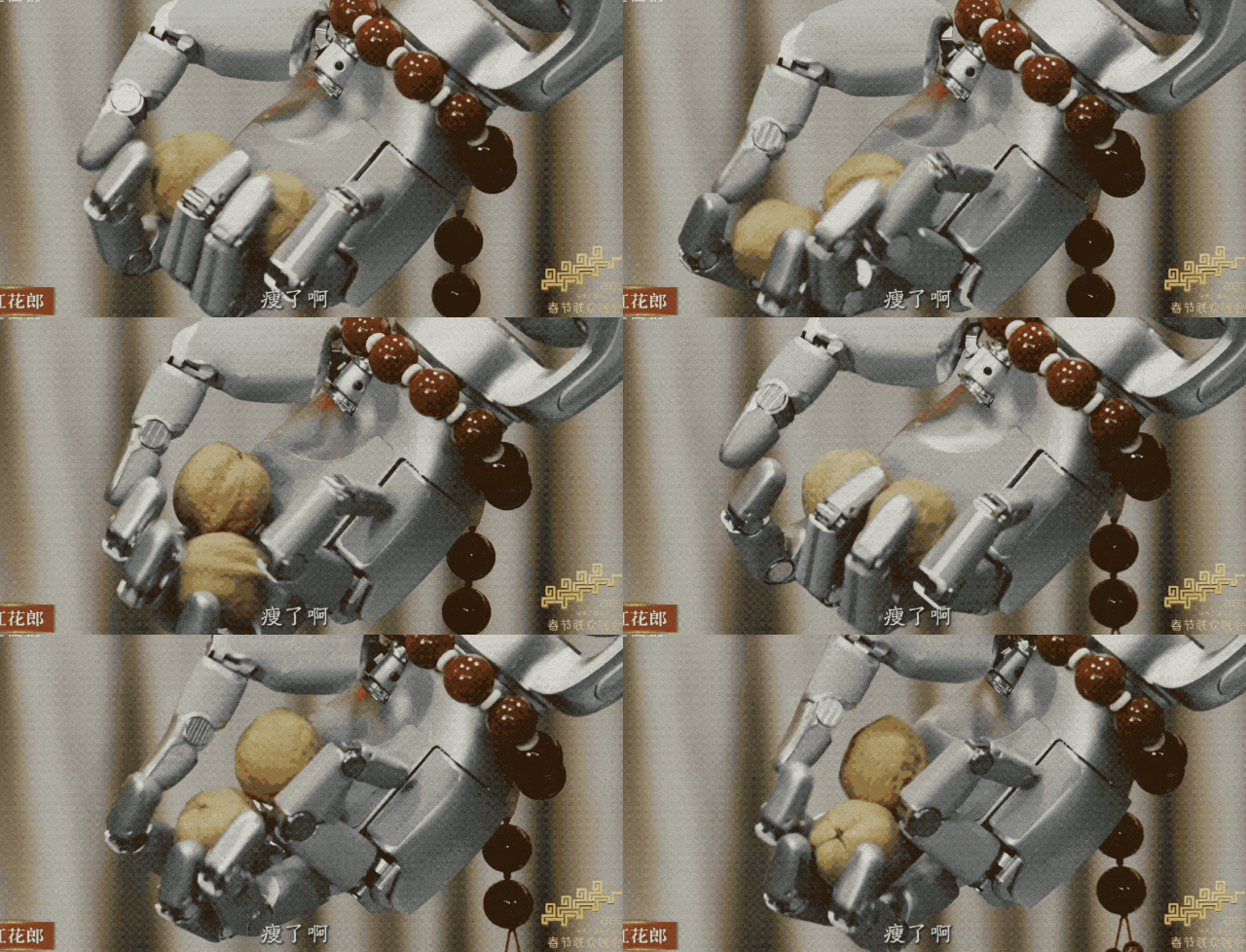
The robotic hand that played with walnuts during the Spring Festival Gala came from Sharpa
The design of the Sharpa Wave robotic hand is extremely complex. It can not only grasp objects, but also judge sliding, deformation and force through touch after contacting objects, and then adjust the grip force, which is the key link for the robot to work at DQ.
In the humanoid robot reference design released by Nvidia in May this year, Sharpa's W01 dual-hand solution was adopted; in the Gemini Robotics 2 experiment, Google DeepMind also installed W01 on Apptronik Apollo 2 for testing. Orders from upstream and downstream are far more valuable than performance shows.
Sharpa's robot adopts a wheeled structure, which is inherently disadvantaged in performance capabilities compared with robotic hands. However, the combination of robotic hands, robots and supporting models forms a technical stack that independently completes the task process.
After the technical platform of "brain + body + dexterous hand" is built, Sharpa's technical team iterates products while conducting actual combat in real scenarios:
In September this year, Sharpa released W02, an iterative product of Wave/W01, which is lighter and smaller than W01. Also released were the humanoid robot D01, and the exoskeleton data glove AE01 for precise teleoperation and data collection.
At the same time, Sharpa's robot met its strictest "teacher" at the DQ store: ice cream.
Unlike humans, robots are not born with the ability to perceive feedback such as touch and gravity in the physical world. Therefore, compared with fancy performance moves, the most common actions in life such as unscrewing bottle caps and opening cans are more difficult to conquer.
Making ice cream is not difficult for humans, but it is the Nürburgring Nordschleife for robots. There are traps everywhere in the 55 steps. For example, when loading and unloading steel coils from a large truck with bare hands, it is enough to have strong materials and great strength. When making ice cream, there are many things to consider just for the action of picking up a paper cup.
The shapes and force-bearing modes of paper cups, cup rings and spoons are different. When stirring, the manipulator needs to hold the cup ring with the thumb and index finger. If the force is too small, it cannot hold it, and if the force is too large, the paper cup will be damaged. How to grasp it properly is a difficult hurdle.
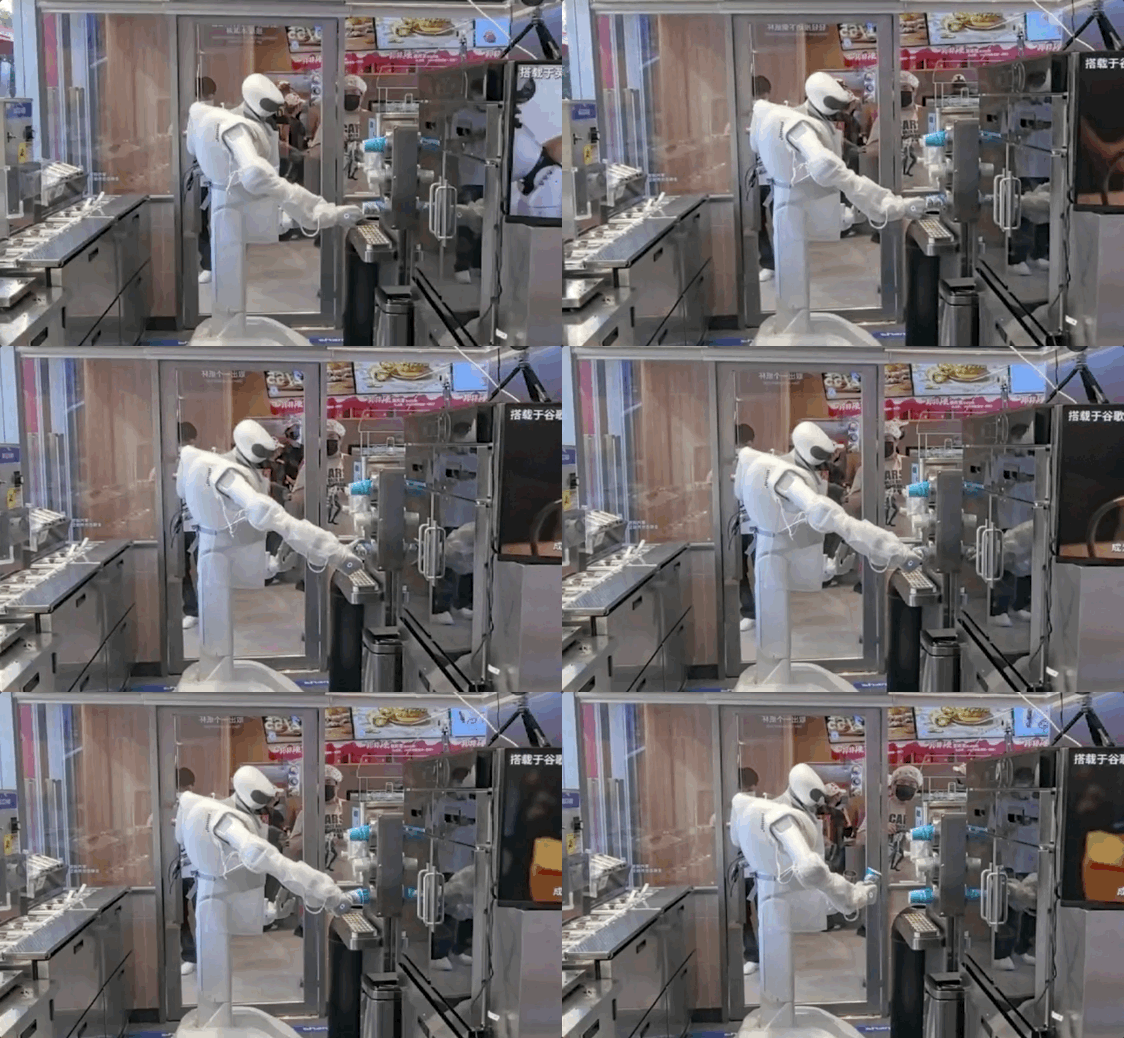
Sharpa's robot takes out the cup
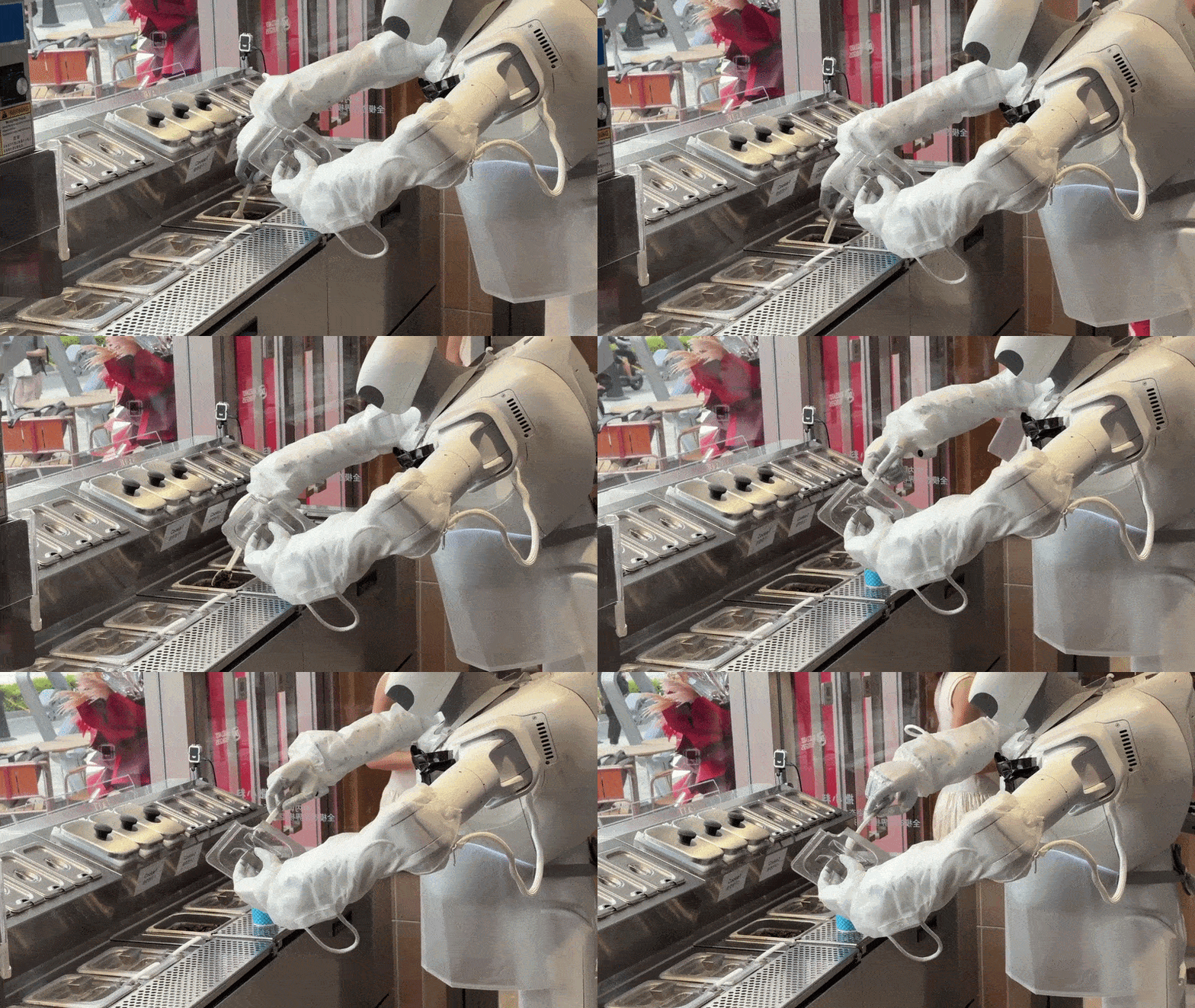
Sharpa's robot is adding ingredients
For another example, the plastic spoons in the store are placed randomly. In extreme scenarios, the robot has to figure out a way to take them out by itself, which requires extremely high generalization ability of the software algorithm.
Ice cream is not like a positioned metal part. Its temperature, viscosity and other states will change. The robot has to judge at all times whether the product can meet the delivery standard, especially to withstand the test of DQ's iconic action of "inverting the cup without spilling", which is very difficult.
In order to achieve the current effect of zero modification and zero intervention, the DQ and Sharpa teams spent several months debugging and adjusting.
What is the purpose? It is definitely not for the robot to work slower than humans.
Picking up a Spoon Is Also a Problem to Solve
Sharpa letting robots work in stores is a technical investment, which is what Li Yifan calls "digging deep into the scenario first".
The call from performance to landing has been going on for a long time, and the industry has reached a consensus on "high-value scenarios": there are standardized SOPs, but there is a lot of randomness in the process.
Industrial scenarios such as automobile production are also popular tracks for robot deployment, but the limitations of such scenarios are also obvious. Before the outbreak of artificial intelligence, the automobile industry was already an industry with very high automation and digitalization. If robots want to enter factories to work, they may not be able to compete with KUKA and Fanuc robotic arms.
On the other hand, precisely because the automation level is very high, the carbon-based humans in the factory are no different from robots, leaving very limited space for robots to play and make mistakes.
Making mistakes in real business scenarios is exactly the top priority of the whole industry at present.
Embodied intelligence is currently in a cycle of rapid technological progress, and large-scale commercial deployment is relatively far away. When the technology iteration cycle is very fast, the half-life of technological achievements will be very short, and the shelf life of technical barriers is even shorter.
To stay at the forefront of technology, a large number of trials and errors are needed to discover problems that cannot be predicted in the laboratory in real scenarios. The scenario of "making ice cream" is very suitable for trial and error.
Different from the militarized managed factory production line, the feature of the offline service industry is that the core process is standardized, but there are a large number of random scenarios in the execution process. Taking DQ stores as an example, equipment failure, where to get more spoons when they run out, and takeaway deliverymen urging the silicon-based staff to hurry up are all real situations that happen.
Similar to Corner Case in autonomous driving, simulation in the laboratory cannot exhaust all random scenarios in reality. Only in real scenarios can we find variables that are not fully predicted in the laboratory, then bring the on-site data back to the simulation to expand into more situations, and finally test them in reality again.
Once the proposition of "landing" is touched, it means that the enterprise must get a complete solution with strong reliability. No enterprise is willing to spend money to accompany the robot company to find bugs. Therefore, trial and error and verification in actual operation are very important.
But for robot companies, letting Sharpa's R&D team experience life in DQ stores, even if they work up to regional director, may not be able to exhaust all random events. Therefore, the longer the robot works in the store, the more Corner Case it accumulates, and the more it can support subsequent engineering improvements.
In other words, if you want to get financing, you must rehearse many times to get a perfect result. If you want to feed back technology R&D, the more mistakes you make, the more knowhow the engineering team accumulates.
Therefore, the most important purpose of Sharpa letting robots work around the clock in stores is to verify the robot's capabilities in real scenarios and discover problems that cannot be predicted in the laboratory.
Founder Li Yifan once gave an example: after the machine runs for an hour or two, the temperature of the ice cream produced by the equipment will rise, which will affect the operation of the subsequent stirring process. This problem was not encountered in the previous simulation tests.
On the day Sharpa's robot started work, there was a scene where plastic spoons were stacked together. The robot used its finger to poke it and took out the spoon smoothly. From the actual performance, picking up a spoon is the most difficult problem for the silicon-based employee, and also the hardest hit area for failures.
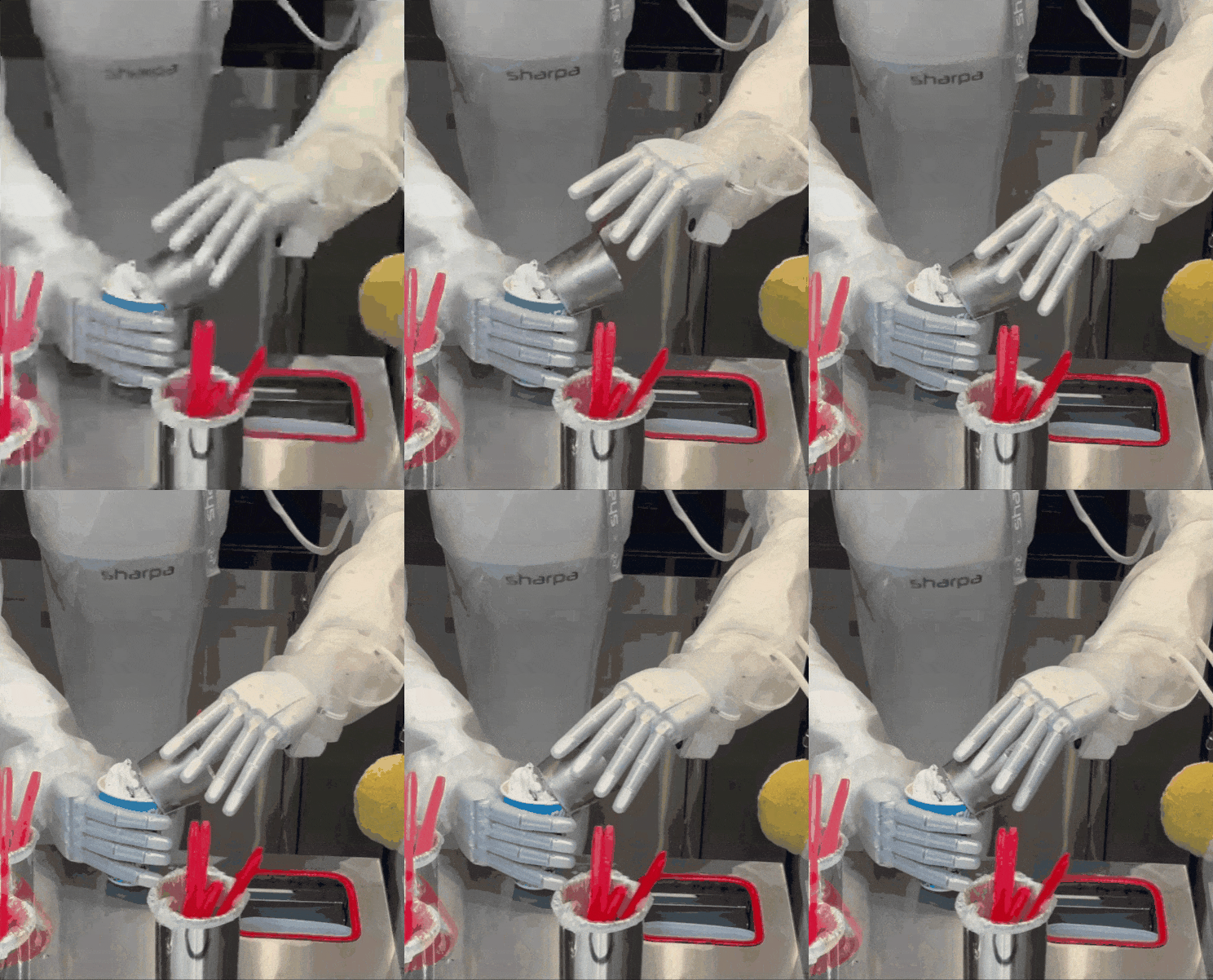
The spoon is stuck in the metal ring, which stumped the silicon-based strong robot
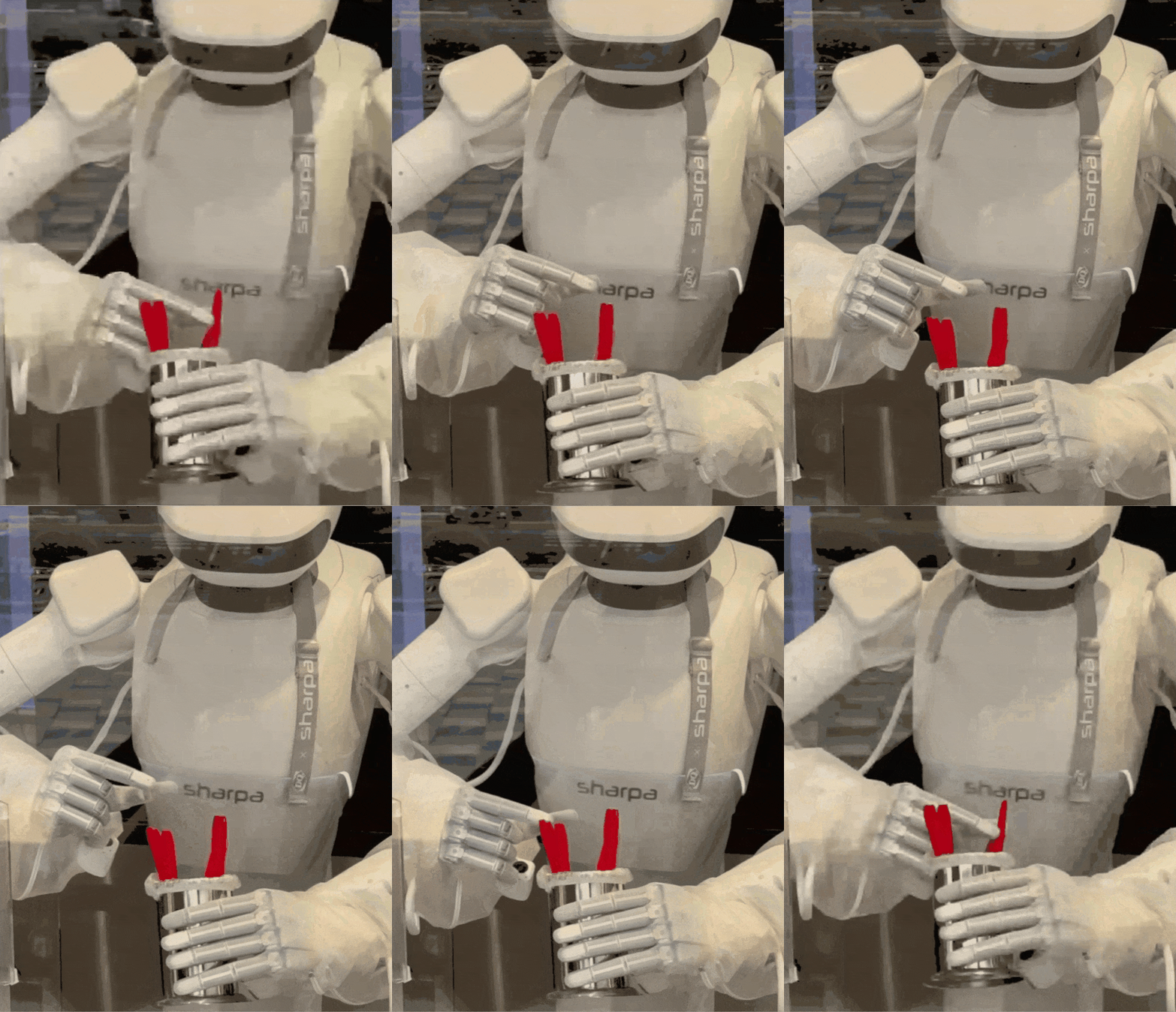
The spoon stumped the robot again
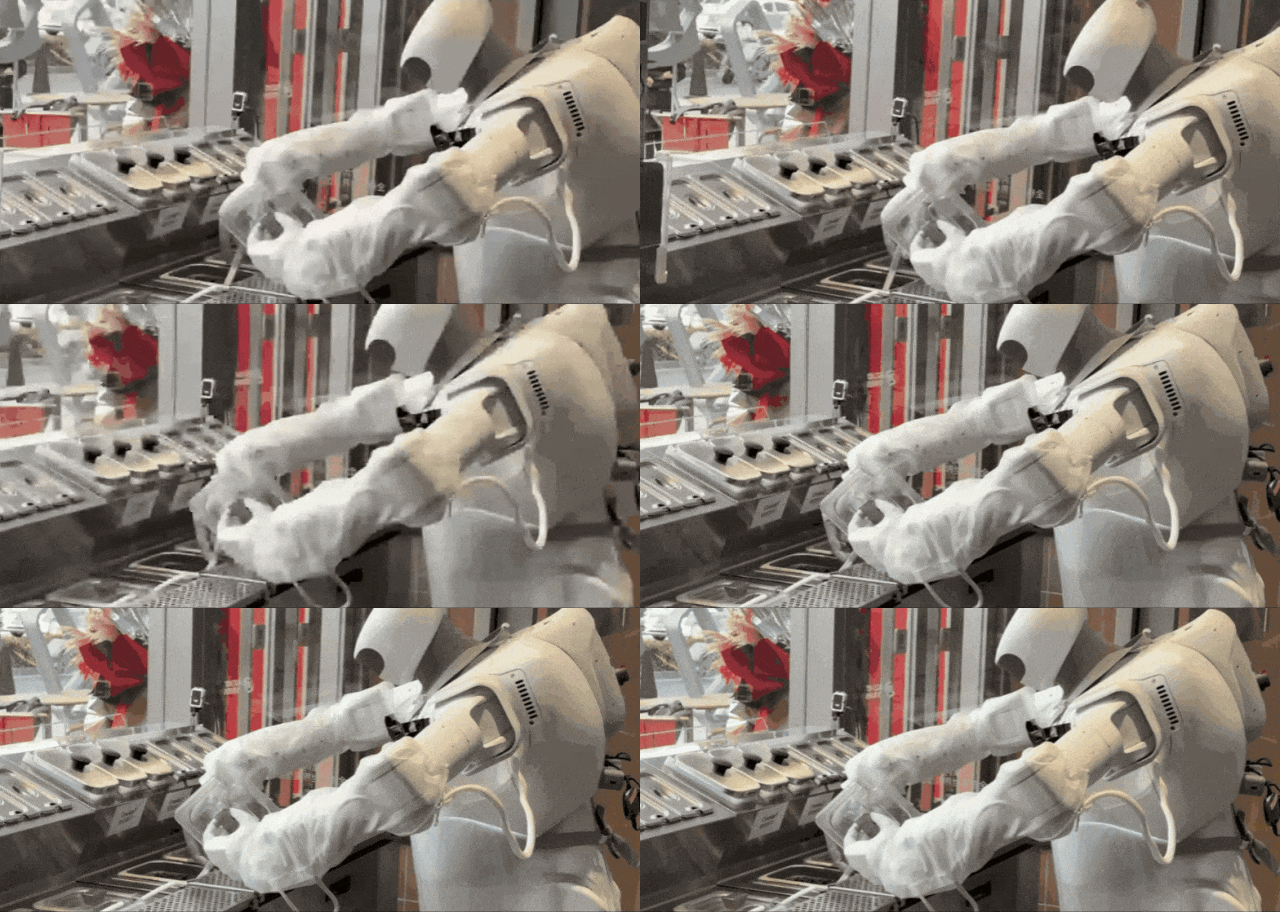
The spoon stumped the robot for the third time
Sharpa's robot has been busy in the operation room for a month, accumulating a full month of failure cases and trial and error solutions. The more content it accumulates, the greater the space for attribution and repair, and the Knowhow formed in the process directly determines the R&D team's understanding of technology.
This is what the old saying goes: you can't learn skills by being told, but you can master them once you practice. The wisdom of the ancestors also applies to carbon-based humans training silicon-based robots.
Research on AI Infrastructure and research on superficial AI gimmicks are both AI, but they are not comparable at all. 10,000 kilometers of commuting and 10,000 kilometers of track driving accumulate two completely different driving skills.
Don't Show Me Demos Anymore
From a general perspective, after going through Spring Festival Gala dancing, ring boxing performances, and major robot OEMs showing themselves in turn, embodied intelligence has quickly passed the "gymnastics performance year" and entered the "brain enhancement year". The attention of the entire embodied intelligence industry is shifting to the execution capabilities of robots.
At the same time, all kinds of demos and technology previews look like alien technology, which is dazzling, but when entering real scenarios, they directly hit a wall. It can only be said that selling concepts to investment institutions and stockholders is also a business model.
All measurement standards ultimately point to whether robots can create real value.
How to define "real value"? We have to return to the proposition and vision of "general purpose": whether to design new positions for robots, or to let robots integrate