Breaking: Manus narrowly escaped the jaws of danger and delivered its latest 2.0 version outcome.
In the breakneck commercial race of AI Agent, few companies have experienced such a dramatic, roller-coaster journey spanning China and the United States in just nine months as Manus.
At the end of 2025, it stunned Silicon Valley with an ARR of over 100 million USD, and caught the attention of almost all tech leaders. Among them was Mark Zuckerberg, founder of Meta, who reportedly facilitated a lightning 2 billion USD acquisition of Manus in just over 10 days.
However, the regulation of the core AI Agent technology acted as an abrupt brake, pushing the deal into the abyss of mandatory termination.
Today, this team founded in China that once operated out of Singapore has not fallen apart under the gravitational pull of tech giants, but staged a stunning comeback against all odds.
As rumors swirl that it is about to finalize a new 500 million USD financing round with a post-money valuation doubling to 4 billion USD, the Manus team, which has announced a complete split from Meta to restore its independent status, officially unveiled its latest achievement today:
It launched the fully rearchitected Manus 2.0, alongside a brand new standalone app "Cue" built exclusively for personal agents.
From rebuilding the underlying execution framework from scratch to embracing human-AI co-creation workflows, this team, which first popularized the concept of "general Agent", attempts to answer the fundamental question once again with a full-dimensional, systematic evolution: what exactly should the next generation of Agent look like?
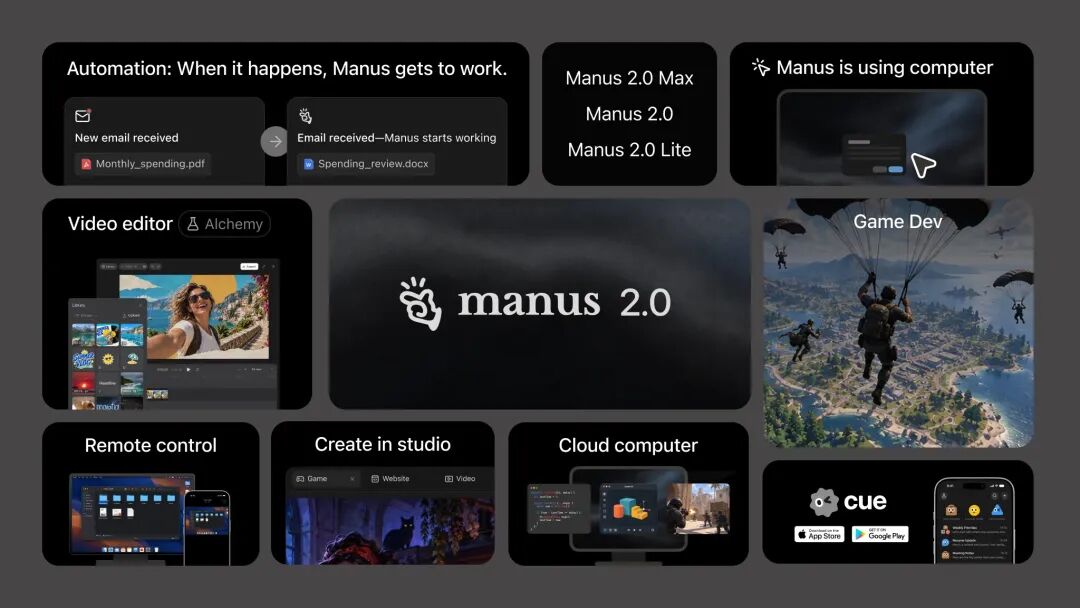
Here is a brief overview of Manus 2.0, with more detailed introductions to follow:
The technical core of Manus 2.0 is a brand new Agent foundation, including the iterated in-house developed Agent framework named Cascade, cloud computer, and automated workflows that support scheduled tasks and event hook triggers.
These designs, especially the cloud computer component, may look very similar to Meta's Muse, but they further carry forward the consistent philosophy of Manus.
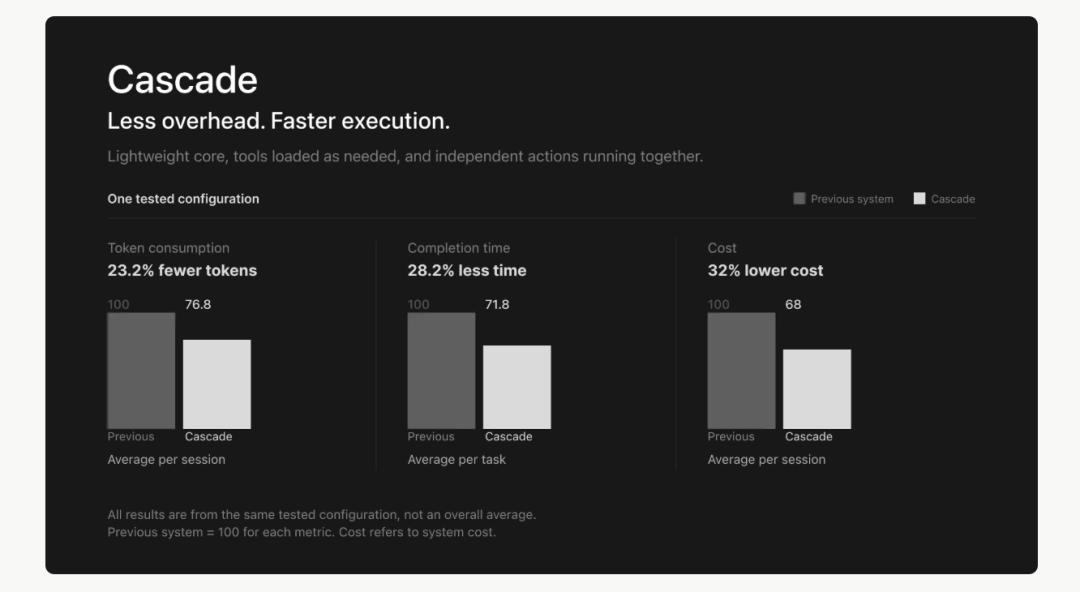
In Manus' tests, Cascade reduces Token consumption by 23.2%, cuts task completion time by 28.2%, and lowers operating costs by roughly 30% compared to the previous Agent framework.
Along with this update, Manus has upgraded its desktop client to Manus Studio.
According to available public information, Manus Studio is designed to "intelligently" introduce professional capabilities based on the actual needs of tasks, thus avoiding excessive Token consumption and long execution time.
This idea of on-demand loading of capabilities/modules is quite similar to DeepSeek Harness.
In addition, Manus Studio now supports video editing capabilities: users can directly import clips, images, text, motion effects and audio materials to produce short videos under 1 minute, dynamic data charts, tutorials, Vlogs and motion effect works.
Most importantly, Manus has also launched a brand new app called Cue in this release.
It is a "personalization-focused" Agent product, conceptually similar to the recently popular Today, supporting mobile and desktop ends and sharing the same underlying infrastructure with Manus.
Cue adopts a design similar to multi-role Agent systems: each Agent has its own identity, email address/phone number, wallet, and dedicated "cloud computer" for work. These Agents can be invoked independently, or added to a group chat to collaborate on tasks together.
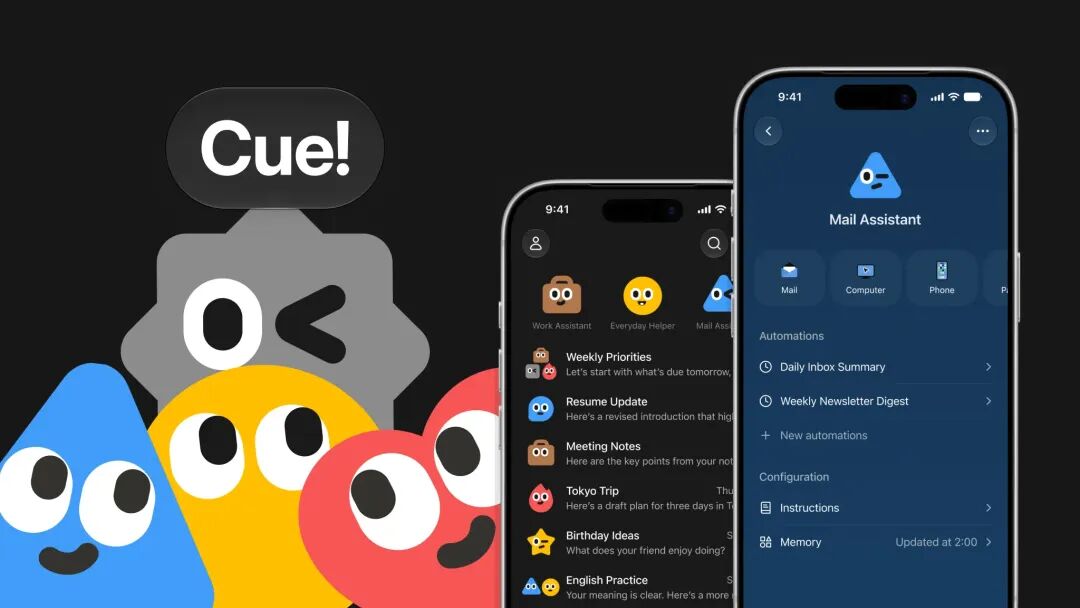
Cue is currently in early access, limited to 1000 users, and can be activated with the invite code MEETCUE. Successfully activated users can also share activation invites with other users.
Deal Termination and Capital Restructuring
Looking back at the past six months, Manus' process of "buying back its independence" from Meta is so thrilling that it can be regarded as a unique case in the history of global venture capital.
At the end of last year, when the news came out that Manus was acquired by Meta and Xiao Hong was appointed as VP, Silicon Valley generally believed that Mark Zuckerberg, amid his anxiety about lagging behind in underlying models, had bought the elite team that best understood the engineering implementation of Agents.
However, subsequent strict regulatory reviews intervened and overturned the original plan. The foreign acquisition deal, which had already entered the delivery phase, encountered unprecedented "mandatory dissolution".
During this period, several key events took place at Manus on the capital front:
According to Bloomberg, the founding team joined hands with long-term shareholders to buy back all equity from Meta in July this year at the original valuation of about 2 billion USD.
Benchmark, the top Silicon Valley VC that played a key role in pushing the Manus team to expand to Singapore and facilitating the Meta deal, also fully exited its position.
It is rumored that Tencent subsequently took over this critical stake, becoming one of the largest external investors of Manus.
The report also noted that the founding team tried to introduce new external capital during the buyback process but failed: the transaction had to be strictly restricted to the original founding team and existing shareholders including Tencent, HSG, and ZhenFund, with no additional new parties allowed.
In terms of technical assets, Manus has also completed full decoupling from Meta:
As early as May this year, Manus and Meta completed physical isolation at the operational level and stopped all data sharing. In August, to fully meet compliance requirements, Manus sent notifications to users and completely destroyed a large amount of user data accumulated during the acquisition period (after the end of 2025).
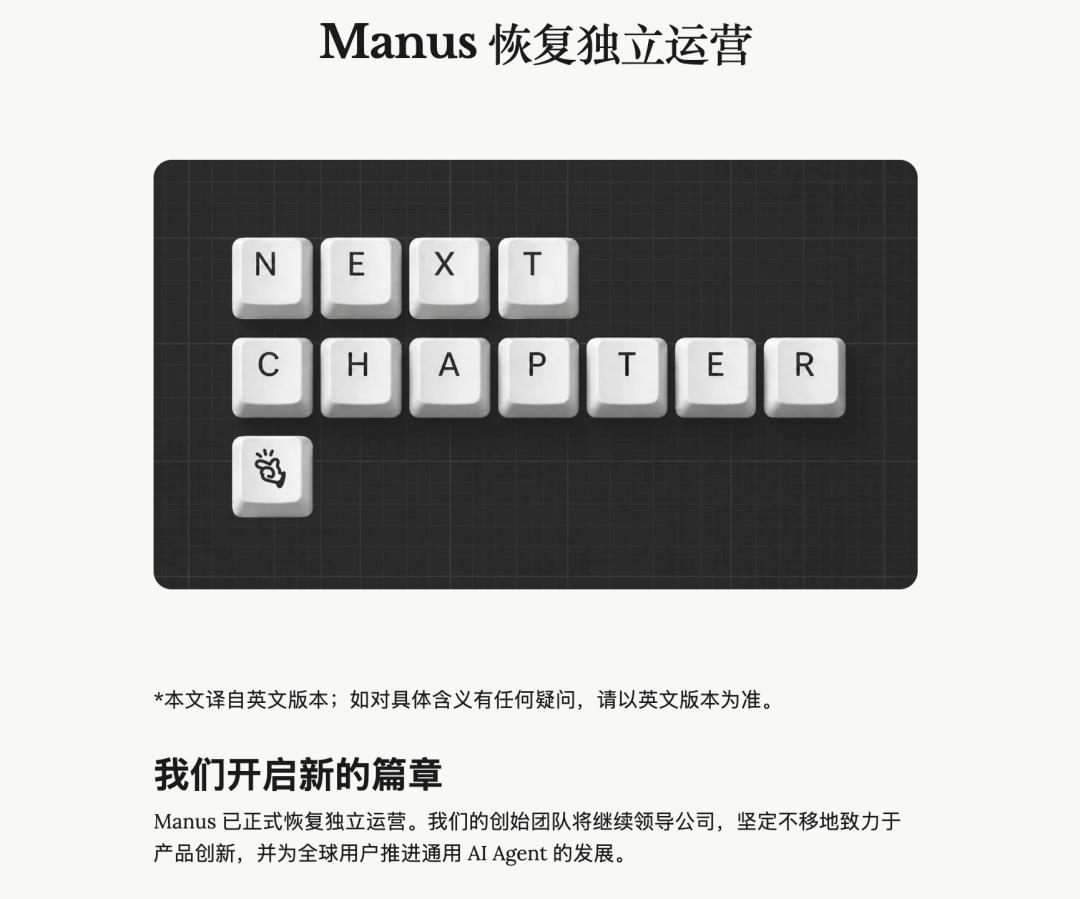
It was not until the beginning of this month, when the founding team published an open letter stating "the official resumption of independent operation", that the cross-border tug-of-war over equity and data was fully settled.
The rumored new 4 billion USD valuation in mid-September not only proves the capital market's recognition of its independent profitability, but also puts it in the top tier alongside leading players such as Moonshadow and DeepSeek, setting its sights on a future IPO on the Hong Kong Stock Exchange.
The Team That Ignited the Agent Movement Reinvents Agent
The restructuring and clarification of its capital structure is the prerequisite for Manus to survive. The major product update Manus announced today is the real source of confidence for the founding team to prove that they have returned stronger than ever.
Back in early 2025, multiple Agent products and Agent companies including Devin, Anthropic Computer Use, and Adept already existed on the market.
The first generation of Manus stunned the world upon its launch, but it received both praise and criticism from the public:
Manus' strength lies in that it successfully encapsulated large language models in an engineering framework, and creatively launched independent virtual sandboxes in the cloud for users. It became the first Agent product that successfully ran the full-length Agentic Loop of task decomposition, code writing, browser manipulation, and deliverable generation, and was accessible to ordinary non-technical users.
Questions about it never stopped. To put it in a negative way, Manus could also be interpreted as a "wrapper" for mainstream model APIs at that time.
During the months when Manus was in turmoil and silence, the Agent industry had undergone earth-shaking changes. The explosive popularity of OpenClaw at the beginning of the year led to an endless stream of products imitating Anthropic's "Cowork" model.
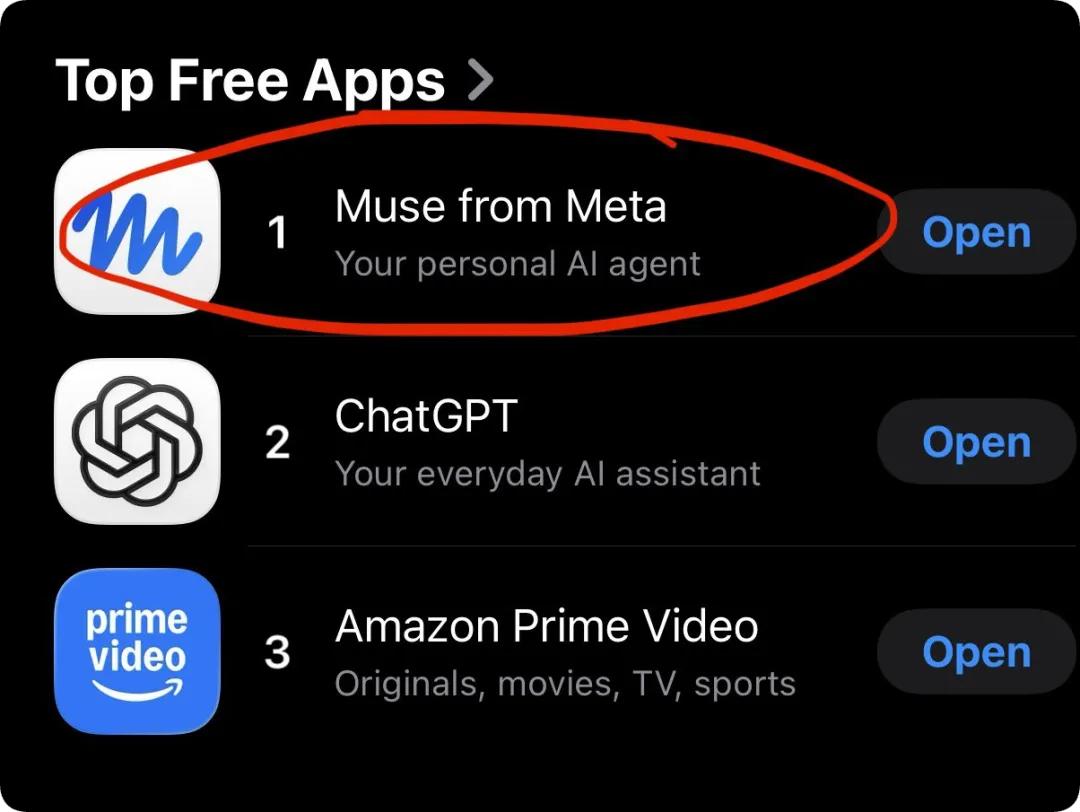
Even Meta made full use of the remaining assets from the Manus deal and launched its Agent product Muse earlier this month.
Since its launch on September 8, Muse topped the US iOS free app chart in less than two weeks, with downloads and daily active users exceeding those of ChatGPT at the same stage after its launch. According to Sensor Tower statistics, Muse recorded 730,000 downloads in about five days after launch, and soon exceeded 2.5 million downloads.
In the Agent industry, Muse in 2026 is just like Manus in 2025: when they were released, they were by no means the pioneers of the Agent concept. But from their respective perspectives, they both made users who were already tired of chatbots but had no need or ability to write code and had never tried Agents, become interested in Agents for the first time.
Almost every Agent product on the market today carries traces of Manus's past; Manus itself, however, has been pushed to the edge of the cliff where it must subvert itself.
It is clear that during this period, Manus has been re-examining itself, as well as the relationship between Agents and human workflows.
According to clues previously shared by Zhang Tao, Product Partner of Manus, the team's thinking on Agents has gone far beyond the limitation of "cloud sandboxes". The launch of Manus 2.0 is exactly the embodiment of these ideas.
The most criticized problem of the first generation of Agents is "bulkiness and high cost" — to complete a tiny task, Agents often blindly load a full set of contexts, leading to out-of-control Token consumption and excessive execution latency.
Manus 2.0's brand new in-house developed Agent framework Cascade is built specifically to solve this problem.
It features a lightweight on-demand mounting architecture: it remains extremely streamlined when the project starts, and only when the execution chain advances to a specific step will the system dynamically introduce professional sub-tools and modules on demand. In a set of benchmark tests, Cascade reduces Token consumption by 23.2%, cuts task completion time by 28.2%, and lowers operating costs directly by 32% compared to the previous generation system.
Persistent Cloud Computer: In the past, sandboxes were destroyed after tasks ended, making it impossible to maintain long-term states. Now users can mount a dedicated cloud computer for their projects, providing an independent server environment that runs 24/7 even when the user's laptop is turned off.
From Scheduled to Event-Triggered: The previous generation system could only mechanically execute scheduled tasks, while 2.0 fully introduces the event hook mechanism. A new email, an abnormal fluctuation in ad delivery data, a calendar event, a Slack message, or a modification to a Notion page can all wake up the Agent to automatically orchestrate and run the full workflow.
If Manus 2.0 is an upgraded version of the Agent productivity environment, then Cue, the brand new standalone app launched alongside this release, demonstrates the team's bolder ultimate ambition.
Each Agent in Cue has a complete digital citizen identity, including the aforementioned dedicated email address, phone number, virtual wallet, and dedicated cloud computer.
This means it can not only actively send and receive emails and instant messages, but also answer harassing calls on your behalf and generate call summaries, and even autonomously complete payments for APIs or online services within the budget limit you strictly set.
Multi-Agent Group Collaboration: Users can pull Agents with different expertise into a group chat, and only provide a broad strategic goal. For example, to prepare an offline launch event, one Agent is responsible for checking venue availability, one for comparing supplier quotes, and the third for drafting the speech outline. The Agents automatically share context and information with each other, and the user only needs to oversee the overall direction and make final decisions in the group chat.
More importantly, Cue is also Manus' key attempt to extend Agent capabilities to the physical world.
In one use case, users only need to scan the QR code on the table of a restaurant, and the Agent can automatically order food according to their dietary preferences, and even queue up for a table on their behalf, extending execution capabilities to real-world consumption scenarios.
The Butterfly That Survived the Storm
A butterfly flapping its wings can create a storm on the other side of the Pacific Ocean, which is the definition of the "Butterfly Effect". In the AI industry, the term "Butterfly Effect" is most famously associated with the name Manus.
From being powerless when it was acquired amid capital pressure, to being on the verge of collapse after mandatory dissolution, to now holding a 4 billion USD valuation and restarting its journey, Manus embodies the most extreme and controversial epitome of this era.
It was sought after by top-tier capital, acquired by a tech giant, and torn to the brink of collapse in the storm of geopolitics. When everyone thought this startup team at the center of the whirlpool would be dragged down by prolonged chaos, they stood back up on the ruins.
Setting aside all commercial disputes and capital labels, perhaps the most touching core of Manus has always been a product-driven geek team.
Why is that?
APPSO recalls April 30, 2026, three days after the order from the National Development and Reform Commission was issued. Manus' official channels released their first update after the incident: it was neither an announcement about the acquisition, nor details of the deal termination and dissolution, but —
The launch of the 24/7 online Cloud Computer capability.
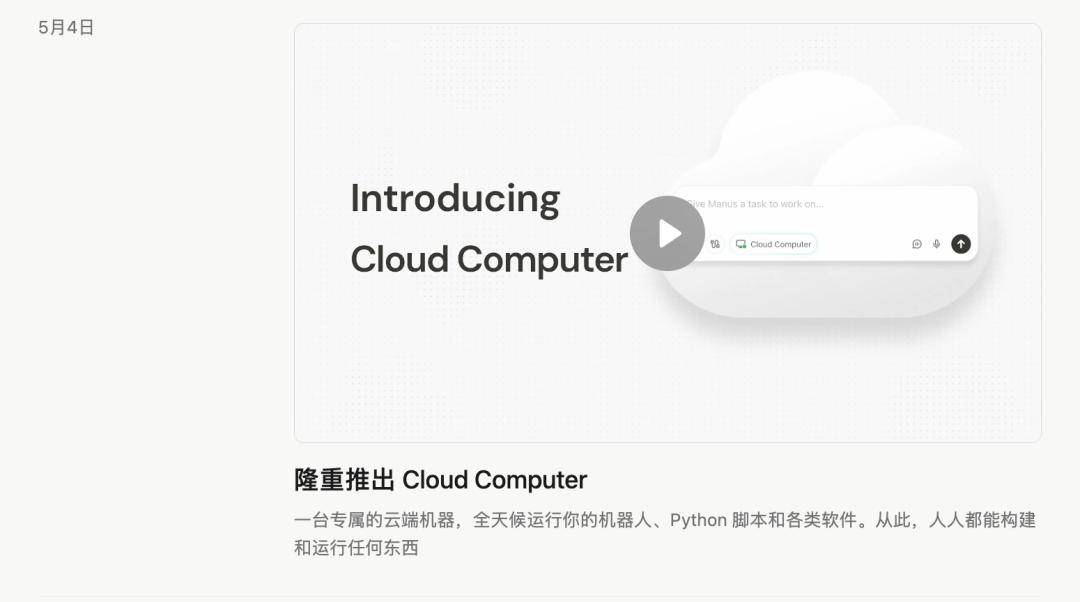
Manus has experienced months of turbulent ups and downs, but if we plot its product updates over this period, we will see a very unique picture:
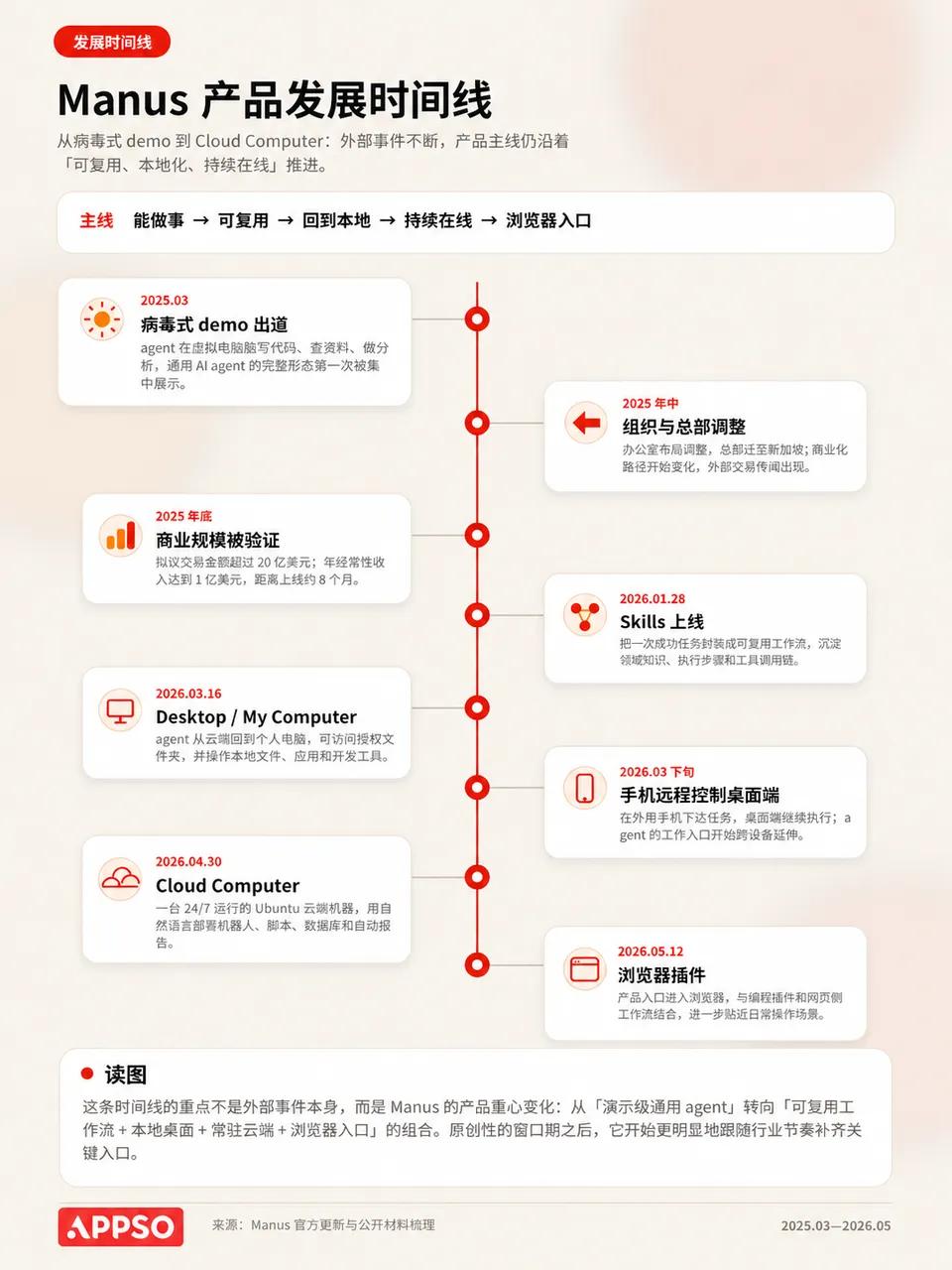
A butterfly that strives to maintain balance in the storm it itself created.
Now, Manus has finally escaped from the whirlpool it made, and is flapping its wings to fly high.
This article is from WeChat Official Account "APPSO", author: Du Chen