AI Glasses Are Heading for the Battle for the Right to Define the "Android Rules"
These past two days, the AI glasses industry feels like the smartphone sector back in 2010: new devices are launched one after another, new systems are rolled out nonstop, and every player claims they are building the "next-generation entry point". But the status of being an entry point is never earned just by releasing a few pairs of glasses.
Data from Omdia shows that global AI glasses shipments hit 8.7 million units in 2025, up 322% year on year, of which Meta accounted for 7.4 million units, taking up 85.2% of the market share; the Chinese mainland market recorded nearly 1 million units, accounting for 10.9%, making it the second largest market only after the United States. While sales have taken off, problems have also emerged: sellers of glasses are making profits, while platform developers are losing money; hardware makers are trapped in cutthroat competition, and the party that sets industry standards remains vacant.
If you look at the full picture of the AI glasses battle, the core competition is not about "who ranks first in sales", but four key dividing tracks: how to monetize the entry point that Meta has explored, which players will follow the system that Google is trying to develop, what kind of product form Chinese manufacturers will adopt to participate in the competition, and who will take control of the underlying capabilities of optical waveguide and end-side AI.
Meta is not selling glasses, but nurturing an entry point
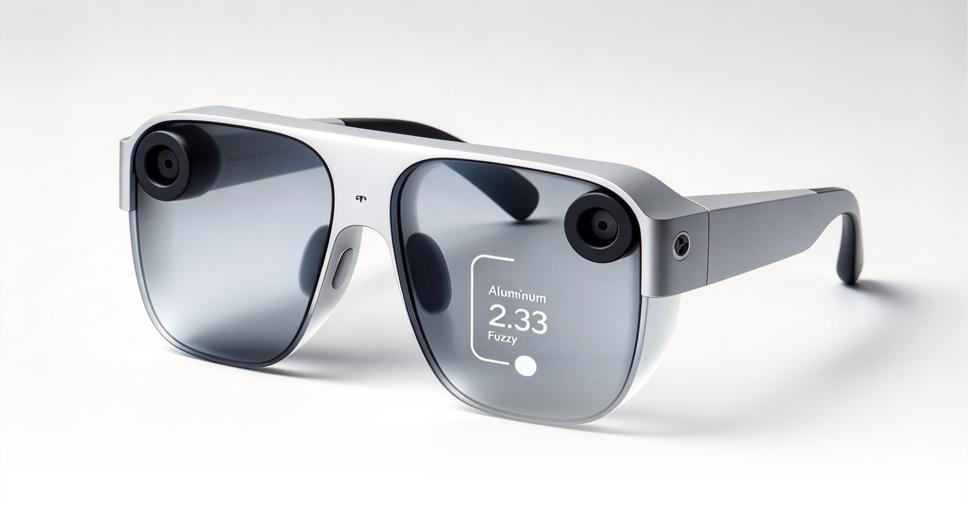
Meta is the most contradictory pathfinder in this competition.
On one hand, it has made consumer-facing AI glasses a commercially viable product. In 2025, Meta's AI glasses shipments reached 7.4 million units, and it took 85.2% of the global single-brand market share even without entering the Chinese mainland market; EssilorLuxottica, the parent company of Ray-Ban, shipped more than 7 million units of Meta series products in the same period, proving that "glasses + camera + voice assistant" is no longer a geek toy.
On the other hand, the cost of nurturing an entry point is extremely staggering. In the second quarter of 2026, Reality Labs recorded revenue of 431 million US dollars with an operating loss of 4.619 billion US dollars; media statistics show its cumulative operating loss since 2020 has approached 80 billion US dollars, with a loss of 19.193 billion US dollars for the whole year of 2025 and another 8.647 billion US dollars in the first half of 2026. The glasses business is the fastest growing and most consumer-oriented segment in Reality Labs, but it bears the full investment burden of VR/MR — massive expenditure on model development, system iteration and spatial interaction, with no hardware premium visible in the short term.
A more critical contrast lies in the division of labor. EssilorLuxottica's revenue in the first half of 2026 reached 14.818 billion euros, up 9.7% year on year, of which AI glasses related revenue in the second quarter nearly doubled. Players that sell frames, operate channels and build brands have returned to profitability first, while Meta, which develops systems, AI and product definitions, continues to fill the funding gap. That is to say: hardware manufacturers earn money from manufacturing and retail, while the platform side bears the cost of user retention and ecological construction.
This illustrates a fact: the "closed system + high-margin hardware" model worked in the smartphone era, because Apple could pass the system cost on to the per-unit profit. However, AI glasses feature low hardware gross margin, slow replacement cycle and weak rigid demand. When Meta tries to replicate Apple's closed-loop path, it can neither obtain high product premium nor collect ecological tax. The entry point is real, but the profit model is still unproven.
Therefore, the first cold conclusion of the AI glasses battle is: no one wins by shipping 10 million units first, the real winner is the one who can form a closed loop of "wearing glasses - calling AI - precipitating services - recovering costs". Meta has blazed the trail, and also stepped on all the pitfalls along the way.
Google is not making hardware, but repeating the Android story

Since the entry point is still vacant, the platform side is always the most eager to develop a supporting system.
Google suffered a setback on Google Glass, and changed its strategy this time: instead of competing to produce complete devices, it focuses on Android XR, and brings together hardware manufacturers, chip makers and model developers to form an open alliance. At the 2025 I/O conference, Google jointly demonstrated Project Aura with XREAL; in December of the same year, it supplemented system details at The Android Show; it continued to open experience access at the 2026 I/O conference; in June, the product was renamed XREAL AURA and opened overseas pre-orders, confirming its launch in autumn.
The division of labor of AURA is very "Android-style": XREAL provides frames, X1S spatial computing chips and 70° FOV OST optics; Qualcomm provides Snapdragon Reality Elite split computing units; Google provides Android XR and Gemini. The goal is to integrate spatial semantics, environment understanding, voice/gesture/image interaction into a unified system, so that third-party hardware can adapt to it.
This approach is so familiar that it makes people feel trance. In the smartphone era, Android used free systems + multi-vendor collaboration + app store to take the definition right away from a single brand. No matter how competitive Chinese mobile phone manufacturers are, they mainly develop models, set prices and expand channels under Android's rules. Now Google is repeating the same path on glasses: it does not compete for "which product sells the most", but competes for "every product should run my system".
But history will not repeat itself exactly. First, glasses do not have the unified touch screen interaction as smartphones, and eye tracking, gesture, voice and spatial anchor all need to redefine standards. Second, Meta has occupied the consumer end with its self-developed system and Ray-Ban channels, and Apple will also take a closed path if it enters the market, so the Android-style openness may not dominate the whole market. Third, and the most importantly, for the core underlying technologies such as optical waveguide, Micro LED and end-side SoC, the Chinese supply chain is in a more leading position than it was in the smartphone era.
Google's repetition of the Android path brings Chinese manufacturers the opportunity to "choose a camp", and also warns them that "they should not only attach to one camp".
Chinese manufacturers are not doing OEM, but seizing the right of definition
China's participation in this round of competition appears to be a multi-brand scuffle on the surface, but there are three core underlying strategies.
Huawei takes the system strategy. In April 2026, it released the first HarmonyOS AI glasses, starting at 2499 yuan, with 12 million pixels, 0.7-second capture, Xiaoyi intelligent agent, supporting "one glance" Alipay payment and multi-device streaming across the HarmonyOS ecosystem. It does not pursue high single-product sales, but strives to extend the HarmonyOS ecosystem from smartphones, vehicles and smart homes to the head-mounted display field. With self-developed system, self-developed end-side technology, and closed-loop capabilities for payment, navigation and conference, its logic is very clear: the entry point cannot rely on other people's systems.
Alibaba and Xiaomi take the ecological strategy. According to AVC data, the Qwen series (including the early Quark brand) occupied 30.4% of the online retail share from March to April 2026, of which the G1/S1 models contributed 19.4% in the two months. The S1 is connected to Tongyi, Taobao, Amap and Alipay, building a life service entry for food ordering, express query and scan-to-pay. Xiaomi released its first AI glasses in June 2025, and in early 2026 it focused on lightweight display and shooting-focused products, taking the cost-effective route and leveraging the "Xiaoai + mobile phone ecosystem". They are not betting on the best optical performance, but on the smoothest user, scenario and transaction closed loop — using the existing ecosystem to feed new hardware.
Thunderbird, Rokid and XREAL take the product form strategy. As of the first quarter of 2026, Thunderbird has ranked first in global consumer AR shipments for 4 consecutive quarters and first in Chinese sales for 5 consecutive quarters. Its X3 Pro supports eSIM binocular full-color display, can work independently without connecting to smartphones, and has cooperated with Amap to develop local life applications. Rokid ranked first in China's online retail market with 21.2% share in Q1 2026, its overseas lightweight model weighs only 38.5 grams, and its domestic Glasses model supports translation, navigation and payment. XREAL uses Android XR to develop the AURA reference hardware, while retaining its self-developed X1/X1S spatial chips, it has long been at the forefront of global AR shipments and plans to list on the Hong Kong Stock Exchange in 2026. The logic of professional manufacturers is: first figure out "how light the glasses should be, how large the field of view should be, and what models can run on the end side", then use product standards to push back the formulation of system standards.
Behind the three strategies is the same anxiety: Huawei is worried that the system will be defined by others, Alibaba and Xiaomi are worried that the entry point will be intercepted by hardware, and professional manufacturers are worried that the specifications will be set by the platform side. They seem to act independently, but all point to the same judgment: the definition right of glasses has not been settled yet, and this is the first time for Chinese manufacturers to have the underlying technology, user base and system capabilities to participate in the core competition at the same time in the past 20 years.
The supply chain is not just supplying parts, but building the underlying foundation
20 years ago when the smartphone system industry started, most Chinese manufacturers only made hardware outside the rule-making system; today when the glasses system has not been finalized, optical waveguide, end-side model and whole device iteration form a closed loop domestically at the same time, so the supply chain has evolved from a "supporting role" to the "underlying foundation".
Optical waveguide took the lead in making breakthroughs. Goertek's 12-inch wafer DUV lithography and etching mass production line in Lingang, Shanghai was completed and put into operation in 2026, covering full-color diffraction, silicon carbide, nanoimprint and other technical routes, and the produced modules can achieve lighter weight and larger field of view. Nika Optical's volume holographic production lines in Tianjin and the new plant have an annual capacity of 1.3 million pieces, and have realized batch delivery of AR optical waveguide. Crystal Optech, Gloin and other enterprises are promoting the development of diffraction/resin/reflection waveguide, and Gloin's diffraction sheet can be as thin as 0.7 mm and weigh only 4 grams. Institutional statistics show that global AR shipments increased significantly year on year in Q1 2026, the proportion of optical waveguide AR has risen significantly from the previous low level, and Chinese manufacturers have a stronger presence in the display subdivision field.
Micro-display and lightweight technologies are also catching up. domestic Micro LED manufacturers such as JBD have entered the first echelon, and some of their solutions are supplied to international giants. Data from the Shenzhen Smart Wearable Industry Association shows that full-color Micro LED has achieved small-scale implementation, the weight of mainstream binocular AR products has been reduced to 38-50 grams, and pure audio products can be as light as 14.9 grams. Special-shaped semi-solid batteries and ultra-thin temples further improve the battery life. The end-side chip sector is no longer completely absent: BES's BES6000, BES2700 and other SoCs support local operation of lightweight large models, Allwinner's V821/V851 cover low and medium power consumption visual scenarios, and Rockchip's RK3586 and high-end solutions supplement high-performance AR capabilities.
Policies and capital further open the industry window. In 2026, the "AI + Consumption" document issued by eight ministries and commissions explicitly mentions smart glasses, and the new purchase subsidy covers 15% of the price of smart glasses with a maximum subsidy of 500 yuan. Bao'an District, Shenzhen has introduced full-chain support policies for optical waveguide, Micro LED and special chips. XREAL, Thunderbird and Rokid have launched listing preparations, and primary market financing is concentrated in the optical and micro-display sectors.
This is not just a slogan of "we also have a complete supply chain", but a structural change: when optics, micro-display, end-side AI and whole device manufacturing all form a closed loop domestically, Chinese manufacturers are no longer just executors under the existing rules, but have obtained the qualification to enter the system negotiation table. Li Hongwei, CEO of Thunderbird, made a very accurate judgment: in the next ten years, Chinese enterprises will very likely deeply participate in defining the core industry standards, ecological interfaces and experience models for the first time.
The final outcome of the AI glasses battle will not necessarily produce an "Android for glasses". The more possible structure is: part of the underlying optical/chip standards will be localized in China, the system layer will coexist with Android, HarmonyOS, YodaOS and RayNeoOS, and the application layer will form segmented scenarios for translation, navigation, industry and life services respectively. What Chinese manufacturers are competing for is not just a title, but "a permanent seat at the rule-making table".
References:
1. Meta Platforms, Inc. Q2 2026 Financial Report: Reality Labs recorded revenue of 431 million US dollars, operating loss of 4.619 billion US dollars, with cumulative loss of about 88 billion US dollars since 2020
2. Omdia: 2025 global AI glasses shipments reached 8.7 million units, up 322% year on year, Meta's market share 85.2% — People's Daily Finance https://finance.people.com.cn/n1/2026/0311/c1004-40679618.html
3. EssilorLuxottica 2025 Ray-Ban/Oakley Meta series shipments exceeded 7 million units — TechTimes
4. Counterpoint Research: 2026 Q1 global AR glasses shipments up 136% year on year, optical waveguide AR share rose from 18% to 42%
5. Pandaily China's AR Optical Waveguide Industry Enters Its Mass-Production Year: Three Chinese optical waveguide production lines achieved million-level capacity https://pandaily.com/ar-optical-waveguide-mass-production-2026-greatar-pvg-china-aug2026
6. Securities Times AI Glasses Race: Where Are Chinese Enterprises When Giants Are Competing for the New Entry Point? https://www.stcn.com/article/detail/3928885.html
7. Shenzhen Smart Wearable Industry Association Full Review of the 2026 H1 Smart Glasses Industry: From Concept Outlet to National Strategy Track http://sswa.com.cn/show.php?pid=497
8. Sohu Tech From Information Prompt to Spatial Computing: The Battle for AR Operating System and Interaction Standards https://it.sohu.com/a/