Is it possible to rack up 500 million views on a 3,000-yuan budget and get rich quickly by making AI short dramas?
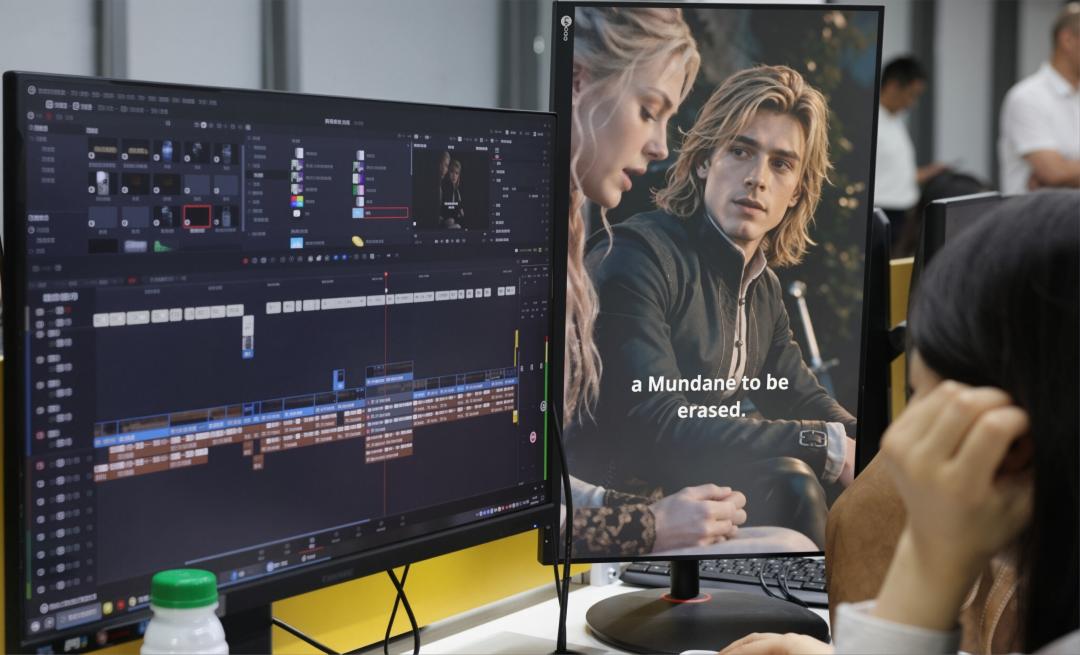
How many users do short dramas have? The answer is at least 100 million.
Nomura Securities' monthly China Internet tracking report shows that as of July 2026, the daily active users (DAU) of Hongguo Short Drama under ByteDance has reached 168 million, with a year-on-year increase of up to 107%. This scale has exceeded the sum of DAU of traditional long video platforms such as iQiyi, Tencent Video and Youku.
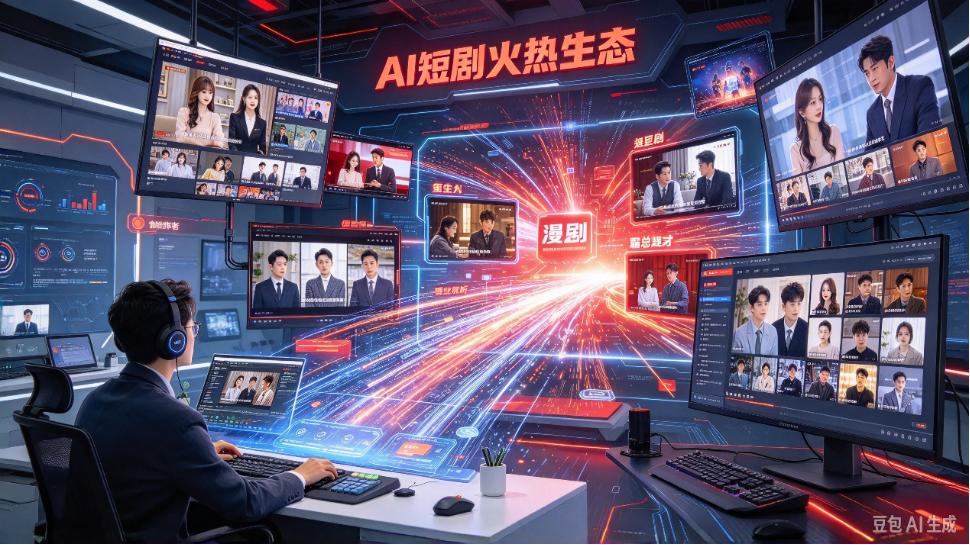
However, this is only the data of the single platform Hongguo. The data of Hongguo refers to daily active users. According to the statistics of the National Radio and Television Administration, the total number of accumulated users of domestic micro short dramas has exceeded 800 million; the market size of the micro short drama sector exceeded 100 billion yuan in 2025, and 430,000 micro short dramas were launched only in the first 8 months of that year, 90% of which were AI-generated short dramas.
In 2023, the short drama industry saw skyrocketing growth, and Hengdian even derived the saying of "Vertical Drama Studio Cluster". At that time, the conversion effect of traffic investment was excellent, the platform had a minimum guarantee policy, and the supervision of themes was relatively loose. Myths often spread in the industry that small teams could earn millions of yuan in revenue with a single hit work, which is the "get-rich-quick era" of short dramas in the public impression.
Along with policy adjustments, AI short dramas have entered a stage of rapid expansion. Relying on AI technology to reduce costs and improve efficiency, the industry launched more than 1,000 new short dramas per day on average in the first half of 2026, with a large number of works of overbearing president and comic drama genres emerging. Behind the rapid growth of output, a core problem has emerged: Is AI short drama entering a golden development period, or is it spawning a "production capacity bubble"? The following article will provide interpretation combined with interviews with a number of industry insiders.
How many steps does it take to make money from AI short dramas?
For ordinary people, the threshold of AI short dramas may not be high. Write a few paragraphs of prompts, plus a few shot scripts, and a formed short video can be generated. This was completely a fantasy for people outside the film and television industry in the past, but now it has really become a reality.
In March this year, an AI short drama named *Huo Qubing* became a hit overseas. It is reported that the core creative team of this short drama with over 500 million views across the network only has 3 people, the total production time is 48 hours, and the production cost is 3,000 yuan. In response to the excessive praise across the network, director Yang Hanhan responded that the so-called 3,000 yuan is only the computing power cost, and 48 hours is not the total production time. However, the success of this short drama also demonstrates the amazing efficiency of AIGC.
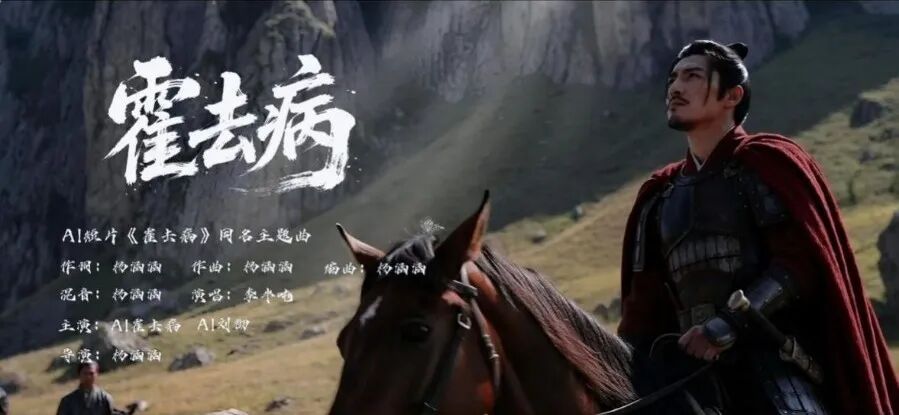
Short Drama *Huo Qubing*
Just when many people thought that AI short dramas could bring huge profits with very little investment, some industry insiders expressed relatively negative views. The author consulted several professionals from short drama companies, who said that the intervention of AI has directly led to a sharp drop in the production cost of short dramas.
Some industry insiders said that when *Huo Qubing* just became popular, the quotation for similar dramas was close to 10,000 to 15,000 yuan per minute. But in just half a year, the quotation has dropped to 1,000-1,500 yuan per minute. The reason for the falling quotation is obvious: in the cost of traditional comic dramas, the script accounts for 10%, technology and computing power account for 30%, and the rest is almost all labor costs such as dubbing, post-production and packaging. Once AI is used on a large scale, 60% of the labor cost may be reduced to less than 20%.
A person in charge of a real-person short drama production company told the author that according to his observation, the biggest problem of current AI short dramas is still the profit model. Today's AI short dramas rely too much on platforms, while real-person short dramas are not in such a situation.
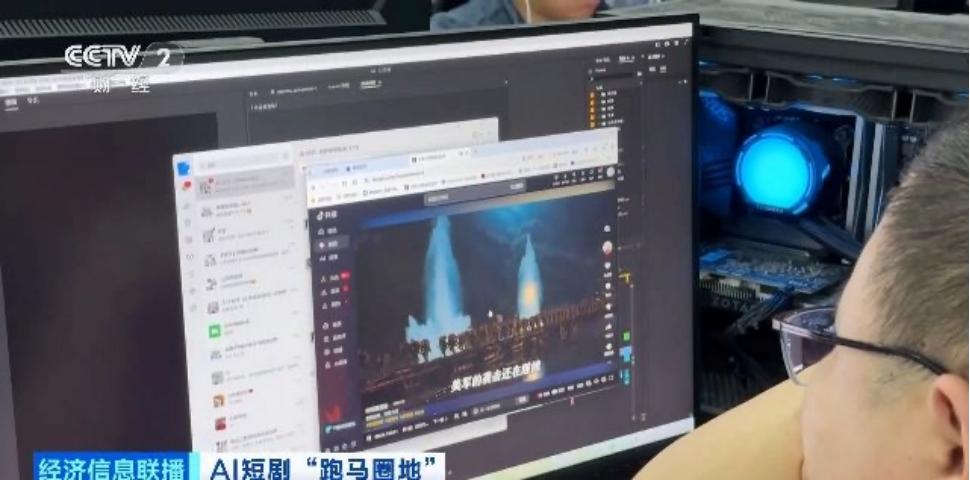
According to the summary of some industry insiders, there are three main monetization methods for AI short dramas: the first is to take orders for OEM production, for example, making a 20-second short e-commerce marketing video for brand owners, with a quotation of several hundred yuan per piece, and the quotation for high-end TVC projects is even higher. This model is more like a part-time side job for individuals.
Source: Internet
The second is the revenue-sharing model based on traffic that most self-media creators adopt. The income depends entirely on the number of plays. Content is published on platforms such as Douyin, Kuaishou and Bilibili. On current short video platforms, the revenue corresponding to 10,000 plays has a large floating range, mostly between 5 and 30 yuan. But sometimes for works with millions of plays, the final revenue is only dozens of yuan. Of course, there are also hit works, and the traffic revenue of a single viral AI short drama across the network can reach six figures, but this is an extremely low probability event.
The third is the model of making paid AI short dramas and comic dramas, which needs to follow the formal short drama operation path. The revenue is very high, but the production cycle and rules are similar to those of film and television dramas, with large upfront investment. It generally adopts the model of free drainage for the first few episodes and paid unlocking for subsequent episodes. The platform will participate in revenue sharing, and some projects will set a minimum guarantee. The income also needs to deduct the costs of traffic investment, computing power and labor, which generally can only be operated by mature teams. Chen Wei, head of AI technology at Yuewen Group, once said: Only AI short dramas with more than 40 million views have a chance to make a profit, and such "hit works" account for less than 1%.
Source: Internet
Platform and policy shift: The tug-of-war between real-person short dramas and AI short dramas
The explosive development of AI short dramas is more or less related to the guidance of platforms and policies.
Looking back in time, two months ago, Hongguo, the leading platform in the short drama industry, launched a high-revenue-sharing policy to implement ByteDance's Seedance model and promote AI commercialization. The revenue-sharing coefficient of AI simulated real-person short dramas far exceeded that of real-person content, forcing a large number of producers to transform into AI short dramas. This led to AI short dramas accounting for more than 95% of the total short dramas launched in the industry in the first quarter of 2026, but audiences prefer real-person dramas, whose views far exceed those of AI dramas, resulting in a serious deviation between platform orientation and user demand. The extreme policy hit the real-person short drama industry hard, many leading manufacturers reduced production or withdrew from the market, and the script approval rate of small and medium-sized teams plummeted. The high revenue-sharing coefficient spawned a large number of low-quality AI short dramas of rebirth, revenge and supernatural themes, triggering regulatory intervention. The platform has removed more than 10,000 low-quality AI short dramas from the shelves.

Source: Internet
Recently, Douyin held a short drama industry conference in Changsha, launching a heavyweight support policy for real-person short dramas, releasing a signal to strongly support real-person content and stabilize industry confidence. The platform has increased the natural traffic revenue-sharing ratio for real-person dramas, added extra rewards for key categories, increased the support fund from 500 million yuan to 1.5 billion yuan, and greatly raised the average minimum guarantee per work. On September 17, the press conference of the National Radio and Television Administration announced that it will thoroughly implement the "Micro Short Drama High-Quality Creation and Communication Plan", guide platforms to set up a special zone for "real-person dramas", and invest real funds to support high-quality works.
Industry insiders believe that this round of support is only a short-term self-rescue measure for platforms to cope with supervision and public opinion, and the underlying revenue-sharing and traffic mechanism has not been fundamentally changed. Platforms always take their own business flywheel and commercial efficiency as the core, rather than the long-term development of the content ecosystem, which has long overdrawn the industry's credibility, so the effect of the new policy support is questionable.
Of course, the short drama market is still very hot. For example, Soy Sauce Culture, an industry benchmark, achieved an annual revenue of about 800 million yuan during the AI dividend period from 2025 to early 2026. The production cost of a single hit AI comic drama is only 50,000 yuan, and the maximum project revenue sharing can reach the level of tens of millions of yuan.
The annual income of the chief director of the project can reach several million yuan.
At the same time, the overseas distribution of AI short dramas is constantly writing the myth of profit. The AI short drama *Destined to Love You* adapted from the online novel IP *The Flowers Are Blooming in South of the City* has achieved over 70 million popularity overseas, with 100% of the content generated by AI. It is reported that the APP recharge of this production company has exceeded 1 billion yuan.

Short Drama Shooting Site Source: Internet
In fact, whether it is short dramas or other Internet trends, once the technology speeds up, it will go through the development cycle of "rise - explosive popularity - homogenization - reshuffling". From another perspective, short dramas are originally fast-food content, and AI makes them produced faster and the competition more intense. The market develops faster, and the competition is naturally fiercer.
From this perspective, it is not surprising to see the absurd scenario where the quotation of AI short dramas falls, but the income of some practitioners is still rising. This market adjustment is aimed at those speculators who only want to use AI to mass produce content and gamble on traffic for arbitrage.
A producer commented on the current short drama market that when content can be mass-produced casually, scarcity returns to where it should be: solid scripts, excellent aesthetics, IP that can be operated for a long time, and of course those platforms that hold the right to distribute traffic.
References
1. The Get-Rich-Quick Myth of AI Short Dramas Faded in Half a Year, Commercial Data Pie
2. Who Makes Money from AI Short Dramas?, Blue Fox Society
3. Short Dramas Have Suffered from Hongguo for a Long Time, China Entrepreneur
This article is from the WeChat Official Account "Chief Business Review" (ID: CHReview), the author is Xing Ying, published with authorization from 36Kr.