Amid the AI horse race among leading tech companies, Tencent's "Lobster" has exited the scene.
Today, Tencent AI "Crayfish" QClaw officially released a shutdown announcement, and the related topic quickly topped the trending search list.

The announcement shows that QClaw will stop service at 00:00 on December 24, 2026. Users can download and back up their data before March 24, 2027, and migrate to WorkBuddy.
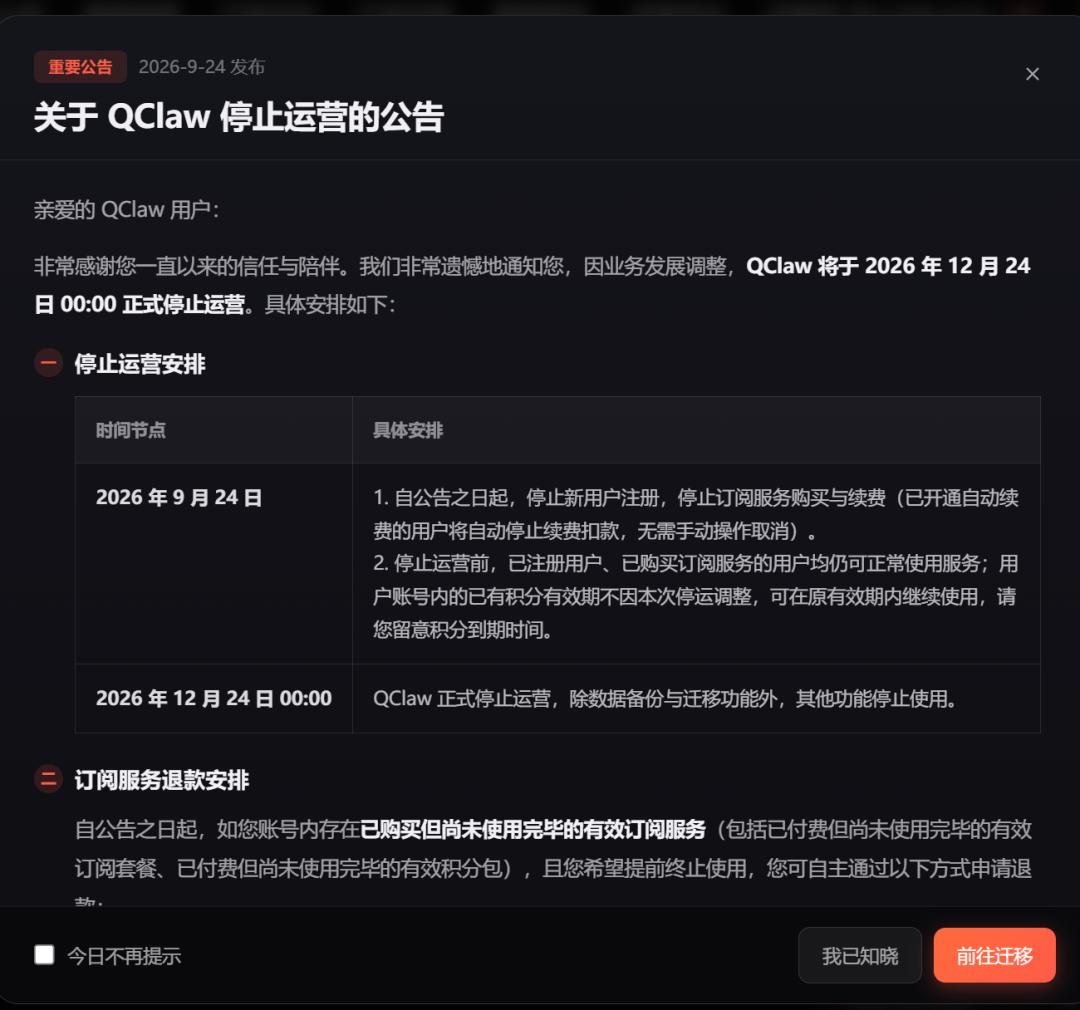
The official stated that the reason for the shutdown is "due to the company's business development adjustment, to further integrate resources to provide users with better Agent services".
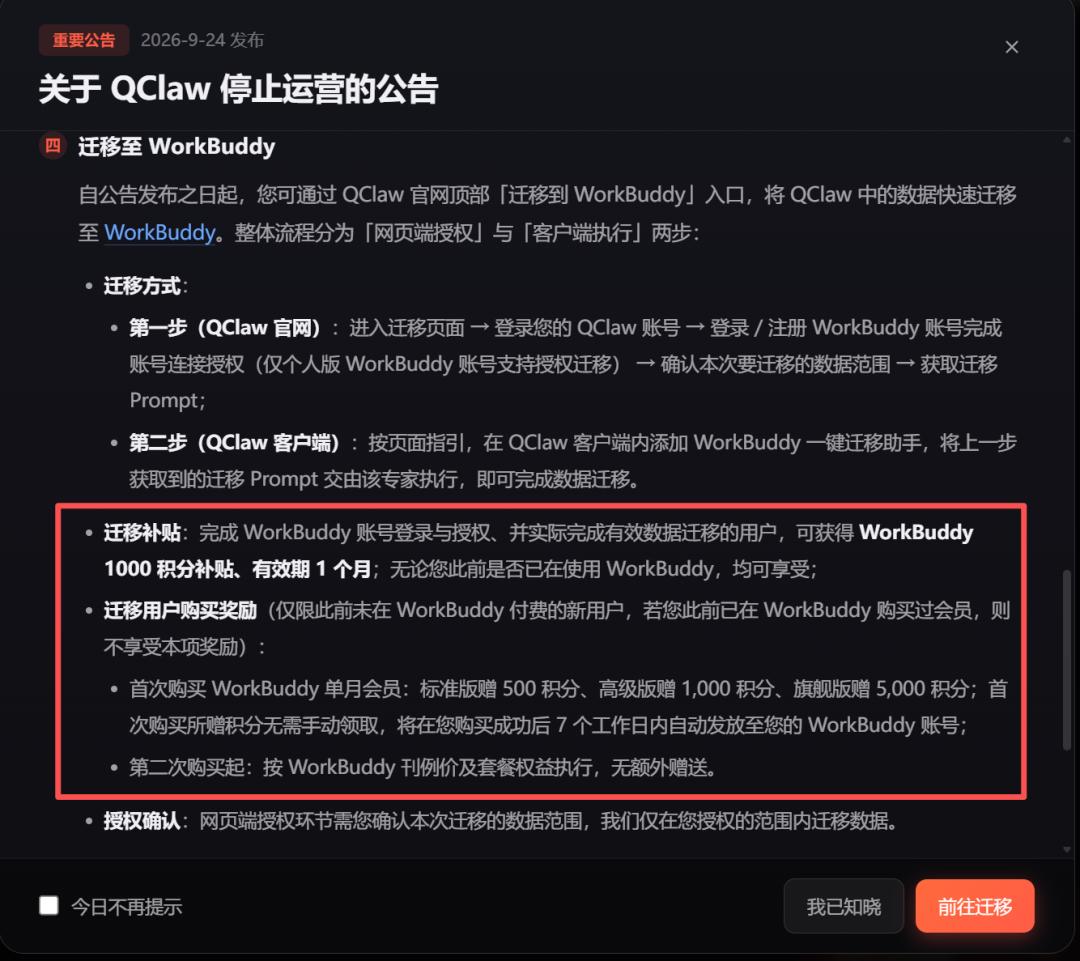
The official has also prepared a WorkBuddy migration tool to facilitate users to quickly migrate data from QClaw to WorkBuddy, and users who complete the migration will receive a 1000-point subsidy.
The Six-Month Lifespan of a "Crayfish"
In January this year, when OpenClaw, developed by an Austrian programmer, attracted global attention, Zhang Shuyu, a newly hired product manager at Tencent, developed a strong interest in this open-source agent software.
She quickly proposed the concept of QClaw, building a one-click installable local AI assistant that can be directly controlled through WeChat based on OpenClaw.
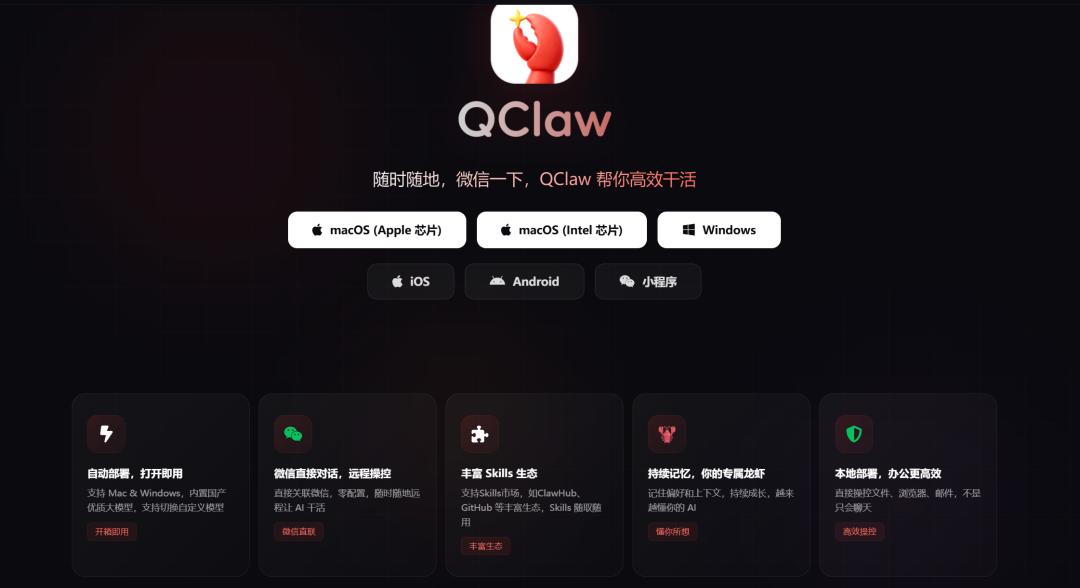
On March 10, Tencent released the full "Crayfish" product matrix in one go, including WorkBuddy, QClaw, Tencent Cloud Lighthouse, agent development platform ADP, cloud desktop and many other products.
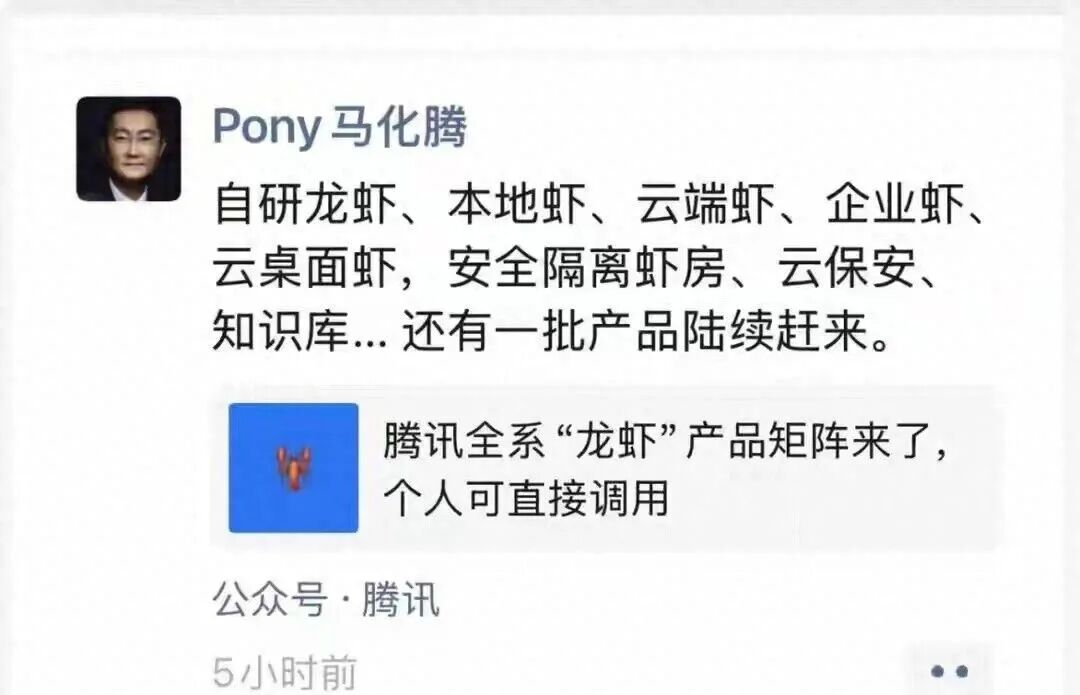
Ma Huateng even listed a number of new products one by one on WeChat Moments, including self-developed Crayfish, locally deployed Crayfish, cloud-based Crayfish, enterprise Crayfish, which Tencent employees regarded as a clear signal of senior management's support for ecological construction.
Among these products, QClaw and WorkBuddy represent two different development paths.
QClaw is positioned as a local AI assistant: users only need to send a command on WeChat on their mobile phones, and the computer at home will automatically execute the task and return the result, just like a personal remote control.
WorkBuddy has greater ambitions, integrating documents, PPTs, codes, browsers and various Skills into one workbench, trying to cover the entire office scenario.
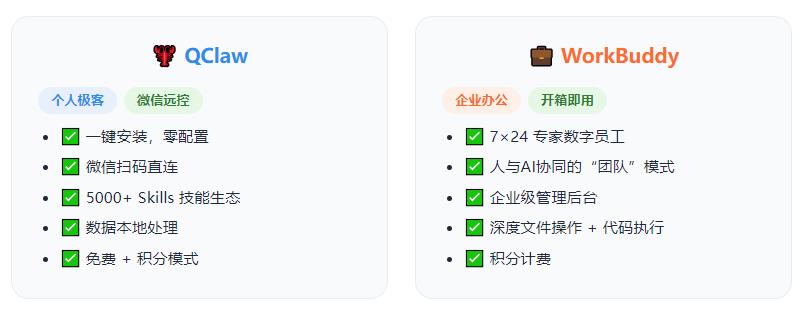
The performance of QClaw after its launch exceeded everyone's expectations. After the full public beta started on March 20, the number of users exceeded millions within a week.
The product developed by a small team of 5 people with zero marketing budget quickly attracted the attention of Tencent's senior management, and the project was immediately promoted to the company's core strategy.
Tencent's Hong Kong stock price once rose by more than 7%, and investors and analysts generally attributed this to the implementation of AI applications such as QClaw and WorkBuddy.
However, the situation soon reversed. On June 29, Zhang Shuyu, the product lead of QClaw, ended her tenure at Tencent, having worked there for only about 10 months.
On July 20, Tencent carried out internal organizational adjustment, and the relevant business of the QClaw Product Center and part of its team were merged into the 6th Cloud Product Department, which is the department where WorkBuddy belongs.
The next news people heard was this shutdown announcement.
The official reason given for the shutdown is "business development adjustment", but the report released by Analysys in July has already given the answer.
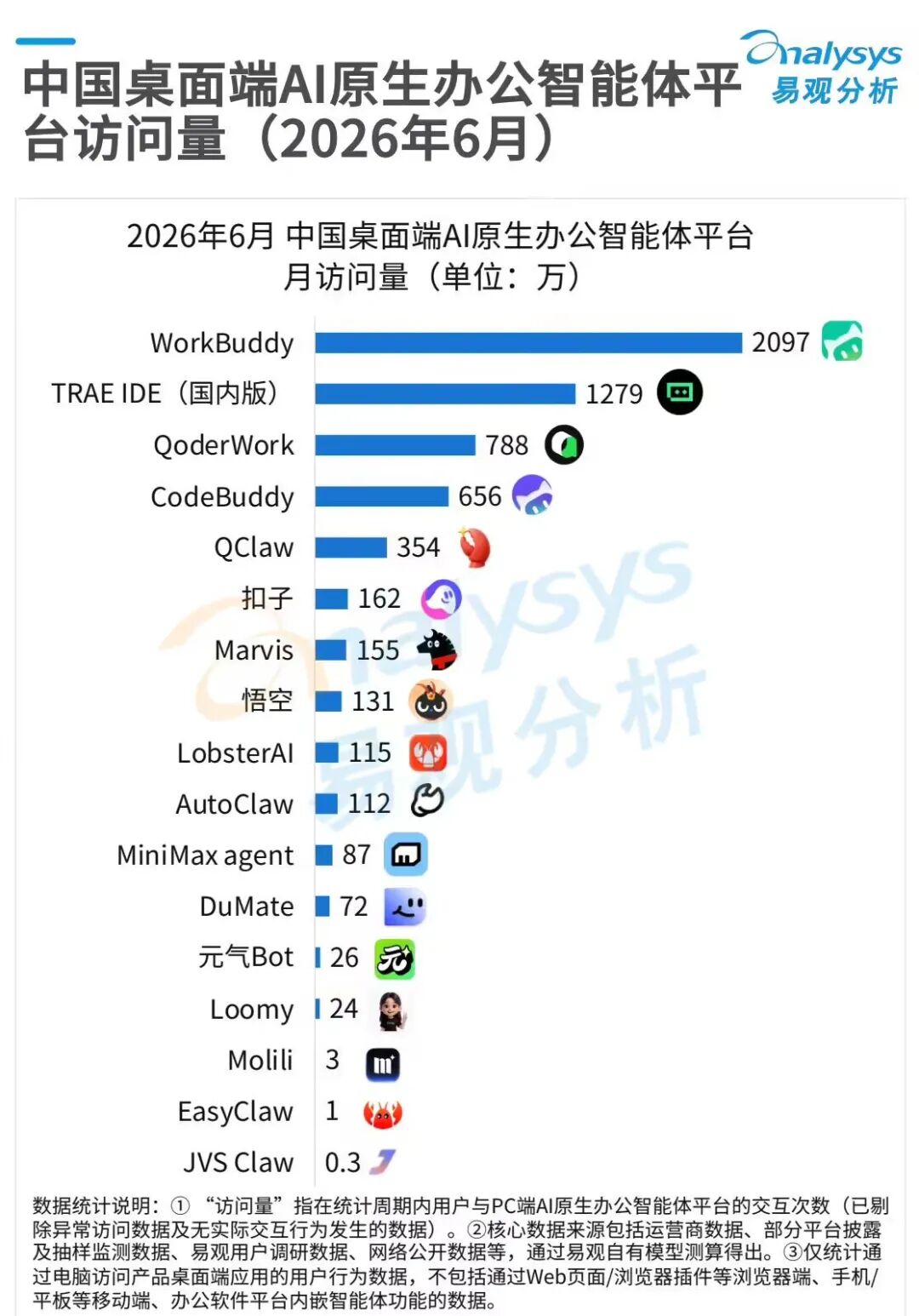
In June 2026, WorkBuddy reached 20.97 million monthly visits in China's PC-side AI-native office agent market, exceeding the sum of the second and third place.
Tencent internally regards WorkBuddy as the third potential phenomenal business after QQ and WeChat.
The necessity of QClaw no longer exists in front of the product data.
The "Marginalization" Anxiety of Doubao
Seeing Tencent's QClaw, the author thought of the widely spread news about Doubao's layoffs recently.
A Doubao employee sighed: The daily active users have exceeded 200 million, but his team is like a "marginal product".
Subsequently, some media reported that the Doubao General Session team planned to reduce about half of its staff.
Liu Xing, the head of public relations of Doubao, responded on the same day that the statements of "layoffs" and "cutting half of the staff" are untrue. It is actually a division of labor adjustment: some functions are split into the transaction and Doubao work teams, the team has less than 50 people, involving 11 people, and 3 people left the company.
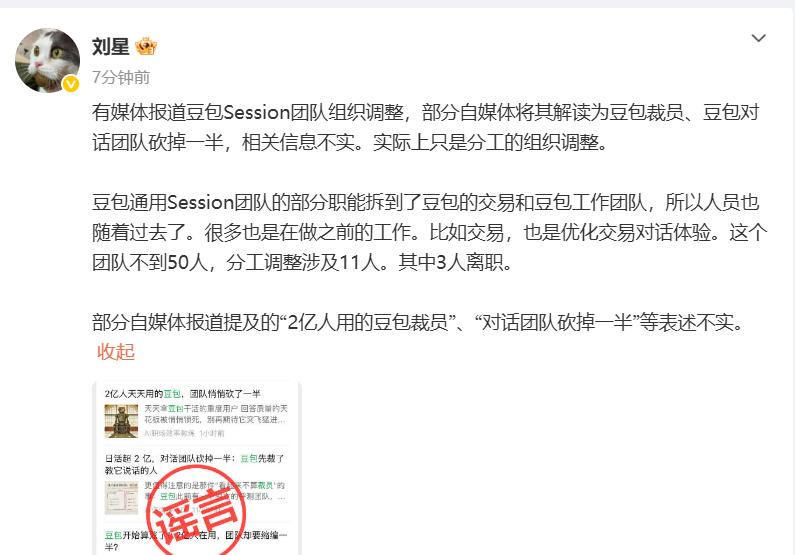
The public opinion is so sensitive because it points to the commercialization bottleneck of conversational AI products.
Doubao has over 200 million DAU, but its daily revenue is less than 1 million yuan, mainly relying on e-commerce commissions, while its daily computing power consumption reaches tens of millions of yuan.
The free multi-modal features have further brought cost pressure, and some people even registered accounts in batches to take advantage of the free quota.
What is more subtle is the organizational change. At the end of July, ByteDance launched its largest AI organizational adjustment in recent years: Feishu was merged into Doubao, Xie Xin reports to Zhao Qi, and GTM is merged with Volcano Engine.
At the end of August, AI programming tools TRAE and Coze were also merged into the Doubao system.
After that, Feishu, which has been operating for ten years and was once an independent BU on a par with Douyin, is now merged into Doubao as a data pool.
In this series of integrations, Doubao's strategic positioning has expanded from a C-end conversational assistant to a core AI productivity platform.
ByteDance's approach is very clear: Conversational capability is no longer the end point, but the entry point.
A ByteDance insider said that the company has already obtained an entry point with 200 million daily active users. Once a new direction is verified in the future, it can still rely on these users and accumulated product capabilities to follow up quickly.
From "Each Team Tries Its Own Path" to "Concentrate Resources"
Once upon a time, the "horse racing" mechanism was Tencent's long-standing tradition.
Back then, the QQ Mail team developed WeChat through internal competition, and since then, this approach of "letting different teams try different paths" has become a classic path for Tencent's product innovation.
Facing the OpenClaw wave in 2026, Tencent launched eight derivative applications intensively in March, among which QClaw and WorkBuddy are the two most prominent ones.
ByteDance is the same: it incubated Feishu Aily, TRAE, and Doubao internally at the same time, with each team developing independently and competing for computing power resources.
But this summer, ByteDance shifted its focus and brought the scattered AI product lines under the Doubao banner.
This shift is not unique to the two giants. In July, Alibaba integrated three of its agents' technologies into one, and launched Tongyi Office in August.
Baidu merged dodo into Baidu Buddy in August, and Wenxin Kuaima was also fully merged in September.
Alibaba's resources are converging to Tongyi Office, ByteDance's to Doubao, Baidu's to Baidu Buddy, and Tencent's to WorkBuddy.
When the direction is unclear, the "horse racing" mechanism is a reasonable way to test mistakes. But when the Agent form is gradually clarified and user habits begin to form, resources must be consolidated.
It can be seen that AI development of major tech giants has entered the stage of "calculating input-output ratio" from "everyone can try". In front of the computing power bill, feelings and curiosity must give way to efficiency.
References: Jimu News, Southern Metropolis Daily, etc.
Editor: Bu Chi Maiyatang
This article is from the WeChat official account "Tech Fox" (ID: kejihutv), authored by Lao Hu, and authorized for release by 36Kr.