Kevin Kelly × Wang He: Humanoid Robots Are Stepping into the Era of Cerebrum-Cerebellum Coordination
"If we look at the model sector, China and the US can be said to have their own strengths and are moving towards each other. China has a more complete industrial ecosystem, with a faster iteration closed loop covering models and data; the US takes the lead in pure large model technology, and can even endow a text model with embodied capabilities."
On September 21, at the "Meet at the Summit - Kevin Kelly in Dialogue with New Forces of Chinese Tech" salon co-hosted by 36Kr and Chen Yuan 139 of China State Construction Land, Wang He, Founder and CTO of Galaxy Universal, expressed the above views.
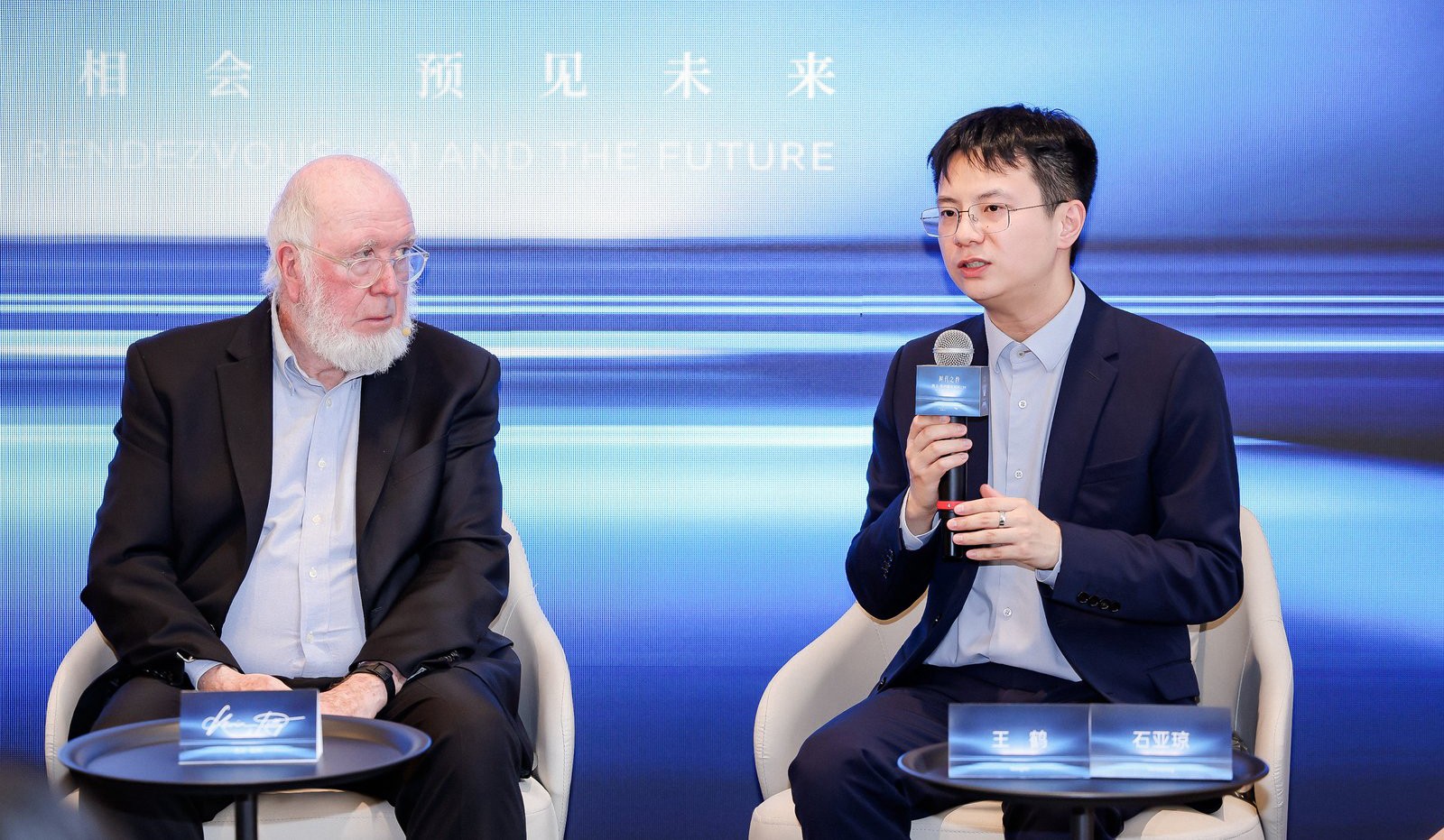
Event Site
When talking about specific technological breakthroughs and concepts, Kevin Kelly also affirmed them: "This is your mission." KK also said he could imagine China becoming a leader in AI-related fields including embodied robots.
The "AstraTennis Moment" of Embodied Intelligence
The first time AI shocked the whole world was in 2016. That year, AlphaGo defeated the top human player in the Go world, making the public truly feel the power of artificial intelligence for the first time. This also brought a huge shock to Wang He, who was a student at Tsinghua University at that time. But he also admitted that he still could not have imagined that the GPT paradigm would emerge only three years later; and by 2022, ChatGPT would be able to extend the intelligence specialized in Go to general intelligence that masters all languages.
At the opening ceremony of the World Humanoid Robot Games on August 22, Galaxy Universal launched the world's first end-to-end humanoid robot model for fully autonomous tennis confrontation, AstraTennis. Through an exciting human-machine tennis match, it proved that embodied intelligence can complete perception, game playing and full-body movement execution in the physical real space full of uncertainties.
In this regard, American investor Andrew Kang once commented: "AlphaGo for every sport is coming."
Wang He admitted that when the team proposed to use humanoid robots to play tennis fully autonomously in June 2025, he was also skeptical - tennis has extremely high requirements for hitting accuracy, landing point, movement and balance. Until the eve of the Spring Festival, after the team's training in the simulation world was mature, he decided to rent a real venue for a week to verify. "In the end, the research progress refreshed my cognition again: it can play tennis."
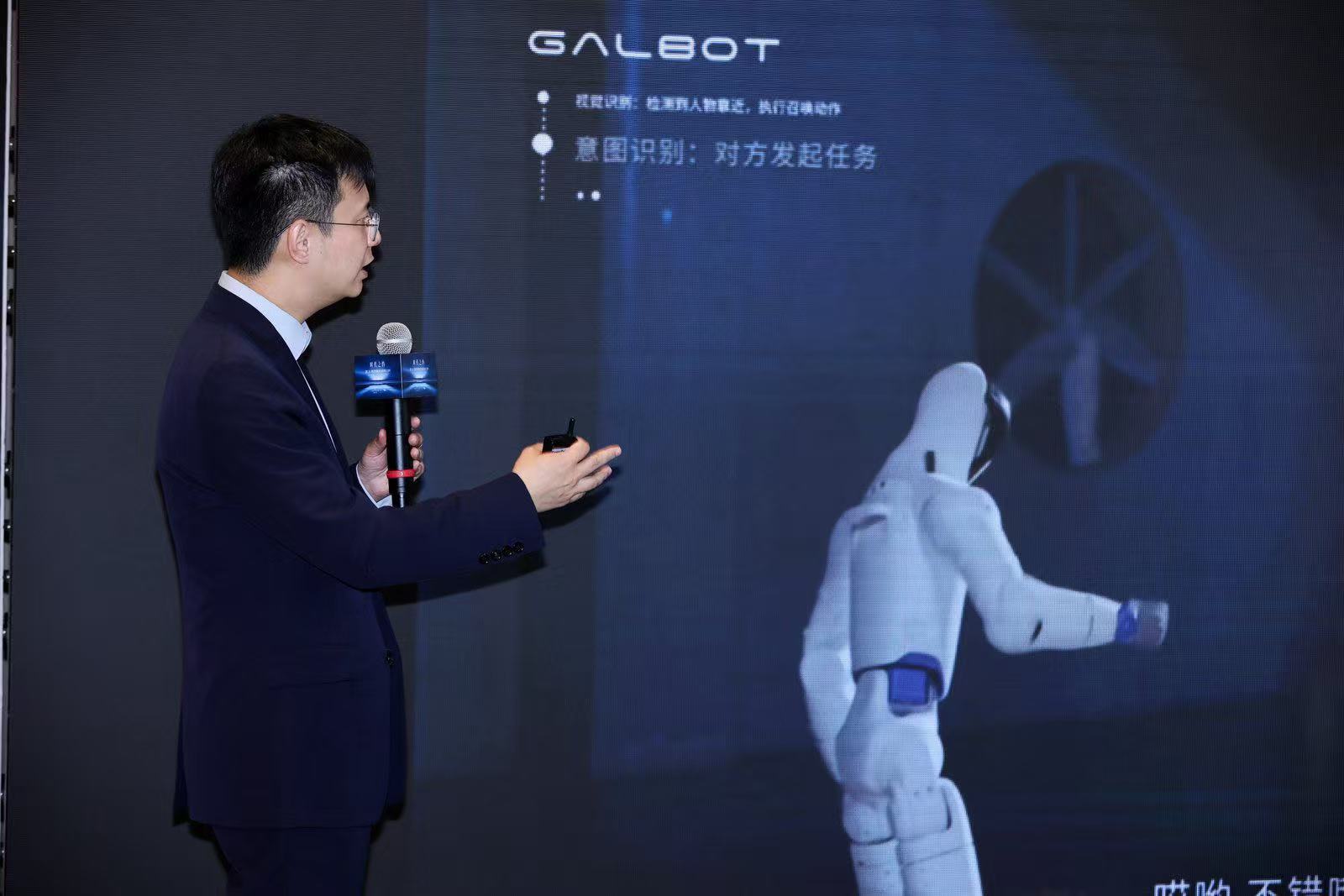
Wang He
He also mentioned that in addition to full-body movement, Galaxy Universal has also made breakthroughs in the dexterous hand operation of humanoid robots, which is also the world's first. "Behind the continuous challenges, it is the optimism mentioned by Mr. KK that supports us."
Talking about the development of humanoid robots and embodied intelligence, Kevin Kelly also said, "Manufacturing humanoid robots will be the most complex transformation we have ever done. It is far more complex than aviation and factories. Coupled with the complexity of chips, the complexity and sensitivity of hands, as well as the power and computing power scheduling required to run it, this is the most complex thing we have ever built. That's why it is the most difficult machine to perfect."
Around the world, the "breakthrough" of embodied intelligence is still ongoing.
This September, OpenAI released its flagship model GPT-6 Astra, which is officially called "the most intelligent and most aligned model to date".
The Galaxy Universal team found through evaluation that GPT-6 Astra shows strong reasoning ability in embodied tasks. In the RoboDojo experiment they conducted, GPT-6 Astra+π0.5 scored an average of 62.6 points across ten tasks, nearly twice as high as the second place. In another RoboLab experiment, GPT-6 Astra Direct achieved a 98% success rate in 50 experiments; Astra+π0.5 had a 92% success rate, while π0.5, DreamZero and others in the same group of statistics were all less than 40%.
"Astra is the first model in the GPT series that demonstrates embodied capabilities. Its embodied capability is very strong and very 'smart' - it can be executed directly with language commands without special training. For example, randomly ask it to build a tower with wooden blocks and planks. It can be seen that GPT-6 Astra will constantly think about what to do at each step, and decide whether to call the embodied model π0.5 or complete it by itself. It can complete this completely untrained task for the first time. In cases like this, the success rate of all tasks can exceed 60%, while the best previous model was only about 10%, which is exactly the significance of this breakthrough." Wang He commented.
What makes GPT-6 Astra truly outstanding is not only its ability to "understand", but also its ability to find "what is wrong". For example, in the experiment, after it finds that the grasping posture is not ideal, it will change the approaching method; during the packing process, it can find that there are missing objects behind the box... This shows that GPT-6 Astra does not mechanically execute a pre-generated trajectory, but forms a closed loop of "observe - decide - execute - re-observe".
Enable Robots to Realize the Coordination of Cerebrum and Cerebellum
"Digital intelligence is a kind of knowledge smart, while robot intelligence is a kind of intuitive intelligence. The vast majority of human reasoning and thinking belongs to the slow system in our brain. Human operation belongs to the fast system in our brain, which is System One. Such a fast system requires a lot of practice to turn such ability into an innate, inadvertent and subconscious reaction. Large models use what we call Chain of Thought, which is a very different form of intelligence.
For the next direction, Wang He said, "On this path, we also hope to build step by step a system that can connect the cerebrum, cerebellum and pons just like humans, which has both high-level judgment and low-level humanoid and bionic brain systems, so that our humanoid robots can truly have intelligence."
In terms of technical routes, Wang He introduced two paths for large embodied models: Google's VLA (Vision Language Action) emphasizes that each data must have robot action output; OpenAI's World Model is more general, but the data does not necessarily involve robots. Galaxy Universal took the lead in integrating the two and proposed the World Action Model (WAM) - which can predict both the future and actions. This technical route has now been widely recognized by the academic community.
With the support of the general brain WAM, Galaxy Universal's robot also completed a 30-minute full household housework challenge at the Humanoid Robot Games, covering the whole process of item placement, garbage cleaning, laundry drying and folding. It can also respond to unexpected instructions such as picking up express delivery midway, and finally won the gold medal of the event with an almost full score.
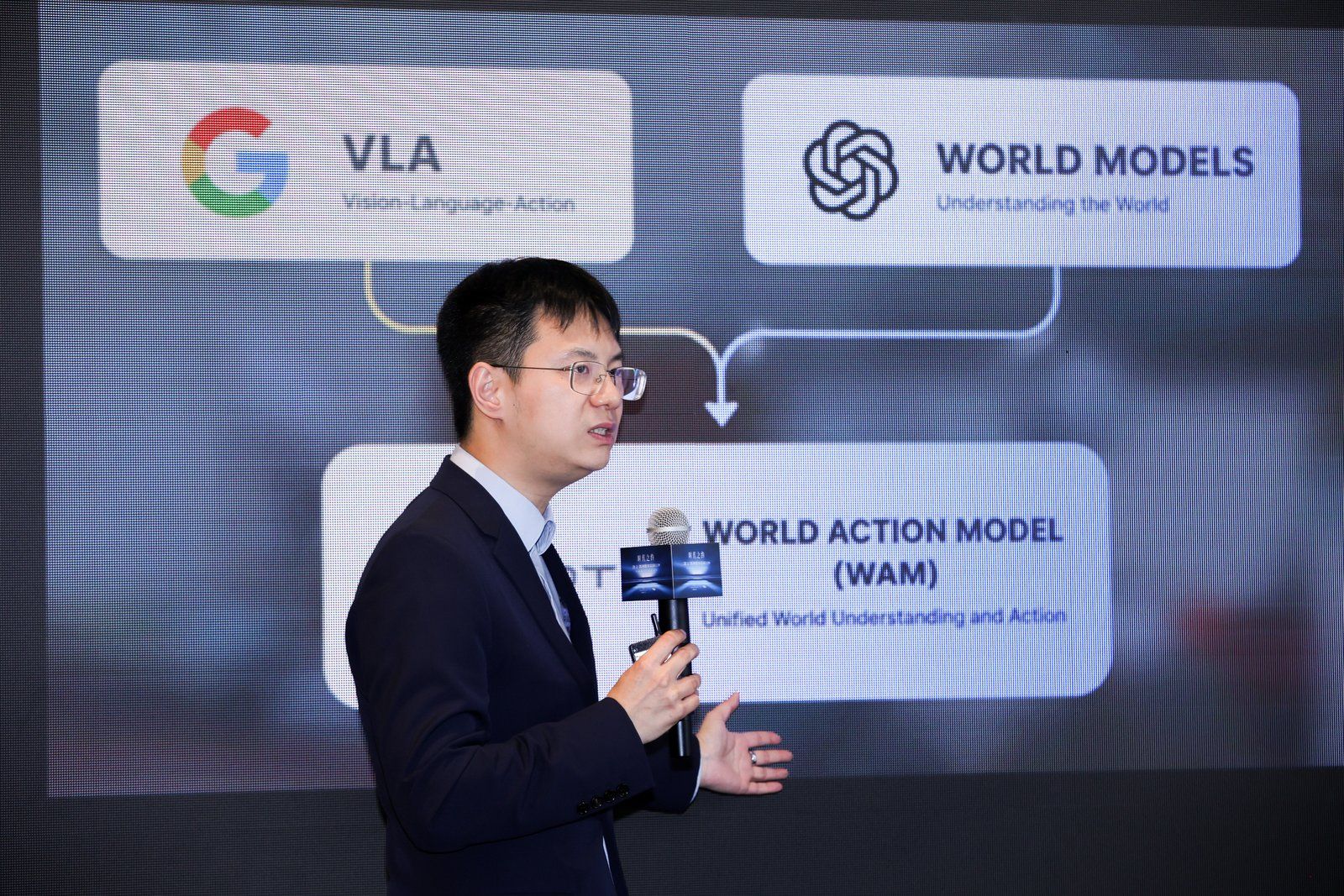
Wang He
In addition to the brain model, Galaxy Universal's cerebellum model is also noteworthy. Wang He said: "In the past, when robots danced, we needed to import human trajectories into the robot in advance, adjust them and then deploy. Now our general cerebellum model can make the robot dance the full dance immediately after a human dances it once. This post-training intelligence even surpasses human's mastery of limb movements, and it is truly a general cerebellum model trained with 2 billion frames of human movement data."
For these breakthroughs, Kevin Kelly said, "The next major breakthrough will be to really make robots work. What we have been doing will have a huge impact. So this is where the excitement lies."
Facing the future, Wang He said: "We will make our robot body, cerebrum and cerebellum, data platform, as well as a complete set of training toolchains and deployment tools, into four-in-one infrastructure that is open to the whole industry. Everyone can use a very simple data collection process and post-training process to teach robots. At that time, humanoid robots, as a form of productivity and service capacity, will enter thousands of industries."
The Essence and Safety Boundary of Robots: Partners, Not Replacements
With the development of intelligent agents, more and more robots will enter human life scenarios such as society and families in the future physical world. How should humans grasp the safety boundary between humans and robots? Will the much-discussed "AI killer" become a reality?
For the relationship between the two, Kevin Kelly believes, "When we give AI a physical body - that is, a robot, we need to understand: they are different from us, they are not humans. The fact that they are different from humans is not a defect, but exactly their greatest advantage. In my opinion, this kind of intelligent carrier with physical entities is a low-cost and valuable resource. Because there are many intellectual problems that cannot be solved by humans alone, nor by AI alone, but can be solved by the combination of AI and humans. Humans and robots are such a partnership."
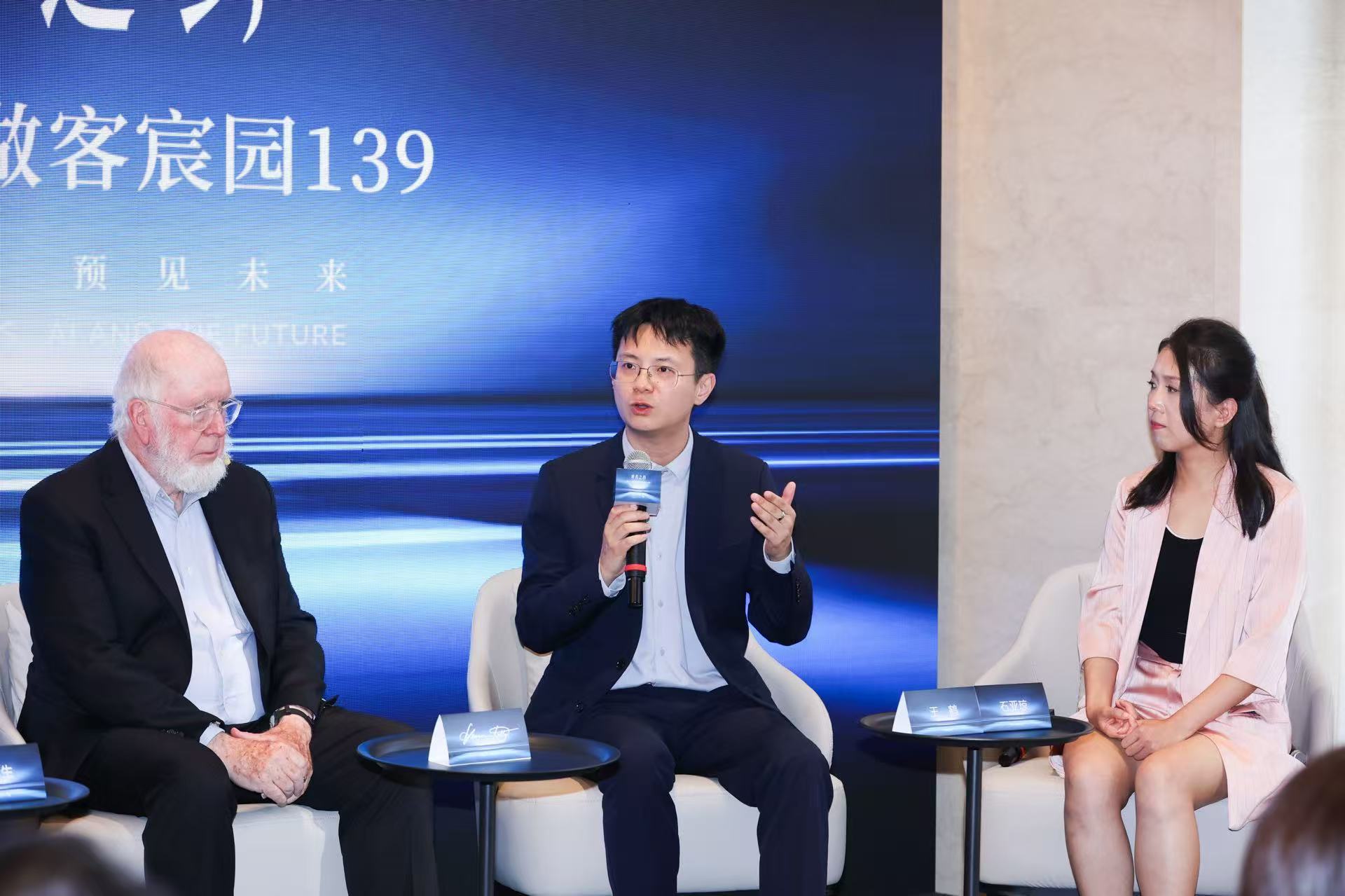
Event Site
Wang He agreed with Kevin Kelly's view: The essence of robots is AI, not human beings. So I am very optimistic about the future of robots: they will become human partners, not human substitutes or rivals.
Then what about the safety issues when robots enter human daily life in the future? Wang He took the already deployed pharmacy robots as an example: In deterministic closed scenarios such as factories and pharmacies, the rights and responsibilities are relatively clear. Galaxy Universal has deployed nearly 100 robot pharmacy points across China, responsible for night drug dispensing. To avoid the risk of wrong drug delivery, the team does not fully rely on the general reasoning of large models, but adds an additional deterministic verification procedure: drugs must pass three verifications of text, image and barcode at the same time before they are allowed to be packaged and delivered. In the past year and a half, nearly a million boxes of drugs have been processed in total, with zero wrong delivery. In such scenarios, if losses are caused by robot failures, the responsible subject points to the manufacturer.
Kevin Kelly believes that in the short term, AI companies must assume corresponding responsibilities, and supporting insurance mechanisms can also be established. Conversely, the AI companies that can survive must be those that can properly handle responsibility issues.
At the same time, Wang He also pointed out that in the completely open and complex family scenarios, which are full of unpredictable interference factors, the risk complexity increases exponentially. "For example, when no one is at home, the robot knocks over water, and the water drops enter the power strip, causing a short circuit and fire, and it cannot clean up by itself. It is more dangerous than cats and dogs, because it can plug in plugs and move all things in your house. If this happens in the future, I fully agree with what Mr. KK said, and I believe that by then we may use a set of systems to guarantee safety."