Meta no longer talks about the metaverse, and its key term has been changed to "personal superintelligence"
At the 2026 Meta Connect conference, the metaverse was barely mentioned, and personal superintelligence became the absolute protagonist.
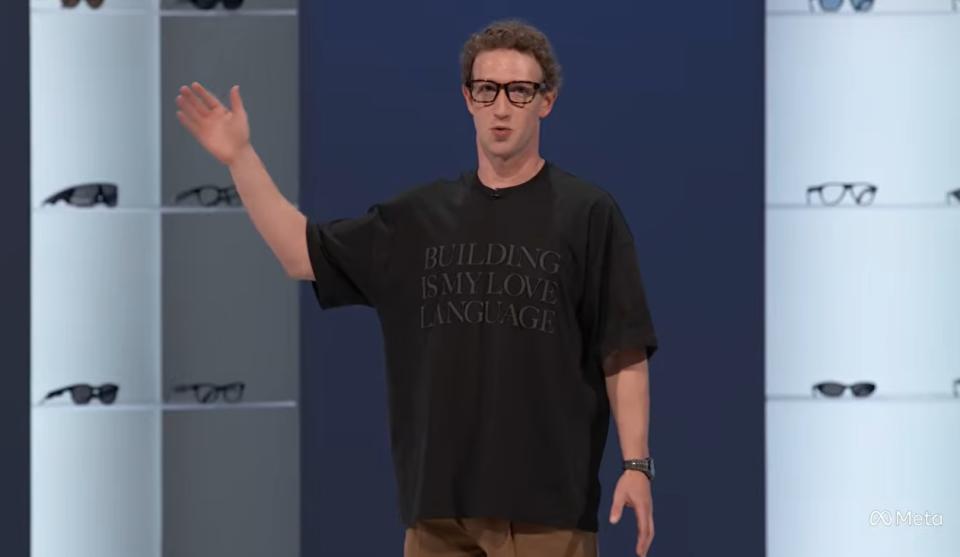
On September 23 local time in the United States, Meta held its annual Connect developer conference in Menlo Park, California. "We believe the highest mission of superintelligence is to create and invent," CEO Mark Zuckerberg said in his opening remarks. Zuckerberg also called Muse the "core" of Meta's future AI vision, and Reality Labs is shifting its focus to building end devices for personal superintelligence.
Another highlight is smart glasses. This time Meta has drawn a clearer division between different product lines: the $349 Ray-Ban Meta Audio has no camera, focuses on music playback, calls and voice interaction, with a maximum battery life of 12 hours, aiming to make users willing to wear it all day long. The third-generation Ray-Ban Meta starting at $449 retains the camera, with upgraded shooting performance, noise reduction and battery life. The existing Ray-Ban Display glasses with screens have added functions such as navigation and expanded sales markets.
Meta is also expanding its frame options and co-branded products, and expects to offer more than 100 styles of glasses by the end of the year.
The more high-end Meta VR Glasses is another product line: it puts the computing unit and battery into an external device, reducing the weight of the glasses itself to about 100 grams, targeting scenarios such as movie watching, immersive events and multi-screen office work. It is priced at $1299.99 and is scheduled to be launched in the spring of 2027.
Muse will be connected to these AI glasses in the future, allowing users to assign tasks through voice commands and what they see in front of them.
This is the story that all consumer hardware terminal companies of this era want to tell: they have their own powerful intelligent agent that can be accessed on mobile phones, computers, and extended to all kinds of wearable devices.
For Meta, glasses are the key device that allows Muse to continuously perceive the user's context and provide help when needed, and also gives it the opportunity to build its own computing entry point. The challenge lies in whether users are willing to wear them for a long time, trust it to process what they see and their private information, and whether Muse can provide sufficiently useful services to make the glasses a device that users use every day.
01 Personal Superintelligence Muse
Just a few weeks after Muse was released, Zuckerberg has given it a very high positioning: In the next few years, Muse will grow into a personal superintelligence, helping billions of people around the world achieve their goals and improve their lives.
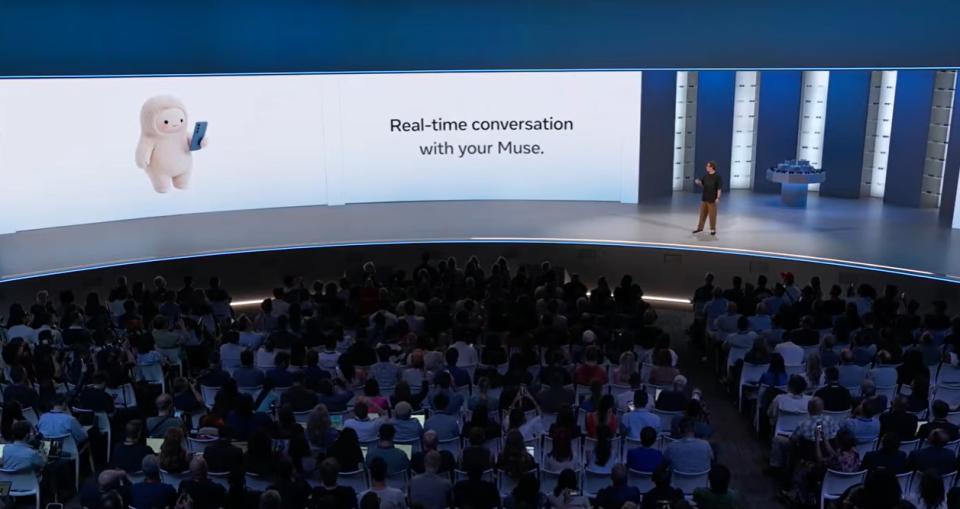
At present, Muse has served millions of people, has just landed in the Canadian market, and will enter more countries in the future.
In terms of technical architecture, each Muse has its own private and secure computing environment, which Meta calls the Muse Secure Virtual Machine. The underlying model is Muse Spark, which is specially trained for personal agents.
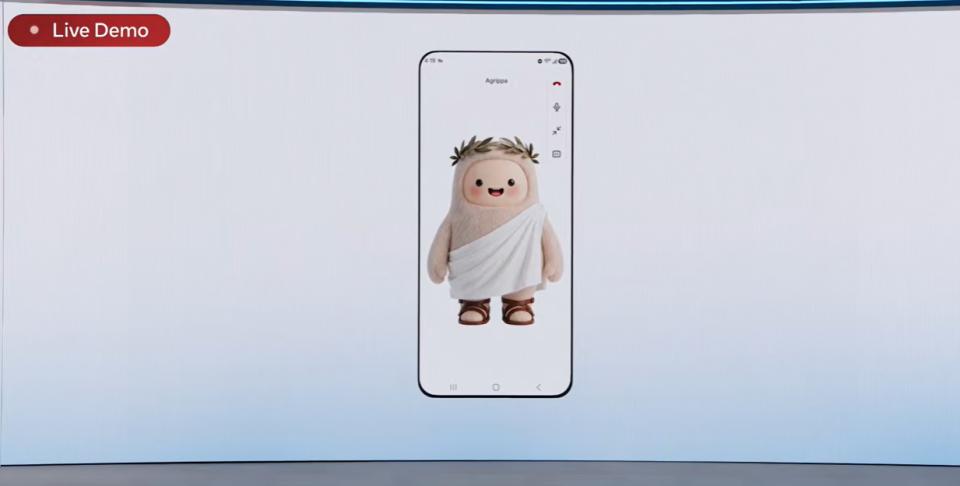
Compared with traditional chatbots, Muse emphasizes continuous task execution. Users can set goals, Muse actively provides information and generates customized information streams, while supporting role and personality customization, with the default role named Jolly.
The business model is also different. Meta's plan is not to charge users a large amount of token fees directly, but to provide free access within a certain usage quota, let Muse generate value by helping users save money, make money and complete transactions, and then charge small fees from related transactions.
This is a familiar internet advertising strategy, but whether this model can work still depends on whether Muse can truly intervene in users' daily decisions and transactions, and how large the number of active users can be. The cases announced by Meta so far have covered scenarios such as shopping, travel, bills and insurance. For example, Muse once helped a user find the same style of broken porcelain, and another user negotiated with a cable TV company through Muse to reduce the monthly bill by $85.
Zuckerberg tried very hard to convince the audience in his speech that Meta has experienced the stage of rapid product growth, and Muse is currently in this stage.
At this Connect conference, Muse announced several new key capabilities.
The first is the computer usage capability on Mac. After user authorization, Muse can operate applications on Mac to complete tasks such as running small businesses and handling work. After the user leaves the computer, it can continue to execute the previously arranged tasks. The Muse Mac app was launched last week, and new dictation capabilities have also been added.
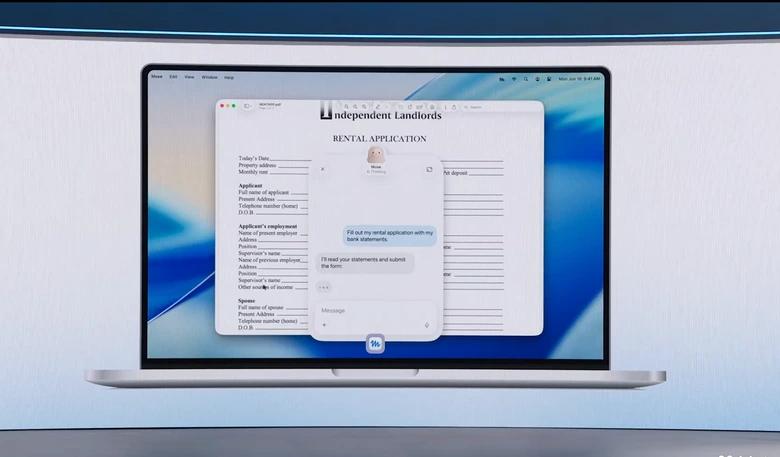
The email function is also under development. Users can add Muse to an email thread, or forward emails to Muse for it to handle on their behalf.
Connectors are an important foundation for Muse to expand its capabilities. Muse has previously accessed services such as Spotify, OpenTable, Plaid and Ticketmaster. This time it has added retailers including Walmart, Best Buy, Gap, Sephora and Wayfair, travel services such as Expedia, and grocery delivery platforms such as Instacart.
In work scenarios, newly added connectors include Box, GitHub, Granola and Notion. Meta has also cooperated with Stripe and Shopify: Muse can access the Shopify product catalog, complete online shopping through Link and Shop Pay, and PayPal payment support is also being gradually added.
More importantly, Meta has started to open up the Muse connector platform. Alexandr Wang, Chief Artificial Intelligence Officer of Meta, described it in his speech as an opportunity emerging during the formation of a new platform. It was also announced that Meta Superintelligence Labs (MSL) is building models for personal agents from scratch, focusing on optimizing capabilities such as preference memory, personalized action, long-term continuity, tool selection and cross-application operation.
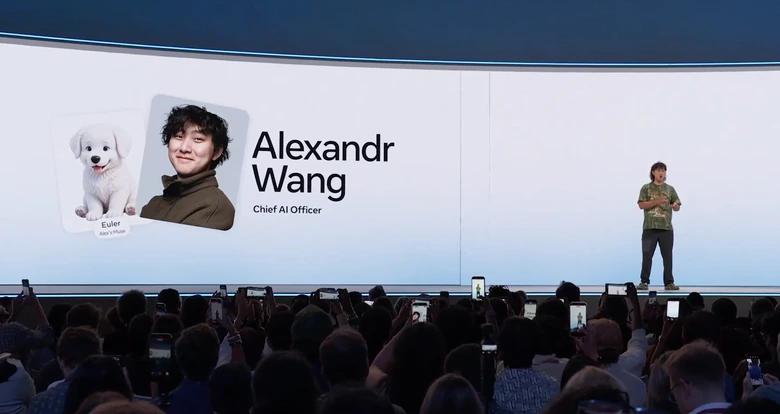
Meta also revealed that it will soon release the most powerful model available at present, so as to promote the capability improvement of the entire model family.
02 Expansive Smart Glasses Product Line
At this Connect, Meta has almost reorganized its entire smart glasses product line.
Zuckerberg believes that about 2 billion people around the world wear glasses, and a considerable number of them will upgrade to AI glasses in the future. Compared with mobile phones, glasses can continuously see what the user sees and hear what the user hears, becoming the entry point for Muse to connect to the real world.
Meta first launched a new category of audio glasses. Since there is no camera, this type of product can adopt a more traditional glasses design, further reduce weight and thickness, and provide all-day battery life. Under this category, Meta has launched the thinnest Ray-Ban Meta so far, and added the classic Ray-Ban Clubmaster style.
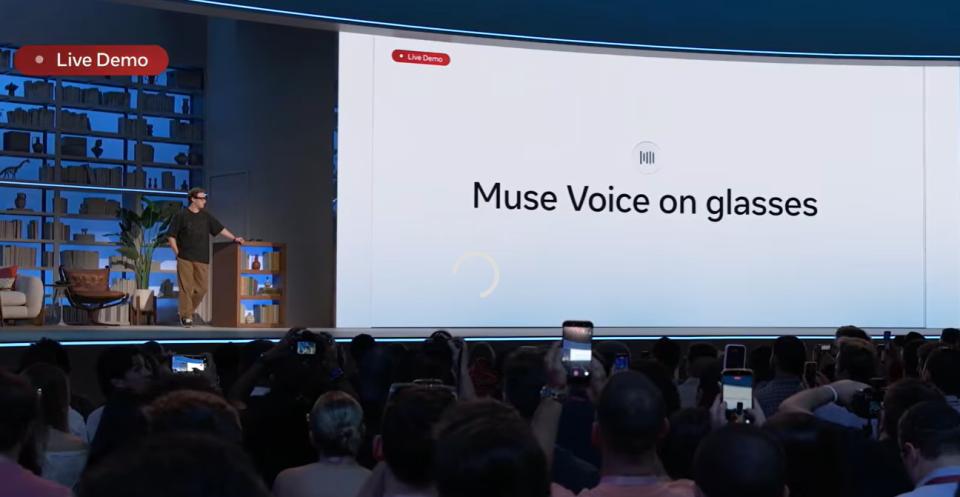
The third-generation Ray-Ban Meta further narrows the frame and temples, adds adjustable temple ends, with synchronously upgraded battery and shooting capabilities, the number of microphones has increased to six, and it supports Dolby Atmos spatial audio capture.
Meta's branded glasses have expanded from dozens of combinations in June this year to 51 styles, with a starting price of $249, and new designs such as Adventurer, Capri and Nova have been added.
Co-branded products are also increasing. Meta previously launched a Kylie co-branded model, and this time it announced a cooperation model with Lisa. The product adds Lisa's iconic star element at the end of the temples, each pair of glasses is equipped with a charm inspired by her pet and a custom glasses case, and the Lisa World design and virtual try-on function will also be provided in the app.

The Ray-Ban Display glasses have also begun to expand sales. This is the first batch of glasses from Meta equipped with full-color high-resolution displays, and also the first product paired with the Meta Neural Wristband. It has been out of stock for a long time since its release a year ago. This time it will resume supply, be sold through Meta.com, and enter the international market at the same time.
By the end of this year, Meta expects to offer more than 100 glasses styles, covering multiple product lines such as audio glasses, display glasses, Ray-Ban and Oakley.
Hearing enhancement is also an important feature of this update. Meta glasses will provide hearing enhancement capabilities, and are planned to be used as an FDA-approved over-the-counter hearing aid to compensate for mild to moderate hearing loss. Users can complete a hearing assessment through the app and then adjust the amplification effect. Meta says that about one in six adults in the United States has some degree of hearing loss, but factors such as the price and size of traditional hearing aids have affected the willingness of some users to wear them.
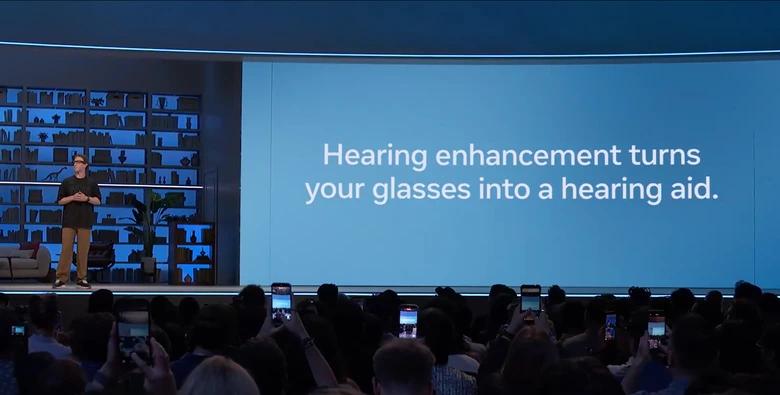
The AI experience will also be upgraded. In the next few weeks, users can directly call Muse, which will retain the full context of the conversation, continue to execute tasks in the background, and support custom sounds, speech speed and accents.
03 100 Grams, $1299, Meta VR Glasses to Ship in Spring
The most important hardware at this Connect is the Meta VR Glasses.
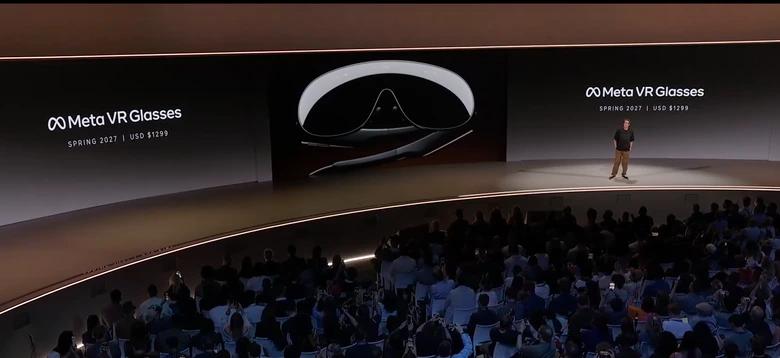
Zuckerberg said that Reality Labs is currently paying more attention to Muse and AI glasses, and new products of traditional VR devices will only be launched when there are obvious breakthroughs. This device is exactly one of those breakthroughs. It adopts the form of glasses instead of a traditional head-mounted display, with a facial weight of about 100 grams, less than one-fifth of that of the Quest 3. The device adopts a split architecture and is equipped with Meta's most advanced display system at present.
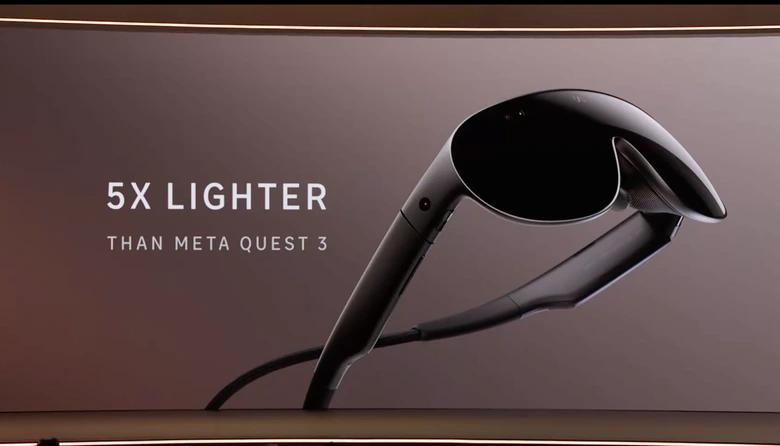
AI is another core capability of this device. For the first time, Meta has directly integrated the AI agent into the operating system. Users can complete operations through voice, eye and gesture, and can also turn a flat desktop into a virtual keyboard and trackpad.
The product mainly covers three scenarios: private cinema, multi-display computer and game console.
In terms of audio and video, it is the first VR device to obtain IMAX Enhanced certification, supporting Dolby Atmos and Dolby Vision. Platforms such as Disney, Peacock, Paramount and HBO Max will provide new 3D or VR content, while YouTube, Prime Video and Crunchyroll will provide 2D streaming media.
In terms of sports, Meta plans to provide more than 100 immersive event live broadcasts every year, and cooperate with ESPN to provide a 180-degree front-row view of some games starting from college football this fall.
In terms of games, 75 pure gesture games will be supported at launch, compatible with the Quest game library, and hundreds of Xbox cloud games can also be accessed.
In office scenarios, the AI assistant can directly handle tasks such as drawing updates, hardware version merging, material rendering and calendar management. The device also supports connecting to a DisplayPort external display source via USB-C.
Meta also demonstrated features such as mixed reality agents and holographic calls. Holographic calls will also be extended to Ray-Ban Display glasses in the future.
Meta VR Glasses is priced at $1299 and is scheduled to ship next spring.
04 Meta's One More Thing
At the end of the conference, Meta announced a small AI hardware called Muse Charm, which can be put in a pocket or hung on a keychain. For users who do not wear glasses, Muse Charm provides an independent entry point to call Muse, and can also help Muse perceive the environment around the user.

At present, Muse Charm is still in the prototype stage. Meta is still determining the surface material and internal component layout, and plans to ship it before the holiday in December this year. Foreign media broke the news that this project was originally planned to be launched in 2027, and Zuckerberg pushed the team to advance the goal to this year's holiday season. For Meta, Charm is a very playful