AlphaFold cannot save AI drug discovery
By Lina Yin
2026 is widely recognized by the industry as the "first year of Physical AI". Jensen Huang declared at CES that "the ChatGPT moment of Physical AI has arrived", while Fei-Fei Li divided world models into three categories: renderer, simulator and planner, judging that the three types of models will eventually converge into a real world model.
Behind the hype is the rapid influx of capital. According to Crunchbase data, the financing amount of Physical AI startups in the first half of 2026 reached 47.4 billion US dollars, major technology giants are entering the track at full speed, and financial capital is placing intensive bets. But the real question worth exploring is where the first wave of value of Physical AI will be realized.
The answer may not lie in autonomous driving, nor in embodied intelligence. Kai-Fu Lee's judgment is: "In the past 20 years, AI has mainly focused on understanding and generating information about the human world; in the next 20 years, the most important task of AI will be to step into the natural world, understand scientific laws, and participate in scientific discoveries."
AI4S (AI for Science) is listed by Jensen Huang as one of the three key AI directions alongside large language models and embodied intelligence, with a long-term market size expected to reach hundreds of billions of US dollars. The calculation of Guosheng Securities is more specific: when the AI R&D penetration rate reaches 2.5%, the size of the AI4S industry is about 14.9 billion US dollars, and if the penetration rate rises to 25%, it will grow into a super blue ocean with an annual output value exceeding 140 billion US dollars.
The first stop of Physical AI in the scientific world is starting at the molecular scale. Among all AI4S explorations, AI-driven Drug Design (AIDD) is the earliest to enter commercial verification, the first to hit the ceiling, and it is also extremely likely to be the first to usher in the transformation brought by Physical AI.
Having been deeply engaged in the AI pharmaceutical field for nearly ten years, Jack ZHOU Jielong, founder and CEO of StoneWise, put forward a more specific judgment at WAIC2026: AI pharmaceutical is moving from the "agent stage" to the "Physical AI stage", and the micro world model is the underlying model leading to Physical AI. He believes that "agents can orchestrate tools and execute processes, but they cannot form the underlying cognition and deduction ability for the microscopic systems of life. Micro world models may achieve breakthroughs earlier than physical world models."
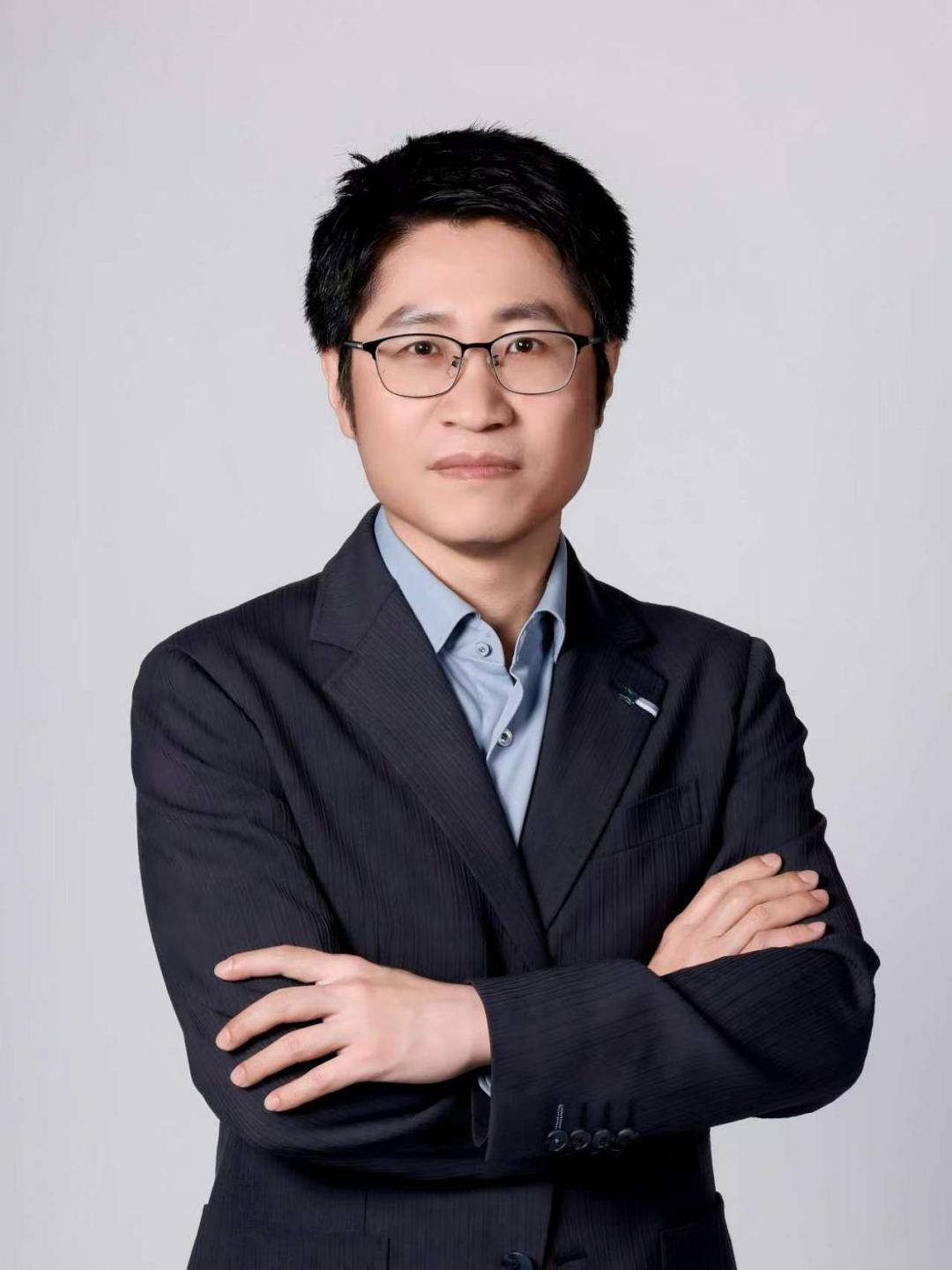
Jack ZHOU Jielong, founder and CEO of StoneWise
Traditional AIDD, where is the bottleneck?
In the pharmaceutical industry, the well-known "three 10s" law for innovative drug R&D states that developing a new drug takes 10 years, costs 1 billion US dollars, and has a success rate of less than 10%. It is inherently high-risk and high-investment, and naturally requires the collaboration of computing, models and experiments, which happens to be one of the most typical and practical implementation scenarios of AI4S.
In the past five years, the efficiency improvement of AI in the early stage of drug discovery is obvious to all. AI can mine the associated information in literature and databases, quickly lock potential targets, generate molecular structures with drug-forming potential, and greatly reduce the number of compounds that need to be synthesized and verified in practice.
However, efficiency improvement cannot solve the fundamental problem. Everyone engaged in new drug R&D knows a term: "Valley of Death".
It describes the gap between basic research discovery and the successful launch of drugs, where the vast majority of candidate drugs fail. At several industry conferences, Biotech practitioners mentioned: "Now although we have large models, their prediction of conversion rate is not good enough, which leads to the 'Valley of Death' from target to human clinical trials."
Drugs that are effective in in vitro cell experiments may fail when they enter animals; targets that are safe in animal experiments may cause off-target toxicity in clinical trials. The fundamental reason is that the current mainstream paradigm of life science research is scale-separated between molecular biology, cell biology and physiology, and there is no unified framework to connect different scales.
Morgan Stanley also mentioned in its report *Beyond Molecules: 2026 is the Make-or-Break Year for AI Drug Discovery* that chemical models are the "accelerator" in the R&D system of pharmaceutical companies, but the development level of biological models determines the upper limit of the value of the AI pharmaceutical industry. Chemical models answer "how to develop drugs efficiently", and biological models answer "what drugs can be developed". The absence of the latter is exactly the root of the "Valley of Death"[2].
At the same time, this also raises another key issue — the "dry-wet experiment closed loop" that current AI pharmaceutical companies are generally beginning to emphasize. It sounds perfect, but it is also very expensive.
The so-called "dry-wet experiment closed loop" refers to the process of AI prediction - molecular synthesis - wet experiment - data feedback - model retraining.
But the problem is that after each round of model prediction, synthesis, testing and screening need to be carried out in the real world, and then data is fed back. The experiments for drug R&D are not A/B tests for Internet products. Molecular synthesis has costs, biological experiments have costs, the cycle may be calculated in weeks or months, a large number of failed data cannot be easily standardized, and truly high-quality data is particularly scarce, expensive, and the time consumption cannot be compressed.
A senior industry insider revealed: "For a wet experiment, synthesizing one molecule may cost thousands to tens of thousands of RMB; to obtain valuable data points for crystallization (the 3D structure of protein-small molecule complex), the average cost is tens of thousands of RMB, or even more expensive. Not to mention the animal model stage, one humanized transgenic mouse may cost tens of thousands of RMB, and one experimental monkey may cost more than tens of thousands of RMB. A single toxicology study can cost hundreds of thousands to millions of RMB. And these costs are only in the preclinical stage. It is very likely that the animal model gives a wrong signal, and the team still continues to invest several years and tens of millions or even hundreds of millions of US dollars in clinical verification."
Therefore, after calculating this account, if the model only filters "1000 molecules" down to "100 molecules", but still requires a lot of experimental verification, the cost is still at the order of tens of millions. In this view, the value realization of large models in the pharmaceutical field is still more about optimizing generation efficiency, without truly changing the cost structure of traditional pharmaceutical R&D.
In short, traditional AIDD is still doing correlation prediction, and has not really solved the fundamental problem of drug R&D, and its capability boundary is approaching the upper limit. The AI pharmaceutical industry in 2026 is standing at a delicate watershed: on one side is the capital boom and frequent BD transactions, on the other side, the regulatory framework is gradually beginning to require AI models to prove "causal inference" rather than "correlation prediction".
In January 2026, the U.S. Food and Drug Administration (FDA) and the European Medicines Agency (EMA) jointly issued the *Guiding Principles for Good Practices of Artificial Intelligence in the R&D of Human Drugs and Biological Products*. This is the first consensus framework reached by the world's two major drug regulators on the application of AI in drug R&D, which has aroused widespread attention and discussion in the industry.
Although regulators are well aware that it is impossible to completely turn the "black box" of drug safety and effectiveness into a "white box" in the short term, they still require AI systems to be transparent, traceable and interpretable in development, verification and use. The reason is simple: regulators need evidence to judge whether the intervention of AI can support the safety, effectiveness and quality of drugs.
This means that if an AI model can only output the prediction that "this molecule is toxic", but cannot explain why it is toxic and through what mechanism it produces toxicity, it will not be accepted in regulatory decision-making.
Whether it is the development of Physical AI technology itself or the requirements of supervision, it points to a signal: In the future, in drug R&D, AI models cannot only be a "high-accuracy black box", it must be able to explain "why" and prove that its reasoning conforms to scientific mechanisms.
Micro world model, a new generation of R&D paradigm that subverts AI4S
Current large AI models can identify correlations, but cannot establish reliable causal deduction. This is not a unique problem in the AI pharmaceutical industry, but a common limitation faced by the entire AI4S field.
Jack ZHOU believes that to cross the "Valley of Death", what AI needs is not stronger statistical fitting, but the causal modeling capability for the microscopic physical world. Therefore, he put forward the concept of "micro world model".
In his view, the world model is that AI internally builds a digital environment that simulates the laws of the real world, which can predict "what will happen next" and repeatedly deduce without taking real actions. Then, sinking this capability from the macro world to the micro scale, we get the "micro world model".
Its core logic is: taking small molecules, proteins, atoms and even electrons as characterization units, following the underlying rules of quantum mechanics and statistical mechanics, to simulate intermolecular interactions, conformational changes and dynamic evolution. Jack ZHOU made a vivid metaphor: "It is to build a 'molecular sandbox' in the computer that strictly follows the laws of physics and chemistry, so that candidate drugs can first 'live a complete life' in this sandbox — how to bind, how to metabolize, will it produce toxicity? Eliminate as many failures as possible before the real experiment starts."
Traditional molecular generation models can only tell researchers that "the activity of this molecule may be 100nM", but the micro world model tries to answer: why does changing a functional group increase the activity by ten times? Is it the formation of a new hydrogen bond, the displacement of a water molecule, or the change of protein conformation?
This is not a simple technical concept. Jack ZHOU said that StoneWise is building the first "all-electron" micro molecular world model. The most cutting-edge molecular models in the world at present, including AlphaFold3, IsoDDE of Isomorphic Labs, etc., basically stay at the "all-atom" level, taking atoms as the smallest modeling unit, and describing intermolecular interactions through atomic coordinates and force field parameters. But StoneWise chooses to go one layer further down, into the electron scale.
Electrons are one of the fundamental particles that make up matter and cannot be divided further. The formation and breaking of chemical bonds, hydrogen bonding and electrostatic interaction, π-π stacking, hydrophobic effect — these core interactions that determine molecular behavior essentially occur at the electron level. Traditional models see the types and coordinates of atoms, but real molecular interactions occur at the underlying electron distribution. Jack ZHOU believes: "If we obtain the most complete information at the space-time scale of nanometers and nanoseconds, in theory we can continuously approximate the final physical reality through machine learning."
The significance of this "all-electron" positioning lies not only in accuracy. More critically, it is its transferability. Drugs, materials, catalysts, and semiconductor devices share the same set of physical foundations at the micro level — the transfer and distribution of electrons, the evolution of chemical bonds, and the absorption and release of energy. A model that can accurately characterize and deduce micro interactions at the electron scale has underlying capabilities that are naturally cross-domain transferable. Jack ZHOU compares it to an "electron universe map": "With complete information of the most fundamental particles, we can do a lot of things."
Behind this is StoneWise's unique accumulation in experimental electron density data for many years, as well as the extension of its mining capability for first-principle related electronic data.
In addition to its own technology and data accumulation, two specific industry signals also make Jack ZHOU convinced that the inflection point is coming. He said: "On the one hand, the development of macro world models has verified the feasibility of AI internalizing physical laws. From OpenAI's Sora to NVIDIA Cosmos, we can see that technology is sinking from 'macro' to 'micro nature'. On the other hand, based on the logic of Scaling Law, data-driven deep learning has a significant performance diminishing marginal effect: it is not difficult to increase the molecular generation index from 10% to 30%, but after the index reaches a certain height, every 1 percentage point increase will lead to a multiplied rise in computing power and data cost. This forces the industry to introduce the constraints of physical and chemical principles at the bottom of the model."
He also mentioned that from the perspective of customers, the demands of pharmaceutical companies have now shifted from "improving efficiency" to "improving quality". Leading pharmaceutical companies no longer only pursue rapid molecular screening, but pay more attention to "whether it can improve the clinical success rate" and "whether it can explain biological mechanisms and principles".
The micro world model is "entering the market", why now?
Looking at the entire AI4S field, Jack ZHOU's judgment may represent a certain cutting-edge trend. Since 2026, multiple AI4S sub-fields are evolving in this direction simultaneously:
GenBio AI, co-founded by Nobel laureate David Baker, launched AIDO Cell, which is claimed to be the first multi-scale virtual cell world model capable of simulating from DNA/RNA to whole-cell behavior.
The team of Prof. Tiannan Guo from Westlake University published the Protein Talks model in *Nature*, which builds virtual cells based on real continuous protein dynamics, used for drug efficacy prediction and personalized precision treatment guidance for triple-negative breast cancer.
AI biotech company Polyphron is building a "tissue world model" — the model is trained based on longitudinal tissue trajectory data, predicts the response trajectory of tissues under different genetic backgrounds and chemical interventions, and then verifies it in real living human tissues manufactured by automation, forming a continuously iterating closed loop.
Meta's Biohub released the world's first open source "protein world model", built on the ESM Atlas containing 6.8 billion proteins and 1.1 billion structures, with a protein hit rate of 36% - 88% in tests of five targets in cancer and immunology.
……
Although the concept of "micro world model" has not yet formed a general definition in the industry, these explorations with different names all point to the same underlying logic: AI must move from processing statistical correlations of symbols and data to modeling and deducing the causal mechanisms of the microscopic physical world.
When DeepMind put forward the concept and direction of "world model" in 2018, it was essentially based on a similar starting point. Demis Hassabis, co-founder and Chairman of DeepMind, once said that although current large language models can process text, images and videos, they essentially lack understanding of physical laws, causal relationships and spatial reasoning, and are only statistical pattern matching rather than real cognition.
Former DeepMind researcher Yuan Cao put it more specifically: large language models can predict that X and Y are highly correlated, but what science needs is a deterministic statement that "X leads to Y through mechanism M"; the model's judgment of causal relationship should not be based on linguistic expressions, but on the modeling and mastery of underlying physical processes.
Interestingly, Jack ZHOU believes that "in the next few years, micro world models may break through faster than macro world models."
There are several key reasons behind this rhythm judgment.
First, the underlying rules of the micro world are more closed and more deterministic. Macro world models face an open environment — there are pedestrians, weather, unexpected situations, and even the intentions and behaviors of other participants, with almost endless long-tail problems. But the molecular world is different, its underlying rules are quantum mechanics and physical chemistry laws, these laws are universal and deterministic, and will not change with different scenarios. The binding free energy of a molecule and its target is only determined by physical laws, with no "accidents". Closed systems are inherently easier to obtain highly credible results than open systems.
Second, the observation and verification methods of the micro world are more precise. The gold standard for macro world models comes from sensors and road tests, with high noise and limited coverage. But the micro world has a complete set of mature experimental physics methods — X-ray crystallography, cryo-electron microscopy, binding free energy measurement — which can provide experimental-level rigid standards that are quantifiable and reproducible. More importantly, the verification cycle is controllable: the verification of one molecular synthesis is calculated in weeks, while the construction of one real road test scenario may take years. This means the data flywheel of the micro world model spins faster.
Third, the commercial closed loop of the micro world model is more direct. The monetization path of macro world models is still in the exploration stage, while drug R&D is one of the scenarios with the highest willingness to pay globally — the failure cost of a new drug is calculated in hundreds of millions of US dollars, and any capability that can substantially reduce the failure rate has