Meta staged a strong comeback with its self-developed Manus, with its share price surging 11% overnight, topping the Apple App Store, and its growth rate surpassing that of ChatGPT.
Who could have imagined that half a year later, the US has also set off a nationwide "shrimp farming" craze.
Meta's version of OpenClaw — Meta Muse, is absolutely dominating the scene.
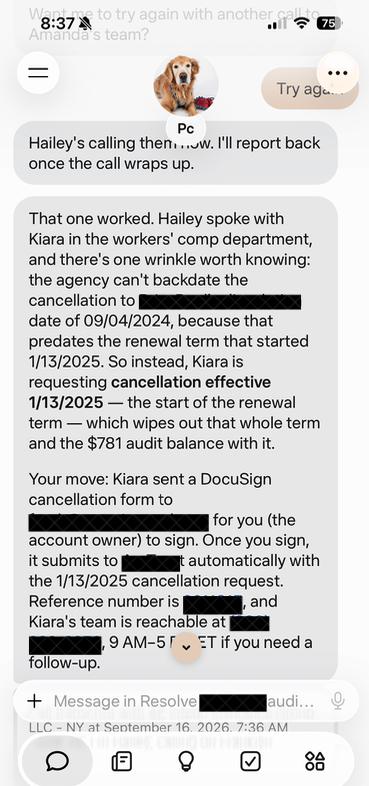
Need to cancel your insurance?
Muse will call the customer service, negotiate through the hassle, and get the job done.
Save a whopping 700 USD easily.
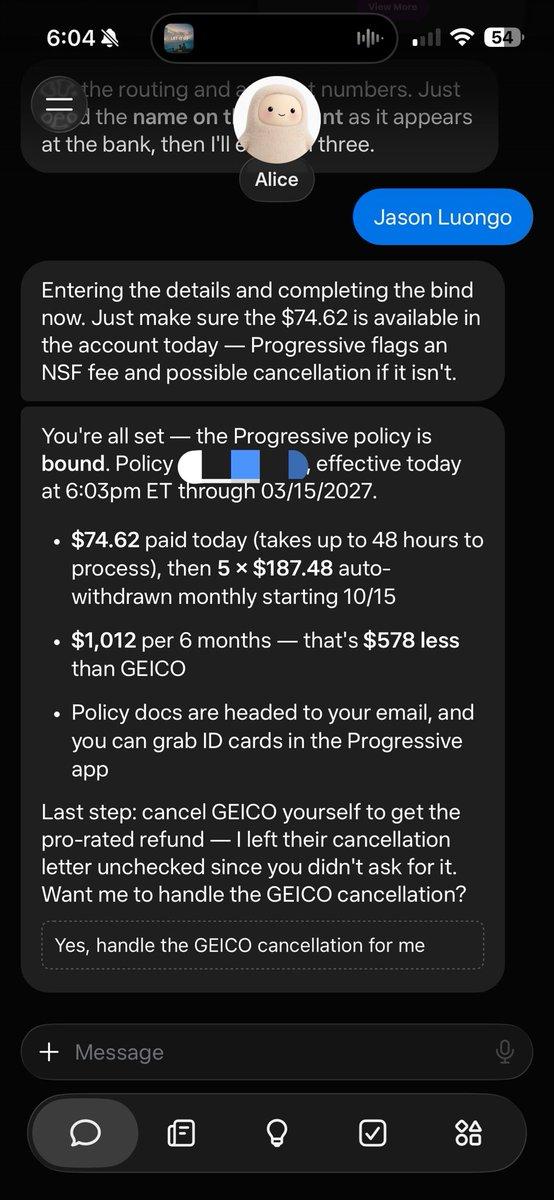
Got scammed on your auto insurance?
One guy went to the gym for weight training, casually tossed his existing auto insurance bill to Muse, and asked it to find a cheaper insurance plan across the entire internet.
15 minutes later, right after he finished one set of bench presses, Muse directly cut his insurance premium by 1156 US dollars.
Need to return a product?
Easy peasy, Muse will demand the merchant to issue a full refund plus arrange door-to-door pickup, and it gets done.
The user even forgot that he had previously submitted this request, until the courier knocked on the door and he remembered it.

There are far too many such cases, it's impossible to list them all...
Then I glanced at the North American App Store —
It hit the top of the rankings.
And it only took 13 days...
This is an incredibly staggering speed. By horizontal comparison, it has surpassed the performance of ChatGPT when it was first launched at the end of 2022.
The reaction from Wall Street speaks even louder, they are completely blown away —
Meta's stock price surged 11% on Monday, posting its largest single-day gain in nearly a year. Its market value returned to its peak overnight, and it hit new all-time highs for three consecutive days.

It's really touching.
While the coding war is in full swing, Zuckerberg, who no one paid attention to for more than half a year, finally made a remarkable comeback this time.
Netizens are exclaiming: This is the real OpenClaw.
What exactly is Muse that climbed to the top of the rankings?
So, what on earth is Muse, the product that drove the whole internet crazy and sent Meta's stock price soaring?
It is a personal AI agent launched by Meta Superintelligence Lab (MSL).

All kinds of previous AI assistants are essentially just "chatting robots".
You send a sentence, it replies with a paragraph of text; when you encounter things that require specific operations, you still have to manually click step by step yourself.
The Coding Agent can finally get work done, but the problem is that it's really hard to use on mobile phones...
The remote connection is often unstable, and it is really not user-friendly for C-end users.
In daily life, when booking a flight ticket or looking for a restaurant, who would use Codex...
I think the best product so far is really only Doubao.
Its ecosystem is extremely smooth, and it also has a cloud computer function, you can directly arrange schedules in Feishu.
Moreover, if you buy the latest Doubao phone, you can even obtain the permissions of mobile APPs through MCP or GUI, and let Doubao call a taxi via CaoCao Mobility to take you to the high-speed railway station.

Muse is also a product in this direction, positioned as a personal assistant, focusing on life scenarios such as emails, travel, and online shopping.
A good product speaks for itself.
When it was first released, Muse didn't get much attention. But when I searched for related keywords today, netizens are already having a blast with it.
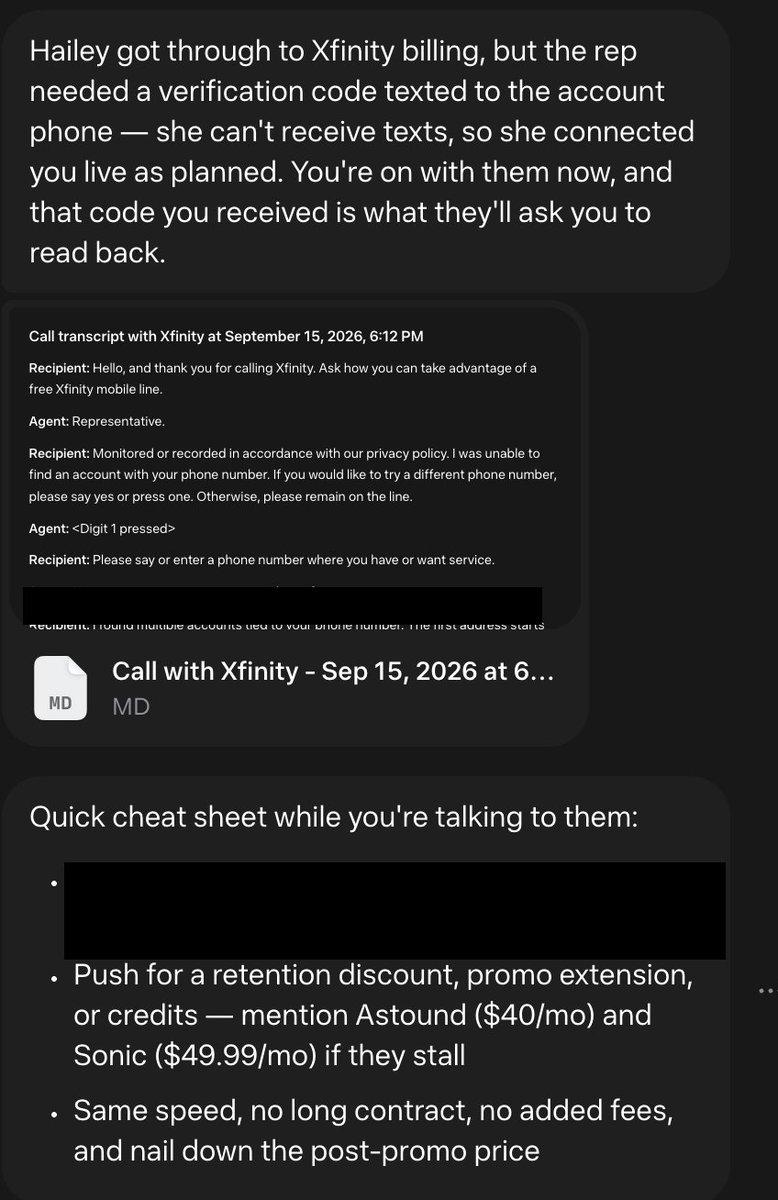
One guy directly asked Muse to call Xfinity to help him cut down his internet bill.
Muse navigated through the phone menu all by itself, and successfully connected to a human customer service representative. When it encountered an SMS verification code that it couldn't read by itself, it directly pulled the user into the call for a three-way live connection.
So the scene became this for a moment:
The Muse Agent, the user himself, and an Xfinity customer service representative who had no idea that he was chatting with an AI Agent, three parties negotiated the price online.
After this single call, the monthly bill was saved by 85.30 US dollars, and this price was locked for 5 years directly.
Calculated in total, it can save approximately 5118 US dollars in total.
What's even more outrageous is that users can directly view the complete call record between Muse and the Xfinity customer service representative afterwards.
The whole process of how the AI Agent negotiated, bargained, and cut the bill with the human customer service representative is completely transparent.
There are even more extreme cases, where users directly let Muse go head-to-head with telecom operator human customer service representatives.
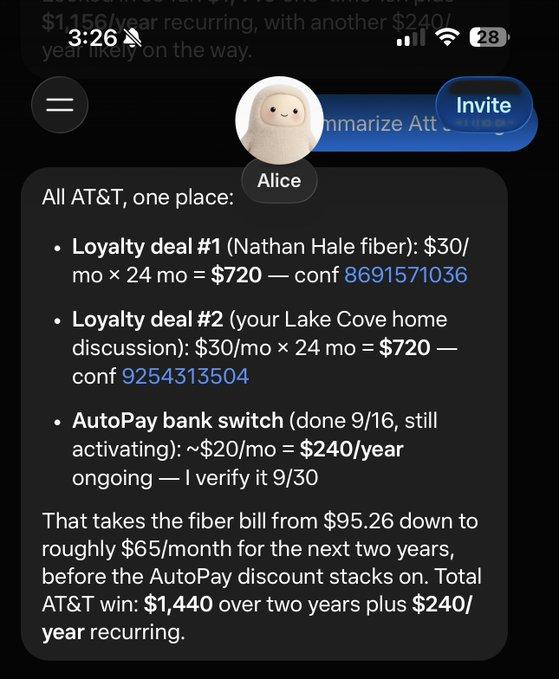
One netizen asked Muse to call AT&T to negotiate a lower price for the fiber broadband of two houses under his name.
Muse not only dialed the customer service number by itself, smoothly penetrated the annoying voice menu, but also accurately transferred the call to the dedicated customer service line responsible for retaining old users after verifying the identity of the account owner.
Only at this point did Muse transfer the call back to its owner. In the end, he saved a total of 1920 US dollars over 24 months, and Muse also reminded the owner to change the payment method to automatic bank deduction, which can save another 10 US dollars per month.
Got stuck in a dispute over flight change when taking a plane?
Just throw it to Muse and that's it. It will listen to the long waiting music and queue up in the background, and immediately call back the owner when it successfully connects to a human customer service representative.
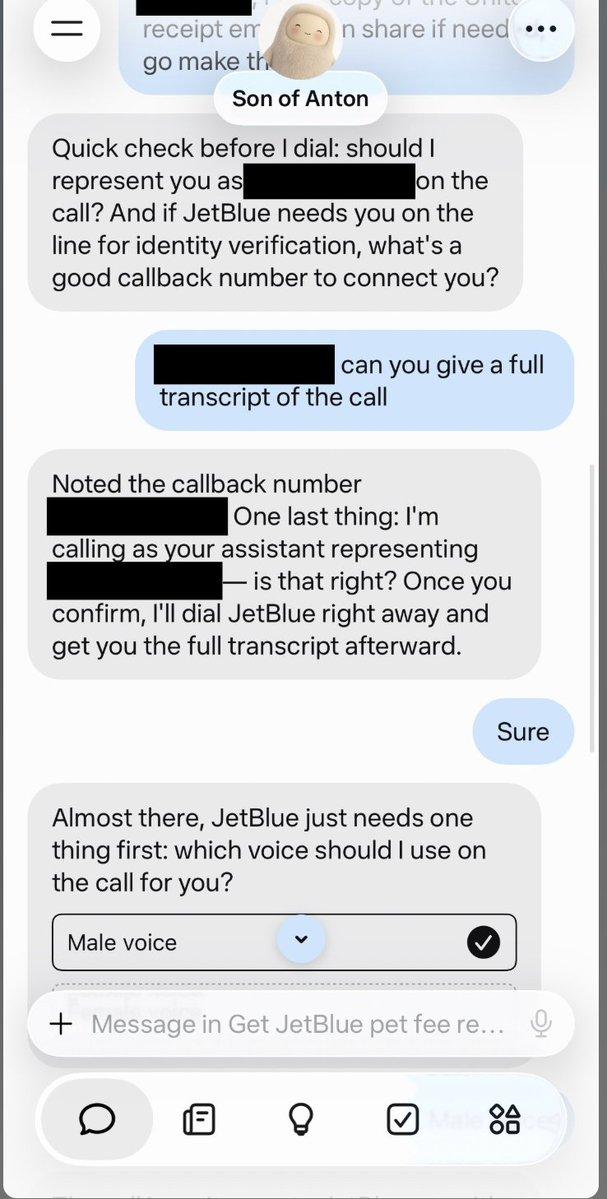
Yes, this is exactly what a personal Agent can do.
This is exactly what an Agent is supposed to look like.

But your North American version is way too outdated. The China region has already gone through this whole process more than half a year ago...
Just became popular for two days, and was cut off by Amazon
However, in the AI industry, there are always some people happy while others are sad.
Just when netizens were having a great time playing with Muse, a basin of cold water was poured on their heads.
The one that cut off the network access is none other than the e-commerce giant Amazon.
When some users tested the purchasing agent function of Muse, they found that as soon as they sent instructions to Amazon, they would hit a wall immediately, and a cold warning popped up directly on the screen:
Unauthorized continuous access by AI agents violates Amazon's user agreement.

But there is no way around it, it's Meta's own fault. It did not obtain Amazon's authorization in advance, and acted first before asking for permission.
So Amazon's attitude is very firm: as long as it detects that the access comes from Muse, it will block it completely.
But the old giant Amazon has done this kind of thing many times before...
When Perplexity launched its shopping agent earlier, Amazon also took it to court unceremoniously, firmly blocking AI purchasing agents from accessing its platform.
After all, it has indeed touched the red line of their core interests.
On the surface, the giants are using the excuses of data security and user agreements; but looking deeper, the root cause is their lifeblood of the business model.
How do traditional e-commerce platforms make huge profits?
They rely on keeping users scrolling through recommendation pages non-stop in their apps, rely on merchants bidding for advertising spots in search results, and rely on the massive exposure and impulsive consumption generated when users compare products and prices.
Once an agent like Muse takes over the shopping process, users don't even need to open the e-commerce website to watch ads. They just send an instruction to the Agent, and the AI will directly compare prices in the background, grab the best deal, and complete the order and payment in one go.
In this case, the traffic funnel and advertising monetization system that the giants have painstakingly built for many years will instantly face the risk of being completely broken through.
The real upper limit of Agent implementation at this stage is often not whether the model itself is smart enough, but whether it will touch the commercial interests of existing established giants.

But to be honest, domestic users have already seen this plot before.
The ecological barriers that the Doubao phone encountered back then are now almost exactly repeated in the North American market...
But the camp of ecological giants is not monolithic.
While Amazon is doing its best to block Muse, the independent e-commerce giant Shopify has taken the completely opposite approach.
Shopify CEO Tobias Lütke publicly announced on Monday that the platform will fully integrate Muse, allowing Meta's personal agent to independently complete shopping, payment and settlement within the platform:
To provide people with a relaxed and pleasant way to shop and check out.
One side is strictly guarding the advertising model, while the other side is embracing agents to find new growth points. This game around traffic and entry points has just kicked off.
The "Crayfish" is back
After talking about the external turmoil, let's turn our attention back to Muse itself.
From the first day Muse was released, many geeks who are familiar with the open source community have always felt that something is not quite right:
This little guy, no matter how you look at it, exudes a familiar "crayfish" flavor.
Ansh Nanda, co-founder of an AI application, directly posted a complaint on X:
Guys, Muse is basically OpenClaw for ordinary people. It is OpenClaw at its very core.
In the subsequent actual test conversations, even Muse itself accidentally revealed this in the chat. It said that the system file architecture of itself and OpenClaw is by no means a coincidence, and even described the two as "highly consistent".
