Models keep swapping rankings on the leaderboards, and Orca Entertainment has begun to bet on the "infrastructure" of the next-generation industry.
That AI can generate sufficiently realistic videos is no longer a novelty in itself. This fading of freshness comes from the rapid scaling of AI video supply and consumption.
DataEye's *2026 H1 Domestic AI Drama & Manhua Drama Data Report* shows that the market size of domestic AI dramas/manhua dramas in 2026 increased by 138% year on year, hitting 220 billion yuan only in the first 5 months.
Deeper changes have also taken place: compared with the past when people cared whether a video was "AI-generated", now audiences care more about whether it is high-quality content. Orca Entertainment analyzed the bullet comments and comments of launched AI videos and found that in Q4 2025, user discussions were mostly focused on "prompt", "technology" and "real or fake"; by Q2 2026, keywords like "plot", "story", "male lead" and "female lead" appeared more frequently. During the same period, the proportion of comments related to AI traces such as "obviously AI-generated" dropped from 10.3% to 6.5%, while the positive comment rate rose from 50% to 73.8%.
Du Yanlong, CTO of Orca Entertainment Group, said: "When audiences start to evaluate AI works by content standards rather than technical demonstration standards, AI is truly approaching the starting point of industrialization."
When the technology first emerged, the fact that AI could make characters move was newsworthy, and being able to generate a complex camera movement was worth sharing. But after "generation" becomes increasingly easy, how can we truly turn AI into productivity for the film and television industry?
On September 22, Orca Entertainment released WhaleRex AI, the industry's first AI film and television production and management platform at the Yunqi Conference. This platform, which is about to launch its internal beta test in October, focuses on the production links above the model layer.
Du Yanlong said: "Generative models determine the upper limit of content capability, and the production system determines whether this upper limit can be stably delivered."
In the past three years, the AI video industry has continuously refreshed the first half of the sentence. What WhaleRex AI aims to solve is the second half.
AI Film and Television, Moving towards Industrialization
Film and television has always been an industry that highly relies on collaboration.
To turn an idea into the final footage, a movie requires the joint collaboration of a large number of roles including directors, actors, cinematographers, artists, lighting technicians, and post-production staff. To enable different people to accurately understand the same creative intention, the film and television industry has developed a complete set of professional languages and workflows: storyboards determine the footage, shot sizes, focal lengths and camera positions guide cinematography, blocking and performance direct actors, and the production system organizes these work into budgets and schedules.
The advantages Hollywood has built over the past century largely come from this industrial system. What is truly irreplicable is not just a group of stars, directors and big productions, but the decomposition of film and television production, which highly depends on individual creativity, into professional division of labor, production processes, quality standards and production management. A single project can involve hundreds or even thousands of people, but every role knows what work to complete at what stage and according to what standards.
For hundreds of years of development, the film and television industry has been solving the problem of how to accurately turn creative intentions into executable footage.
However, generative AI has made this matter uncertain again. Creators clearly know what they want, but first they have to compress their complex intentions into a prompt, and then wait for the model to give a probabilistic result. The character may be correct but the camera position is wrong; the expression is right but the camera movement has problems; when you finally get a satisfactory composition, the originally correct part may change after you readjust the action.
As a result, a problem that could have been communicated and controlled item by item in the traditional film and television industry has turned into repeated generation and screening in AI. There is still a gap in production capability between clear creative intentions and stable, accurate output of results.
"Gacha drawing" has thus become a very representative term in AI video creation.
A single shot can still be solved by "gacha drawing", but when it comes to a complete project, the cost will expand rapidly. One unsatisfactory result means re-generation, and a change in one link may affect subsequent modifications. The production costs originally saved by AI may also be consumed again in screening, trial and error, and rework.
Occasionally generating a 100-point shot is the capability of the model; continuously delivering hundreds of shots that meet professional standards and forming a narrative is the production capability of the system.
"Generating a good shot and delivering a good work are two completely different things," Du Yanlong believes.
Du Yanlong, CTO of Orca Entertainment Group
This is also the threshold that AI film and television must cross to move towards industrialization. After the model continuously raises the upper limit of the capability of a single shot, the industry begins to need a new production system to organize this capability stably.
Make Creation More "Certain"
"Standing at this starting point, the direction of the next stage is no longer about who can generate a single good shot, but about who can help the creative team continuously, interpretably deliver a good work on budget; what is truly scarce in the AI era is no longer the powerful generative capability of the model, but the capability of a creative team to continuously deliver high-quality content" — this is also the product idea of WhaleRex AI.
As the industry's first AI film and television production and management platform, WhaleRex AI focuses on three things: controllable production process, deliverable results, and manageable costs. These seem to be three product capabilities, but they actually correspond to three problems that appear sequentially in film and television production: whether creators can accurately get the footage they want, whether the generated content can meet professional production standards, and whether costs and schedules can still be controlled when creation expands from individuals to teams and from clips to complete projects.

The first step is to take back the choice from random generation.
WhaleRex AI does not continue to stuff all creative requirements into prompts, but re-deconstructs the professional language that has been formed in the film and television industry into control variables that AI can execute. At present, the platform provides five types of precise control kits: scene control, character performance, camera, 3D virtual studio, and light and shadow adjustment, including more than 250 scene editing combinations, 49 basic expression controls, more than 40 professional camera parameters, and more than 100 character pose and position settings, to achieve a series of precise control capabilities for images and videos.
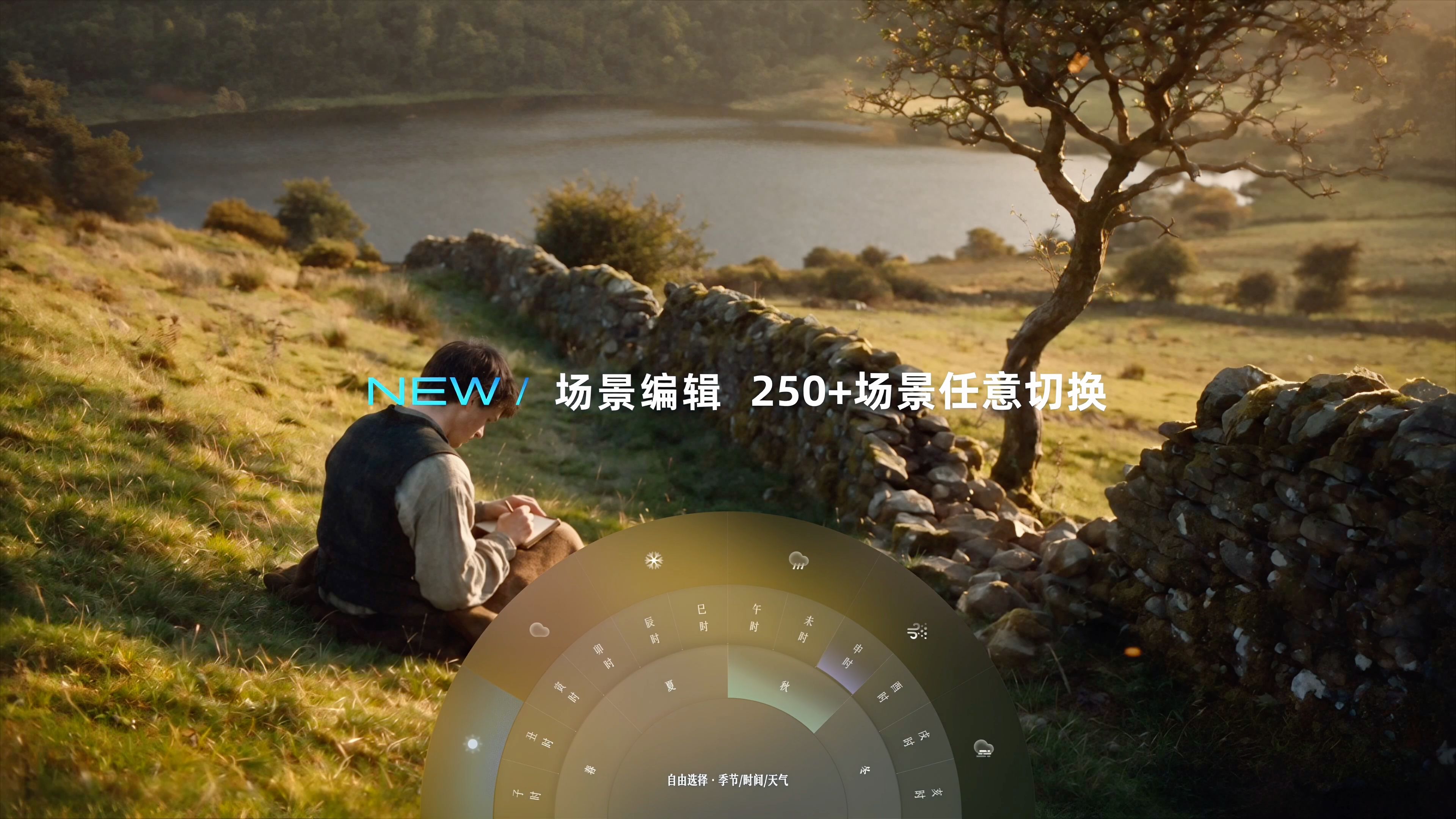
For example, when a creator wants to make a shot of two people talking in a cafe, in the past when using AI video tools, he might need to describe the position, movement, expression of the characters, camera angle, shot size and light in the prompt at the same time, and then generate multiple times to find the version closest to expectations. But in the product logic of WhaleRex AI, these variables can be controlled separately: first determine the position and posture of the two characters in the 3D virtual studio, then adjust the character expressions, determine the position, focal length and movement mode of the camera, and finally process the light and shadow. When you need to modify one of the variables, you don't have to re-generate the entire footage randomly.
This seems to be just a change in interaction mode, but behind it is a change in the relationship between AI and professional creators. The film and television industry has spent hundreds of years forming a set of language to express creative intentions. There is no need to ask directors and cinematographers to re-learn a set of machine language just because of the emergence of AI. The sign of truly mature technology may not be that creators understand AI better and better, but that AI understands creators better and better.
However, being able to accurately control how to shoot only solves the first step of production. There is a more realistic problem in film and television production: to what extent can the work be regarded as completed?
When consumers scroll through an AI video and feel that the characters are natural and the footage is beautiful, that's enough. The "finalization" in professional production also means considering the realism of characters and assets, whether the camera expression serves the narrative, whether the sound can be consistent, and whether the final image quality can meet the requirements of subsequent production and broadcast.
Therefore, WhaleRex AI extends its product capabilities to professional "finalization". In the currently announced product system, the platform builds a production chain around links such as realism, lifelike asset adjustment, professional camera expression, super-resolution and HDR, and voice consistency, while introducing professional Skills to encapsulate some specific production methods into the workflow.
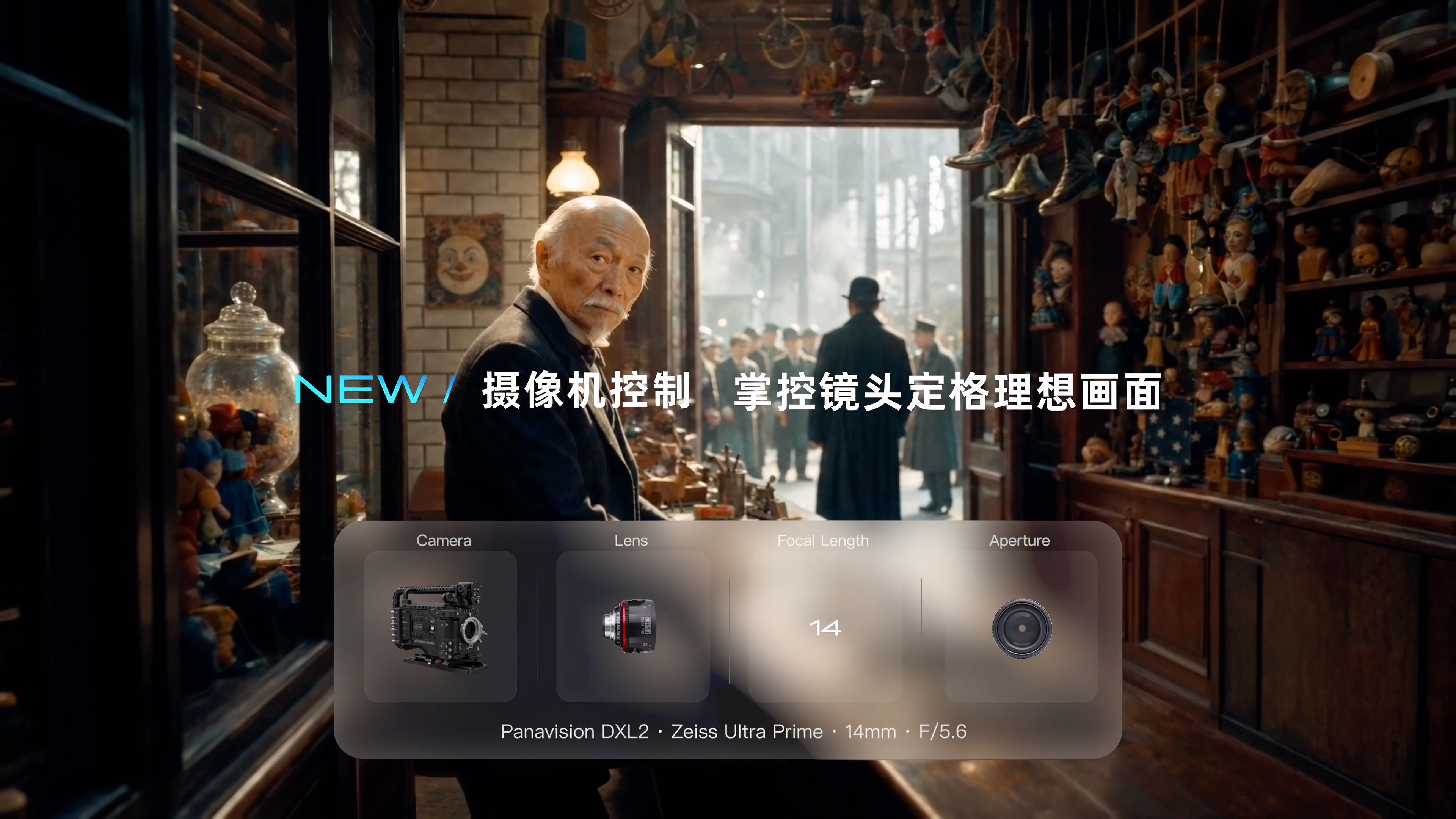
What is more noteworthy here is that the professional experience of the film and television industry has the opportunity to be softwareized. Previous AI advances only made up for the capabilities required for professional film and television production, while Skills allow AI to amplify the professional experience in the minds of practitioners that was previously difficult to replicate in the film and television industry.
A cinematographer knows what focal length is more suitable for a certain emotion, and a post-production staff knows how to process the footage to meet the delivery standards. In the past, these capabilities were difficult to replicate without specific people. If these experiences can be gradually precipitated by AI into digital assets, Skills and workflows, the same verified production method can be called repeatedly and shared within the team. The learning object of AI has also extended from the final film and television works to the methods of producing works in the film and television industry.
When this production capability continues to expand, the third problem arises: how to manage it.
Making tens of seconds of AI videos can still rely on folders and personal memory to manage materials; but if the project becomes a dozen episodes of dramas, hundreds of scenes, and dozens of people participating at the same time, production management problems will reappear. Which character asset is the final version, which scenes have been completed, whether a verified workflow can be directly called by other members, how much computing power and budget have been consumed — these problems will not disappear just because the camera is replaced by a generative model.
WhaleRex AI organizes production by projects, episodes, scenes and roles. Assets, prompts, Skills and workflows can be precipitated and reused in the project, and project consumption, remaining available duration and stage progress are included in the management.
This corresponds to the new production management system in the AI era. Traditional production management manages actors, cameras, venues and shooting schedules; after AI film and television moves towards large-scale development, it is necessary to manage models, computing power, digital assets and workflows.
Therefore, if you only understand WhaleRex AI as an AI video generation tool, you will ignore the more noteworthy part of this product. It tries to fill the missing layer between generative models and professional film and television production: first, enable creative intentions to be accurately executed, then make the results have clear delivery standards, and finally enable the entire project to be calculated and managed.
Taking these capabilities one step further, what WhaleRex AI ultimately wants to solve is actually the problem about "people": when AI becomes more and more powerful, where should creators spend their time?
"What we care more about is: can we reduce the time creators are consumed by tools, and leave more time for judgment, aesthetics and expression; can we give ordinary people's inspiration the opportunity to be seen without being limited by insufficient resources; can we allow professional creators who understand cameras, performance and narrative to bring their experience into new production methods, instead of being blocked by technology," Du Yanlong explained the original intention of WhaleRex AI on site. This may also be the true meaning of "certainty" for creation.
Why Orca Entertainment?
Then why is it Orca Entertainment that can make this happen, rather than other platforms?
The answer lies in the past accumulation of Orca Entertainment. On one end, it connects the technical capabilities of the Alibaba system in terms of models, computing power, engineering and security, and on the other end, it connects the real content production needs of the cultural and entertainment business. The former continuously provides new technical capabilities, while the latter tells technology what is truly useful through specific creative tasks, aesthetic judgments and production feedback.
One end is the rapidly evolving AI technology, and the other end is the professional standards of directors, cinematographers and production teams. After connecting the two ends of technology and content, Orca Entertainment has not stopped exploring the relationship between model capabilities and film and television production.
This year, the team of Professor Qi Hong from Beijing Film Academy, Orca Entertainment Moku Lab and Xiaotian Hengyu jointly launched FilmBench, which reversely constructs 1169 prompts from 307 real films, and deconstructs 35 fine-grained audio-visual language examination points to provide industry evaluation references for model capabilities. What WhaleRex AI wants to give back to creators is not only the control over AI tools, but also the initiative of creation itself.
