With only its imaging trump card remaining, can vivo sustain its push toward high-end brand positioning?
On the evening of September 21, vivo made a rare first move in the year-end straight-screen flagship product promotion.
On the same day, vivo released its 2026 flagship X500 series, which includes three models: X500, X500 Pro and X500 Pro Max, with starting prices of 5499 yuan, 6499 yuan and 6999 yuan respectively.
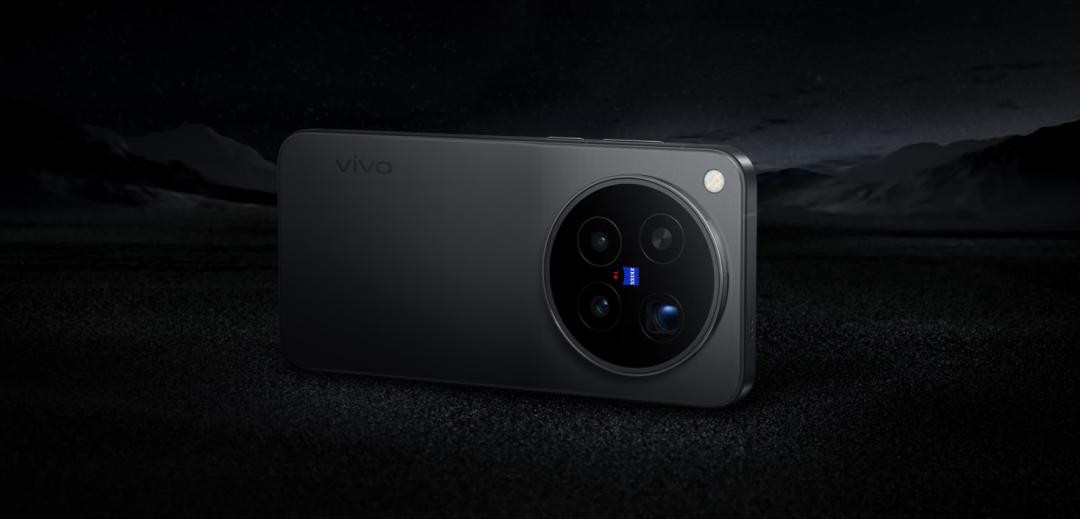
vivo X500 Pro Max, source from the official website of vivo smartphones
Over the past few years, vivo has launched its X-series products around October 14, right after the 7-day National Day holiday. During the holiday, users usually take a large number of photos and videos with their old phones. After the holiday, watching a vivo launch event and recalling the pain points they encountered during the vacation will very likely amplify users' demand for the image performance of smartphones.
Huang Tao, Vice President of vivo, also quoted similar jokes from netizens during the launch event to explain the reason for this earlier release. For vivo today, seizing market demand before the holiday is more important than waiting passively.
However, this "first launch" of vivo has not shown any outstanding highlights.
In the past, vivo's flagship products often added configurations without raising prices, but this time, the standard version and Pro version have seen considerable price increases. The starting price of the X500 standard version with the same memory specification has increased by 1100 yuan compared with the previous generation X300; the starting price of the X500 Pro with the same memory specification has increased by 1200 yuan compared with the previous generation X300 Pro.
Although the starting price of the top-spec X500 Pro Max is the same as that of the X300 Ultra, part of its image hardware is suspected to be downgraded, which is equivalent to a disguised price increase.
While raising prices, the upgrades of X500 are also barely satisfactory. Just like the X300, vivo X500 is still focusing on the image experience, and the highlights of its image functions are still concentrated on the over-mentioned features such as "anti-shake, clear shooting even against backlight, cinematic look". Although other functions including chip, system, battery life, screen and AI have also been updated, there are almost no iterations that can highlight vivo's unique competitiveness.
Combined with the recent situation of vivo, the price increase of vivo X500 is more like a result forced by factors such as rising storage costs, declining domestic sales, and shrinking overseas markets, rather than an active premium supported by core competitiveness.
In other words, vivo that only has image advantages may not be able to withstand the pressure that the "vanguard" of the 2026 flagship war needs to bear, nor can it support its future high-end development goals.
From X300 to X500, vivo is still telling the same story
Just like the X300 last year, image performance took up a large part of the vivo X500 launch event.
According to Huang Tao's statement at the launch event: "The professional upper limit of the X500 series should be high enough to become a productivity tool for creators; the experience threshold for ordinary users should be low enough so that average people can easily take photos with a cinematic look."
If you compare the vivo X500 with the X300, you can also find that the vivo X500 has indeed improved the professionalism of image performance, and it places great emphasis on the upgrades in video shooting.
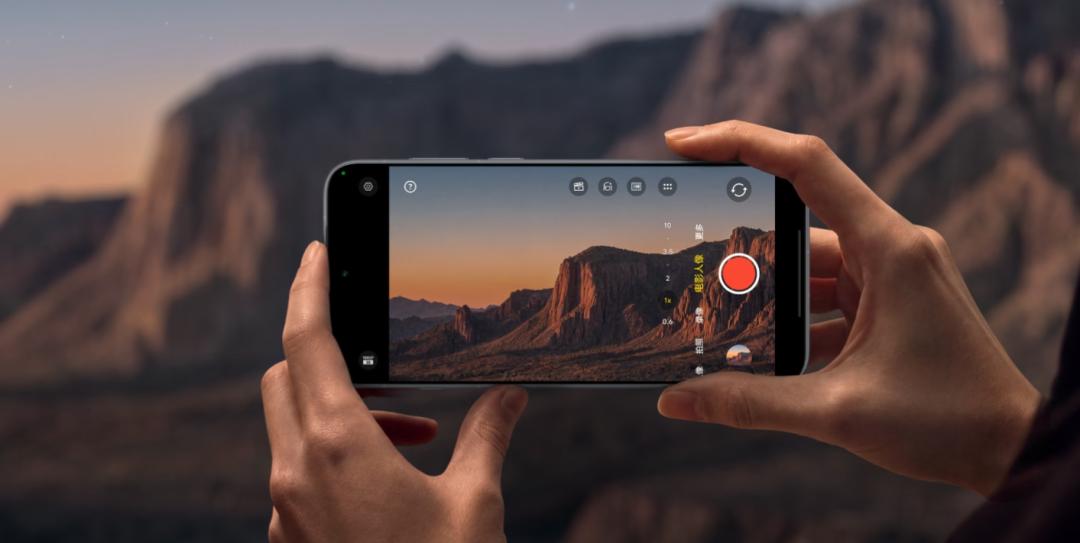
vivo X500 Pro Max, source from the official website of vivo smartphones
Take the top-spec products of the X500 and X300 series as examples for comparison:
The improvement of dynamic range is the most obvious. The dynamic range of vivo X500 Pro Max has been increased from about 14EV of X300 Ultra to 17EV, which means that the brightness span that X500 Pro Max can accommodate is 8 times that of the previous generation. This improvement allows users to shoot in scenes with huge brightness gaps such as backlight and sunset, without overexposure in bright areas and total blackness in dark areas of the picture.
In terms of the anti-shake level of the main camera and telephoto lens, X500 Pro Max has raised the main camera anti-shake level from CIPA 6.5 of X300 Ultra to CIPA 7.0, realizing the unified anti-shake level of the main camera and telephoto lens. When users walk to follow the shooting, record running scenes, or take photos at night, the pictures they take will be more stable and clearer.
In terms of video specifications, based on the configuration of X300 Ultra, vivo X500 Pro Max adds native 4K 240fps cinematic slow motion recording, and can also achieve 32x super slow motion effect of 4K 480fps/960fps. Users can use vivo X500 Pro Max to shoot slow motion scenes such as liquid splashing and pets jumping.
In addition, X500 Pro Max also adds a "Cinema" mode in the first-level menu. It is claimed that users can get a finished video in three steps. Ordinary users do not need to understand frame rate, encoding and Log curve, and the video shot by selecting this mode will have basic cinematic texture.
Apart from the image performance, the improvements of vivo X500 in screen, chip and battery life are more like the inevitable result of following the conventional iteration of the industry, and they do not get much exposure at the launch event.
X500 Pro Max adopts BOE Q11 panel, and the screen resolution is upgraded from 1.5K to 2K. But since 2026, the top-spec models such as iQOO 15 Ultra, Xiaomi 18 series, OPPO Find X10 Pro Max have all adopted 2K screens.
The situation of chips and batteries is similar.
The chip process carried by vivo X500 Pro and Pro Max has been improved, but vivo is only the first manufacturer to carry MediaTek's 2nm chip, and it does not have independent chip R&D capability. The battery capacity of the product has increased from 6510mAh of X300 Ultra to 8000mAh of X500 Pro Max. But since 2026, the battery capacity of high-end smartphones is generally above 7000mAh, and the improvement of vivo in battery life may not bring much increment to sales.
What is more noteworthy is that part of the image hardware of the vivo X500 series is suspected to be downgraded compared with the X300 series.
Still taking the two top-spec products as examples, the main camera of X300 Ultra is Sony LYT-901, 200 million pixels, 1/1.12 inch large bottom. While the main camera of X500 Pro Max is replaced with Lantu Guangyu 900, 50 million pixels, 1/1.28 inch, with both the pixel count and sensor size reduced.
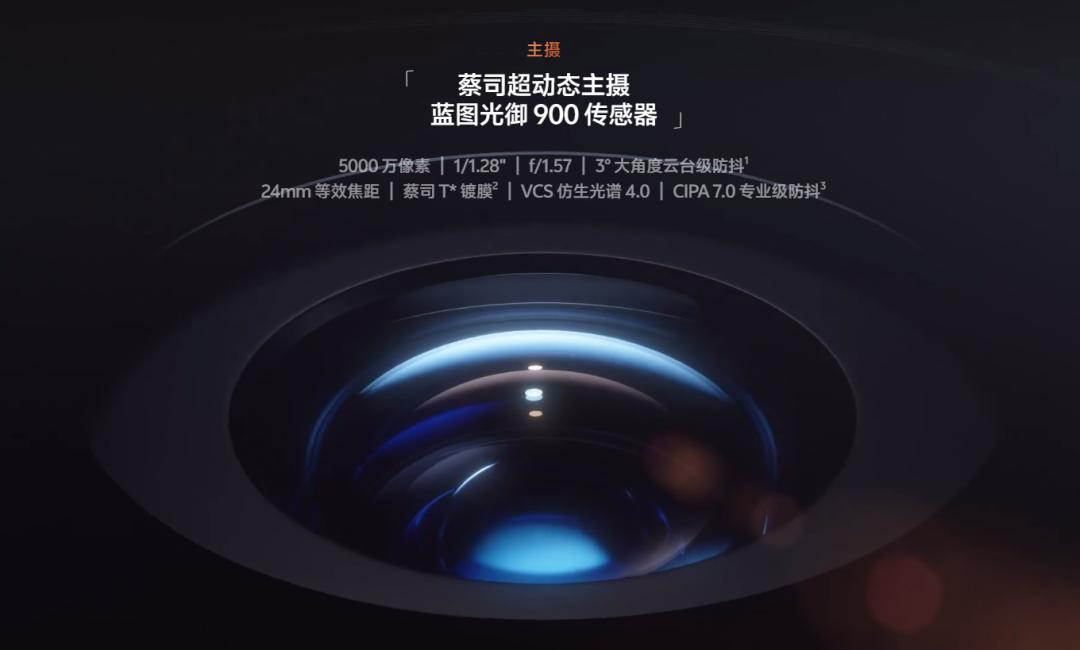
The main camera configuration of vivo X500 Pro Max, source from the official website of vivo smartphones
However, according to Zhao Dian, Senior Director of vivo X-series Products, in an interview after the launch event, this situation is a choice made after comprehensive consideration to ensure the balance between anti-shake and dynamic range. "The internal space of the phone is limited. If we only choose a large bottom solution with ordinary technology, there may be no space to achieve the current anti-shake effect. If the dynamic range is well optimized but the picture is still shaky when shooting, it is also not acceptable."
But whether this statement is credible may still need to be tested by time.
In addition to the downgraded main camera, the telephoto sensor uses the same Samsung HP0 as the X300 Ultra without iteration; although the image chip solution is changed from the "VS1+" of X300 Ultra to the "dual-core combination of V3+ and VS1", neither of these two chips is the first launch. V3+ was first launched with the X100 series in May 2024, and VS1 was first launched with the X200 Ultra in April 2025.
More critically, the entire X500 series cancels 16GB RAM as the base configuration. The X500 and X500 Pro only provide 12GB RAM across the lineup, and 16GB RAM is only available for the 16GB+512GB version of Pro Max, priced at 8499 yuan. If users want 256GB or 1TB storage, they cannot get 16GB RAM.
This collocation strategy has caused a lot of controversy. Later, vivo launched the 16GB+512GB and 16GB+1TB specifications for Pro and Pro Max on e-commerce platforms.
However, this remedial measure taken only after controversy has proved to some extent that under the pressure of storage cost, vivo has chosen to make compromises in RAM specifications.
Overall, vivo X500 can only focus on the image experience, but obviously, the image advantage can hardly support its premium any more.
AI functions, few highlights
The key capabilities of smartphones that can attract users are nothing more than several aspects: smooth system, high-spec hardware, excellent image performance, exquisite appearance, and cost-effectiveness.
After entering the AI era, every enterprise has got a new development direction.
vivo does not seem to stop its AI layout. Just one week before the launch event, on September 16, vivo released a lot of AI-related progress at its developer conference.
For example, it publicly announced its pre-researched Blueheart 30B MoE on-device large model for the first time; it officially released OriginOS 7, and the Blueheart XiaoV was upgraded to Pro mode, which can independently decompose tasks, integrate information across applications, and operate across devices, completing complex tasks such as travel plan customization and cross-device report arrangement with one sentence.
In addition, vivo also released BlueOS 4, carrying out technical exploration in the direction of agent operating system. Its technical preview version has realized the capabilities of home screen interaction, office and coding agents.
Looking at the configuration of X500, it is equipped with OriginOS 7, but at the new product launch event, vivo hardly demonstrated or introduced the system-level Agent related functions of X500.
The AI functions that the launch event focused on demonstrating are concentrated in three directions: AI photography assistant, album AI assistant and pose recommendation. Their functions are roughly to identify 5000 scene tags; actively recommend posing, composition and tone when shooting, support natural language to complete photo editing instructions; allow users to complete photo editing with one voice command, etc. These are more like auxiliary functions of the camera and photo album.
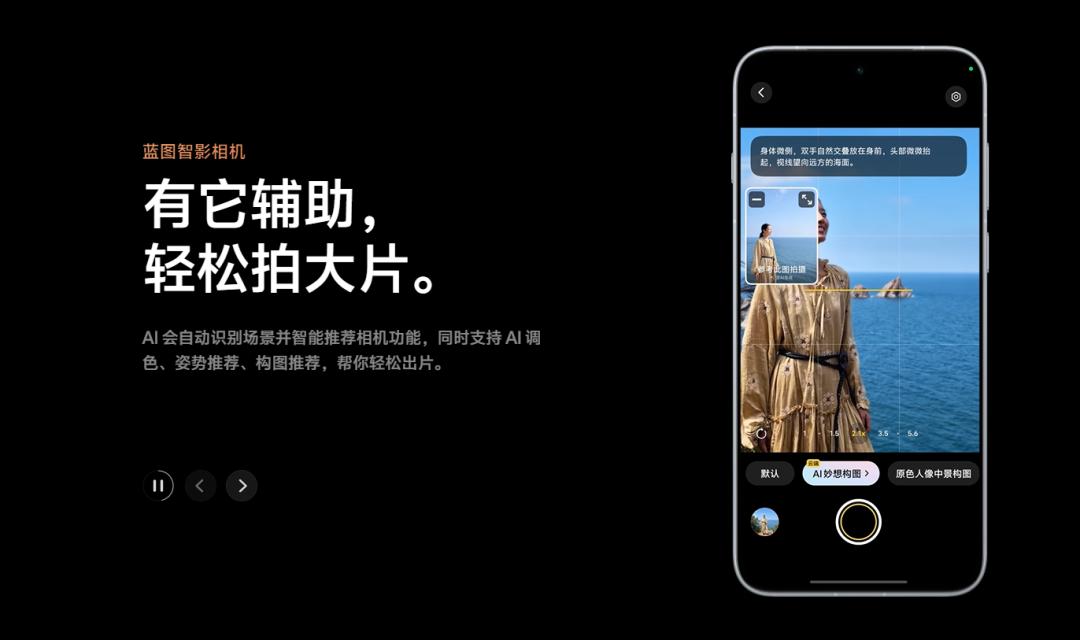
Part of the AI functions of vivo X500 Pro Max, source from the official website of vivo smartphones
Among the series of achievements released at the developer conference, few can be implemented on mobile phone products in the short term.
For example, Zhou Wei, Vice President of vivo and Dean of Vivo AI Research Institute, said that the Blueheart 30B MoE on-device large model is expected to be implemented on end devices by the end of 2028; another BlueOS system will be first launched on vivo's smart watches.
This inevitably seems somewhat fragmented.
The vivo X series started in 2012, and officially entered the hundreds era in 2023. 2023 is exactly the key year for the explosion of AI technology. The initial narrative of the vivo X+hundred-digit series actually took AI as the second starting point of its story.
Looking back at November 2023 when the X100 was released, vivo launched its self-developed Blueheart large model matrix, covering 5 large models with three parameter levels of 1 billion, 10 billion and 100 billion. The X100 series became the first mass-produced smartphone connected to large models in the market at that time, and was defined as an "AI large model smartphone" at the launch event. AI was promoted to a strategic height parallel to the image experience.
A year later, the X200 series was first equipped with OriginOS 5, and the official statement was to "reconstruct the operating system experience with AI as the core".
Functions such as Atomic Island, XiaoV Circle Search, XiaoV Note-taking, and XiaoV Writing were launched intensively. vivo tried to upgrade AI from "functional level" to "system level".
However, since the X300 released last year, AI has almost disappeared from vivo's mobile phone launch events. The brand's publicity focus is still on the image experience, and it rarely mentions AI-related content such as voice assistants and agents.
Also last year, vivo kept releasing signals to reduce the burden of AI R&D.
For example, in February last year, vivo officially launched the full-blooded version of DeepSeek-R1, forming a "dual-engine drive" layout with its self-developed Blueheart large model; in early March, vivo's AI-related departments carried out multiple rounds of organizational restructuring, further reflecting vivo's internal hesitation in the AI strategic direction; in June, vivo announced that all OriginOS 5 models support the latest version of DeepSeek-R1, and its dependence on DeepSeek in general large model capabilities continues to deepen.
Entering 2026, the AI hardware categories that vivo previously announced to enter have also begun to shrink. In January this year, Smart Emergence reported that vivo has stopped the AI glasses project that had been secretly prepared for nearly half a year.
It can also be seen from the performance of X500 that vivo has no time to take into account AI projects that require high costs to achieve results, and the only capability it can grasp to attract users is "excellent image performance".
How can vivo support its high-end development narrative?
Perhaps a few years ago, vivo could win by the route of image + cost-effectiveness. But in recent years, the underlying logic of the mobile phone market is undergoing fundamental changes.
The shipment volume of the market continues to shrink, and the user's phone replacement cycle continues to lengthen.
IDC data shows that the cumulative shipment volume of China's smartphone market in the first half of 2026 is about 134 million units, a year-on-year decrease of 4.2%, which has declined year-on-year for several consecutive quarters; data from China Academy of Information and Communications Technology shows that the average replacement cycle of Chinese mobile phone users has extended to 40.2 months in early 2026, hitting a record high.
In addition, the rising price of memory chips has further compressed the profit margin of mobile phone manufacturers. TrendForce data shows that in the second quarter of 2026, the contract price of mobile DRAM increased by nearly 78