Audi's headquarters does not recognize AUDI? These truths are hidden behind it.
In recent days, the public opinion that "Audi headquarters does not recognize the SAIC AUDI brand" has been flooding the automotive industry. Many reports have interpreted the legal actions of Audi's global headquarters as an official denial of the AUDI letter logo series of models.
In response, SAIC Audi quickly issued an official clarification, pointing out that the incident was targeted at Auto China, an unauthorized parallel importer in Germany, rather than the AUDI brand itself. Since AUDI models flowing into Germany through unofficial channels cannot access Audi's global official after-sales system, the headquarters refuses to provide maintenance rights and interests.
As this public opinion continues to ferment, the controversy has grown far beyond the right or wrong of the incident itself. As for why this industry event has attracted so much attention, the reasons are not single-fold.
Is AUDI the real Audi?
The first reason is that Audi, or rather AUDI, has had a relatively high "visibility" recently.
For example, the recent widely reported division of governance between the two Audi joint ventures in the north and south — that is, the core adjustment direction of FAW Audi is that FAW Audi takes over the four-ring brand, while SAIC Audi focuses on the AUDI letter brand. No new four-ring Audi models will be produced in the future.
This incident has caused many consumers to have inherent cognitive bias. In most people's impression, FAW Audi with the four-ring logo is the orthodox Audi. AUDI, which does not have the four-ring logo and only retains the letter logo, has been labeled as "non-genuine Audi".
In fact, from the perspective of brand origin, this prejudice is not objective. At the beginning of the birth of the Audi brand, it started with the Audi letter logo, and the four-ring car logo was iterated later. Today, SAIC Audi's AUDI letter brand is essentially a return and innovation of Audi's century-old brand context, rather than a derivative branch.
The existence of prejudice is essentially the gap between market accumulation and brand volume.
After all, FAW Audi has been deeply cultivated in the Chinese market for many years, with a complete matrix of fuel vehicle products, channels all over the country, and a huge user base, which has long been rooted in consumers' minds. In contrast, AUDI has a short birth time and insufficient market accumulation, and has not yet formed a market volume enough to subvert inherent cognition. This is also the reason why even after repeated official clarifications, the public still cannot fully accept the letter-logo Audi.
In fact, this is true at the brand level. Since its launch, AUDI has focused on the high-end pure electric segment, and currently its main selling models are two pure electric products, the Audi E5 Sportback and the Audi E7X. However, the sales volume of the models is still in the initial stage.
According to terminal retail data, in June 2026, the first-month sales of Audi E7X exceeded 4,000 units, ranking among the top of the 300,000-yuan pure electric SUV segment. In August of the same year, the car became the first luxury pure electric model with sales exceeding 10,000 units within 100 days.
In fact, in the car market in recent years, there is a common "slang" that everyone is familiar with: "As long as you add enough attributives, anyone can be the champion". Of course, this phenomenon is undesirable, which shows that the sales volume is not really good, and that the brand side is not confident enough. In order to report to the superiors, they have to "put powder on the brocade" (everyone understands it), and forcibly find the so-called highlights for reporting.
When this phenomenon becomes common, many real hidden champions will also suffer, which is just like the story of "The Boy Who Cried Wolf" in the automotive industry.
Back to the terminal performance of AUDI, especially the Audi E7X, it has good momentum after its launch, and the product itself has no lack of highlights. It can definitely be regarded as a good performer in the luxury car segment of 300,000 yuan and above, especially in the joint venture pure electric camp.
However, the joint venture brands themselves have seen a significant decline in market share, and even BBA has not made major breakthroughs in electrification, so some potential users are still waiting and seeing for AUDI and even BBA's electric vehicles.
To put it plainly, it is still a problem of brand recognition. Especially from the overall market perspective, AUDI has a single product line and insufficient market accumulation. Compared with the volume of FAW Audi, there is still a clear gap in brand influence, which is an unavoidable shortboard for AUDI at this stage.
Is it that they do not recognize AUDI, or are they more worried about Chinese cars?
But if we only look at the product level, the AUDI series already has the competitiveness of luxury pure electric vehicles. On the one hand, it has Audi's heritage in car manufacturing, on the other hand, it has new insights under the Chinese manufacturing solution. Compared with other overseas pure electric vehicles such as those from Europe, its intelligent cockpit interaction, advanced assisted driving system, and three-electric energy efficiency optimization are more in line with the needs of current users, forming distinct differentiated advantages.
This is the key for AUDI to achieve counter-trend growth in the future.
This is presumably the confidence that makes German parallel importers willing to take risks to introduce AUDI models.
Moreover, according to industry sources, the terminal selling price of Audi E5 Sportback and E7X imported in parallel to Germany is about twice that of the domestic Chinese market, with obvious premium.
Of course, the turmoil caused by AUDI's reverse export to Germany is actually a microcosm of the rise of smart manufacturing in China, which impacting the barriers of the traditional European automotive industry. In 2026, China's automobile export has entered a period of full-speed explosive growth. Even facing European tariff barriers, the overall export sales still achieved a significant year-on-year increase.
It is not just the sales growth. Chinese automakers continue to deepen their layout in Europe, and rapidly improve their overseas supply chain systems by acquiring local factories, building new production bases, and carrying out in-depth cooperation with local automakers. Brands such as Leapmotor, BYD, and NIO have all gained a firm foothold in Europe, breaking the local monopoly pattern of foreign luxury brands.
At the same time, the strong breakout of local Chinese automakers has put obvious pressure on the traditional European automotive industry.
As the birthplace of the global automotive industry, the German automotive industry is experiencing rare growing pains in recent years. The Volkswagen Group has finalized a plan to lay off 10,000 employees, many factories have been shut down for transformation, and even expanded military business to digest idle production capacity.
As the ebb and flow continues, many European countries are planning to increase tariffs on Chinese electric vehicles, which is essentially a passive defense after the local industrial defense line is impacted.
The reverse return of AUDI models to Germany is also a reflection of hitting the pain points of the European industry.
Compared with traditional European pure electric models, AUDI combines luxury handling, high-level intelligence, stable three-electric system and reasonable pricing, forming a full range of product advantages. This differentiated advantage is fully competitive in the German local market. This parallel import boom is just the tip of the iceberg of Chinese high-end new energy vehicles impacting the European market.
Then, returning to the Audi brand itself, there is no obvious news about the so-called "headquarters does not recognize AUDI" statement at present.
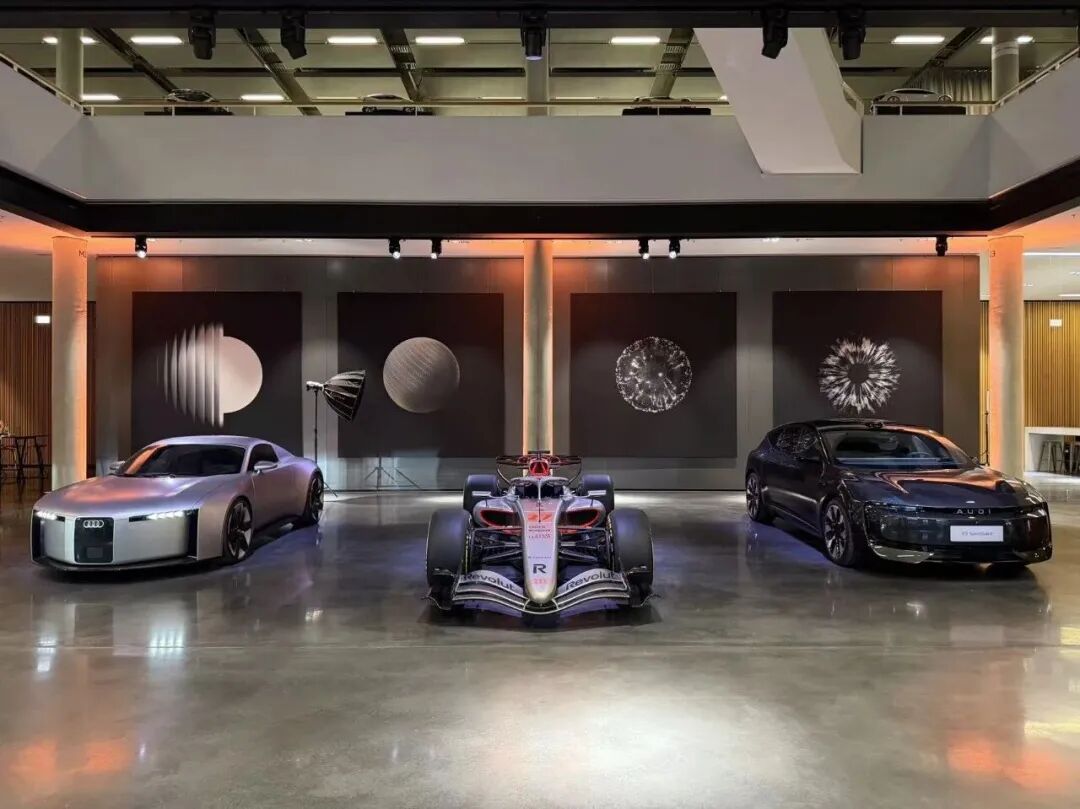
Previously, Gernot Döllner, Global CEO of Audi, has attended many events related to the AUDI brand. The Audi E5 Sportback was even displayed in the exhibition hall of the headquarters in Ingolstadt, Germany, side by side with the Audi F1 racing car, which is the official endorsement of the AUDI brand by the global headquarters. That means the official overseas export channel for AUDI in the future has not been closed.
In April 2026, Audi's first overseas intelligent electric technology center was launched in Shanghai, and it was officially registered in September. Relying on the second-generation ADP exclusive platform, it will continue to iterate new products for AUDI. For AUDI, if there is an opportunity to go overseas in the future, it already has a new fulcrum.
This article is from the WeChat official account "Auto Community" (ID: iAUTO2010), written by Li Sijia, and published with authorization from 36Kr.