Veteran mechanics get new helpers? AI is reshaping the automotive aftermarket.
A veteran technician with 20 years of industry experience has retired, taking away not just a wrench, but also a treasure trove of experience that cannot be digitized. This is the most real anxiety in the current automotive aftermarket: vehicles are getting smarter, but fewer and fewer people are capable of repairing them.
Faced with complex electronic circuits and cross-brand differences, senior technicians inevitably get stuck, while the huge group of junior and mid-level technicians are at a loss in the massive amount of maintenance materials.
When the industry is facing a serious talent gap, the era of relying solely on personal experience to work alone has come to an end. The diagnostic industry is in urgent need of an AI-driven knowledge equalization.
1. Automotive Diagnosis: AI Is an Inevitable Trend
Automotive diagnosis is an old trade with a history of more than 100 years, and its origin is almost synchronized with the large-scale development of the automotive industry. Today, after multiple rounds of evolution in the automotive industry, the underlying logic of this business is being completely rewritten.
Let's look at a set of data: According to the report from Industrial Securities, the number of car ownership in the United States rose to 290 million in 2024, the average vehicle age rose to 14.5 years in 2025, and the total driving mileage has shown a long-term growth trend. The aging of owned vehicles has become an established trend in the US automotive market, providing stable demand support for the aftermarket.
At the same time, the automotive industry began to move towards electronization more than ten years ago, and was equipped with intelligent functions such as electronic parking and active braking. Today, the software code of some cars has exceeded 100 million lines, and continuous OTA updates are still ongoing. The same car hardware may correspond to different software versions, and automotive maintenance is no longer limited to hardware-level repair.
Against the background of explosive growth in the number of car models and exponential increase in maintenance difficulty, the industry's requirements for maintenance technicians are escalating, and the group of DIY car owners is also expanding rapidly. More notably, with the rapid development of current AI technology, car owners gradually turn to AI for consultation after encountering vehicle faults, and then decide whether to solve the problem by themselves, go to an external repair shop or return to the 4S store.
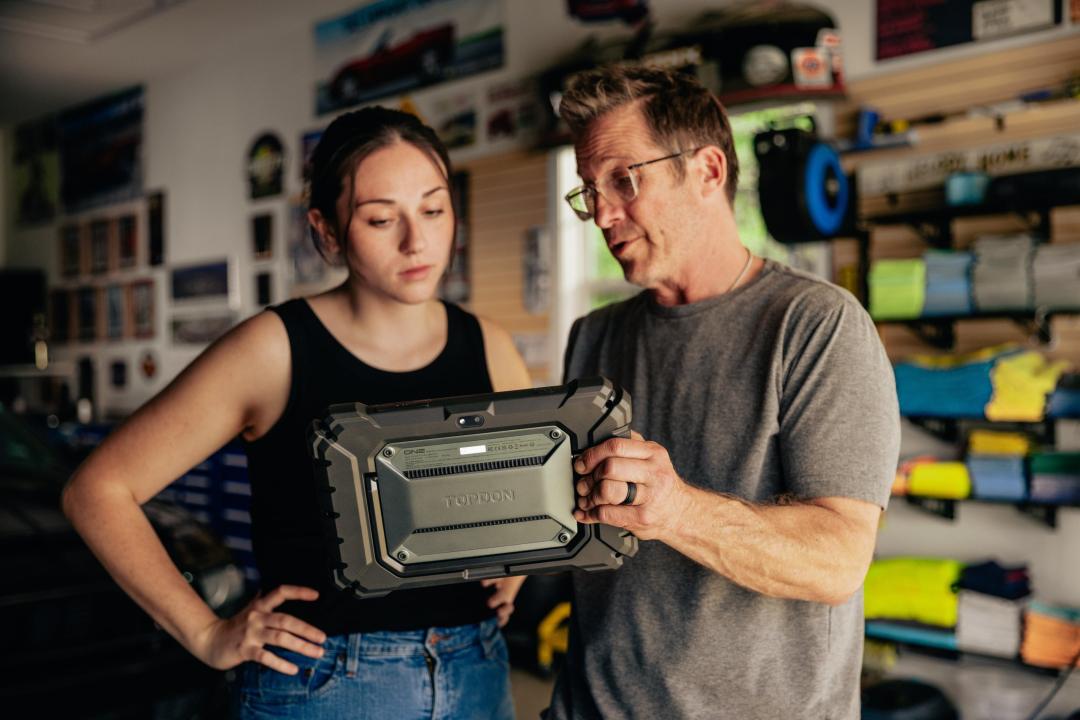
The automotive industry still has demand for diagnosis, but the subjects that need diagnosis, the executors of diagnosis, and the complexity of diagnosis are all changing. Diagnostic equipment that only supports fault code reading and simple function guidance is far from sufficient.
The core role of AI for diagnostic tools is to improve the efficiency and accuracy of diagnosis, which is also the only meaning of diagnosis.
Traditional automotive diagnosis highly relies on the personal experience of technicians. When facing a faulty vehicle, technicians need to build a fault tree based on their experience accumulated over years of work, and then check each component one by one to determine the cause. After completing the diagnosis, whether to repair or replace the component also highly depends on the technician's experience.
In today's era of explosive development of automotive technology, it is difficult for a single technician to master all brands and technical details, and they are likely to get stuck when facing new car models. In addition, experience is difficult to pass on, and the retirement of veteran technicians often means the loss of experience.
The intervention of AI just makes up for the limitation of "experience".
The value of AI automotive diagnostic tools goes far beyond code reading. It can absorb massive cases and car model knowledge to fill the knowledge blind spots of technicians. More importantly, it can replace humans to complete complicated information screening. Faced with maintenance materials of uneven quality, AI can quickly distinguish authenticity, directly output accurate judgments and implementable solutions, so that diagnosis is no longer limited by the depth of personal experience.
In 2025, TOPDON, a leading enterprise in the automotive diagnosis industry, innovatively launched TopFix, its first AI diagnostic platform. After the diagnostic scanner reads out the vehicle fault code, TopFix can not only give maintenance priority, associated maintenance cases and common vehicle faults, but also link with the diagnostic program to directly call diagnostic functions and maintenance guidelines, and quickly identify faulty parts and faulty circuits.
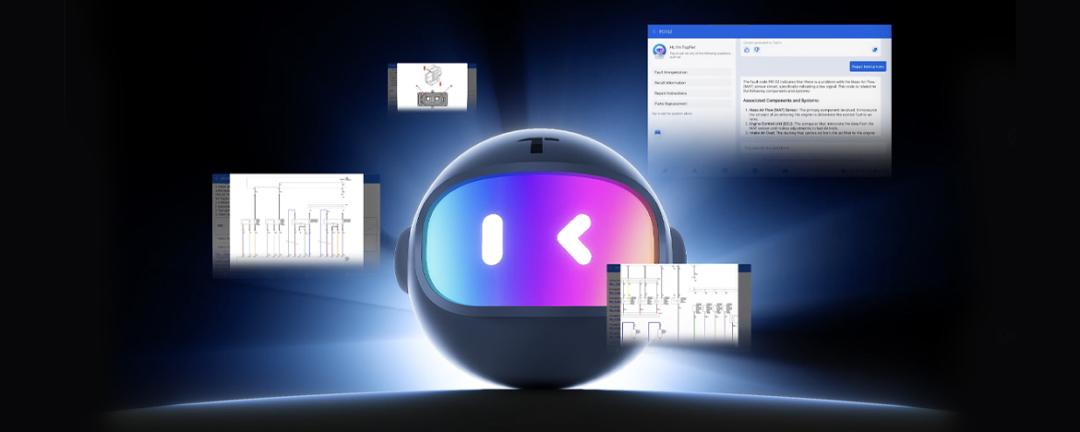
TOPDON TopFix AI
If traditional diagnostic tools are like CT scanners that only provide scanning and imaging functions, TopFix is more like a general practitioner that can not only accurately identify the lesion, but also directly output a structured treatment plan.
At the moment when the automotive maintenance and care market is facing talent and technology gaps, AI diagnostic tools may be the key solution to break the deadlock.
2. Why Is TOPDON the Only Player That Can Deliver Qualified AI Diagnosis?
In the automotive diagnosis field with extremely low fault tolerance, every judgment of AI must be based on the real-time status of the vehicle. Here, "zero error" is only the bottom line, not an advantage.
From the perspective of technical principles, accuracy first depends on the scale of the database. The larger the data volume, the more comprehensive the dimensions, and the more continuous the update, the stronger the model's ability to cover car models and fault types, identify complex faults, and predict early degradation.
With self-developed communication protocols, TOPDON covers more than 150 passenger car brands and 105 motorcycle brands worldwide, and has built a proprietary maintenance knowledge base for TopFix on this basis. This base not only contains fault diagnosis and maintenance suggestions, but also precipitates massive real cases and historical records, forming TOPDON's core data assets.
However, AI cannot actively identify the authenticity of data, and there are huge differences in technical languages between different automakers and car models of different ages. Therefore, what really determines the experience of AI tools is the enterprise's data system: whether it can continuously accumulate high-quality diagnostic experience and convert it into a unified language understandable by AI.
On the one hand, TOPDON sorts out the business requirements of TopFix according to industry characteristics, clarifies the knowledge scope and target users; on the other hand, it forms an audit team composed of internal experts and external senior technicians to carefully proofread materials and structure maintenance knowledge to ensure the accuracy of data entering the base. At the same time, it invests a lot of energy to establish a dedicated internal technical terminology system to unify the names of parts and functions across different countries, brands and car models. In addition, TOPDON carries out regular updates and iterations to ensure that the knowledge base is accurate and available, effectively solving the hallucination problem of large models.
Eventually, all of this will form a closed loop in the user's real scenarios. Every feedback from users drives TopFix to evolve continuously.
Protocol coverage and user feedback continuously inject data, and the expert team continuously purifies the data, which ultimately feeds back the AI diagnostic capability. This flywheel data system will continue to deliver high-quality data for TOPDON in the future, and continuously strengthen its competitive barrier.
Data is only a ticket to the industry. Whether consumers are willing to pay depends ultimately on the overall experience, which tests the AI large model and the software and hardware platform that carries it.

TOPDON's AI large model layout adopts a dual-track strategy of cloud side and device side.
This is an unavoidable challenge in the AI transformation process of automotive diagnostic tools. The operation of real-time online TopFix has high requirements for network bandwidth and computing power, while technicians engaged in road mobile maintenance and DIY users with poor network environments often face limited network conditions in their work scenarios, which directly affects the calling efficiency and use experience of AI. However, in a weak network environment, TopFix is even more needed to provide assistance when encountering unknown faults.
The device-side large model enables TopFix to have offline intelligence, which can not only solve the pain points of use in weak network environments, but also complete the closed loop of core diagnostic capabilities on the device side, making the whole process more autonomous and controllable. With the implementation of the device-side model, the generational gap between TOPDON and other diagnostic tool players will be completely widened.
In addition, TOPDON's software system and hardware equipment cooperate with each other. By tapping into hardware performance and carrying out overall optimization, it provides the best experience within controllable costs. No matter how powerful the AI algorithm is, it must finally be implemented on a "user-friendly" hardware tool. Behind this is an R&D team that accounts for more than 40% of the company's total employees. They are polishing industrial-grade hardware to achieve consumer-level experience. Their original "Lego-style" modular architecture allows devices of different models to share core modules, and realizes function differentiation only through software configuration, which greatly improves R&D efficiency and cost advantages.
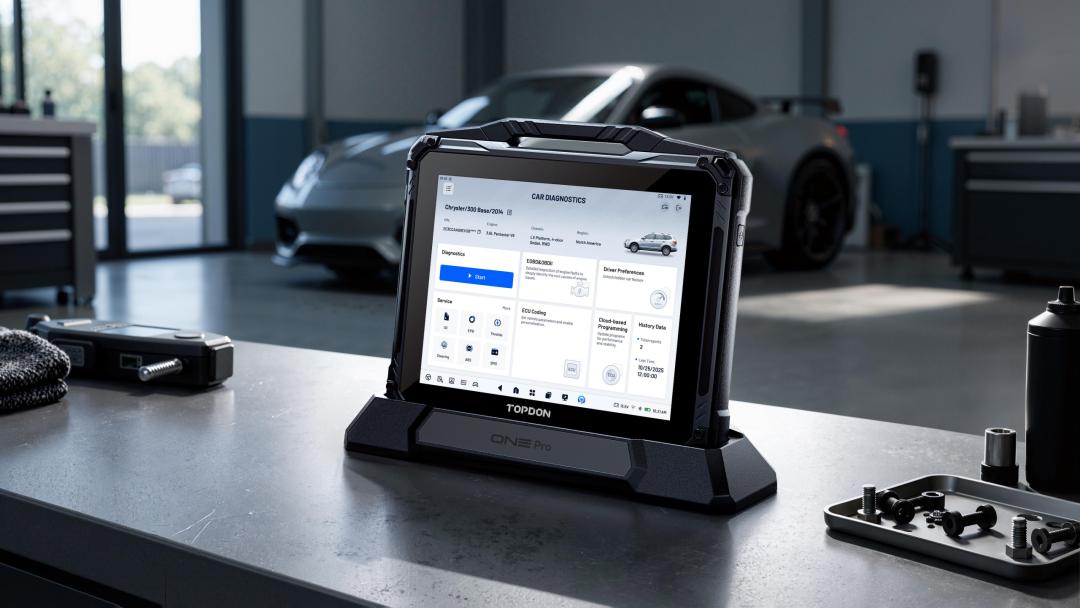
ONE Pro — TOPDON's new automotive diagnostic product of 2026
Data, AI capabilities and software & hardware accumulation are the foundation of TOPDON's entry into the AI diagnosis field. But what really determines the success of this business is its deep insight into user needs and precise timing to enter the market.
In the automotive diagnosis industry, in the past, all players competed for how advanced their equipment was and how wide the coverage of car models was, assuming that technicians were all experts and tools were only "code readers". But TOPDON discovered a hidden pain point in the market: the individual differences of users.
Traditional diagnostic tools assume that users are all experts, so they only provide standard definitions of fault codes.
Taking abnormal engine cylinder as an example, after reading the code, traditional tools can only display the internal abnormality of the cylinder and list all current data streams of the engine. The cause analysis it provides covers all aspects but has no priority. For technicians with insufficient maintenance experience, after obtaining this information, they still need to refer to the maintenance manual or ask senior colleagues to take the next step.
TOPDON's AI application precisely targets the long-tail group of junior and mid-level technicians. Its products can not only output targeted maintenance solutions combined with specific symptoms and common faults of car models, but also record the operation track and diagnosis progress of technicians in real time, and intelligently skip the steps they have mastered, so as to improve efficiency while ensuring maintenance accuracy.
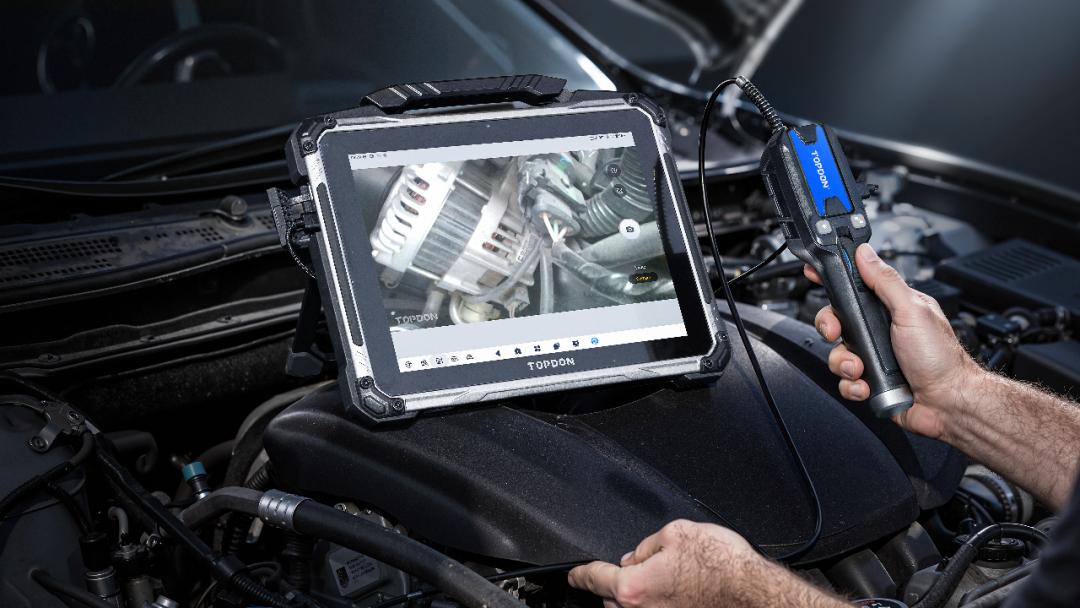
This strategy brings two significant commercial values.
First of all, the number of junior and mid-level technicians is huge, but they lack mature experience and frequently face maintenance problems. The precise guidance of TopFix just solves the core pain point of this group of people.
Secondly, most junior and mid-level technicians are active in third-party independent repair shops, and are exposed to a large number of mainstream brands on a daily basis, facing complex and diversified maintenance demands. This high-intensity real scenario provides a test field for TopFix's algorithm verification. Whether the solution is effective can get actual combat feedback in a very short time. Technicians train AI in reverse in the process of use, forming a virtuous cycle of human-machine co-construction, which further improves the quality of solutions output by TopFix.
Of course, TOPDON neither assumes that all users are experts, nor regards them as "newbies" who completely rely on guidance. Instead, it creatively adopts an interactive logic of on-demand recommendation.
Taking the abnormal engine cylinder of a Japanese car that has traveled more than 200,000 kilometers as an example, facing the same fault, users at different levels have completely different needs.
Some users need precise decisions like "80% of past cases point to aging of the intake pipe, it is recommended to replace it directly"; some users who are new to maintenance are not familiar with specific operations, and need the standard steps and processes for intake pipe replacement; other users hold a prudent attitude towards AI, and need TopFix to present the complete judgment logic so that they can master the final decision-making power.
This "interactive guidance" that fully considers user differences allows TopFix to break away from the constraints of traditional tools and stand out in this mature market.
In essence, TOPDON is a typical user demand-driven enterprise, and all its products and technology polishing are centered on user pain points. Commercial history has repeatedly proved that companies with this gene often have the longest-term vitality.
3. From "New Player" to "Category Definer"
The AI automotive diagnosis that TOPDON is investing in has gradually become a consensus trend in the industry. A global survey by Omdia shows that 34% of respondents regard intelligent diagnosis and predictive maintenance as the most important AI application scenarios in software-defined vehicles.
This is exactly TOPDON's advantage and opportunity.
Founded in 2010, TOPDON is a global provider of intelligent automotive diagnostic tools, with products covering five major fields: personal diagnosis, professional diagnosis, remote diagnosis, thermal imager and battery service, and has a full-link model of R&D, production, sales and service.
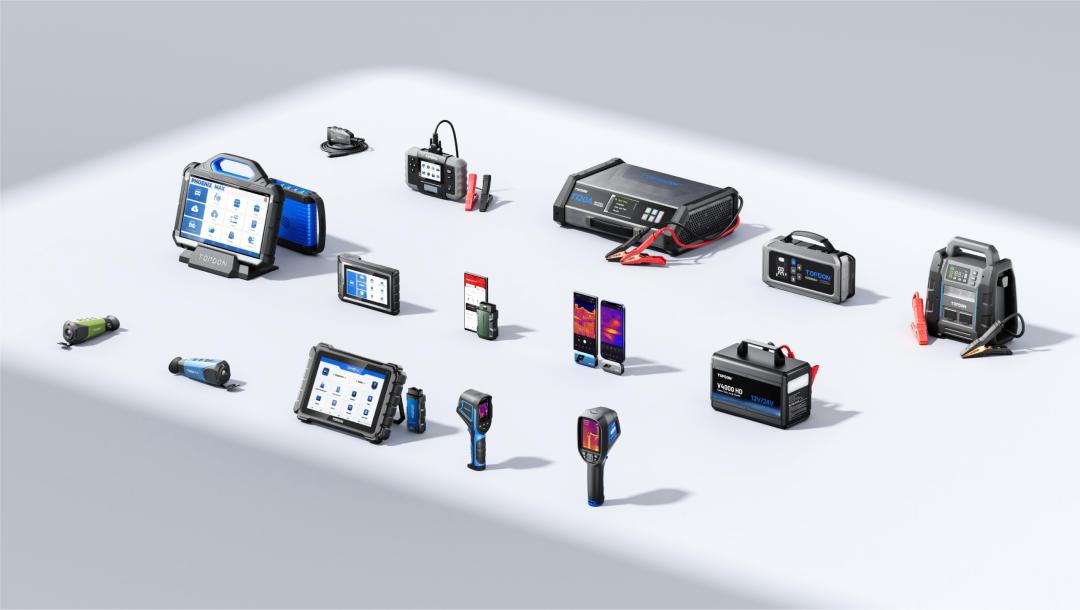
TOPDON Product Matrix
Its strategic intention is very clear: to deepen technical barriers vertically and achieve full-scenario coverage horizontally. However, TOPDON's deeper subversion of the industry lies in the reconstruction of the business model.
Senior technicians have limited demands for AI assistance, but experts are a minority after all. The larger market base is the massive number of junior and mid-level technicians. Choosing to deeply serve this group is TOPDON's core growth logic.
In the future, TOPDON will be committed to the personalized evolution of diagnosis. Through deep human-machine interaction, TopFix will become an exclusive partner that understands users. This transformation will completely break the traditional positioning of diagnostic tools as shared devices, and promote their upgrade to dedicated terminals for each user.
At the same time, the company is gradually evolving from the traditional industry's "one-time hardware sales" model to the 2.0 stage of "hardware for customer acquisition, basic software empowerment". With the launch of TopFix, TOPDON will accelerate its pace to move towards the 3.0 stage: through the inclusive opening of basic software, users will recognize the value in the experience, and the company will gradually explore the business model of "hardware + paid software subscription".
This marks that the automotive diagnosis industry is undergoing a reconstruction of underlying logic.
The automotive diagnosis industry has long been under the old logic of one-time hardware transactions, only serving a small number of experts, with neither data closed loop nor solutions to cross-brand differences and device-side computing power problems. When AI technology penetrates all walks of life at an exponential speed, this static model lacking evolution capability is inevitably moving towards marginalization.
The breakthrough of TopFix lies in the reconstruction of the industry's business logic. In terms of user groups, it extends the service