FDE has suddenly become a booming trend, will product managers jump on the bandwagon?
The most frequently asked question in our backend recently is:
"Hey Guai Ge, is FDE the new career breakthrough for product managers?"
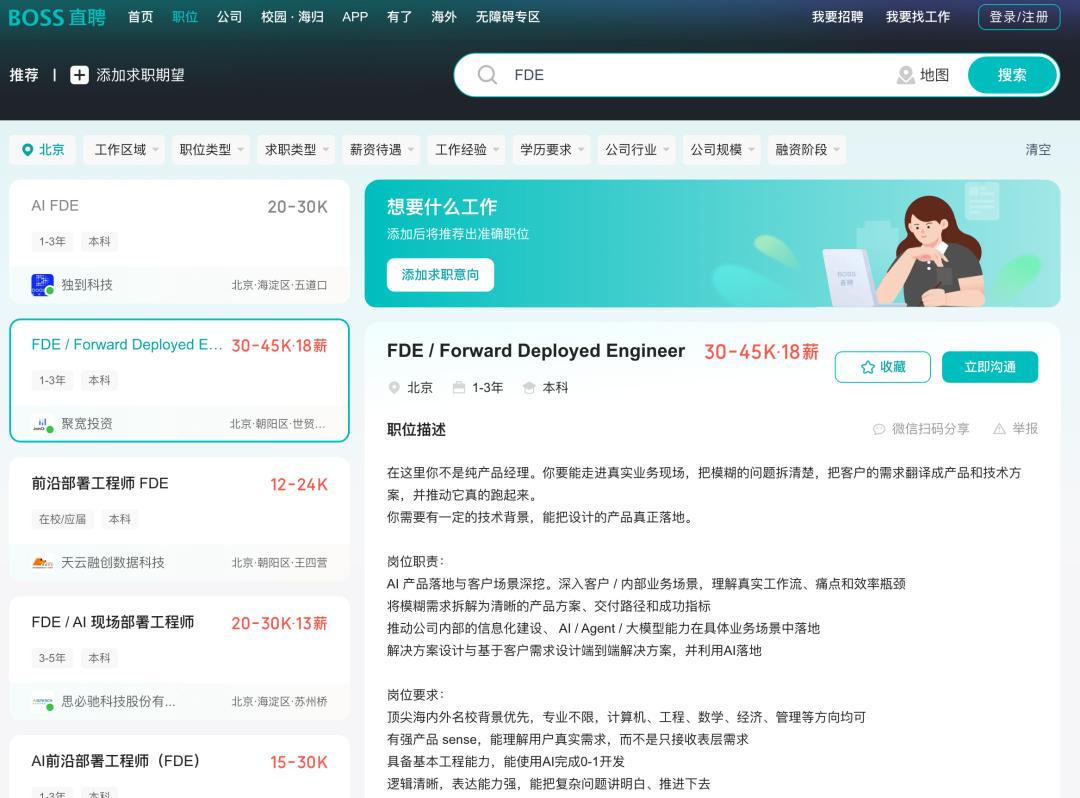
I totally get why so many people are drawn to this role. You will understand it the moment you look at FDE interview questions. Someone on Reddit has compiled an FDE interview guide for Anthropic, and the questions in it are roughly like these:
A bank wants to use AI to automate analysts' work. What is the first step to do?
After a customer purchases AI tools and builds the corresponding system, they complain that the system is not easy to use. Is the problem caused by the model, data, permissions, or a wrong workflow selection?
The boss wants the Agent to modify the production system directly, but the security team strongly disagrees. Whose side do you take?
Don't these questions look familiar? This is not an engineer interview at all — it's just the daily work of a product manager.
So many people's first reaction is: this role is tailor-made for us.
Hold your horses first. My point is very straightforward: FDE is suitable for some product managers, but it is definitely not an upgrade path for all product managers. In China, it may even be a career trap.
I will elaborate on this point in the following sections.
01 First, we have to admit that this hype is real
This is not a conceptual gimmick, the data speaks for itself.
Even Tencent Cloud has launched certification services for FDE now, which shows how popular this role is, though no one can tell for sure if it is just a way to make easy money from users.
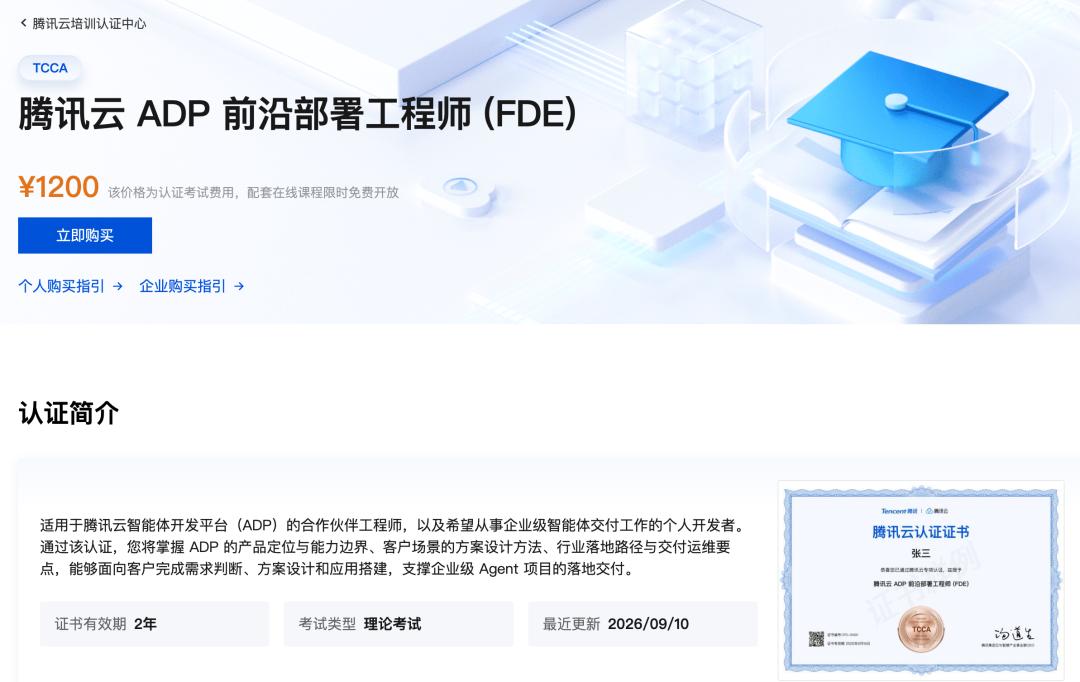
By the end of 2025, there were roughly 922 FDE positions, marking a five-fold increase in one year, and the number is still rising in 2026.
By the beginning of September this year, 462 companies in the United States were recruiting FDEs, with 982 open positions, a 729% increase over last year.
There is even more exaggerated data. A headhunting firm's survey found that only 5% to 10% of companies planned to recruit FDEs at the beginning of the year, and this proportion rose to 70% by the end of the second quarter.
The domestic market is also catching up fast. In May this year, Shanghai specially launched an advanced training program for FDE, and a dedicated FDE track was set up in the engineer competition, where winners can get professional title assessment directly.
Why did this role suddenly become so popular?
To put it simply: AI models are already intelligent enough, but enterprises cannot put them into practical use.
The bottleneck is not the model itself, but data, permissions, workflows and organizational structures. Anyone who can break through these trivial and tough barriers and make AI actually run in enterprises is highly valuable.
That's exactly what FDE does.
02 What on earth is FDE
This concept is not new, its originator is Palantir. Their engineers embedded in client organizations very early, using the company's platform to solve specific business problems.
Palantir has a very clear statement: ordinary engineers develop functions that can serve many customers; FDEs combine multiple functions to solve complex problems for one specific customer.
Key takeaway: The premise of FDE is that there must be a reusable platform behind it.
It is the last mile of platform implementation, not the platform itself. Keep this sentence in mind, we will refer to it later.
03 A strange phenomenon in China: same job title, completely different roles
If you check the recruitment pages of major domestic tech companies, you will find a very interesting thing.
Tencent is recruiting 3 Field Deployment Engineers requiring 3 to 5 years of work experience, which are classified under the product category.
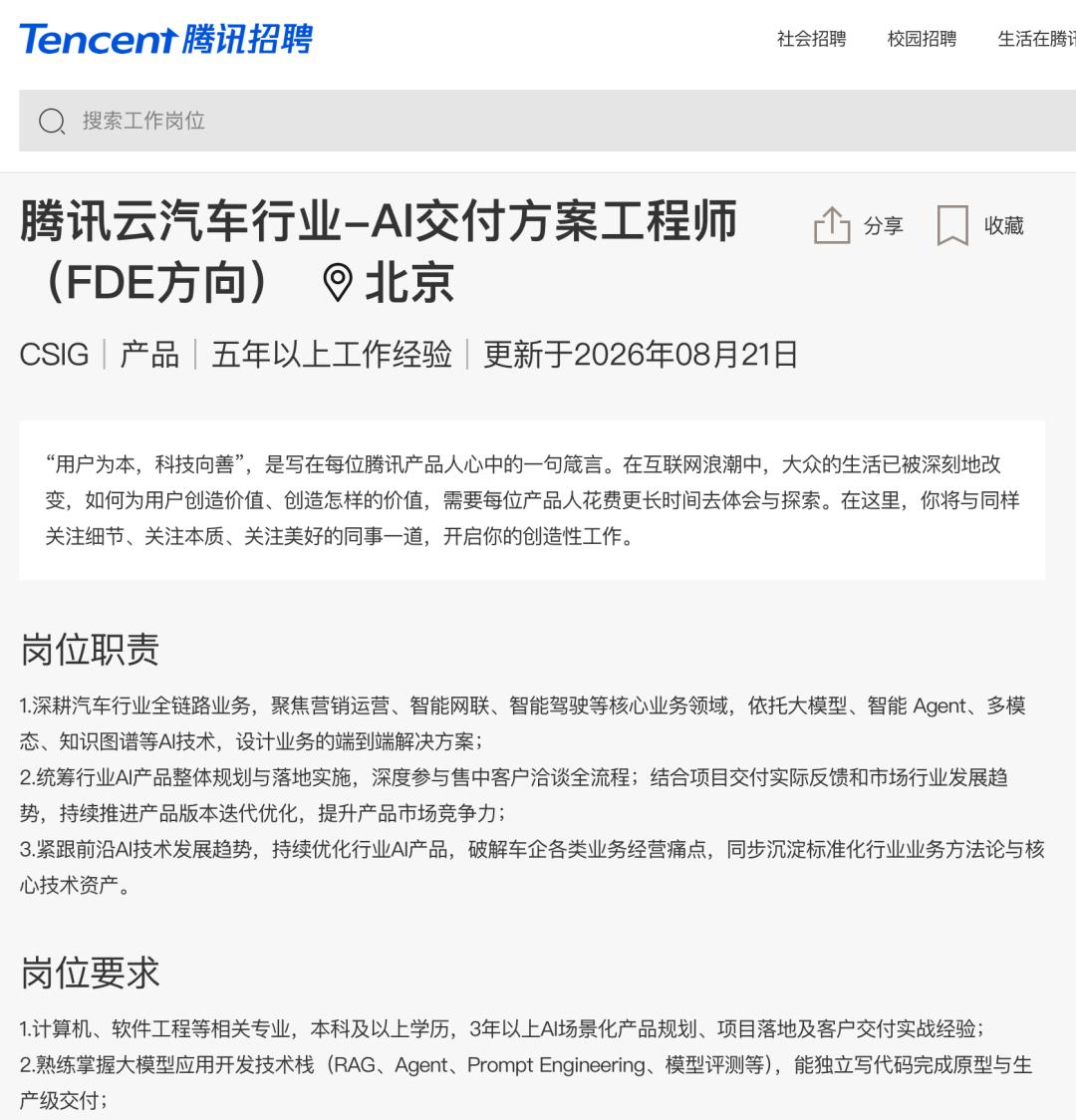
ByteDance calls this role AI FDE Engineer, which is classified under the R&D category, with openings in Feishu, Volcano Engine and the data platform team.
However, the FDE intern position at ByteDance is classified under "Sales - Sales Support".
Product, R&D, sales — three different identities under the same job title.
What does this indicate? It shows that there is no consensus on this role in the domestic market, every company is filling this basket with content based on its own understanding.
So if you want to switch to this role, the first thing to do is not to prepare for the interview, but to figure out: Which exact FDE role are you applying for?
04 The biggest trap: implementation work under a new name
This is the part I most want to talk about.
Anyone who has experience in China's ToB industry knows a common pain point: customers demand customization, private deployment and on-site support. In the end, SaaS products turn into custom projects, and product companies turn into outsourcing companies.
Over the past decade, countless ToB startups have failed on this path.
The reason why FDEs are highly valued in Silicon Valley lies in two prerequisites:
First, there is a reusable platform behind the role;
Second, the insights discovered at the front line can feed back to product iteration, making the deployment for the next customer faster and cheaper.
What if these two prerequisites do not exist?
Then FDE is nothing more than an implementation consultant, on-site engineer, or pre-sales support. The job title sounds fancy, but the work content remains the same, and the career ceiling does not change either.
The experience you accumulate is not universal competence, but "I am most familiar with the system of that certain bank". Once you switch to a new company, all previous experience is almost reset to zero.
Let me say something that may offend some people: If a company whose products cannot be reused recruits a large number of FDEs, it is most likely not recruiting real FDEs, but recruiting implementation staff under a new fancy name.
05 The strengths and weaknesses of product managers
Let's start with the good news first.
What is truly scarce for FDE roles is not people who can write code.
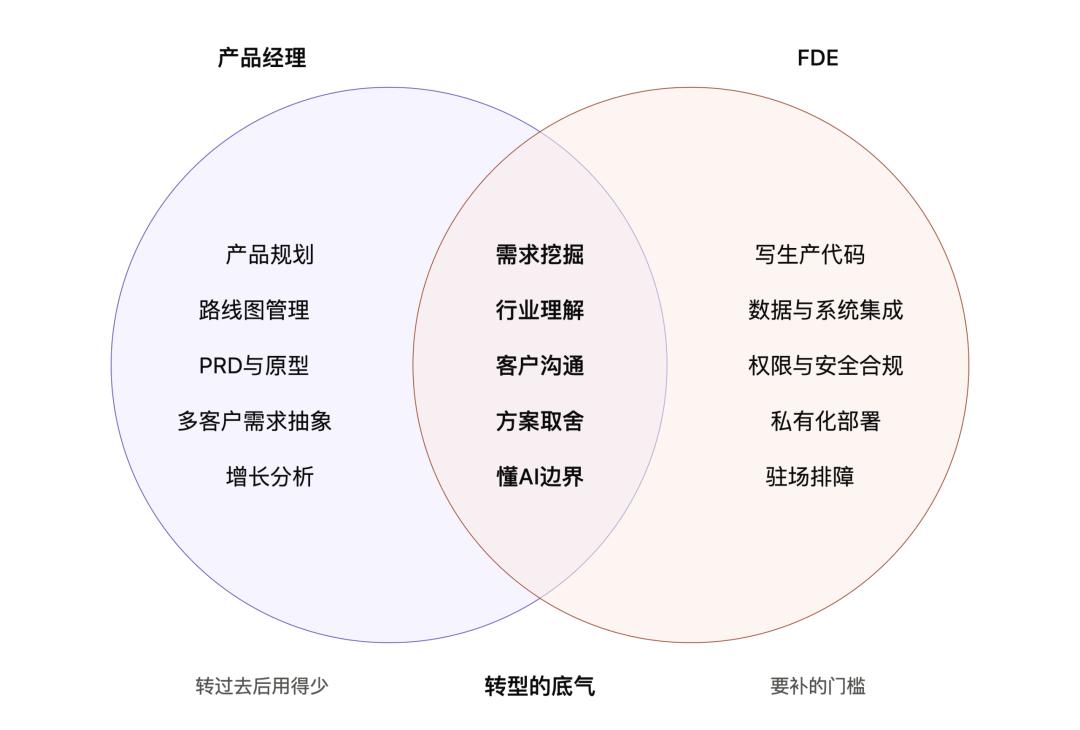
Some institutions estimate that there are roughly 17,000 FDEs in the United States now, but only about 2,000 of them truly understand the industry, can communicate with enterprises properly, have AI implementation experience, and can continuously create profits for customers.
You can see what part is missing right? Business understanding, judgment, and execution to push things forward. These are exactly the core competencies of excellent product managers. To be honest, it is much harder for engineers to master these skills than for product managers to learn technical skills.
Now for the bad news.
Product managers also have obvious weaknesses: engineering delivery capabilities.
FDEs need to write data pipelines, complete system integration, build backends, develop RAG and Agent applications, and carry out system design under various constraints such as single sign-on, permission policies, compliance requirements, data residency, and legacy ERP systems.
You may say that AI programming tools are widely available now.
That's true, the threshold for writing code has been lowered. But there is a huge gap between "being able to run a demo" and "being fully responsible for the production system".
In China, this gap is even wider. For clients in the finance sector, government and state-owned enterprises, private deployment, intranet isolation and domestic technology adaptation are all extremely complicated tasks that cannot be handled carelessly.
If your daily work is mainly drawing prototypes, writing PRDs and organizing review meetings, you will face huge difficulties when you take this role.
06 So who is suitable to switch to FDE
I think the following types of people are more suitable:
People who have ToB or industry product experience, and have in-depth understanding of a certain vertical field, such as finance, manufacturing, retail supply chain;
People who have a certain technical foundation, or are truly willing to write code, debug interfaces and check logs in practice;
People who do not mind business trips and on-site support, and even enjoy communicating and negotiating with customers.
The following types of people need to think twice before switching:
Pure C-end growth-focused product managers;
People who mainly complete work through documents and prototypes;
People who feel headache as soon as they hear on-site support requirements.
07 Three questions and one test
If you really get an FDE offer, make sure you figure out three things before signing the contract:
First question: Can feedback collected from front line be incorporated into the product roadmap?
If there is no formal channel for this, you are actually doing custom project work.
Second question: What metrics will be used to evaluate my performance?
If the metrics are productization rate, subscription renewal rate and customer expansion rate, it is a real FDE role. If the metrics are delivery progress and working hours, it is just an implementation role.
Third question: What is the future career path for this role?
If the path leads to product lead or solution architect, it is a good direction. If the path leads to delivery manager, you need to think it over carefully before taking the job.
Finally, do a small test for yourself:
Given one week, can you independently build an Agent that connects to real enterprise data, has permission control, and deploy it online?
If yes, you can seriously consider switching to this role.
If no, make up for the relevant competencies first, and do not rush to switch.
The underlying signal behind the FDE hype is: the AI industry is shifting from "selling models" to "delivering tangible results".
This is a good thing for product managers. The position closest to real business demands is becoming the most valuable one.
A real FDE role is an excellent career springboard. After working on the front line for two or three years, you will see dozens of enterprises applying AI, encountering bottlenecks and giving up halfway. When you go back to work as an AI product lead or start your own business, your judgment will be far stronger than those who only guess demands in meeting rooms.
But the premise is that the FDE role you take is a real one.
You can follow the trend of popular job titles, but you cannot follow the trend blindly when making career choices.
This article is from WeChat Official Account "Everyone is a Product Manager" (ID: woshipm), written by Guai Ge, published with authorization from 36Kr.