Building a new moat for China's domestic beauty brands, why has PROYA staked all its R&D efforts on mitochondria at the 1-micron level?
Author | WANG Yi
A tiny organelle with a diameter of less than 1 micrometer, how does it affect the cosmetics business with a trillion-yuan output value in China? This academic conference held in Hangzhou has put forward a phased discussion on this topic.
More than 20 scholars from institutions including the Chinese Academy of Sciences, Zhejiang University, Peking University, the University of California, Los Angeles, Nankai University, and Osaka University gathered to share insights at the Mitochondria · Hangzhou Forum, which was hosted by the journal Mitochondrial Communications and undertaken by PROYA Inc.
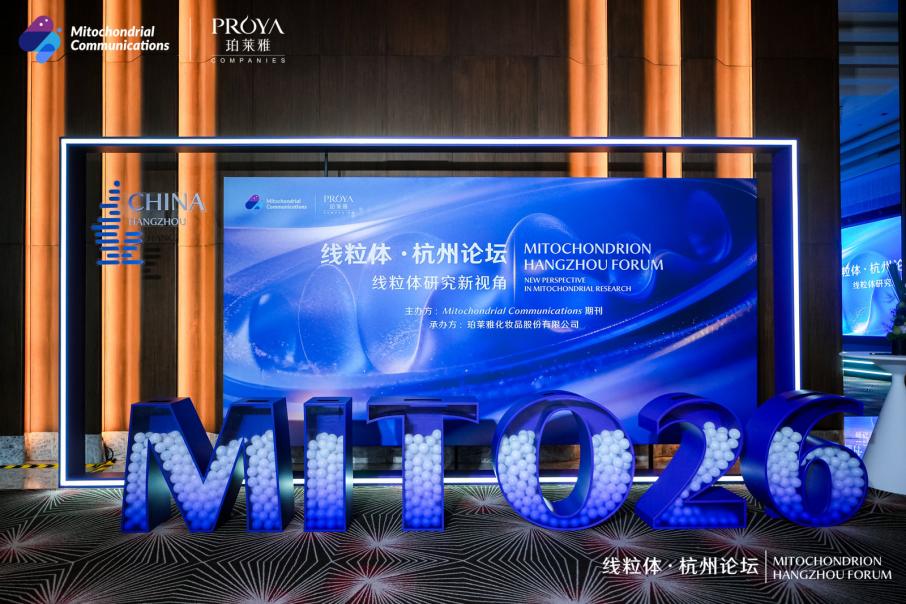
A cosmetics company paired with a top-tier academic conference on mitochondria was rarely seen several years ago. In PROYA's narrative, this is more like a "return gift" a year in the making. In Cannes, France in September 2025, at the 35th International Federation of Societies of Cosmetic Chemists Congress (IFSCC2025), PROYA won the "Top 10 Basic Research Awards of IFSCC2025" for its research on mitochondrial anti-aging active compounds assisted by deep learning screening, becoming the only Chinese cosmetics enterprise to receive this award that year.
It is understood that PROYA will attend IFSCC again this year. From September 28 to October 1, the congress will be held in Perth, Australia. As the Gold Partner for Scientific and Technological Contribution of IFSCC, 20 of PROYA's research achievements have been selected this time, including 4 oral presentations and 16 poster displays, covering cutting-edge fields such as innovative sunscreen film technology, mitochondrial anti-aging research, and AI-enabled screening of natural plant active substances.
Why does a domestic beauty enterprise that has ranked among the top domestic beauty brands for three consecutive years with revenue exceeding 10 billion yuan bet real money on mitochondrial research?
Making moves at the "upstream" of aging
When PROYA bets on mitochondria, it first targets a "root problem" in aging science.
Mitochondria are known as the "powerhouses of the cell", which synthesize ATP to supply energy for life activities, and their dysfunction is regarded as one of the core mechanisms of skin aging: insufficient energy supply will weaken the ability of fibroblasts to synthesize collagen, accelerate the degradation of extracellular matrix, and then lead to sagging, dullness and periorbital aging. HUANG Hu, Chief Scientific Officer of PROYA Inc., made an analogy in an interview with the media: "Now everyone is talking about cell-level anti-aging, but what we are working on is mitochondria, which are smaller than cells. In fact, they are the 'engine' and 'energy device' of cells."
In April 2025, in a review published in Cell by the team of Guido Kroemer and Carlos López-Otín from Sorbonne University in France, the hallmarks of aging were updated from the previous 12 to 14, and mitochondrial dysfunction has always been on the list. HUANG Hu judged that to obtain truly cutting-edge and revolutionary anti-aging technologies, "the answers need to be found in research on the 14 hallmarks."
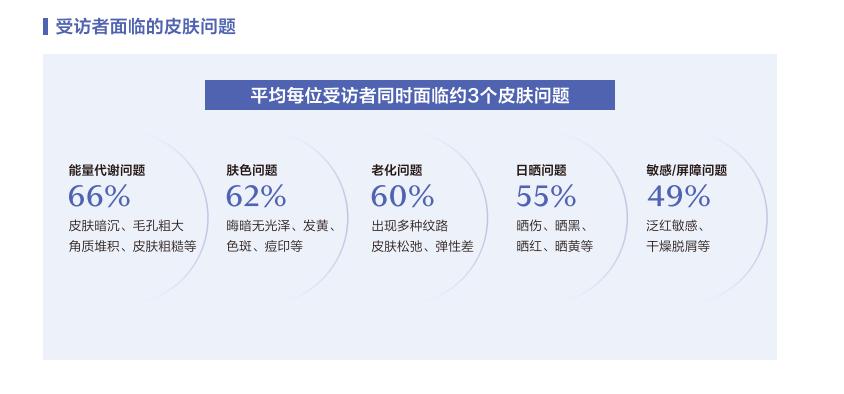
Beyond scientific judgment, there is real traction from the market side. In August this year, PROYA jointly released the White Paper on China's Systematic Skin Care Research and Industrial Practice with the Shanghai Daily Chemicals Industry Association. The data shows that among 2002 Chinese women aged 18 to 50, each respondent faces about 3 skin problems on average, and the mention rate of "energy metabolism problems" reaches 66%, ranking ahead of skin tone (62%), aging (60%), sun exposure (55%) and sensitivity/barrier issues (49%); 61% of the respondents said that the more mature their cognition is, the more they pay attention to skin care as a systematic problem, and will consider improving multiple skin problems at the same time.
Demand is upgrading, but the old map of the industry is failing. The white paper cites data from iResearch showing that China's beauty and skin care retail market experienced negative growth twice in 2022 and 2024, and is expected to grow by only 3.2% in 2025.
The era of incremental growth has ended, and the game of stock competition has begun. For a long time in the past, the beauty industry fell into the path dependence of "involution of raw materials": formula competition focused on increasing the addition of active substances, but paid insufficient attention to transdermal absorption efficiency and bioavailability. Some studies used alternative models or in vitro data to replace complete clinical verification, and there was once a "black box" in the transformation process of product efficacy.
When the concentration competition comes to an end, moving upstream to find targets at the mechanism level becomes another path. PROYA's choice is to further reduce the research object from "cells" to "mitochondria", and make systematic arrangements around dimensions such as energy metabolism, oxidative stress, autophagy, quality control and mtDNA homeostasis.
Public reports show that as early as when the traffic dividend had not yet peaked and most peers were still competing for speed, PROYA began to "sink" into the R&D end, and then continuously increased R&D investment year by year, with the scale of personnel and the amount of investment continuing to grow.
In 2021, the company established the International Scientific Research Institute; in 2023, the two R&D centers in Longwu, Hangzhou and Shanghai were put into use; in October 2024, PROYA European Science and Innovation Center was officially established in Paris, France, becoming the first domestic beauty enterprise to set up a science and innovation center in Paris.
At the beginning of 2025, the company further put forward the "Double Ten" strategy of "ranked among the top 10 global cosmetics enterprises in the next ten years". HOU Yameng, General Manager of PROYA Inc., said at the 2026 Innovation Technology Conference: "The accidental success of one product does not mean the ability to continuously make good products. Being able to create a representative work is a success; being able to continuously produce representative works is the real capability of an enterprise."
Making moves at the "upstream" of aging never tests vision, but patience.
From a research paper to a bottle of cream, the true value of basic research
WANG Jianhua, President of the China Industry-University-Research Collaboration Promotion Association, published an article in the journal New Industrialization stating that "enterprises are closest to the market and have the best understanding of industrial needs, so they should become the 'proposers' of scientific research topics."
This judgment has been reflected in PROYA. In the layout of the mitochondrial energy anti-aging track, PROYA has built a systematic scientific research system of "mechanism research - raw material development - efficacy verification - product transformation".
To this end, PROYA Inc. has joined hands with top domestic and foreign scientific research institutions such as Zhejiang University, the University of Innsbruck in Austria, and West China Hospital of Sichuan University to carry out systematic mechanism research around dimensions including mitochondrial energy metabolism, oxidative stress, autophagy, quality control and mtDNA homeostasis; integrating high-content imaging, multi-omics analysis and deep learning technology, it jointly developed a high-throughput screening platform for mitochondrial dynamic phenotypes with Zhejiang University to efficiently screen anti-aging active substances, and successfully developed the core formula Cellergy Pro™; at the same time, focusing on the mitochondrial NNT target, it made a breakthrough in developing the RevMelan™ whitening technology to solve the problem of "aging darkening".
Relevant achievements have been published in international academic journals such as Phytomedicine, Journal of Cosmetic Dermatology, and Frontiers in Pharmacology, and a number of invention patents have been arranged; the deep learning-assisted mitochondrial active substance screening study won the "Top 10 Basic Research Awards" of IFSCC 2025, making it the only Chinese cosmetics enterprise to receive this honor that year; the mitochondrial NNT whitening study was also presented at the IFSCC Academic Conference and the Chinese Medical Association Dermatovenereology Academic Annual Conference, and obtained the exclusive patent "A NNT Activating Composition and Its Application".
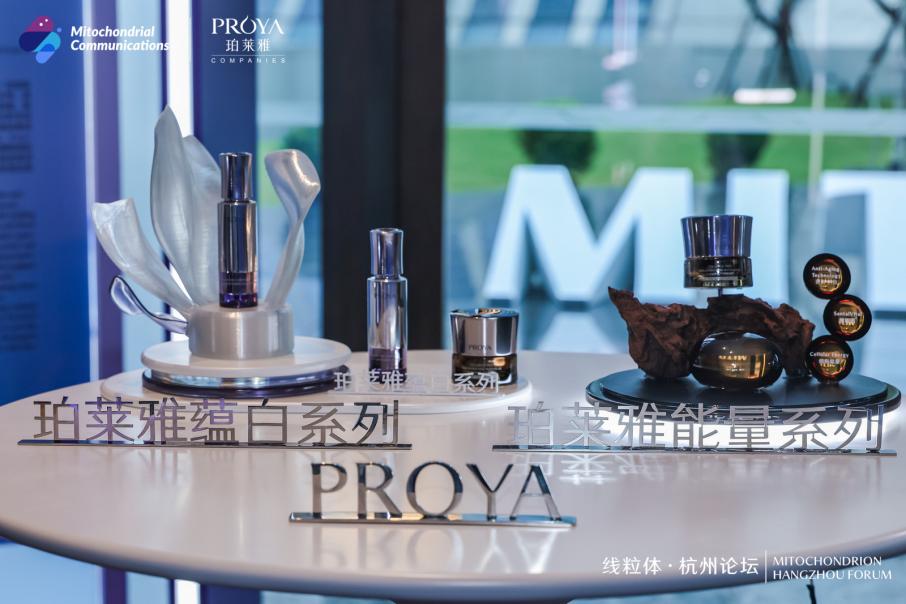
It is reported that the relevant research results have been applied to the PROYA Energy Series. The Energy Series is equipped with Cellergy Pro™, and SGS human efficacy tests show that the product can significantly improve skin elasticity and firmness, and effectively reduce wrinkles; the Energy Bright Series uses RevMelan™ whitening technology to activate mitochondrial NNT, and the patented whitening technology matrix works synergistically through four pathways. Chromatometer tests on real people show that the pigmentation spots decrease by 31% in 7 days and the skin fairness increases by 46% in 4 weeks.
At the industry-university-research level, PROYA further developed the "Joint Laboratory of Mitochondrial Medicine and Skin Health" co-built with the Institute of Genetics of Zhejiang University. During the conference, the joint laboratory officially appointed Professor Douglas C. Wallace as the Chief Scientific Advisor and Professor GUAN Minxin as the Director of the Joint Laboratory, and jointly formed an academic advisory team with 20 domestic and foreign experts and scholars in related fields, focusing on four major directions: efficacy, mechanism, raw materials and targeting.
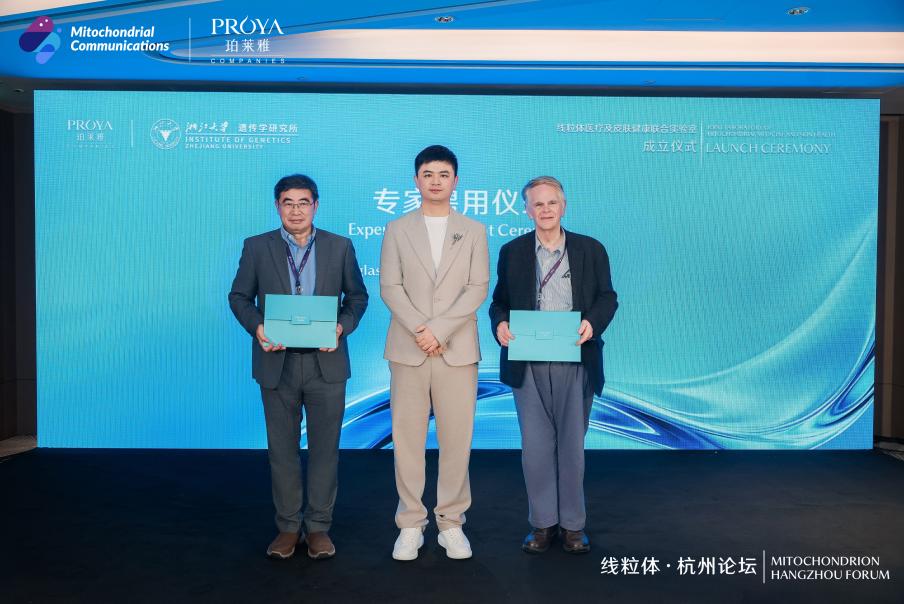
At the same time, the laboratory will build an efficacy evaluation platform relying on the skin cell experimental system, continuously carry out screening of high-efficiency skin care raw materials, produce high-level papers and invention patents, and promote the transformation of cutting-edge scientific research results into cosmetics products.
Behind the single-point achievements, there is a set of specially precipitated methodology. In the white paper, PROYA named it the CRMVP five-dimensional evidence-based research model, which is linked step by step from Consumer insight, Research, Material and formula, Visual Verification to Product launch; products must pass the three standards of "laboratory mechanism research, third-party human testing, and clinical verification in top tertiary hospitals" at the same time. The research scope covers five types of skin problems: energy metabolism, skin tone, aging, sun exposure, and sensitivity/barrier issues, and finally lands on six product lines, directly promoting skin care technology from "single technological breakthrough" to "systematic solution".
Behind the methodology is the continuously expanding R&D foundation. Financial report data shows that PROYA's R&D investment increased from 77 million yuan in 2021 to 210 million yuan in 2024 and 217 million yuan in 2025; according to the 2025 annual report, the company has 334 R&D personnel, 52.1% of whom have master's or doctoral degrees, and R&D personnel account for 10.27% of the total number of employees of the company; as of June 30, 2026, it has accumulated 332 authorized patents, participated in the formulation of 22 national standards, 9 industry standards and 48 association standards. The white paper shows that its patents have been arranged along the whole chain of "raw material development - formula technology - efficacy evaluation", of which more than 130 patents (including applied and authorized ones) are at the raw material end.
In PROYA's framework, this is exactly how basic research is transformed into technical barriers: the barrier is not a single popular ingredient, but a platform-based and iterative research capability. Once technical platforms such as molecular design and synthesis, advanced delivery systems, biological fermentation and synthetic biology are built, they can continuously "supply water" to the product end, which is a completely different business from chasing popular raw materials again and again.
From walking fast alone to walking far together, a new integration model of "basic research + industry-university-research-medicine"
In PROYA's scientific research map, basic research is never a lonely advance of one single enterprise.
The most concerned scholar at this forum is Professor Douglas C. Wallace. He is a famous American geneticist, a member of the National Academy of Sciences, the National Academy of Medicine, and the American Academy of Arts and Sciences. He currently serves as a Professor of Pathology and Laboratory Medicine at the Perelman School of Medicine of the University of Pennsylvania, and the Founding Director of the Center for Mitochondrial and Epigenomic Medicine at the Children's Hospital of Philadelphia.
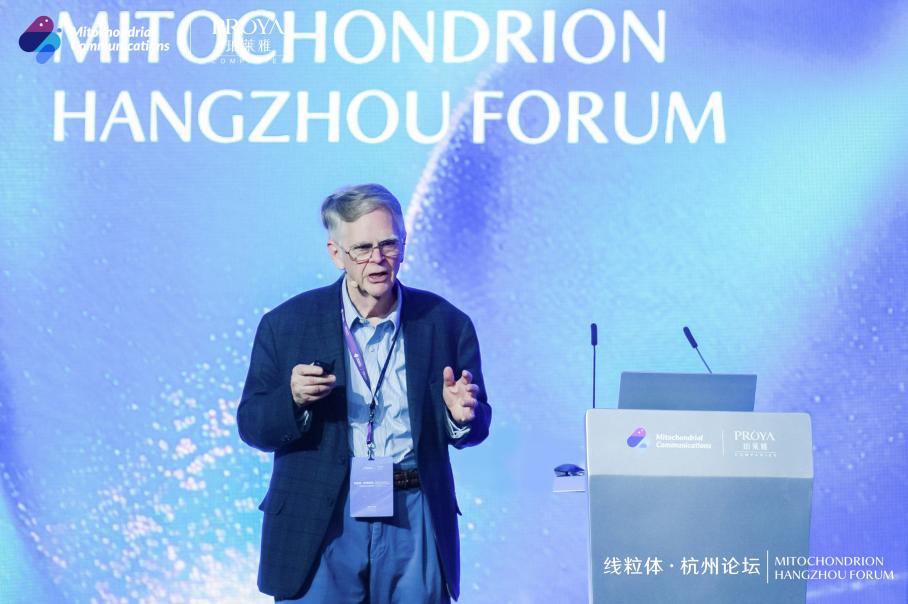
Professor Wallace pioneered the new field of human mitochondrial genetics in the 1970s. By developing the cytoplasmic hybrid technology, he was the first to confirm that mitochondrial DNA encodes heritable traits, and proved that human mtDNA strictly follows the law of maternal inheritance; he identified the first pathogenic mitochondrial DNA mutation, clarified its pathogenic mechanism in Leber's hereditary optic neuropathy, and then linked mtDNA mutations to a variety of clinical diseases such as deafness, neuropsychiatric diseases, cardiomyopathy, myopathy and diabetes. The two core concepts of "threshold effect" and "heteroplasmy" he proposed have become the cornerstone of the diagnosis and understanding of mitochondrial diseases.
In his opinion, "anything that provides 90% of the energy of a cell cannot be insignificant." For this reason, he highly recognizes PROYA's research direction.
More than that, more and more researchers are joining hands with PROYA.
In July 2025, PROYA signed a cooperation agreement with West China Hospital of Sichuan University, focusing on mitochondrial anti-aging pathways, targets, active substance screening and clinical transformation; in October of the same year, it jointly built the "Joint Laboratory for Skin Health and Aging Research" with the School of Pharmaceutical Sciences of Zhejiang University... Universities, hospitals, scientific research institutions and raw material enterprises have their own roles in this network: enterprises "propose questions" from the consumer end, universities analyze the mechanism, hospitals complete clinical verification, and industrial partners solve raw materials and processes.
Behind this is a new narrative logic of "industry-university-research-medicine".
GUAN Minxin said: "What I see is a complete system of PROYA, from cell-level basic research, to AI-optimized formula, to efficacy verification, and then to being responsible for consumer safety, every link is covered." He also said, "What impresses me most is that PROYA is really willing to invest in R&D. This is a revolutionary change. I believe this direction may change the paradigm of the entire cosmetics industry in the future, moving towards a more technology-driven route."
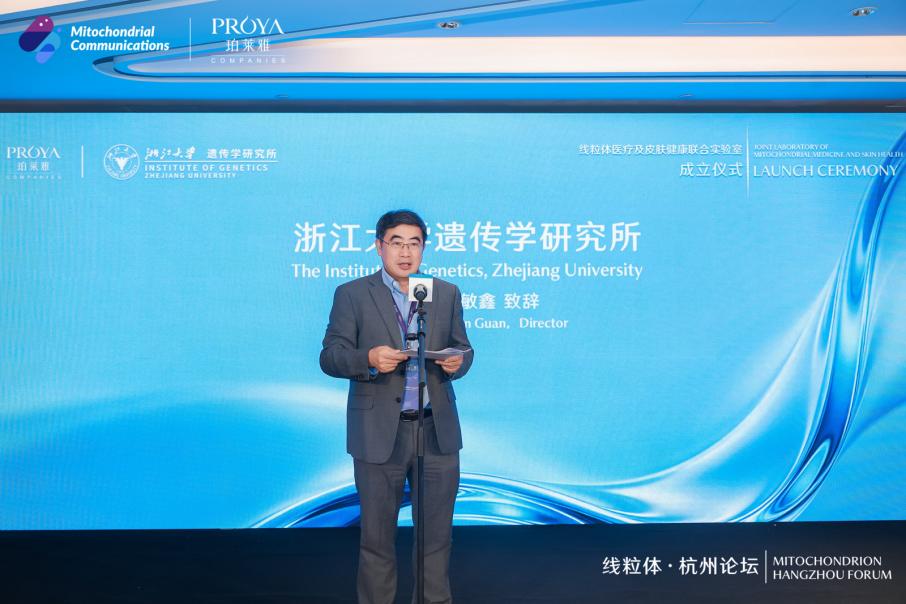
For domestic beauty brands, the industrial significance of this cooperation lies in: in the past, Chinese beauty enterprises were more "applicants" and "learners" of the global scientific research system; now, some enterprises are