At the Yunqi Conference, what did Alibaba say and what did it not mention?
Text by Chen Xi
At this year's Yunqi Conference, the most highly anticipated keynote speech was delivered by Wu Yongming.
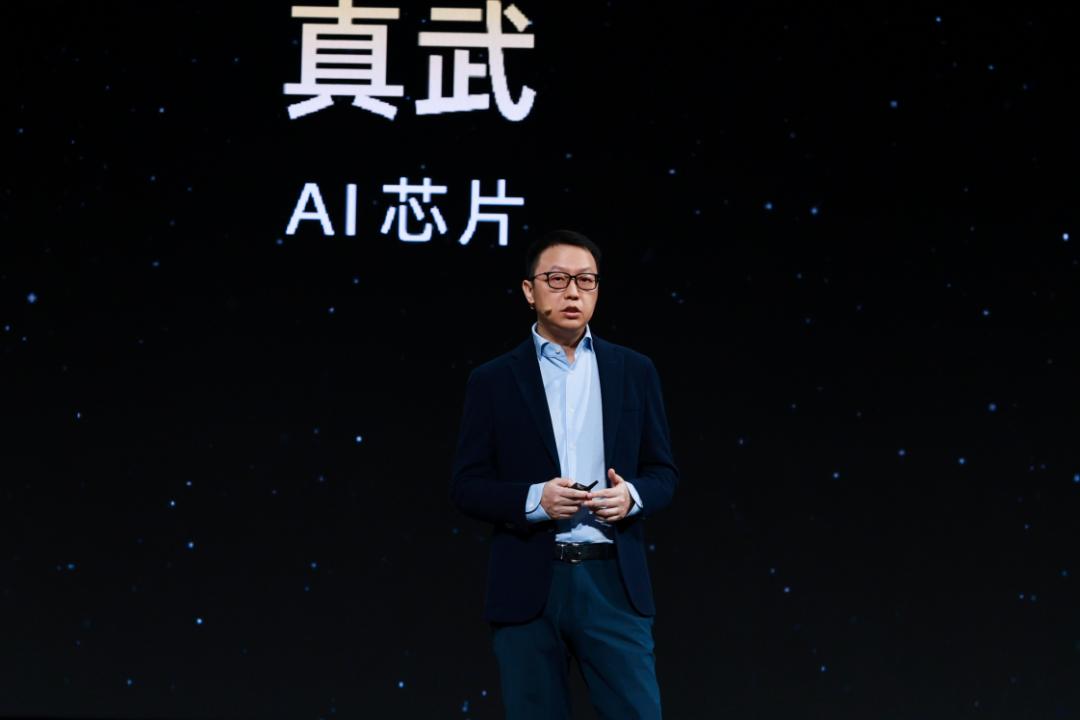
While the entire industry is competing to see whose models deliver higher benchmark scores, whose applications achieve faster growth, and who is fighting tooth and nail in a specific AI vertical, Alibaba CEO Wu Yongming presented a "power grid" at the main forum. He divided the infrastructure for the machine intelligence era into three segments: AI models, AI chips, and AI Cloud, and announced that Alibaba will make long-term strategic investments in all three directions.
For a long period in the past, many people failed to understand what bets Alibaba was placing. The answer revealed at Yunqi is very straightforward: Alibaba is betting on the "super power grid" of the AI era.
This is also the most essential difference between Alibaba and pure model companies or application companies. Models will iterate, applications will be replaced, and the AI application trend shifts every month from chatbots to coding to work scenarios, but the underlying power grid responsible for producing and delivering intelligence — chips, data centers and cloud — is a cycle-transcending hard asset, which is exactly Alibaba's most solid core advantage. Among global cloud giants, very few have full-stack capabilities covering from the most underlying chips to the top-level models and applications.
Behind this heavy bet is Alibaba's deduction of AI demand.
Machine thinking is different from human thinking, as it is not limited by population size or the 24-hour daily cycle. Wu Yongming predicts that the total amount of machine thinking in the future will be more than 1000 times that of human thinking, while today's machine thinking only accounts for about 3% of human thinking, leaving at least 30,000 times more room for growth ahead.
What the AI market will ultimately bear is far more than the value of human work today. Assisting humans with programming and report writing is only the primary stage of machine intelligence. When the supply of machine intelligence becomes infinitely abundant, its significance to human society will go far beyond replacing existing mental labor. This change will be more profound than the Industrial Revolution.
Demand is nearly unlimited, but the ultimate product has not yet emerged. Today's AI applications are still in the "electric lamp" stage, and people cannot stand at the moment of the emergence of electric lamps to imagine railways, elevators, refrigerators and the entire subsequent modern industrial system.
Therefore, before the ultimate product appears, the most certain thing is to build power stations and power grids first. Following this logic, Alibaba's three investment segments have clear divisions of labor:
On the model side, the Qwen team plans to train a brand-new model with a parameter scale of 5-10T, moving toward super artificial intelligence.
On the chip side, T-Head released the most powerful domestic AI chip Zhenwu V900 on the day, with computing power 3 times that of the Zhenwu M890. A single cluster built on it can be scaled up to 500,000 cards, supporting the training and inference of cutting-edge models. Alibaba stated that due to the maturity of T-Head's chip product lines and wide adoption by customers, the annual shipment volume is expected to increase significantly.
On the cloud side, Alibaba announced a previously undisclosed long-term target: by 2032, the scale of global data centers operated by Alibaba Cloud will exceed 20GW.
The three are not parallel business segments, but a complete machine that produces intelligence. Models determine what machine intelligence can do, chips and systems determine how much cost is required to produce the same level of intelligence, and the cloud determines the maximum scale that intelligence can be delivered to.
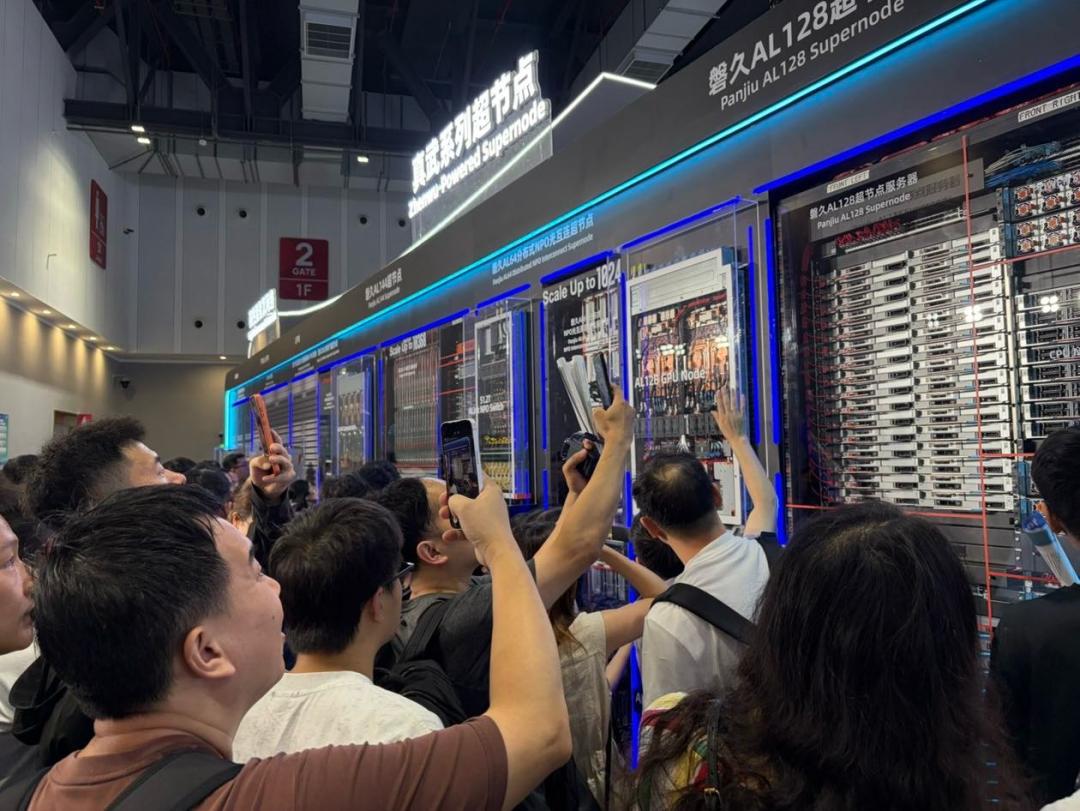
At present, the global shortage of AI computing power has become a consensus across the industry. Whether machine intelligence can be adequately supplied in the future ultimately depends on two variables. The first is scale: the construction of chips, power, networks and data centers is still tight, and AI data centers themselves are complex system engineering, with very few companies truly capable of large-scale supply.
The second is price: as models and infrastructure continue to optimize, the competition lies in who can continuously reduce the price for the same level of intelligence and continuously improve the intelligence-price ratio. In the final analysis, future competition will come down to who can produce intelligence on a larger scale and at a lower cost.
A clear signal is that "GW" is becoming a common unit of measurement for global cloud giants. According to Bloomberg, Microsoft plans to expand its data center capacity to 38GW by 2032, and AWS previously disclosed a pace of adding 3.8GW of new capacity per year. When the industry begins to describe its scale with the unit used for power stations, the core variable of this round of competition is no longer just model benchmark scores, but power, chips, land, networks, capital and engineering delivery capabilities.
20GW can also be converted into a highly imaginative revenue forecast. According to analysts' estimates, if each GW corresponds to about 12-15 billion US dollars in revenue, Alibaba Cloud's external revenue is expected to exceed 1 trillion RMB by 2032, which means it is expected to achieve the target of 100 billion US dollars in external revenue ahead of schedule in 2030, with revenue growth rate higher than the previous industry expectation of about 50%.
At the same time, T-Head's latest self-developed AI chip is regarded as the most powerful domestic AI chip at present, which is expected to reduce the cost of computing power centers. This round of computing power expansion also presents a new model: in addition to self-construction, the adoption of methods such as joint construction and cooperative operation with partners makes the investment structure shift more to operating expenditures. If self-developed chips continue to dilute the unit computing power cost, Alibaba Cloud is expected to build barriers on both the "supply scale" and "computing power cost" sides.
While the market is still debating who will own the next hit application, Alibaba is competing for the underlying position that all applications cannot bypass. It is not fighting for a short-term ticket for the AI era, but for the super power grid that enables continuous model evolution, large-scale computing power supply, and increasingly affordable intelligence, which is exactly what Alibaba excels at.
The full text of Wu Yongming's speech at the Yunqi Conference is as follows:
Hello everyone, welcome to the 2026 Yunqi Conference. As we gather for the Yunqi Conference again this year, the development of AI technology over the past year has exceeded all expectations, with technological iteration accelerating rapidly. A year ago, we judged that AGI was only the starting point, and AI would continue to evolve toward super artificial intelligence ASI capable of self-iteration. Over the past year, everyone has got used to Vibe Coding and Vibe Working, AI has made very significant breakthroughs in long-horizon tasks, and the technical path for autonomous evolution has become increasingly clear.
As AI gradually unlocks stronger capabilities and accelerates its penetration into various scenarios, we see a profound change: Machines are becoming the main force of thinking, and intelligence is becoming a large-scale commodity. The last change of this kind was the Industrial Revolution, which turned "power" into a large-scale commodity. Humans successively invented the steam engine, internal combustion engine and electricity, and built our modern industry around them.
This time, it is the turn of thinking. In the past, how much thinking could be invested in a complex problem was limited by the total human intelligence and value distribution. Today, machines break these limits. With the gradual realization of ASI and the continuous expansion of AI infrastructure, thinking will become a commodity supplied on a large scale just like power. In the future, we will enter the "Machine Intelligence" era.
What I want to talk about today is our thinking about the "Machine Intelligence" era and Alibaba's strategic choices.
First of all, I want to clarify a concept. People are used to calling AI "Artificial Intelligence", and the word "Artificial" in English means "man-made", such as artificial diamonds and artificial leather. When talking about AI, we are also used to understanding it through human capabilities, hoping to build AI that thinks like humans. In the past, we all asked "Does it think like a human?" and "Can it think like a human?", and the Turing test was once the standard for measuring AI.
Let's look back at the Industrial Revolution. In the early days, steam engines and internal combustion engines replaced the work that humans and horses could do, such as pumping water in mines, weaving cloth and carrying goods, which is where the term "horsepower" came from. But soon, machine power could do far more than physical labor. No number of humans and horses could make trains run fast, let alone make planes and rockets fly. Machine power is not simply "man-made physical strength", but an entirely new species. The depth, breadth and density of machine power have enabled humans to achieve things that were never imagined before.
Similarly, today's machine intelligence is not a substitute for human intelligence, but an entirely new species. AI helping humans with programming and report writing is only the primary stage of machine intelligence. When the supply of machine intelligence becomes infinitely abundant, its significance to human society will go far beyond replacing existing mental labor. This change will be more profound than the Industrial Revolution. For the future Machine Intelligence era, I have two judgments.
The first judgment: In the future, the total amount of thinking supplied by machines will be more than 1000 times the total amount of human thinking. This has already happened in the physical world. Since the invention of the steam engine created a new era, machine power has undertaken 99.9% of physical work today. In the future, the total amount of human thinking will continue to grow, but the scale of machine thinking will expand at a faster pace, and it is expected to undertake 99.9% of thinking work.
We can deduce this from both the supply and demand sides. First, the changes on the supply side.
The supply of top-level human thinking is very limited. The number of well-known scientists and experts around the world is very small. Cultivating a top scientist or expert requires decades of learning and practice, plus talent and luck. This leaves many fields of research chronically short of sufficient intellectual input. For example, there are only dozens of new cases of neonatal progeria worldwide every year, and only hundreds of recorded patients globally. Such rare diseases can hardly get sufficient research resources. According to the current business logic of the pharmaceutical industry, very few companies are willing to spend more than a decade and huge sums of money to develop a new drug for hundreds of people.
But when AI has the intellectual level required for professional research, as long as there is enough and affordable computing power, millions of Agents can be organized in every niche field to conduct continuous research, simulation and verification, and explore different solutions. These research directions that previously lacked sufficient resources will receive large-scale intellectual supply for the first time. Top-level thinking will change from a luxury good to a commodity that can be supplied on a large scale. Imagine that in the future, there will be millions of AI scientists and experts in every niche field, continuously innovating and solving difficult problems, which will bring huge changes to human society.
Second, the changes on the demand side. In the industrial era, how many commodities humans can consume depends on the population size. Coffee needs to be drunk by people, cars need to be driven by people, mobile phones need to be used by people, and the amount of physical commodities a person can consume in their lifetime is limited. But as AI capabilities become stronger and stronger, this relationship will undergo fundamental changes. Imagine a future scenario where we ask AI to build a spacecraft to Mars. For such an extra-long and complex task, AI can break it down into tens of millions of subtasks, with millions of Agents working nonstop until the task is completed.

Humans only need to put forward an idea and a goal, then they can mobilize huge intellectual resources. Every super individual can have an intellectual leverage of tens of thousands of times. The consumption of thinking will no longer be directly proportional to the population size, but to the thinking depth and supply scale of machine intelligence. The total amount of machine thinking will far exceed the total amount of human thinking. Today, the total amount of machine thinking is less than 3% of that of humans. If the total amount of machine thinking is 1000 times that of humans in the future, a simple calculation shows that machine thinking will have at least tens of thousands of times more room for growth in the future.
The second judgment: The representative product of the Machine Intelligence era has not yet appeared. The earliest use of "electricity" was to replace kerosene lamps and candles for lighting. In 1882, Edison built the Pearl Street Station and lit about 400 electric lamps in the surrounding blocks. Interestingly, in the earliest days, Edison sold light bulbs and gave away electricity for free, just like today platforms give away Tokens with Agents. Many world-changing things emerged later. In 1902, air conditioning appeared, and then washing machines, refrigerators and other appliances entered households one after another. The first computer did not appear until 1946, more than 60 years after the 400 lamps on Pearl Street. Of course, the progress of the AI era today will be much faster than that time.
Today's AI Coding may be similar to the electric lamp in the early days of the Machine Intelligence era, which replaces existing work in human society such as traditional programming and report writing. At present, AI is entering a broader office market, but simply replacing existing work cannot create a new era. Today, it is difficult for us to predict what new products and inventions will emerge after the outbreak of machine intelligence, just like standing under the electric lamp in 1882, people can hardly imagine the full picture of the electrical era.
However, no matter how many new inventions appear later, the first step is to build enough power stations and lay a wide enough power grid. Around 1900, many electrical appliances began to enter family life, but the total global power generation of the whole year at that time would only be enough for two hours of consumption today.
The Machine Intelligence era also requires strong infrastructure construction. The three cornerstones of the "Machine Intelligence" era are AI models, AI chips and AI Cloud. They are the prerequisites for the large-scale supply of machine thinking. Only when AI infrastructure is sufficiently complete and advanced can various new AI products and inventions at the application level emerge one after another. Looking at the development history of electricity, the future demand of machine intelligence for AI infrastructure is almost unlimited compared with today's scale. Alibaba will firmly invest in the construction of infrastructure represented by AI models, AI chips and AI Cloud, which is our long-term strategic choice.
The first cornerstone is AI models. Last year, we talked about AI evolving from autonomous action to self-iteration. This year, we see that the technical path to ASI has become clearer. From coding, office work to scientific research, models are undertaking more and more real tasks. These real tasks and feedback will make the models stronger.
AI researchers have gradually figured out the specific technical path to super artificial intelligence — Recursive Self-Improvement, referred to as RSI. The model discovers its own shortcomings from real feedback, designs experiments, constructs data, evaluates results, and iteratively promotes the evolution of the model itself. At present, our Qwen team is conducting explorations in RSI and has made certain progress. The Qwen team is continuously promoting research on model architecture and data optimization, and plans to train a brand-new model with a parameter scale of 5-10T, aiming to complete more complex, longer-horizon tasks and move toward ASI.
If the forward direction of LLM base models is to create a top-level intelligent and self-evolvable brain, multi-modal capability is another important direction for the development of machine intelligence. We believe that a sufficiently intelligent brain is not enough, AI also needs to master perception and interaction capabilities. Humans communicate through voice, images, expressions and movements, and also express intentions and emotions through these methods. Models need stronger multi-modal capabilities to understand and express this information like humans, and align with human culture, aesthetics and values. In the future, people can communicate with AI just like communicating with other people, without facing a complex interactive interface. In this way, AI can better