The world's only breakthrough in non-invasive transcranial brain reading, this Chinese company aspires to become the "NVIDIA" of the brain science sector.
In September 2026, Elon Musk's Neuralink enrolled 27 subjects in its clinical trials and plans to launch large-scale mass production. Public opinion has boiled over once again, as if the future of brain-computer interfaces has already arrived.
But this is an illusion. In fact, the fundamental contradiction faced by invasive brain-computer interfaces has never changed: drilling holes in the skull and inserting electrodes into brain tissue determines that it is only suitable for a very small number of severely ill patients and those who dare to try it. On the other hand, although the non-invasive EEG brain cap is safe, its signal resolution is too low to read the brain through the scalp and skull at all.
There are two paths, one is too dangerous and the other is too vague. Is there a middle way: a non-invasive reading and writing technology that can penetrate the skull and obtain sufficiently high resolution? Even more, can this derived technology have universal attributes, just like NVIDIA's GPU to AI, and become a key infrastructure on the road to brain science AGI?
This is exactly the proposition that Kunwei tries to answer. Founded seven years ago in Shenzhen, this company's founder has been engaged in cutting-edge basic research on acoustic spatial intelligence for more than ten years, and it applied this revolutionary theoretical breakthrough to the direction of transcranial ultrasound in 2024 — directly targeting the deepest "forbidden zone" in the industry: transcranial brain reading. At present, it is the only company in the world that has realized non-invasive ultrasound transcranial brain reading.
Interestingly, although its practical achievements are far ahead of the Frontier in the international academic circle, Kunwei never publishes Papers, and its core technical achievements are protected as trade secrets. While the academic circle is still struggling in the whirlpool of basic theories, Kunwei has turned theories into precise and complex medical-grade products. After completing the long-cycle closed loop from theory to technology, product and mass production, it has grown into an acoustic spatial intelligence Neo Lab that has entered a steep commercial growth stage.
This is largely attributed to the genes of Kunwei's founder Liu Jiajia. He is not only a hardcore hardware engineer, but also a hidden theoretical Researcher.
Liu Jiajia studied Biomedical Engineering for his bachelor's and master's degrees at Xi'an Jiaotong University. He was exposed to neural networks in 2003 and laid a solid mathematical foundation during his time at school. When he first entered the ultrasound industry in 2008, he started from the first principle to think about whether low frequency can achieve high resolution. Low frequency is exactly the key to ultrasound transcranial penetration. Since then, he has embarked on a vast exploration of basic theories. Until he founded Kunwei in 2019, almost all his time after work revolved around the single theme of "acoustic spatial intelligence".
In fact, whether it is the invasive brain circuit route represented by Neuralink, the ultrasound route represented by Merge Labs, or other non-invasive technologies such as EEG, MEG, and near-infrared, all different routes cannot avoid a common problem: how to study the brain — brain science has become the core research hotspot in the AI era. What Kunwei provides is exactly a non-invasive, high-resolution brain science reading and writing tool.
The success of this path is also due to the node of computing power explosion — its computational volume is more than a thousand times that of traditional ultrasound. It is the leap of computing power in the past few years that has made Kunwei's spatial intelligence theory economically feasible. Transcranial ultrasound imaging is already a subversive breakthrough, but becoming the key Infra for global brain science research is Kunwei's greater vision.
Part 01
A Doctor's Conjecture and the Missing Infra
In August this year, an unexpected event happened in the mathematics circle.
The Crouzeix conjecture that has plagued the academic circle for 22 years — a difficult problem about the numerical range of matrices and the norm inequality of functions, has been proved to be correct. After review, mathematician Alex Townsend from Cornell University and Professor Anne Greenbaum from the University of Washington publicly confirmed the result. Even the proposer of the conjecture, French mathematician Michel Crouzeix himself, verified it successfully.
The prover is Jin Shanmu, the junior fellow apprentice of Wang Hong, a mathematician who won the Fields Medal in 2026 for solving the Kakeya conjecture, and a postdoctoral fellow and resident physician in the Department of Neurosurgery of Peking Union Medical College Hospital. He studied geology at Peking University for his bachelor's degree and switched to clinical medicine in 2020.
A thought-provoking detail is: he stepped into matrix analysis not because of mathematics (he has a very solid mathematical foundation), but because of transcranial ultrasound. In his research, he tried to make ultrasonic waves penetrate the human skull with complex structure, encountered practical problems and had to study matrix analysis, and then "casually" solved a mathematical problem.
This story can be interpreted from many perspectives. But in a broader narrative, it actually points to a fact that has been ignored by the industry for a long time: up to now, the development of brain science has not solved the most fundamental problem, that is, the lack of a non-invasive tool that can read and write the brain at any time.
Jin Shanmu's starting point is exactly this bottleneck itself: the skull has extremely strong attenuation and distortion effects on ultrasound, and conventional ultrasound can hardly effectively penetrate the skull to achieve high-resolution imaging.
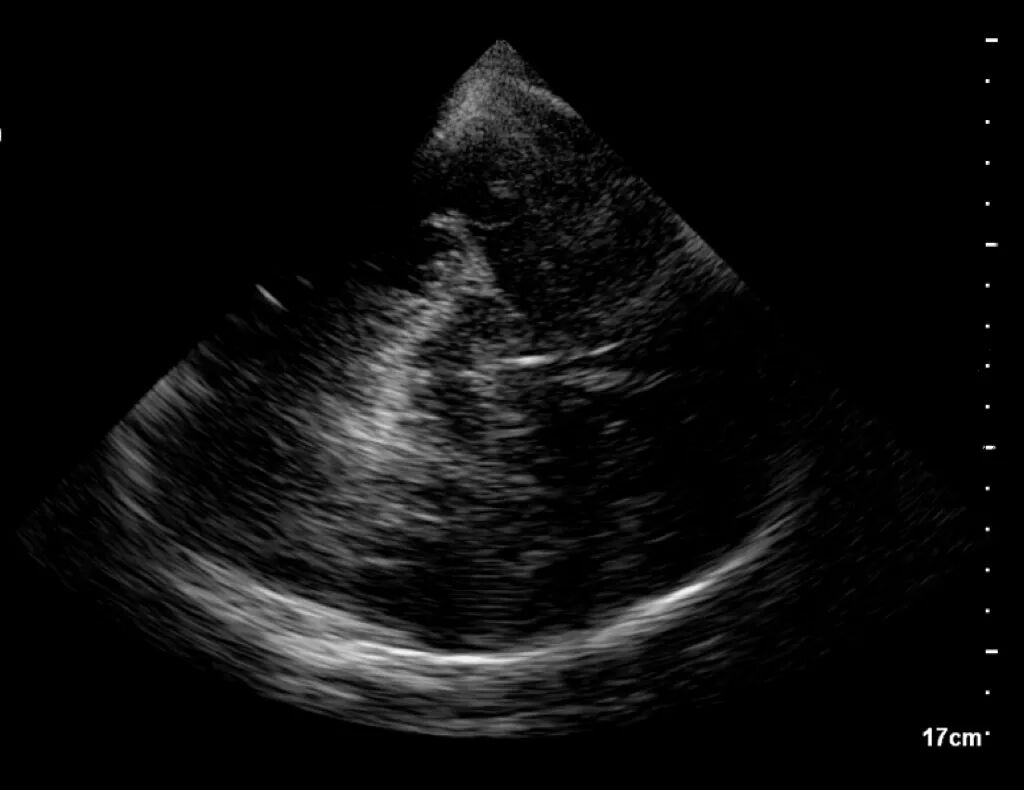
Traditional TCS adult cranial imaging
Although ultrasound functional imaging has set off a boom in the field of brain science research, due to its extremely high temporal and spatial resolution, which can distinguish extremely fine blood flow of 20 microns, it has the potential to become the brain functional imaging tool with the best performance. However, due to the natural barrier of the skull, this technology still stays at the Nature and Science stage.
All the cutting-edge brain science teams on the ultrasound route have chosen to bypass the "skull": Arbor and Merge Labs perform craniotomy or implant PMMA, PEEK acoustic-transparent implants for imaging; Openwater uses optics to measure cerebral blood flow and uses ultrasound for regulation; Attune Neurosciences uses MRI for positioning and ultrasound for deep brain regulation.
However, Kunwei has chosen the most difficult path: not to bypass the skull, but to penetrate it head-on — based on the world's unique full-stack computational imaging capability for ultrasound, Kunwei breaks through the diffraction limit in textbooks and makes transcranial brain reading possible.
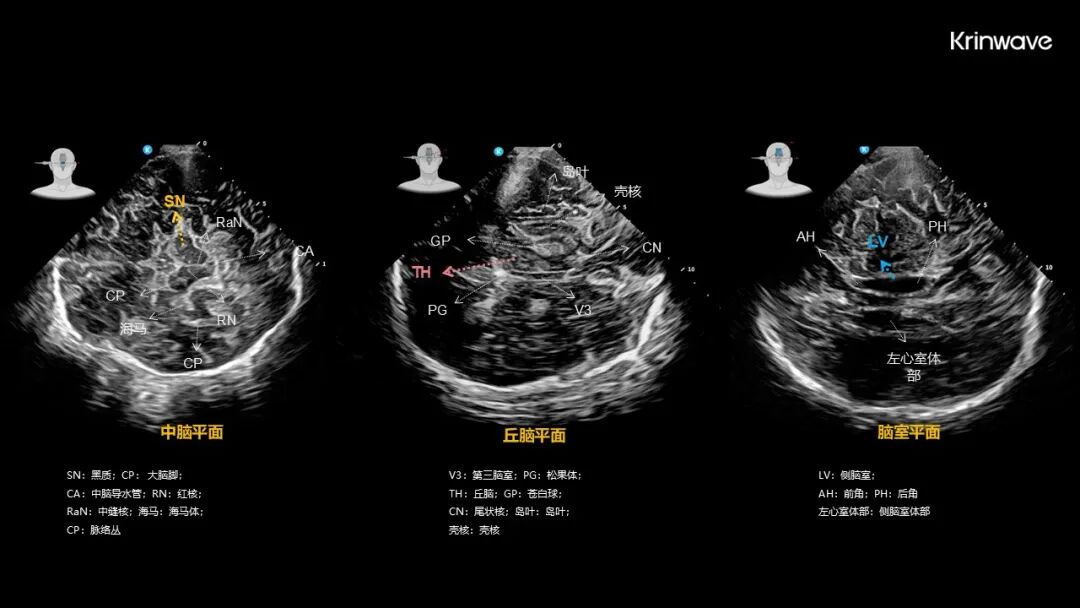
Cranial ultrasound image under Kunwei's HUS technology
The most thought-provoking thing is the reaction of the global ultrasound academic circle — a company that never publishes papers has achieved results that the academic circle has long sought but failed to obtain. Their reaction is not to question the data, but to try to reproduce it: how on earth is high resolution achieved at low frequencies?
Part 02 Low Frequency Paradigm:
Lowering the Frequency is the Solution for Next-Generation Performance
Kunwei's counter-intuition does not lie in its choice of ultrasound as a mature technology, but in its most anti-consensus judgment on the ultrasound industry.
The technical logic of the ultrasound industry over the past half century is "echo positioning". The probe emits sound waves that pass through tissues and reflect at the boundaries, and the device reconstructs images based on the echoes. The higher the frequency, the shorter the wavelength and the higher the resolution, but the faster the attenuation; the lower the frequency, the stronger the penetration, but the worse the resolution.
As a result, the evolution direction of the entire industry is highly consistent: competing for higher frequencies, squeezing resolution within the allowable range of attenuation. The logic of 5G communication, chip manufacturing processes, and ultrasound probes are all similar — the improvement of frequency means the improvement of performance, which is a paradigm engraved in the industry's genes.
This logic works well in most medical ultrasound scenarios, until it hits a wall: the skull.
The skull is a recognized "forbidden zone" for ultrasound imaging. High-frequency ultrasound is almost completely reflected and absorbed when it encounters the skull, and low-frequency ultrasound can penetrate it, but the resolution degrades to the point where it loses clinical value. In the past few decades, the only verified application of transcranial ultrasound is Transcranial Doppler (TCD) — which can only measure the blood flow velocity of several large blood vessels, far from being capable of imaging. A deep-rooted cognition has thus formed in the industry: full-brain ultrasound imaging either requires craniotomy, or has no solution.
"This is a problem worthy of being re-examined from the first principle," Liu Jiajia believes, "All insiders want to increase the frequency, but the increase of frequency has hit a wall. Think the other way around: what will happen if we lower the frequency? Low frequency has the best penetration, the only problem is resolution, and can resolution be achieved not by physical focusing but by computing?"
This sounds simple, but in practice it is equivalent to rewriting the entire technical stack of ultrasound imaging.
The image quality of traditional ultrasound mostly depends on the physical focusing performance of the probe, while Kunwei's route is the opposite: it leaves the difficult problem of beamforming to algorithms on a large scale, and uses GPU computing power to "compute" the image at the level of physical reconstruction.
The realization of this path relies on the node of computing power explosion. Because the computational volume of Kunwei's imaging algorithm is extremely large, more than a thousand times that of traditional ultrasound, it requires high-performance GPU for real-time physical reconstruction. Therefore, without NVIDIA, there would be no today's Kunwei. Kunwei's ultrasound paradigm that consumes huge amounts of computing power has also made it a cutting-edge customer of NVIDIA in the global ultrasound field.
It is precisely because of this ultrasound paradigm based on acoustic spatial intelligence + computing power that the performance shows extremely strong Scaling, from 0.25 frames per second of the first-generation prototype to 5000 frames per second today, the imaging performance has increased by ten thousand times in five years. Behind the performance improvement is the "Moore's Law" driven by computing power + algorithms, the current resolution is far from the end point, and the company's goal is to increase the performance of each generation of products by at least twice.
Part 03
From Ultrasound Equipment to the Key Infrastructure of Brain Science
If brain science wants to continue to move forward rapidly, one bottleneck that cannot be bypassed is exactly data. Especially high-quality data that can be repeatedly obtained from the same brain at different times and in different states. However, existing collection tools all have their own shortcomings:
Implanted electrodes can directly record neural electrical activity, but they require craniotomy and drilling, and can only obtain local signals;
EEG is non-invasive, portable and cheap, but the signal has to go through layers of attenuation of the scalp and skull, resulting in too low signal-to-noise ratio;
Although fMRI can non-invasively view the whole brain, the equipment is huge and expensive, and it is difficult to follow people's daily activities;
Functional ultrasound can finely observe the blood flow changes related to brain neural activity, but it cannot penetrate the skull.
The potential of the functional ultrasound route has been continuously demonstrated in research. In 2011, Macé et al. published the foundational paper "Functional ultrasound imaging of the brain" in *Nature Methods*. Since then, functional ultrasound has been continuously advanced to a finer scale. Combined with super-resolution technology based on microbubble localization, functional ultrasound has achieved 20-micron level neurovascular activity observation in animal experiments.
Back to reality, functional ultrasound brain reading has not been widely popularized for a long time, and the skull is the last wall, but this barrier has been broken through by Kunwei.
At present, Kunwei's cranial ultrasound products have been approved for medical scenarios, and have completed systematic clinical verification and commercial implementation in many top hospitals in China and overseas. This business itself is quite solid. The global ultrasound market has long been a mature market worth tens of billions of dollars, dominated by GE and Philips for a long time. Cranial ultrasound is a difficult problem that giants have not solved for a long time. In Kunwei's view, transcranial imaging brings a "technical dimensionality reduction" opportunity to enter this market, and it has entered a steep exponential growth since its commercialization at the end of 2025.
If the story stops here, in the eyes of the outside world, what Kunwei has done is still only to build a transcranial imaging device, realizing the current commercial value of this technology. But Kunwei's greater vision is to change the way brain science acquires data and become a key infrastructure on the road to brain science AGI.
Behind this, there are two mutually reinforcing capabilities.
First, ultrasound can be made wearable, allowing the brain to be observed for a long time and continuously
Different from MR and CT, which require patients to lie in huge equipment for examination, ultrasound has the engineering foundation to become wearable: the probe can be made into a thin array that fits the skin, and can also be integrated into a head-mounted device.
Human experiments on wearable ultrasound brain reading have already been carried out. In 2025, a study published in *Science Advances* customized an ultrasound helmet for a subject with an acoustic-transparent skull implant, which recorded blood flow changes reflecting brain activity in real time while the subject was walking, and obtained repeated observation results spanning 20 months. It essentially still requires craniotomy, but it has demonstrated the possibility of functional ultrasound following human activities and being used repeatedly for a long time.
Philip Sabes, the founding scientist of Neuralink and current CEO of Arbor Neuroscience, proposed in a recent speech: Brain-computer interfaces need to redesign the way human data is acquired — you can pay 10,000 or 60,000 people to use a wristband, but you cannot get 60,000 people to accept a brain implant.
This is exactly Kunwei's technical vision. When the equipment is further miniaturized and made wearable, ultrasound brain function measurement can enter people's daily life, paying attention to users' sleep, exercise, mood, concentration state, and the symptomatic period before the onset of chronic diseases, thus enabling Oura Ring-level products in the brain science field.
At the same time, this will completely change the data collection scale of brain science, generating data volume of hundreds of millions of hours like Oura Ring. In contrast, the largest fMRI brain function dataset currently is still at the level of tens of thousands of hours, and it is low-frequency data of a large number of people, lacking long-term continuous observation of the same individual.
Second, ultrasound naturally forms a closed loop of reading and writing, which allows observation to further evolve into intervention experiments
Ultrasound can not only perform imaging, but also be used for neuromodulation. The two capabilities can be integrated on the same probe, allowing researchers to observe: after changing a stimulation parameter, what happens in the brain, whether the change can be repeated, and whether it is related to the improvement of symptoms.
Philip Sabes, the founding scientist of Neuralink, also said recently: "Focused ultrasound has shown great potential in the field of neuromodulation... If we combine neuromodulation with functional ultrasound imaging, we may directly observe what is happening in the brain while intervening."
"In other words, we hope that future technologies can truly achieve: intervene while observing; treat while learning."
Specific experiments on this path have already appeared. In June 2026, a preprint report from the UCSF team showed that in rat experiments requiring an artificial acoustic window, the same probe was used to alternately complete stimulation and imaging, and then the algorithm selected the next set of parameters according to the cerebral blood volume response.
This is exactly the direction Kunwei hopes to promote, using ultrasound to realize the closed loop of brain reading and writing. Kunwei has the opportunity to make "observation — intervention — re-observation" a tool that more researchers can use, so that each experiment can help the next experiment to be done better.
The demand for brain data has been written into the research plans of cutting-edge AI teams. OpenAI announced a cooperation with Merge Labs to develop a basic model of brain science and explore new types of brain-computer interfaces; the "Digital Brain Project" supported by Meta plans to collect 15,000 hours of brain records of interactive tasks