The team of the Hong Kong University of Science and Technology has launched a standardized solution for cold atom systems, securing tens of millions of yuan in two rounds of financing from investors including SpinQ Technology, in an exclusive release by 36Kr.
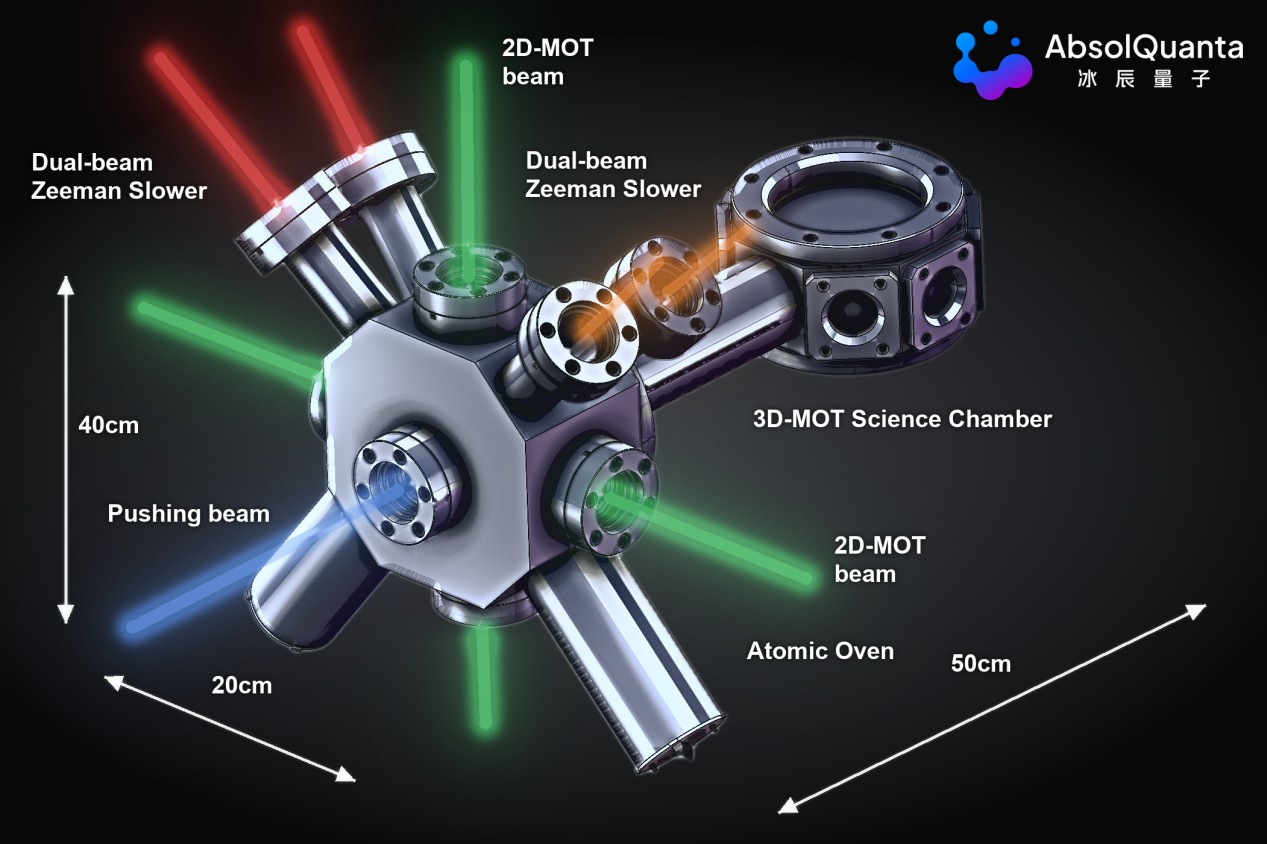
Image source / Enterprise
This article contains approximately 2400 words, with an estimated reading time of 5 minutes
Author | Ou Xue
Editor | Yuan Silai
Hard Krypton has learned that Shenzhen Bingchen Quantum Technology Co., Ltd. (hereinafter referred to as "Bingchen Quantum") has recently completed two consecutive angel-series financing rounds of tens of millions of yuan. The angel round was jointly led by Yuanhe Puhua and industrial investor Spinor Technology, while the angel+ round was led by Zhongying Venture Capital, with participation from Jinyu Maowu, Summit Partners, Chenfeng Capital, Yuanlai Capital, and industrial partner Xuanxiang Technology. Yirong Capital served as the long-term financial advisor. The raised funds will be mainly used for site construction, talent recruitment, and core product iteration.
Founded in Shenzhen in March 2026, Bingchen Quantum is a technology company focused on the upstream core equipment of neutral-atom quantum computing. Starting from cold atom systems, the company is committed to transforming the traditional "hand-built" laboratory devices into standardized, mass-producible high-performance products, and solving the engineering problems in the industrialization process of neutral-atom quantum computing.
Chen Peng, the founder and chief scientist of the company, graduated from Shanghai Institute of Optics and Fine Mechanics, Chinese Academy of Sciences, studied under Academician Wang Yuzhu, a pioneer in the field of cold atoms in China. He is currently an assistant professor at The Hong Kong University of Science and Technology (Guangzhou), and has previously engaged in scientific research work at The Hong Kong University of Science and Technology and University of Science and Technology of China.
Neutral-atom quantum computing has experienced rapid development in the past few years. In 2023, Atom Computing took the lead in breaking through the 1000-qubit threshold. In 2024, the team from the California Institute of Technology realized an array of more than 6100 qubits, with a single-qubit manipulation accuracy of 99.98%.
Technology giants such as Google, Microsoft, and NVIDIA have all deployed in this track. Overseas enterprises including QuEra, Pasqal, and Atom Computing have continuously delivered technical milestones, and domestic neutral-atom complete machine startup teams have also emerged rapidly.
However, the standardized supply capacity in the upstream of the industrial chain still lags behind the expansion of downstream demand. What Bingchen Quantum tries to solve is the standardization problem in the upstream of the neutral atom industry.
As early as 10 years ago, Chen Peng led the development of the world's first miniaturized strontium atomic Rydberg cold atom system at the University of Science and Technology of China (Shanghai Research Institute), laying a foundation for subsequent productization. However, at that time, this system could only adapt to a single element, still staying at the academic prototype stage, and had not formed a mass-producible product.
Later, when the team was building an ultra-cold quantum degenerate system of magnetic atoms — erbium atoms at a higher temperature zone at The Hong Kong University of Science and Technology (Clear Water Bay), they encountered multiple key technical challenges such as insufficient performance of blue lasers, failures of ultra-high vacuum systems and high-temperature atomic furnaces, small number of erbium atoms captured by laser cooling, and long cold atom loading time. After being driven to a desperate situation, Chen Peng conceived a brand-new "dual-beam Zeeman slowing" scheme, which laid a key foundation for realizing the quantum degeneracy of erbium atoms. This scheme later became one of the core technologies of the team and was inherited into the current product prototype.
From 2024 to 2025, Chen Peng's team carried out relevant research work in the new laboratory of The Hong Kong University of Science and Technology (Guangzhou). After tackling key problems, Chen Peng's team successfully demonstrated the second-generation generalized products, achieved the key breakthrough of "the same system compatible with two different elements", and refreshed the record of cold atom loading efficiency.
At present, the company's first product — the high-throughput cold atom source system is ready for delivery. Adopting the world's original hybrid enhanced architecture of "dual-beam Zeeman slower + two-dimensional magneto-optical trap", this system can increase the cold atom loading efficiency by more than two orders of magnitude, while supporting cross-group compatibility of multiple elements such as alkali metals and alkaline earth metals. Its volume is only 1/3 to 1/4 of that of traditional solutions, which greatly improves the integration and engineering level of the cold atom system.
According to Chen Ziting, CEO of the company, the product prototype has received orders from multiple scientific research institutions and leading neutral-atom complete machine manufacturers, and the delivery cycle under mature conditions can be shortened to as fast as one month.
"Our idea is different from that of our competitors," Chen Ziting said. "Competitors will start custom design from scratch after receiving customer demands, which is essentially an outsourcing service. But what we make are standardized products, whose underlying technology can be reused to dilute the iteration cost, resulting in stronger long-term competitiveness. What customers want is just a plug-and-play device, and they should not worry about how to build the solution."
In terms of business extension, the company is simultaneously developing the third-generation cold atom source, aiming to increase the system loading rate by more than one order of magnitude compared with the second generation, and optimize the adaptation capability for rare elements.
Meanwhile, the company has also planned product lines in fields such as quantum simulation and precision measurement. In addition, the company disclosed that the cold atom source is homologous to the molecular beam epitaxy technology in the semiconductor field, and expansion into the semiconductor equipment sector may be considered in the future.
The following is an excerpt of the dialogue between Hard Krypton and Chen Ziting, CEO of Bingchen Quantum (edited):
Hard Krypton: What are the differences between Bingchen's core technology and traditional solutions? What is the moat?
Chen Ziting: Traditional solutions fall into two categories. One is the single-beam Zeeman slower, which is purely hand-built with wound coils. It has to be redesigned when switching to another element, whose performance is several times worse than ours, and cannot be mass-produced. The other is the two-dimensional magneto-optical trap, which has a very narrow adaptation range and can only adapt to some elements.
Bingchen's solution is a completely original hybrid architecture of dual-beam Zeeman slower plus two-dimensional magneto-optical trap. While the atomic loading rate is increased by one to two orders of magnitude, the volume is reduced by 70%, the vacuum degree is increased by one to two orders of magnitude, and the maintenance cycle can be extended to four or five years. This technology does not come out of nowhere. It has been laid for more than 10 years, from the first-generation miniaturized system developed by founder Professor Chen 10 years ago, to the key dual-beam technology accumulated when we conducted Asia's first erbium quantum degeneracy experiment in Hong Kong, and then to the second-generation generalized products in 2024.
Hard Krypton: The neutral-atom quantum computing market is still in its early stage. Will the relevant market demand be too small?
Chen Ziting: I think we should not look at the market size statically. First of all, neutral-atom quantum computing has developed exponentially in the past two or three years, and has reached the scale of ten thousand qubits. Next, it will move to one hundred thousand and one million qubits.
The cold atom source is equivalent to a water tap, and physical qubits are "catching fish" from the atomic flow. If the water flow is not wide enough, you cannot catch enough fish. Therefore, the demand for our products will be more rigid in the later stage. Secondly, the applications of neutral atoms are not limited to quantum computing. There are demands in fields such as precision measurement, quantum simulation, mineral exploration, and even the military industry. At the same time, overseas comparable products are already in shipment. Users generally feedback that overseas products are low in usability and fail to meet the performance standards. Our products have better performance and have the potential to go global.
We are not betting on when quantum computing will explode. Even if we only look at deterministic scenarios such as scientific research and precision measurement, the business itself is viable.
Hard Krypton: Will you develop complete machines? How do you view the relationship with downstream customers?
Chen Ziting: We clearly will not develop complete machines in the short term. First, we have communicated with complete machine manufacturers. If they know that you are developing complete machines, they will definitely have concerns about cooperation. Second, our current scale is small, and extending the business line does not conform to business laws. Third, our team is pragmatic, and we do not want to be kidnapped by capital or industry hype. Our original intention is to do the upstream part well. We prefer to make upstream standard parts. Taking lasers as an example, five years ago people were still hand-building lasers, but now they buy ready-made ones. Recently, leading domestic laser enterprises have also successfully gone public. The cold atom source will follow the same trend. We focus on engineering, polish the products thoroughly, and let customers concentrate on downstream application R&D, which is the proper division of labor in the industrial chain.
Investor Insights:
Yuanhe Puhua stated: Quantum technology is a core hard technology track for the future. Although it is in the early stage of the industry, it has both scientific value and long-term industrial dividends. We are optimistic that the Bingchen Quantum team has both in-depth scientific research capabilities and engineering capabilities, and can transform cutting-edge theories into implementable products. We believe that Professor Chen and the team, relying on the Quantum Center of The Hong Kong University of Science and Technology, will continue to gather R&D talents to provide key support for quantum scientific research and complete machines. Relying on the long-term accumulated industrial resources in the semiconductor and photonics fields, Yuanhe Puhua will empower Bingchen Quantum in all dimensions including supply chain and industry customer docking, help the enterprise break through key technologies, and promote the commercialization process of domestic quantum equipment.
Spinor Technology stated: At present, quantum technology is accelerating from laboratory research to engineering verification and industrialization implementation. The independent controllability of scientific research infrastructure and core equipment is becoming the key foundation supporting the entire quantum industry.
In this process, Spinor Technology is optimistic about Bingchen Quantum and the core R&D teams represented by Chen Peng's team. The team not only has solid scientific research accumulation in cutting-edge directions such as neutral-atom quantum technology, but also shows the scarce engineering implementation capabilities in the quantum industry, which can continuously transform the cutting-edge theoretical research results into deployable, iterable, and scalable real products.
As the quantum technology industry enters a period of rapid development, core equipment that provides key support for scientific research institutions and complete machine manufacturers will become a long-term deterministic basic link in the industrial ecosystem.
In the future, Spinor Technology will continue to rely on its advantages in industrial ecology, supply chain resources, technology verification and customer scenarios to empower Bingchen Quantum in all dimensions, jointly promote the commercialization process of domestic quantum core equipment, and help the quantum industry infrastructure move to a new stage of independent controllability, maturity and reliability.
Zhongying Venture Capital stated: Bingchen Quantum is positioned in the cold atom source link at the most upstream of neutral-atom quantum computing, which is the core equipment supporting the leap of qubit scale. It breaks through the bottleneck of traditional solutions from the principle level, and launches standardized, high-throughput, multi-element compatible commercial cold atom sources, opening up three application scenarios: quantum computing, quantum simulation, and quantum precision measurement. Zhongying Venture Capital led this round of investment, and is optimistic that the team has scarce original technology and composite engineering capabilities, which can precisely fill the gap in the industrial chain and become an indispensable source of the trillion-level quantum industry.
Jinyu Maowu stated: Bingchen Quantum is positioned as a provider of key cold atom source systems in the upstream of neutral-atom quantum computers. Based on the 20-year profound technology accumulation and strong engineering implementation capabilities of Professor Chen Peng's team in the neutral atom field, it has successfully launched a high-throughput, miniaturized cold atom source system. With innovative architecture and standardized product design, it can greatly shorten the construction cycle of neutral atom computers, and increase the atomic loading rate by two orders of magnitude. We are optimistic that neutral atom is the most promising technical path to realize general-purpose quantum computers. Cold atom source systems and optical tweezer systems are the most core subsystems of neutral atom computers, and highly standardized, ultra-reliable cold atom source systems are the cornerstone of neutral atom computers. We believe that under the leadership of Professor Chen Peng with pragmatic and innovative concepts, Bingchen Quantum has every opportunity to become the most critical and most promising shovel provider in the neutral atom field.
Summit Partners stated: Summit Partners has long been optimistic about the potential of neutral-atom quantum computing. As the core component in the upstream of the industrial chain, cold atom sources have long lacked high-performance, standardized system-level products. The Bingchen Quantum team has both academic background and engineering capabilities. With more than 20 years of accumulation in cold atoms, and the world's original solution, it has achieved order-of-magnitude leadership in loading rate, miniaturization and multi-element support, and truly solved the industry's pain point of "hand-building". We believe that Bingchen Quantum is expected to become an irreplaceable upstream cornerstone enterprise in the neutral atom ecosystem, and we are honored to accompany the company to grow together.
Chenfeng Capital stated: We are firmly optimistic about Bingchen Quantum. The core logic is that neutral-atom quantum computing is at the explosive inflection point from laboratory to industrialization, and Bingchen has accurately positioned the most scarce upstream link in this track. At present, cold atom source systems are still mainly hand-built in laboratories, with overseas embargo and no standardized products. Bingchen can provide general-purpose, high-performance, standardized cold atom source systems. The team's original hybrid architecture of dual-beam Zeeman slower + 2D MOT increases the atomic loading efficiency by more than 100 times, the volume is only 1/3 of similar equipment, and the optical window can achieve zero deposition with more than two years of maintenance-free operation, far exceeding the limitation of traditional systems that need to be cleaned once every few months. Meanwhile, it is the only system in the world that realizes cross-group multi-element compatibility. More importantly, the team has a complete closed-loop capability from academic source innovation to engineering product implementation, superimposed with the strategic synergy of industrial leaders such as Spinor Technology. In the arms race of quantum computing as a game among major countries, investing in upstream core equipment is the most deterministic path, and Bingchen is the optimal solution we found in this direction.
Yuanlai Capital stated: Yuanlai Capital has long invested in the underlying core technologies of cutting-edge science and technology. Neutral-atom quantum computing is moving towards large-scale development, and the continuous increase in the number of qubits puts higher requirements on cold atom systems. The Bingchen team has profound academic experience and industrial resources in the design, system construction and mass production of neutral-atom core components, and we look forward to Bingchen continuously breaking through the basic capabilities of neutral-atom quantum computing.