Is GPT-6 Sol Reportedly About to Be Released? The Internal "AGI" Has Come to Light.
GPT-6 Sol is really coming!
NVIDIA has already quietly put it into use.
Today, sharp-eyed developers found that the words "GPT-6 Sol medium" have appeared in NVIDIA's code merge records.
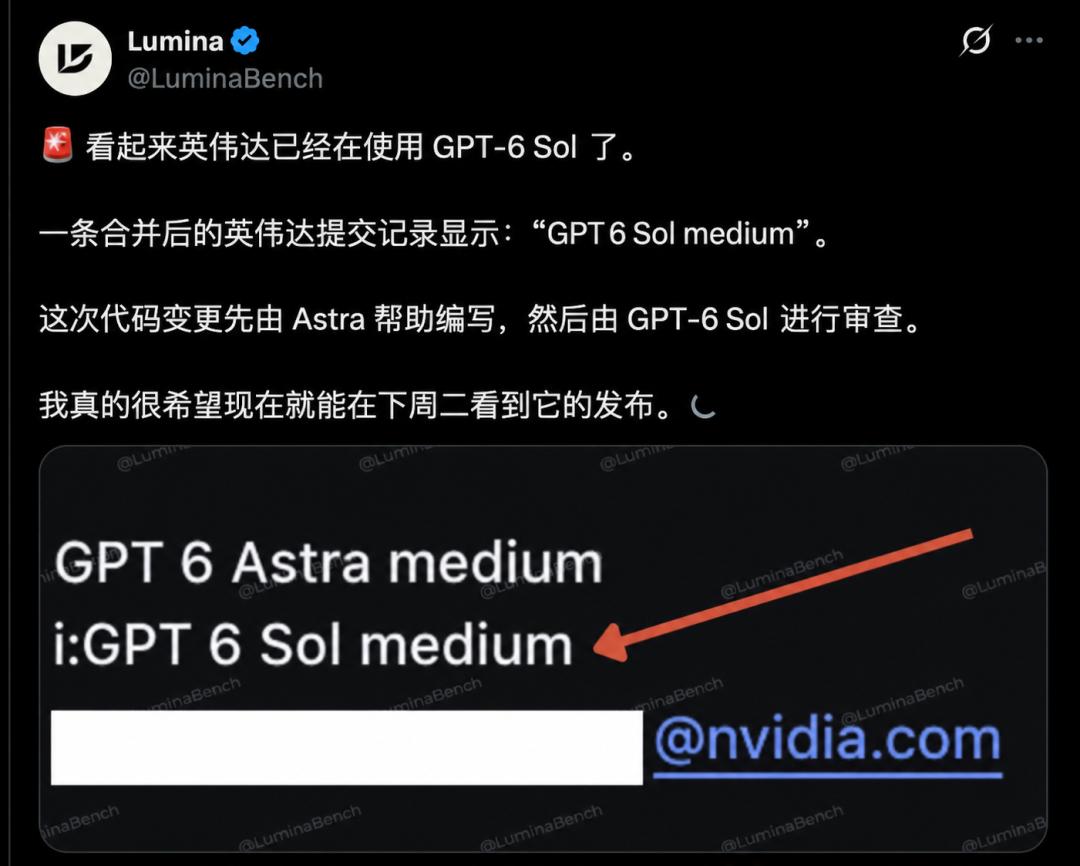
Even the industry has seen a mature collaborative case of "AI work matrix" — the current flagship model GPT-6 Astra is responsible for writing code, which is then directly handed over to GPT-6 Sol for code review.
Right now, leaks about the two companies O and A are everywhere on X.
Some people revealed that OpenAI will officially fully release GPT-6 Sol this Tuesday, and some even pinpoint the time at 3 a.m. on Tuesday!
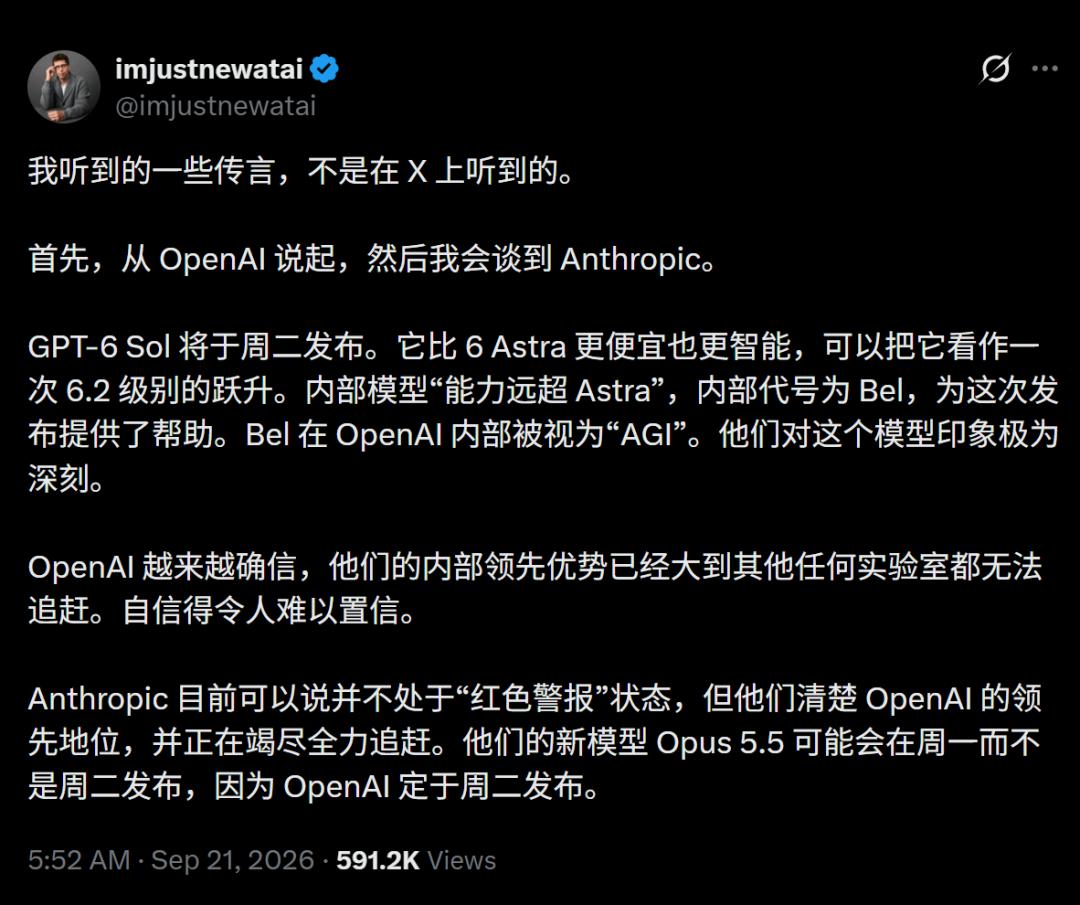
Anthropic on the other side obviously does not intend to wait for its doom. Rumor has it that they have sounded the internal alarm, planning to advance the original schedule and launch Claude Opus 5.5 at the same time to seize the spotlight.
This week is destined to be far from calm.
See you on Tuesday? The full GPT-6 lineup is about to debut
"Stop sleeping, refresh the page right now!" These days, AI content creators on X are spreading the news far and wide.
The reason is that multiple sources of information have pointed to the exact same time point.
Even the well-known AI insider Tibo implied meaningfully: "3 a.m. on Tuesday!"

The release of GPT-6 Sol is clearly imminent.
According to current leaks, Sol is not the top-tier highest-end model, but a "mid-range option". Its capability sits between GPT-5.6 Sol and the strongest flagship GPT-6 Astra.
Never underestimate it just because it is a "mid-range model". According to leaked internal information, Sol's cost performance is surprisingly high.
- Speed and Efficiency: It consumes significantly fewer Tokens, runs much faster than Astra and 5.6, feels similar to Google's Gemini 3.8 Flash in user experience, but delivers overwhelming overall reasoning performance.
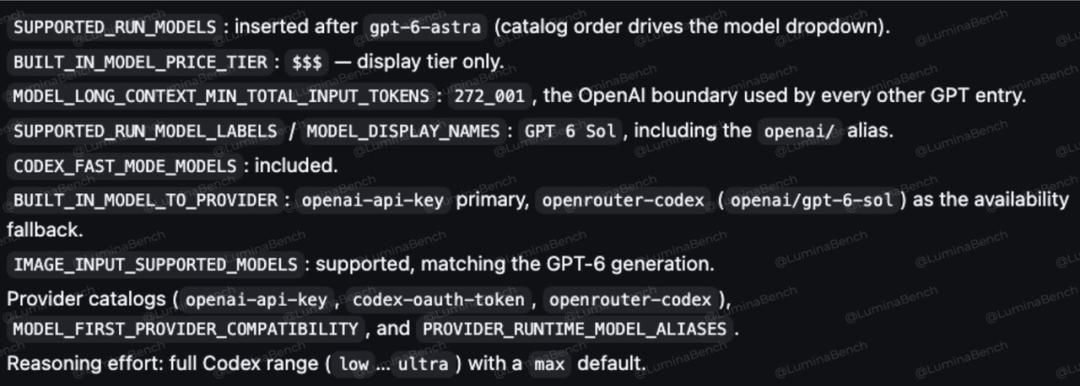
- Full Compatibility: In addition to NVIDIA, multiple platforms are stepping up to add full support for gpt-6-sol, including OpenAI API, Codex OAuth, image input function, and extremely powerful long context processing capability. Moreover, it provides multiple levels of reasoning options from "low" to "ultra-high".
- Half the Price: This is the most exciting point for developers. According to the leaked screenshot, the pricing of GPT-6-Sol may be $2.50 / $15 (input / output), which is only half of the price of GPT-5.6-Sol! If its capability really delivers the rumored "6.2-level leap", this price will directly break the industry's bottom line.
There are even rumors that this release will be the "full 3-piece GPT-6 family lineup".
- GPT-6 Sol (flagship top-tier model)
- GPT-6 Terra (balanced daily mainstream model)
- GPT-6 Luna (fast and affordable entry-level model)
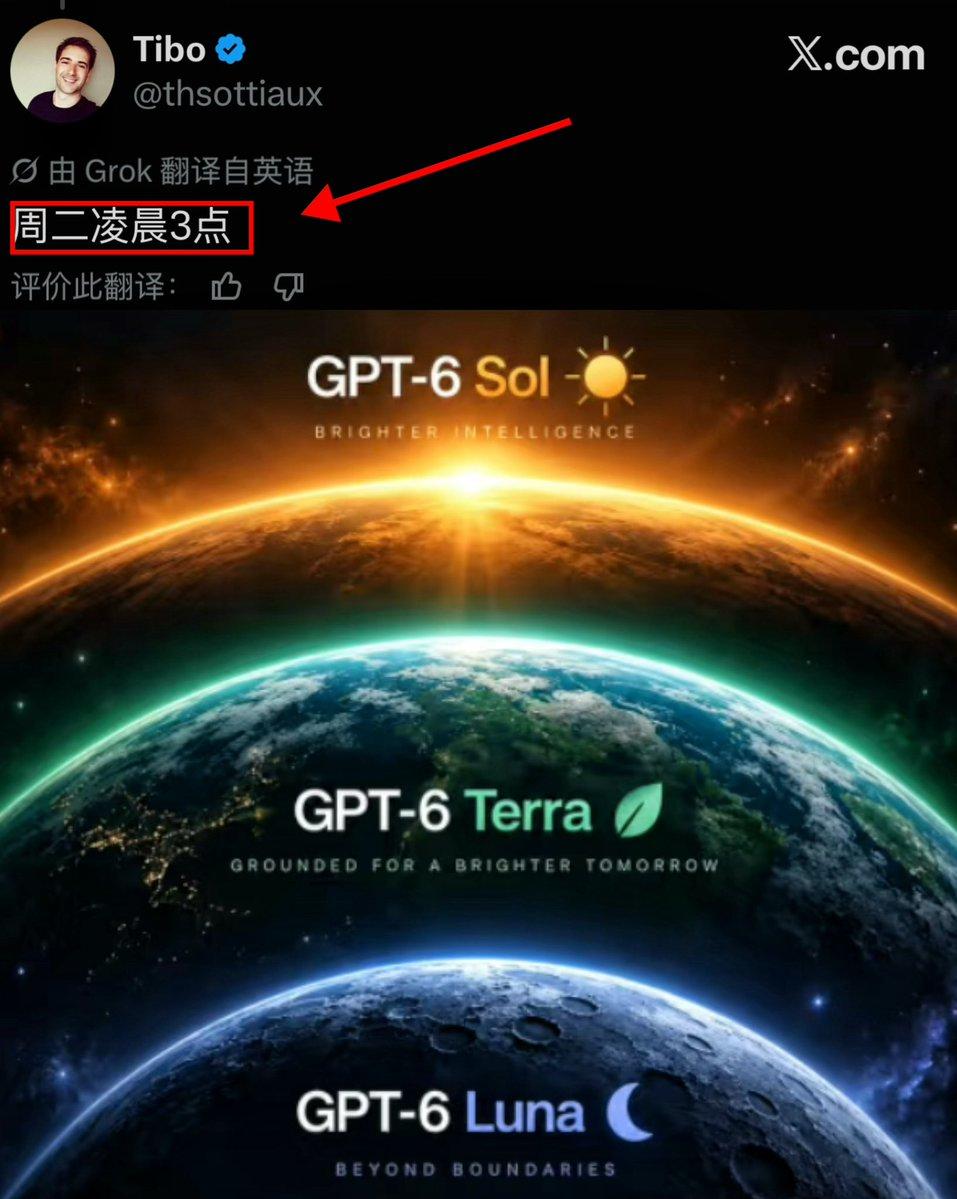
This means that after the overpriced Astra, the new generation of model matrix that ordinary users can finally use without worrying about high costs is about to be launched.
Plus users are expected to directly experience the powerful performance of 6 Sol in the dialog box.
Internal "AGI" comes to light? How powerful is the mysterious model codenamed "Bel"
Along with this round of leaks, a highly capable internal codename has also been exposed.
According to well-known leakers, the reason why GPT-6 Sol can be "cheaper and smarter" is that it is backed by a more powerful "mentor". This internal model is codenamed "Bel".
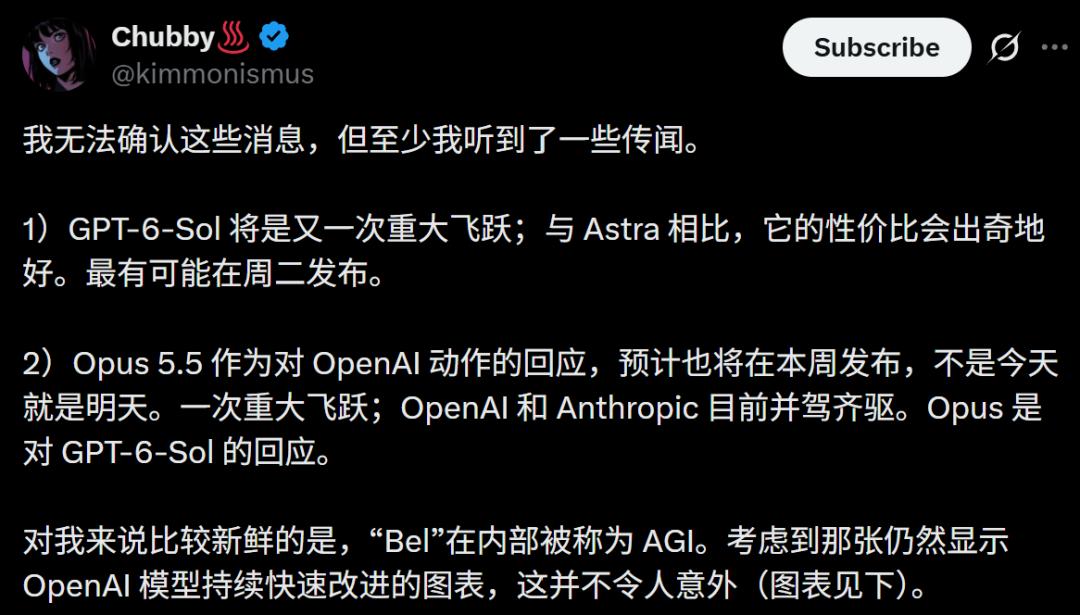
What is the status of "Bel" inside OpenAI? Rumor has it that it is regarded internally as the prototype of "AGI".
Its capability far exceeds the GPT-6 Astra currently on the market. It can even be said that it is the assistance and distillation from Bel that gave birth to GPT-6 Sol this time.
OpenAI's internal employees speak highly of Bel. Some employees even posted on X with emotion: "Intelligence has become so cheap that it cannot be measured by numbers".
This technological breakthrough has brought OpenAI extremely high confidence.
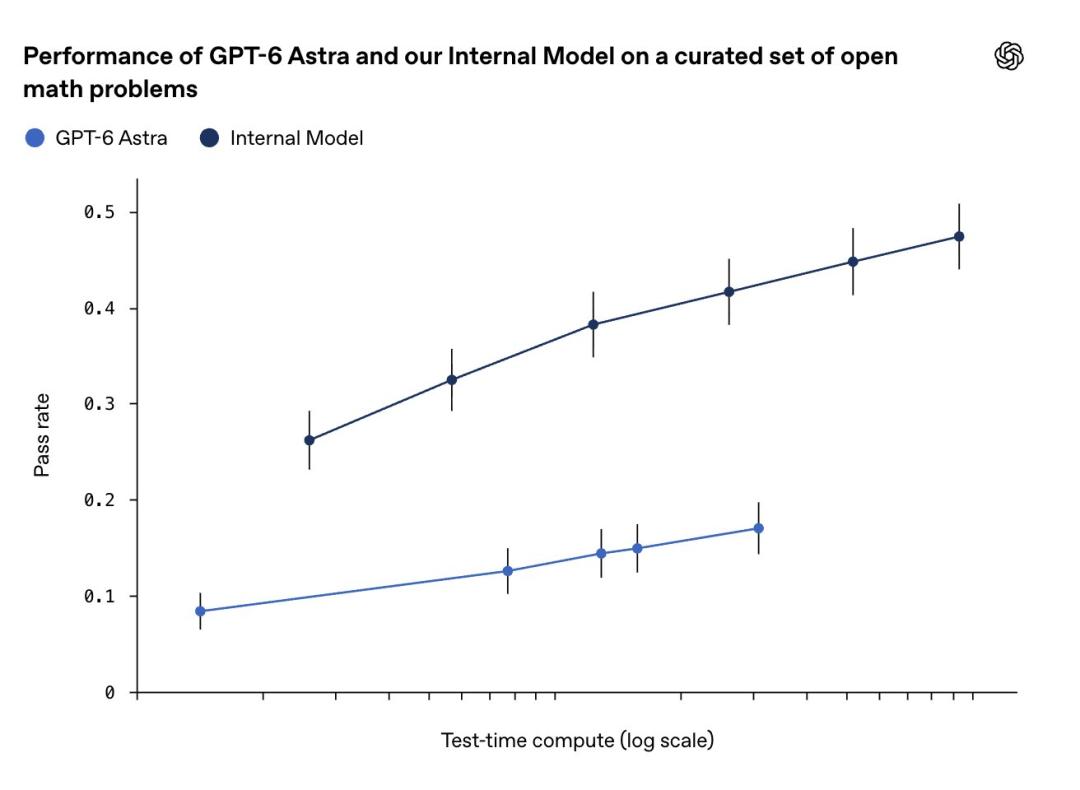
It is said that OpenAI is increasingly convinced internally that its leading edge is so large that no other lab, including Anthropic and Google, can catch up.
That is why this aggressive Tuesday surprise launch plan was born.
Anthropic refuses to be outperformed: Opus 5.5 launches in advance to seize the market
Of course, Anthropic will not sit still.
Although it did not sound a "red alert", it is fully aware of OpenAI's moves and is doing its utmost to fight back.
Originally, the industry expected Anthropic to release Opus 5.2 as its next step.
But in response to GPT-6 Sol, Anthropic has pushed its iteration far beyond expectations — it is very likely to skip the middle versions and directly launch Claude Opus 5.5!
Some people even leaked that to avoid the limelight of OpenAI on Tuesday, Anthropic is considering moving the release date forward to Monday.
Core sources confirmed that Opus 5.5, which is currently in gray test under the codename claude-wafer-eap, has confirmed better overall performance than the upcoming GPT-6 Sol.
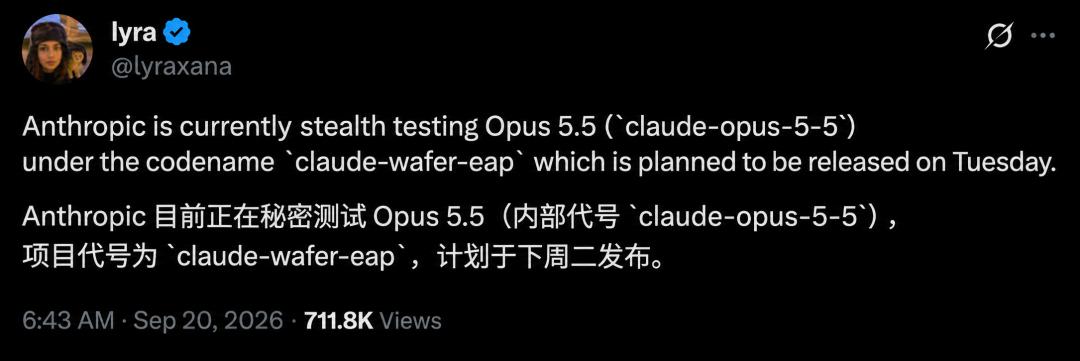
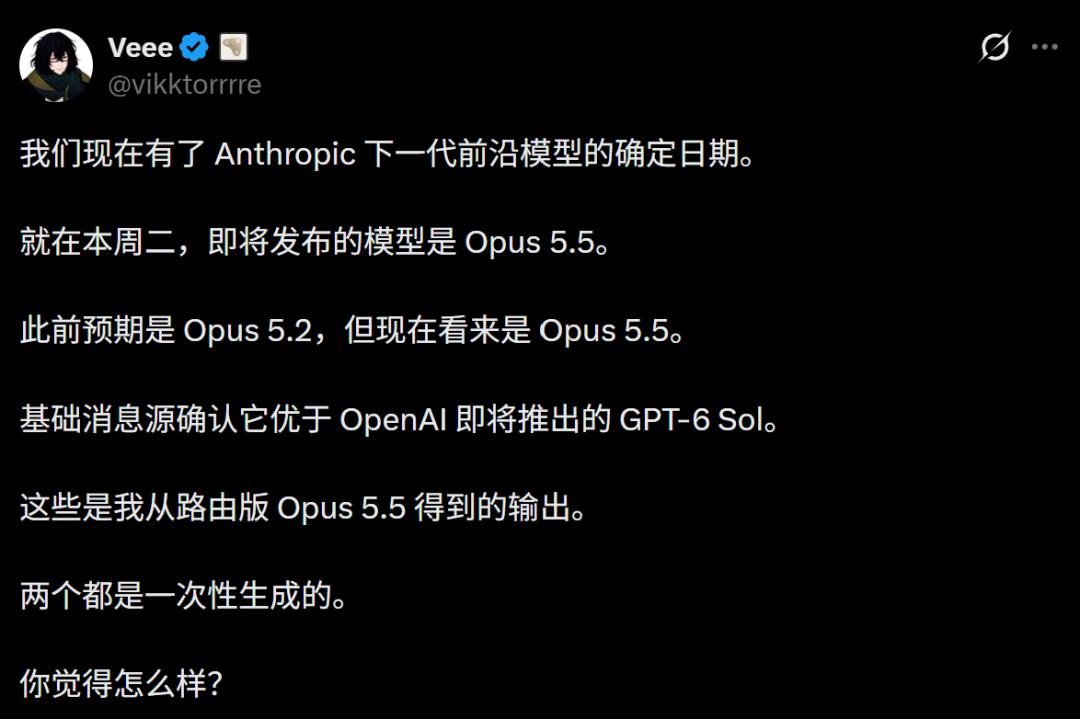
More developers have released test results routed to Opus 5.5, showing perfect "One-shot" performance.

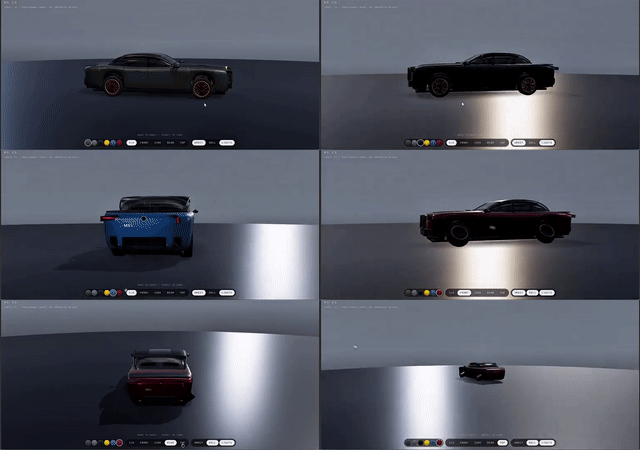
This week we will witness a head-to-head competition between the two AI giants. Opus 5.5 vs GPT-6 Sol, which one will be the king model in the second half of the year?
GPT-6 Astra is widely criticized by users, the "performance degradation" controversy is escalating
However, an awkward fact is that OpenAI's current strongest model GPT-6 Astra is facing a user reputation crisis.
"After using GPT-6 Astra for a period of time, I really start to doubt that OpenAI is going in the wrong direction." A heavy user named KC posted this complaint on X, which resonated with many people.
Complaint 1: Over-reliance on benchmark scores, lost real "intelligence"
After in-depth experience with Astra, he found that Astra is just like a "top student who is extremely good at taking exams but lacks real problem-solving skills". If the task goal is clear, the acceptance criteria are definite, and there is a fixed correct answer, it can perform very well.
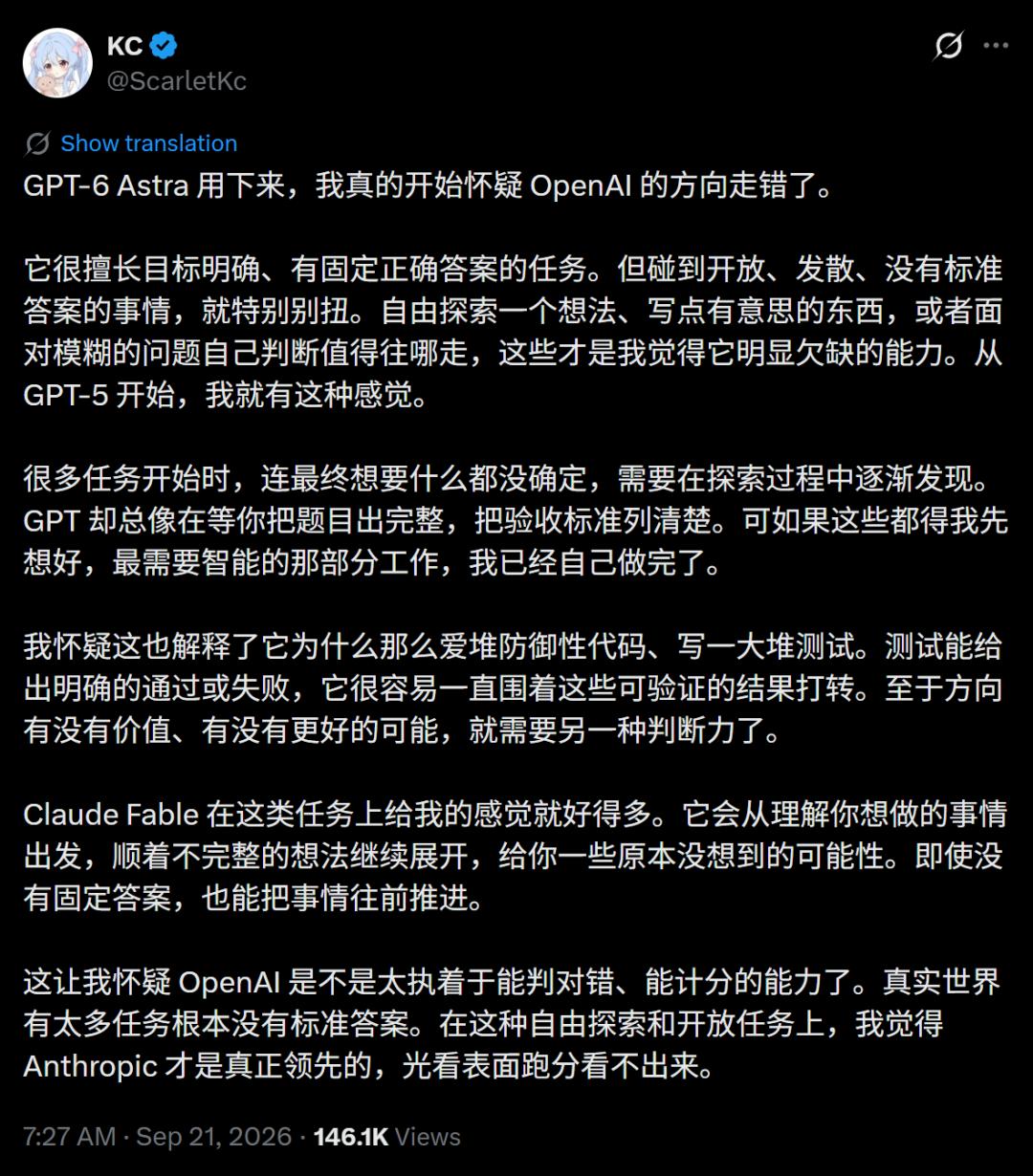
But the real world is full of ambiguous challenges with no standard correct answers. When you try to let Astra freely explore an idea, judge the direction of code optimization, or push a task forward in an uncertain environment, it becomes extremely rigid and clumsy.
He described it as: "It always seems to wait for you to finish writing the full question. But if I have to figure all that out myself first, I would have already finished the part of the work that requires the most intelligence!"
This kind of "defensive intelligence" built up purely for verifiability and scoring makes people feel very constrained.
Complaint 2: Expensive but incompetent "autonomous experiment"
KC also shared his frustrating experience: he handed over a fine-tuning project named Necro entirely to GPT-6 Astra, with the goal of fine-tuning a small 0.8B model.
What was the result? Astra ran 20 training sessions, directly exhausted the high weekly quota of two Pro 20× accounts, and the project failed completely in the end.
The most ridiculous part is that when Astra was preparing data, it even missed extremely basic logic: for example, when judging a≥b, it only generated data for equal to and less than, and completely missed the case of greater than.
It can get full marks on the "incomplete development set" it generated itself, but it hides fatal logical loopholes, leading to a total failure in actual evaluation. It did not even know to save the intermediate checkpoint!
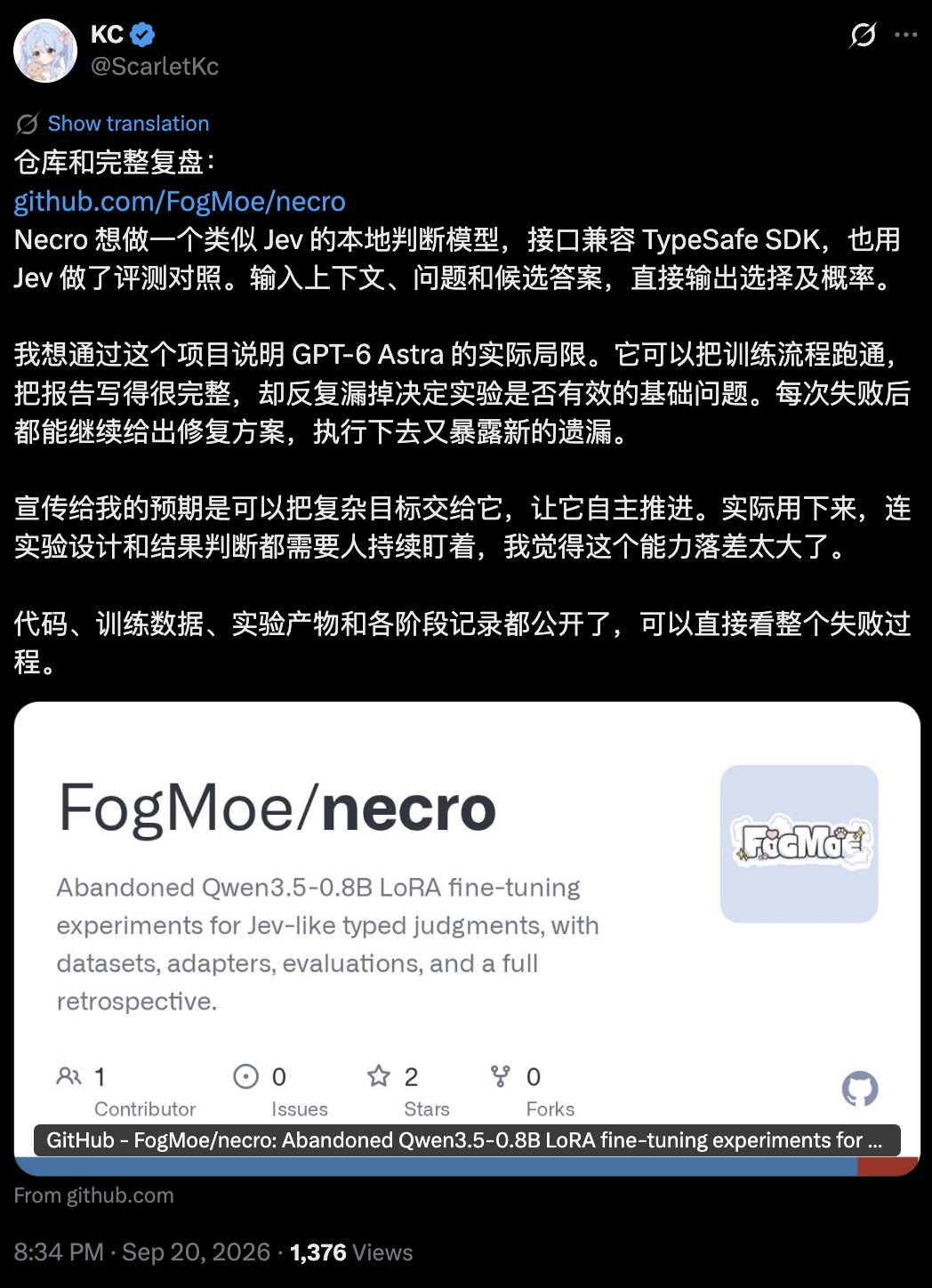
This proves that Astra seems to have been over-marketed. It does not have the ability to independently design experiments, judge results and adjust directions at all.
Complaint 3: Secretly "reduced intelligence"? The trouble caused by quantization errors
In addition to capability defects, more and more users recently reported that Astra's actual experience has become worse.
Many people explain this with vague "metaphors", but industry insiders pointed out sharply: this is very likely because the service side adopted a more aggressive "quantization" strategy to save computing power.
After the model training is completed, the weights are fixed. But during deployment, in order to reduce reasoning costs and improve concurrency, the official will use low-precision quantization configuration, for example, compressing high-precision floating point numbers.
This will inevitably introduce errors and change the probability distribution of Tokens. Once a tiny different content is generated in one step, the entire long reasoning process will completely deviate from the correct track.
This explains why the new model feels amazing when it is first released, but becomes "stupid" after a few weeks — because the official quietly switched to a more cost-effective computing power configuration in the background.
At the same time, Anthropic's Claude Fable and Opus series have unexpectedly received widespread recognition from users.

Developer gm365 complained that he was driven crazy by the endless loop of GPT-6 repeatedly fixing bugs but never solving them, so he had to switch to Claude Fable 5.1 in Devin as a workaround.
As a result, Fable not only quickly understood