Breaking: OpenAI officially announced that it has solved more than 100 world-class mathematical problems in 24 days.
The mathematics community has found AI right at its doorstep!
Just now, OpenAI suddenly released a landmark blog post —
A new internal model that only started training on August 28 has now solved over 100 world-class mathematical problems.
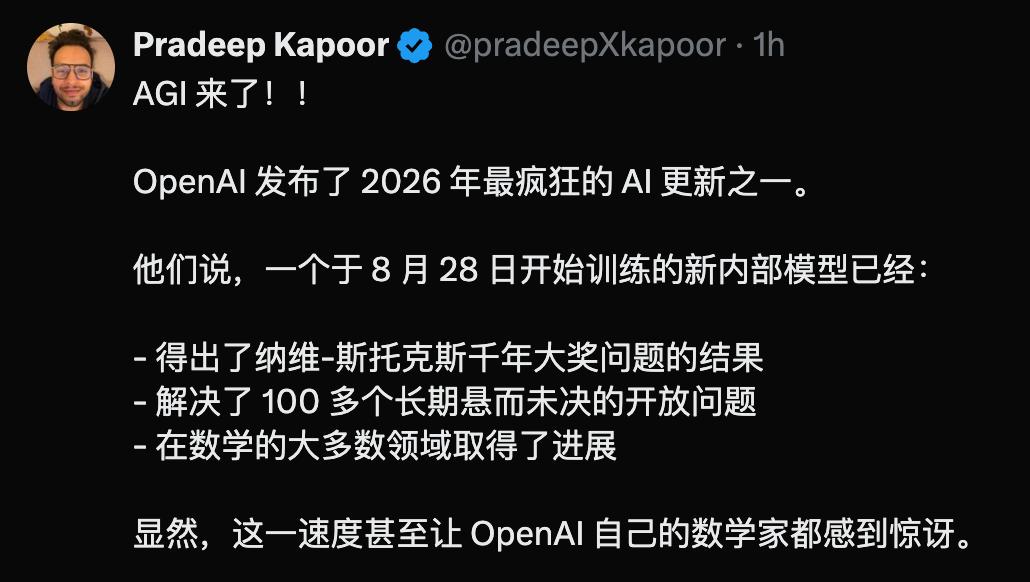
These problems span most major fields of mathematics.
Even more remarkably, among these over 100 problems is the famous Navier–Stokes Millennium Prize Problem that has puzzled the mathematics community for decades.
This pace of evolution is so fast that even mathematicians inside OpenAI were taken aback.
From the start of training on August 28 to the official announcement on September 21, it took only 24 days.
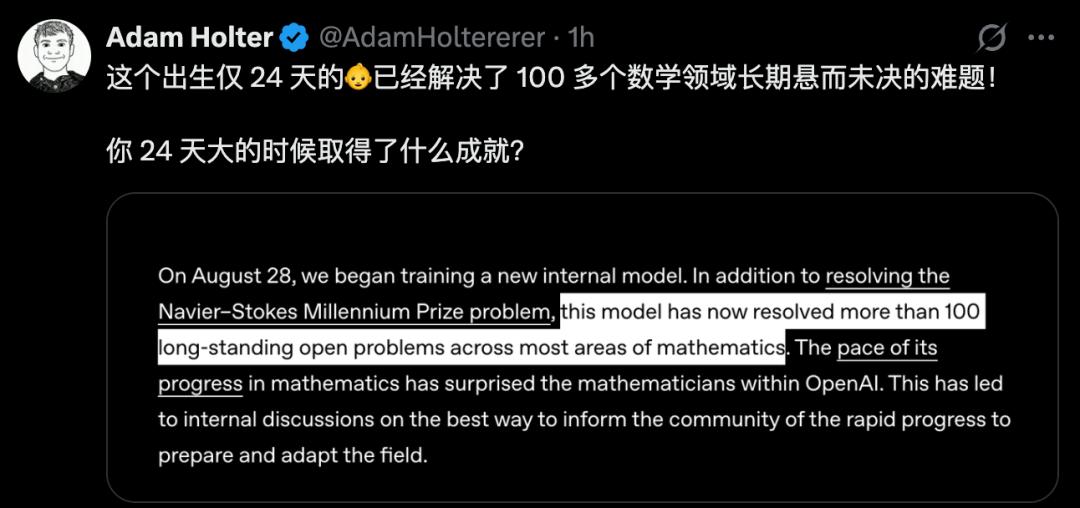
An internal AI that is still in the training process has begun to sweep through problems that humanity has not solved for decades, even centuries.
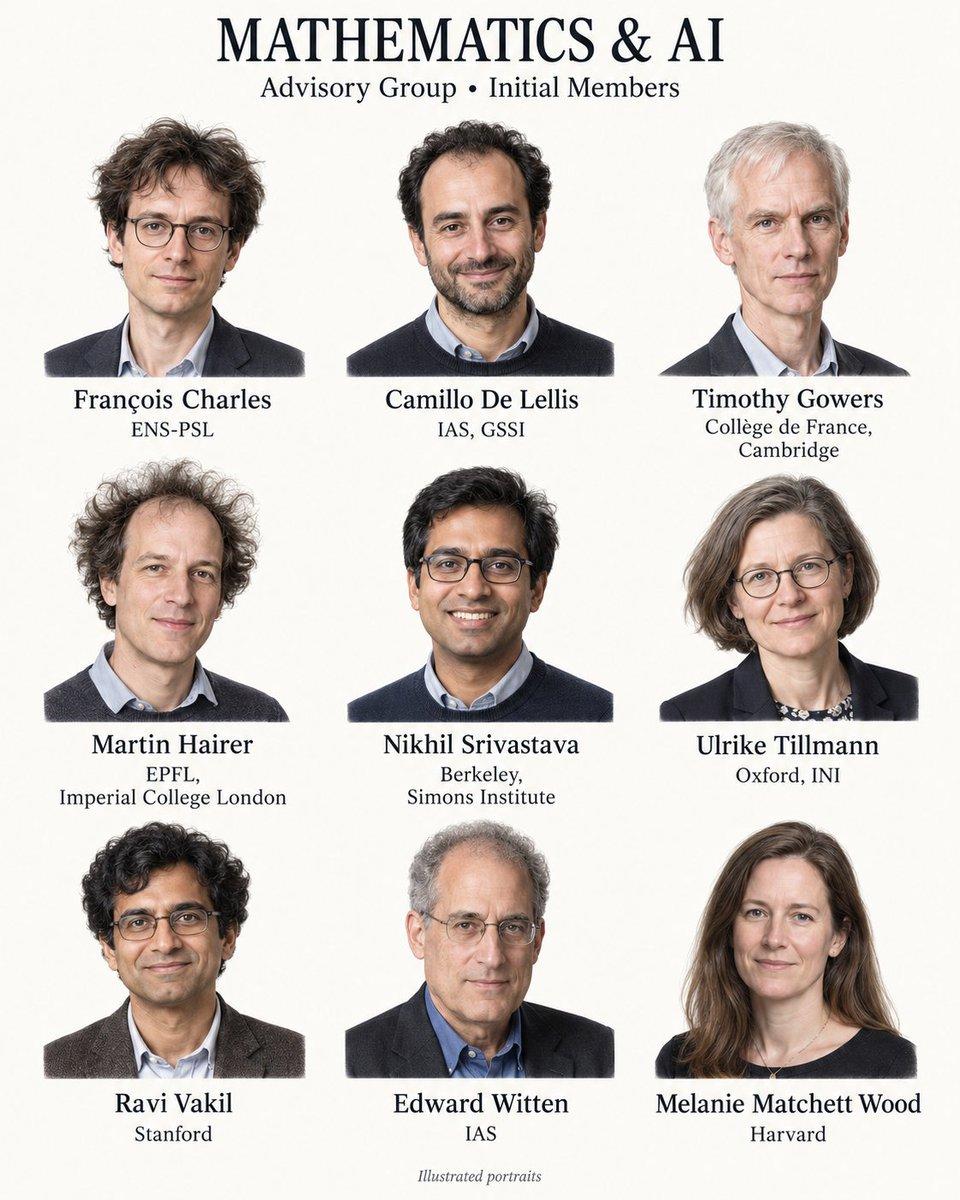
Earlier today, OpenAI announced the formation of an independent mathematics advisory board, bringing together 9 of the world's top mathematicians.
The list includes Fields Medal winners Timothy Gowers and Martin Hairer, as well as Edward Witten, the legendary figure in theoretical physics and mathematics.
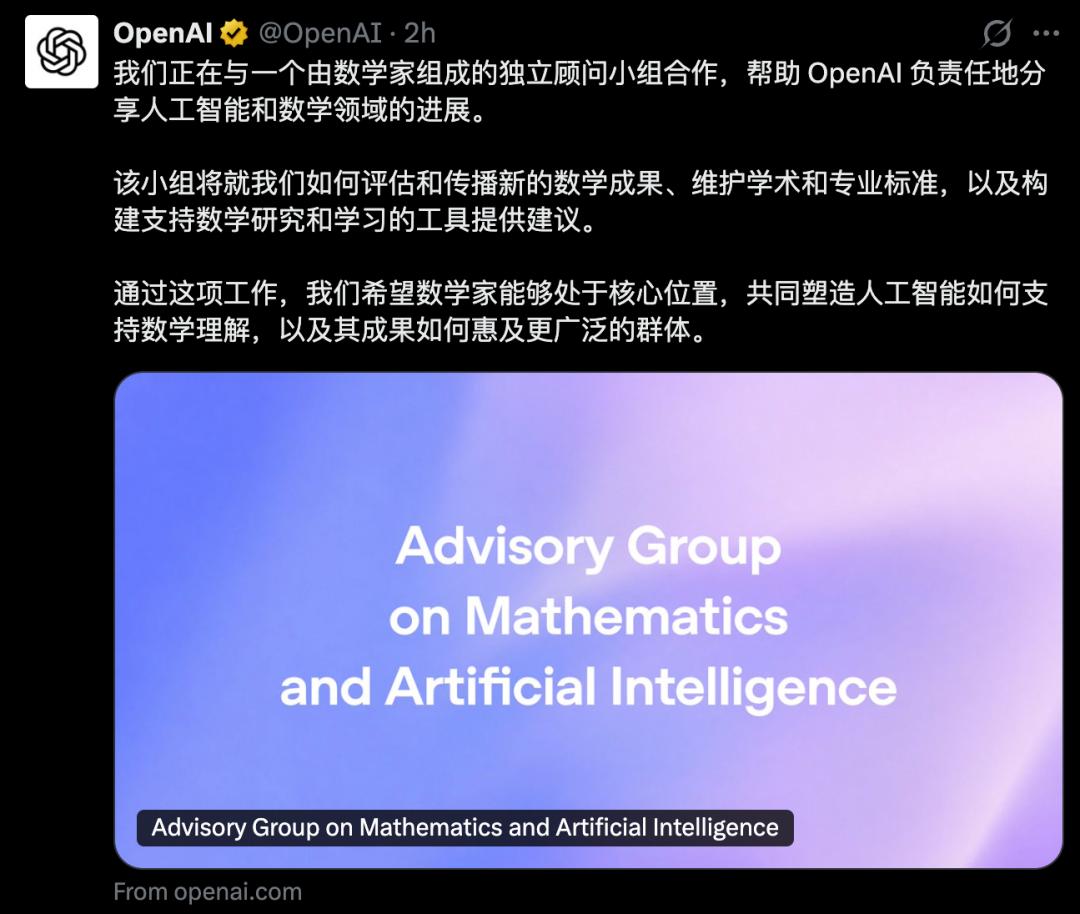
This lineup can be called the "Avengers Alliance" of the mathematics community.
The question they will face next is: as AI starts to crack hard mathematical problems in batches, how exactly should the human mathematics community respond?
OpenAI's Training Lasted Less Than a Week
AI Solves the Millennium Prize Problem
In the mathematics community, there is even a hierarchy of difficulty among hard problems.
To understand the true significance of this latest progress, we need to rewind the timeline back to September 8.
A brand new internal model from OpenAI solved the NS Millennium Prize Problem in just 88 hours.
It presented a proof for the existence and smoothness of the NS equations, and simultaneously released a 166-page paper and the formal verification code in Lean.

Extended reading:
According to the company's introduction, this result shows that:
Under the action of smooth external forces, a three-dimensional incompressible fluid that is initially stationary and smooth can form singularities in finite time, corresponding to Version C and D in the official statement of the Millennium Prize Problem.
Behind this proof is a large-scale collaborative research effort involving more than 10,000 concurrent Agents.
These Agents can access cached internet data, run code, and exchange information within their groups, while different teams explore different versions of the problem and different solution paths.
Researchers also participated continuously in the process: after the system first achieved results related to the Euler equations, they concentrated resources on the Navier–Stokes problem, using existing solutions to guide subsequent exploration; Codex was then used to aggregate valuable intermediate insights from all teams to facilitate communication across different solution paths.
On September 5, about 88 hours after the first batch of Agents was launched, the system derived the solution.
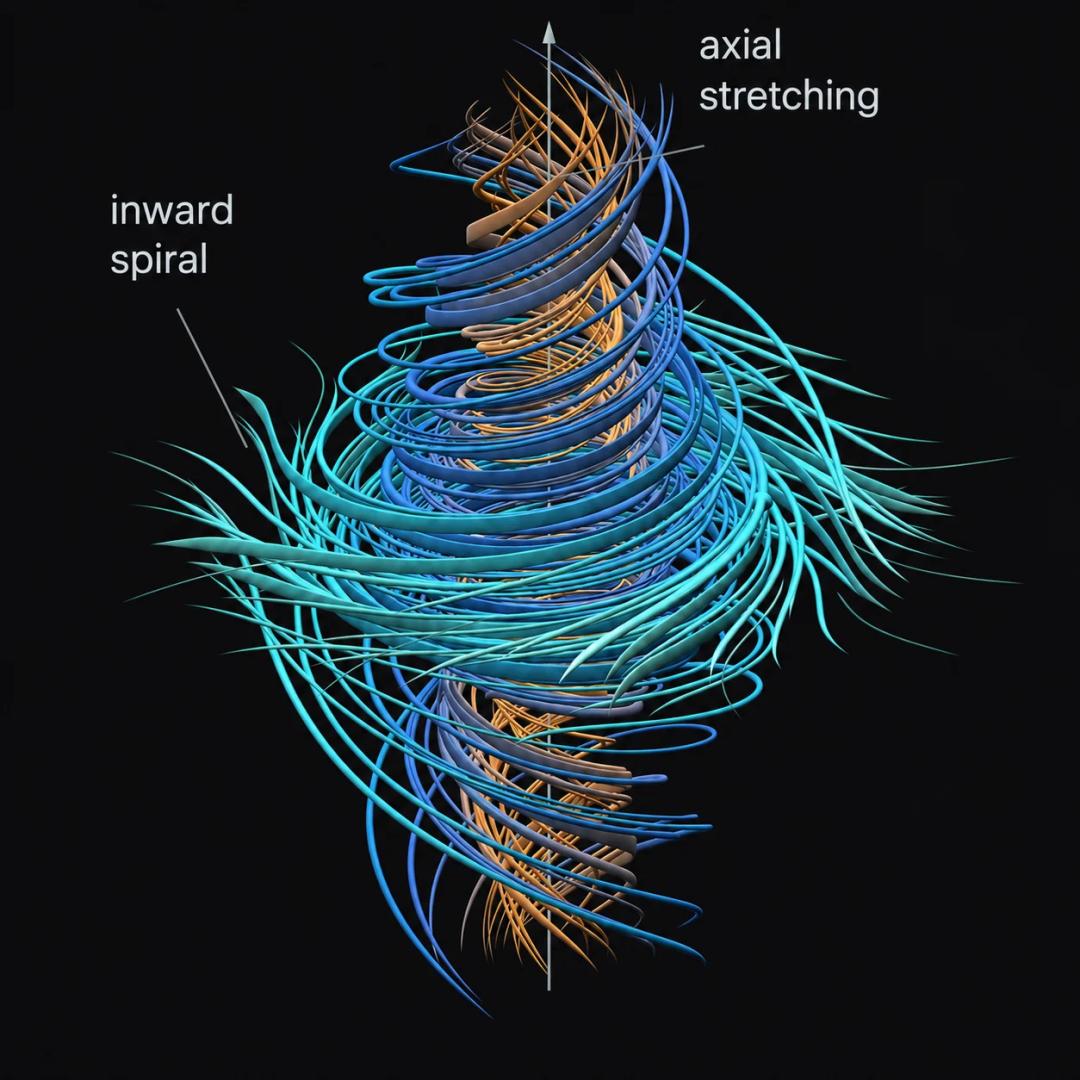
After that, GPT‑6 Astra spent another 17 hours completing the Lean formalization and verification work.
The model, tools, parallel exploration, and human research organization together made this breakthrough possible.
As of today, the scope of results disclosed by OpenAI has further expanded: in addition to the Navier–Stokes problem, there are more than 100 long-standing open problems spanning most fields of mathematics.
OpenAI stated that this progress has sparked internal discussions on how to let the mathematics community understand these changes in a timely manner, so as to leave enough space for preparation and adaptation.
This also makes "how to review and how to publish" a practical issue that has emerged alongside the rapid advancement of AI capabilities.

27 Fields Medal Winners
Jointly Speak Out Against AI for "Ruining Mathematics"
Just three days after OpenAI announced its breakthrough on the NS equations, the entire mathematics community was thrown into an uproar.
27 Fields Medal winners jointly signed a strongly worded open letter titled "The Serious Misalignment of AI in the Field of Mathematics".
Extended reading: Just now, Fields Medal winners including Terence Tao and Deng Yu jointly protested: AI companies are ruining the entire mathematics community!
The signatories cover the 48-year history of the Fields Medal.
Deng Yu, Terence Tao, June Huh, Ngo Bao Chau, Peter Scholze, Martin Hairer.......
Winners of the highest honor in the field of mathematics have almost all stood up collectively.
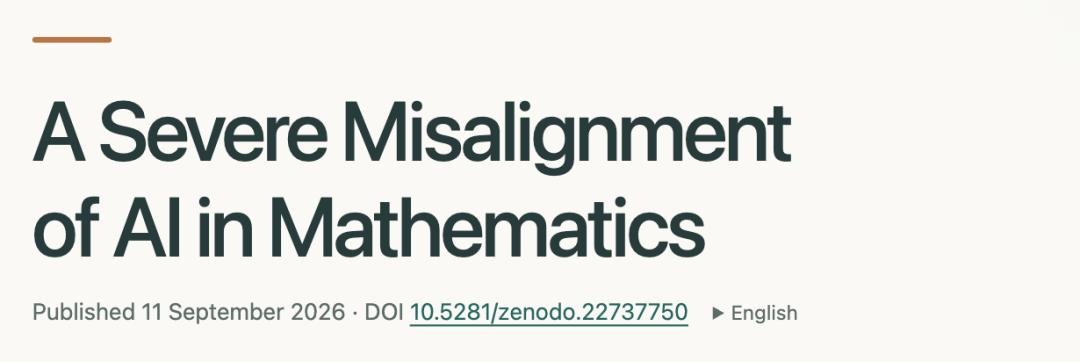
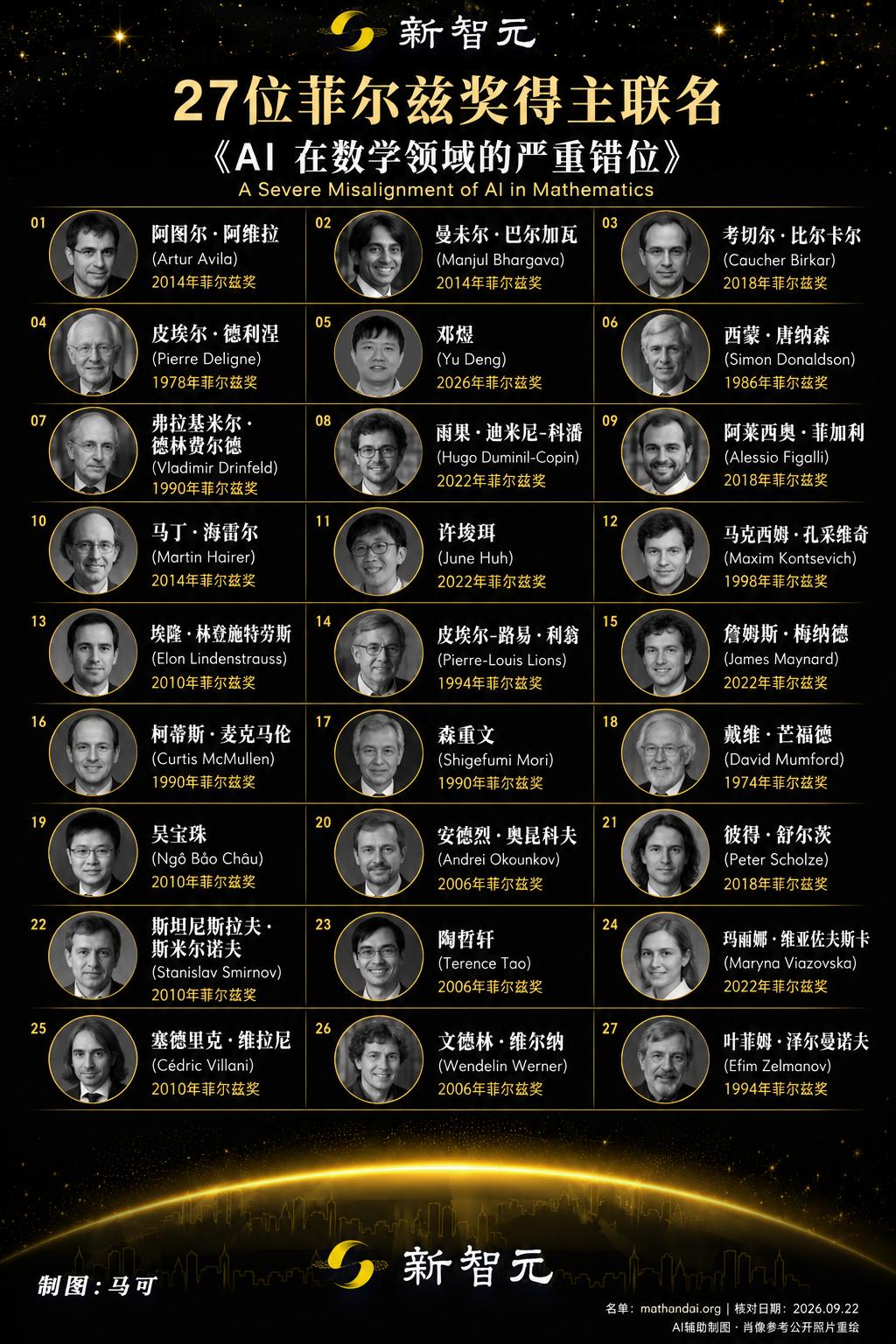
Their anger is not directed at AI itself. The opening of the open letter explicitly acknowledges that AI has huge potential to accelerate real mathematical research.
What these top mathematicians find truly unacceptable is the way these results are released.
They criticize that major AI giants are treating publicly available mathematical problems accumulated by humanity over hundreds of years as benchmarks to boost their performance rankings.
The metric of solving problems may deviate from the deep understanding that mathematical research pursues.
Moreover, after the giants rush to release these results, there is no time at all to sort out the logical thinking behind them and fully document the new methods.
This utilitarian, black-box style of brute-force cracking may seem impressive on the surface, but it actually leaves the mathematics community in a mess.
Of course, OpenAI did not avoid this issue. In its latest announcement, it directly cited this open letter and stated publicly —
It is high time for AI giants and mathematicians to sit down and have a serious conversation.

That is why the so-called "Avengers Alliance of the mathematics community" is the real highlight of this development.
9 Leading Scholars Team Up to Oversee AI
The Mathematics Community's "Avengers Alliance" Is Formed
The first batch of members of this independent advisory group totals 9 people.
They come from institutions including the University of Cambridge, the University of Oxford, Harvard University, Stanford University, UC Berkeley, and the Institute for Advanced Study in Princeton.
Any of their names is more than impressive.
Timothy Gowers, a Fields Medal winner who closely follows AI advances in mathematics. Martin Hairer, the 2014 Fields Medal laureate.
Camillo De Lellis, a professor at the Institute for Advanced Study in Princeton, is a world-leading authority in the mathematical theory of partial differential equations and fluid mechanics.
As for Edward Witten, he is the most distinguished master of contemporary theoretical physics, known as "Einstein's successor", and also the first physicist to win the Fields Medal.
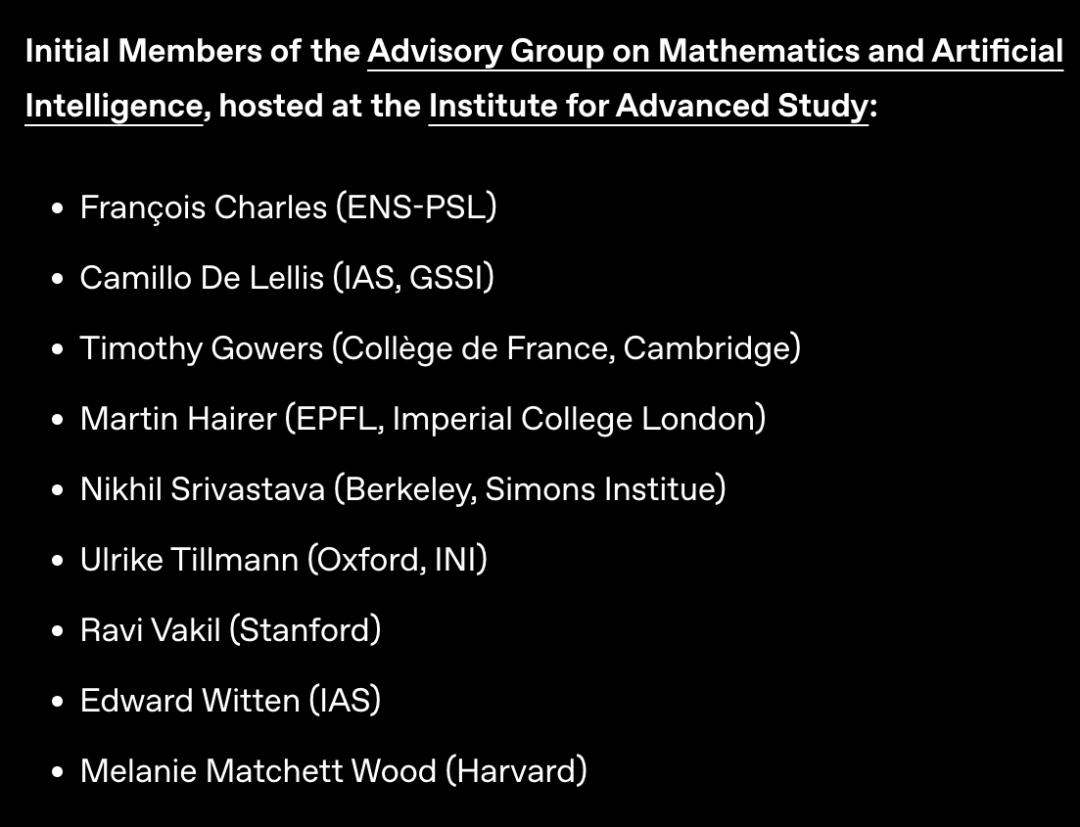
OpenAI has three main tasks for this team:
- Help assess the true significance of new mathematical results;
- Discuss how and when these results should be published;
- Ensure that mathematical research in the AI era still adheres to academic and professional norms.
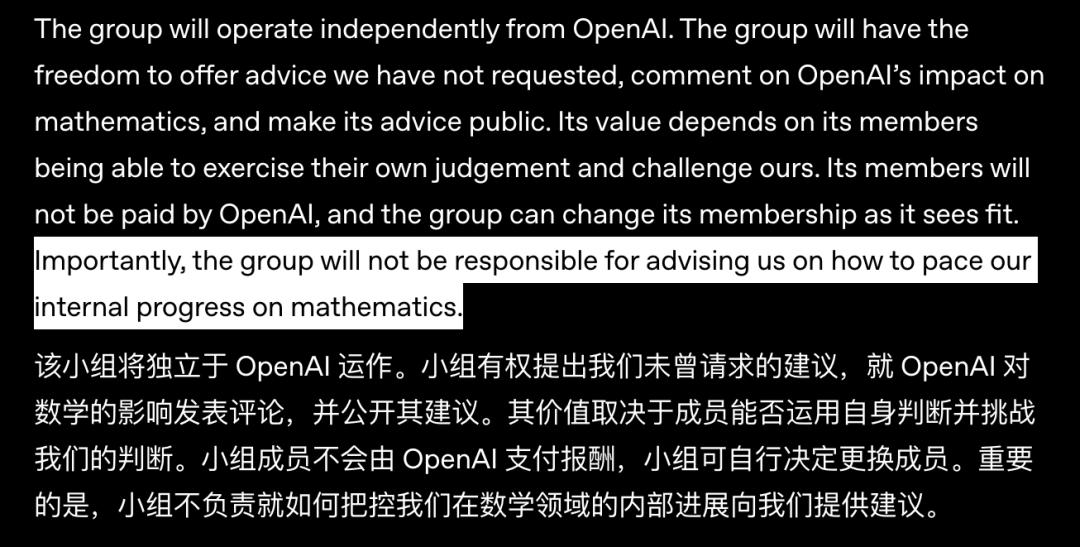
There is also a very interesting arrangement: none of these 9 people are paid by OpenAI. They can openly criticize OpenAI, put forward suggestions that the company has not asked for, and independently decide on changes to the group's membership.
However, there is one key restriction: the advisory group is not tasked with advising OpenAI on how to control the pace of its internal mathematical research.
These 9 leading academics have the right to speak publicly, but they do not hold the "brake pedal" to stop the research.
AI Can Solve the Problems, But Can Humans Finish Reviewing Them?
The situation has become extremely clear.
In less than a month of training, the AI has solved over 100 long-standing historical problems. Faced with this staggering speed, the technical bottleneck is no longer "whether AI can solve the problems", but "whether humans can finish reviewing them".
What is it like to review papers generated by AI? Buckmaster has the most profound personal experience —
The preliminary proof generated by the large model was the most horrifying thing he had ever read. The paper they rushed to publish later to claim priority was dismissed by himself as a pile of "AI Slop", for which he made a public apology.
Even top human experts who spent a whole year polishing their work were completely outpaced. Now the machine spits out more than 100 major problems in just one month. There are barely a handful of people in the whole world who are qualified to review proofs at the Navier-Stokes level.
So what is the real function of this "nine-person elite advisory group"?
Put simply, it is a top-tier processing and demining team that OpenAI has set up for these AI-generated outputs.
Which problem deserves priority review? Which one needs to be rewritten? Who should be invited to verify it? Who should be listed as the author? OpenAI has handed over all these tedious tasks to these 9 unpaid top scholars, while keeping the throttle of the AI problem-solving engine firmly in its own hands.
The mathematics community itself has also realized that this tsunami is coming.
Daniel Litt, a number theorist at the University of Toronto, revealed on X in recent days that after talking with deans of various departments, they reached a consensus: the incentive mechanism, recruitment standards and PhD evaluation system must be completely restructured. Everyone is ready to defend the culture of mathematics, and will no longer encourage the "mere production of PDF documents".
Fields Medal winner Figalli even predicted that the role of mathematicians is being forced to shift from "people who solve problems" to "people who decide which problems are worth solving".