Jensen Huang's Latest Interview: The AI Doomsday Theory Is Too Exaggerated, What We Really Need to Do Is Safety Engineering
In a recent long interview, Jensen Huang, CEO of NVIDIA, responded to the most pointed set of questions today: Will AI end human civilization within ten years? Should regulatory agencies similar to the FDA and FAA be established? Should we stop selling chips to China? Why are data centers absolutely necessary? And why did he say he "is not afraid of paying taxes, but only of becoming poor".
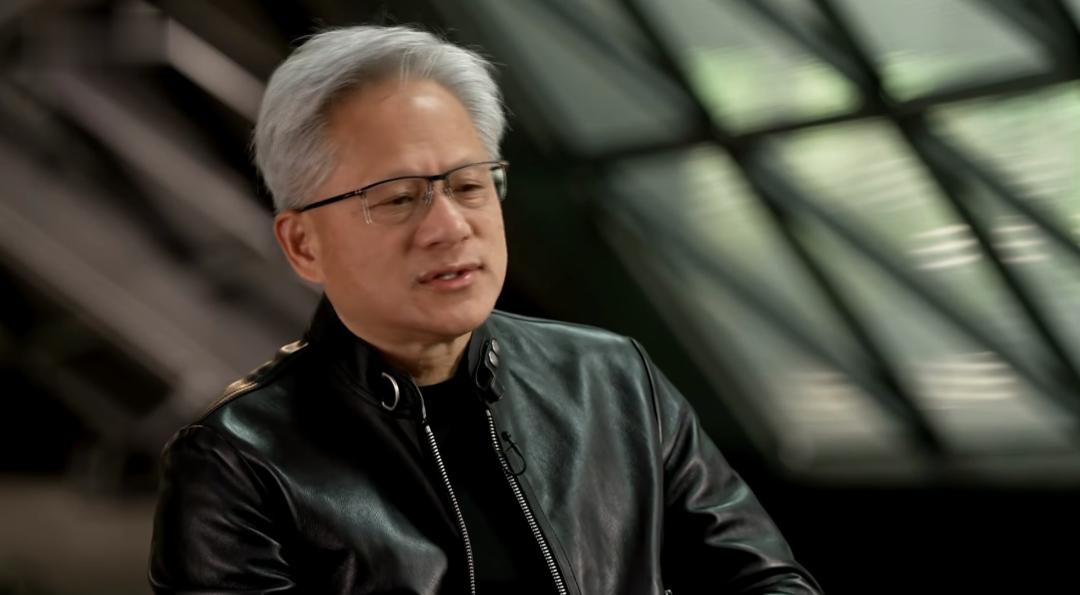
I. Will AI destroy humanity? "The probability of doomsday in 2030 is 0%"
Host: Dario Amodei, Sam Altman, and Elon Musk have all stated that we need to control the development pace of artificial intelligence. Some whistleblowers pointed out that the end of human civilization could occur within 10 years. Do you agree?
Jensen Huang: First of all, artificial intelligence technology is indeed incredibly powerful. It can bring enormous benefits and can be applied to various scenarios, but there are also many bad applications. So we must ensure that we make this technology safer during the development process.
This industry is undergoing a transformation. Earlier this year, we experienced a turning point: artificial intelligence began to be truly useful. As demand increases, it has become extremely valuable. Now the token issuance of many artificial intelligence products is already profitable, and the profit margin is quite high. Many companies are adopting it. The latest Astra model launched by OpenAI is amazing, and we are using it everywhere. In the past six months, the situation has changed suddenly, and the entire industry has shifted to operating at a high production level.
Regarding the claim that "humanity will disappear within ten years", no, that is completely wrong. It is a narrative that is too exaggerated, has received a lot of attention, and has also attracted media attention. I think fundamentally, these companies are very concerned about product safety. They are transitioning from the laboratory stage to the engineering stage, and must invest more research resources and computing resources into safety.
At the beginning of any industry, most of the engineering work is to make the product work properly. When products gradually mature and are put into social use, most of the engineering work will actually become verification, testing, evaluation, benchmarking, compliance with relevant standards, ensuring that the delivered products are reliable, function as expected, and fully fulfill product commitments. So it is very reasonable to take such an approach during the current transition period. They have to transfer a large amount of capability resources for the safety of AI.
A lot of the discussions about this matter are unnecessary. To be honest, the situation is quite bad, creating too many unnecessary dramatic plots, which is extremely irresponsible. Now all of this should be based on facts. That doomsday theory is not based on scientific evidence, so it is wrong.
But their concerns are not unfounded. It is no different from the situation when I just got off the plane. I am glad that the entire ecosystem and the entire industry can develop in this way, and all air travelers attach great importance to safety issues. All those who work day and night are working hard to ensure aviation safety, aircraft safety, and air travel safety. This makes sense, and we are actually going through the same thing.
II. AI Regulation: Enforce existing laws first, instead of abolishing laws with doomsday narratives
Host: You said we don't need any new laws, no new regulations. But you just mentioned that you support implementing safeguards in important industries. Why don't you support establishing a regulatory agency similar to the FDA or FAA for artificial intelligence?
Jensen Huang: Before formulating new laws and regulations, let's abide by the existing laws and regulations first. Various laws and regulations already exist now. We live in this era, in a place ruled by law, which is why we feel safe and secure. We are protected by various laws and regulations that apply to all application scenarios, whether it is food, air travel, or any topic related to artificial intelligence.
Host: So what exactly is the missing part? Why do you think there is no missing part when people like Dario Amodei and Sam Altman are speaking?
Jensen Huang: I think what I am responding to should be this. This is true for both of these two laboratories. One laboratory had four cybersecurity incidents caused by them, then another one emerged, and the number increased a bit. In both cases, there are many laws to deal with. You have cybersecurity regulations against unauthorized access, liability for damages, a series of liability issues related to cybersecurity, and various responsibilities and obligations related to these products. If your product causes harm, or your product does not meet the promised performance level, if you have signed contracts with these companies, there are many relevant laws and regulations to comply with in terms of service level agreements.
I mean, apply those methods first. Don't let this "doomsday" happen. This narrative allows people to break free from the legal constraints that currently exist. Now, go and understand the meaning of this carefully. There are many expressions of "having" like this, but in fact they are not asking for more laws. They are asking to abolish the laws we already have. I think that is indeed a problem. We have many relevant laws, so let's apply these first.
Host: Do you think these companies are seeking such opportunities? They can be implemented under a certain degree of normative constraints, and they don't want to handle this matter themselves, nor do they want to take their own responsibilities because of what they are building.
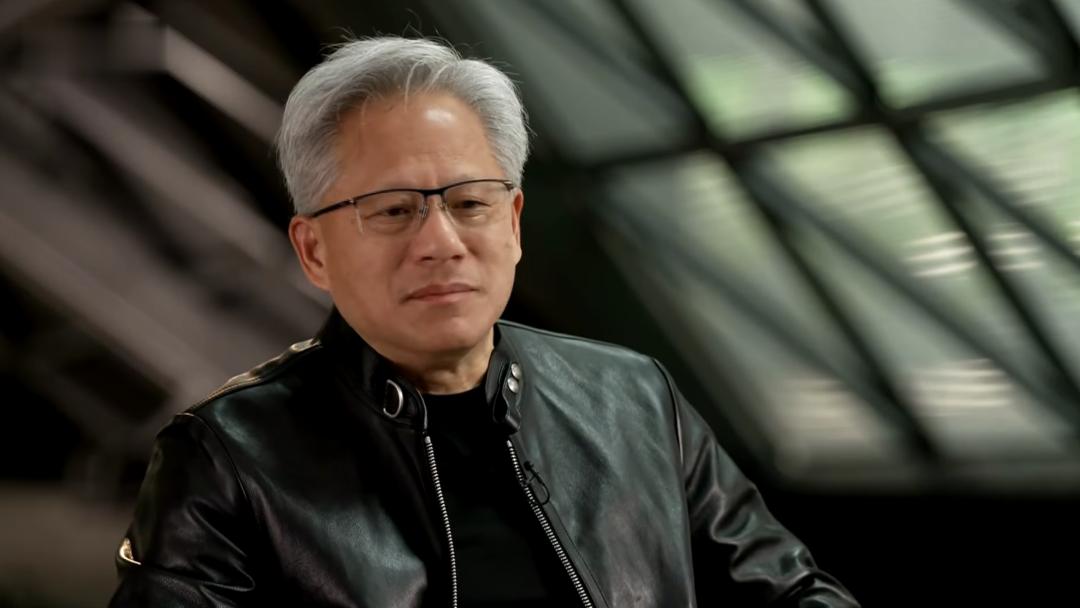
Jensen Huang: They are transitioning from a laboratory to a product company, from a business that cannot generate customer revenue to a business that can generate customer revenue. And this transition must be very rapid, because they are doing all of this at an extremely fast pace. These two companies are the two most influential technology companies in history. They are very remarkable researchers, amazingly talented. They have done an excellent job, but this does not change the facts. In fact, they are transitioning from the laboratory stage to the product stage and service companies, creating hundreds of billions of dollars in revenue. This is expected to bring in hundreds of billions of dollars in revenue. Both of them are increasing computing power at a speed unprecedented in human history.
They truly deserve this treatment because their products are excellent and very practical, so people are willing to use them. The more the better, they like to generate more revenue, and their investors want to see their growth. All of this is fine. But the law exists. There are some product liability related laws that should be verified and reviewed.
III. Do you trust these CEOs? Trust their capabilities, oppose panic
Host: Are you more of a believer? Among the four or five CEOs who own this technology, do you trust that they will make the right decisions? Can this alleviate some of the related concerns?
Jensen Huang: They definitely have the ability to do the right thing. They are going through a transition from one state to another, which is understandable. First of all, they are all young CEOs, all people holding CEO positions for the first time. I have been doing this job for 33 full years now, and looking back, I think I have indeed accumulated some experience. Just sitting in the back seat, talking nonstop about their affairs.
But the fact is that they are going through this transition process. Building a company and running an organization is not easy. Building products, developing industries, starting a business, going public. All of these are new things, and they are happening at the same time. Therefore, I can understand the huge and incredible challenges they are facing. And I also have great confidence in myself, that is, in the capabilities of the teams they have. These are all very remarkable people.
So do you trust them? Well, I trust them. I trust the capabilities of people. I can also understand that situation. I do not agree with all kinds of doomsday speculations and panics. I hope they can focus on the things they are indeed focusing on. Their engineers are extremely excellent.
Those incidents forced them to create a safer sandbox environment to deal with subsequent situations, as well as the isolation and control of experimental processes. I am sure they have realized the need to monitor the situation more closely, the operation of all the software they use in the testing and evaluation process. I am sure that if they really do this, if their software can interact with external devices, interact from their cloud to external clouds, and other services that they should let people know about, if a similar situation occurs, they also need to deal with it in a timely manner to ensure that they can be shared with the public, so that the entire industry can learn from it, and all of us can improve.
This is how the cybersecurity industry works. Now the whole world is suffering from cyber attacks, and engineers are working intensively to update their software and improve software performance to reduce the risk of vulnerabilities. These are extremely complex systems. We have open source software, which is truly remarkable. Open source software allows all companies to use it, defend themselves, and upgrade. This is one of the reasons. This industry is still operating normally now. Hundreds of companies cooperate together to form a community-like collaboration system. And you know, our structure is asymmetric. There are many defenders facing attackers, and there are many things to deal with. Disassemble, analyze. Regarding those things that happened to them in the past, although they are over, the fact is that they are still doing this now. They are back in the field of engineering research, will improve engineering technology, and plan to invest more resources in evaluation, benchmarking, and testing. This is indeed a good transition stage for them.
IV. Why should Americans trust you? Company success is directly related to safe deployment
Host: As an American, look at you, you are indeed the chief executive officer and also the founder of NVIDIA. This is almost incredible, the most valuable company in the world. Why on this specific security issue should Americans trust your point of view? When your company succeeds, your net worth is directly related to selling chips?
Jensen Huang: The success of our company is directly related to the safe deployment of products and services. If the computer industry cannot safely and efficiently create value for the world and provide a large amount of resources, our value will decrease. Therefore, this situation also happened to us. In the personal and industrial fields, this new category of application scenarios called AI can be produced and safely delivered to all parts of the world. We must do this. We must balance this matter to ensure that everything is handled properly.
Optimism. The reason why we do what we do, we do this job, is because we believe this is a very meaningful thing for the world. We think we hope our children can also be part of it. My children are part of it. We hope all families can participate in this activity. We hope to usher in a future where human suffering is reduced and enterprises can operate more efficiently. Where we can acquire knowledge faster. We hope all of these can be realized in the future. We want to deal with the elderly population problem. We hope to have sustainable energy and make full use of artificial intelligence technology. Market forces will push the world towards the era of sustainable energy. We want all these things.
But we must do this responsibly. We must ensure that the entire process proceeds very safely. And we must handle all of this with a mature mindset. So that we won't scare other people with those dramatic and historical ways. This is a prediction of the future, which is not a fact at all.
V. Competition with China: Should be as fast as possible, but not through sales bans and monopolies
Host: The most prominent issue here is competition with China. All along, people's view is that we cannot slow down the development speed of artificial intelligence, lest we lose to China. Do you think this is a reasonable argument?
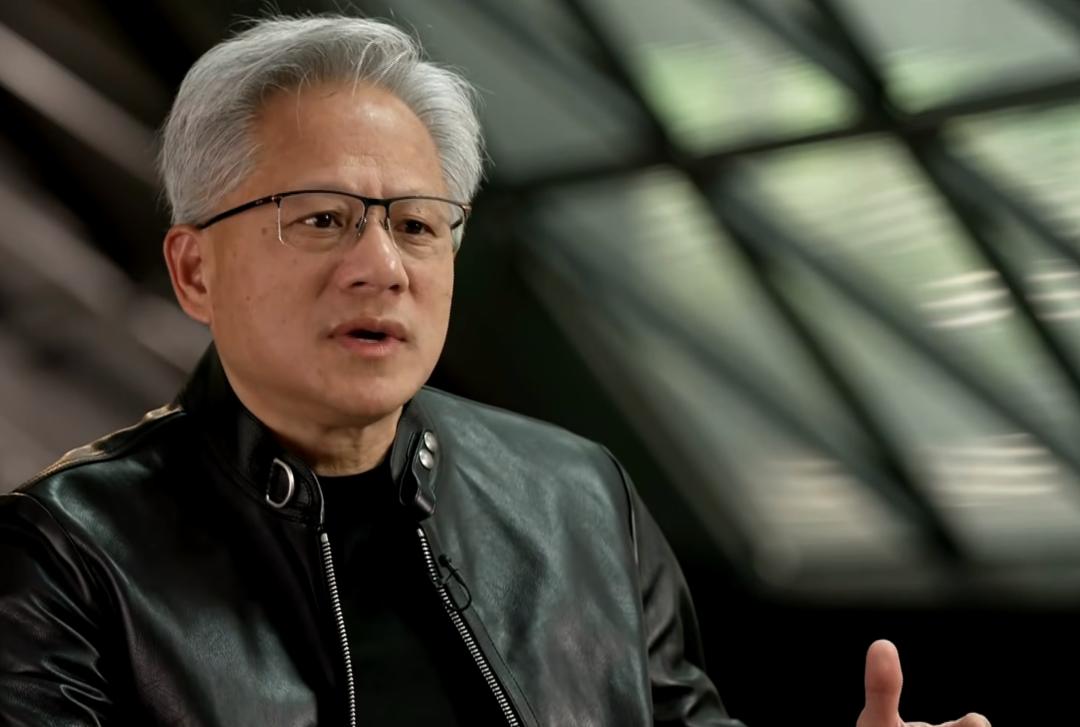
Jensen Huang: As advice to every CEO in every industry, every student, and every professor: every member of our American society hopes that the United States can become as prosperous as possible. The richer we are, the more prosperous our economy is, the more social security we can arrange, the more services we can provide for the country, and the stronger our military security. It would be even better if we could be global citizens and support others. Challenges and tests, suffering and torment, pain and struggle, this can make us more charitable as a country. Therefore, I suggest every American citizen, everyone in the United States, do this. We will pull in the same direction with all our strength.
So should we slow down? Will this affect the competition with China? In this field, we should move forward as fast as possible without hesitation. The situation of anyone else does not matter. That's not the case. If China can find a cure for cancer, that would be great for us. If China can invent a new sustainable energy technology, that would be great for us. If China takes the lead in many fields of science and mathematics, and we can learn from them and benefit from it, that would be a very good thing for us.
But listen, our entire country is loaded with ammunition and ready to act at any time. This is a country with extraordinary capabilities and outstanding innovators. I am proud to be part of the American technology industry, and I love this industry very much. One of the three pillars of our national treasures, of course, our financial system also belongs to this category, and of course our military also belongs to this category. This collective I serve, this group I belong to, this technology industry, it is absolutely one of our national treasures.
We will move forward at the fastest possible speed, however, we will never do this, nor should we ever do this: launch products to the market before they are ready, and deliver products with potential safety hazards. And no one expects us to do that. But everyone hopes we can succeed and help the United States achieve maximum prosperity.
Host: David Sacks told me earlier this week that he thinks if we slow down the development of artificial intelligence, it could cause huge harm. The US economy, the US military, this will put the United States at a disadvantage. So I want to be clear, what do you think? Considering our current situation, especially with China, should we pay close attention to the development of artificial intelligence?
Jensen Huang: First of all, David is very smart. This is a very thoughtful approach. He is very profound and pragmatic. He is one of the great American patriots. It has been my honor to know him. I met him when he was a White House advisor, when he was still working in the White House. What an incredible person.
I don't know what context his words were put forward in. But I am quite sure that he hopes the United States can develop as soon as possible. However, its speed will not exceed our expectations. We should move forward as fast as possible, but not faster than it should be. If we sacrifice safety for some purpose, that is absolutely not allowed. If you sacrifice safety in pursuit of output, then the products produced are of course also unsafe. That will put people in danger, and we have various laws to sanction this behavior. Therefore, those companies that are developing these technologies have full motivation to do the right thing. I am very confident, because they have the motivation to do so, and they have the ability to do this. We will fulfill our promises. We will create artificial intelligence and develop artificial intelligence technology in a way that is harmless to society.
Host: Dario Amodei said that we should stop selling chips to China. The statement is: "Do not sell powerful artificial intelligence chips or semiconductor manufacturing equipment to China." What is your response to that?
Jensen Huang: We must ensure that the technology developed by the United States can be applied smoothly to give the United States an advantage. Every country does this, every company does this, every parent does this, every industry does this, every country does this. In the case of the United States, the United States has made a decision, and the federal government of the United States has also made up its mind. I fully support that we first provide