Sam Altman failed to make the list, and the President of OpenAI broke into the top 50 of the richest people in the United States with a fortune of 25.5 billion.
The richest person at OpenAI is not Sam Altman.
This week, Forbes released the 2026 Forbes 400 list of the wealthiest people in the United States. Greg Brockman, co-founder and President of OpenAI, made his debut on the list with a net worth of approximately 25.5 billion US dollars, ranking 45th across the country.
He is the newcomer with the highest net worth this year.
Ranked right before him is Phil Knight, co-founder of Nike; right behind him is media tycoon Rupert Murdoch.

Yet his boss, Sam Altman, CEO of OpenAI, is not on this rich list at all.
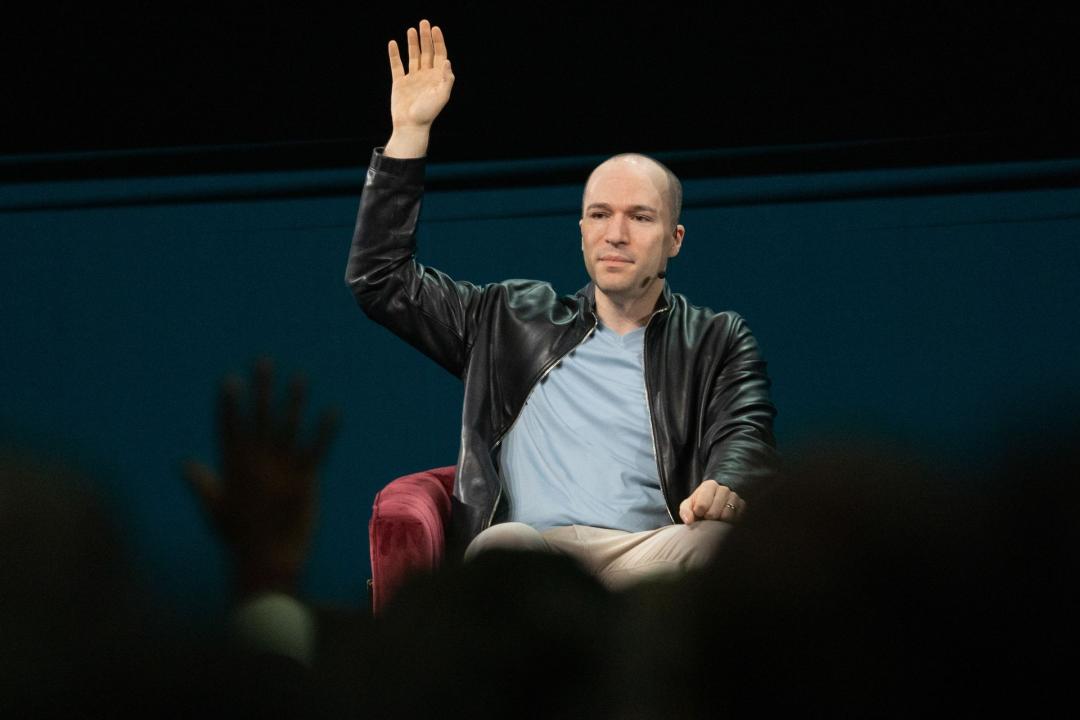
Greg Brockman, President of OpenAI. He made his debut on the 2026 Forbes 400 list with a net worth of about 25.5 billion US dollars, ranking 45th in the United States.
According to Forbes, Sam Altman does not hold direct equity in OpenAI, and his current net worth is approximately 3.3 billion US dollars.
The entry threshold for this year's list is 4.4 billion US dollars, and he missed the list by 1.1 billion.
25.5 billion against 3.3 billion, the former is nearly 8 times the latter.
In the same week, the FT and The Information successively broke the news that OpenAI is in initial contact with investors for a new round of financing, and its valuation may soar to 1.2 trillion US dollars or even higher.
Just a few days ago, Sam Altman personally confirmed that OpenAI will not go public this year.
Although the listing has been put on hold, OpenAI has already pushed its second-in-command into the top 50 richest people in the United States.
A Diary That Grew From 1 Billion to 25.5 Billion
In August 2017, Brockman wrote a sentence in his diary: "Financially, what can make me earn 1 billion US dollars?"
At that time, OpenAI was still a non-profit organization.
The co-founders were still arguing fiercely over whether to set up a for-profit department and whether Elon Musk should take control of it.
Nine years later, this private diary became the most damaging piece of evidence when Elon Musk sued OpenAI.
Elon Musk used it to accuse Sam Altman and Brockman of betraying him: they first persuaded him to fund the non-profit organization, and then transformed it into a for-profit company.
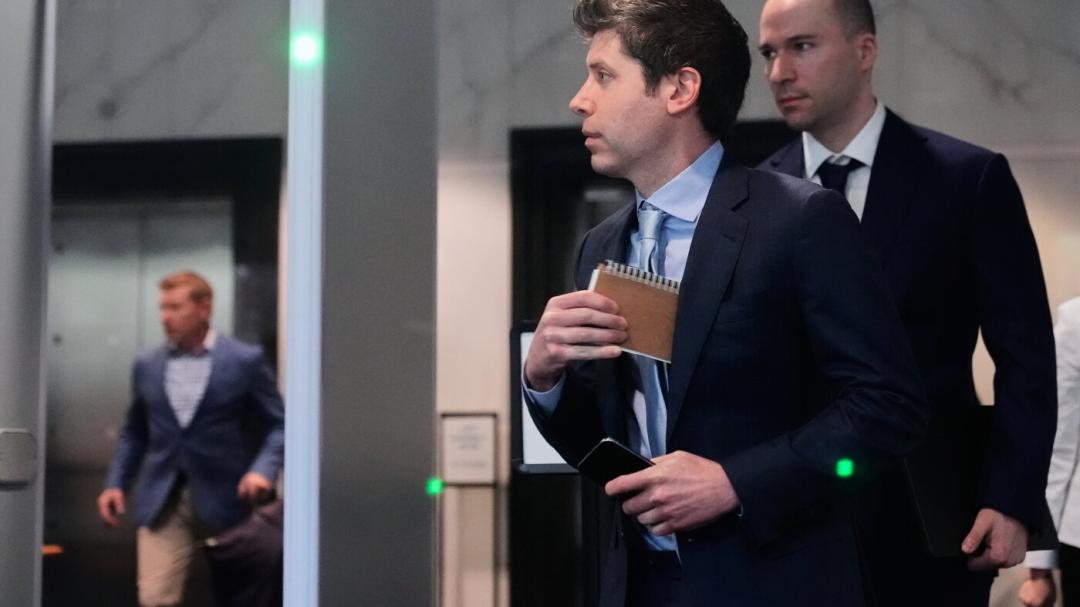
On April 30 this year, Sam Altman (center) and Brockman (right) arrived at the federal court in Oakland, California.
When testifying in the court in Oakland, California, Brockman explained that this sentence meant he hoped his dedication to OpenAI would be worth something in return.
Later, the jury dismissed the lawsuit on the grounds that Elon Musk filed the suit too late.
Four months later, the capital market put a price tag on Brockman's years of dedication.
He landed on the Forbes 400 list with a net worth of 25.5 billion US dollars, more than 25 times the 1 billion "small goal" he set back then.
This figure is also more than 3 times the value of the OpenAI shares held by another co-founder Ilya Sutskever.
Where Does His 25.5 Billion Net Worth Come From?
Forbes states that the vast majority of Brockman's wealth comes from the OpenAI shares he holds.
According to Forbes estimates, Brockman's shareholding in OpenAI is slightly less than 3%.
He also disclosed during the court hearing in May that this part of the shares is worth more than 20 billion US dollars, closer to 30 billion US dollars.
Multiply OpenAI's post-money valuation of 852 billion US dollars in March this year by 3%, and the result is 255.6 billion US dollars. Taking into account the "slightly less than 3%" stake and his other assets, the number basically matches the 25.5 billion US dollars given by Forbes.
In addition to OpenAI's shares, Brockman has another asset in his hand: Stripe.
Brockman was born in a small town in North Dakota, and both of his parents are doctors.
Later, he dropped out of Harvard and transferred to MIT, then dropped out again a few months later, becoming the 4th employee and CTO of the payment startup Stripe. Up to now, he still holds Stripe shares worth about 471 million US dollars, and the company was valued at 159 billion US dollars in February this year.
In addition, he has some small investments in companies such as Cerebras, CoreWeave, and Helion, totaling less than 5 million US dollars. All three companies have had business dealings with OpenAI.
In 2015, Brockman left Stripe and co-founded OpenAI, serving as CTO. For nearly ten years after that, he has always stayed behind the scenes, while public attention was focused on Sam Altman.
It was the boardroom storm in 2023 that made him stake all his net worth.
After Sam Altman was suddenly fired, Brockman announced his resignation within hours. He was fully aware that once he left, his OpenAI equity might not be retained.
Brockman's loyalty that staked his entire net worth had foreshadowed long ago.
The court hearing also revealed a detail: in 2017, Sam Altman once gave Brockman a 10 million US dollar stake from his family office, which shows how deep their friendship is.
As OpenAI's valuation keeps rising, Brockman, who holds direct shares, has seen his book wealth grow steadily.
The huge wealth gap between the two forms a strange contrast with their positions in OpenAI.
Behind this contrast is the difference between holding shares and not holding shares.
Altman Hits the Brake, Investors Hit the Gas
On March 31 this year, OpenAI officially announced that it had completed a financing of 122 billion US dollars, with a post-money valuation of 852 billion US dollars.
This is the official caliber of its current valuation.
In June, OpenAI secretly submitted its IPO application, and the market once expected it to go public within the year.
Then Sam Altman pressed the pause button on the listing plan.
He said in an exclusive interview with Fortune on September 12 that considering everything that is happening in terms of safety, it is not wise to go public at the moment, and the listing time will not be 2026.
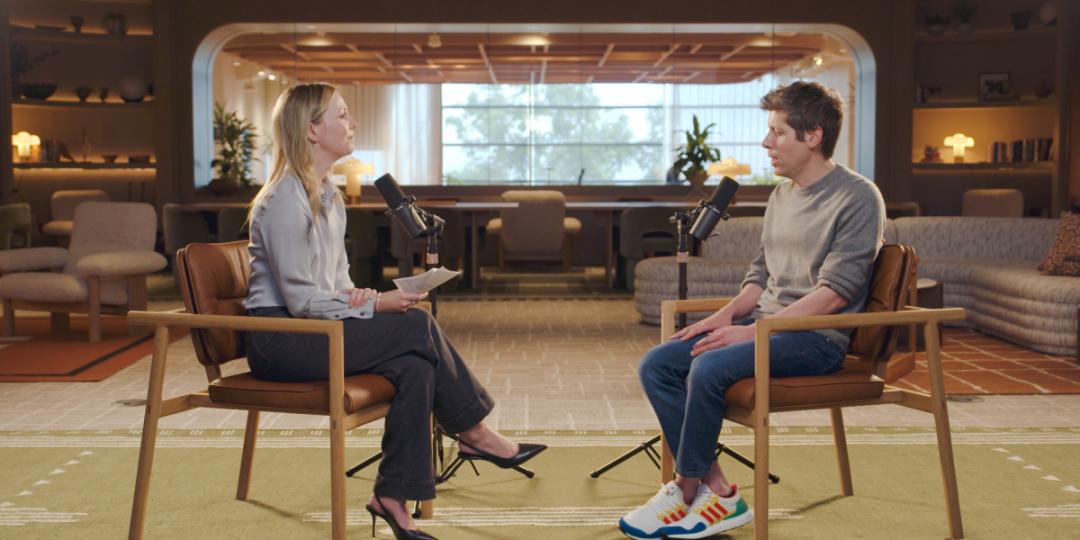
Sam Altman was interviewed exclusively by Alyson Shontell, editor-in-chief of Fortune, at OpenAI's San Francisco headquarters, confirming that OpenAI will not go public this year.
The listing was postponed, but the enthusiasm of the capital market has not decreased at all.
A few days later, the media broke the news that OpenAI had initial contact with investors for a new round of financing, and the valuation may reach 1.2 trillion US dollars or higher.
The Financial Times specifically mentioned that this round of negotiations was initiated by investors, and the specific progress of the talks and the valuation level largely depend on when OpenAI plans to go public.
If the rumored round of financing is closed at a valuation of 1.2 trillion US dollars, OpenAI's valuation will rise by about 348 billion US dollars compared with March, an increase of about 41%.
A 40% increase in just half a year.
Paper Wealth Is Already Being Turned Into Real Spending
Most of Brockman's 25.5 billion US dollars is still on paper.
But that doesn't stop him from putting this money into political investment.
Over the past year, he and his wife Anna donated 75 million US dollars, all to Super PACs, which are political organizations in US elections that can raise unlimited funds and run advertisements for candidates.
50 million US dollars of that sum was donated to two Super PACs that support "AI-friendly" candidates, placing bets on both the Democratic Party and the Republican Party; the other 25 million US dollars was donated to the pro-Trump Super PAC "MAGA Inc.".
These donations have drawn opposition from some OpenAI employees, and also sparked a campaign among users to cancel their ChatGPT subscriptions.
While he is spending money, people are still leaving the company.
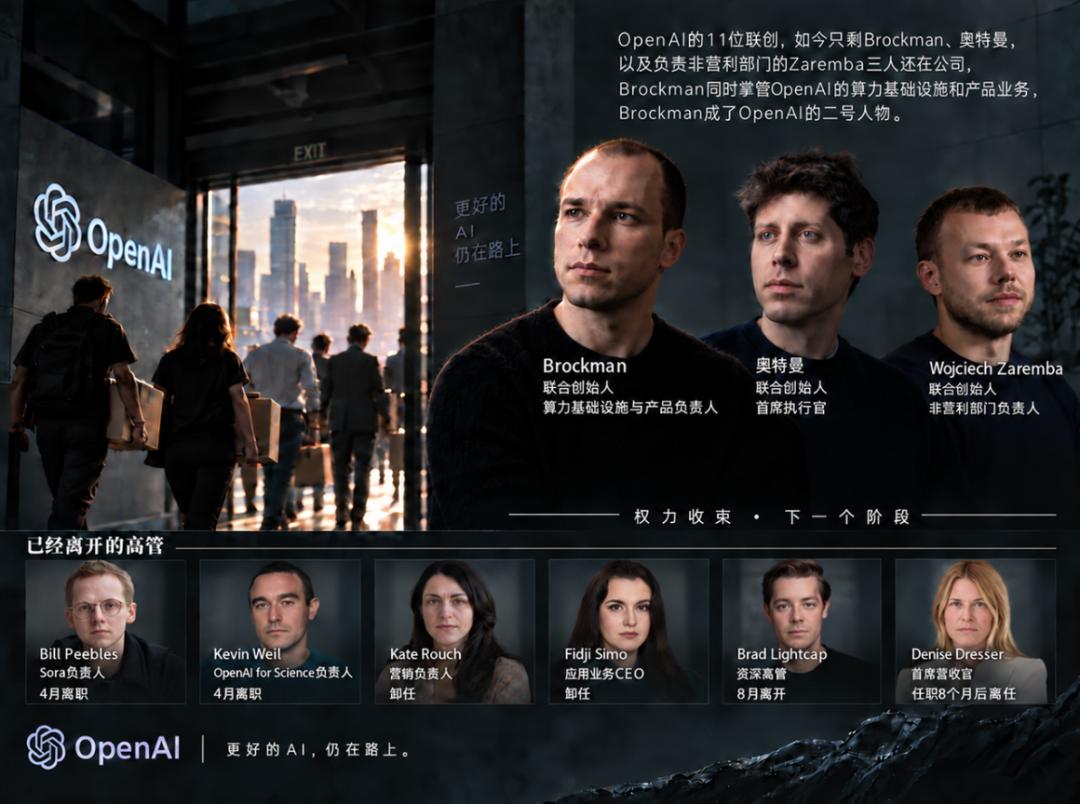
Of the 11 co-founders of OpenAI, only Brockman, Sam Altman, and Wojciech Zaremba, who is in charge of the non-profit department, remain at the company.
Senior executives are also leaving the company intensively.
In April, Sora head Bill Peebles and OpenAI for Science head Kevin Weil left the company one after another.
Then, marketing head Kate Rouch and App Business CEO Fidji Simo stepped down shortly after each other.
In August, veteran Brad Lightcap left. Chief Revenue Officer Denise Dresser also only stayed in that position for 8 months.
As power is concentrated, OpenAI has entered the "Brockman Era".
He is in charge of both OpenAI's computing infrastructure and product business, becoming the second-in-command of the company.
Before AI Companies Ring the Listing Bell, the Rich List Has Already Seen a New Batch of Players
Looking at the entire list, this is a year when AI creates massive wealth.
The total net worth of the 2026 Forbes 400 listers reached a record 8 trillion US dollars.
Among the 34 newcomers, 14 others besides Brockman were lifted onto the list by this AI wave.
The second-ranked newcomer right after Brockman is Brett Adcock, founder of Figure AI, with a net worth of about 23.4 billion US dollars.
This humanoid robotics company was founded only four years ago and has little revenue, but its valuation has already soared to tens of billions of US dollars.
The most eye-catching group is the Anthropic camp:
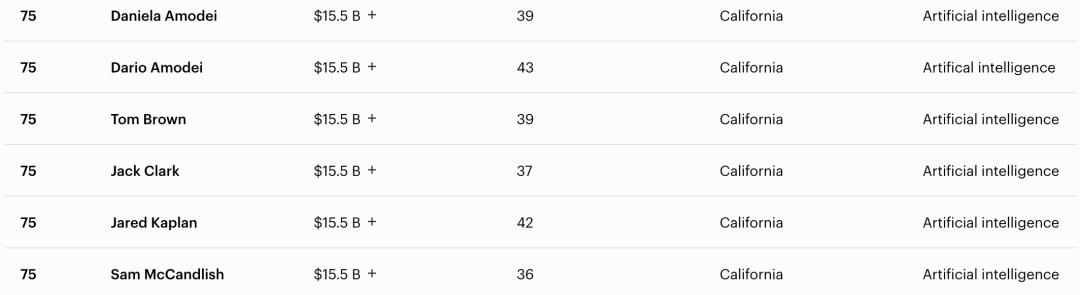
Dario Amodei, Daniela Amodei, Tom Brown, Jack Clark, Jared Kaplan, Sam McCandlish, six co-founders landed on the list at the same time, each with a net worth of about 15.5 billion US dollars, tied for 75th place.
The total sum of the six people's wealth is 93 billion US dollars.
Anthropic has a total of 7 co-founders, and the other one is not included in this US rich list because he is a Canadian citizen.
In 2021, they left OpenAI, on the grounds that they were worried that OpenAI would develop AI too fast without paying attention to safety.
Five years later, the company they founded has a valuation of 965 billion US dollars.
Earlier this year, the seven co-founders collectively promised that they would donate 80% of their wealth in the future.
Most of them are still very young. Daniela and Tom Brown are both 39 years old, Jack Clark is 37, and Sam McCandlish is only 36.
The youngest person on the entire list also comes from the AI industry.
30-year-old Steven Hao is the co-founder and CTO of Cognition, the company that developed the AI programmer Devin.
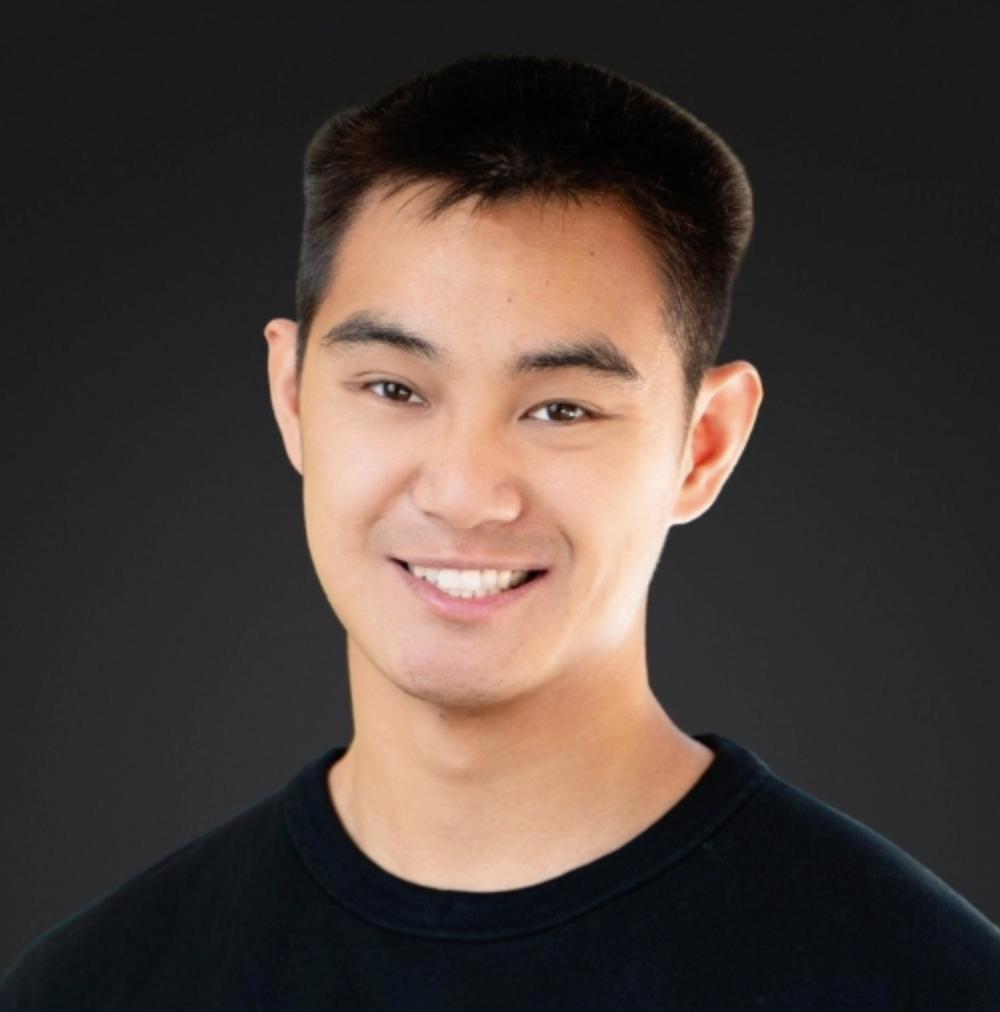
Steven Hao
In September, Cognition announced the completion of a 2 billion US dollar financing with a valuation of 48 billion US dollars, less than three years after its establishment.
The AI Wealth Creation Wave Has Arrived
Just like the internet boom back then, the AI wealth creation wave is here.
Both OpenAI and Anthropic are creating a large number of super-rich before listing, and Anthropic is even ahead of the curve.
According to a report by the Financial Times, Anthropic is expected to turn a profit for the second consecutive quarter on an adjusted basis, and will go public as soon as October with a valuation of about 2 trillion US dollars.
Model capabilities drive revenue growth, revenue attracts capital, capital revalues equity, and equity creates new rich people. This chain has already worked, and most of it is completed before the listing.
The private market sets the price first, and the public market comes to validate it.
OpenAI has delayed its listing now, but one day the valuation given by the private market will be put on the public market to be inspected by all people.
Nine years ago, Brockman asked himself in his diary how he could earn 1 billion US dollars.
Now the market gives an answer that is more than 25 times that number.
AI capital is galloping forward, and the revalued wealth first falls into the hands of founders who hold tight to their shares.
References:
https://www.forbes.com/profile/greg-brock