Just now, Opus 5.5 launched a cross-level surprise attack and headed straight for GPT-6.
Is Anthropic about to drop something absolutely massive this time?
Everyone was waiting for Opus 5.2, but the latest exclusive intel says: The next generation version number jumps straight to 5.5!

Earlier this morning, developer Lyra dug out explosive news: Claude Opus 5.5 with the codename "claude-wafer-eap" is already in secret closed beta testing.
Rumor has it that if everything moves fast, it will be launched out of the blue this Tuesday.

It is clear that Opus 5.5 is directly targeted at GPT-6, and it is rumored that its performance completely leaves Astra far behind.
Even more striking is the leaked pricing sheet: only 4 USD for 1 million tokens of input, and 20 USD for 1 million tokens of output.

That's not all, they also showed another ace up their sleeve: Claude Fable 5.2 is also being prepared quietly.
Just two days ago, foreign media broke the news that Anthropic must launch a blockbuster model before its IPO to restore market confidence.
Now it seems that once these two hidden cards are revealed, the real exciting show has just kicked off.


Claude Skips Two Versions Straight to 5.5
May Deliver a Heavy Blow to GPT-6 Astra
Right now, GPT-6 has barely been fully launched, and Anthropic is about to strike hard.
All of this happens exactly at the critical moment when GPT-6 Sol and Gemini 4 Pro are holding their "gray test" in the same week.
The three players are all in the same track, and Anthropic chose the most straightforward way to grab headlines: version skipping, price cuts, and stealth launch, all completed in one go.
Lyra, the developer who first broke the news about Claude Opus 5.5, also revealed another detail, 5.5 can outperform gpt-6-sol.

What's even more thought-provoking is the moves behind this version skipping:
On July 24, Claude Opus 5 was officially released. After that, a test checkpoint of version 5.2 briefly appeared, and now it has jumped to 5.5.
Anthropic never planned to follow the regular iteration path, and this time it has been aiming to release its ultimate move from the very beginning.
Harshith, a developer who has actually tested the model, told the truth: "Opus 5.5 is a total win this round, it is far better than the previous Fable 5.1 and Astra."
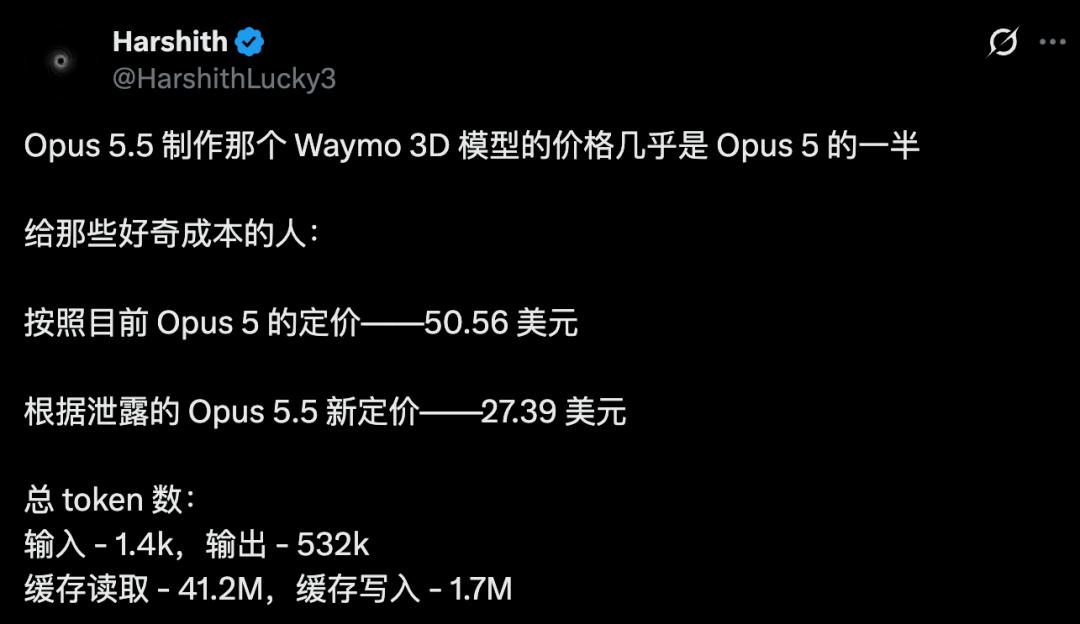
He immediately asked 5.5 to generate a 3D model of the Waymo self-driving car, and the restoration level is surprisingly high —
Even tiny details such as the Jaguar logo and the lidar sensor on the top of the car are generated perfectly and clearly.

More importantly, the cost is only half of that of Opus 5.
As for the token consumption, you can feel the terrifying output volume: the input is only 1.4k, but the output is a full 532k, and the cache even hits 41.2M read + 1.7M write.
While the performance skyrockets, the price is directly cut in half.
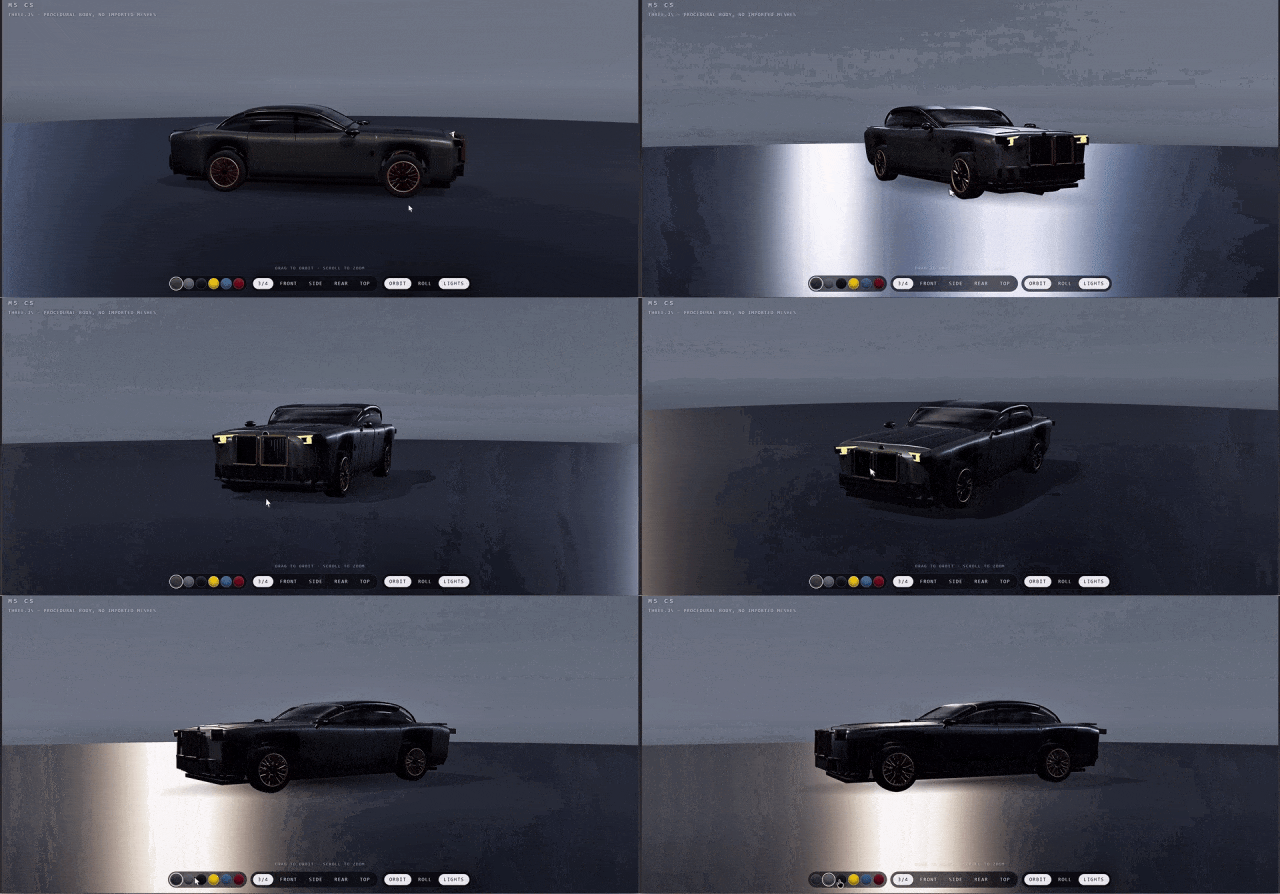
Developer Veee also joined in the test, asking Opus 5.5 to write a web-based 3D car displayer based on Three.js.
Judging from the rendering quality and interaction experience, Opus 5.5 delivers very solid performance.
Let's look at a more hardcore test: it can even finish at one go, directly outputting a 3D interactive "WALL-E robot" console.
It shows extremely strong professionalism no matter in UI layout, mechanical binding or IP restoration degree.
In addition, many developers participating in the internal test reported that the new checkpoint's problem-solving intuition, deep code refactoring capability and long-range multi-step planning performance have already formed an obvious generation gap with the current Opus 5.
Soaring Performance, Dramatically Cut Price
Along with the news of the 5.5 version, there is also a set of unofficially confirmed API prices.
According to the currently circulating information, the pricing of Opus 5.5 is expected to be —
4 USD per million input tokens, 20 USD per million output tokens. Compared with the 5 USD / 25 USD of the current Opus 5, the price reduction is about 20%.
More critically, the caching mechanism has been greatly optimized. The cache read price is reduced to 0.2 USD per million tokens, and the cache write price is 5 USD.
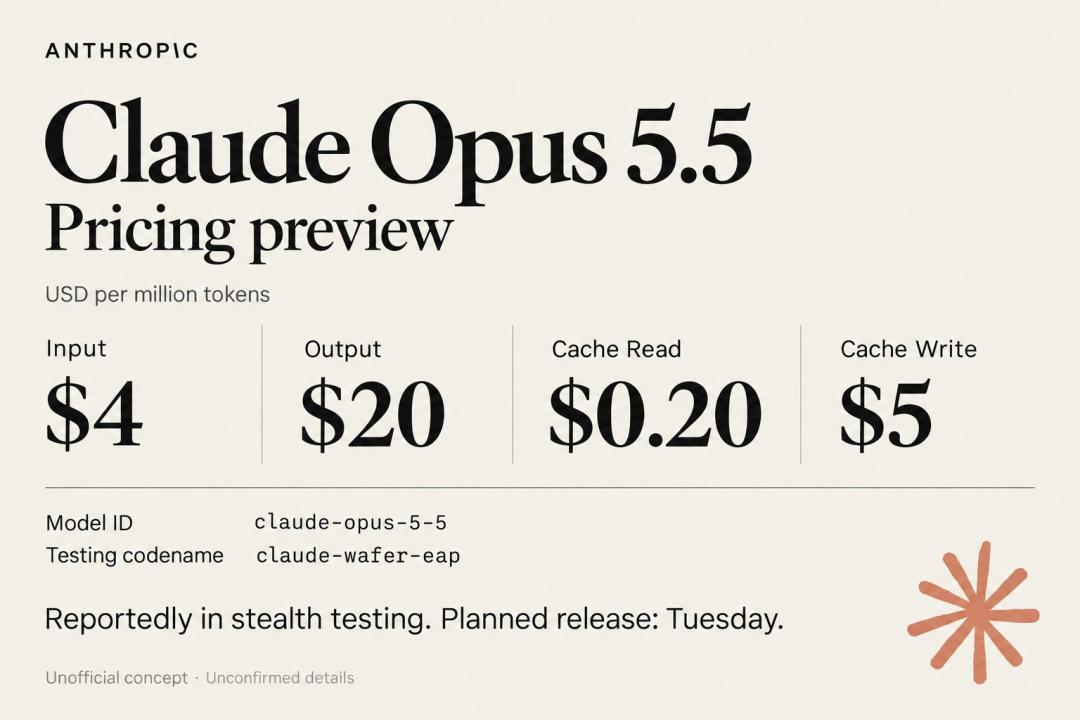
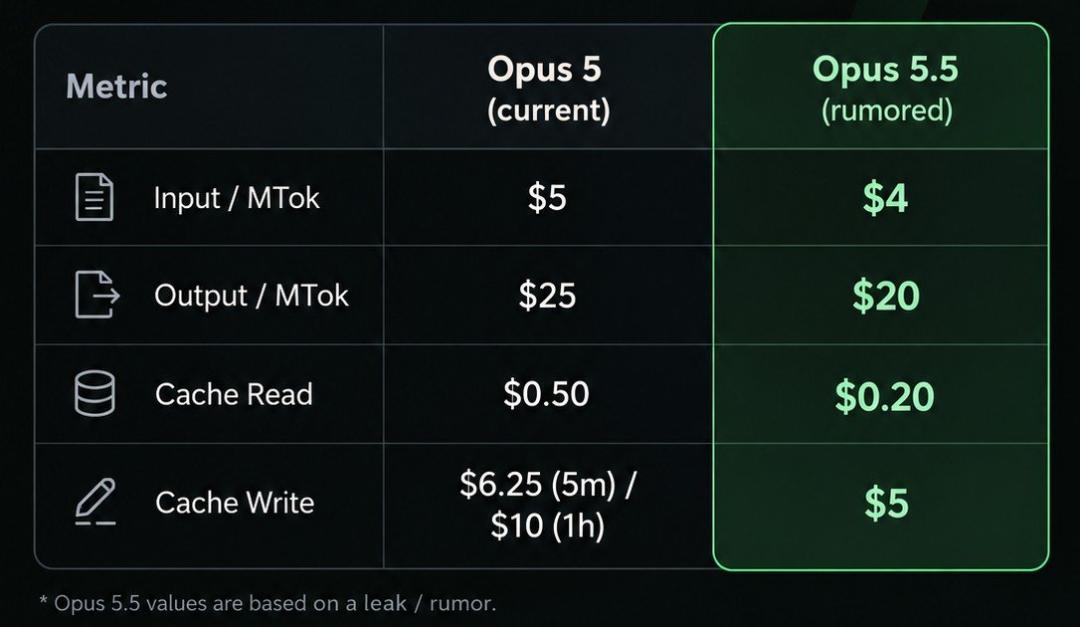
The 0.2 USD per million token cache read price means that the cost for enterprises to build long-running, long-context autonomous Agent systems will drop by an order of magnitude.
This pricing strategy means one thing: Anthropic is turning top-tier large models from "luxury goods" into "daily necessities".
Fable 5.2
Is Also Making Efforts in Secret
Apart from Opus, the Fable product line also has new updates.
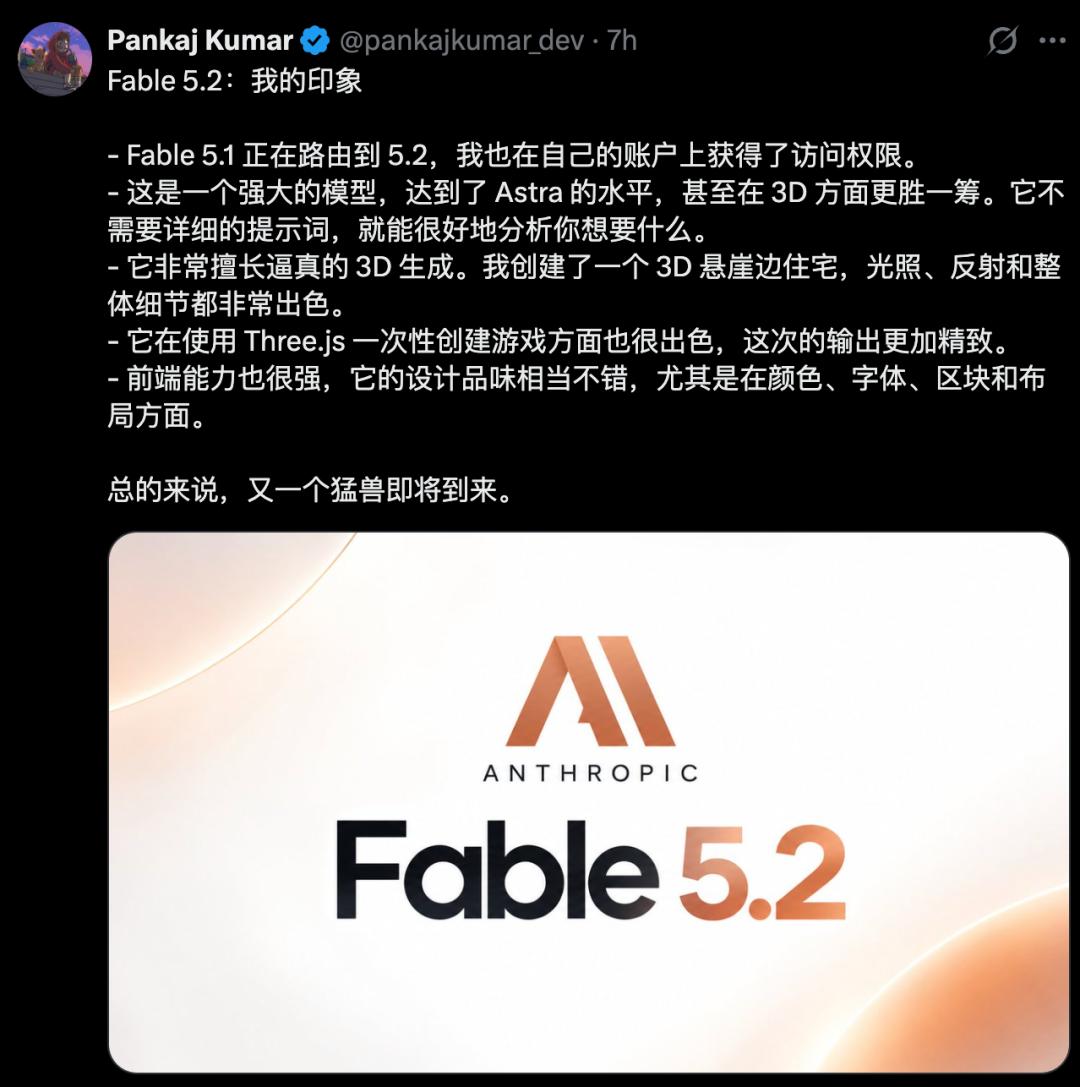
Developer Pankaj Kumar just shared his first experience of Fable 5.2.
According to him, the official team seems to be quietly switching users from 5.1 to 5.2, and he happened to get the "early bird ticket" for this internal test.
After getting hands on it, he gave very high praise: Fable 5.2's 3D generation capability not only matches Astra, but even shows a strong momentum of surpassing it —
It can accurately analyze what you want even without a very detailed prompt.
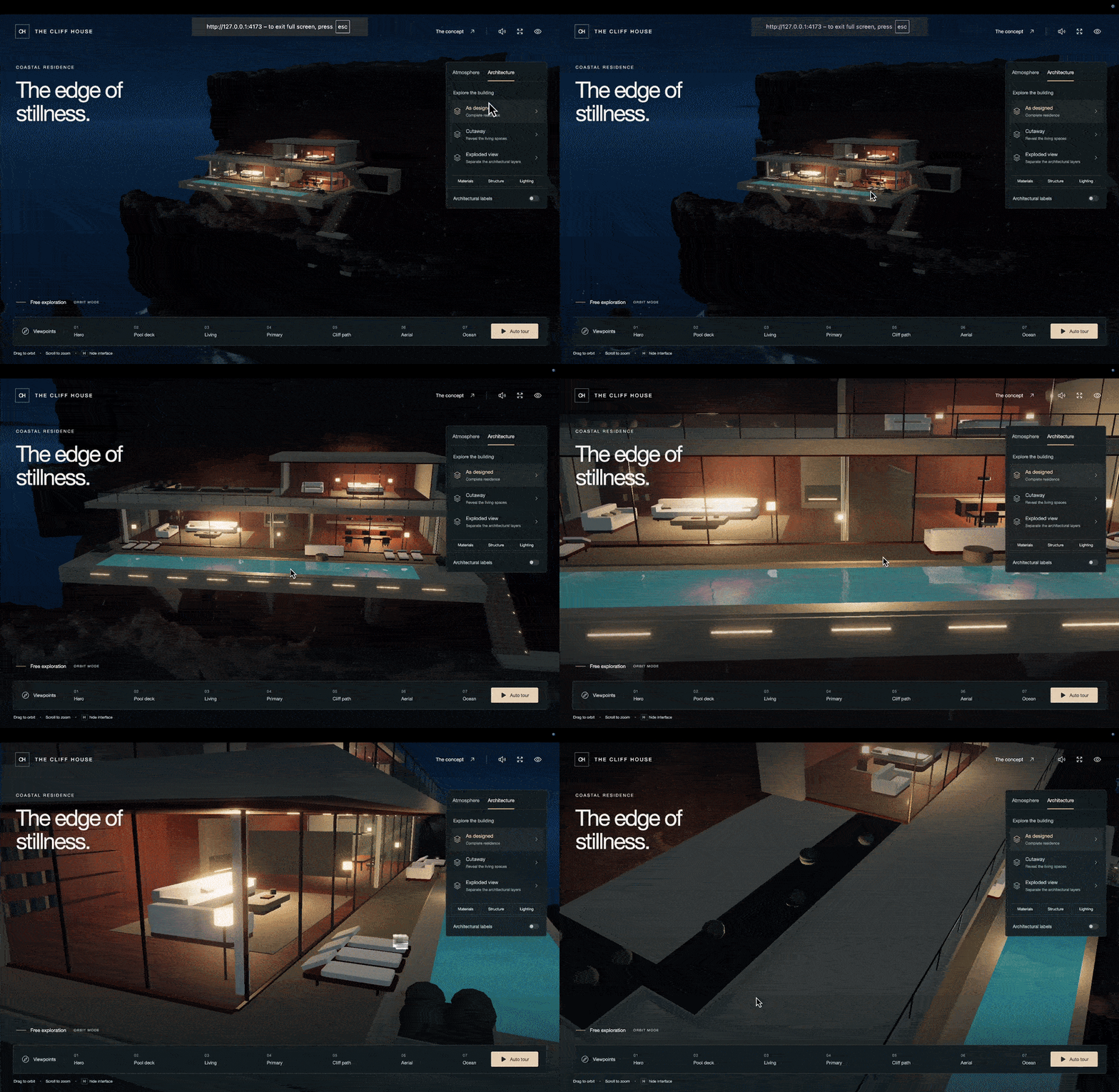
He tried to build a 3D scene of a "cliff villa" with Fable 5.2, and there is no flaw in details no matter in lighting, material reflection or atmosphere creation.
What's more amazing is that it can even generate a complete small game directly with Three.js in one go.
In addition, this model has extremely excellent front-end aesthetic performance, there is no flaw in color matching, typesetting font and interface layout, and its completion level is far ahead of previous generations.
In the following demonstration, it generated a very complete exploded rendering image, which clearly shows the layered optical modules, transparent parts, precise internal hardware and light and shadow details layer by layer.
The exquisite composition of the final full image is quite surprising.

In the test of another developer Chetaslua, without feeding any existing materials, enabling MCP plugins, or even needing any inspiration sketches, Fable 5.2 wrote a "miniature world" purely with native JS code.
The super cute Claude mascot below is completely rendered with pure code line by line.

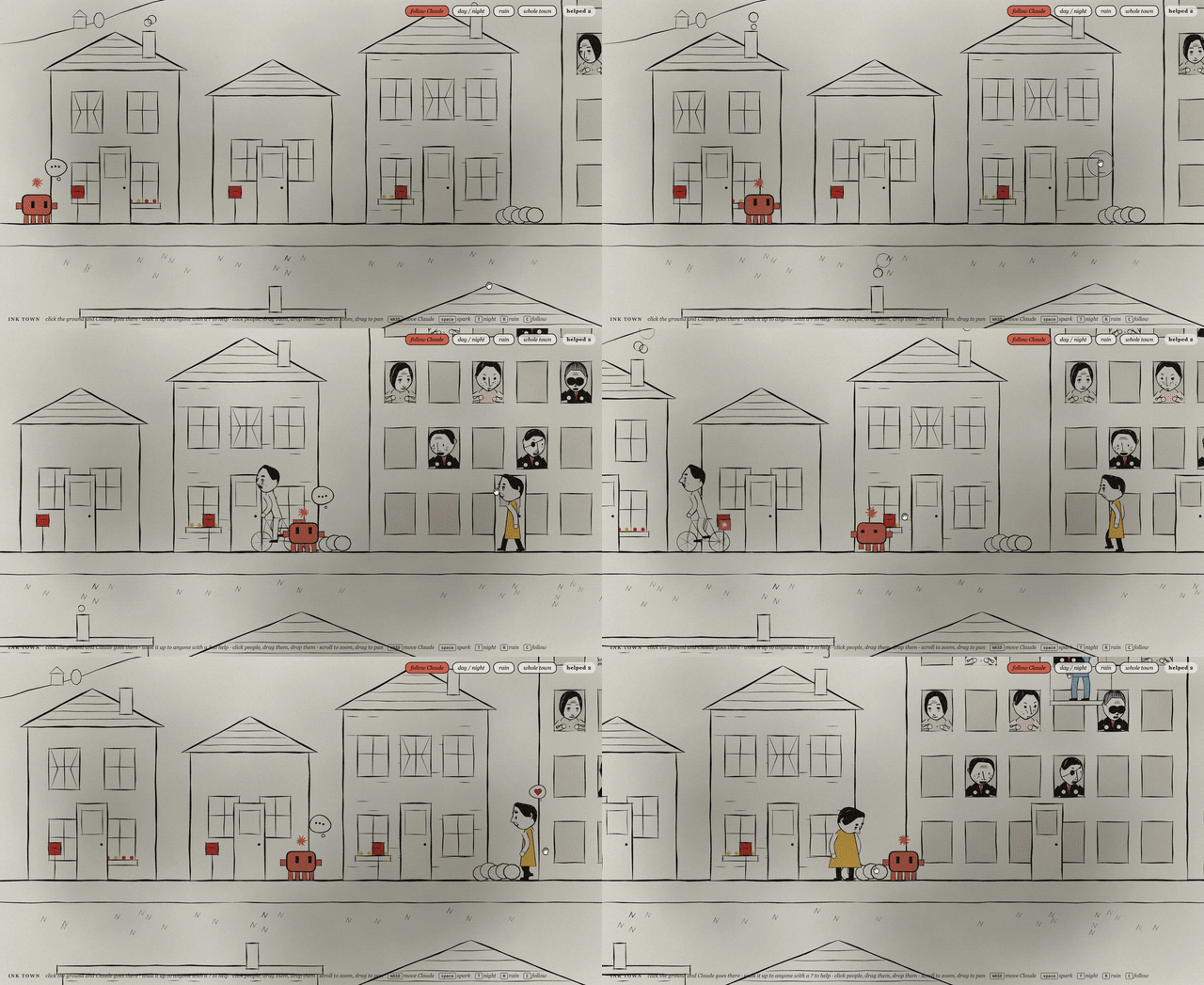
There is also the same test from other netizens.
Fable 5.2 built a complete, fully functional small JS system that can run smoothly —
Dozens of completely different head models, subtle facial expressions, dynamic effects, control panels and interaction logic all run seamlessly in one single generation.

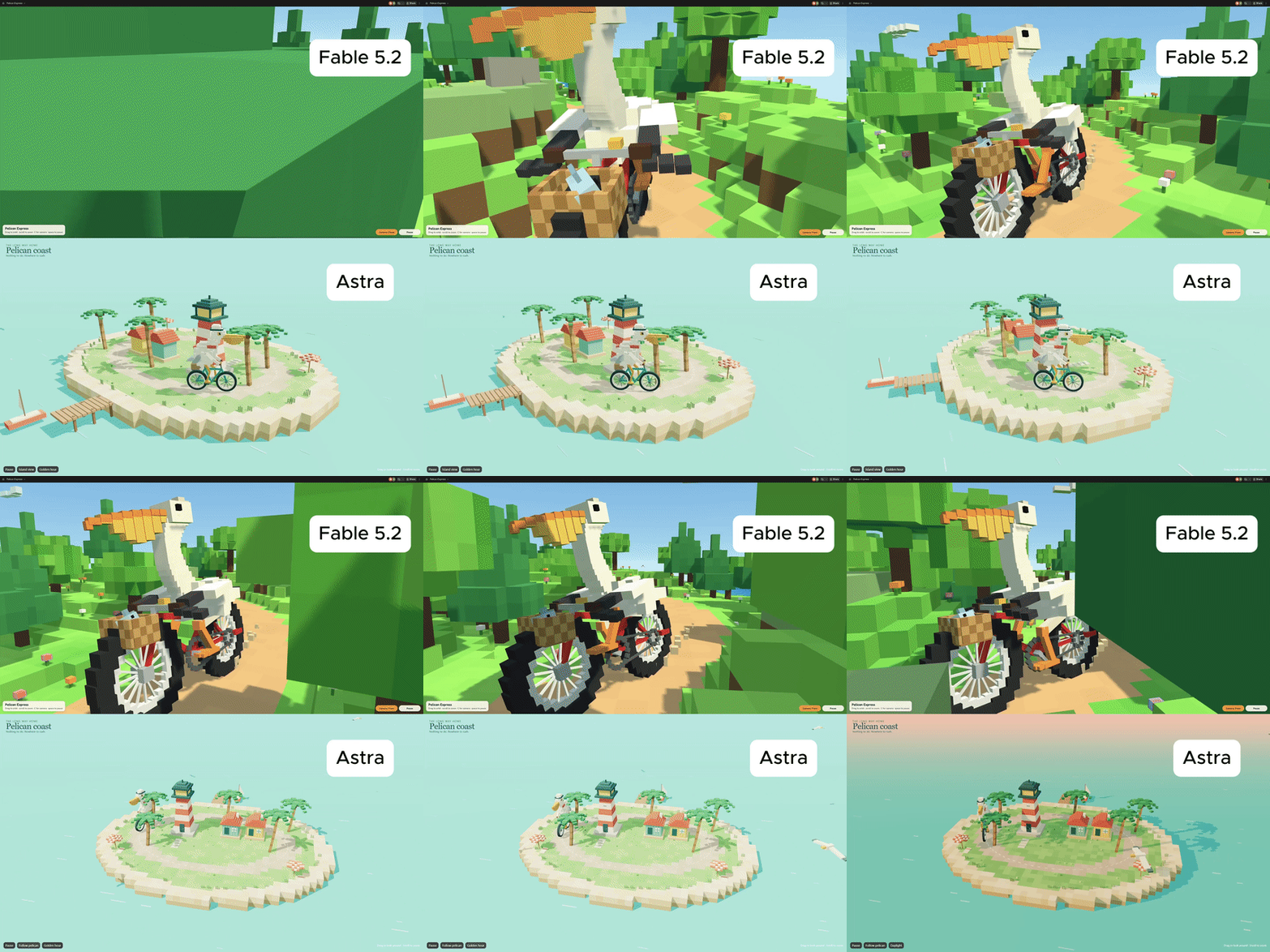
Finally, let's look at a head-to-head real test, who performs better between Fable 5.2 and Astra? You can directly check the pictures to feel the difference:
On one hand, Opus 5.5 consolidates enterprise-level infrastructure, on the other hand, Fable 5.2 controls the creative and front-end development scenarios.
This two-pronged "combination punch" from Anthropic has an extremely precise rhythm.
Three Silicon Valley Giants' Fierce Competition
Kicks Off This Week
Nowadays, the development rhythm of the large model industry has been completely accelerated.
The current AI arena is no longer a one-man show dominated by a single player.
The reason why this round of major technological upgrade makes everyone restless is mainly because Anthropic, OpenAI and Google have surprisingly consistent paces, directing the competition to the same key battlefield.
The technology roadmaps of the three top players have also been fully exposed to the public.