Shuyan Zhou, the author of WebArena, has joined Meta's 100-million-yuan club.
Meta's 100-million-yuan club has welcomed another Chinese member.
According to the latest news, Shuyan Zhou, an alumnus of Harbin Institute of Technology and the author of WebArena, announced that she left the academic circle earlier this year and joined Meta's "AI Dream Team" Superintelligence Labs.
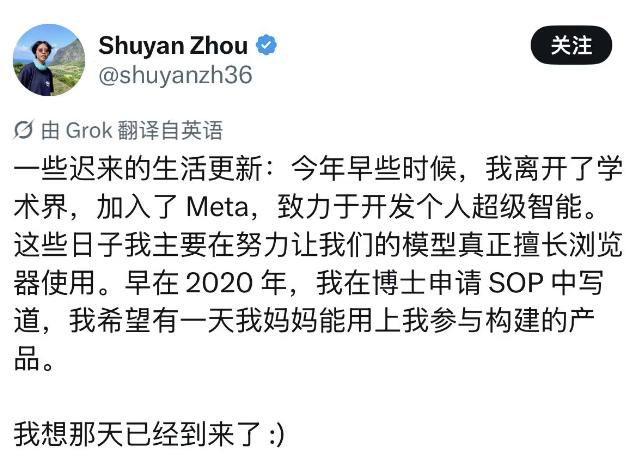
During this tenure at Meta, she clearly stated her core task: to develop an AI browser.
She also revealed that this research interest stems from her original aspiration when applying for PhD programs — she hoped that one day she could give her mother a dialogue-driven device that can automatically book flight tickets.
Who is Shuyan Zhou?
Shuyan Zhou, an alumnus of the School of Computer Science of Harbin Institute of Technology, also holds a bachelor's degree in Computer Science from the University of Hong Kong.
After graduating from her undergraduate program in 2018, she entered the Language Technologies Institute of Carnegie Mellon University to pursue her master's and doctoral degrees successively, and graduated with a PhD in 2024.
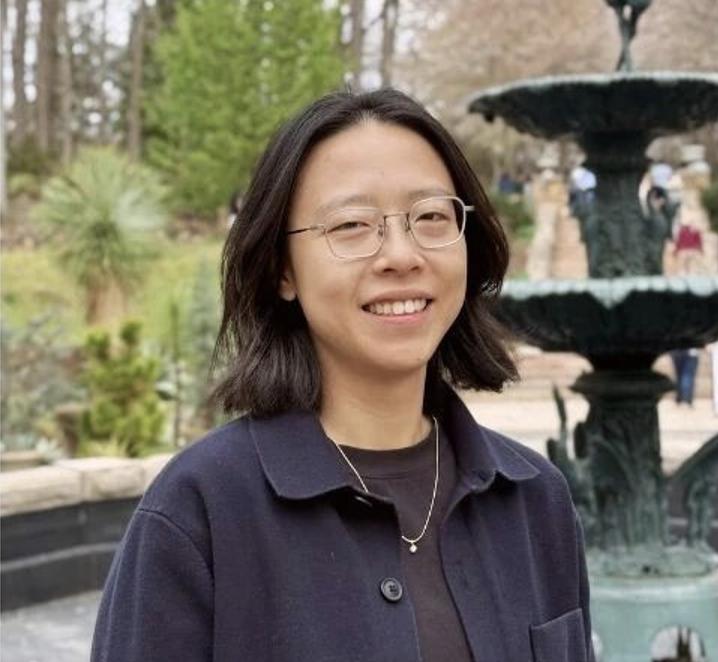
Although it has only been two years since Shuyan Zhou obtained her doctorate, her papers on Google Scholar have received as many as 9569 citations with an h-index of 25, making her a quite outstanding young scholar...
Back in 2020, when Shuyan Zhou started her PhD program, her research focus had converged on a key issue that would become prominent several years later:
How to enable AI to enter the real digital environment and complete tasks for users?
That is to say, users only need to state what they want to do, and the agent can determine which page to open next, where to click, what information to fill in... as well as how to readjust after making mistakes.
Such research motivation may be related to her mother.
In earlier years, she once gave her mother a Chinese version of Alexa, Amazon's voice assistant.
This device can perform simple commands, such as playing music and checking the weather, which is as considerate as Xiao Ai.
But when it comes to booking flight tickets, Alexa can do nothing to help. Her mother could only call Shuyan Zhou and ask her to guide step by step.
Since then, Shuyan Zhou has been thinking: how to create an intelligent device that can automatically complete tasks only through conversation, to help her mother and people like her live a better life?
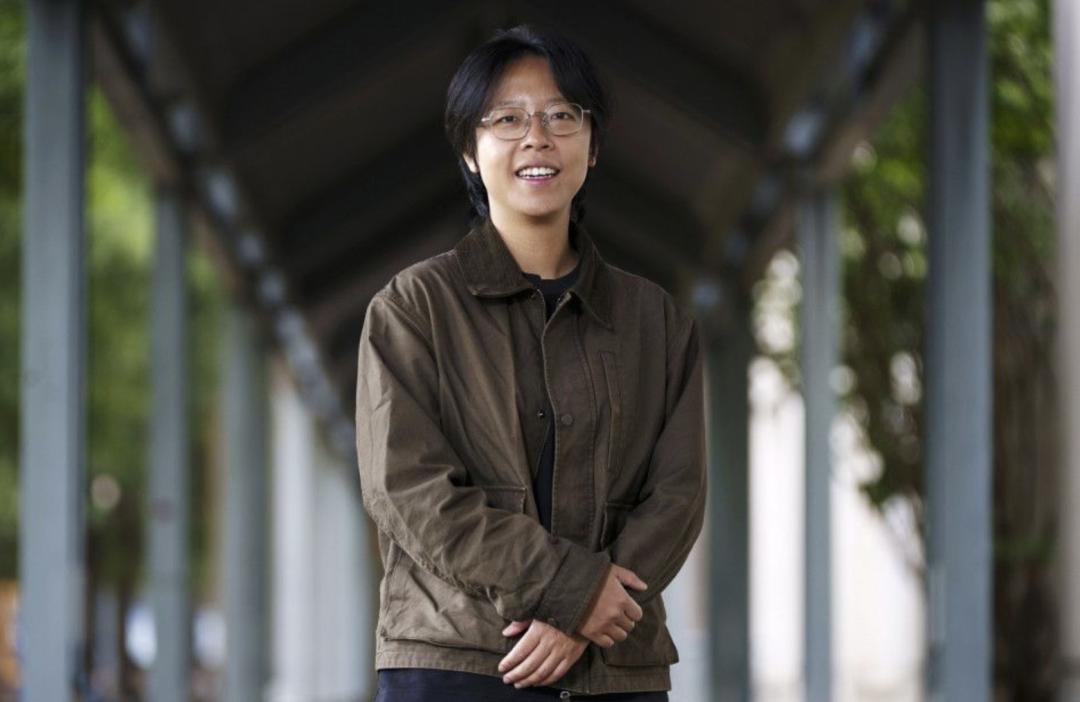
As she said, she expounded this original intention in her PhD application materials in 2020 — four years later, her doctoral thesis *Solving Real-World Tasks with AI Agents* gave a phased answer.
This research direction also indicates the core of Shuyan Zhou's work after joining Meta this time.
By the way, this is the second time that Shuyan Zhou has joined Meta.
In 2024, she joined Meta's GenAI, working in the team led by Ruslan Salakhutdinov (who is also Yang Zhilin's doctoral supervisor at Carnegie Mellon University), researching Llama general computer operation agents.
Last year, she left Meta and joined Duke University as a faculty member — until the beginning of this year.
Shuyan Zhou is to Teach AI to Surf the Internet
In line with her consistent research direction, Shuyan Zhou's representative product is WebArena.
WebArena is the project output of Shuyan Zhou during her PhD period. It is a real web environment for building autonomous agents, providing real interaction and task execution functions.
Before the birth of WebArena, many browser agents were tested on simplified web pages or static datasets — these environments are convenient for conducting experiments, but cannot reflect the continuous operations, page changes and user permissions in real websites.
This is also the core concern of WebArena, that is, how to evaluate the ability of AI to operate web pages and complete tasks in an environment close to the real Internet.
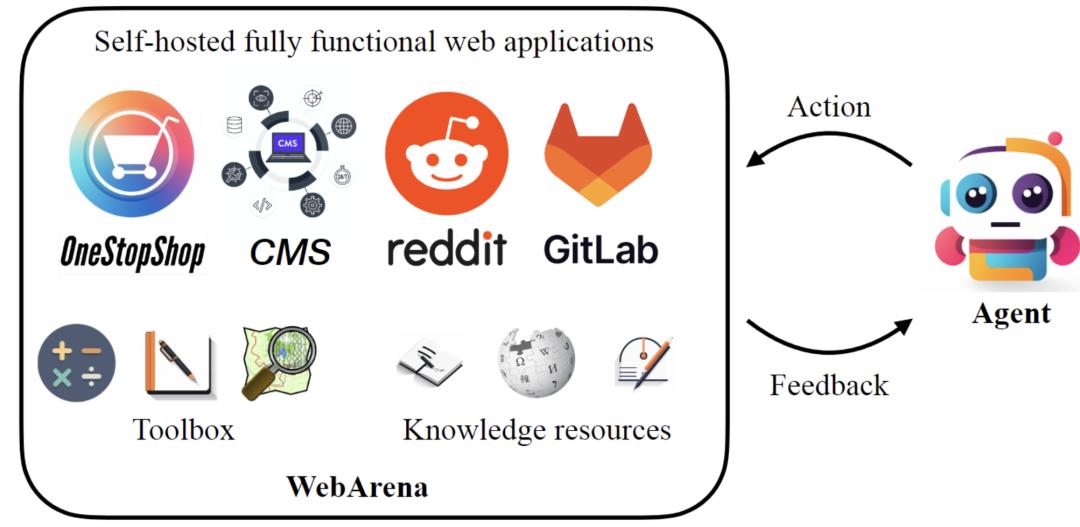
To this end, the project uses open-source software to rebuild websites for e-commerce, forums, code collaboration and content management, forming a set of independently deployable and reusable interactive environments.
Shuyan Zhou and her team also designed 241 types of task templates and generated 812 test tasks to verify whether AI can continuously complete operations such as searching, clicking, inputting, page jumping and content modification according to natural language instructions.
Following this path, Shuyan Zhou participated in VisualWebArena.
This project inherits the basic framework of WebArena, but expands the evaluation focus from text information to pictures, icons and page layouts, adding 910 web tasks that require visual understanding.
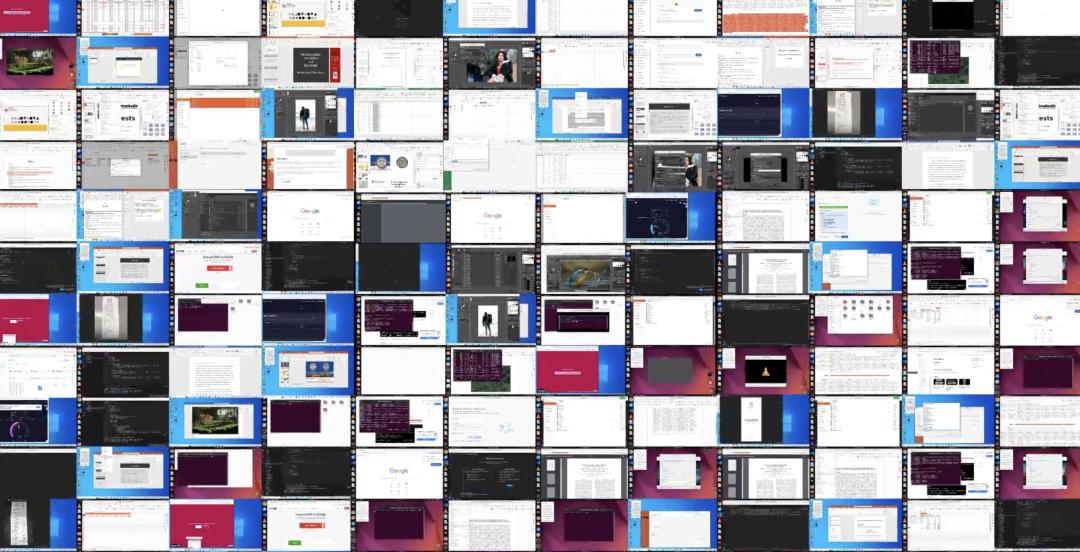
After that, Shuyan Zhou also completed the research of OSWorld together with institutions such as the XLANG team of the University of Hong Kong, further expanding the evaluation scope from browsers to the entire computer system.
OSWorld includes 369 computer operation tasks, involving collaborative operations between browsers, file systems, office software and multiple applications.
△
The project was first publicly released in April 2024, and was later selected for the Datasets and Benchmarks track of NeurIPS 2024. The data at the time of paper publication shows that the completion rate of human beings in the test tasks is 72.36%, while the best-performing model only reaches 12.24%.
There are many challenges: visual positioning, long-term planning, dynamic environment, error recovery, security permissions... All of these may be the challenges that Shuyan Zhou has to face when developing AI browsers in the future.
Mark Zuckerberg's High-Priced AI Team Starts to Deliver Results
Shuyan Zhou joined Meta's Superintelligence Labs (MSL for short) this time, which was established in June 2025.
MSL is Meta's integrated AI organization after restructuring its AI business. It integrates TBD Lab responsible for next-generation foundation models, FAIR responsible for long-term research, product and application research teams responsible for product implementation, and MSL Infra that provides computing power and engineering support into one system.
It aims exclusively to achieve "personal superintelligence".
According to Mark Zuckerberg's vision, superintelligence will not replace human beings, but truly understand user needs, and help users realize value through real entry points such as Meta AI, WhatsApp, Instagram and smart glasses.
To this end, Meta launched a sky-high talent recruitment campaign last year, offering top researchers a compensation package of up to 300 million US dollars for four years — hence the name "100-million-yuan club".
What is more notable is that among the publicly announced managers and researchers of MSL, the proportion of Chinese descent is nearly half.
For example:
The overall head of MSL, Alexandr Wang, a Chinese-American entrepreneur who founded Scale AI at the age of 19 and later received a $14.3 billion investment from Meta.
The chief scientist of MSL, Shengjia Zhao, graduated from Tsinghua University with a bachelor's degree, and once participated in the R&D of ChatGPT, GPT-4 and reasoning models at OpenAI.
The principal researcher of MSL, Yang Song, a representative researcher of diffusion models, once led OpenAI's strategic exploration team, and now jointly participates in the design of the laboratory's research directions with Shengjia Zhao.
Shuchao Bi, graduated from the Department of Mathematics of Zhejiang University, once served as Google's engineering leader, and was responsible for multimodal post-training at OpenAI. Now he is researching reinforcement learning, model post-training and agents at MSL.
Dawn Son, studied for her bachelor's degree at Tsinghua University, is a professor at UC Berkeley and a researcher of AI security and computer security, conducting research on AI security, trustworthy agents and other directions at MSL.
……

△
It can be said that Chinese researchers and students trained by Chinese universities have entered the most core positions in the research of global cutting-edge models, agents and AI security.
On the other hand, after completing organizational restructuring and talent recruitment, MSL is indeed launching practical results.
In April this year, Meta released Muse Spark, the first model after the establishment of MSL, which is a multimodal reasoning model designed for personal agent scenarios.
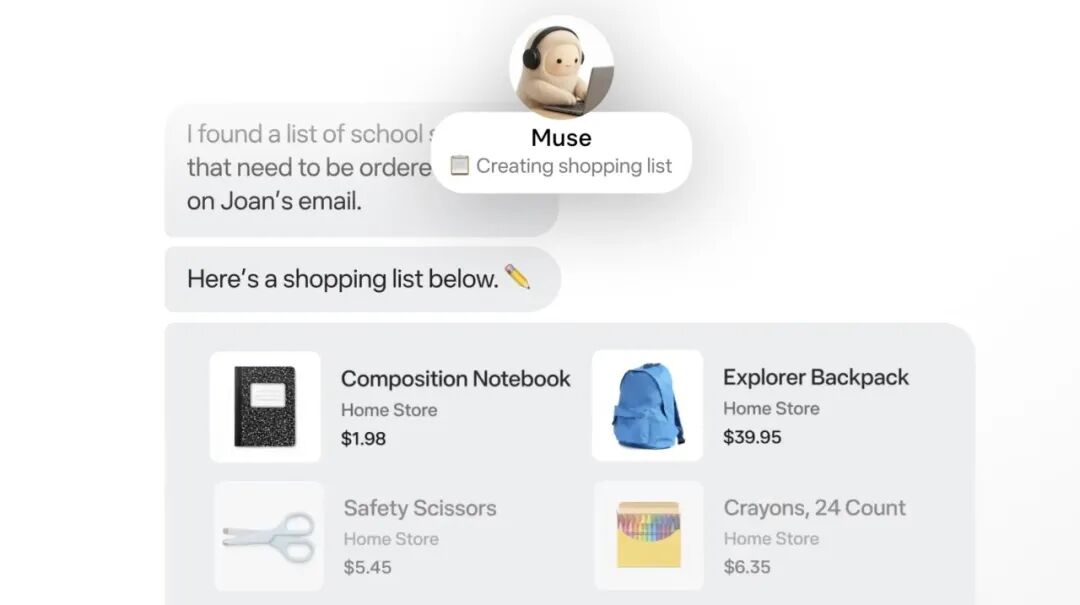
In September, Meta launched Muse, a personal agent driven by Muse Spark.
It became a hit immediately after its release.
Users can assign goals to it, and it will process emails, fill in forms, do shopping or make long-term plans. It will be connected to AI smart glasses in the future.
△
In this regard, the development path of Muse is also directly related to Shuyan Zhou's research route.
Let's look forward to Shuyan Zhou's AI browser coming out of the papers and benefiting everyone in the near future...
This article is from the WeChat official account "QbitAI", written by Cheng Qian, and published with authorization from 36Kr.