From flexing technical muscles to prioritizing practical, everyday use scenarios, the robotics industry has finally shifted to a new track.
Text by Manman
At the end of 2022, the advent of ChatGPT brought artificial intelligence into the daily lives of ordinary people for the first time in a sufficiently natural and popular manner.
People began to get used to talking to AI, asking it to write code, conduct research and generate content, and for the first time felt so intuitively that AI is no longer just code running hidden in the background, but a tool that everyone can use directly.
Today, AI is undergoing another kind of change.
If ChatGPT endows machines with stronger "language ability", then embodied intelligence is further enabling machines to have physical bodies — capable of perceiving the environment, understanding instructions, moving and operating, and truly entering the physical world.
From personal computers to smartphones, and then to the personal robots emerging today, technology has continuously moved from professional scenarios to personal life, and robots have also begun to move from factories, laboratories and exhibition stages to more common households, becoming a new type of personal intelligent terminal.
On September 20, Qiyuan Robotics, a consumer-grade embodied intelligence brand under Swancor New Material Technology Co., Ltd. (hereinafter referred to as "Swancor New Material"), held a new product launch conference, officially releasing two personal robots, Qiyuan Q1 and Qiyuan T1, and simultaneously announcing its brand, technology, product and ecosystem strategies. Among them, the Qiyuan Q1 is priced at 19,999 yuan, the Qiyuan Q1 Explorer Edition is priced at 26,999 yuan; the Qiyuan T1 is priced at 19,999 yuan, and the Qiyuan T1 Pro is priced at 29,999 yuan. Orders will be shipped in sequence starting from October 1.
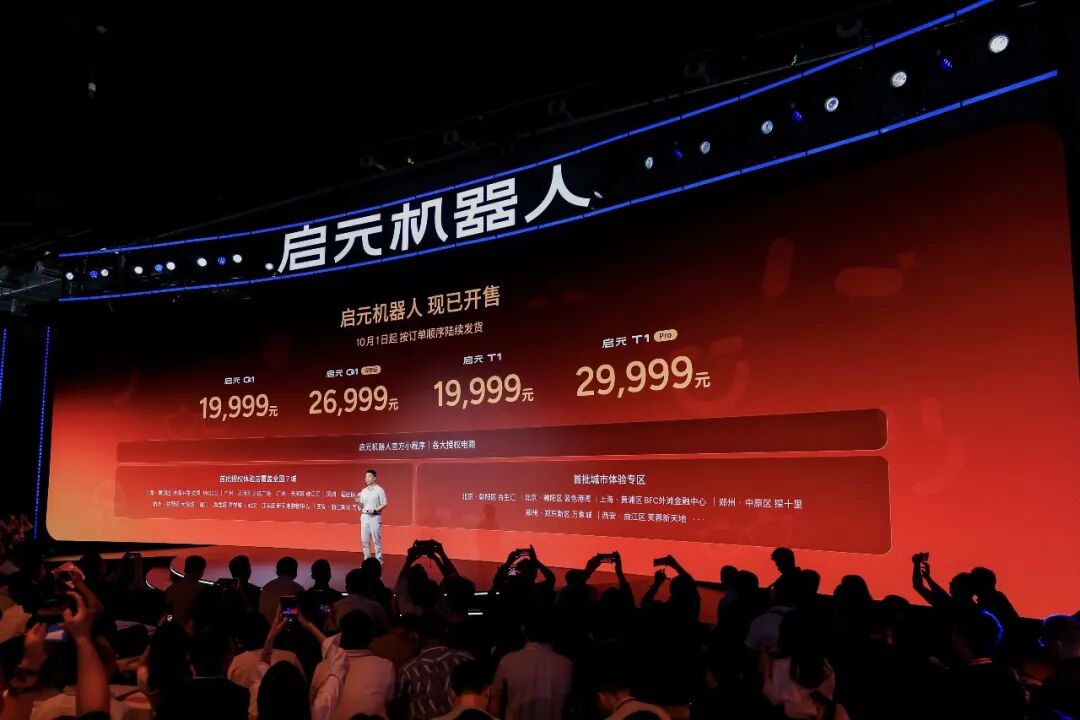
Since its inception, Qiyuan Robotics has taken individuals and households as its core application scenarios, and positioned "personal robots" as its core product category, trying to explore the product path for robots to enter the C-end market. The official launch of the Qiyuan Q1 and Qiyuan T1 also means that personal robots are beginning to move from technical exploration and product verification in laboratories to real consumer scenarios, entering the lives of ordinary people in the form of purchasable and deliverable products.
Create a new category of personal robots
As AI begins to enter the real world, the relationship between robots and humans is also undergoing new changes. They are no longer just machines that perform fixed tasks, nor are they just products that demonstrate technical capabilities. With the continuous integration of AI, ontology, interaction and consumer electronics technologies, robots have begun to have stronger perception, understanding and action capabilities, and are also gaining the possibility to enter personal life.
In the view of Qiyuan Robotics, a personal robot is not a simply downsized humanoid robot, nor is it a traditional smart hardware added with a set of mechanical structures, but a new type of personal intelligent terminal that integrates AI, ontology, interaction and ecological capabilities. It needs to be able to understand humans, integrate into people's lives, and continuously form personalized capabilities as the usage time increases.
Therefore, from the very beginning of its establishment, Qiyuan Robotics has firmly targeted individuals and households, and explored the product path for robots to enter the C-end market: let robots gradually evolve from task-completing machines to personal terminals that serve individuals and accompany families.
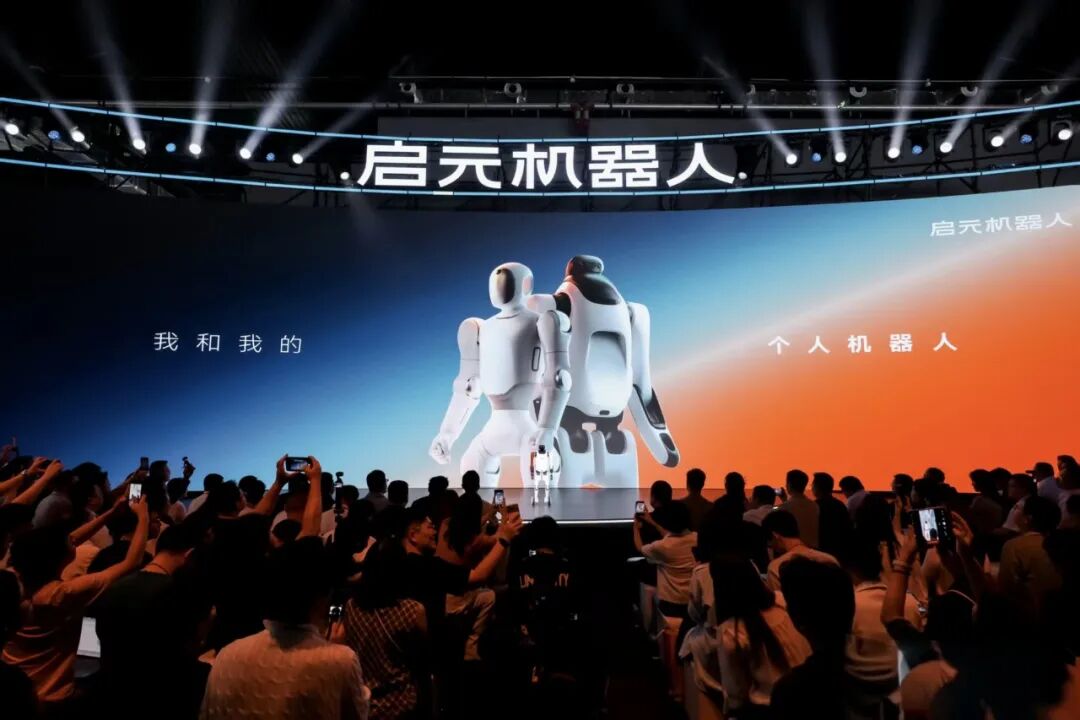
This means that for robots to enter the C-end, it is not simply to "sell industrial robots to consumers", but to re-answer a series of questions — why are consumers willing to own a robot? What value can robots create for personal life? And how to turn a one-time purchase into long-term usage?
Therefore, Qiyuan Robotics proposes three stages for personal robots to integrate into life: from "fun" to "useful" and then to "loving".
In the first stage, robots need to make users willing to approach and use them, and leave room for continuous exploration. In the second stage, robots begin to engage in learning, companionship, recording and daily family life, and truly solve specific problems. In the third stage, through long-term memory, continuous interaction and personalized growth, robots will gradually become part of family life from a single product.
"Someone has to take the first step," said Tian Hua, CEO of Swancor New Material. The core interactive entry in the AI era is shifting from screens to personal robots with capabilities of perception, interaction, movement and execution. From the first day of its establishment, Qiyuan Robotics has firmly targeted individuals and families, "We start from 'fun' first, and let robots gradually move towards 'useful'. To this end, Qiyuan Robotics will simultaneously promote the capacity building of hardware, AI and ecology, and finally make personal robots partners that truly understand users and integrate into family life."
This is also the reason why the theme of this Qiyuan Robotics launch conference is "My Personal Robot and I" — personal robots should not have only one standard answer in the end, but be continuously defined in the process of getting along with users.
Build the full-stack technical base of robots with ontology + models
Of course, for personal robots to truly enter households, it is not only the mechanical structure problems that need to be solved.
At the launch conference, Qiyuan Robotics announced its full-stack technical layout, including self-developed force-controlled joints and composite materials for the ontology, as well as motion control models, multimodal perception following models and multimodal interaction models.

On the ontology side, relying on Swancor New Material's long-accumulated material R&D and manufacturing capabilities, Qiyuan Robotics applies lightweight and high-rigidity composite materials to robot products, and independently develops the QDD quasi-direct drive joint. According to the introduction, this joint adopts a highly integrated design, is only the size of an egg, takes into account accuracy and compliant control on the basis of small volume, and provides a hardware foundation for small humanoid robots to achieve lightweight and safe interaction.
On the AI model side, Qiyuan Robotics announced three core models this time:
PrimeMotion, the compliant and safe cerebellum motion control model, focuses on solving the stability, compliance and safety problems during robot movement;
PrimeGo, the multimodal perception following model, drives both humanoid and quadruped forms, which is the only one in the industry to realize environment understanding and following control; PrimeVista, the multimodal interaction model, allows users to communicate with robots in a more natural way through multimodal interaction methods such as vision and voice.
In addition, Qiyuan Robotics plans to continuously invest in robot AI R&D, and promote robot Agent based on the Harness architecture, further connecting environment perception, language understanding and task execution, so that robots can evolve from "understanding instructions" to "understanding tasks and completing tasks independently".
It was introduced at the scene of the launch conference that Qiyuan Robotics also disclosed that it is expected to invest 500 million yuan in R&D expenses in 2026 to continuously promote full-stack R&D in the directions of robot ontology, motion control, multimodal interaction and intelligent agents. PrimeMind, the large model for household tasks of Qiyuan Research Institute, is also about to be launched.
As the first mass production launch conference of consumer robots in the industry, this launch conference supports shipping right after sales. At the scene, Tian Hua also announced the mass production information. Qiyuan Robotics introduces the manufacturing rhythm and quality management methods of the automotive industry, with one robot off the production line every 2.5 minutes, and the assembly data of each product can be traced for a long time, reaching industrial-grade mass production.
Qiyuan Q1: From accompanying children to exploring with you
As the first core product launched by Qiyuan Robotics for individual users, Qiyuan Q1 is a small-size full-body force-controlled humanoid robot, which further covers three product roles: children's embodied intelligence partner, tech pioneers' embodied trendy toy, and developers' professional experimental platform.
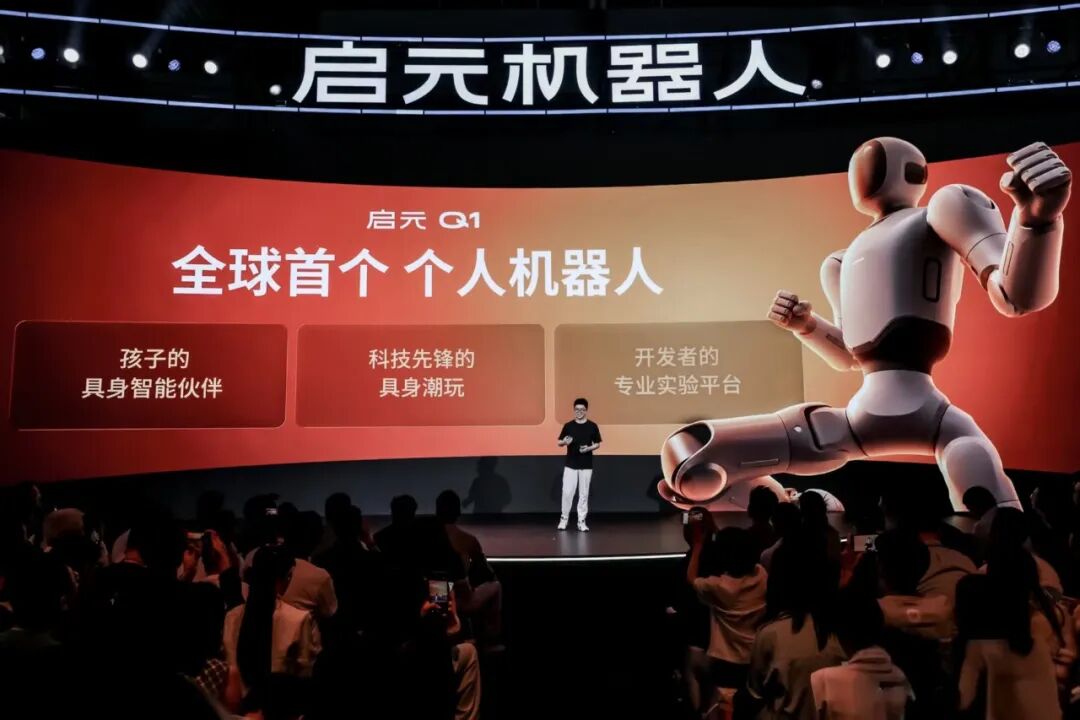
The Qiyuan Q1 is about 88 cm in height and weighs about 15 kg. It adopts a full-body force control design, and uses lightweight composite materials and its self-developed QDD quasi-direct drive joints which are only the size of an egg to achieve a miniaturized body. Focusing on household scenarios, the Qiyuan Q1 is designed targeted in terms of size, safety, interaction and portability, can be folded for storage, and supports being placed in a backpack and a 20-inch carry-on suitcase.
At this launch conference, Qiyuan Robotics officially released the Qiyuan Q1 Explorer Edition. The new version opens SDK, HDK and hardware expansion interfaces, supports full-stack secondary development, supports skill application development at the same time, and provides one-stop developer sharing tools.
In the family companionship scenario, Qiyuan Q1 can memorize the information and daily preferences of users and family members, and form a more personalized companionship method through continuous interaction. Qiyuan also designed graphical programming, embodied AI enlightenment and other content for Q1, so that programming instructions can be directly converted into robot actions, turning the code that originally stayed on the screen into tangible, touchable and interactive physical results.
Focusing on "creation", Qiyuan Q1 further open-sources the robot's appearance structural parts, movements and skill development interfaces. Users can replace the robot shell through 3D printing, and develop their own movements and interactive content; developers can deploy their creativity to real robots through open interfaces and tools.
Qiyuan Robotics hopes to change the traditional consumer electronics relationship of "you can only use what you buy": The same robot can have different appearances, skills, interaction methods and even personalities in the hands of different users. What the robot will be like in the end is not entirely determined by the original design, but also customized by users.
Qiyuan T1: From the living room to the outdoors, robots start to go further
If Qiyuan Q1 focuses on exploring the possibilities of "small-size personal robots", then Qiyuan T1 further extends the activity boundary of personal robots from indoors to outdoors.
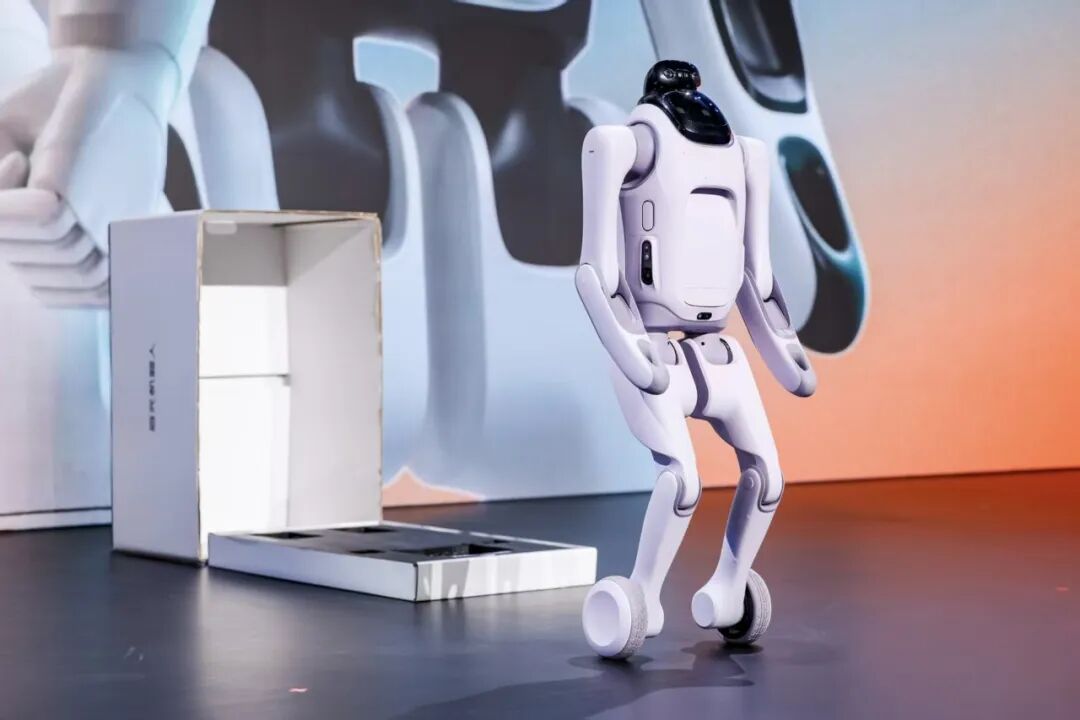
Qiyuan T1 is the world's first transformable personal robot, with a height of about 100 cm and a weight of about 16 kg. Based on the industry's original "Transformer cross-form integrated architecture", Qiyuan T1 realizes two forms of wheel-foot humanoid and quadruped on the same ontology, automatically switches forms to adapt to different environments, and covers scenarios such as family companionship, outdoor accompanying and image creation.
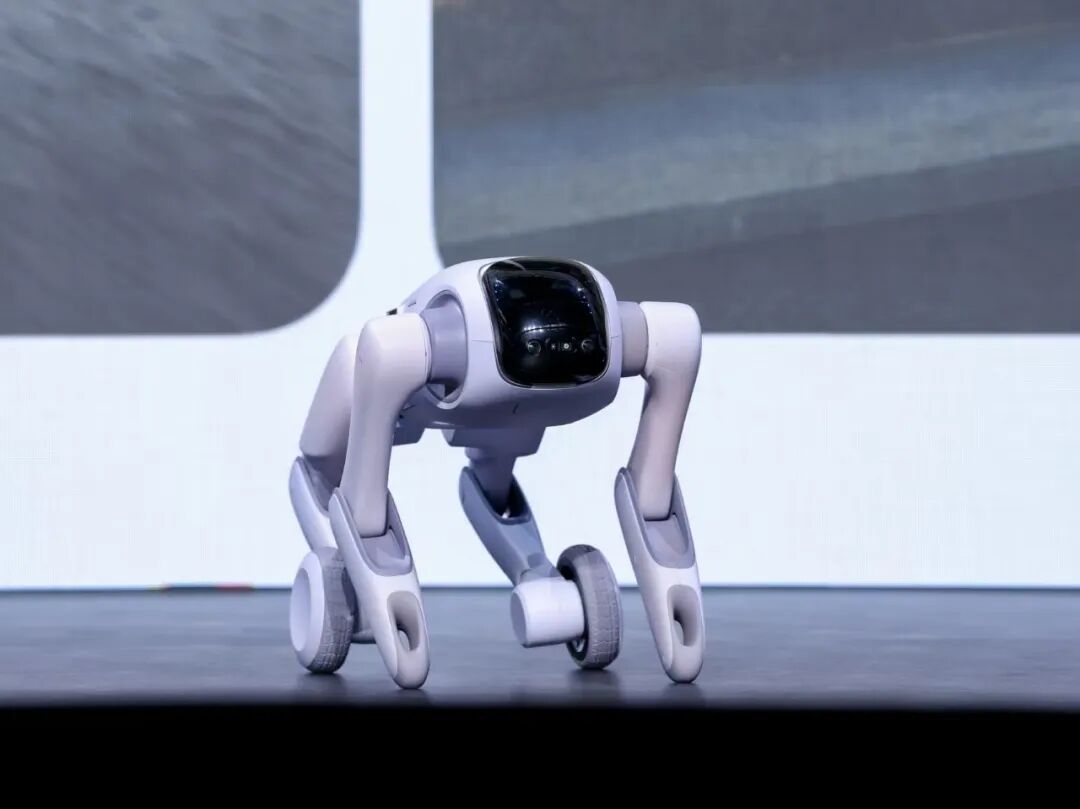
At this launch conference, Qiyuan Robotics released the Qiyuan T1 Pro version, with upgraded software and hardware, added NVIDIA Orin Nano computing power chip, supports 360° omnidirectional obstacle avoidance in dual forms, and added functions such as low battery automatic navigation recharging, voice call, following and carrying objects, and opened secondary development interfaces.
In the family scenario, Qiyuan T1 can interact with users in humanoid form, and can also switch to a lower quadruped form to adapt to different space environments. It supports capabilities such as intelligent following, video call, and remote companionship, and strengthens mute, safety and dynamic obstacle avoidance capabilities for the household usage environment.
In the outdoor scenario, Qiyuan T1 can switch to quadruped form to adapt to complex terrain such as ramps and steps, and has certain object-carrying capabilities. In scenarios such as user travel, camping and outdoor activities, robots are no longer just "following around", but can also undertake auxiliary tasks such as accompanying shooting and object carrying.
It is worth noting that Qiyuan T1 also has the ability of automatic transformation protection when the battery is low: when the power is insufficient, it can automatically switch to the quadruped form and stop moving, so as to reduce the risk of falling caused by low power.
From the perspective of product logic, Qiyuan T1 does not take "transformation" as a simple visual display, but tries to make different robot forms serve different real scenarios — more friendly at home, more flexible outdoors; capable of both companionship and movement and execution.
More than robots, ecology makes possibilities continue to happen
For personal robots, product delivery is only the beginning of the user experience. As robots enter real life scenarios, users' demands for robots will further extend from "owning a robot" to continuous usage, personalized creation and capability expansion.
Based on this idea, Qiyuan Robotics simultaneously launched PrimeFLOW robot appearance creation platform, PrimeStore skill store, PrimeHub Meta Creation Workshop and Qiyuan Star Ecology Plan this time, continuously expanding the playability, creativity and growth potential of robots around user experience, and gradually building a robot ecology covering users, developers, content creators and industrial partners.
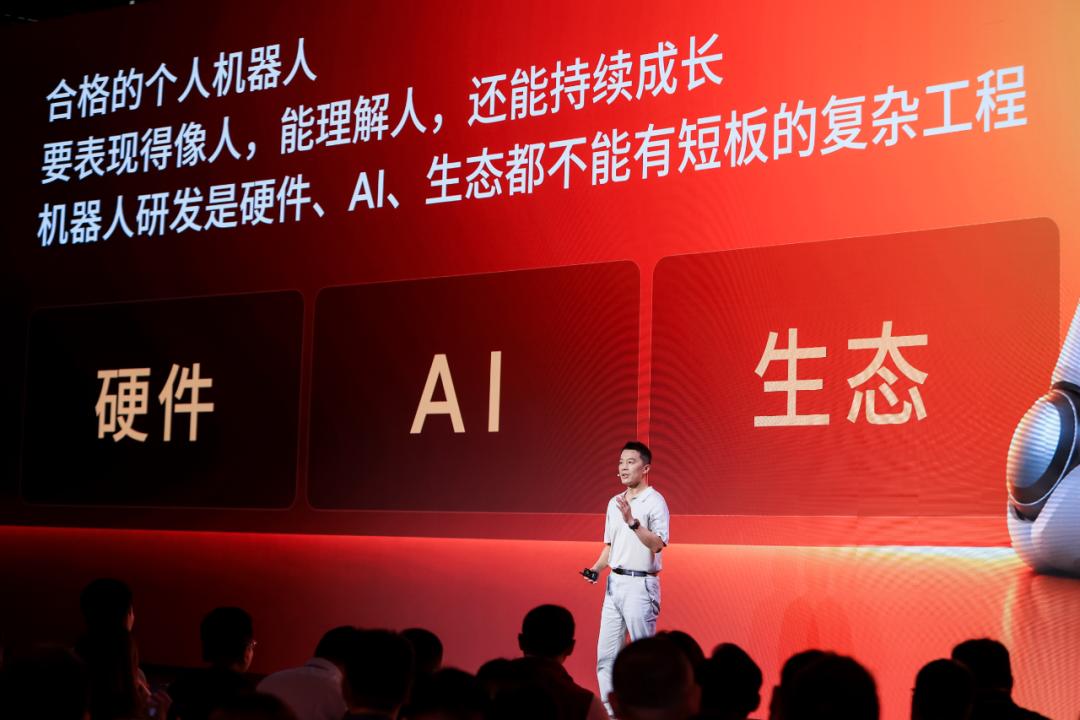
PrimeFLOW is a creation and commercialization platform built around robot appearance, which converges the creation process of the entire robot personalized shell into a clear main link — generation, editing, output. After three steps, you can get a shell that is not only personalized, but also can be actually installed on the robot. This is also the first time in human history that the right to define one's own robot is given to the users themselves.
PrimeStore is positioned as the "skill store" of Qiyuan Robotics. According to the scene of the launch conference, applications and services such as Ximalaya, QQ Music, Youdao, JD Health and Ctrip will gradually be integrated into robots and become robot skills that can be directly called.
For developers, PrimeHub Meta Creation Workshop provides a platform for the creation, release and sharing of robot skills. Developers can develop Skills around scenarios such as AI interaction, education and entertainment, and deploy them to robots. It was revealed at the launch conference that more than 1000 developers have participated in ecological co-creation so far. At the same time, Qiyuan Robotics has also carried out cooperation with partners such as CSDN and Tencent Work