Samsung has been driven to the wall by Apple, and the most delighted party is Lingyi iTech.
After Apple released the iPhone Duo, Samsung could no longer sit still.
Recent reports say that Samsung's second-generation tri-fold phone, the Galaxy Z TriFold 2, may be released earlier than scheduled, with a launch as early as July next year. Previously, the outside world predicted that this phone would make its public debut in the second half of 2027.
Samsung's rush to speed up is most likely to cope with the competitive pressure brought by Apple's first foldable iPhone Duo entering the market ahead of schedule, even though the market performance of Samsung's first-generation tri-fold phone was mediocre.
A week ago, Apple's first foldable iPhone Duo, which had been rumored for three years, was officially unveiled, with a starting price of 15,999 yuan for the Chinese mainland version.
No sooner had Apple made its move than Samsung immediately "responded to the challenge". The two overseas giants have launched a battle in the foldable smartphone market.
Interestingly, no matter who makes the first move, the one who stands to gain the most might be the "richest woman in Jiangmen".
01. Reaping the dividends of the foldable phone boom
Compared with bar phones, the two most core incremental components of foldable smartphones are flexible displays and hinges.
Lingyi Technology is the core hinge supplier for Apple.
Reports indicate that Lingyi Technology supplies core precision components to Apple including hinge precision structural parts, display support plates, ultra-thin vapor chambers, and ultra-thin stainless steel battery shell modules with flanges, with the per-unit value several times that of bar phones.
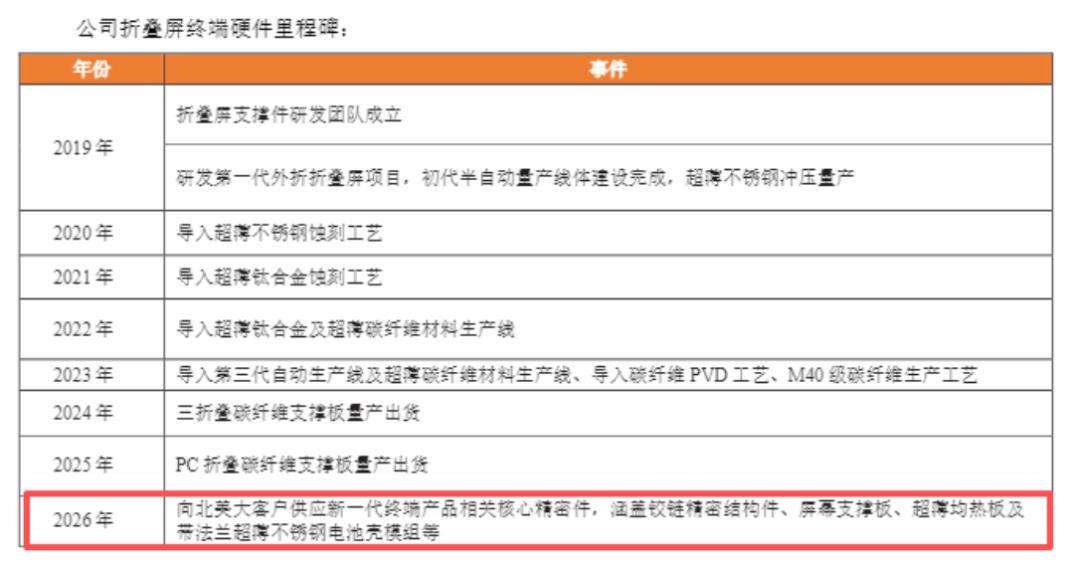
Image source: 2026 Semi-Annual Report of Lingyi Technology
Lingyi Technology is also the core hinge supplier for Samsung.
Lingyi Technology has publicly stated that the company supplies ultra-thin titanium alloy support parts and other components for the Samsung Galaxy Z Fold7, and for the Galaxy Z Fold8, it further provides ultra-thin titanium alloy foldable support plates, enabling new products to achieve breakthroughs in lightweighting and structural durability.
In other words, no matter consumers buy Apple's iPhone Duo or Samsung's Galaxy Z Fold, Lingyi Technology benefits from the deal.
The fiercer the competition between the two brands and the more foldable phones are sold, the larger its order volume will be. This is a business model that does not bet on a single manufacturer but on the entire track, allowing the richest woman in Jiangmen to reap the dividends of the foldable phone sector.
The company's current performance is justifying this logic.
In the first half of 2026, Lingyi Technology recorded a revenue of 251.5 billion yuan, hitting an all-time high. Among them, the overall revenue of the thermal management business covering end-side and AI computing server heat dissipation reached 29.2 billion yuan, a year-on-year surge of 43.46%. The revenue from automotive and low-altitude economy businesses even jumped 198% year-on-year to 35.3 billion yuan.
Of course, this is inseparable from Lingyi Technology's heavy investment in R&D. In the first half of the year, R&D expenditure increased by 28% year-on-year to 14.4 billion yuan, mainly used for the technical development of foldable display hardware and VC heat dissipation hardware.
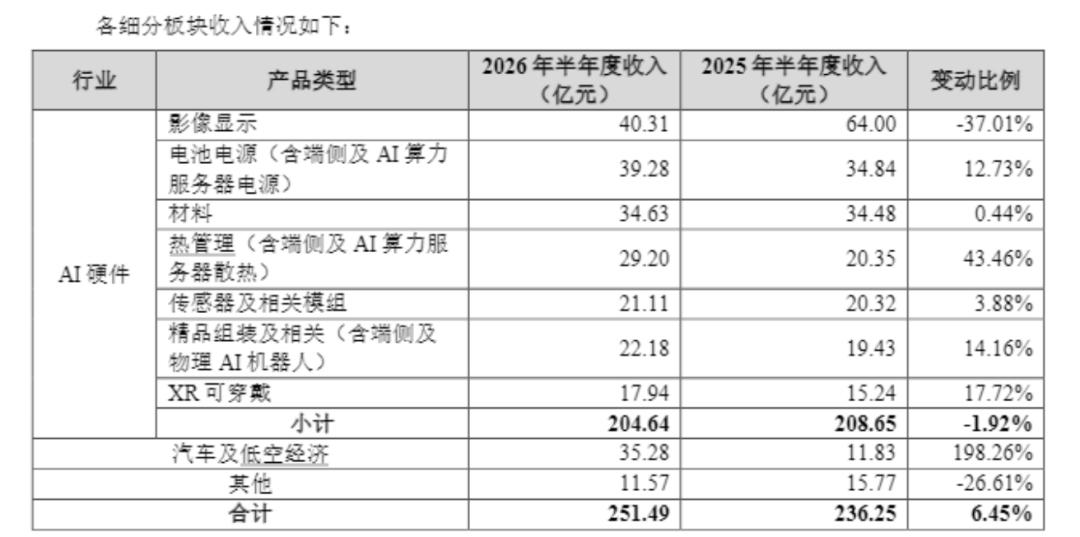
Image source: 2026 Semi-Annual Report of Lingyi Technology
Like the two sides of a coin, on the positive side, Lingyi Technology is reaping the dividends of the current foldable phone boom, and the growth of its new expanded businesses is indeed gratifying. On the other hand, the company has long had a persistent "worry" — deep dependence on the Apple supply chain.
For many years, Apple has been the core customer of Lingyi Technology, and the proportion of revenue contributed by Apple has been gradually increasing. From 2022 to 2025, the company's revenue rose from 345 billion yuan to 514 billion yuan, but its gross profit margin remained difficult to boost during the same period.
The moment O-film was terminated from its partnership with Apple in 2021 became a wake-up call for all Apple supply chain enterprises. Although O-film quickly adjusted its strategy, shifting its customer focus to domestic manufacturers such as Huawei, Xiaomi, and Honor to make up for part of the order gap, its overall scale still inevitably declined.
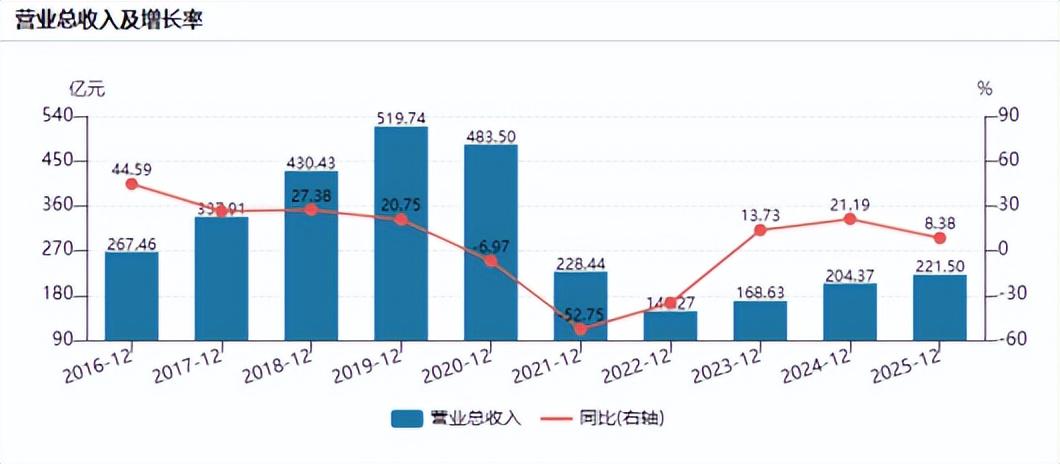
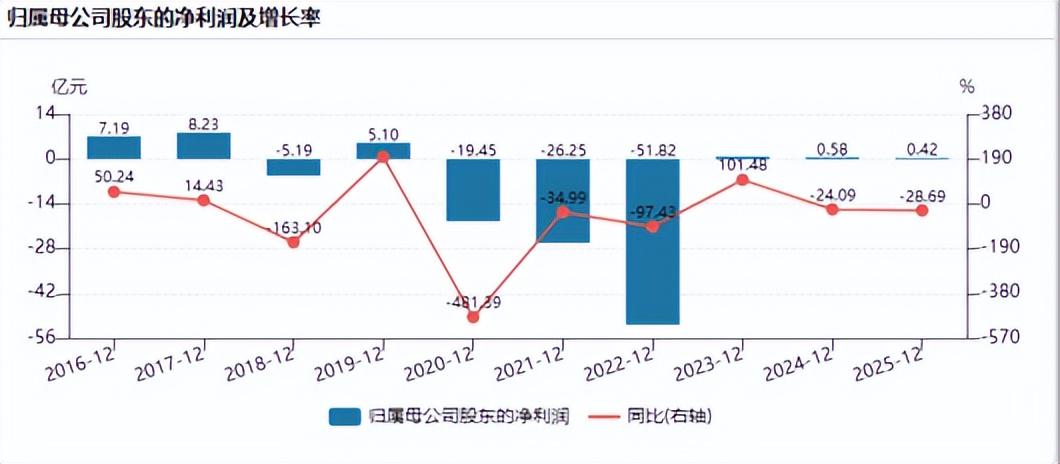
Image source: Wind
The experience of O-film has made many Apple supply chain enterprises recognize one thing: the operational dependency risk.
02. The entire Apple supply chain is exploring new ways of survival
Being part of the Apple supply chain has supported the revenue of many companies, and once created wealth myths.
The female leaders behind Lens Technology, Luxshare Precision, and Lingyi Technology have all climbed to high positions on the wealth list by riding the wind of Apple's supply chain.
In 2025, the head of Lingyi Technology ranked 6th on the Hurun China Women's Rich List with a net worth of 69.5 billion yuan, becoming the "richest woman in Jiangmen, Guangdong".
The anxiety brought by high order concentration also makes many Apple supply chain companies realize that the figures on the wealth list always come easy and go easy.
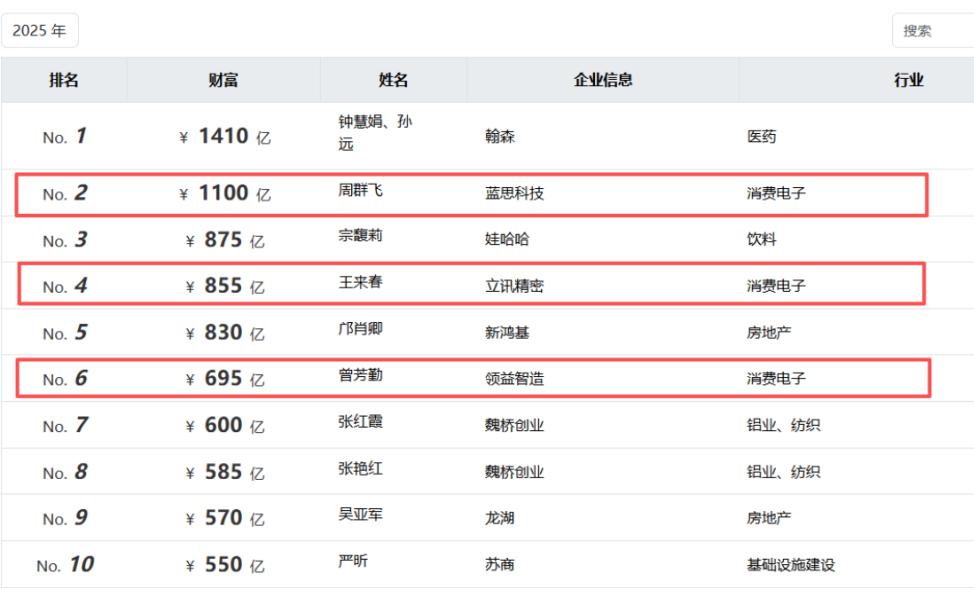
Image source: 2025 Hurun China Women's Rich List
As a result, the giants in the Apple supply chain have begun to transform collectively, looking for a new way of development.
Among them, Luxshare Precision is the fastest mover. Financial reports and Tianyancha data show that the proportion of its revenue from Apple dropped from 73.3% in 2022 to 56.7% in 2025.
In 2025, after Luxshare Precision completed the integration of Leoni AG, the German auto parts giant, its automotive electronics business revenue reached 393 billion yuan, a year-on-year increase of 185%. In the first half of 2026, the automotive business even increased by 274% year-on-year.
At the same time, Luxshare Precision has entered the AI computing infrastructure sector, with high-speed connectivity, heat dissipation, and power management businesses fully rolled out.
In addition, Luxshare Precision has also taken actions at the capital level by spinning off Luxshare Innovation for independent listing. This can not only promote Luxshare Innovation to complete financing and operate independently, but also gradually reduce its dependence on the Apple supply chain, leaving more room for diversified transformation.
Lens Technology has chosen the "multi-point development" strategy, with the proportion of revenue from Apple dropping from 71% in 2022 to 49.5% in 2024.
In the second half of this year, Lens supplies UTG glass for the foldable phone projects of major clients. The processing difficulty is high and the per-unit value has increased significantly, making the company a beneficiary of the incremental structural parts for foldable models. At the same time, Lens has also entered multiple tracks such as AI glasses, robots, computing power hardware, and TGV glass substrates.
Goertek has bet heavily on AI glasses. In 2025, the company's emerging businesses including AI smart glasses saw explosive growth, with net profit surging by nearly 50% year-on-year.
Moreover, relying on its first-mover advantage in the field of full AI smart glasses manufacturing, Goertek's global AI smart glasses sales reached 3.48 million units in Q2 2026, mainly driven by the growth of Meta's products.
Compared with these peer companies, Lingyi Technology's diversification path has both overlaps and its own unique arrangements.
In terms of customers, in addition to Apple, Lingyi Technology has also made deep inroads in the Android camp, with customer lists including Samsung, Xiaomi and others. In terms of business, in 2026, the company clearly focuses on four strategic directions: AI terminals, AI servers, humanoid robots, and automotive & low-altitude economy.
In the AI server field, it completed the acquisition of Liminda in January 2026 to complement its server liquid cooling hardware capabilities. In the low-altitude economy sector, the company has achieved technological breakthroughs in carbon fiber aircraft blades, adopting thermosetting unidirectional carbon fiber materials for the first time, which significantly reduces the weight of the blades and improves their strength.
Although these new tracks combined are not yet sufficient to replace the basic revenue from Apple business in the short term, they form a safety net — when the foldable phone dividends fade and the company is removed from the Apple supply chain, it still has a second, even a third, growth driver to rely on.
03. The most certain revenue still comes from the foldable phone sector
Interestingly, although the Apple supply chain giants talk about "de-Appleization" every year, the most definite performance increment in the second half of 2026 comes precisely from the head-to-head confrontation between Apple and Samsung in the foldable phone market.
Reports say that the initial stocking volume of Apple's first foldable iPhone has reached 10 million units.
If the phone receives good market feedback after its launch in October, orders will most likely be increased. Coupled with Samsung being forced to release its second-generation tri-fold phone ahead of schedule, with its hinge solution completely redesigned from scratch, the order volume for Lingyi Technology will also be considerable.
Counterpoint Research predicts that the upper limit of Apple's foldable iPhone shipments in 2026 is about 6 million units, which will account for about 25% of the global foldable phone market share in the early stage of its launch.
Against the backdrop of overall pressure on the consumer electronics sector, foldable phones may be the biggest surprise for Apple supply chain companies in the second half of the year.
Here comes a paradox: the giants in the Apple supply chain are desperately trying to get rid of Apple's dependence, but at the same time have to admit that Apple is still the most competitive player in this industry.
For example: Luxshare Precision achieved revenue growth in the first half of the year, and Apple-related orders are still the core pillar of its performance. Lingyi Technology's foldable phone hinge orders are also real large-value orders.
The essence of "de-Appleization" is not to leave Apple, but to cultivate new growth drivers based on the existing Apple supply chain foundation.
In previous years, Apple supply chain companies were afraid of being cut off from Apple's orders and flocked to the automotive sector to find their second growth curve. This year, they have fully turned to the AI sector. The logic behind the two moves is the same: do not put all eggs in one basket.
But to be honest, AI is still in the initial stage of commercialization, and no large client that can replace Apple has emerged yet. The scale of the AI glasses market is relatively small, and the robotics sector is still in the commercial exploration stage. Apple's foldable phone orders are certain, Samsung's accelerated layout in the foldable phone market is certain, and the trend of the foldable phone track moving from niche early adopters to the mass market is also certain.
Lingyi Technology's biggest advantage lies precisely in that the faster Apple and Samsung expand in the foldable phone market, the faster the company's performance will be realized, as it has already secured positions in both camps in advance.
In this "hinge war", the one who benefits the most is probably the supplier that makes profits from both sides — Lingyi Technology of the richest woman in Jiangmen.
Note: The materials of this article come from official reports and public information, and the views are for reference only. Some images are from the Internet, please notify us for deletion if there is any infringement.
This article is from the WeChat official account "Yuan Media", author: Xie Chunsheng, authorized for release by 36Kr.