The most maddening iPhone generation that drives people with obsessive-compulsive disorder crazy has finally arrived.
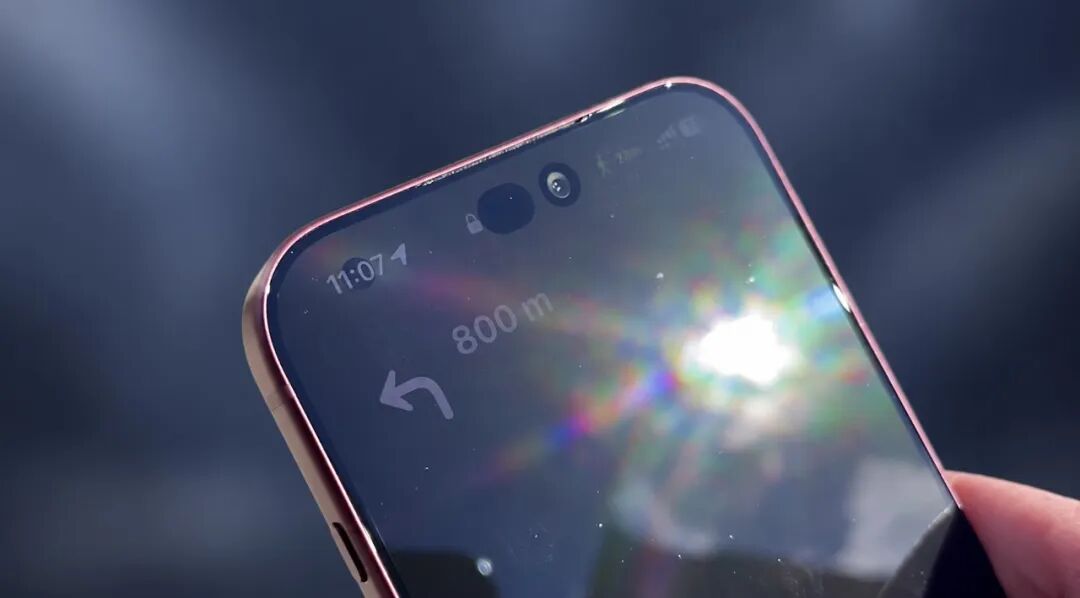
Last Friday, the first batch of new iPhone 18 Pro series units officially started shipping. Based on past years' experience, the much-hyped "iPhone screen quality check event" and "flaw-hunting with magnifying glass" activities will most likely go viral across various social platforms.
Interestingly, the protagonist has changed this year. The first concern for the iPhone 18 series is not which supplier's screen it uses, but a circular "spot" in the upper left corner of the screen on all models.
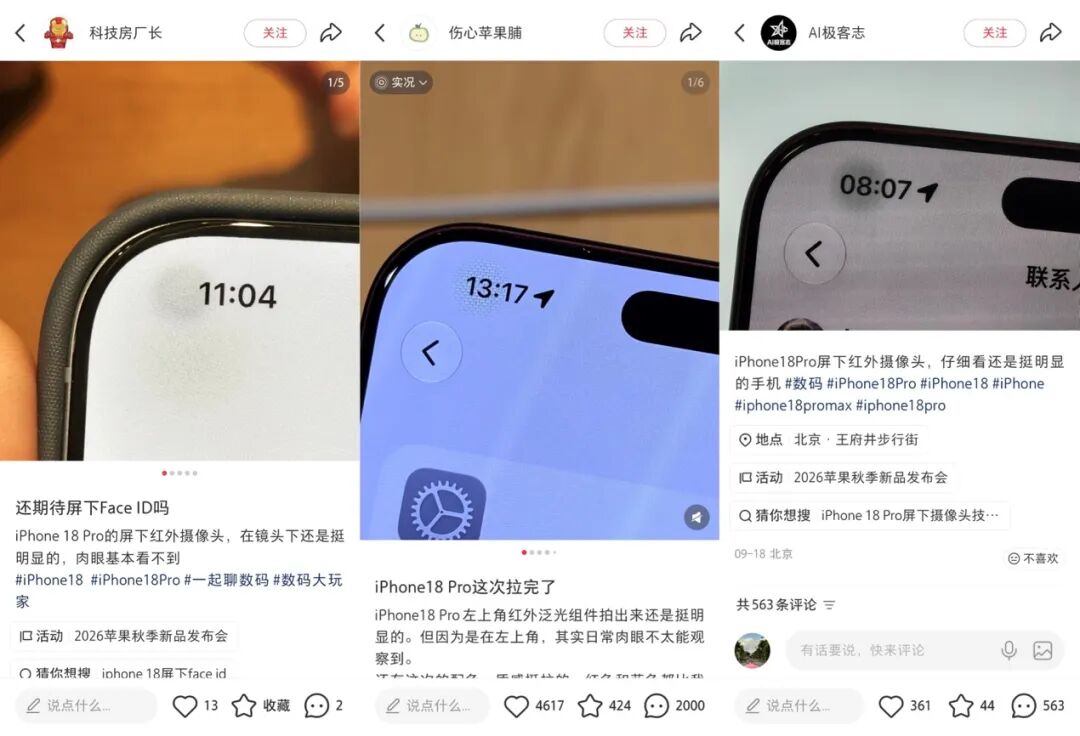
From the photos shared by users, this "spot" is located exactly at the position where the time is displayed in the upper left corner of the phone. Under strong light, the dot area appears darker than the surrounding screen, like a faint light mark left on the otherwise smooth display.
In some other photos, it shows colorful pixel points that stand out sharply against the normally displayed surrounding content, earning this generation the title of "the most obsessive-compulsive disorder-triggering iPhone ever".
Could this generation of iPhone 18 Pro have a new kind of quality control flaw?
The Cost of a Shrunken Dynamic Island
This small mark is related to the smaller Dynamic Island on the iPhone 18 Pro this year.
If you place the old and new generations of iPhones side by side, you can clearly see that the black bezel area at the top of the screen has been significantly narrowed. The shrunken Dynamic Island on the iPhone 18 Pro series is also one of its core selling points this year.
However, the Dynamic Island was already packed with many components, in addition to the front camera for selfies, there is also a full set of modules responsible for Face ID facial recognition.
The common experience of picking up your phone and unlocking it with a glance at the screen relies on the coordinated work of multiple hardware components: the dot projector projects invisible light dots onto the user's face, the infrared camera receives the reflected light, the system obtains the depth information and infrared image of the face based on this data, and then compares it with the pre-registered facial data.
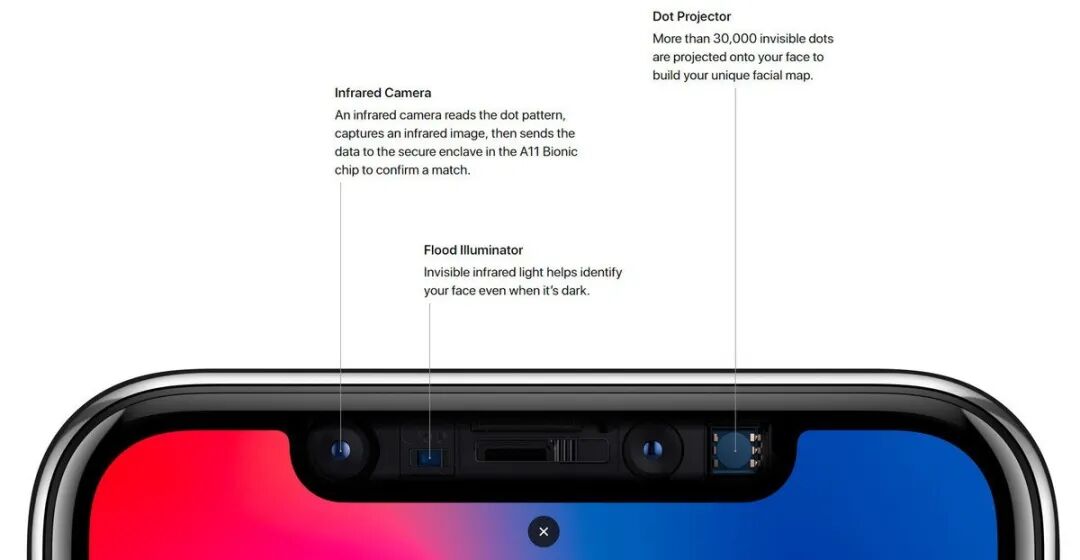
The flood illuminator provides infrared lighting to help the system work in dark environments.
Therefore, although the most noticeable component on the front of the phone is the large front camera, it is not responsible for unlocking your phone, let alone accurately recognizing your face during payment processes.
This also explains why Apple has always needed to reserve space for facial recognition related modules. From the original "notch" to the current Dynamic Island, Apple has only been able to shrink it step by step, and has never managed to make it disappear completely.
That's why when rumors spread that the Dynamic Island on the iPhone 18 Pro series would become smaller, many content creators speculated that Apple had adopted some cutting-edge technology, such as smaller parts or cameras, to achieve the reduced size.
But as it turns out, Apple only used the most "uninnovative" straightforward method: moving certain components out of the Dynamic Island.
Specifically, Apple moved the infrared camera that was originally placed next to the front camera to the area under the upper left corner of the screen.
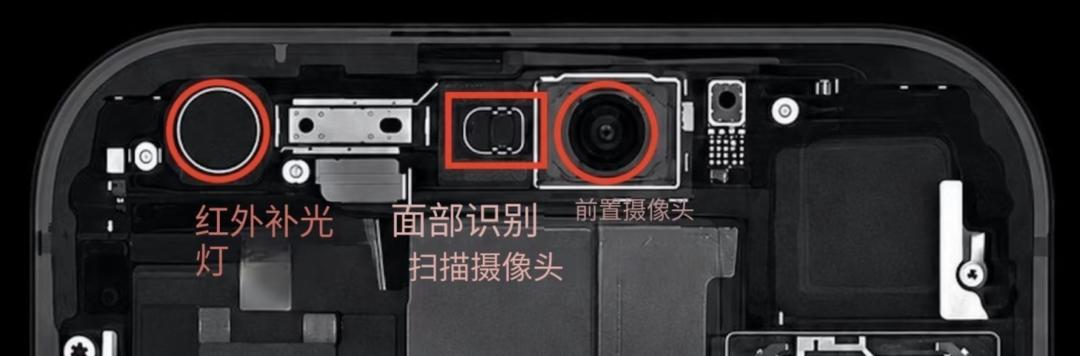
Teardown footage also shows that this camera is separated from other components centered at the top, exactly where the netizens noticed the "small mark" or "tiny spot".
After being moved, the infrared camera can still achieve high-precision facial recognition, with only the way it receives light changed. Apple adopted a solution similar to the under-display camera, allowing it to receive infrared light through the display panel, while the screen above continues to show the time and other content.
In this way, the opening space it originally occupied is freed up, the Dynamic Island naturally becomes smaller, and there is no need to expose a black camera hole in the upper left corner.
The idea sounds perfect in theory, but the reality is far from ideal. This under-display infrared camera design obviously falls far short of a truly mature "under-display" solution.
Apple Also Faces Unsolvable Technical Challenges
Have you ever noticed that under-display camera technology can eliminate the unsightly black hole on the screen, but very few phones on the market actually adopt it?
This is because under-display camera technology itself is an imperfect solution that requires trade-offs.
Both infrared cameras and front-facing imaging cameras work by collecting light into their sensors. But to hide the camera under the screen, light has to pass through the display panel before reaching the sensor.
However, the dense array of light-emitting sub-pixels, circuits and metal traces in the OLED screen will block and interfere with light. When the camera takes photos through these elements, problems such as blurry images and glare are very likely to occur.
To increase light transmittance, one method is to arrange the sub-pixels above the camera more sparsely to leave more gaps for light to pass through. But the pixel density in this area is different from the surrounding area, which will lead to graininess and brightness differences when displaying the same content.
Even with display compensation adjustments, it is difficult to ensure that this area is completely consistent with the surrounding area under all scenarios, brightness levels and viewing angles.
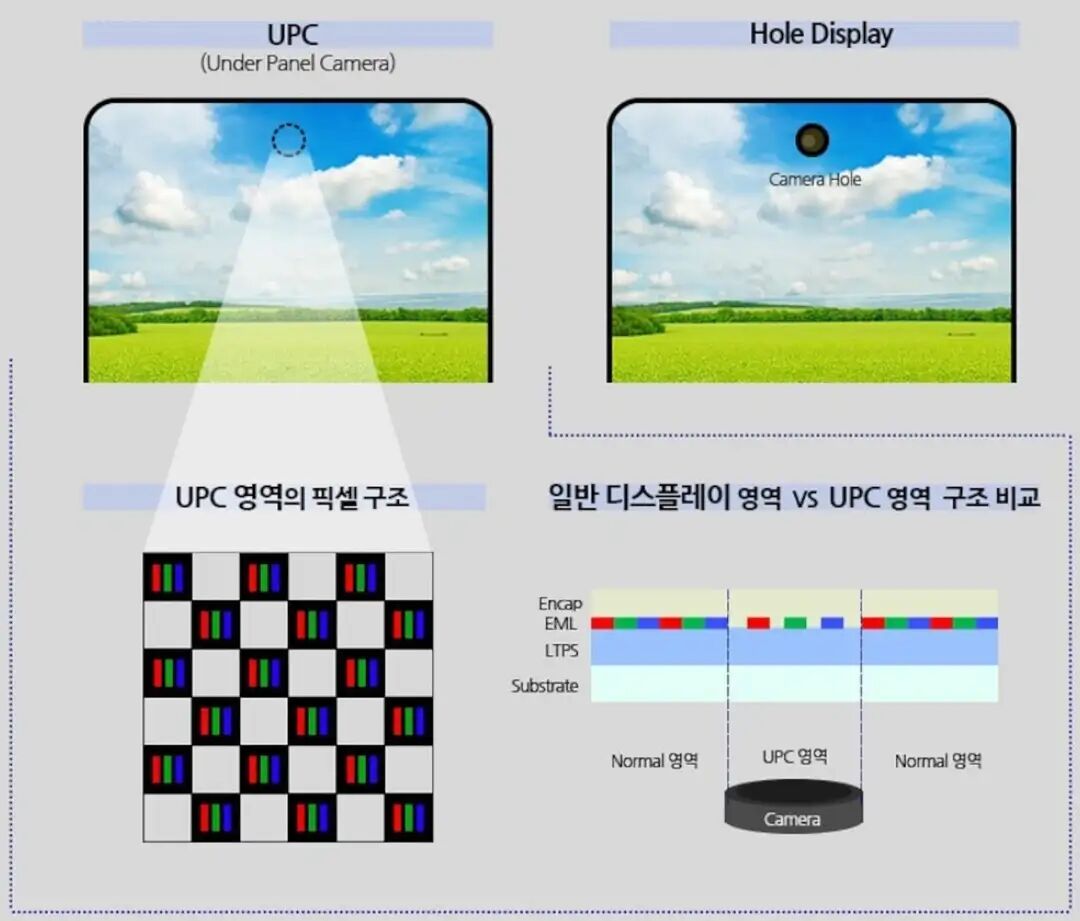
The under-display infrared solution Apple adopted this time encountered similar problems.
In the microscopic comparison shots released by tech content platform WekiHome, the pixel difference between the under-display camera area and the normal screen area is very clear. You can see that the light-emitting sub-pixels on the left are significantly sparser, and the gaps between the luminous points are larger.
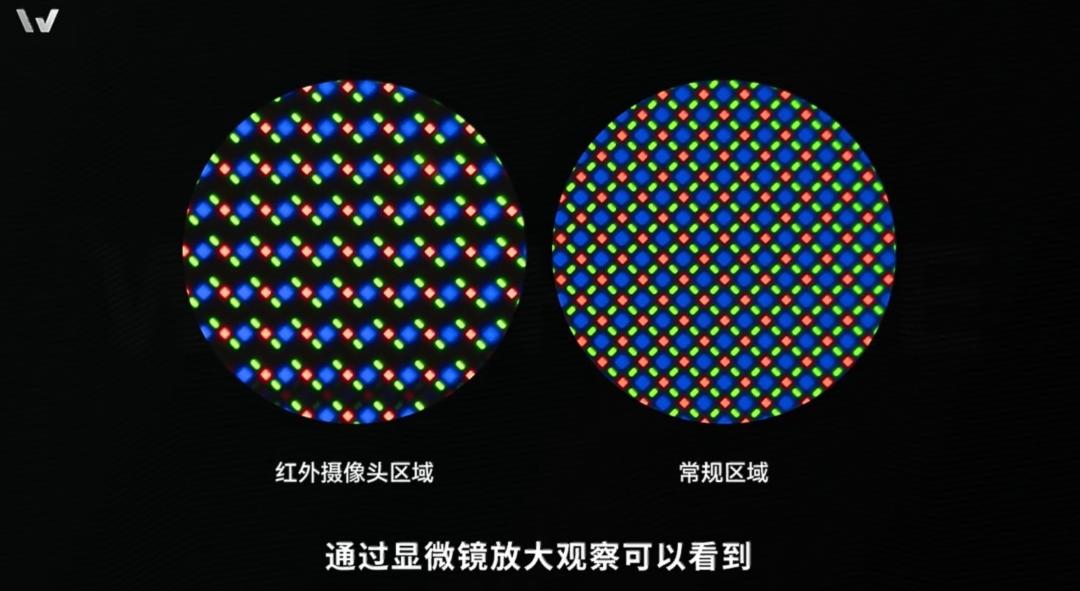
This circular area still needs to display the time and other content, but it has fewer luminous points than the surrounding area, which naturally leads to graininess, brightness differences under certain backgrounds, and even a "black hole" effect under strong light with the screen off.
Fortunately, placing an infrared camera under the screen presents fewer imaging challenges than hiding a front-facing selfie camera.
Selfie cameras need to receive visible light of different colors, to reproduce natural skin tones while retaining the details of hair, clothing and backgrounds, which places higher requirements on the pixel sparsity and wiring of the under-display cutout area.
In contrast, the infrared camera processes a more concentrated spectral range, and can work with the phone's own infrared lighting. It only needs to capture clear enough facial information to complete recognition, without the need to reproduce rich colors or output a selfie that can be directly posted on social platforms.
But the otherwise intact screen is essentially forced to have a functional cutout, leaving a faint, intermittent "small mark" on the surface that easily catches the eye of users with sharp vision.
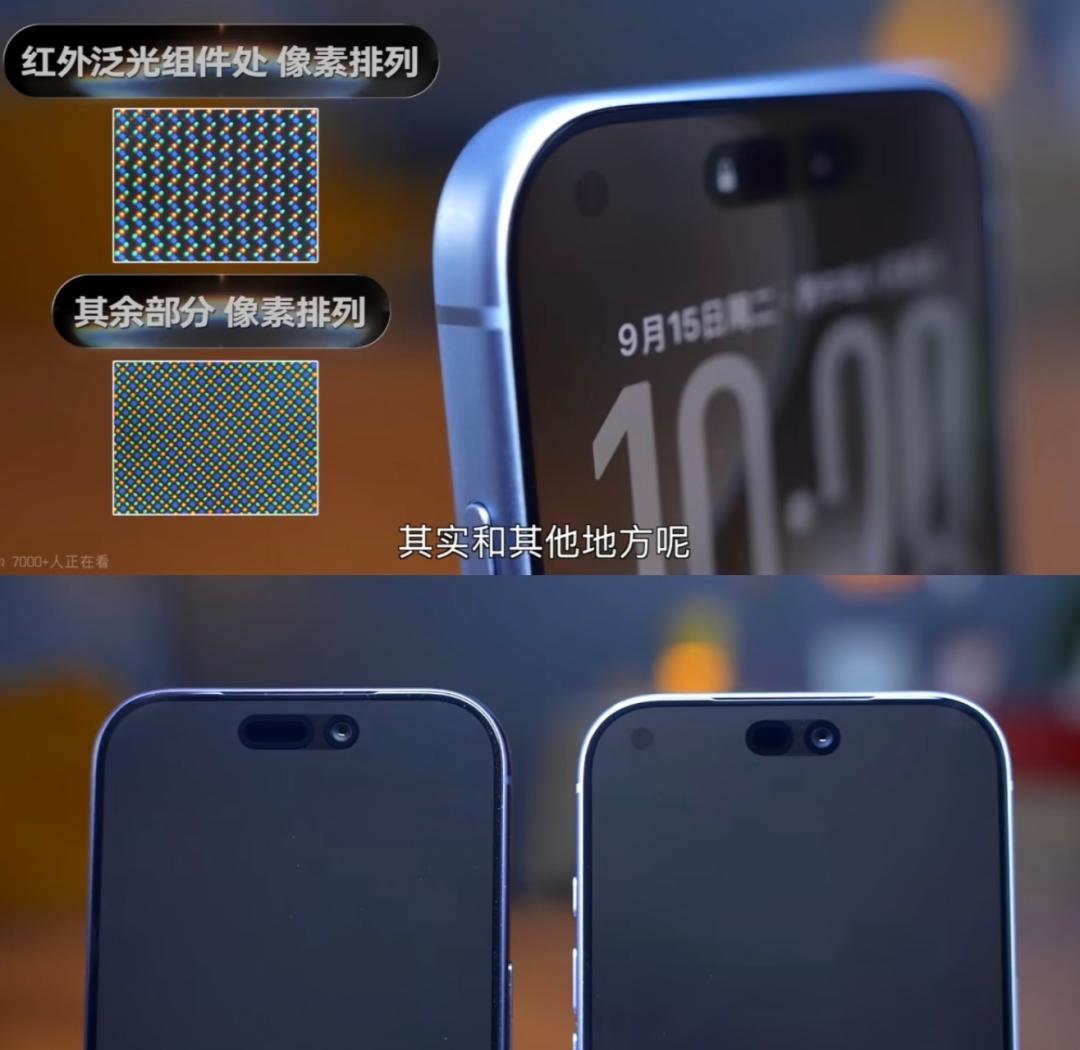
Apple traded this solution for a smaller Dynamic Island, but also introduced a new visible flaw for users. Making necessary trade-offs has long been a consistent tradition of Apple's product development.
Is It Worth the Effort That Yields Little Reward?
To make the Dynamic Island slightly smaller, Apple moved the camera and specially adjusted the screen structure of a specific area. After all this trouble, the Dynamic Island is still there, with an additional noticeable small mark next to it. Judging only from this generation of products, it really seems that Apple has put in a lot of effort for very little gain.
But Apple may have no choice: after all, eliminating all cutouts on the front of the screen is the shared goal of every smartphone manufacturer.
And under-display camera technology does seem to be the closest path to that final goal. The camera does not need to be moved, and the area above it can display content normally. Starting from this generation, it appears that Apple has begun to push the adoption of under-display camera technology vigorously.
Not only did the iPhone 18 Pro hide the infrared camera under the screen first, the iPhone Duo released in the same period also adopted an under-display front camera on its inner screen for video calls. But in practice, the aforementioned light transmittance and display issues are unavoidable.
This choice makes even more sense when combined with rumors about the 20th anniversary of the iPhone next year.
Mark Gurman, a journalist from Bloomberg, previously reported that Apple is planning an anniversary iPhone model that features a large amount of glass, a curved design, and a completely notch-free screen. If this vision is realized, both the front camera and Face ID will be hidden under the display, and the Dynamic Island will disappear from the front of the device entirely.

Another piece of news from leaker "Chana Digital" extends the changes to the side of the device. Apple is reportedly testing solid-state buttons that use pressure sensing and haptic feedback to replace traditional mechanical buttons. At that time, there will be no protruding buttons on the frame of the 20th anniversary iPhone, and all four bezels will be seamlessly integrated.
Although none of these reports have been confirmed by Apple, and the public has different opinions on whether the under-display technology will be mature enough by 2027, a phone that feels like a complete piece of glass in the hand and shows nothing but the display when lit up is clearly more in line with the public's imagination of "a phone that Apple would make".
If Apple is indeed intent on building such a "perfect phone", then hiding the infrared camera under the screen this year and testing the under-display front camera on the foldable inner screen may be steps to accumulate experience for future designs.
Therefore, this small mark on the screen is not just "effort for no reward". Apple's willingness to keep trying new things is always worth looking forward to.
However, these attempts have been installed on officially sold phones, and users are paying real money for them. While Apple can continue to pursue a completely notch-free screen, it should also try its best to avoid making customers pay for immature technologies.
This article is from the WeChat Official Account "Blue Print Plan", written by Hayward, and is republished by 36Kr with authorization.