Will people like Terence Tao also bury their talents in yesterday?
When I read *I Had to Bury My Talent in Yesterday* written by Liu Shengyu, an engineer at DeepSeek, I can't help recalling the scene in *The Smiling, Proud Wanderer* where Linghu Chong spots the carvings on the stone wall in the back cave of Siguo Cliff.
The stone wall records not only the sword moves of the Five Mountains Sword Sects, but also their corresponding cracking methods.
Linghu Chong suddenly realizes that the sect martial arts skills he has practiced diligently for years actually show flaws from a completely different perspective. What makes a person feel awful at such a moment is that the beliefs he used to understand himself and prove his loyalty to his sect are also shaken accordingly.
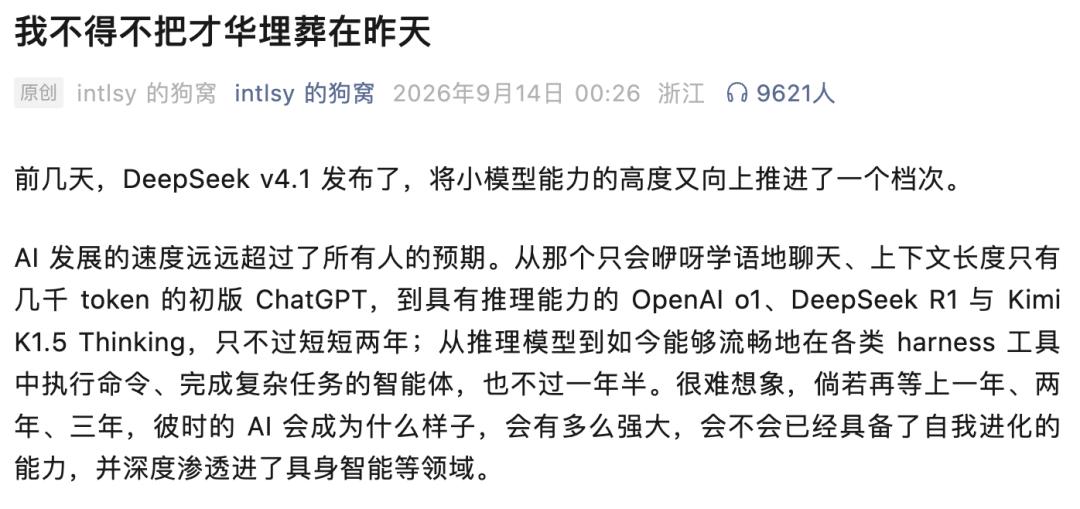
Nowadays, the "stone wall" standing in front of Liu Shengyu is an AI that is getting increasingly skilled at writing code.
He excels at developing high-performance operators, but the work achievements he strived for have unknowingly pressed the acceleration button for this tool that will eventually replace him, leading him to utter the widely spread golden line: "I had to bury my talent in yesterday".
Recently, mathematicians have also arrived in front of a similar stone wall.
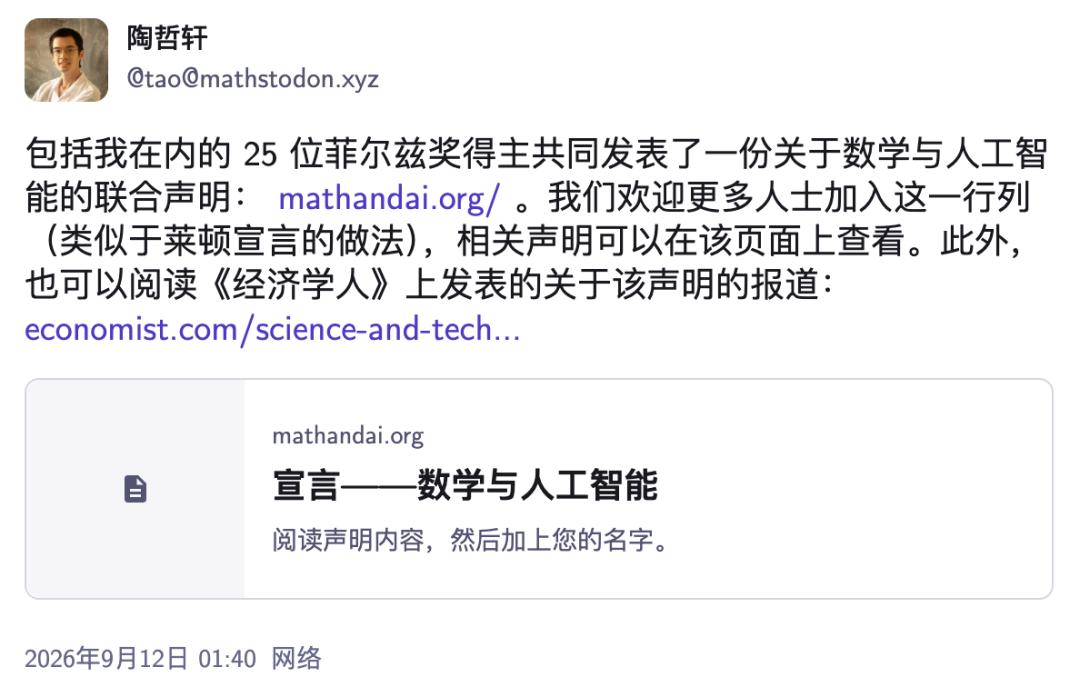
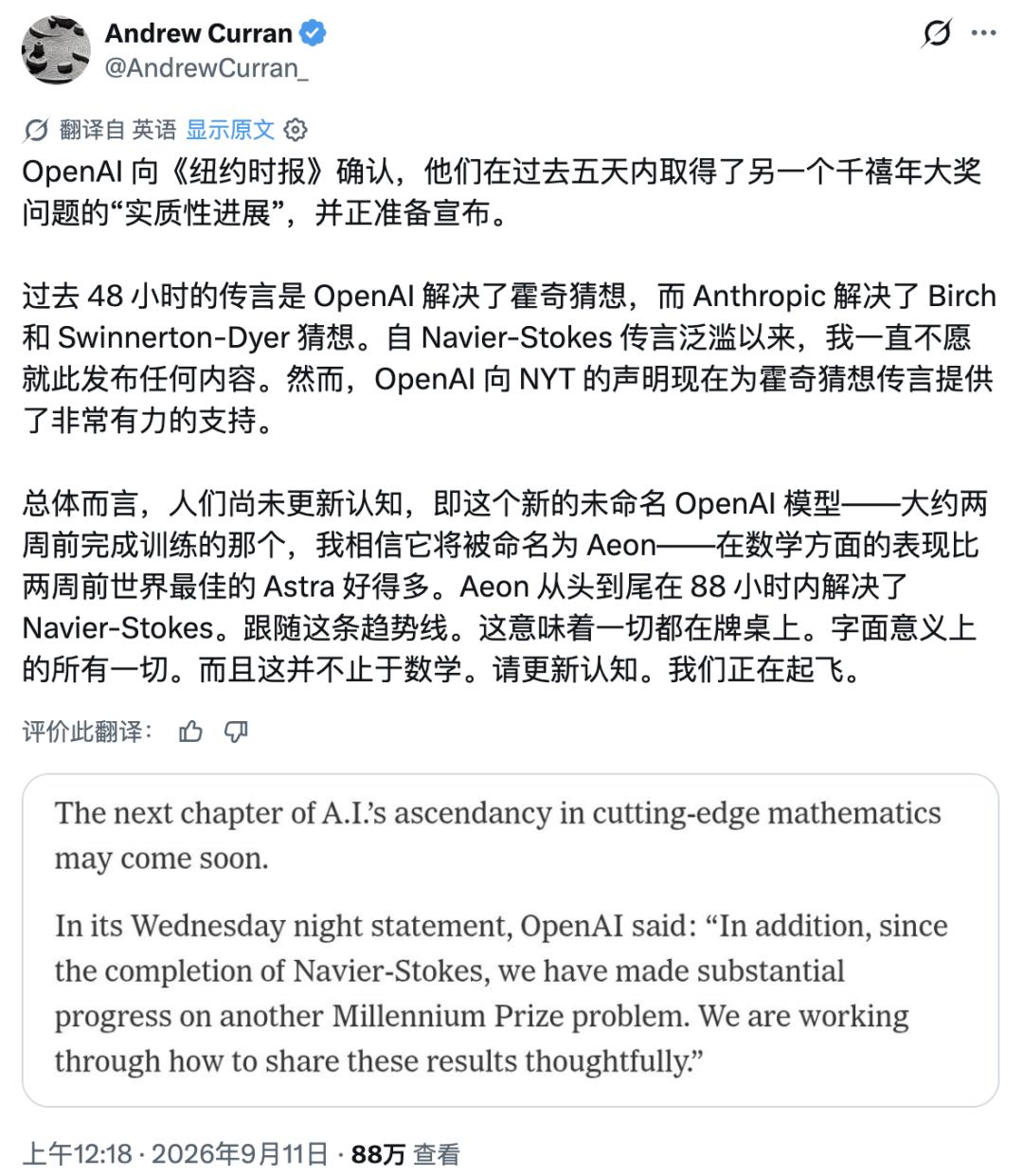
After OpenAI announced its research results related to the Navier-Stokes problem, it was later revealed that it is close to solving the Hodge Conjecture; Terrence Tao and multiple Fields Medal winners have issued warnings that AI is impacting the values, research methodologies and talent cultivation systems of the mathematics community.
When solving difficult problems can be organized on a large scale, accelerated or even completed automatically, what the mathematics community needs to re-discuss goes far beyond how to define top experts. New answers are needed for how to count the contributions of predecessors, how to convert machine proofs into knowledge that humans can understand, and how the next generation of mathematicians should grow.
Several Hours for AI, Hundreds of Years for Humankind
Liu Shengyu's work usually takes place at the underlying level that is hardly noticeable to ordinary people.
For the same GPU and the same computing task, the arrangement of instructions, the transfer of data, and the positions where waiting time can be reduced will all affect the efficiency of the model. While others think the speed is already fast enough, he still strives to approach the hardware limit. The expertise of an operator engineer is hidden in these subtle details.
In the early days, AI could at most help check documents and find errors. Now it is already capable of reading underlying code and optimizing operators together with engineers. Facing the results he polished carefully, Liu Shengyu feels proud, and meanwhile realizes that AI is approaching the level of human experts.
The public tends to attribute this kind of sentiment to job security anxiety, but people who truly love a craft also cherish the sense of creation that comes from discovering hidden problems and making the program run a little faster after repeated deliberation. What Liu Shengyu misses is not only a career, but also the confirmation of his own ability after reaching a high level through long-term training.
The mathematics community also values this kind of confirmation very much.
Research relies on the accumulation of generations, but individuals often spend several years or even more than a decade tracking clues to complete proofs. The long-term exploration shapes the research results, and also shapes the reputation and identity of mathematicians. Nowadays, laboratories are experimenting with another set of knowledge production methods.
A large number of AI agents can conduct exploration in parallel, exchange intermediate results, and then concentrate computing power on more promising paths. The years of groping by individuals has gradually become a systematic engineering that can be executed concurrently and screened quickly.
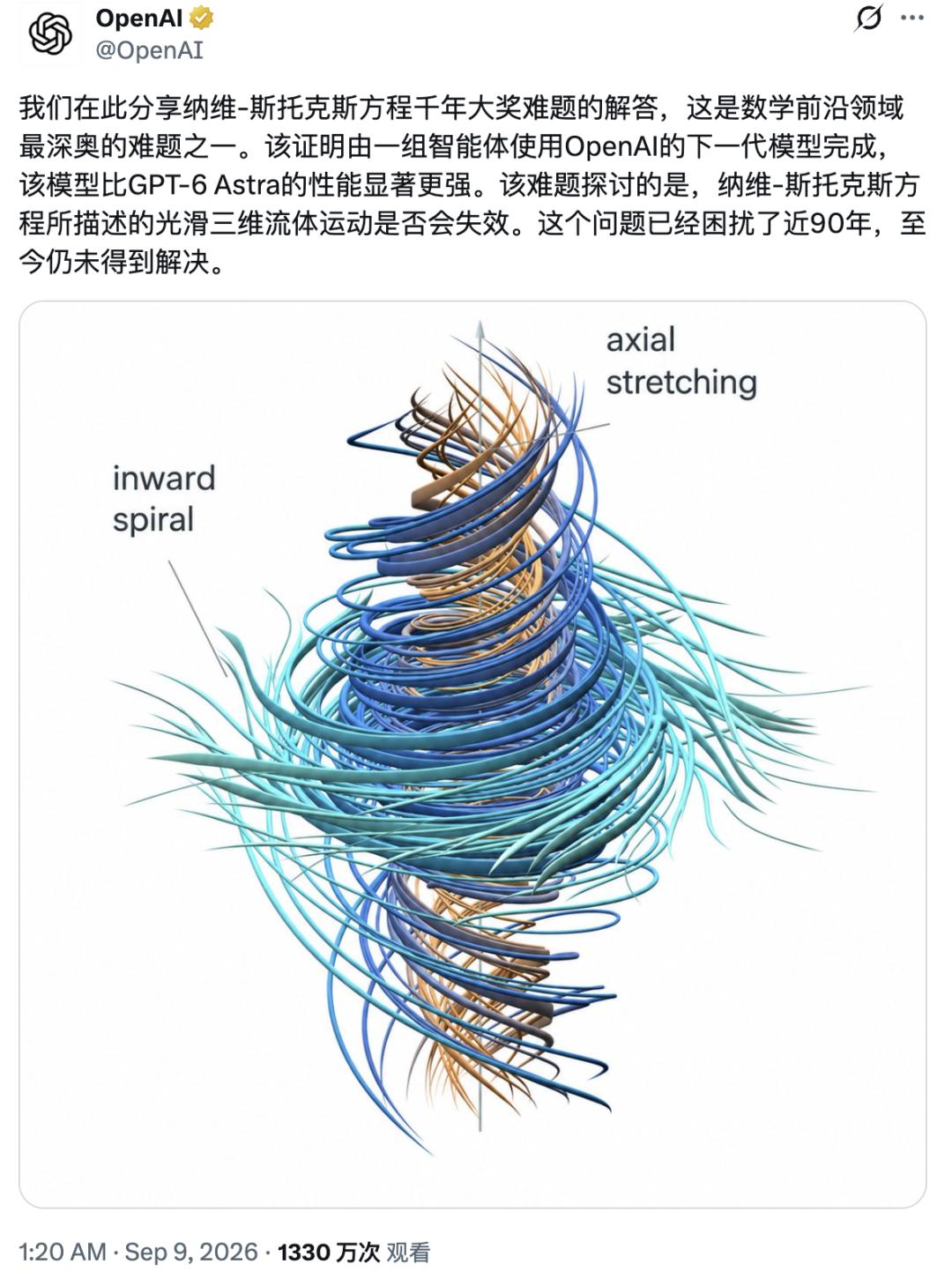
On September 8 local time, OpenAI announced its relevant achievements on the Navier-Stokes problem, one of the Millennium Prize Problems. According to the disclosure, about 10,000 concurrent agents proposed solutions in less than four days, and then completed Lean formal verification.
On September 17, The Information cited people familiar with the matter and reported that OpenAI is close to solving another Millennium Prize Problem, the Hodge Conjecture. Some researchers even judge that mathematics may become the next field to achieve rapid automation after software engineering, and put forward an aggressive expectation of "six to nine months".
Cédric Villani, the French mathematician and Fields Medal winner, described that there is a pervasive atmosphere in the mathematics community that a certain historical period has come to an end. When machines compress the exploration that used to take years into several days, the value scale built around personal talent, time investment and independent proof also starts to loosen.
However, people tend to notice the impressive speed AI shows in the final stage, but ignore what kind of starting point it is based on.
In *The Heaven Sword and Dragon Saber*, Zhang Wuji quickly mastered the Universe Shift skill in the secret tunnel of the Ming Cult, relying on the Nine Yang Divine Skill he had practiced before. If you only focus on the few hours he spent in the secret tunnel, you will miss the long accumulation in the earlier part of the story.
AI's mathematical capabilities also come from hundreds of years of human knowledge accumulation. The definitions, theorems, methods and unfinished attempts of predecessors have jointly paved the way to the answer. Even if the machine runs at an amazing speed in the final stage, the work that forms the starting point should still be recorded in the merit list of the results.
When Proof Comes Faster Than Understanding
In *Ode to Gallantry*, the two island owners Long and Mu, together with many masters, studied the atlas on the Xiake Island for a long time, but never managed to understand its profound meaning.
Shi Potian is illiterate, so he bypasses the interpretation paths familiar to everyone, and comprehends the *Tai Xuan Jing* from the graphics, glyphs and strokes. AI may also be able to bypass the reasoning methods commonly used by humans, and find a proof route that no one has ever thought of.

A proof that passes mechanical inspection only means that the derivation chain is formally valid.
Mathematicians still need to explain why it holds, where the core ideas lie, which methods can be transferred, and what new understandings it brings to people in related fields. While the machine can reach the finish line, the mathematics community still needs to map the path, so that latecomers can understand it and continue to move forward from there.
Once the production speed of proofs exceeds human reading speed, whoever can mobilize more agents is more likely to announce results first, and it is easier for them to decide which problems get attention. The issue of understanding therefore quickly extends to authorship, attribution and research rights.
Before OpenAI announced the results, mathematician Tristan Buckmaster of New York University and Levent Alpöge, who works at Anthropic, had already made progress on related fluid equations with the help of AI.
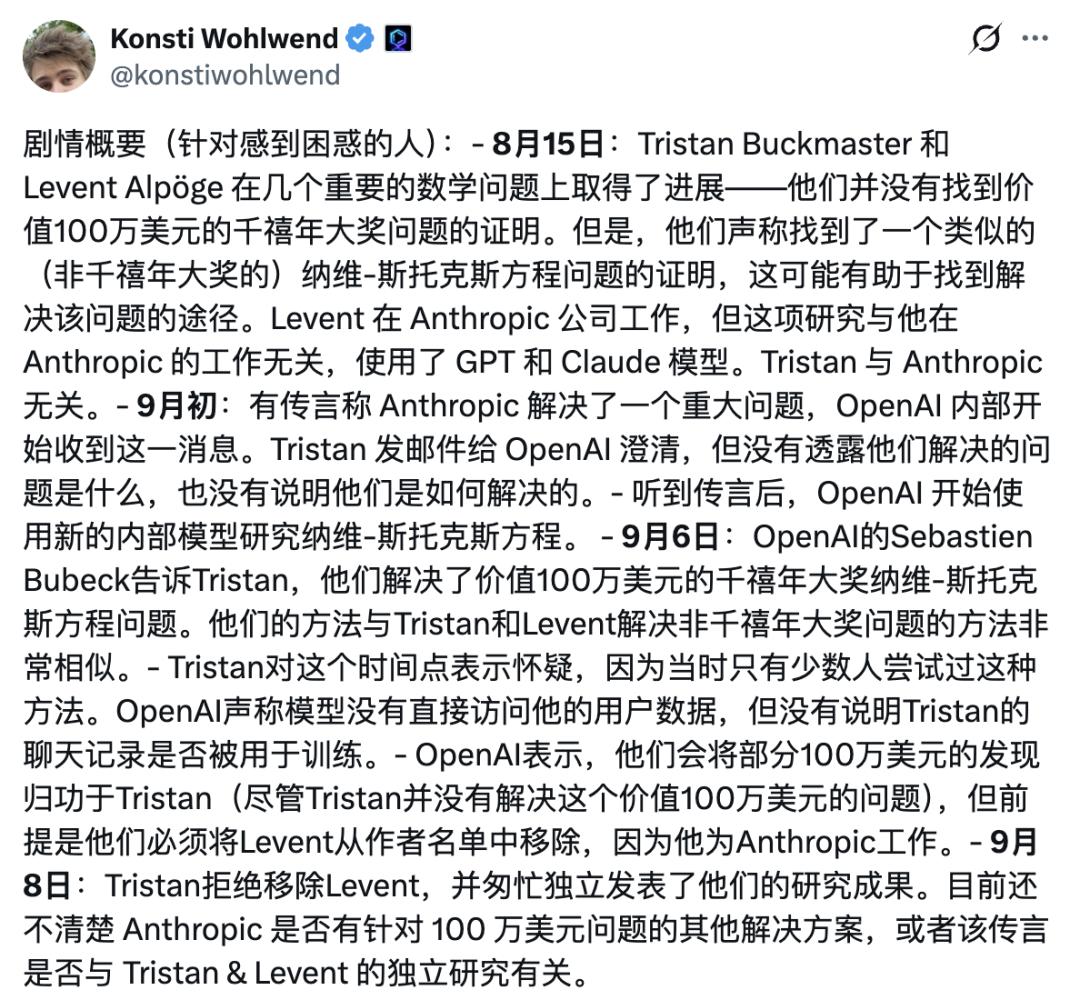
Buckmaster later questioned whether the research information he had previously submitted to OpenAI's tools had affected the company's work. OpenAI denied using the two's unpublished results, and stated that the investigation showed that the relevant content could not have influenced the system this time through training or other means.
The controversy exposes new contradictions between traditional academic communities and technology companies.
When scholars submit their immature ideas to AI, the companies behind the tools not only control the models and computing power, but also may organize teams to study the same problem. The rules of authorship, citation and priority maintained by papers, conferences and peer exchanges in the past have been difficult to cover the cooperative relationships in closed systems.
Commercial competition will also direct resources to the most well-known problems with the easiest-to-determine results, because a Millennium Prize Problem is enough to become a striking medal of model capability.
Terrence Tao pointed out that AI companies chasing famous mathematical problems are also borrowing the prestige accumulated by the mathematics community for hundreds of years. Results that are easy to score are suitable for model competitions, but cannot cover all the values that a discipline emphasizes.
On September 11, 25 Fields Medal winners including Terrence Tao, Yitang Zhang, Peter Scholze and Pierre Deligne jointly signed a statement, criticizing the competition mode of turning difficult mathematical problems into model benchmarks, arguing that commercial goals have been seriously misaligned with the scientific needs of the mathematics community.
On the same day, Terrence Tao compared open problems to lighthouses.
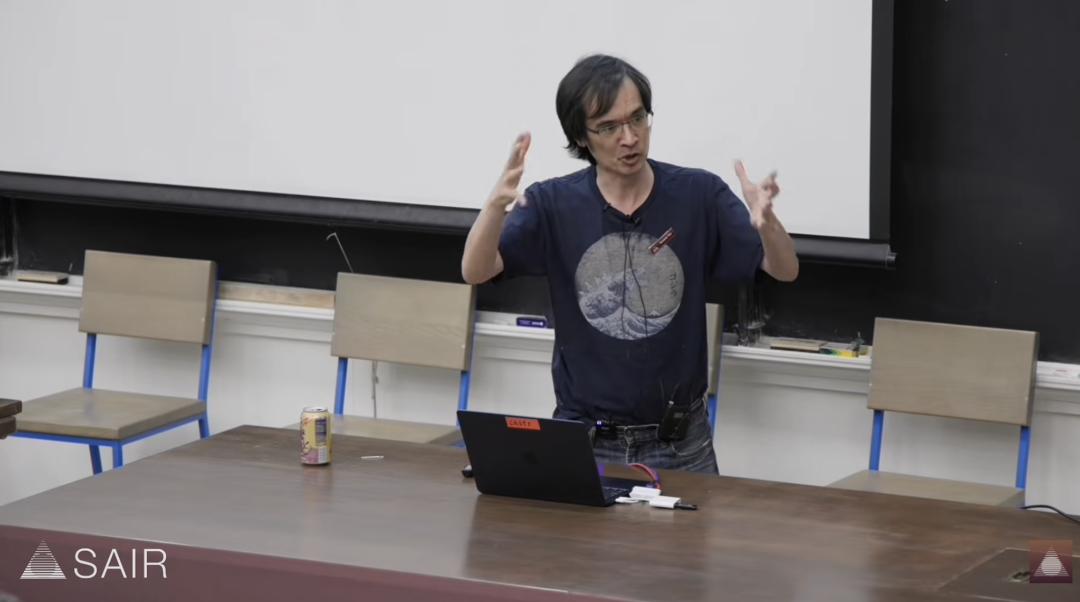
People rarely set off just for a small piece of land at the foot of a lighthouse. The meaning of a lighthouse is to illuminate the surrounding terrain, so that latecomers know how to continue sailing. A major problem can push researchers to invent tools, establish connections and raise new questions, and the final answer is only part of the results.
Scott Armstrong, a mathematics professor at New York University, later disclosed that he was told OpenAI has accumulated hundreds of unpublished mathematical proofs at least since the International Congress of Mathematicians in July.
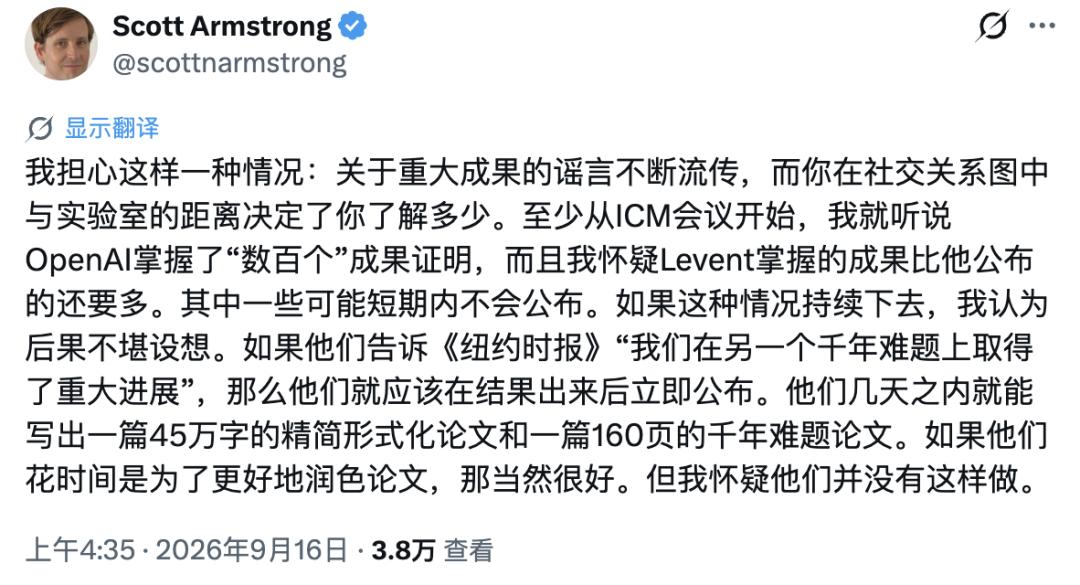
In the past, people worried that important problems would not be proved for a long time. Now the speed at which machines generate results may exceed the speed of peer review, reinterpretation and inclusion in textbooks, and knowledge production will thus encounter the "proof indigestion" mentioned by Terrence Tao.
If machines generate a large number of incomprehensible proofs every day, what humans get is just a continuously expanding warehouse of results, without obtaining the corresponding mathematical knowledge.
Outsourcing Difficult Problems to AI: Where Does Young People's Judgment Come From
Letting AI solve problems and letting mathematicians be responsible for topic selection, review and interpretation seems to have a clear division of labor, but it cannot avoid the problem of how judgment is formed. Identifying what is worth studying and finding out which step of derivation is questionable requires long-term training, which comes from solving problems, making mistakes and correcting them in person.
On September 15 local time, Scott Aaronson, a professor of theoretical computer science at the University of Texas at Austin, wrote in his blog that his 13-year-old daughter joked: "If I want to be a mathematician, it seems that I only have about two weeks left."
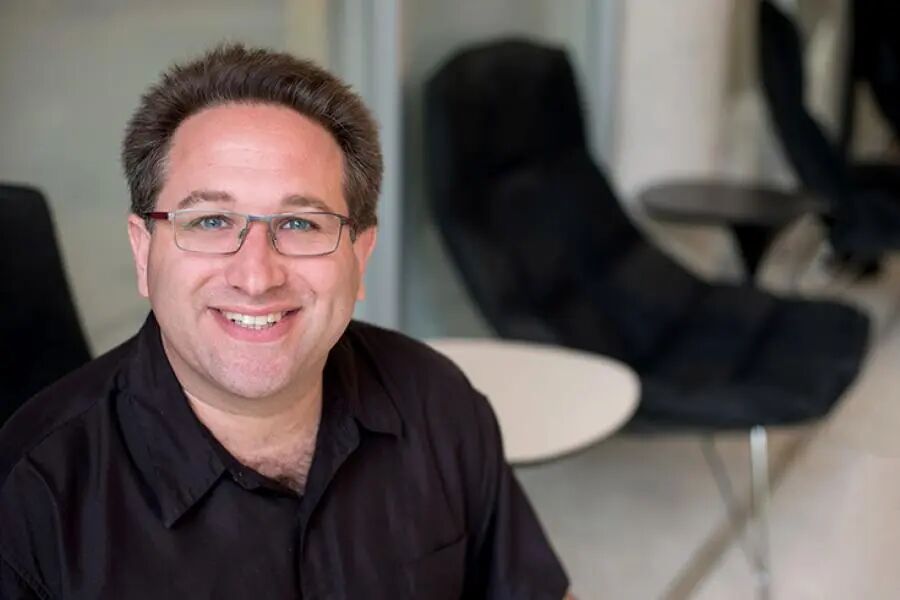
Scott Aaronson
Aaronson once worked as a visiting researcher on OpenAI's alignment team. When students asked about their career prospects after graduation, he admitted that he no longer knew how to answer.

Future students can let AI complete proofs, find counterexamples and explain theorems. But when the most laborious part of exploration is continuously handed over to machines, they may also lose their sensitivity to anomalies and the opportunity to develop research intuition in long-term failures.
Engineering education faces the same problem. While students get perfect code quickly, they may miss the training of designing architecture, troubleshooting underlying bugs and understanding the operating mechanism of machines, and eventually find it difficult to judge whether the answers given by machines are reliable.
In *The Heaven Sword and Dragon Saber*, the